
3 months 3 weeks ago
Knowing whether or not one can live without appeal is all that interests me.

3 months 3 weeks ago
Assay nothing without science, but confine your selves to those bounds, which Nature hath prescribed you.
▼
Source
p. 70 (last sentence of the book)
3 months 3 weeks ago
This it is that gives a majesty so pure and touching to the historic figure of Christ; self-abandonment to God, uttermost surrender, without reserve or stipulation, to the guidance of the Holy Spirit from the Soul of souls; pause in no darkness, hesitation in no perplexity, recoil in no extremity of anguish; but a gentle unfaltering hold of the invisible Hand, of the Only Holy and All Good; — these are the features that have made Jesus of Nazareth the dearest and most sacred image to the heart of so many ages.
▼
Source
Vol. II, pp. 14–15.
3 months 3 weeks ago
Leibniz’s theory on the subject as substantia ideans in the sense of a causative agent of decision and acts stands much closer to a materialist interpretation of history than does a philosophy which reduces the thinking subject to the role of subsuming protocol sentences under general propositions and deducing other sentences from them.
▼
Source
p. 149.
3 months 3 weeks ago
Use these rules then, and trouble thyself about nothing else.
▼
Source
X, 2
3 months 3 weeks ago
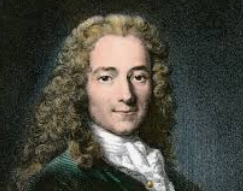
If this is the best of possible worlds, what then are the others?

3 months 3 weeks ago
Sadness makes you God's prisoner.
3 months 3 weeks ago
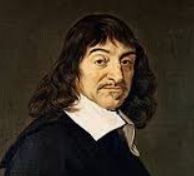
I could give here several other ways of tracing and conceiving a series of curved lines, each curve more complex than any preceding one, but I think the best way to group together all such curves and them classify them in order, is by recognizing the fact that all points of those curves which we may call "geometric," that is, those which admit of precise and exact measurement, must bear a definite relation to all points of a straight line, and that this relation must be expressed by a single equation. If this equation contains no term of higher degree than the rectangle of two unknown quantities, or the square of one, the curve belongs to the first and simplest class, which contains only the circle, the parabola, the hyperbola, and the ellipse; but when the equation contains one or more terms of the third or fourth degree in one or both of the two unknown quantities (for it requires two unknown quantities to express the relation between two points) the curve belongs to the second class; and if the equation contains a term of the fifth or sixth degree in either or both of the unknown quantities the curve belongs to the third class, and so on indefinitely.
▼
Source
Second Book

3 months 3 weeks ago
I here, on the very threshold, protest against it in reference to Paganism, and to all other isms by which man has ever for a length of time striven to walk in this world. They have all had a truth in them, or men would not have taken them up. Quackery and dupery do abound; in religions, above all in the more advanced decaying stages of religions, they have fearfully abounded: but quackery was never the originating influence in such things; it was not the health and life of such things, but their disease, the sure precursor of their being about to die! Let us never forget this.
3 months 3 weeks ago
You have already grasped that Sisyphus is the absurd hero. He is, as much through his passions as through his torture. His scorn of the gods, his hatred of death, and his passion for life won him that unspeakable penalty in which the whole being is exerted toward accomplishing nothing. This is the price that must be paid for the passions of this earth. Nothing is told us about Sisyphus in the underworld. Myths are made for the imagination to breathe life into them.
3 months 3 weeks ago
The real cause I consider to be the one which was formerly most kept out of sight. The growth of the power of Athens, and the alarm which this inspired the Lacedaemon, made war inevitable.
▼
Source
Book I, 1.23-[6]. (See:[https://en.wikipedia.org/wiki/Thucydides%20Trap Thucydides Trap])
3 months 3 weeks ago
Today in America—the child of European imperialism—a new revolution is rising. It is the revolution of our time... and offers the only possible escape for mankind today.
▼
Source
Without Marx or Jesus; the new American Revolution has begun (1971) quoted in The Aquarian Conspiracy, by Marilyn Ferguson, Chapter 5 (1980)
3 months 3 weeks ago
The basic ideals and concepts of rationalist metaphysics were rooted in the concept of the universally human, of mankind, and their formalization implies that they have been severed from their human content. How this dehumanization of thinking affects the very foundations of our civilization can be illustrated by analysis of the principle of the majority, which is inseparable from the principle of democracy. In the eyes of the average man, the principle of the majority is often not only a substitute for but an improvement upon objective reason: since men are after all the best judges of their own interests, the resolutions of a majority, it is thought, are certainly as valuable to a community as the intuitions of a so-called superior reason. … What does it mean to say that “a man knows his own interests best”—how does he gain this knowledge, what evidences that his knowledge is correct? In the proposition, “A man knows [his own interests] best,” there is an implicit reference to an agency that is not totally arbitrary … to some sort of reason underlying not only means but ends as well. If that agency should turn out to be again merely the majority, the whole argument would constitute a tautology. The great philosophical tradition that contributed to the founding of modern democracy was not guilty of this tautology, for it based the principles of government upon … the assumption that the same spiritual substance or moral consciousness is present in each human being. In other words, respect for the majority was based on a conviction that did not itself depend on the resolutions of the majority.
▼
Source
pp. 26-27.
3 months 3 weeks ago
Remember that what pulls the strings is the force hidden within; there lies the power to persuade, there the life,—there, if one must speak out, the real man.
▼
Source
X, 38
3 months 3 weeks ago
God created woman only to tame man.
▼
Source
p. 41
3 months 3 weeks ago
Born in a prison, with burdens on our shoulders and our thoughts, we could not reach the end of a single day if the possibilities of ending it all did not incite us to begin the next day all over again.
3 months 3 weeks ago
Mahomet himself, after all that can be said about him, was not a sensual man. We shall err widely if we consider this man as a common voluptuary, intent mainly on base enjoyments, — nay on enjoyments of any kind. His household was of the frugalest; his common diet barley-bread and water: sometimes for months there was not a fire once lighted on his hearth. They record with just pride that he would mend his own shoes, patch his own cloak. A poor, hard-toiling, ill-provided man; careless of what vulgar men toil for.
3 months 3 weeks ago
The absurd ... is an experience to be lived through, a point of departure, the equivalent, in existence of Descartes' methodical doubt. Absurdism, like methodical doubt, has wiped the slate clean. It leaves us in a blind alley. But, like methodical doubt, it can, by returning upon itself, open up a new field of investigation, and in the process of reasoning then pursues the same course. I proclaim that I believe in nothing and that everything is absurd, but I cannot doubt the validity of my proclamation and I must at least believe in my protest. The first and only evidence that is supplied me, within the terms of the absurdist experience, is rebellion ... Rebellion is born of the spectacle of irrationality, confronted with an unjust and incomprehensible condition.
▼
Source
pp. 8 - 10 as quoted in Albert Camus and the Philosophy of the Absurd;(2002) by Avi Sagi, p. 44
3 months 3 weeks ago
Words had to change their ordinary meaning and to take that which was now given them. Reckless audacity came to be considered the courage of a loyal ally; prudent hesitation, specious cowardice; moderation was held to be a cloak for unmanliness; ability to see all sides of a question, inaptness to act on any. Frantic violence became the attribute of manliness; cautious plotting, a justifiable means of self-defence. The advocate of extreme measures was always trustworthy; his opponent a man to be suspected. To succeed in a plot was to have a shrewd head, to divine a plot a still shrewder; but to try to provide against having to do either was to break up your party and to be afraid of your adversaries.
▼
Source
Book III, 3.82-[4]
3 months 3 weeks ago
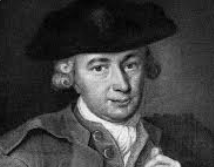
Not only the entire ability to think rests on language... but language is also the crux of the misunderstanding of reason with itself.
▼
Source
Sämtliche Werken, ed. Josef Nadler (1949-1957), vol. III, p. 286.
3 months 3 weeks ago
[...] As for others whose lives are not so ordered, he reminds himself constantly of the characters they exhibit daily and nightly at home and abroad, and of the sort of society they frequent; and the approval of such men, who do not even stand well in their own eyes has no value for him.
▼
Source
III. 4, trans. Maxwell Staniforth
3 months 3 weeks ago
All religions are more or less mixed with superstitions. Man is not reasonable enough to content himself with a pure and sensible religion, worthy of the Deity.
▼
Source
p. 139
3 months 3 weeks ago
Ennui is the echo in us of time tearing itself apart.
3 months 3 weeks ago
Is it not a right glorious thing, and set of things, this that Shakspeare has brought us? For myself, I feel that there is actually a kind of sacredness in the fact of such a man being sent into this Earth.
3 months 3 weeks ago
La vraie générosité envers l'avenir consiste à tout donner au présent.
▼
Source
Real generosity toward the future consists in giving all to the present. | Part 5: Thought at the Meridian (p. 313)
3 months 3 weeks ago
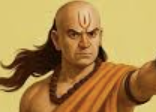
The world's biggest power is the youth and beauty of a woman.
3 months 3 weeks ago
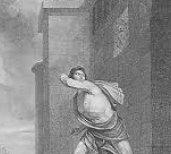
Magic of bounty! all these spirits thy power Hath conjur'd to attend! I know the merchant.
▼
Source
Poet, scene i
3 months 3 weeks ago
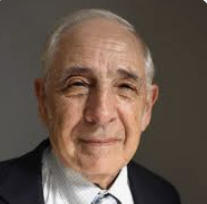
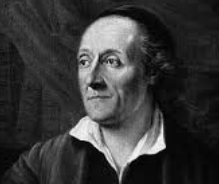
I want to block some common misunderstandings about "understanding": In many of these discussions one finds a lot of fancy footwork about the word "understanding."
3 months 3 weeks ago
The prudent sees only the difficulties, the bold only the advantages, of a great enterprise; the hero sees both, diminishes those, makes these preponderate, and conquers.
▼
Source
No. 390
3 months 3 weeks ago
You have power over your mind – not outside events. Realize this, and you will find strength.
▼
Source
Not from any known translation of the Meditations. Quote is attributed to Marcus Aurelius, e.g. in the 2006 book: [https://books.google.com/books?id=zc0_hcEwRnIC&q=%22you+have+power+over+your+mind+not+outside+events%22&dq=%22you+have+power+over+your+mind+
3 months 3 weeks ago
I disapprove of what you say, but I will defend to the death your right to say it.
▼
Source
Variants: | Monsieur l'abbé, I detest what you write, but I would give my life to make it possible for you to continue to write. | I wholly disapprove of what you say—and will defend to the death your right to say it. | Though these words are regularly at
3 months 3 weeks ago
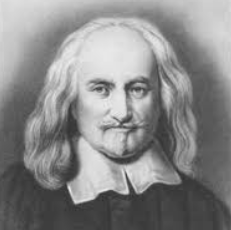
As incompetent in life as in death, I loathe myself and in this loathing I dream of another life, another death. And for having sought to be a sage such as never was, I am only a madman among the mad.
3 months 3 weeks ago
But all this language gotten, and augmented by Adam and his posterity, was again lost at the tower of Babel, when by the hand of God, every man was stricken for his rebellion, with an oblivion of his former language.
▼
Source
The First Part, Chapter 4, p. 12 (See also: Julian Jaynes)
3 months 3 weeks ago
It depends on what we read, after all manner of Professors have done their best for us.
3 months 3 weeks ago
What was also unusual for Americans was that so many of the revered figures were writers and intellectuals. This is perhaps because to a very large extent theirs was a movement from the universities. Perhaps the single most influential writer for young people in the sixties was Algerian-born French Nobel Prize laureate Albert Camus, who died in 1960 in an automobile crash at age forty-seven, just as what should have been his best decade was beginning. Because of his 1942 essay, “The Myth of Sisyphus,” in which he argued that the human condition was fundamentally absurd, he was often associated with the existential movement. But he refused to consider himself part of that group. He was not a joiner, which is one of the reasons he was more revered than the existentialist and communist Jean-Paul Sartre, even though Sartre lived through and even participated in the sixties student movements. Camus, who worked with the Resistance against the Nazi occupiers of France editing an underground newspaper, Le Combat, often wrote from the perspective of a moral imperative to act. His 1948 novel, The Plague, is about a doctor who risks his life and family to rid his community of a sickness he discovers. In the 1960s, students all over the world read The Plague and interpreted it as a call to activism. Mario Savio’s famous 1964 speech, “There’s a time when the operation of the machine becomes so odious . . . you’ve got to put your bodies upon the gears . . . and you’ve got to make it stop,” sounds like a line from The Plague. “There are times when the only feeling I have is one of mad revolt,” Camus wrote. American civil rights workers read Camus. His books were passed from one volunteer to the next in SNCC. Tom Hayden wrote that he considered Camus to be one of the great influences in his decision to leave journalism and become a student activist. Abbie Hoffman used Camus to explain in part the Yippie! movement, referring to Camus’s words in Notebooks: “The revolution as myth is the definitive revolution.”
▼
Source
Mark Kurlansky, 1968: The Year that Rocked the World (2004), p. 107-08, ISBN 0-345-45581-9

3 months 3 weeks ago
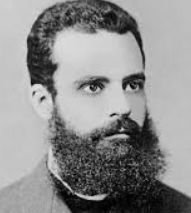
This argument too shows that in truth we know nothing about anything, but every man shares the generally prevailing opinion.
3 months 3 weeks ago
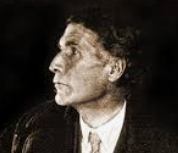
Society is not homogeneous, and those who do not deliberately close their eyes have to recognize that men differ greatly from one another from the physical, moral, and intellectual viewpoints.
▼
Source
p. 281.
3 months 3 weeks ago
"The meaning of culture" is nothing less than the conduct of life itself, fortified, thickened, made more crafty and subtle, by contact with books and with art.
▼
Source
p. 134
3 months 3 weeks ago
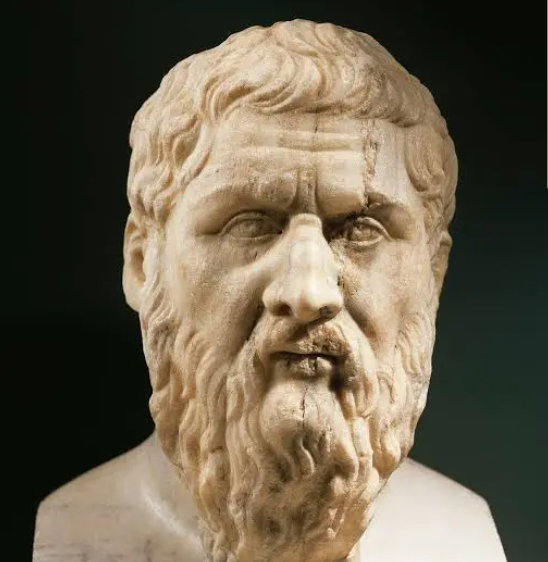
It is difficult to set forth any of the greater ideas, except by the use of examples; for it would seem that each of us knows everything that he knows as if in a dream and then again, when he is as it were awake, knows nothing of it all.
▼
Source
277d
3 months 3 weeks ago
To hope is to contradict the future.
3 months 3 weeks ago
Whatsoever therefore is consequent to a time of Warre, where every man is Enemy to every man; the same is consequent to the time, wherein men live without other security, than what their own strength, and their own invention shall furnish them withall. In such condition, there is no place for Industry; because the fruit thereof is uncertain: and consequently no Culture of the Earth; no Navigation, nor use of the commodities that may be imported by Sea; no commodious Building; no Instruments of moving, and removing things as require much force; no Knowledge of the face of the Earth; no account of Time; no Arts; no Letters; no Society; and which is worst of all, continuall feare, and danger of violent death; And the life of man solitary, poore, nasty, brutish, and short.
▼
Source
The First Part, Chapter 13, p. 62
3 months 3 weeks ago
Such souls are, in these days, getting somewhat out of humour with the world. Your very Byron, in these days, is at least driven mad; flatly refuses fealty to the world. The world with its injustices, its golden brutalities, and dull yellow guineas, is a disgust to such souls: the ray of Heaven that is in them does at least pre-doom them to be very miserable here. Yes:—and yet all misery is faculty misdirected, strength that has not yet found its way. The black whirlwind is mother of the lightning. No smoke, in any sense, but can become flame and radiance! Such soul, once graduated in Heaven's stern University, steps out superior to your guinea.
3 months 3 weeks ago
Seek after the good, and with much toil shall ye find it; the evil turns up of itself without your seeking it.
3 months 3 weeks ago
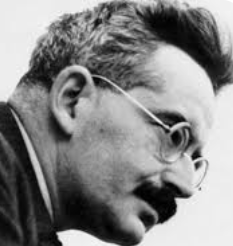
The tradition of the oppressed teaches us that the "state of emergency" in which we live is not the exception but the rule. We must attain to a conception of history that is in keeping with this insight. Then we shall clearly realize that it is our task to bring about a real state of emergency, and this will improve our position in the struggle against Fascism. One reason why Fascism has a chance is that in the name of progress its opponents treat it as a historical norm. The current amazement that the things we are experiencing are "still" possible in the twentieth century is not philosophical. This amazement is not the beginning of knowledge — unless it is the knowledge that the view of history which gives rise to it is untenable.
▼
Source
VIII
3 months 3 weeks ago
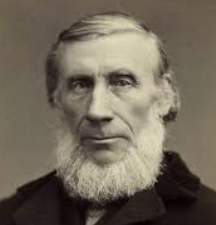
A point highly illustrative of the character of Faraday now comes into view. He gave an account of his discovery of Magneto-electricity in a letter to his friend M. Hachette, of Paris, who communicated the letter to the Academy of Sciences. The letter was translated and published ; and immediately afterwards two distinguished Italian philosophers took up the subject, made numerous experiments, and published their results before the complete memoirs of Faraday had met the public eye. This evidently irritated him. He reprinted the paper of the learned Italians in the Philosophical Magazine accompanied by sharp critical notes from himself. He also wrote a letter dated Dec. 1,1832, to Gay Lussac, who was then one of the editors of the Annales de Chimie in which he analysed the results of the Italian philosophers, pointing out their errors, and' defending himself from what he regarded as imputations on his character. The style of this letter is unexceptionable, for Faraday could not write otherwise than as a gentleman; but the letter shows that had he willed it he could have hit hard. We have heard much of Faraday's gentleness and sweetness and tenderness. It is all true, but it is very incomplete. You cannot resolve a powerful nature into these elements, and Faraday's character would have been less admirable than it was had it not embraced forces and tendencies to which the silky adjectives "gentle" and "tender" would by no means apply. Underneath his sweetness and gentleness was the heat of a volcano. He was a man of excitable and fiery nature; but through high self-discipline he had converted the fire into a central glow and motive power of life, instead of permitting it to waste itself in useless passion. "He that is slow to anger" saith the sage, "is greater than the mighty, and he that ruleth his own spirit than he that taketh a city." Faraday was not slow to anger, but he completely ruled his own spirit, and thus, though he took no cities, he captivated all hearts.
▼
Source
"Points of Character", p. 37.
3 months 3 weeks ago
Socrates: The disgrace begins when a man writes not well, but badly. Phaedrus: Clearly. Socrates: And what is well and what is badly—need we ask Lysias, or any other poet or orator, who ever wrote or will write either a political or any other work, in metre or out of metre, poet or prose writer, to teach us this?
▼
Source
258d | paraphrased in Zen and the Art of Motorcycle Maintenance by Robert M. Pirsig: "And what is good, Phaedrus, and what is not good—need we ask anyone to tell us these things?"
3 months 3 weeks ago
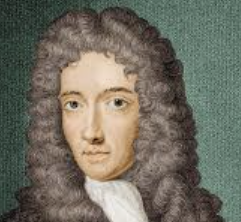
And therefore I think you have done very wisely to make it your business to consider the Phœnomena relating to the present question, which have been afforded by experiments, especially since it might seem injurious to our senses, by whose mediation we acquire so much of the knowledge we have of things corporal, to have recourse to far-fetched and abstracted Ratiocination, to know what are the sensible ingredients of those sensible things that we daily see and handle, and are supposed to have the liberty to untwist (if I may so speak) into the primitive bodies they consist of.
3 months 3 weeks ago
It is an understatement to say that in this society injustices abound: in truth, it is itself the quintessence of injustice.
3 months 3 weeks ago
Power as is really divided, and as dangerously to all purposes, by sharing with another an Indirect Power, as a Direct one.
▼
Source
The Third Part, Chapter 42, p. 315
3 months 3 weeks ago
It is the very joy of man's heart to admire, where he can; nothing so lifts him from all his mean imprisonments, were it but for moments, as true admiration.
CivilSimian.com created by AxiomaticPanic, CivilSimian, Kalokagathia