
3 months 3 weeks ago
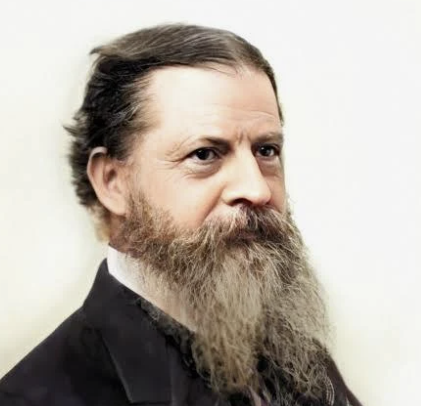
Peirce, to my knowledge, is original and unique in stressing the problem of studying the rules that limit the class of possible theories. Of course, his concept of abduction, like Lorenz’s biological a priori, has a strongly Kantian flavor, and all derive from the rationalist psychology that concerned itself with the forms, the limits, and the principles that provide “the sinews and connections” for human thought, that underlie “that infinite amount of knowledge of which we are not always conscious,” of which Leibnitz spoke. It is therefore quite natural that we should link these developments to the revival of philosophical grammar, which grew from the same soil as an attempt, quite fruitful and legitimate, to explore one basic facet of human intelligence.
▼
Source
Noam Chomsky, Language and Mind (1968), Chap. 2 : Linguistic contributions to the study of mind: present
3 months 3 weeks ago
We should say: 'Causes almost identical take almost the same time to produce almost the same effects.'
3 months 3 weeks ago
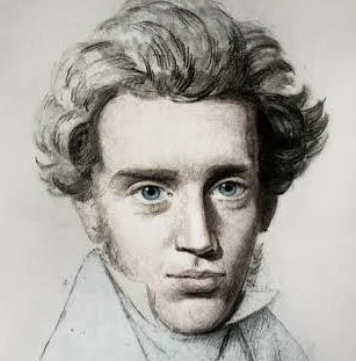
But this I thought was the meaning of life, that the individual shook off the habit of accepting the favors of difference, should that be tempting, steeled himself against its humiliation, should that weigh down on him, in order to find the universal, what is common to all human beings, to concern oneself only with that. Oh! How beautiful to lose oneself in this way. But then I thought again that in the having of this concern the meaning of life was to be concerned for oneself as if the particular individual were all there was. Oh! How beautiful thus to find oneself in the universal! If the universal is the rule then the individual is the paradigm [corrected from demand]; if the universal is the demand then the universal is the fulfillment; if the universal is everything, if the universal says everything, then the particular individual believes that the everything is said about him-him alone. So if the place and context here did not require signature, none would be needed, for again it is infinitely inconsequential who has said it (as though the favored one said it, the one who was wronged being in no position to say it, since after all they all have it in them to do it).
▼
Source
S. Kierkegaard 1846 Journals, Hannay 1996, VII IB200, p. 252
3 months 3 weeks ago
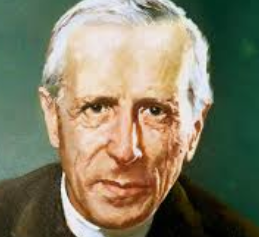
Personally, I stick to my idea that we are watching the birth, more than the death, of a World. The scandal for you, is that England and France should have come to this tragedy because they have sincerely tried the road of peace. But did they not precisely make a mistake on the true meaning of "peace"? Peace cannot mean anything but a HIGHER PROCESS OF CONQUEST. ... The world is bound to belong to its most active elements. ... Just now, the Germans deserve to win because, however bad or mixed is their spirit, they have more spirit than the rest of the world. It is easy to criticize and despise the fifth column. But no spiritual aims or energy will ever succeed, or even deserve to succeed, unless it is able to spread and keep spreading a fifth column.
▼
Source
Letter from Peking (Summer 1940), quoted in The Last European War : September 1939/December 1941 (1976) by John Lukacs, p. 515
3 months 3 weeks ago
A failure is a man who has blundered, but is not able to cash in the experience.

3 months 3 weeks ago
A whole dimension of human activity and passivity has been de-eroticized. The environment from which the individual could obtain pleasure—which he could cathect as gratifying almost as an extended zone of the body—has been rigidly reduced. Consequently, the “universe” of libidinous cathexis is likewise reduced. The effect is a localization and contraction of libido, the reduction of erotic to sexual experience and satisfaction.
▼
Source
p. 73
3 months 3 weeks ago
As the analysis of a substantial composite terminates only in a part which is not a whole, that is, in a simple part, so synthesis terminates only in a whole which is not a part, that is, the world.
3 months 3 weeks ago
An old proverb fetched from the outward and visible world says: "Only the man that works gets the bread." Strangely enough this proverb does not aptly apply in that world to which it expressly belongs. For the outward world is subjected to the law of imperfection, and again and again the experience is repeated that he too who does not work gets the bread, and that he who sleeps gets it more abundantly than the man who works. In the outward world everything is made payable to the bearer, this world is in bondage to the law of indifference, and to him who has the ring, the spirit of the ring is obedient, whether he be Noureddin or Aladdin, and he who has the world's treasure, has it, however he got it.
▼
Source
Problemata: Preliminary Expectoration
3 months 3 weeks ago
It is also the becoming-space of the spoken chain - which has been called temporal or linear; a becoming-space which makes possible both writing and every correspondence between speech and writing, every passage from one to the other.The activity or productivity connoted by the a of différance refers to the generative movement in the play of differences. The latter are neither fallen from the sky nor inscribed once and for all in a closed system, a static structure that a synchronic and taxonomic operation could exhaust. Differences are the effects of transformations, and from this vantage the theme of différance is incompatible with the static, synchronic, taxonomic, ahistoric motifs in the concept of structure.
▼
Source
p. 28
3 months 3 weeks ago
As a result of changes which, over the last century, have modified our empirically based pictures of the world and hence the moral value of many of its elements, the "human religious ideal" inclines to stress certain tendencies and to express itself in terms which seem, at first sight, no longer to coincide with the "christian religious ideal".
▼
Source
Preface, p. 43
3 months 3 weeks ago
Woman's inaptitude for reasoning has not prevented her from arriving at truth; nor has man's ability to reason prevented him from floundering in absurdity.
3 months 3 weeks ago
By virtue of the universal concept, thought attains mastery over the particular cases. However, the most formalized universe of logic still refers to the most general structure of the given, experienced world; the pure form is still that of the content which it formalizes. The idea of formal logic itself is a historical event in the development of the mental and physical instruments for universal control and calculability. In this undertaking man had to create theoretical harmony out of actual discord, to purge thought from contradictions, to hypostatize identifiable and fungible units in the complex process of society and nature. Under the rule of formal logic, the notion of the conflict between essence and appearance is expendable if not meaningless; the material content is neutralized; the principle of identity is separated from the principle of contradiction (contradictions are the fault of incorrect thinking); final causes are removed from the logical order. Well defined in their scope and function, concepts become instruments of prediction and control. Formal logic is thus the first step on the long road to scientific thought
▼
Source
p. 137
3 months 3 weeks ago
It is difficult for the isolated individual to work himself out of the immaturity which has become almost natural for him. He has even become fond of it and for the time being is incapable of employing his own intelligence, because he has never been allowed to make the attempt. Statutes and formulas, these mechanical tools of a serviceable use, or rather misuse, of his natural faculties, are the ankle-chains of a continuous immaturity. Whoever threw it off would make an uncertain jump over the smallest trench because he is not accustomed to such free movement. Therefore there are only a few who have pursued a firm path and have succeeded in escaping from immaturity by their own cultivation of the mind.
3 months 3 weeks ago
A Roman emperor sitting at the table surrounded by his bodyguard is a magnificent sight, but when the reason is fear, the magnificence pales. So also when the individual does not dare stand taciturnly by his word, does not stand freely and confidently on the pedestal of a conscious act, but is surrounded by a host of deliberations before and after that render him incapable of getting his eye on the action.
▼
Source
Two Ages: The Age of Revolution and the Present Age. A Literary Review. By Soren Kierkegaard, 1846 edited and translated by Howard V. Hong and Edna H. Hong 1978 Princeton University Press P. 68
3 months 3 weeks ago
The human features and countenance, although composed of but some ten parts or little more, are so fashioned that among so many thousands of men there are no two in existence who cannot be distinguished from one another.
▼
Source
Book VII, sec. 8.
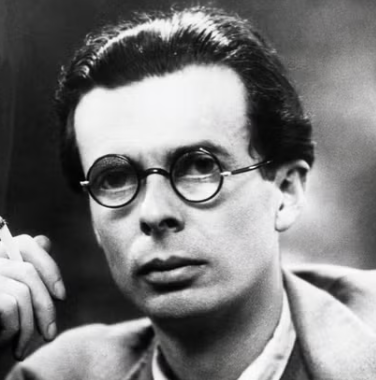
3 months 3 weeks ago
To travel is to discover that everyone is wrong.
▼
Source
[https://archive.org/details/jestingpilatedia0000huxl/page/214/mode/2up?q=To+travel+is+to+discover+that+everyone+is+wrong Part II: Malaya],
3 months 3 weeks ago
Impartiality is a pompous name for indifference, which is an elegant name for ignorance.
▼
Source
The Speaker (15 December 1900)
3 months 3 weeks ago
I have in this treatise followed the mathematical method, if not with all strictness, at least imitatively, not in order, by a display of profundity, to procure a better reception for it, but because I believe such a system to be quite capable of it, and that perfection may in time be obtained by a cleverer hand, if stimulated by this sketch, mathematical investigators of nature should find it not unimportant to treat the metaphysical portion, which anyway cannot be got rid of, as a special fundamental department of general physics, and to bring it into unison with the mathematical doctrine of motion.
▼
Source
Preface, Tr. Bax (1883)
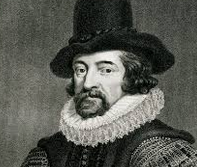
3 months 3 weeks ago
There is no excellent beauty that hath not some strangeness in the proportion.
▼
Source
Of Beauty https://www.authorama.com/essays-of-francis-bacon-43.html
3 months 3 weeks ago
A genius and an Apostle are qualitatively different, they are definitions which each belong in their own spheres: the sphere of immanence, and the sphere of transcendence.
▼
Source
P. 90-91
3 months 3 weeks ago
Is the intellect to be regarded as autonomous and self-sufficient, as pursuing ends of its own, and as judging by standards of its own? or is it to be regarded as the servant of alien interests which impose their ends and standards upon it? The modern tendency has been towards the latter or practical interpretation of the knowing faculties.
3 months 3 weeks ago
Music is an ocean, but the repertory is hardly even a lake; it is a pond.
▼
Source
Interview, Time magazine, December 1957
3 months 3 weeks ago
A change of opinions is almost unknown in an elderly military man.
▼
Source
A Utopia of Usurers (1917)
3 months 3 weeks ago
He felt neither guilt nor distress at the pleasure with which he was now filled by the proximity of this young creature, and when he discovered in himself even physical symptoms of his inclination he did not take fright, but continued cheerfully and serenely to see Nick whenever the ordinary run of his duties suggested it, congratulating himself upon the newly achieved solidity and rational calm of his spiritual life.
▼
Source
The Bell (1958) p. 91
3 months 3 weeks ago
Let us suppose there was a teacher of whom an historical record (or, at least, a widespread belief which is not basically disputable) reports that he was the first to expound publicly a pure and searching religion, comprehensible to the whole world. … Suppose that all he did was done even in the face of a dominant ecclesiastical faith which was onerous and not conducive to moral ends (a faith whose perfunctory worship can serve as a type of all the other faiths, at bottom merely statutory, which were current in the world at the time). Suppose, further, we find that he had made this universal religion of reason the highest and indispensable condition of every religious faith whatsoever … and this without further adding to this faith burdensome new ordinances or wishing to transform acts which he had initiated into peculiar holy practices, required in themselves as being constituent elements of religion. After this description one will not fail to recognize the person who can be referenced, not indeed as the founder of the religion which, free from every dogma, is engraved in all men’s hearts (for it does not have its origin in an arbitrary will), but as the founder of the first true church.
▼
Source
Book IV, Part 1, Section 1, “The Christian religion as a natural religion”
3 months 3 weeks ago
Those who have taken upon them to lay down the law of nature as a thing already searched out and understood, whether they have spoken in simple assurance or professional affectation, have therein done philosophy and the sciences great injury. For as they have been successful in inducing belief, so they have been effective in quenching and stopping inquiry; and have done more harm by spoiling and putting an end to other men's efforts than good by their own. Those on the other hand who have taken a contrary course, and asserted that absolutely nothing can be known — whether it were from hatred of the ancient sophists, or from uncertainty and fluctuation of mind, or even from a kind of fullness of learning, that they fell upon this opinion — have certainly advanced reasons for it that are not to be despised; but yet they have neither started from true principles nor rested in the just conclusion, zeal and affectation having carried them much too far.... Now my method, though hard to practice, is easy to explain; and it is this. I propose to establish progressive stages of certainty. The evidence of the sense, helped and guarded by a certain process of correction, I retain. But the mental operation which follows the act of sense I for the most part reject; and instead of it I open and lay out a new and certain path for the mind to proceed in, starting directly from the simple sensuous perception.
3 months 3 weeks ago
There is no one at the Communion table who retains against you even the least of your sins, no one, unless you yourself do it. So cast them away from yourself, and the recollection of them, lest in it your retain them; and cast the recollection of your having cast your sins away, lest in it you retain them. P. 170
3 months 3 weeks ago
We live in an age of artificial scarcity, maintained by ignorance and fear. The government has been paying farmers not to grow food for fifty years--while millions starve. Labor unions, business and government conspire to hold back the Microprocessor Revolution--because none of them know how to deal with the massive unemployment it will cause. (Fuller's books could tell them.) The utilities advertise continually that "solar power is at least forty years in the future" when my friend Karl Hess, and hundreds of others, already live in largely solar-powered houses. These propaganda advertisements are just a delaying action, because the utilities still haven't figured out how to put a meter between us and the sun.
▼
Source
Right Where You Are Sitting Now: Further Tales of the Illuminati. Berkeley, CA: Ronin Pub., 1993. p. 144.[http://books.google.com/books?id=ee8W8jQIQBQC&pg=PA144]
3 months 3 weeks ago
I met, not long ago, a young man who aspired to become a novelist. Knowing that I was in the profession, he asked me to tell him how he should set to work to realize his ambition. I did my best to explain. 'The first thing,' I said, 'is to buy quite a lot of paper, a bottle of ink, and a pen. After that you merely have to write.'
▼
Source
"Sermons in Cats"
3 months 3 weeks ago
Let me explain a little: Certain things are bad so far as they go, such as pain, and no one, not even a lunatic, calls a tooth-ache good in itself; but a knife which cuts clumsily and with difficulty is called a bad knife, which it certainly is not. It is only not so good as other knives to which men have grown accustomed. A knife is never bad except on such rare occasions as that in which it is neatly and scientifically planted in the middle of one's back. The coarsest and bluntest knife which ever broke a pencil into pieces instead of sharpening it is a good thing in so far as it is a knife. It would have appeared a miracle in the Stone Age. What we call a bad knife is a good knife not good enough for us; what we call a bad hat is a good hat not good enough for us; what we call bad cookery is good cookery not good enough for us; what we call a bad civilization is a good civilization not good enough for us. We choose to call the great mass of the history of mankind bad, not because it is bad, but because we are better. This is palpably an unfair principle. Ivory may not be so white as snow, but the whole Arctic continent does not make ivory black.
▼
Source
"Introduction"
3 months 3 weeks ago
We know that the real lesson to be taught is that the human person is precious and unique; but we seem unable to set it forth except in terms of ideology and abstraction.
▼
Source
Ch. 10, p. 148 (the concluding sentence of the book)
3 months 3 weeks ago
The child must be brought up free (that he allow others to be free). He must learn to endure the restraint to which freedom subjects itself for its own preservation (experience no subordination to his command). Thus he must be disciplined. This precedes instruction. Training must continue without interruption. He must learn to do without things and to be cheerful about it. He must not be obliged to dissimulate, he must acquire immediate horror of lies, must learn so to respect the rights of men that they become an insurmountable wall for him. His instruction must be more negative. He must not learn religion before he knows morality. He must be refined, but not spoiled (pampered). He must learn to speak frankly, and must assume no false shame. Before adolescence he must not learn fine manners ; thoroughness is the chief thing. Thus he is crude longer, but earlier useful and capable.
▼
Source
Part III : Selection on Education from Kant's other Writings, Ch. I Pedagogical Fragments, # 3
3 months 3 weeks ago
Let men learn (as we have said above) the difference that exists between the idols of the human mind, and the ideas of the Divine mind. The former are mere arbitrary abstractions; the latter the true marks of the Creator on his creatures, as they are imprinted on, and defined in matter, by true and exquisite touches. Truth, therefore, and utility are here perfectly identical.
▼
Source
Aphorism 124
3 months 3 weeks ago
In the New Testament sense, to be a Christian is, in an upward sense, as different from being a man as, in a downward sense, to be a man is different from being a beast. A Christian in the sense of the New Testament, although he stands suffering in the midst of life's reality, has yet become completely a stranger to this life; in the words of the Scripture and also of the Collects (which still are read-O bloody satire!-by the sort of priests we now have, and in the ears of the sort of Christians that now live) he is a stranger and a pilgrim-just think, for example of the late Bishop Mynster intoning, “We are strangers and pilgrims in this world”! A Christian in the New Testament sense is literally a stranger and a pilgrim, he feels himself a stranger, and everyone involuntarily feels that this man is a stranger to him.
▼
Source
Attack Upon Christianity, The Instant, No. 7, Søren Kierkegaard, 1854-1855, Walter Lowrie 1944, 1968
3 months 3 weeks ago
Animals outline their territories with their excretions, humans outline their territories by ink excretions on paper.
▼
Source
Ch. 4 : The Anal Emotional Territiorial Circuit, p. 68
3 months 3 weeks ago
In regard to man's final end, all the higher religions are in complete agreement. The purpose of human life is the discovery of Truth, the unitive knowledge of the Godhead. The degree to which this unitive knowledge is achieved here on earth determines the degree to which it will be enjoyed in the posthumous state. Contemplation of truth is the end, action the means.
3 months 3 weeks ago
We are then able to answer in some manner the question, "Why have we no great men?" We have no great men chiefly because we are always looking for them. We are connoisseurs of greatness, and connoisseurs can never be great; we are fastidious, that is, we are small. When Diogenes went about with a lantern looking for an honest man, I am afraid he had very little time to be honest himself. And when anybody goes about on his hands and knees looking for a great man to worship, he is making sure that one man at any rate shall not be great.
▼
Source
Ch 1: "The Dickens Period"
3 months 3 weeks ago
I should liken Kant to a man at a ball, who all evening has been carrying on a love affair with a masked beauty in the vain hope of making a conquest, when at last she throws off her mask and reveals herself to be his wife.
▼
Source
Arthur Schopenhauer, On the Basis of Morality (1840)
3 months 3 weeks ago
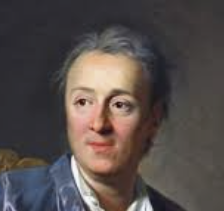
The more man ascends through the past, and the more he launches into the future, the greater he will be, and all these philosophers and ministers and truth-telling men who have fallen victims to the stupidity of nations, the atrocities of priests, the fury of tyrants, what consolation was left for them in death? This: That prejudice would pass, and that posterity would pour out the vial of ignominy upon their enemies. O Posterity! Holy and sacred stay of the unhappy and the oppressed; thou who art just, thou who art incorruptible, thou who findest the good man, who unmaskest the hypocrite, who breakest down the tyrant, may thy sure faith, thy consoling faith never, never abandon me!
▼
Source
As quoted in "Diderot" in The Great Infidels (1881) by Robert Green Ingersoll; The Works of Robert G. Ingersoll Vol. III (1900), p. 367
3 months 3 weeks ago
Logic is the last scientific ingredient of Philosophy; its extraction leaves behind only a confusion of non-scientific, pseudo problems.
▼
Source
p. 22
3 months 3 weeks ago
We can pool information about experiences, but never the experiences themselves. From family to nation, every human group is a society of island universes.
▼
Source
Page 159
3 months 3 weeks ago
We have passed the age of the demagogue, the man who has little to say and says it loud. We have come to the age of the mystagogue or don, the man who has nothing to say, but says it softly and impressively in an indistinct whisper.
▼
Source
"The Philosopher"
3 months 3 weeks ago
The following general definition of an animal: a system of different organic molecules that have combined with one another, under the impulsion of a sensation similar to an obtuse and muffled sense of touch given to them by the creator of matter as a whole, until each one of them has found the most suitable position for it shape and comfort.
▼
Source
No. 51

3 months 3 weeks ago
In its most general form, confinement was explained, or at least justified, by a will to avoid scandal. It thereby signalled an important change in the consciousness of evil. The Renaissance had let unreason in all its forms come out into the light of day, as public exposure gave evil the chance to redeem itself and to serve as an exemplum.
▼
Source
Part One: 5. The Insane
3 months 3 weeks ago
Kirk was an artist, a visionary, almost a prophet.
▼
Source
David Frum, “Russell Kirk” in The New Criterion (1994:16)
3 months 3 weeks ago
It is a political axiom that power follows property.
▼
Source
Chapter 12 (p. 113)
3 months 3 weeks ago
My friends, we will not go again or ape an ancient rage,Or stretch the folly of our youth to be the shame of age,
▼
Source
Ch. XXI: "The Road to Roundabout" ("The Rolling English Road", l. 19)
3 months 3 weeks ago
The principle itself of dogmatic religion, dogmatic morality, dogmatic philosophy, is what requires to be rooted out; not any particular manifestation of that principle. ¶ The very corner-stone of an education intended to form great minds, must be the recognition of the principle, that the object is to call forth the greatest possible quantity of intellectual power, and to inspire the intensest love of truth: and this without a particle of regard to the results to which the exercise of that power may lead, even though it should conduct the pupil to opinions diametrically opposite to those of his teachers. We say this, not because we think opinions unimportant, but because of the immense importance which we attach to them; for in proportion to the degree of intellectual power and love of truth which we succeed in creating, is the certainty that (whatever may happen in any one particular instance) in the aggregate of instances true opinions will be the result; and intellectual power and practical love of truth are alike impossible where the reasoner is shown his conclusions, and informed beforehand that he is expected to arrive at them.
▼
Source
"Civilization," London and Westminster Review (April 1836)
3 months 3 weeks ago
Good music is very close to primitive language.
▼
Source
"Correspondence of Ideas with the Motion of Organs"
3 months 3 weeks ago
The criticism of the reformers was directed not so much at the weakness or cruelty of those in authority, as at a bad economy of power.
▼
Source
Chapter Two, pp.. 79
CivilSimian.com created by AxiomaticPanic, CivilSimian, Kalokagathia