
5 months ago
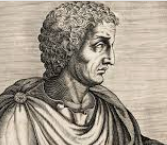
The agricultural population, says Cato, produces the bravest men, the most valiant soldiers, and a class of citizens the least given of all to evil designs…. A bad bargain is always a ground for repentance.
▼
Source
Book XVIII, sec. 26.
5 months ago
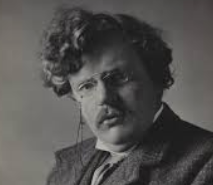
Reason is always a kind of brute force; those who appeal to the head rather than the heart, however pallid and polite, are necessarily men of violence. We speak of 'touching' a man's heart, but we can do nothing to his head but hit it.
▼
Source
Twelve Types (1903) Charles II

5 months ago
Who is, in the classical conception, the subject that comprehends the ontological condition of truth and untruth? It is the master of pure contemplation (theoria), and the master of a practice guided by theoria, i.e., the philosopher-statesman. To be sure, the truth which he knows and expounds is potentially accessible to everyone. Led by the philosopher, the slave in Plato’s Meno is capable of grasping the truth of a geometrical axiom, i.e., a truth beyond change and corruption. But since truth is a state of Being as well as of thought, and since the latter is the expression and manifestation of the former, access to truth remains mere potentiality as long as it is not living in and with the truth. And this mode of existence is closed to the slave — and to anyone who has to spend his life procuring the necessities of life. Consequently, if men no longer had to spend their lives in the realm of necessity, truth and a true human existence would be in a strict and real sense universal. Philosophy envisages the equality of man but, at the same time, it submits to the factual denial of equality. For in the given reality, procurement of the necessities is the life-long job of the majority, and the necessities have to be procured and served so that truth (which is freedom from material necessities) can be. Here, the historical barrier arrests and distorts the quest for truth; the societal division of labor obtains the dignity of an ontological condition. If truth presupposes freedom from toil, and if this freedom is, in the social reality, the prerogative of a minority, then the reality allows such a truth only in approximation and for a privileged group. This state of affairs contradicts the universal character of truth, which defines and “prescribes” not only a theoretical goal, but the best life of man qua man, with respect to the essence of man. For philosophy, the contradiction is insoluble, or else it does not appear as a contradiction because it is the structure of the slave or serf society which this philosophy does not transcend. Thus it leaves history behind, unmastered, and elevates truth safely above the historical reality. There, truth is reserved intact, not as an achievement of heaven or in heaven, but as an achievement of thought — intact because its very notion expresses the insight that those who devote their lives to earning a living are incapable of living a human existence.
▼
Source
pp. 128-130
5 months ago
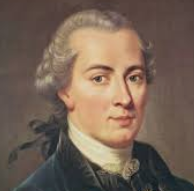
The prejudices of the second species, since they impose upon the intellect by the sensual conditions restricting the mind if it wishes in certain cases to attain to what is intellectual, lurk more deeply. One of them is that which affects knowledge of quantity, the other that affecting knowledge of qualities generally. The former is: every actual multiplicity can be given numerically, and hence, every infinite quantity; the latter, whatever is impossible contradicts itself. In either of them the concept of time, it is true, does not enter into the very notion of the predicate, nor is it attributed as a qualification to the subject. But yet it serves as a means for forming an idea of the predicate, and thus, being a condition, affects the intellectual concept of the subject to the extent that the latter is only attained by its aid.
5 months ago
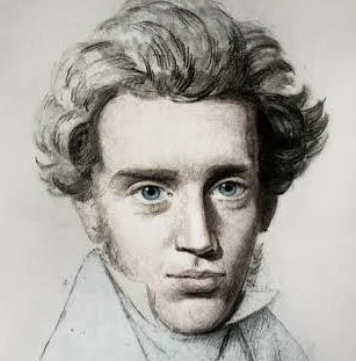
I was brought up in the Christian religion, and although I can scarcely sanction all the improper attempts to gain the emancipation of woman, all paganlike reminiscences also seem foolish to me. My brief and simple opinion is that woman is certainly as good as man-period. Any more discursive elaboration of the difference between the sexes or deliberation on which sex is superior is an idle intellectual occupation for loafers and bachelors.
▼
Source
Stages on Life's Way, 1845 (Hong) p. 124
5 months ago
I have little interest in the "conscientious objector"; but I have the greatest regard for the individual thinker. The former opposes private conviction to public policy. His inflexibility is symptomatic of will and emotion, rather than enlightenment. The latter opposes freedom of thought to uniformity of opinion.
5 months ago
And I will add this point of merely personal experience of humanity: when men have a real explanation they explain it, eagerly and copiously and in common speech, as Huxley freely gave it when he thought he had it. When they have no explanation to offer, they give short dignified replies, disdainful of the ignorance of the multitude.
▼
Source
"Doubts About Darwinism", in The Illustrated London News (17 July 1920)
5 months ago
By 1968 there was another intellectual it seemed everybody wanted to quote: Marxist-Hegelian revisionist revolutionary Herbert Marcuse. His most appealing idea was what he called "the great refusal," the time to say "No, this is not acceptable"—another idea that was expressed in Savio's "odious machine" speech. Marcuse, a naturalized American citizen who had fled the Nazis, was on the faculty of Brandeis when Abbie Hoffman was a student there, and Hoffman was enormously influenced by him, especially by his book Eros and Civilization, which talked about guilt-free physical pleasure and learned about "false fathers, teachers, and heroes." The most talked about Marcuse book of the late sixties, One-Dimensional Man, was published in 1964. It denounced technological society as shallow and conformist and put into the carefully orchestrated discipline of German philosophy all of the sentiments of the 1950s James Dean-style rebels and the 1960s student revolutionaries. The New York Times called Marcuse "the most important philosopher alive." In 1968, at the age of seventy, Marcuse taught at San Diego State, where he could be seen fussing over his rust-colored cat and enjoying the hippos at the zoo, an avuncular white-haired figure whose impact was felt across the globe. The students who forced the University of Rome to close in March of that year carried a banner with three Ms that stood for Marx, Mao, and Marcuse.
▼
Source
Mark Kurlansky, 1968: The Year that Rocked the World (2004), p. 108-109, ISBN 0-345-45581-9
5 months ago
I do not, therefore, need any penetrating acuteness to see what I have to do in order that my volition be morally good. Inexperienced in the course of the world, incapable of being prepared for whatever might come to pass in it, I ask myself only: can you also will that your maxim become a universal law?
5 months ago
Death is a friend of ours; and he that is not ready to entertain him is not at home.
▼
Source
An Essay on Death, published in The Remaines of the Right Honourable Francis Lord Verulam (1648), which may not have been written by Bacon
5 months ago
The mathematical thermology created by Fourier may tempt us to hope that, as he has estimated the temperature of the space in which we move, me may in time ascertain the mean temperature of the heavenly bodies: but I regard this order of facts as for ever excluded from our recognition. We can never learn their internal constitution, nor, in regard to some of them, how heat is absorbed by their atmosphere. We may therefore define Astronomy as the science by which we discover the laws of the geometrical and mechanical phenomena presented by the heavenly bodies.
▼
Source
Book II: Astronomy, Ch. I: General View
5 months ago
Be attentive therefore, according to the instruction of the Gospel, to learn obedience from the lily and the bird. Be not affrighted, do no despair, when thou comparest thy life with these teachers. There is nothing to despair about, for indeed thou shalt learn from them; and the Gospel first comforts thee by telling thee that God is the God of patience, and then it adds: 'Thou shalt learn from the lilies and the birds, learn to be absolutely obedient like the lilies and the birds, learn not to serve two masters; for no man can serve two masters, he must either ... or. P. 343
5 months ago
The task of universal pragmatics is to identify and reconstruct universal conditions of possible mutual understanding.
▼
Source
p. 21
5 months ago
Groups are grammatical fictions; only individuals exist, and each individual is different.
5 months ago
We may not appreciate the fact; but a fact nevertheless it remains: we are living in a Golden Age, the most gilded Golden Age of human history — not only of past history, but of future history. For, as Sir Charles Darwin and many others before him have pointed out, we are living like drunken sailors, like the irresponsible heirs of a millionaire uncle. At an ever accelerating rate we are now squandering the capital of metallic ores and fossil fuels accumulated in the earth's crust during hundreds of millions of years. How long can this spending spree go on? Estimates vary. But all are agreed that within a few centuries or at most a few millennia, Man will have run through his capital and will be compelled to live, for the remaining nine thousand nine hundred and seventy or eighty centuries of his career as Homo sapiens, strictly on income. Sir Charles is of the opinion that Man will successfully make the transition from rich ores to poor ores and even sea water, from coal, oil, uranium and thorium to solar energy and alcohol derived from plants. About as much energy as is now available can be derived from the new sources — but with a far greater expense in man hours, a much larger capital investment in machinery. And the same holds true of the raw materials on which industrial civilization depends. By doing a great deal more work than they are doing now, men will contrive to extract the diluted dregs of the planet's metallic wealth or will fabricate non-metallic substitutes for the elements they have completely used up. In such an event, some human beings will still live fairly well, but not in the style to which we, the squanderers of planetary capital, are accustomed.
▼
Source
"Tomorrow and Tomorrow and Tomorrow" in Adonis and the Alphabet (1956); later in Collected Essays (1959), p. 293
5 months ago
Humility is the luxurious art of reducing ourselves to a point, not to a small thing or a large one, but to a thing with no size at all, so that to it all the cosmic things are what they really are — of immeasurable stature. That the trees are high and the grasses short is a mere accident of our own foot-rules and our own stature. But to the spirit which has stripped off for a moment its own idle temporal standards the grass is an everlasting forest, with dragons for denizens; the stones of the road are as incredible mountains piled one upon the other; the dandelions are like gigantic bonfires illuminating the lands around; and the heath-bells on their stalks are like planets hung in heaven each higher than the other.
▼
Source
"A Defence of Humilities"
5 months ago
All the interests of my reason, speculative as well as practical, combine in the three following questions: 1. What can I know? 2. What ought I to do? 3. What may I hope?
▼
Source
B 832-833
5 months ago
I could not be true and constant to the argument I handle, if I were not willing to go beyond others; but yet not more willing than to have others go beyond me again: which may the better appear by this, that I have propounded my opinions naked and unarmed, not seeking to preoccupate the liberty of men's judgments by confutations.
▼
Source
Book II
5 months ago
"In hidden inwardness all are Christians; who would dare deny this? Anyone who would take it upon himself to deny it surely runs the risk of wanting to play the knower of hearts. So no one can deny it. That everyone is Christian in hidden inwardness is in this way a secretiveness that is almost locked up, so to speak, behind a jammed lock: it is impossible to find out whether all these thousands upon thousands actually are Christians, for they all are that, so it is said, in hidden inwardness. And not only for the Church but for everybody it holds true that one does not pass judgment on hidden and secret things, because one is unable to judge. Should it not, however, be possible to break this secretiveness and have a little disclosure without becoming guilty of being a knower of hearts? Yes, indeed! How so? In this way, that someone quite simply on his own responsibility takes it upon himself to confess Christ in the midst of Christendom. He does not judge a single person, far from it, but many will disclose themselves by the way they judge him. He does not claim to be a better Christian than others, no, far from it; on the contrary, to the others he makes the admission that they undoubtedly are better Christians than he, they who keep it hidden out of religious fear of winning honor and esteem, whereas he, poor simpleton that he is, on his own behalf is so afraid that it might prove to be shadowboxing with such an extreme Christianity, and therefore he holds to the old Christianity of confessing Christ. Therefore he does not inform against any of the others, that they are not Christians; far from it, he informs only against himself, that he is such a poor simpleton. Nevertheless the thoughts of many hearts would be disclosed by how they judge this poor simpleton, this imperfect Christian."
▼
Source
p. 220
5 months ago
Most historians merely mention that Bruno was charged with the heresy of teaching Copernican astronomy, but Frances Yates, a historian who specialized in the occult aspects of the scientific revolution, points out that Bruno was charged with 18 heresies and crimes, including the practice of sorcery and organizing secret societies to oppose the Vatican. Yates thinks Bruno may have had a role in the invention of either Rosicrucianism or Freemasonry or both. Bruno's teachings combined the new science of his time with traditional Cabalistic mysticism. He believed in a universe of infinite space with infinite planets, and in a kind of dualistic pantheism, in which the divine is incarnate in every part but always in conflicting forms that both oppose and support each other. Whatever his link with occult secret societies, he influenced Hegel, Marx, theosophy, James Joyce, Timothy Leary, Discordianism, and Dr. Wilhelm Reich.
▼
Source
"Giordano Bruno", p. 95
5 months ago
The film concludes with ... the most nauseatingly luscious, the most penetratingly vulgar mammy song that it has ever been my lot to hear. My flesh crept as the loud speaker poured out those sodden words, the greasy, sagging melody. I felt ashamed of myself for listening to such things, for even being a member of the species to which such things are addressed.
▼
Source
“Silence is Golden,” p. 62
5 months ago
Dickens was the character whom anybody can hurt and nobody can kill.
▼
Source
Ch 3: "The Youth of Dickens"
5 months ago
Perhaps when distant people on other planets pick up some wave-length of ours all they hear is a continuous scream.
▼
Source
The Message to the Planet (1989) p. 509.
5 months ago
[T]his species works intentionally on its own destruction (by war). This, however, does not keep the rational creatures of such a constantly advancing culture, even in the midst of war, from promising to mankind in coming centuries an unequivocal prospect of bliss which will never end.
▼
Source
Kant, Immanuel (1996), page 185
5 months ago
In the same manner as we are cautioned by religion to show our faith by our works we may very properly apply the principle to philosophy, and judge of it by its works; accounting that to be futile which is unproductive, and still more so, if instead of grapes and olives it yield but the thistle and thorns of dispute and contention.
▼
Source
Aphorism 73
5 months ago
If self-knowledge does not lead to knowing oneself before God - well, then there is something to what purely human self-observation says, namely, this self-knowledge leads to a certain emptiness that produces dizziness. Only by being before God can one totally come to oneself in the transparency of soberness. p. 106
5 months ago
If someone wishes to speak in his language about a new kind of entities, he has to introduce a system of new ways of speaking, subject to new rules; we shall call this procedure the construction of a linguistic framework for the new entities in question.
▼
Source
Ch. 2. Linguistic frameworks
5 months ago
A great deal of attention has been paid ... to the technical languages in which men of science do their specialized thinking ... But the colloquial usages of everyday speech, the literary and philosophical dialects in which men do their thinking about the problems of morals, politics, religion and psychology — these have been strangely neglected. We talk about "mere matters of words" in a tone which implies that we regard words as things beneath the notice of a serious-minded person. This is a most unfortunate attitude. For the fact is that words play an enormous part in our lives and are therefore deserving of the closest study. The old idea that words possess magical powers is false; but its falsity is the distortion of a very important truth. Words do have a magical effect — but not in the way that magicians supposed, and not on the objects they were trying to influence. Words are magical in the way they affect the minds of those who use them. "A mere matter of words," we say contemptuously, forgetting that words have power to mould men's thinking, to canalize their feeling, to direct their willing and acting. Conduct and character are largely determined by the nature of the words we currently use to discuss ourselves and the world around us.
▼
Source
Quoted as the opening passage of "BOOK ONE: The Functions of Language" in Language in Thought and Action (1949) by S. I. Hayakawa, p. 3
5 months ago
The whole object of travel is not to set foot on foreign land; it is at last to set foot on one's own country as a foreign land.
▼
Source
Ch. XXXI: "The Riddle of the Ivy"
5 months ago
Kant's view of the nature of what is "actually real" remained unaltered throughout his life. Reality is in itself a system of existing thought-essences brought into a unity by teleological relations that are intuitively thought by the Divine intellect, and by this very act of thought posited as real. ...If one... makes Kant either a sceptical agnostic who teaches the unknowableness of things-in-themselves, or a subjective idealist for whom there is no reality in itself at all, he will never be able to make anything of his philosophy. ...Kant is no forbidding or threatening name, but a kindly disposed patron.It happens that for many the Critique of Pure Reason is the first philosophical book that they seriously attempt to read. ...the book is not well suited to this purpose. Kant himself would not have recommended it. He did not even write the Prolegomena for pupils, but for future teachers of philosophy. ...They presuppose nothing less than an acquaintance with the entire state of philosophy at the time, with dogmatism and scepticism, with Leibniz and Hume....Kant's philosophy is the door to the philosophy of our century, and the door to the Kantian philosophy is the Critique of Pure Reason.
▼
Source
, [https://books.google.com/books?id=tGMdAAAAMAAJ Immanuel Kant: His Life and Doctrine] (1902) Preface to the First Edition (1898) pp. xiii-xv.
5 months ago
The Lord Chancellor was not particularly interested in the writings of the humanists.
▼
Source
Carlos G. Noreña. 1907. Juan Luis Vives. Springer Science & Business Media. 241.
5 months ago
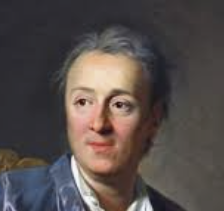
The arbitrary rule of a just and enlightened prince is always bad. His virtues are the most dangerous and the surest form of seduction: they lull a people imperceptibly into the habit of loving, respecting, and serving his successor, whoever that successor may be, no matter how wicked or stupid.
▼
Source
"Refutation of Helvétius" (written 1773-76, published 1875)
5 months ago
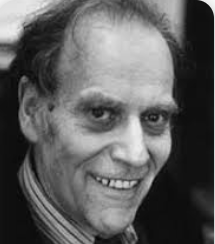
A few weeks before his death, he asked another Columbia philosopher, David Albert, about God. "Why is God making me suffer so much?" he asked. "Just because I don't believe in him?"
▼
Source
The Independent, [http://www.independent.co.uk/news/obituaries/professor-sidney-morgenbesser-550224.html The Independent, Professor Sidney Morgenbesser: Philosopher celebrated for his withering New York Jewish humour], 6 August 2004. The Times, [https://w
5 months ago
The Beatific Vision, Sat Chit Ananda, Being-Awareness-Bliss-for the first time I understood, not on the verbal level, not by inchoate hints or at a distance, but precisely and completely what those prodigious syllables referred to. And then I remembered a passage I had read in one of Suzuki's essays. “What is the Dharma-Body of the Buddha?” ('“the Dharma-Body of the Buddha” is another way of saying Mind, Suchness, the Void, the Godhead.) The question is asked in a Zen monastery by an earnest and bewildered novice. And with the prompt irrelevance of one of the Marx Brothers, the Master answers, “The hedge at the bottom of the garden.” “And the man who realizes this truth,” the novice dubiously inquires, “what, may I ask, is he?” Groucho gives him a whack over the shoulders with his staff and answers, “A golden-haired lion.”
5 months ago
Are they clinging to their crosses?
▼
Source
Antichrist, or the Reunion of Christendom
5 months ago
The good of the people must be the great purpose of government. By the laws of nature and of reason, the governors are invested with power to that end. And the greatest good of the people is liberty. It is to the state what health is to the individual.
▼
Source
Article on Government

5 months ago
The constitution of madness as mental illness, at the end of the eighteenth century, bears witness to a rupture in a dialogue, gives the separation as already enacted, and expels from the memory all those imperfect words, of no fixed syntax, spoken falteringly, in which the exchange between madness and reason was carried out. The language of psychiatry, which is a monologue by reason about madness, could only have come into existence in such a silence.
▼
Source
Preface to 1961 edition

5 months ago
One day I'll be old, dead, forgotten. And at this very moment, while I'm sitting here thinking these things, a man in a dingy hotel room is thinking, "I will always be here."
▼
Source
Regina to herself, p. 28
5 months ago
The survival of democracy depends on the ability of large numbers of people to make realistic choices in the light of adequate information.
▼
Source
Chapter 6 (p. 47)
5 months ago
I do not ask them to assume the worth of my creed or any creed; and I could wish they did not so often ask me to assume the worth of their worthless, poisonous plutocratic modern society. But if it could be shown, as I think it can, that a long historical view and a patient political experience can at last accumulate solid scientific evidence of the vital need of such a vow, then I can conceive no more tremendous tribute than this, to any faith, which made a flaming affirmation from the darkest beginnings, of what the latest enlightenment can only slowly discover in the end.
5 months ago
The blood of Jesus Christ can cover a multitude of sins, it seems to me.
5 months ago
The public execution is to be understood not only as a judicial, but also as a political ritual. It belongs, even in minor cases, to the ceremonies by which power is manifested.
▼
Source
Chapter One, The body of the condemned
5 months ago
The fact that we are human beings is infinitely more important than all the peculiarities that distinguish human beings from one another; it is never the given that confers superiorities: "virtue", as the ancients called it, is defined at the level of "that which depends on us". In both sexes is played out the same drama of the flesh and the spirit, of finitude and transcendence; both are gnawed away by time and laid in wait for by death, they have the same essential need for one another; and they can gain from their liberty the same glory. If they were to taste it, they would no longer be tempted to dispute fallacious privileges, and fraternity between them could then come into existence.
5 months ago
Like a piece of litmus paper, he has always been quick to take the colour of his times.
▼
Source
"Author Profile : Aldous Huxley" in The Observer(27 February 1949; also quoted in The Encarta Dictionary of Quotations, (2000), p. 459
5 months ago
An open mind is really a mark of foolishness, like an open mouth. Mouths and minds were made to shut; they were made to open only in order to shut.
▼
Source
Original quote: | For my friend said that he opened his intellect as the sun opens the fans of a palm tree, opening for opening's sake, opening infinitely for ever. But I said that I opened my intellect as I opened my mouth, in order to shut it again on s
5 months ago
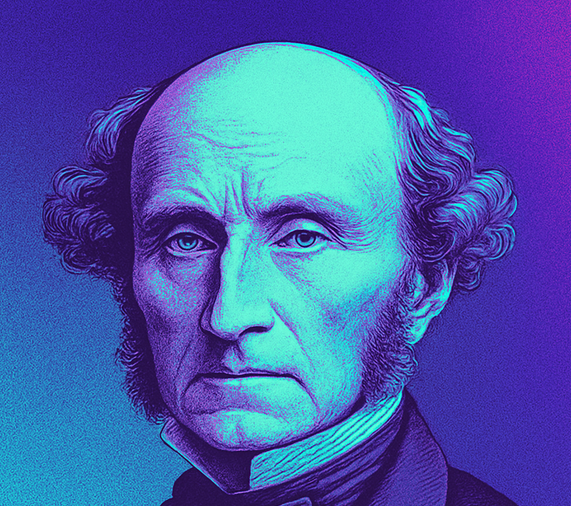
I regard utility as the ultimate appeal on all ethical questions; but it must be utility in the largest sense, grounded on the permanent interests of man as a progressive being.
▼
Source
Ch. 1: Introductory
5 months ago
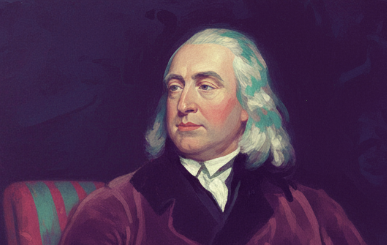
The principle of utility judges any action to be right by the tendency it appears to have to augment or diminish the happiness of the party whose interests are in question... if that party be the community the happiness of the community, if a particular individual, the happiness of that individual.
▼
Source
Introduction (1789 edition)
5 months ago
Today, criminal justice functions and justifies itself only by this perpetual reference to something other than itself, by this unceasing reinscription in non-juridical systems.

5 months ago
The body is a source of endless trouble to us by reason of the mere requirement of food; and is also liable to diseases which overtake and impede us in the search after truth: and by filling us so full of loves, and lusts, and fears, and fancies, and idols, and every sort of folly, prevents our ever having, as people say, so much as a thought.
5 months ago
There are today an increasing number of people whose awareness is, in the strict sense of the phrase, without a focus; and the techniques which have transformed the framework of daily life for such people at such a prodigious pace – I am thinking particularly of the cinema and the radio – are making a most powerful contribution towards this defocalizing process. … The human creature under normal conditions finds his bearings in relation to other people, and also to physical objects, that are not only close to him in space but also linked to him by a feeling of intimacy. Of this feeling of intimacy, I would say that in itself it tends to create a focus for human awareness. One might go farther and speak of a kind of constellation, at once material and spiritual, which under normal conditions assembles itself around each human being. … This kind of constellation around the individual life is, in a great many countries, in process of dissolution.
▼
Source
pp. 146-147
CivilSimian.com created by AxiomaticPanic, CivilSimian, Kalokagathia