
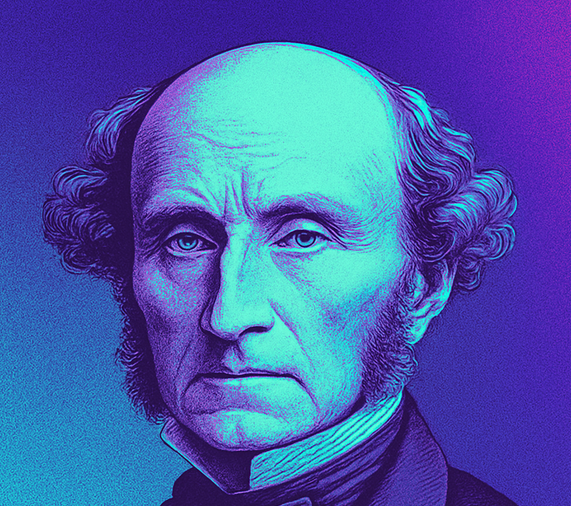
5 months ago
It is better to be a human being dissatisfied than a pig satisfied; better to be Socrates dissatisfied than a fool satisfied. And if the fool, or the pig, are of a different opinion, it is because they only know their own side of the question. The other party to the comparison knows both sides.
▼
Source
Ch. 2

5 months ago
The play Ion is... devoted to the problem of parrhesia... It pursues the question; who has the right, the duty, and the courage to speak the truth?

5 months ago
When I was young, Cebes, I had a prodigious desire to know the department of philosophy which is called Natural Science; this appeared to me to have lofty aims, as being the science which has to do with the causes of things, and which teaches why a thing is, and is created and destroyed; and I always agitated myself with the consideration of such questions as these... I went on to examine the decay of them, and then to the study of the heaven and earth, and at last I concluded that I was wholly incapable of these inquiries... There was a time when I thought that I understood the meaning of greater and less pretty well... that ten is more than eight, and that two cubits are more than one, because two is twice one. I should be far from imagining... that I knew the cause of any of them, indeed I should, for I cannot satisfy myself that when one is added to one, the one to which the addition is made becomes two... nor can I understand how the division of one is the way to make two; for then a different cause would produce the same effect.

5 months ago
Intuition is the positive energy that envy kills when it refuses to see the rainbow in the sky.
5 months ago
Of the evils most liable to attend on any sort of early proficiency, and which often fatally blights its promise, my father most anxiously guarded against. This was self-conceit. He kept me, with extreme vigilance, out of the way of hearing myself praised, or of being led to make self-flattering comparisons between myself and others. From his own intercourse with me I could derive none but a very humble opinion of myself; and the standard of comparison he always held up to me, was not what other people did, but what a man could and ought to do. He completely succeeded in preserving me from the sort of influences he so much dreaded. I was not at all aware that my attainments were anything unusual at my age.
▼
Source
([https://archive.org/details/autobiography01mill/page/32/mode/1up pp. 32–33])
5 months ago
To-day the [Enlightenment] ideal has been changed into a reality; not only in legislation, which is the mere framework of public life, but in the heart of every individual, whatever his ideas may be, and even if he be a reactionary in his ideas, that is to say, even when he attacks and castigates institutions by which those rights are sanctioned.… The sovereignty of the unqualified individual, of the human being as such, generically, has now passed from being a juridical idea or ideal to be a psychological state inherent in the average man. And note this, that when what was before an ideal becomes a component part of reality, it inevitably ceases to be an ideal. The prestige and the magic that are attributes of the ideal are volatilised.
▼
Source
Chap.II: The Rise Of The Historic Level
5 months ago
Give thyself time to learn something new and good, and cease to be whirled around.
▼
Source
II, 7
5 months ago
Two sorts of truth: profound truths recognized by the fact that the opposite is also a profound truth, in contrast to trivialities where opposites are obviously absurd.
▼
Source
As quoted by his son Hans Bohr in "My Father", published in Niels Bohr: His Life and Work (1967), p. 328 | Unsourced variant: The opposite of a correct statement is a false statement. But the opposite of a profound truth may well be another profound truth
5 months ago
You will know that the divine is so great and of such a nature that it sees and hears everything at once, is present everywhere, and is concerned with everything.
▼
Source
Memorabilia I.4.18
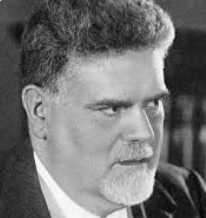
5 months ago
The merit of Fascism was that it courageously and vigorously opposed itself to the prejudices of contemporary liberalism—to affirm that the liberty proposed by liberalism serves neither the people nor the individual.
▼
Source
Orgini e dottrina del fascismo, Rome: Libreria del Littorio, (1929). Origins and Doctrine of Fascism, A. James Gregor, translator and editor, Transaction Publishers (2003) p. 31
5 months ago
The correct statement would be, not that I disliked poetry, but that I was theoretically indifferent to it. I disliked any sentiments in poetry which I should have disliked in prose; and that included a great deal. And I was wholly blind to its place in human culture, as a means of educating the feelings. But I was always personally very susceptible to some kinds of it. ...Long before I had enlarged in any considerable degree, the basis of my intellectual creed, I had obtained in the natural course of my mental progress, poetic culture of the most valuable kind, by means of reverential admiration for the lives and characters of heroic persons; especially the heroes of philosophy. The same inspiring effect which so many of the benefactors of mankind have left on record that they had experienced from Plutarch’s Lives, was produced on me by Plato’s pictures of Socrates, and by some modern biographies, above all by Condorcet's Life of Turgot; a book well calculated to rouse the best sort of enthusiasm, since it contains one of the wisest and noblest of lives, delineated by one of the wisest and noblest of men. The heroic virtue of these glorious representatives of the opinions with which I sympathized, deeply affected me, and I perpetually recurred to them as others do to a favourite poet, when needing to be carried up into the more elevated regions of feeling and thought. I may observe by the way that this book cured me of my sectarian follies. The two or three pages beginning "Il regardait toute secte comme nuisible," and explaining why Turgot always kept himself perfectly distinct from the Encyclopedists, sank deeply into my mind. I left off designating myself and others as Utilitarians, and by the pronoun "we" or any other collective designation, I ceased to afficher, sectarianism. My real inward sectarianism I did not get rid of till later, and much more gradually.
▼
Source
([https://archive.org/details/autobiography01mill/page/112/mode/1up pp. 112-114])
5 months ago
To imagine that Caesar aspired to do something in the way Alexander did it — and this is what almost all historians have believed — is definitely to give up trying to understand him. Caesar is very nearly the opposite of Alexander. …[I]t is not merely a universal kingdom that Caesar has in view. His purpose is a deeper one. He wants a Roman empire which does not live on Rome, but on the periphery, on the provinces, and this implies the complete supersession of the City-State. It implies a State in which the most diverse peoples collaborate, in regard to which all feel solidarity.
▼
Source
Chapter XIV: Who Rules The World?
5 months ago
Men seek retreats for themselves, houses in the country, sea-shores, and mountains; and thou too art wont to desire such things very much. But this is altogether a mark of the most common sort of men, for it is in thy power whenever thou shalt choose to retire into thyself. For nowhere either with more quiet or more freedom from trouble does a man retire than into his own soul.
▼
Source
Variant translation: Nowhere can man find a quieter or more untroubled retreat than in his own soul. | IV, 3.
5 months ago
writing should be dangerous: as dangerous as Socrates. There should be no refuge for the writer either in the Ivory Tower or the Social Church.
▼
Source
Josephine Herbst "The Ruins of Memory" (April 4, 1956) in The Nation

5 months ago
It gives liberty and breadth to thought, to learn to judge our own epoch from the point of view of universal history, history from the point of view of geological periods, geology from the point of view of astronomy.
▼
Source
20 July 1848
5 months ago
The notion that truths external to the mind may be known by intuition or consciousness, independently of observation and experience, is, I am persuaded, in these times, the great intellectual support of false doctrines and bad institutions. By the aid of this theory, every inveterate belief and every intense feeling, of which the origin is not remembered, is enabled to dispense with the obligation of justifying itself by reason, and is erected into its own all-sufficient voucher and justification. There never was such an instrument devised for consecrating all deep-seated prejudices.
▼
Source
([https://archive.org/details/autobiography01mill/page/225/mode/1up pp. 225-226])
5 months ago
It needs to realize that what happens to everyone—bad and good alike—is neither good nor bad.
▼
Source
IV, 39(Hays translation)
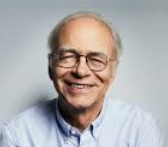
5 months ago
The animals themselves are incapable of demanding their own liberation, or of protesting against their condition with votes, demonstrations, or boycotts. Human beings have the power to continue to oppress other species forever, or until we make this planet unsuitable for living beings. Will our tyranny continue, proving that morality counts for nothing when it clashes with selfinterest, as the most cynical of poets and philosophers have always said? Or will we rise to the challenge and prove our capacity for genuine altruism by ending our ruthless exploitation of the species in our power, not because we are forced to do so by rebels or terrorists, but because we recognize that our position is morally indefensible? The way in which we answer this question depends on the way in which each one of us, individually, answers it.
▼
Source
Ch. 6: Speciesism Today

5 months ago
May it please His Majesty that we fear Him whom we ought to fear, and understand that one venial sin can do us more harm than all hell together; for that is the truth. The evil spirits keep us in terror, because we expose ourselves to the assaults of terror by our attachments to honours, possessions, and pleasures. For then the evil spirits, uniting themselves with us, — we become our own enemies when we love and seek what we ought to hate, — do us great harm. We ourselves put weapons into their hands, that they may assail us; those very weapons with which we should defend ourselves. It is a great pity. But if, for the love of God, we hated all this, and embraced the cross, and set about His service in earnest, Satan would fly away before such realities, as from the plague. He is the friend of lies, and a lie himself. He will have nothing to do with those who walk in the truth. When he sees the understanding of any one obscured, he simply helps to pluck out his eyes; if he sees any one already blind, seeking peace in vanities, — for all the things of this world are so utterly vanity, that they seem to be but the playthings of a child, — he sees at once that such a one is a child; he treats him as a child, and ventures to wrestle with him — not once, but often. May it please our Lord that I be not one of these; and may His Majesty give me grace to take that for peace which is really peace, that for honour which is really honour, and that for delight which is really a delight. Let me never mistake one thing for another — and then I snap my fingers at all the devils, for they shall be afraid of me. I do not understand those terrors which make us cry out, Satan, Satan! when we may say, God, God! and make Satan tremble. Do we not know that he cannot stir without the permission of God? What does it mean? I am really much more afraid of those people who have so great a fear of the devil, than I am of the devil himself. Satan can do me no harm whatever, but they can trouble me very much, particularly if they be confessors. I have spent some years of such great anxiety, that even now I am amazed that I was able to bear it. Blessed be our Lord, who has so effectually helped me!
▼
Source
Ch. XXV. "Divine Locutions. Discussions on That Subject" ¶ 26 & 27 | Variant translation: I do not fear Satan half so much as I fear those who fear him.

5 months ago
We have been twenty years engaged in the two most expensive wars that Europe ever saw. The whole burthen of this charge has lain upon the landed interest during the whole time. The men of estates have, generally speaking, neither served in the fleets nor armies, nor meddled in the public funds, and management of the treasure.A new interest has been created out of their fortunes, and a sort of property, which was not known twenty years ago, is now encreased to be almost equal to the terra firma of our island. The consequences of all this is, that the landed men are become poor and dispirited. They either abandon all thoughts of the publick, turn arrant farmers, and improve the estates they have left: or else they seek to repair their shattered fortunes by listing at court, or under the heads of partys. In the mean while those men are become their masters, who formerly would with joy have been their servants.
▼
Source
Letter to Lord Orrery (9 July 1709), quoted in 'The Letters of Henry St. John to the Earl of Orrery, 1709–1711', ed. H. T. Dickinson, Camden Miscellany, Vol. XXVI (1975), p. 146
5 months ago
As increased industrial efficiency makes it possible to procure the means of livelihood with less labor, the energies of the industrious members of the community are bent to the compassing of a higher result in conspicuous expenditure, rather than slackened to a more comfortable pace. ...this want ...is indefinitely expansible, after the manner commonly imputed in economic theory to higher or spiritual wants. It is owing chiefly to the presence of this element in the standard of living that J. S. Mill was able to say that "hitherto it is questionable if all the mechanical inventions yet made have lightened the day's toil of any human being."
▼
Source
Thorstein Veblen, The Theory of the Leisure Class: An Economic Study of Institutions (1899)
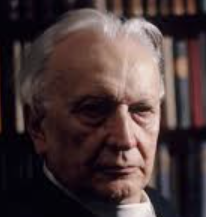
5 months ago
The 'public' is a phantom, the phantom of an opinion supposed to exist in a vast number of persons who have no effective interrelation and though the opinion is not effectively present in the units. Such an opinion is spoken of as 'public opinion,' a fiction which is appealed to by individuals and by groups as supporting their special views. It is impalpable, illusory, transient; "'tis here, 'tis there, 'tis gone"; a nullity which can nevertheless for a moment endow the multitude with power to uplift or destroy.
5 months ago
...be tolerant with others and strict with yourself. Remember, nothing belongs to you but your flesh and blood—and nothing else is under your control. (Hays translation)
▼
Source
V, 33
5 months ago
Some of Singer's critics call him a Nazi and compare his proposals to Hitler's schemes for eliminating the unwanted, the unfit and the disabled. But...Singer is no Hitler. He doesn't want state-sponsored killings. Rather, he wants the decision to kill to be made by you and me. Instead of government-conducted genocide, Singer favors free-market homicide.
▼
Source
Dinesh D'Souza, [http://townhall.com/columnists/dineshdsouza/2008/05/12/atheism_and_child_murder/page/full "Atheism and Child Murder," in Townhall (12 May 2008)].
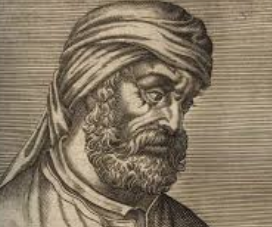
5 months ago
What indeed has Athens to do with Jerusalem? (Quid ergo Athenae Hierosolymis?)
5 months ago
Among many reasons which determine me to prefer monarchy to every form of government, this is a principal one. When monarchy is the essential form, it may be more easily and more usefully tempered with aristocracy or democracy, or both, than either of them, when they are the essential forms, can be tempered with monarchy. It seems to me, that the introduction of a real permanent monarchical power, or any thing more than the pageantry of it, into either of these, must destroy them and extinguish them, as a great light extinguishes a less. Where it may easily be shewn, and the true form of our government will demonstrate, without seeking any other example, that very considerable aristocratical and democratical powers may be grafted on a monarchical stock, without diminishing the lustre, or restraining the power and authority of the prince, enough to alter in any degree the essential form.
▼
Source
pp. 92-93
5 months ago
Retire into thyself. The rational principle which rules has this nature, that it is content with itself when it does what is just, and so secures tranquility.
▼
Source
VII, 28

5 months ago
The weakest living creature, by concentrating his powers on a single object, can accomplish something. The strongest, by dispensing his over many, may fail to accomplish anything. The drop, by continually falling, bores its passage through the hardest rock. The hasty torrent rushes over it with hideous uproar, and leaves no trace behind.
▼
Source
The life of Friedrich Schiller: Comprehending an examination of his works (1825).
5 months ago
If I had to lay bets, my bet would be that everything is going to go to hell, but, you know, what else have we got except hope?
▼
Source
"Richard Rorty Interviewed by Gideon Lewis-Kraus." The Believer, June 2003.
5 months ago
Both (are) brethren, both fellow servants, no difference of spirit or of flesh; nay, (they are) truly “two in one flesh.” Where the flesh is one, one is the spirit too. Together they pray, together prostrate themselves, together perform their fasts; mutually teaching, mutually exhorting, mutually sustaining. Equally (are they) both (found) in the Church of God; equally at the banquet of God; equally in straits, in persecutions, in refreshments. Neither hides (ought) from the other; neither shuns the other; neither is troublesome to the other. The sick is visited, the indigent relieved, with freedom. Alms (are given) without (danger of ensuing) torment; sacrifices (attended) without scruple; daily diligence (discharged) without impediment: (there is) no stealthy signing, no trembling greeting, no mute benediction. Between the two echo psalms and hymns; and they mutually challenge each other which shall better chant to their Lord. Such things when Christ sees and hears, He joys. To these He sends His own peace. Where two (are), there withal (is) He Himself. Where He (is), there the Evil One is not.
▼
Source
To His Wife - Book 2, Chapter VIII.—Arguments Drawn Even from Heathenish Laws to Discountenance Marriage with Unbelievers. The Happiness of Union Between Partners in the Faith Enlarged on in Conclusion.
5 months ago
The pioneering practitioners of the new science knew that they were producing a new kind of knowledge and so they declared this newness in the titles of their books and articles. Thus we have Galileo's Two New Sciences, Boyle's New Experiments, Kepler's New Astronomy, and Tartaglia's New Science. When Ben Jonson presented a masque entitled "News from the New World," his new world was not the newly found continent of North America, but the new world of science, the world revealed by the telescope of Galileo.
5 months ago
To change your mind and to follow him who sets you right is to be nonetheless the free agent that you were before.
▼
Source
Remember that to change thy opinion and to follow him who corrects thy error is as consistent with freedom as it is to persist in thy error. (Long translation) | VIII, 16
5 months ago
There is endless merit in a man's knowing when to have done.
▼
Source
Dr. Francia (1845).

5 months ago
As for rosemarie, I lett it run alle over my garden walls,not onlie because my bees love it,but because 'tis the herb sacred to remembrance and therefore to friendship,whence a sprig of it hath a dumb language that maketh ye chosen emblem at our funeral wakes and in our buriall grounds.
▼
Source
Actually written in 1852 by Anne Manning in her fictional novel The Household of St Thomas More, as if a diary entry was made by his daughter Margaret; and so, although written as said by the character Thomas More in the novel by Anne Manning, it was not
5 months ago
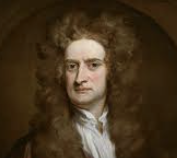
When I wrote my treatise about our System, I had an eye upon such principles as might work with considering men for the belief of a Deity and nothing can rejoice me more than to find it useful for that purpose. But if I have done the public any service this way, 'tis due to nothing but industry and a patient thought.
▼
Source
Newton to Bentley, 10 December 1692 (first letter), The Correspondence of Isaac Newton, ed. H. W. Turnbull (Cambridge: Cambridge University Press, 1961), 3:233. Referenced on p. 383 of Snobelen SD: "[https://isaacnewtonstheology.files.wordpress.com/2013/0
5 months ago
For to love is to give what one is, his very being, in the most absolute, the most brazenly metaphysical, the least phenomenalizable sense of this word.
▼
Source
p 9.
5 months ago
Thinking which displaces, or otherwise defines, the sacred has been called atheistic, and that philosophy which does not place it here or there, like a thing, but at the joining of things and words, will always be exposed to this reproach without ever being touched by it.
▼
Source
p. 46
5 months ago
Think not disdainfully of death, but look on it with favor; for even death is one of the things that Nature wills.
▼
Source
IX, 3
5 months ago
We are no longer instinctively driven to apprehend, and lay to heart, what is Good and Lovely, but rather to inquire, as onlookers, how it is produced, whence it comes, whither it goes. Our favourite Philosophers have no love and no hatred; they stand among us not to do, nor to create anything, but as a sort of Logic mills, to grind out the true causes and effects of all that is done and created.
5 months ago
If there is a sin against life, it consists perhaps not so much in despairing of life as in hoping for another life and in eluding the implacable grandeur of this life.
▼
Source
[http://books.google.com/books?id=N0bNUqDVKJgC&q=%22If+there+is+a+sin+against+life+it+consists+perhaps+not+so+much+in+despairing+of+life+as+in+hoping+for+another+life+and+in+eluding+the+implacable+grandeur+of+this+life%22&pg=PA153#v=onepage "Summer in Alg
5 months ago
I would have thee know that every day is a year contracted, that every year is a day extended. Anticipate the year in the day and lose not a day in the year. Make use of indeterminate agents till thou canst find a determinate one. The many may wish well but one only loves. Circumferences spread but centres contract: so superiors dissolve and inferiors coagulate. Stand not long in the sun nor long in the shade. Where extremes meet, there look for complexions.
5 months ago
If I had stayed for other people to make my tools and things for me, I had never made anything.
▼
Source
This first appears in the Isaac Newton : A Biography (1934), citing unpublished papers by John Conduitt reporting an anecdote of an occasion where Conduitt asked Newton where he obtained the tools to make his reflecting telescope. Newton is said to have l
5 months ago
Human character is never found "to enter into its glory," except through the ordeal of affliction. Its force cannot come forth without the offer of resistance, nor can the grandeur of its free will declare itself, except in the battle of fierce temptation.
▼
Source
Vol. II, p. 126.
5 months ago
Remember that the term Rational was intended to signify a discriminating attention to every several thing and freedom from negligence; and that Equanimity is the voluntary acceptance of things which are assigned to thee by the common nature; and the Magnanimity is the elevation of the intelligent part above the pleasurable or painful sensations of the flesh, and above that poor thing called fame, and death, and all such things. If then, thou maintainest thyself in the possession of these names, without desiring to be called by these names by others, thou wilt be another person and wilt enter into another life.
▼
Source
X, 8
5 months ago
There are no arguments. Can anyone who has reached the limit bother with arguments, causes, effects, moral considerations, and so forth? Of course not. For such a person there are only unmotivated motives for living. On the heights of despair, the passion for the absurd is the only thing that can still throw a demonic light on chaos. When all the current reasons — moral, esthetic, religious, social, and so on — no longer guide one's life, how can one sustain life without succumbing to nothingness? Only by a connection with the absurd, by love of absolute uselessness, loving something which does not have substance but which simulates an illusion of life. I live because the mountains do not laugh and the worms do not sing.
5 months ago
For is not a Symbol ever, to him who has eyes for it, some dimmer or clearer revelation of the God-like?
▼
Source
Bk. III, ch. 3.
5 months ago
We get into the habit of living before acquiring the habit of thinking.
5 months ago
War is a matter not so much of arms as of money,"
▼
Source
Book I, 1.83-[2]
5 months ago
The principal function of anti-Americanism has always been, and still is, to discredit liberalism by discrediting its supreme incarnation. To travesty the United States as a repressive, unjust, racist—almost fascist—society was a way of proclaiming: look what happens when liberalism is implemented!
▼
Source
[http://www.encounterbooks.com/books/anam/anam_intro.html "Introduction"]
5 months ago
Although the formulations of science now offer the most advanced knowledge of nature, men continue to use obsolete forms of thought long discarded by scientific theory. In so far as these obsolete forms are superfluous for science, the fact that they persist violated the principle of the economy of thought, that characteristic trait of the bourgeois temper.
▼
Source
p. 133.
CivilSimian.com created by AxiomaticPanic, CivilSimian, Kalokagathia