

3 months 3 weeks ago
Another of his sayings was, that education was the best viaticum of old age.
▼
Source
Aristotle, 9.

3 months 3 weeks ago
If we demonstrate this moving principle, if we show that matter, far from being as indifferent as it is supposed to be, to movement and to rest, ought to be regarded as an active, as well as a passive substance, what resource can be left to those who have made its essence consist in extension?
▼
Source
Ch. V Concerning the Moving Force of Matter
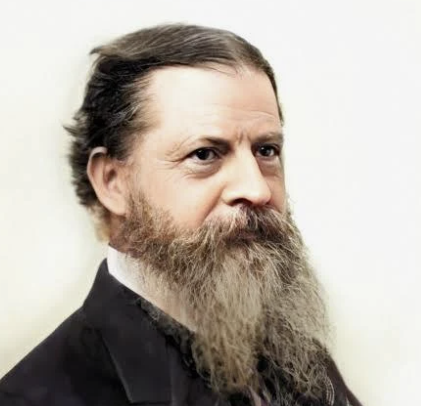
3 months 3 weeks ago
What distinct meaning can attach to saying that an idea in the past in any way affects an idea in the future, from which it is completely detached?

3 months 3 weeks ago
I see the situation of man in the world of planetary technicity not as an inexitricable and inescapable destiny, but I see the task of thought precisely in this, that within its own limits it helps man as such achieve a satisfactory relationship to the essence of technicity. National Socialism did indeed go in this direction. Those people, however, were far too poorly equipped for thought to arrive at a really explicit relationship to what is happening today and has been underway for the past 300 years.
▼
Source
As translated by William Richardson in Risk and Meaning, Nicolas Bouleau (translated by Dené Oglesby and Martin Crossley), ed. Springer, 2011 , page 102.

3 months 3 weeks ago
As to the poorer classes—who always feel the influence of ideas circulating at a given time amid the wealthier classes—it deprived them of the very hope of improvement; it made them skeptical as to the promises of the social reformers; and to this day the most advanced reformers entertain doubts as to the possibility of satisfying the needs of all; in case there should be a claim for their satisfaction, and a temporary welfare of the labourers resulted in a sudden increase in population.
3 months 3 weeks ago
Xenophanes was the first person who asserted... that the soul is a spirit.
▼
Source
Xenophanes, 3.

3 months 3 weeks ago
The will is a unity of two different aspects or moments: first, the individual’s ability to abstract from every specific condition and, by negating it, to return to the absolute liberty of the pure ego; secondly, the individual’s act of freely adopting a concrete condition, freely affirming his existence as a particular, limited ego. P. 185
3 months 3 weeks ago
Man's preeminent advantage is his organism. ...Only through nature do we have any good qualities; to her we owe all that we are.
3 months 3 weeks ago
Were the ends of a person already explicit, there would be no room for development, for growth, for life; and consequently there would be no personality. The mere carrying out of predetermined purposes is mechanical. This remark has an application to the philosophy of religion. It is that genuine evolutionary philosophy, that is, one that makes the principle of growth a primordial element of the universe, is so far from being antagonistic to the idea of a personal creator, that it is really inseparable from that idea; while a necessitarian religion is in an altogether false position and is destined to become disintegrated. But a pseudo-evolutionism which enthrones mechanical law above the principle of growth is at once scientifically unsatisfactory, as giving no possible hint of how the universe has come about, and hostile to all hopes of personal relations to God.
3 months 3 weeks ago
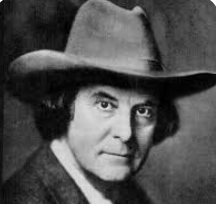
Every time people cite a principle of theoretical physics in support of a metaphysical doctrine or physical dogma, they commit a mistake, for they attribute to this principle a meaning not its own, an import not belonging to it.
3 months 3 weeks ago
Anyone who idolizes you is going to hate you when he discovers that you are fallible. He never forgives. He has deceived himself, and he blames you for it.
▼
Source
An American Bible (1918) edited by Alice Hubbard
3 months 3 weeks ago
The category “society” itself expressed the acute conflict between the social and political sphere—society as antagonistic to the state. Similarly, “individual,” “class,” “private,” “family” denoted spheres and forces not yet integrated with the established conditions—spheres of tension and contradiction. With the growing integration of industrial society, these categories are losing their critical connotation, and tend to become descriptive, deceptive, or operational terms. An attempt to recapture the critical intent of these categories, and to understand how the intent was cancelled by the social reality, appears from the outset to be regression from a theory joined with historical practice to abstract, speculative thought: from the critique of political economy to philosophy. This ideological character of the critique results from the fact that the analysis is forced to proceed from a position “outside” the positive as well as negative, the productive as well as destructive tendencies in society.
▼
Source
p. xlvi
3 months 3 weeks ago
Every man is fully satisfied that there is such a thing as truth, or he would not ask any question.
▼
Source
Vol. V, par. 211
3 months 3 weeks ago
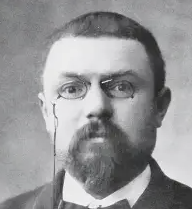
The mathematician is born, not made.
3 months 3 weeks ago
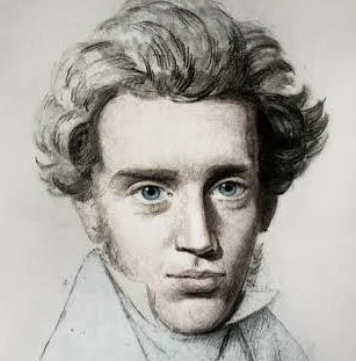
Deep within every human being there still lives the anxiety over the possibility of being alone in the world, forgotten by God, overlooked among the millions and millions in this enormous household. One keeps this anxiety at a distance by looking at the many round about who are related to him as kin and friends, but the anxiety is still there, nevertheless, and one hardly dares think of how he would feel if all this were taken away.
▼
Source
Journals VII 1A 363
3 months 3 weeks ago
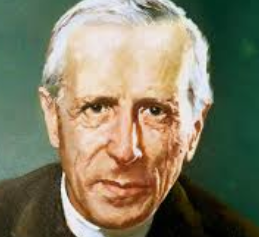
Science will, in all probability, be increasingly impregnated by mysticism.
▼
Source
My Universe (1924)
3 months 3 weeks ago
Life is a compromise between fate and free will.
▼
Source
p. 36
3 months 3 weeks ago
The present stage redefines the possibilities of man and nature in accordance with the new means available for their realization.
▼
Source
p. 65
3 months 3 weeks ago
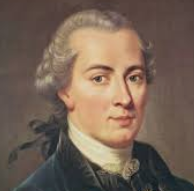
As everybody likes to be honoured, so people imagine that God also wants to be honoured. They forget that the fulfilment of duty towards men is the only honour adequate to him. Thus is formed the conception of a religion of worship, instead of a merely moral religion. … Apart from moral conduct, all that man thinks himself able to do in order to become acceptable to God is mere superstition and religious folly. If once a man has come to the idea of a service which is not purely moral, but is supposed to be agreeable to God himself, or capable of propitiating him, there is little difference between the several ways of serving him. For all these ways are of equal value. … Whether the devotee accomplishes his statutory walk to the church, or whether he undertakes a pilgrimage to the sanctuaries of Loretto and Palestine, whether he repeats his prayer-formulas with his lips, or like the Tibetan, uses a prayer-wheel … is quite indifferent. As the illusion of thinking that a man can justify himself before God in any way by acts of worship is religious superstition, so the illusion that he can obtain this justification by the so-called intercourse with God is religious mysticism (Schwärmerei). Such superstition leads inevitably to sacerdotalism (Pfaffenthum) which will always be found where the essence is sought not in principles of morality, but in statutory commandments, rules of faith and observances.
▼
Source
As quoted in German Thought, From The Seven Years' War To Goethe's Death : Six Lectures (1880) by Karl Hillebrand, p. 208
3 months 3 weeks ago
You wanted God's ideas about what was best for you to coincide with your ideas, but you also wanted him to be the almighty Creator of heaven and earth so that he could properly fulfill your wish. And yet, if he were to share your ideas, he would cease to be the almighty Father.
▼
Source
Søren Kierkegaard, Eighteen Upbuilding Discourses, Hong p. 37

3 months 3 weeks ago
The history of metaphysics, like the history of the West, is the history of these metaphors and metonymies. It’s matrix—If you will pardon me for demonstrating so little and for being elliptical in order to come more quickly to my principle theme—is the determination of Being as presence in all sense of this word.
▼
Source
Structure, Sign and Play
3 months 3 weeks ago
The radical defect in all forms of belief in progress, as they are expressed in positivist credos, is that they do not definitely eliminate death. What is the use of detecting a focus of any sort in the van of evolution if that focus can and must one day disintegrate? To satisfy the ultimate requirements of our action, Omega must be independent of the collapse of the forces with which evolution is woven.
3 months 3 weeks ago
Respectability is the dickey on the bosom of civilization.
3 months 3 weeks ago
The ontological concept of truth is in the centre of a logic which may serve as a model of pre- technological rationality. It is the rationality of a two-dimensional universe of discourse which, contrasts with the of thought and behavior that develop in the execution of the technological project.
▼
Source
p. 130
3 months 3 weeks ago
The spurious axioms of the third kind from conditions proper to the subject whence they are transferred rashly to the object are plentiful, not, as in those of the Second Class, because the only way to the intellectual concept lies through the sensuous data, but because only by aid of the latter can the concept be applied to that which is given by experience, that is, can we know whether something is contained under a certain intellectual concept or not. To this class belongs the threadbare one of the schools: whatever exists contingently does at some time not exist. This spurious principle springs from the poverty of the intellect, having insight frequently into the nominal, rarely into the real, marks of contingency or necessity.
3 months 3 weeks ago
The immediacy of falling in love recognizes but one immediacy that is ebenburtig (of equal standing), and this is a religious immediacy; falling in love is too virginal to recognize any confidant other than God. But the religious is a new immediacy, has reflection in between-otherwise, paganism would actually be religious and Christianity not. That the religious is a new immediacy every person easily understands who is satisfied with following the honest path of ordinary common sense. And although I imagine I have but few readers, I confess nevertheless that I do imagine my readers to be among these, since I am far from wanting to instruct the admired ones, who make systematic discoveries a la Niels Klim, who have left their good skin in order to put on the “real appearance.”
▼
Source
Stages on Life's Way, p. 161-162
3 months 3 weeks ago
Everything is soothed by oil, and this is the reason why divers send out small quantities of it from their mouths, because it smooths every part which is rough.
▼
Source
Book II, sec. 234.
3 months 3 weeks ago
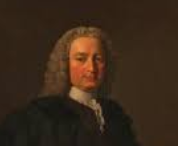
A good man deliberating which of several actions proposed he shall choose, regards and compares the material goodness of them, and then is determined by his moral sense invariably preferring that which appears most conducive to the happiness and virtue of mankind.
▼
Source
Book II, Ch. III, § I
3 months 3 weeks ago
While more conventional thinkers insisted that technology would create more leisure time, Marcuse warned that it would instead imprison people in unoriginal lives devoid of creative thinking. He warned that the though technology appeared to to help the dissenter, it would actually be used to muffle protest. People were being anesthetized into a complacency that was mistaken for happiness. Goods and services were rendering mankind useless and incapable of real thought. There was an increase in media, but it espoused less and less variety of ideas. People in today's world who "surf" through eighty or more television stations, only to find less there than when they had only four choices, might be beginning to grasp Marcuse's vision for a technological age in which people think they have more choices but the choices lack significant differences. In an age of abundance, when technology has made individuals extraordinarily efficient, why do people spend even more time working, and why is so much work mindless instead of stimulating? One of the first Marxists to lose faith in the Soviet system, Marcuse saw the West as also in a state of "unfreedom" and often suggested that revolution may be the only path to true freedom. Marcuse, the aging professor, seemed to warm to the role of guru to the student radicals. He frequently discussed their movements. He warned Abbie Hoffman on "flower power" that "flowers have no power" other than the force of the people that cultivate them—one of the few occasions on which Hoffman had no reply. But as Marcuse freely admitted, many of the young rebels who talked about his ideas had never read him. His work is written in the German dialectic tradition. Marcuse achieved popularity without ever developing an accessible writing style. Luis Gonzalez de Alba, one of the student leaders in Mexico, described finally sitting down to read some Marcuse simply because President Gustavo Díaz Ordez had accused the movement of being influenced by the philosopher: "I opened One-Dimensional Man and got as far as page five. Eros and Civilization had been a terrible bore. And now I had to read another of Marcuse's books, all because Diaz Ordaz had happened to mention the 'philosophers of destruction.'"
▼
Source
Mark Kurlansky, 1968: The Year that Rocked the World (2004), p. 108-109, ISBN 0-345-45581-9
3 months 3 weeks ago
Even if there never have been actions arising from such pure sources, what is at issue here is not whether this or that happened; that, instead, reason by itself and independently of all appearances commands what ought to happen; that, accordingly, actions of which the world has perhaps so far given no example, and whose very practicability might be very much doubted by one who bases everything on experience, are still inflexibly commanded by reason … because … duty … lies, prior to all experience, in the idea of a reason determing the will by means of apriori grounds.
3 months 3 weeks ago
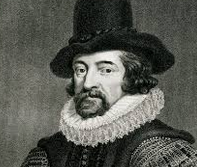
In the system of Copernicus there are found many and great inconveniences; for both the loading of the earth with triple motion is very incommodious, and the separation of the sun from the company of the planets, with which it has so many passions in common, is likewise a difficulty, and the introduction of so much immobility into nature, by representing the sun and stars as immovable, especially being of all bodies the highest and most radiant, and making the moon revolve about the earth in an epicycle, and some other assumptions of his, are the speculations of one who cares not what fictions he introduces into nature, provided his calculations answer. But if it be granted that the earth moves, it would seem more natural to suppose that there is no system at all, but scattered globes (…) than to constitute a system of which the sun is the centre. And this the consent of ages and of antiquity has rather embraced and approved. For the opinion concerning the motion of the earth is not new, but revived from the ancients (…) whereas the opinion that the sun is the centre of the world and immovable is altogether new (…) and was first introduced by Copernicus. (…) But if the earth moves, the stars may either be stationary, as Copernicus thought or, as it is far more probable, and has been suggested by Gilbert, they may revolve each round its own centre in its own place, without any motion of its centre, as the earth itself does (…). But either way, there is no reason why there should not be stars above stars til they go beyond our sight.
▼
Source
Descriptio Globi Intellectualis (1653, written ca. 1612), Chap. 6, as quoted in "Description of the Intellectual Globe," The Works of Francis Bacon (1889), Vol. 4, ed. , , Douglas Denon Heath, [https://books.google.com/books?id=lsILAAAAIAAJ&pg=PA517 pp. 5
3 months 3 weeks ago
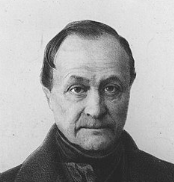
Catholicism minus Christianity.
▼
Source
T. H. Huxley, on the ideas of Comte.
3 months 3 weeks ago
Does a Human Being Have the Right to Let Himself Be Put to Death for the Truth?
3 months 3 weeks ago
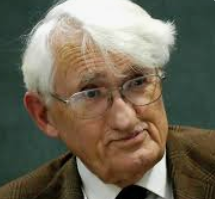
I shall develop the thesis that anyone acting communicatively must, in performing any speech act, raise universal validity claims and suppose that they can be vindicated.
▼
Source
p. 22
3 months 3 weeks ago
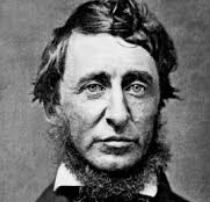
In reviewing the several levels of life which morality defines, we may observe two types of universal value. The lower values m relation to the higher are indispensable. There is no health without satisfaction, no achievement without health, no rational intercourse without achievement, and no true religion except as the perfecting and completing of a rational society. The higher values, on the other hand, are more universal than the lower in that they surpass these in validity, and are entitled to preference. Thus the lower values are ennobled by the higher, while the higher are given body and meaning by the lower. Satisfaction derives dignity from being controlled by the motive of good-will, while the moral kingdom at large derives its wealth, its pertinence to life, and its incentive, from the great manifold of particular interests which it conserves and fosters.
▼
Source
[https://books.google.com/books?id=TjdWAAAAMAAJ The Moral Economy] (1909)
3 months 3 weeks ago
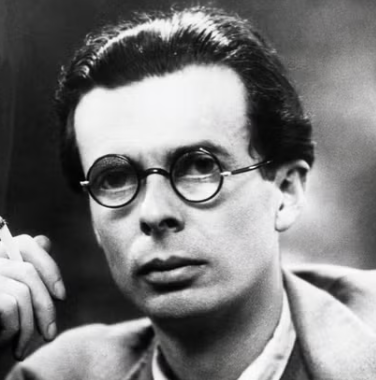
That men do not learn very much from the lessons of history is the most important of all the lessons that history has to teach.
▼
Source
"[http://www.christiebooks.com/ChristieBooksWP/2013/11/a-case-of-voluntary-ignorance-by-aldous-huxley/ A Case of Voluntary Ignorance]" in Collected Essays (1959)
3 months 3 weeks ago
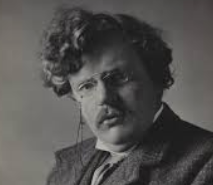
The whole difference between construction and creation is exactly this: that a thing constructed can only be loved after it is constructed; but a thing created is loved before it exists, as the mother can love the unborn child.
▼
Source
Appreciations and Criticisms of the Works of Charles Dickens (1911) Ch. 2: "Pickwick Papers"
3 months 3 weeks ago
The inscrutable wisdom through which we exist is not less worthy of veneration in respect to what it denies us than in respect to what it has granted.
3 months 3 weeks ago
For the inquisition of Final Causes is barren, and like a virgin consecrated to God produces nothing.
▼
Source
Book III, viii
3 months 3 weeks ago
That a woman is presented as a teacher, as a prototype of piety, cannot amaze anyone who knows that piety or godliness is fundamentally womanliness. ... from a woman you learn concern for the one thing needful, from Mary, sister of Lazarus, who sat silent at Christ's feet with her heart's choice: the one thing needful. P. 149
3 months 3 weeks ago
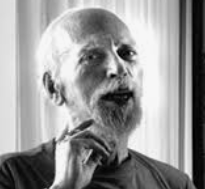
The Western World has been brainwashed by Aristotle for the last 2,500 years. The unconscious, not quite articulate, belief of most Occidentals is that there is one map which adequately represents reality. By sheer good luck, every Occidental thinks he or she has the map that fits. Guerrilla ontology, to me, involves shaking up that certainty. I use what in modern physics is called the "multi-model" approach, which is the idea that there is more than one model to cover a given set of facts. As I've said, novel writing involves learning to think like other people. My novels are written so as to force the reader to see things through different reality grids rather than through a single grid. It's important to abolish the unconscious dogmatism that makes people think their way of looking at reality is the only sane way of viewing the world. My goal is to try to get people into a state of generalized agnosticism, not agnosticism about God alone, but agnosticism about everything. If one can only see things according to one's own belief system, one is destined to become virtually deaf, dumb, and blind. It's only possible to see people when one is able to see the world as others see it. That's what guerrilla ontology is — breaking down this one-model view and giving people a multi-model perspective.
▼
Source
[http://www.rawilsonfans.com/articles/Starship.htm "Robert Anton Wilson: Searching For Cosmic Intelligence" - interview with Jeffrey Elliot (1980)]
3 months 3 weeks ago
To aspire to be superhuman is a most discreditable admission that you lack the guts, the wit, the moderating judgment to be successfully and consummately human.
▼
Source
“Spinoza’s Worm,” p. 75
3 months 3 weeks ago
Half the trouble about the modern man is that he is educated to understand foreign languages and misunderstand foreigners.
▼
Source
[http://books.google.com/books?id=9_m6AAAAIAAJ&q=%22Half+the+trouble+about+the+modern+man+is+that+he+is+educated+to+understand+foreign+languages+and+misunderstand+foreigners%22&pg=PA322#v=onepage The Autobiography of G. K. Chesterton] (1936)
3 months 3 weeks ago
The notion that one will not survive a particular catastrophe is, in general terms, a comfort since it is equivalent to abolishing the catastrophe.
▼
Source
The Message to the Planet (1989) p. 532.
3 months 3 weeks ago
The man of principles has character. Of him we know definitely what to expect. He does not act on the basis of his instinct, but on the basis of his will. Therefore, without being redundant one can classify characteristics according to a person's faculty of desire (what is practical), as a) his nature, or natural talent, b) his temperament, or disposition, and c) his general character, or mode of thinking.
▼
Source
Kant, Immanuel (1996), page 195
3 months 3 weeks ago
It is not possible to run a course aright when the goal itself has not been rightly placed.
▼
Source
Aphorism 81
3 months 3 weeks ago
This is approximately the way Christendom relates to the essentially Christian, the unconditioned. After seventeen, eighteen detours and running all around someone finally has his finite existence assured, and then we receive a sermon about Seek first the kingdom of God. Is this sobriety or is this intoxication? p. 112
3 months 3 weeks ago
Various medical authorities swarm in and out of here predicting I have between two days and two months to live. I think they are guessing. I remain cheerful and unimpressed. I look forward without dogmatic optimism but without dread. I love you all and I deeply implore you to keep the lasagna flying. Please pardon my levity, I don't see how to take death seriously. It seems absurd.
▼
Source
[http://robertantonwilson.blogspot.com/2007/01/do-not-go-gently-into-that-good-night.html "Do Not Go Gently Into That Good Night" final blog entry (6 January 2007)]
3 months 3 weeks ago
More than twenty-five centuries have passed since that which has been called the Perennial Philosophy was first committed to writing; and in the course of those centuries it has found expression, now partial, now complete, now in this form, now in that, again and again. In Vedanta and Hebrew prophecy, in the Tao Teh King and the Platonic dialogues, in the Gospel according to St. John and Mahayana theology, in Plotinus and the Areopagite, among the Persian Sufis and the Christian mystics of the Middle Ages and the Renaissance — the Perennial Philosophy has spoken almost all the languages of Asia and Europe and has made use of the terminology and traditions of every one of the higher religions. But under all this confusion of tongues and myths, of local histories and particularist doctrines, there remains a Highest Common Factor, which is the Perennial Philosophy in what may be called its chemically pure state. This final purity can never, of course, be expressed by any verbal statement of the philosophy, however undogmatic that statement may be, however deliberately syncretistic. The very fact that it is set down at a certain time by a certain writer, using this or that language, automatically imposes a certain sociological and personal bias on the doctrines so formulated. It is only in the act of contemplation when words and even personality are transcended, that the pure state of the Perennial Philosophy can actually be known. The records left by those who have known it in this way make it abundantly clear that all of them, whether Hindu, Buddhist, Hebrew, Taoist, Christian, or Mohammedan, were attempting to describe the same essentially indescribable Fact.
3 months 3 weeks ago
There is no such thing on earth as an uninteresting subject; the only thing that can exist is an uninterested person.
CivilSimian.com created by AxiomaticPanic, CivilSimian, Kalokagathia