
5 months ago
How many people ruin themselves by laying out money on trinkets of frivolous utility? What pleases these lovers of toys is not so much the utility, as the aptness of the machines which are fitted to promote it. All their pockets are stuffed with little conveniences. They contrive new pockets, unknown in the clothes of other people, in order to carry a greater number. They walk about loaded with a multitude of baubles, in weight and sometimes in value not inferior to an ordinary Jew's-box, some of which may sometimes be of some little use, but all of which might at all times be very well spared, and of which the whole utility is certainly not worth the fatigue of bearing the burden.
▼
Source
Chap. I.
5 months ago
How can a rational being be ennobled by anything that is not obtained by its own exertions?
▼
Source
Ch. 3
5 months ago
Normal science, the puzzle-solving activity we have just examined, is a highly cumulative enterprise, eminently successful in its aim, the steady extension of the scope and precision of scientific knowledge. In all these respects it fits with great precision the most usual image of scientific work. Yet one standard product of the scientific enterprise is missing. Normal science does not aim at novelties of fact or theory and, when successful, finds none.
▼
Source
p. 52

5 months ago
The result of toppling tyranny in divided countries is usually civil war and ethnic cleansing.
▼
Source
[http://www.guardian.co.uk/commentisfree/2007/jul/31/comment.politics1 "The death of this crackpot creed is nothing to mourn,"] The Guardian (2007-07-31)
5 months ago
And surely to know what this good is, is of great importance for the conduct of life, for in that case we shall be like archers shooting at a definite mark, and shall be more likely to do what is right. But, if this is the case, we must try to comprehend, in outline at least, what it is and to which of the sciences it belongs.
▼
Source
(Bk I, Ch I)
5 months ago
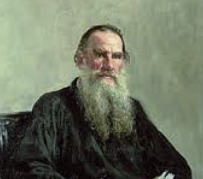
I sit on a man's back, choking him, and making him carry me, and yet assure myself and others that I am very sorry for him and wish to ease his lot by any means possible, except getting off his back.
▼
Source
Writings on Civil Disobedience and Nonviolence (1886)
5 months ago
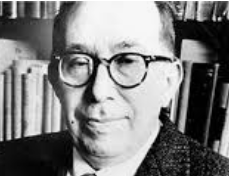
The kingdom is Yours, and You will reign in glory for all eternity. As it is written in Your Torah: "The Lord shall reign for ever and ever." And it is said: " And the Lord shall be King over all the earth: on that day the Lord shall be One, and His name One." No nobler dream was ever dreamt. It is surely nobler to be a victim of the most noble dream than to profit from a sordid reality and to wallow in it. Dream is akin to aspiration. And aspiration is a kind of divination of an enigmatic vision. And an enigmatic vision in the emphatic sense is the perception of the ultimate mystery, of the truth of the ultimate mystery. The truth of the ultimate mystery — the truth that there is an ultimate mystery, that being is radically mysterious — cannot be denied even by the unbelieving Jew of our age. That unbelieving Jew of our age, if he has any education, is ordinarily a positivist, a believer in Science, if not a positivist without any education.
▼
Source
Commenting upon the Aleinu prayer, in "Why We Remain Jews" (1962)

5 months ago
Judged by the evolving nineteenth-century ideology of femininity, which emphasized women’s roles as nurturing mothers and gentle companions and housekeepers for their husbands, Black women were practically anomalies.
5 months ago
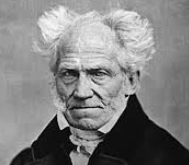
Every man takes the limits of his own field of vision for the limits of the world.
▼
Source
"Psychological Observations"

5 months ago
One disgust, then another — to the point of losing the use of speech and even of the mind...The greatest exploit of my life is to be still alive.
5 months ago
A man must always live by his work, and his wages must at least be sufficient to maintain him. They must even upon most occasions be somewhat more, otherwise it would be impossible for him to bring up a family, and the race of such workmen could not last beyond the first generation.
▼
Source
Chapter VIII, p. 81.
5 months ago
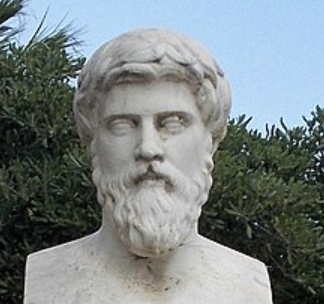
Thrasyllus the Cynic begged a drachm of Antigonus. "That," said he, "is too little for a king to give." "Why, then," said the other, "give me a talent." "And that," said he, "is too much for a Cynic (or, for a dog) to receive."
▼
Source
45 Antigonus I
5 months ago
The repression of liberty that took place in the countries in which Communist regimes were established cannot be adequately explained as a product of backwardness, or of errors in the application of Marxian theory. It was the result of a resolute attempt to realize an Enlightenment utopia - a condition of society in which no serious form of conflict any longer exists.
▼
Source
'Isaiah Berlin: The Value of Decency' (p.99)
5 months ago
What it lies in our power to do, it lies in our power not to do.
▼
Source
Book III, 5
5 months ago
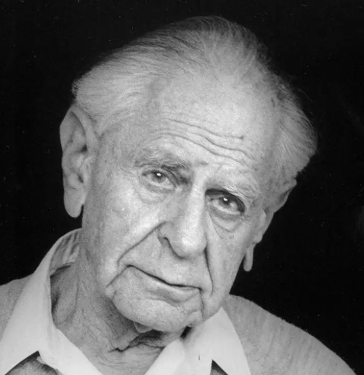
Bold ideas, unjustified anticipations, and speculative thought, are our only means for interpreting nature: our only organon, our only instrument, for grasping her. And we must hazard them to win our prize. Those among us who are unwilling to expose their ideas to the hazard of refutation do not take part in the scientific game.
▼
Source
Ch. 10 "Corroboration, or How a Theory Stands up to Tests", section 85: The Path of Science, p. 280.
5 months ago
The young Princess Bolkónskaya had brought some work in a gold-embroidered velvet bag. Her pretty little upper lip, on which a delicate dark down was just perceptible, was too short for her teeth, but it lifted all the more sweetly, and was especially charming when she occasionally drew it down to meet the lower lip. As is always the case with a thoroughly attractive woman, her defect—the shortness of her upper lip and her half-open mouth—seemed to be her own special and peculiar form of beauty. Everyone brightened at the sight of this pretty young woman, so soon to become a mother, so full of life and health, and carrying her burden so lightly. Old men and dull dispirited young ones who looked at her, after being in her company and talking to her a little while, felt as if they too were becoming, like her, full of life and health. All who talked to her, and at each word saw her bright smile and the constant gleam of her white teeth, thought that they were in a specially amiable mood that day.
▼
Source
Bk. I, Ch. II
5 months ago
The silence of a wise man is always meaningful.
▼
Source
p. 30

5 months ago
The clergy are as like as peas.
▼
Source
"The Preacher", in The Index: A Weekly Paper (Feb. 5, 1880) pp. 62–3. Originally written as a parlor-lecture to some Divinity students, in 1867; afterwards enlarged from earlier writings, and read in its present form at the Divinity Chapel, Cambridge, MA,
5 months ago
The prison industrial complex is much more than the sum of all the jails and prisons in this country. It is a set of symbiotic relationships among correctional communities, transnational corporations, media conglomerates, guards' unions, and legislative and court agendas.
▼
Source
Chapter Six
5 months ago
He speaks to me as no other philosopher does, direct and in his own human voice, a fellow spirit, a penetratingly perceptive friend, with a hand on my elbow and a twinkle in his eye. Although I frequently do not agree with what he says, I always listen to him.
▼
Source
Bryan Magee, in Confessions of a Philosopher: A Personal Journey through Western Philosophy from Plato to Popper (1999), p. 373
5 months ago
When you love someone, you hope — the more closely to be attached — that a catastrophe will strike your beloved.
5 months ago
It is the highest impertinence and presumption, therefore, in kings and ministers, to pretend to watch over the economy of private people, and to restrain their expence, either by sumptuary laws, or by prohibiting the importation of foreign luxuries. They are themselves always, and without any exception, the greatest spendthrifts in the society. Let them look well after their own expence, and they may safely trust private people with theirs. If their own extravagance does not ruin the state, that of their subjects never will.
▼
Source
Chapter III, p. 381.
5 months ago
To one commending an orator for his skill in amplifying petty matters, Agesilaus said, "I do not think that shoemaker a good workman that makes a great shoe for a little foot."
▼
Source
Of Agesilaus the Great
5 months ago
As the Genesis story teaches, knowledge cannot save us from ourselves. If we know more than before, it means only that we have greater scope to enact our fantasies. But – as the Genesis myth also teaches – there is no way we can rid ourselves of what we know. If we try to regain a state of innocence, the result can only be a worse madness. The message of Genesis is that in the most vital areas of human life there can be no progress, only an unending struggle with our own nature.
▼
Source
An Old Chaos: Humanism and Flying Saucers (pp. 79-80)
5 months ago
The aim of art is to represent not the outward appearance of things, but their inward significance.
▼
Source
Source: Will Durant, The Story of Philosophy: The Lives and Opinions of the World's Greatest Philosophers (1926), reprinted in Simon & Schuster/Pocket Books, 1991, ], Ch. II: Aristotle and Greek Science; part VI: Psychology and the Nature of Art: "Artisti
5 months ago
If I were to give a simple formula or recipe for distinguishing between what I consider to be admissible plans for social reform and inadmissible Utopian blueprints, I might say: Work for the elimination of concrete evils rather than for the realization of abstract goods. Do not aim at establishing happiness by political means. Rather aim at the elimination of concrete miseries.
▼
Source
p. 385
5 months ago
Stephan Arkadievich chose neither his attitudes nor his opinions, no, the attitudes and opinions came to him on their own, just as he chose neither the style of his hat nor of his coats but got what people were wearing.
▼
Source
Part 1, Chapter 3
5 months ago
Political philosophy was concerned with the best or just order of society which is by nature best or just everywhere or always, while politics is concerned with the being and well-being of this or that particular society (a polis, a nation, an empire) that is in being at a given place for some time.
5 months ago
If I made laws for Shakers or a school, I should gazette every Saturday all the words they were wont to use in reporting religious experience, as "spiritual life," "God," "soul," "cross," etc., and if they could not find new ones next week, they might remain silent.
▼
Source
June 15, 1844
5 months ago
There are many versions of nationalism. And I've always preferred to identify with the pan-Africanism of W. E. B. Du Bois, who argued that Black people, say Black people in the new world, do have a special responsibility to Africa and other parts of the world, Asia...not by virtue of any biological connection, not by virtue of any racial link, but by virtue of a political identification that is forged. So that it is not about Africa because Africa happens to be populated by Black people. It is about Africa because Africa has been the target of colonialism and imperialism. And what I also like about Du Bois's pan-Africanism is that it is open to notions of Afro-Asian struggles as well, and this is something, I think, that has been concealed in the conventional tellings of history at many historical gatherings that were designated as Afro-Asian solidarity. So I prefer to think about the kind of political approach that is open, that is not racially defined but that is poised against racism.
5 months ago
Never unreal, Pain is a challenge to the universal fiction. What luck to be the only sensation granted a content, if not a meaning!
5 months ago
The violence and injustice of the rulers of mankind is an ancient evil, for which, I am afraid, the nature of human affairs can scarce admit a remedy.
▼
Source
Chapter III, Part II, p. 531.
5 months ago
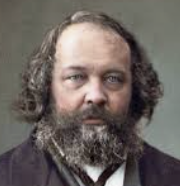
Unity is the great goal toward which humanity moves irresistibly. But it becomes fatal, destructive of the intelligence, the dignity, the well-being of individuals and peoples whenever it is formed without regard to liberty, either by violent means or under the authority of any theological, metaphysical, political, or even economic idea. That patriotism which tends toward unity without regard to liberty is an evil patriotism, always disastrous to the popular and real interests of the country it claims to exalt and serve. Often, without wishing to be so, it is a friend of reaction – an enemy of the revolution, i.e., the emancipation of nations and men.
5 months ago
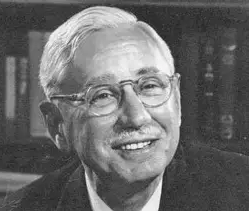
Sir William Hunter, estimated that 40,000,000 of the people of India were seldom or never able to satisfy their hunger. In 1901, 272,000 died of plague introduced from abroad, in 1902, 500,000 died of plague; in 1903, 800,000; in 1904, 1,000,000. We can now understand why there are famines in India. Their cause, in plain terms, is not the absence of food, but the inability of the people to pay for it. It was hoped the railways would solve the problem...the fact that the worst famines have come since the building of the railways...behind all these, as the fundamental source of the terrible famines in India, lies such merciless exploitation, such unbalanced exploitation of goods, and such brutal collection of high taxes in the very midst of famine.... (source: The Case for India - By Will Durant Simon and Schuster, New York. 1930 p.50-53).
5 months ago
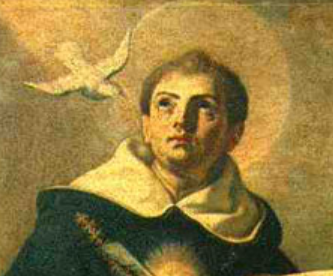
O saving Victim, opening wideThe gate of heaven to man below,Our foes press on from every side,Thine aid supply, Thy strength bestow.
▼
Source
Verbum Supernum Prodiens (hymn for Lauds on Corpus Christi), stanza 5 (O Salutaris Hostia)

5 months ago
The soul is bound to the body by a conversion to the corporeal passions; and again liberated by becoming impassive to the body. That which nature binds, nature also dissolves: and that which the soul binds, the soul likewise dissolves. Nature, indeed, bound the body to the soul; but the soul binds herself to the body. Nature, therefore, liberates the body from the soul; but the soul liberates herself from the body. Hence there is a twofold death; the one, indeed, universally known, in which the body is liberated from the soul; but the other peculiar to philosophers, in which the soul is liberated from the body. Nor does the one entirely follow the other. We do not understand similarly in all things, but in a manner adapted to the essence of each. For intellectual objects we understand intellectually; but those that pertain to soul rationally. We apprehend plants spermatically; but bodies idolically (i.e., as images); and that which is above all these, super-intellectually and super-essentially.
▼
Source
7 - 10
5 months ago
Our aim as scientists is objective truth; more truth, more interesting truth, more intelligible truth. We cannot reasonably aim at certainty. Once we realize that human knowledge is fallible, we realize also that we can never be completely certain that we have not made a mistake.
5 months ago
The positivist philosophy of Comte and the I doctrine deduced from it that humanity is an organism, and Darwin's doctrine of a law of the struggle for existence that is supposed to govern life, with the differentiation of various breeds of people which follows from it, and the anthropology, biology, and sociology of which people are now so fond-all have the same aim. These have all become favourite sciences because they serve to justify the way in which people free themselves from the human obligation to labour, while consuming the fruits of other people's labour.
5 months ago
All ideology hails or interpellates concrete individuals as concrete subjects, by the functioning of the category of the subject. ... ideology ‘acts’ or ‘functions’ in such a way that it ‘recruits’ subjects among the individuals (it recruits them all), or ‘transforms’ the individuals into subjects (it transforms them all) by that very precise operation which I have called interpellation or hailing, and which can be imagined along the lines of the most commonplace everyday police (or other) hailing: ‘Hey, you there!’
▼
Source
p. 117
5 months ago
Genius is always sufficiently the enemy of genius by over influence.
▼
Source
par. 19

5 months ago
'Tis not Wit merely, but a Temper which must form the Well-Bred Man. In the same manner, 'tis not a Head merely, but a Heart and Resolution which must compleat the real Philosopher.
▼
Source
Vol. 2, p. 206; "Miscellany III".
5 months ago
Every religious, moral, economic, ethical, or other antithesis transforms into a political one if it is sufficiently strong to group human beings effectively according to friend and enemy. The political does not reside in the battle itself, which. possesses its own technical, psychological, and military laws, but in the mode of behavior which is determined by this possibility, by clearly evaluating the concrete situation and thereby being able to distinguish correctly the real friend and the real enemy.
5 months ago
I. The subjects of every state ought to contribute towards the support of the government, as nearly as possible, in proportion to their respective abilities, that is, in proportion to the revenue which they respectively enjoy under the protection of the state.
▼
Source
Chapter II, Part II, p. 892.
5 months ago
A person is strong only when he stands upon his own truth, when he speaks and acts from his deepest convictions. Then, whatever the situation he may be in, he always knows what he must say and do. He may fall, but he cannot bring shame upon himself or his cause. If we seek the liberation of the people by means of a lie, we will surely grow confused, go astray, and lose sight of our objective, and if we have any influence at all on the people we will lead them astray as well — in other words, we will be acting in the spirit of reaction and to its benefit.
▼
Source
"Appendix A"
5 months ago
This dumb ox will fill the world with his bellowing.
▼
Source
Albertus Magnus, in response to other of his students calling Thomas a "dumb ox" because of his quietude, as quoted in The Great Ages of Western Philosophy : The Age of Belief : The Medieval Philosophers (1962) by Anne Jackson Fremantle
5 months ago
Taxation of earnings from labor is on a par with forced labor. Seizing the results of someone's labor is equivalent to seizing hours from him and directing him to carry on various activities.
▼
Source
Ch. 7 : Distributive Justice, Section I, Redistribution and Property Rights, p. 169
5 months ago
The man who holds the divine theory of life recognizes life not in his own individuality, and not in societies of individualities (in the family, the clan, the nation, the tribe, or the government), but in the eternal undying source of life—in God; and to fulfill the will of God he is ready to sacrifice his individual and family and social welfare. The motor power of his life is love. And his religion is the worship in deed and in truth of the principle of the whole—God.
▼
Source
Chapter IV, Christianity Misunderstood by Men of Science
5 months ago
Certainly no man can rightfully be required to join, or support, an association whose protection he does not desire.
▼
Source
Section III, p. 7
5 months ago
Each the herald is who wrote His rank, and quartered his own coat. There is no king nor sovereign state That can fix a hero's rate.
▼
Source
Astræa
5 months ago
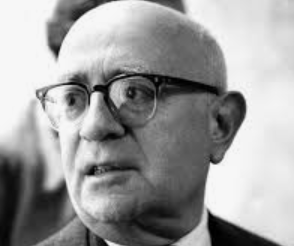
Music for entertainment ... seems to complement the reduction of people to silence, the dying out of speech as expression, the inability to communicate at all. It inhabits the pockets of silence that develop between people molded by anxiety, work and undemanding docility.
▼
Source
p. 271
CivilSimian.com created by AxiomaticPanic, CivilSimian, Kalokagathia