
5 months ago
When I was working on China Men, I remember reading a critic who was praising the great male writers, like Flaubert and Tolstoy and Dostoevsky and Henry James, who were able to write great women characters. I don't remember if they said women had done men in this way or not, but I remember thinking that to finish myself as a great artist I'd have to be able to create men characters. Along with that, I was thinking that I had to do more than the first person pronoun.
▼
Source
1991 interview in Conversations with Maxine Hong Kingston (1998)
5 months ago
I do not ascribe to God ignorance of anything or any kind of weakness; I hold that Divine Providence is related and closely connected with the intellect, because Providence can only proceed from an intelligent being, from a being that is itself the most perfect Intellect. Those creatures, therefore, which receive part of that intellectual influence, will become subject to the action of Providence in the same proportion as they are acted upon by the intellect. This theory is in accordance with reason and with the teaching of the Scripture, whilst the other theories previously mentioned either exaggerate Divine Providence of detract from it.
▼
Source
Ch.17

5 months ago
They reckon ill who leave me out; When me they fly, I am the wings; I am the doubter and the doubt; And I the hymn the Brahmin sings.
▼
Source
Brahma, st. 3
5 months ago
The synergetic integral of the totality of principles is God, whose sum-total behavior in pure principle is beyond our comprehension and is utterly mysterious to us, because as humans — in pure principle — we do not and never will know all the principles.

5 months ago
It is requisite to defend those who are unjustly accused of having acted injuriously, but to praise those who excel in a certain good.
▼
Source
"Pythagorean Ethical Sentences From Stobæus" (1904)
5 months ago
How great is the usefulness of every precept that delivers us from this great error, and leads us back to the true faith: that God, the Creator of all things, rules the Universe; that He must be served, loved, and feared, and not those imaginary deities. According to this faith we approach the true God, and obtain His favour without having recourse to burdensome means; for nothing else is required but to love and fear Him; this is the aim in serving God, as will be shown. Comp. "And now, Israel, what doth the Lord thy God require of thee but to fear the Lord?" &c. (Deut. x. 12)
▼
Source
Ch.29
5 months ago
Raphael paints wisdom, Handel sings it, Phidias carves it, Shakespeare writes it, Wren builds it, Columbus sails it, Luther preaches it, Washington arms it, Watt mechanizes it.
▼
Source
Art
5 months ago
The courage to cooperate or initiate are based entirely on the truth, the whole truth, and nothing but the truth as the divine mind within you tells you the truth is. It really does require a courage and a self-disciplining to go along with that truth.
5 months ago
Scholastic skeptics, as well as ignorant materialists, have greatly amused themselves for the last two centuries over the absurdities attributed to Pythagoras by his biographer, Iamblichus. The Samian philosopher is said to have persuaded a she-bear to give up eating human flesh; to have forced a white eagle to descend to him from the clouds, and to have subdued him by stroking him gently with the hand, and by talking to him. On another occasion, Pythagoras actually persuaded an ox to renounce eating beans, by merely whispering in the animal's ear! (Iamblichus: "De Vita Pythag.") Oh, ignorance and superstition of our forefathers, how ridiculous they appear in the eyes of our enlightened generations! Let us, however, analyze this absurdity. Every day we see unlettered men, proprietors of strolling menageries, taming and completely subduing the most ferocious animals, merely by the power of their irresistible will... Every one has either witnessed or heard of the seemingly magical power of some mesmerizers and psychologists. They are able to subjugate their patients for any length of time. Regazzoni, the mesmerist who excited such wonder in France and London, has achieved far more extraordinary feats than what is above attributed to Pythagoras. Why, then, accuse the ancient biographers of such men as Pythagoras and Apollonius of Tyana of either willful misrepresentation or absurd superstition?
▼
Source
H. P. Blavatsky, Isis Unveiled: A Master-Key to the Mysteries of Ancient and Modern Science and Theology, p.284 (1877)
5 months ago
Honor Wisdom; and deny it not to them that would learn; and shew it unto them that dispraise it! Sow not the sea fields!
5 months ago
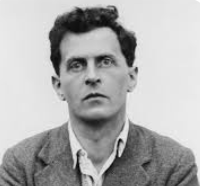
Philosophy aims at the logical clarification of thoughts. Philosophy is not a body of doctrine but an activity. A philosophical work consists essentially of elucidations. Philosophy does not result in 'philosophical propositions', but rather in the clarification of propositions. Without philosophy thoughts are, as it were, cloudy and indistinct: its task is to make them clear and to give them sharp boundaries. (4.112)
▼
Source
Variant translation: Philosophy is not a theory but an activity. A philosophical work consists essentially of elucidations. The result of philosophy is not a number of "philosophical propositions." but to make propositions clear. | Original German: Der Zw
5 months ago
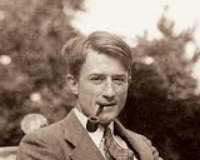
By one road or another, by conviction, by its supposed inevitability, by its alleged success, or even quite unreflectively, almost all politics today have become Rationalist or near-Rationalist.
5 months ago
Now shall we say that only the first men were well alive, and the existing generation is invalided and degenerate? ... A more subtle and severe criticism might suggest that some dislocation has befallen the race; that men are off their centre; that multitudes of men do not live with Nature, but behold it as exiles. People go out to look at sunrises and sunsets who do not recognize their own quietly and happily, but know that it is foreign to them. As they do by books, so they quote the sunset and the star, and do not make them theirs. Worse yet, they live as foreigners in the world of truth, and quote thoughts, and thus disown them. Quotation confesses inferiority.
▼
Source
Quotation and Originality
5 months ago
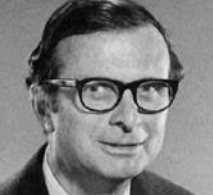
Scientists whose work has no clear, practical implications would want to make their decisions considering such things as: the relative worth of (1) more observations, (2) greater scope of his conceptual model, (3) simplicity, (4) precision of language, (5) accuracy of the probability assignment.
▼
Source
p. 248 as cited in: Douglas, H.E. (2009) Science, Policy, and the Value-Free Ideal
5 months ago
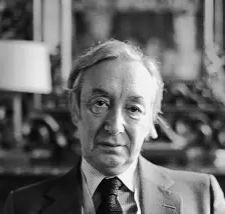
The ground for taking ignorance to be restrictive of freedom is that it causes people to make choices which they would not have made if they had seen what the realization of their choices involved.
▼
Source
"The Concept of Freedom".
5 months ago
For on these matters we should not trust the multitude who say that none ought to be educated but the free, but rather to philosophers, who say that the educated alone are free.
▼
Source
Variant: ...Only the educated are free. | Book II, ch. 1, § 22.
5 months ago
Pythagoras called his Gnosis “the knowledge of things that are,” or ἡ γνῶσις τῶν ὄντων, and preserved that knowledge for his pledged disciples only: for those who could digest such mental food and feel satisfied; and he pledged them to silence and secrecy. Occult alphabets and secret ciphers are the development of the old Egyptian hieratic writings, the secret of which was, in the days of old, in the possession only of the Hierogrammatists, or initiated Egyptian priests.
▼
Source
H.P. Blavatsky in [http://www.gutenberg.org/ebooks/55618 The Key to Theosophy] p. 7, (1889)
5 months ago
Those who have taken the planets to be inanimate bodies without function, limited to traveling geometric paths, resemble idiots who would believe that the brain is inanimate because it has no visible function, or that the stomach is idle because it does no visible work as do our limbs. Civilizees have always been reproached for believing nature to be limited to known effects. If the planets were not animate creatures endowed with functions, God would then appear to be an advocate of laziness. He would have created universes furnished with large inert bodies spending eternity in purposeless meandering as do the idlers in our society.
▼
Source
L'attraction passioneé
5 months ago
The ceremonial (hot or cold) as opposed to the haphazard (lukewarm) characterizes piety.
▼
Source
Ch. 7 : Remarks on Frazer's Golden Bough, p. 127
5 months ago
One does not need buildings, money, power, or status to practice the Art of Peace. Heaven is right where you are standing, and that is the place to train.
5 months ago
In skating over thin ice our safety is our speed.
▼
Source
Prudence
5 months ago
There are no experts in the systems approach.
▼
Source
p. 232
5 months ago
When men and women agree, it is only in their conclusions; their reasons are always different.
▼
Source
[http://books.google.com/books?id=ICAsAAAAYAAJ&q=%22When+men+and+women+agree+it+is+only+in+their+conclusions+their+reasons+are+always+different%22&pg=PA148#v=onepage Ch. VI: Free Society]
5 months ago
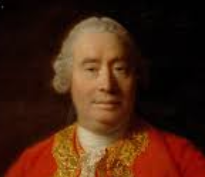
Now as we call every thing , which proceeds from a past repetition, without any new reasoning or conclusion, we may establish it as a certain truth, that all the belief, which follows upon any present impression, is deriv'd solely from that origin.
▼
Source
Part 3, Section 8
5 months ago
Some things are in our control and others not. Things in our control are opinion, pursuit, desire, aversion, and, in a word, whatever are our own actions. Things not in our control are body, property, reputation, command, and, in one word, whatever are not our own actions. (1).
5 months ago
He ordained that his disciples should speak well and think reverently of the Gods, muses and heroes, and likewise of parents and benefactors; that they should obey the laws; that they should not relegate the worship of the Gods to a secondary position, performing it eagerly, even at home; that to the celestial divinities they should sacrifice uncommon offerings; and ordinary ones to the inferior deities. (The world he Divided into) opposite powers; the "one" was a better monad, light, right, equal, stable and straight; while the "other" was an inferior duad, darkness, left, unequal, unstable and movable.
▼
Source
Porphyry of Tyre, in [http://www.tertullian.org/fathers/porphyry_life_of_pythagoras_02_text.htm "The Life of Pythagoras"] as translated by Kenneth Sylvan Guthrie in The Pythagorean Sourcebook and Library: An Anthology of Ancient Writings which Relate to P
5 months ago
The real discovery is the one which enables me to stop doing philosophy when I want to. The one that gives philosophy peace, so that it is no longer tormented by questions which bring itself into question.
▼
Source
§ 133

5 months ago
Ends and purposes, whether they exist as conscious or subconscious tendencies, form the warp and woof of our conscious experience.
▼
Source
[https://www.google.com/books/edition/The_Reconstruction_of_Religious_Thought/uCh14nl09jkC?hl=en The Reconstruction of Religious Thought in Islam] (1930), p. 42
5 months ago
There is a kind of latent omniscience not only in every man but in every particle.
▼
Source
p. 263
5 months ago
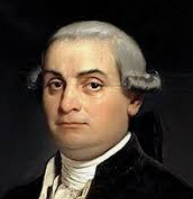
Seems so absurd to me that the laws, that are the expression of the public will, that hate and punish the murder, make one themselves, and, to dissuade citizens from the murder, order a public murder.
▼
Source
(Chapter XXVIII)
5 months ago
Never since the heroic days of Greece has the world had such a sweet, just, boyish master.
▼
Source
"The British Character"
5 months ago
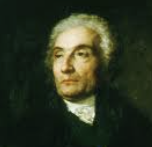
Man is an enigma whose knot has not ceased to occupy observers. The contradictions that he contains astonish reason and impose silence on it. So what is this inconceivable being who carries within him powers that clash and who is obliged to hate himself in order to esteem himself?
5 months ago
That the sun will not rise to-morrow is no less intelligible a proposition, and implies no contradiction, than the affirmation, that it will rise.
▼
Source
§ 4.8
5 months ago
Zoroaster, Pythagoras, Epicharmus, Empedocles, Kebes, Euripides, Plato, Euclid, Philo, Boethius, Virgil, Marcus Cicero, Plotinus, Iamblichus, Proclus, Psellus, Synesius, Origen, and, finally, Aristotle himself, far 'from denying our immortality, support it most emphatically. (p. 251)
▼
Source
The Veil of Isis, Part 1, Science.
5 months ago
Man has to awaken to wonder — and so perhaps do peoples. Science is a way of sending him to sleep again.
▼
Source
p. 5e

5 months ago
Science as a system of statements is always an object of discussion. Statements are to be compared with statements, and not with 'experience', or with 'the world', or with something else. All that meaningless doubling belongs to more or less subtle metaphysics and as such must be rejected. Every new statement is to be confronted with existing ones, already brought to a state of harmony between themselves. A statement will be considered correct if it can be joined to them.
▼
Source
Otto Neurath (1931), "Soziologie im Physikalismus", in Erkenntnis, Vol. 2. p. 403; as cited in: Schaff (1962;84)
5 months ago
I love Emerson, the first great American writer.
▼
Source
1987 interview in Conversations with Susan Sontag edited by Leland Poague (1995)
5 months ago
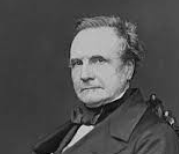
Mill, in speaking of Hume's celebrated principle, "that nothing is credible which is contradictory to experience, or at variance with the laws of nature," calls it a very plain and harmless proposition, being, in effect, nothing more than that whatever is contradictory to a complete induction is incredible. Admit the existence of a Deity, and the possibility of a miracle is the natural consequence. No doubt our examination of the evidence which sustains an unusual phenomenon should be most carefully conducted; but we must not measure the credibility or incredibility of an event by the narrow sphere of our own experience, nor forget that there is a Divine energy which overrides what we familiarly call the laws of nature.
▼
Source
"Passages from the life of a philosopher", Appendix, p. 488
5 months ago
They [the wise spirits of antiquity in the first circle of Dante's Inferno] are condemned, Dante tells us, to no other penalty than to live in desire without hope, a fate appropriate to noble souls with a clear vision of life.
▼
Source
Obiter Scripta (1936)
5 months ago
There is the same difference between political theory and constitutional laws as there is between poetics and poetry. The illustrious Montesquieu is to Lycurgus, in the intellectual hierarchy, what Batteux is to Homer or Racine. Moreover, these two talents positively exclude each other, as can be seen by the example of Locke, who fumbled badly when he presumed to give laws to the Americans.
▼
Source
Chapter VI, p. 52
5 months ago
It is a very comfortable reflection to the lovers of liberty, that this peculiar privilege of Britain is of a kind that cannot easily be wrested from us, but must last as long as our government remains, in any degree, free and independent. It is seldom, that liberty of any kind is lost all at once. Slavery has so frightful an aspect to men accustomed to freedom, that it must steal upon them by degrees, and must disguise itself in a thousand shapes, in order to be received. But, if the liberty of the press ever be lost, it must be lost at once. The general laws against sedition and libelling are at present as strong as they possibly can be made. Nothing can impose a farther restraint, but either the clapping an Imprimatur upon the press, or the giving to the court very large discretionary powers to punish whatever displeases them. But these concessions would be such a bare-faced violation of liberty, that they will probably be the last efforts of a despotic government. We may conclude, that the liberty of Britain is gone for ever when these attempts shall succeed.
▼
Source
Part I, Essay 2: Of the Liberty of the Press
5 months ago
I believe that one of the things Christianity says is that sound doctrines are all useless. That you have to change your life. (Or the direction of your life.)
▼
Source
p. 53e

5 months ago
Or, to go a step further, let us glance at what science has done to establish rational foundations for physical and moral health. Science tells us how we ought to live in order to preserve the health of our own bodies, how to maintain in good conditions of existence the crowded masses of our population. But does not all the vast amount of work done in these two directions remain a dead letter in our books? We know it does. And why? Because science today exists only for a handful of privileged persons, because social inequality which divides society into two classes — the wage-slaves and the grabbers of capital — renders all its teachings as to the conditions of a rational existence only the bitterest irony to nine-tenths of mankind.
5 months ago
A philosopher may try to prove the truth of something he believed before he was a philosopher, but even if he succeeds, his belief never regains the untroubled character, and the settled place in his mind, which it had at first.
▼
Source
The Rationality of Induction, Oxford: Clarendon, 1986. Page 99, first paragraph.
5 months ago
There is a great analogy between grace and genius, for genius is a grace. The real man of genius is the one who acts by grace or by impulsion, without ever contemplating himself and without ever saying to himself: Yes! It is by grace that I act.
▼
Source
p. 37
5 months ago
If the material world rests upon a similar ideal world, this ideal world must rest upon some other; and so on, without end. It were better, therefore, never to look beyond the present material world. By supposing it to contain the principle of its order within itself, we really assert it to be God; and the sooner we arrive at that Divine Being, so much the better. When you go one step beyond the mundane system, you only excite an inquisitive humour which it is impossible ever to satisfy.
▼
Source
Philo to Cleanthes, Part IV
5 months ago
If we spoke a different language, we would perceive a somewhat different world.
▼
Source
This actually first appears in Recent Experiments in Psychology (1950) by Leland Whitney Crafts, Théodore Christian Schneirla, and Elsa Elizabeth Robinson, where it is expressed:
5 months ago
A society to which preestablished forms, crystallized by law, are repugnant; which looks for harmony in an ever-changing and fugitive equilibrium between a multitude of varied forces and influences of every kind, following their own course, — these forces promoting themselves the energies which are favorable to their march toward progress, toward the liberty of developing in broad daylight and counter-balancing one another.This conception and ideal of society is certainly not new. On the contrary, when we analyze the history of popular institutions — the clan, the village community, the guild and even the urban commune of the Middle Ages in their first stages, — we find the same popular tendency to constitute a society according to this idea...

5 months ago
Another was, "Watch your opportunity."
▼
Source
Pittacus, 7.
5 months ago
Upon the whole, I have always considered him, both in his lifetime and since his death, as approaching as nearly to the idea of a perfectly wise and virtuous man, as perhaps the nature of human frailty will permit.
▼
Source
Adam Smith
CivilSimian.com created by AxiomaticPanic, CivilSimian, Kalokagathia