

5 months ago
Knowledge grows, but human beings remain much the same.Belief in progress is a relic of the Christian view of history as a universal narrative, and an intellectually rigorous atheism would start by questioning it.
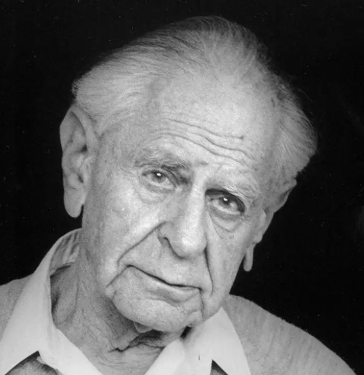
5 months ago
I appeal to the philosophers of all countries to unite and never again mention Heidegger or talk to another philosopher who defends Heidegger. This man was a devil. I mean, he behaved like a devil to his beloved teacher, and he has a devilish influence on Germany. ... One has to read Heidegger in the original to see what a swindler he was.
▼
Source
As quoted in "At 90, and Still Dynamic : Revisiting Sir Karl Popper and Attending His Birthday Party" by Eugene Yue-Ching Ho, in Intellectus 23 (Jul-Sep 1992)
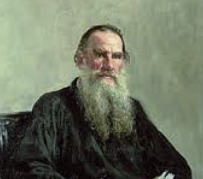
5 months ago
Understand then all of you, especially the young, that to want to impose an imaginary state of government on others by violence is not only a vulgar superstition, but even a criminal work. Understand that this work, far from assuring the well-being of humanity is only a lie, a more or less unconscious hypocrisy, camouflaging the lowest passions we possess.
▼
Source
Passage written for for The Law of Love and the Law of Violence (1908), released in 1917, as quoted in Equality in Liberty and Justice (2001) by Antony Flew, p. 89
5 months ago
To avert the danger [posed by theory] to life, Nietzsche could choose one of two ways: he could insist on the strictly esoteric character of the theoretical analysis of life—that is, restore the Platonic notion of the noble delusion—or else he could deny the possibility of theory proper and so conceive of thought as essentially subservient to, or dependent on, life or fate... If not Nietzsche himself, at any rate his successors [Heidegger] adopted the second alternative.
▼
Source
p. 26
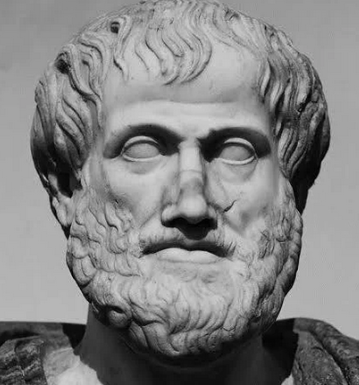
5 months ago
Let this serve as an outline of the good; for we must presumably first sketch it roughly, and then later fill in the details. But it would seem that any one is capable of carrying on and articulating what has once been well outlined, and that time is a good discoverer or partner in such a work; to which facts the advances of the arts are due; for any one can add what is lacking. And we must also remember what has been said before, and not look for precision in all things alike, but in each class of things such precision as accords with the subject-matter, and so much as is appropriate to the inquiry. For a carpenter and a geometer investigate the right angle in different ways; the former does so in so far as the right angle is useful for his work, while the latter inquires what it is or what sort of thing it is; for he is a spectator of the truth. We must act in the same way, then, in all other matters as well, that our main task may not be subordinated to minor questions. Nor must we demand the cause in all matters alike; it is enough in some cases that the fact be well established, as in the case of the first principles; the fact is the primary thing or first principle. Now of first principles we see some by induction, some by perception, some by a certain habituation, and others too in other ways. But each set of principles we must try to investigate in the natural way, and we must take pains to state them definitely, since they have a great influence on what follows. For the beginning is thought to be more than half of the whole, and many of the questions we ask are cleared up by it.
▼
Source
Book I, 1098a-b; §7 as translated by W. D. Ross

5 months ago
Although men constitute the vast majority of prisoners in the world, important aspects of the operation of state punishment are missed if it is assumed that women are marginal and thus undeserving of attention.
▼
Source
Chapter Four
5 months ago
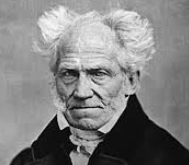
...on the fanaticism and endless persecutions, the religious wars, that sanguinary frenzy of which the ancient had no conception! Think of the crusades, a butchery lasting two hundred years and inexcusable, its war cry 'It is lasting two hundred years and inexcusable, its war cry 'It is the will of God,' Think of the orgies of blood, the inquisitions, the heretical tribunals, the bloody and terrible conquests...in three continents, or....in America, whose inhabitants were for the most part, not looked upon as human! And above all, don't lets forget India, the cradle of the human race, or at least of that part of it to which we belong, where first.. were most cruelly infuriated against the adherents of the original faith of mankind. The destruction or disfigurement of the ancient temples and idols, a lamentable, mischievous and barbarous act still bear witness to the monotheistic fury...carried on from Mahmud, the Gahaznevid of cursed memory, down to Aurengzeb, the fratricide, whom the Portuguese...have zealously imitated by destruction of temples and the auto defe of the Inquisition of Goa..."For the sake of truth, I must add that the fanatical enormities perpertrated in the name of religion are only to be put down to the adherents of monotheistic creeds...We hear nothing of the kind in the case of the Hindoos and Buddhists.
▼
Source
source: The Essays of Arthur Schopenhauer - By T. Bailey Saunders p. 42 - 43. [https://www.hinduwisdom.info/European_Imperialism.htm]

5 months ago
One does not inhabit a country; one inhabits a language. That is our country, our fatherland — and no other.
▼
Source
Variant translation: We inhabit a language rather than a country.
5 months ago
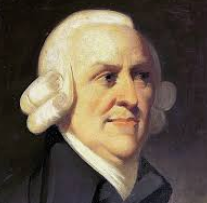
With the greater part of rich people, the chief enjoyment of riches consists in the parade of riches, which in their eye is never so complete as when they appear to possess those decisive marks of opulence which nobody can possess but themselves.
▼
Source
Chapter XI, Part II, p. 202 (See also Thorstein Veblen).
5 months ago
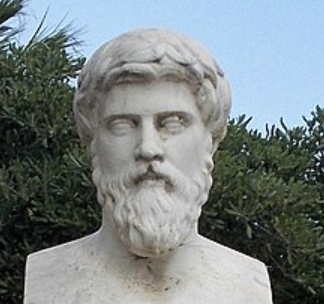
Cato requested old men not to add the disgrace of wickedness to old age, which was accompanied with many other evils.
▼
Source
Cato the Elder
5 months ago
Cheating ageing by a low-calorie diet, uploading one’s mind into a super-computer, migrating into outer space … Longing for everlasting life, humans show that they remain the death-defined animal.
▼
Source
Sweet Morality (p. 235)
5 months ago
We all remember how many religious wars were fought for a religion of love and gentleness; how many bodies were burned alive with the genuinely kind intention of saving souls from the eternal fire of hell. Only if we give up our authoritarian attitude in the realm of opinion, only if we establish the attitude of give and take, of readiness to learn from other people, can we hope to control acts of violence inspired by piety and duty.
5 months ago
War is not a courtesy but the most horrible thing in life; and we ought to understand that, and not play at war. We ought to accept this terrible necessity sternly and seriously. It all lies in that: get rid of falsehood and let war be war and not a game. As it is now, war is the favourite pastime of the idle and frivolous.
▼
Source
Bk. X, ch. 25
5 months ago
Liberal education reminds those members of a mass democracy who have ears to hear, of human greatness.
▼
Source
“What is liberal education,” p. 5
5 months ago
For the purposes of poetry a convincing impossibility is preferable to an unconvincing possibility.
▼
Source
1461b.11
5 months ago
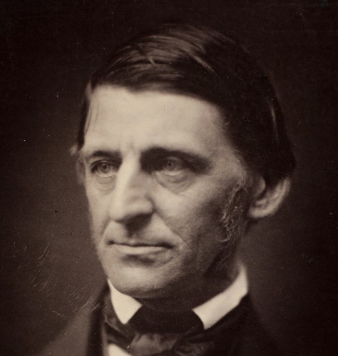
Let me never fall into the vulgar mistake of dreaming that I am persecuted whenever I am contradicted.
▼
Source
November 8, 1838
5 months ago
Acknowledging continuities between nineteenth century anti-slavery struggles, twentieth century civil rights struggles, twenty-first century abolitionist struggles—and when I say abolitionist struggles I’m referring to the abolition of imprisonment as the dominant mode of punishment, the abolition of the prison industrial complex—acknowledging these continuities requires a challenge to the closures that isolate the freedom movement of the twentieth century from the century preceding and the century following.
5 months ago
Who does not believe in Fate proves that he has not lived.
5 months ago
The statesman who should attempt to direct people in what manner they ought to employ their capitals, would not only load himself with a most unnecessary attention, but assume an authority which could safely be trusted, not only to no single person, but to no council or senate whatever, and which would nowhere be so dangerous as in the hands of a man who had folly and presumption enough to fancy himself fit to exercise it.
▼
Source
Chapter II
5 months ago
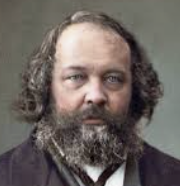
If there is a devil in human history, that devil is the principle of command. It alone, sustained by the ignorance and stupidity of the masses, without which it could not exist, is the source of all the catastrophes, all the crimes, and all the infamies of history.
▼
Source
"On the Program of the Alliance" (1871), in Bakunin on Anarchy (1971), translated and edited by Sam Dolgoff | Variant translation: If there is a devil in history, it is the power principle. | As quoted in the leader to the film [https://www.youtube.com/wa
5 months ago
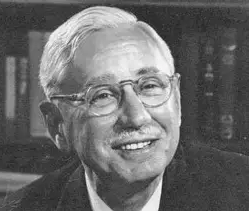
The death of Alexander (323 BC) quickened this process of decay. The boy-emperor, barbarian though he remained after all of Aristotle’s tutoring, had yet learned to revere the rich culture of Greece, and had dreamed of spreading that culture through the Orient in the wake of his victorious armies.... But he had underrated the inertia and resistance of the Oriental mind, and the mass and depth of Oriental culture. It was only a youthful fancy, after all, to suppose that so immature and unstable a civilization as that of Greece could be imposed upon a civilization immeasurably more widespread, and rooted in the most venerable traditions. The quantity of Asia proved too much for the quality of Greece.
5 months ago
Human beings act, certainly. But none of them knows why they act as they do. There is a scattering of facts, which can be known and reported. Beyond these facts are the stories that are told. Human beings may behave like puppets, but no one is pulling the strings.
▼
Source
In The Puppet Theatre: Puppetry, Conspiracy and Ouija Boards (p. 136)
5 months ago
Scientific theories are distinguished from myths... in being criticizable, and... open to modifications... They can be neither verified nor probabilified.
5 months ago
Quite often a man goes on for years imagining that the religious teaching that had been imparted to him since childhood is still intact, while all the time there is not a trace of it left in him.
▼
Source
Pt. I, ch. 1
5 months ago
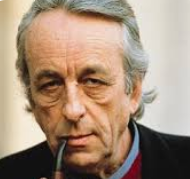
Like every 'intellectual', a philosophy teacher is a petty bourgeois. When he opens his mouth, it is petty-bourgeois ideology that speaks: its resources and ruses are infinite.
▼
Source
p. 2
5 months ago
The charming landscape which I saw this morning, is indubitably made up of some twenty or thirty farms. Miller owns this field, Locke that, and Manning the woodland beyond. But none of them owns the landscape. There is a property in the horizon which no man has but he whose eye can integrate all the parts, that is, the poet. This is the best part of these men's farms, yet to this their warranty-deeds give no title. To speak truly, few adult persons can see nature. Most persons do not see the sun. At least they have a very superficial seeing. The sun illuminates only the eye of the man, but shines into the eye and the heart of the child. The lover of nature is he whose inward and outward senses are still truly adjusted to each other; who has retained the spirit of infancy even into the era of manhood. His intercourse with heaven and earth, becomes part of his daily food.
▼
Source
Nature

5 months ago
Through certain humors or passions, and from temper merely, a man may be completely miserable, let his outward circumstances be ever so fortunate.
▼
Source
As quoted in Day's Collacon : An Encyclopaedia of Prose Quotations: (1884), p. 930; Actual quote: "That thro certain Humours or Passions, and from Temper merely, a Man may be completely miserable; let his outward Circumstances be ever so fortunate." An in
5 months ago
I know several writers, young writers, who tried to publish something and were frustrated, whereupon they wanted to take their lives. I understand that in some way, but it is exceptionally difficult to comfort someone who is so far gone. The most shocking things in life are perhaps the great defeats, and there are many of them, for everyone. When one gets to know people in that situation, one experiences the most of them. I am very often visited by people in complete despair, mostly young, who feel that they have failed. It is quite an extraordinarily important lesson, for there are people for whom it is not easy to go through such a crisis; it is a matter of sensitivity, of nerves, possibly even something inherited. Nevertheless, there are these crises in every social sphere and one must say that, fundamentally, failure merely constitutes the experience of life. That is really not so bad for the one who comprehends everything—what can happen to him? But it hits the ambitious exceptionally hard, those who have a plan for their lives, who think about the future, who have a future. Just because they take everything so seriously, I say to these people, "Go to the cemetery!" and it is right, and the results prove it. It is the only weapon with which to minimize such an essentially tragic situation.... Best of all, go find the grave of a friend! It is perhaps absurd and yet it has not only meaning, but is, as I said, the only way to alleviate a personal drama. One learns in life just about everything but this, how to survive such a crisis. And in literary circles, which are often afflicted in this regard, there is certainly a lot of disappointment.
5 months ago
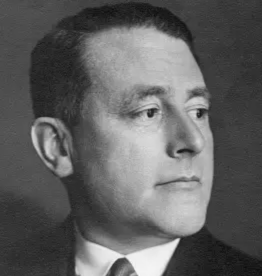
The metaphysical image that a definite epoch forges of the world has the same structure as what the world immediately understands to be appropriate as a form of its political organization.
5 months ago
The tolls for the maintenance of a high road, cannot with any safety be made the property of private persons.
▼
Source
Chapter I, Part III, Article I, p. 786 (See also.. Public-private partnerships).
5 months ago
This contradiction lies here: they wish God, and they wish humanity. They persist in connecting two terms which, once separated, can come together again only to destroy each other. They say in a single breath: "God and the liberty of man," "God and the dignity, justice, equality, fraternity, prosperity of men" — regardless of the fatal logic by virtue of which, if God exists, all these things are condemned to non-existence. For, if God is, he is necessarily the eternal, supreme, absolute master, and, if such a master exists, man is a slave; now, if he is a slave, neither justice, nor equality, nor fraternity, nor prosperity are possible for him. In vain, flying in the face of good sense and all the teachings of history, do they represent their God as animated by the tenderest love of human liberty: a master, whoever he may be and however liberal he may desire to show himself, remains none the less always a master. His existence necessarily implies the slavery of all that is beneath him. Therefore, if God existed, only in one way could he serve human liberty — by ceasing to exist.
5 months ago
The principle of the family was mutual aid; but the principle of society is competition, the struggle for existence, the elimination of the weak and the survival of the strong.
▼
Source
Ch. 2 : On Youth

5 months ago
Natural inclinations are present in things from God, who moves all things. So it is impossible for the natural inclinations of a species to be toward evil in itself. But there is in all perfect animals a natural inclination toward carnal union. Therefore it is impossible for carnal union to be evil in itself.
▼
Source
III, 126, 3
5 months ago
Our principles fix what our life stands for, our aims create the light our life is bathed in, and our rationality, both individual and coordinate, defines and symbolizes the distance we have come from mere animality. It is by these means that our lives come to more than what they instrumentally yield. And by meaning more, our lives yield more.
▼
Source
The Nature of Rationality (1993), Ch. V : Instrumental Rationality and Its Limits; Rationality's Imagination, p. 181
5 months ago
I got to know Bertrand Russell in the last years of his life. I knew Karl Popper quite well, and they were a whole class above me in intelligence. It wasn’t that I was jealous, it was that I was trying to grapple with these problems with inadequate weaponry… Popper had this originality, Russell had it, and Einstein had it in spades.
▼
Source
Bryan Magee, The New Statesman, 8 April 2018
5 months ago
The precise reason why abstinence from animal food will be the first act ... of a moral life is admirably explained in the book, The Ethics of Diet [by Howard Williams]; and not by one man only, but by all mankind in the persons of its best representatives during all the conscious life of humanity. ... the moral progress of humanity — which is the foundation of every other kind of progress — is always slow; but ... the sign of true, not casual, progress is its uninterruptedness and its continual acceleration. And the progress of vegetarianism is of this kind. That progress, is expressed both in the words of the writers cited in the above-mentioned book and in the actual life of mankind, which from many causes is involuntarily passing metre and more from carnivorous habits to vegetable food, and is also deliberately following the same path in a movement which shows evident strength, and which is growing larger and larger — viz., vegetarianism.
▼
Source
Ch. X
5 months ago
For this reason, whoever desires liberty, should understand these vital facts, viz.:
5 months ago
Thought is all light, and publishes itself to the universe. It will speak, though you were dumb, by its own miraculous organ. It will flow out of your actions, your manners, and your face. It will bring you friendships. It will impledge you to truth by the love and expectation of generous minds. By virtue of the laws of that Nature, which is one and perfect, it shall yield every sincere good that is in the soul, to the scholar beloved of earth and heaven.
5 months ago
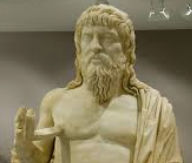
Greet your son Aristocleides from me. I pray he may not turn out like you, since you, too, were once an irreproachable young man.
▼
Source
to Gordias, Epp. Apoll. 46
5 months ago
Mr. Burke talked in very high terms of Dr. Adam Smith; praised the clearness and depth of his understanding, his profound and extensive learning, and the vast accession that had accrued to British literature and philosophy from these exertions, and described his heart as being equally good with his head and his manners as peculiarly pleasing. Mr. Smith, he said, told him, after they had conversed on subjects of political economy, that he was the only man, who, without communication, thought on these topics exactly as he did.
▼
Source
Robert Bisset, The Life of Edmund Burke, Volume II (1800), pp. 428-429
5 months ago
Hayek and Nozick both think that talk of distributive justice is misleading, because it suggests the presence of a distributing person or mechanism; in a developed economy there is no such thing, and in a free society, the attempt to institute such a thing would destroy all freedom. Hayek, however, supports this view with an account of the computational impossibility of deciding what to produce and distribute in order to achieve justice, while Nozick is more concerned to emphasize that the state has no right to seize the resources of individuals in order to distribute them according to any principle whatever.
▼
Source
Alan Ryan, Introduction in Justice (1993) edited by Alan Ryan
5 months ago
No feats of heroism are needed to achieve the greatest and most important changes in the existence of humanity; neither the armament of millions of soldiers, nor the construction of new roads and machines, nor the arrangement of exhibitions, nor the organization of workmen's unions, nor revolutions, nor barricades, nor explosions, nor the perfection of aerial navigation; but a change in public opinion. And to accomplish this change no exertions of the mind are needed, nor the refutation of anything in existence, nor the invention of any extraordinary novelty; it is only needful that we should not succumb to the erroneous, already defunct, public opinion of the past, which governments have induced artificially; it is only needful that each individual should say what he really feels or thinks, or at least that he should not say what he does not think.
▼
Source
Ch. 17
5 months ago
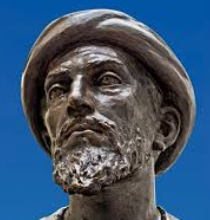
Silence is a fence around wisdom.
▼
Source
Chapter 2, Section 5, p. 33
5 months ago
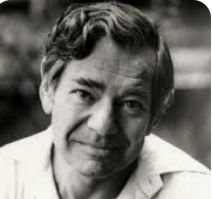
Of faith and morals, one cannot speak honestly for long without hurting feelings. Therefore, most people speak dishonestly of the most important subjects. Many recent philosophers prefer not to speak of them at all. But in some situations honesty is incompatible with silence.
5 months ago
Art is a human activity consisting in this, that one consciously, by means of certain external symbols, conveys to others the feelings one has experienced, whereby people so infected by these feelings, also experience them.
5 months ago
A scholar ... should turn his ears from the talk of the illiterate and not take it to heart.
▼
Source
Treatise 3: “The Study of the Torah,” H. Russell, trans. (1983), p. 69
5 months ago
Out from the heart of Nature rolled The burdens of the Bible old.
▼
Source
The Problem, st. 2
5 months ago
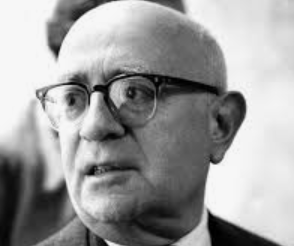
When I speak of 'negative dialectics' not the least important reason for doing so is my desire to dissociate myself from this fetishization of the positive.
▼
Source
p. 18
5 months ago
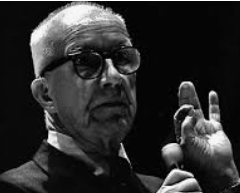
Technology paces industry, but there's a long lag in the process. Industry paces economics. It changes the tools, a great ecological change. And in that manner we come finally to everyday life. The politician is someone who deals in man's problems of adjustment. To ask a politician to lead us is to ask the tail of a dog to lead the dog.
▼
Source
"The Designers and the Politicians" (1962), later published in Beyond Left & Right : Radical Thought for Our Times (1968) by Richard Kostelanetz, p. 368
5 months ago
[T]he great and leading object of Mr. Smith's speculations is to illustrate the provision made by nature in the principles of the human mind, and in the circumstances of man's external situation, for a gradual and progressive augmentation in the means of national wealth; and to demonstrate, that the most effectual plan for advancing a people to greatness, is to maintain that order of things which nature has pointed out; by allowing every man, as long as he observes the rules of justice, to pursue his own interest in his own way, and to bring both his industry and his capital into the freest competition with those of his fellow-citizens. Every system of policy which endeavours, either by extraordinary encouragements, to draw towards a particular species of industry a greater share of the capital of the society than what would naturally go to it; or, by extraordinary restraints, to force from a particular species of industry some share of the capital which would otherwise be employed in it, is in reality, subversive of the great purpose which it means to promote.
▼
Source
Dugald Stewart, Account of the Life and Writings of Adam Smith, LL.D., quoted in The Works of Dugald Stewart, Vol. VII (1829), pp. 56-57
CivilSimian.com created by AxiomaticPanic, CivilSimian, Kalokagathia