
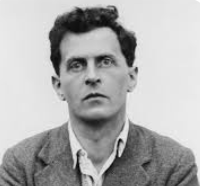
4 months ago
He lives in the same kind of tense excitement as I do, hardly able to sit still or read a book. He was talking about Beethoven — how a friend described going to Beethoven's door and hearing him 'cursing and howling and singing' over his new fugue; after a whole hour Beethoven at last came to the door, looking as if he had been fighting the devil, and had eaten nothing for 36 hours because his cook and parlour-maid had been away from his rage. That's the sort of man to be.
▼
Source
Bertrand Russell, letter to Lady Ottoline on April 23, 1912, quoted in Brian McGuinness, Young Ludwig: Wittgenstein's life, 1889-1921 (1988)

4 months ago
The law has no claim to human respect. It has no civilizing mission; its only purpose is to protect exploitation.
▼
Source
"Words of a Rebel"; as quoted in The Heretic's Handbook of Quotations: Cutting Comments on Burning Issues (1992) by Charles Bufe, p. 26
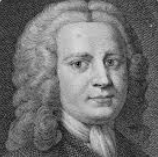
4 months ago
We seem to be in the place of God to them, to be his vice-regents, and empowered to receive homage from them in his name. And we are obliged, by the same tenure, to be their guardians and benefactors.
▼
Source
On animals. [https://archive.org/stream/cu31924029011902#page/n5/mode/2up Observations on Man] (1749; 6th edition, 1834), Part I, Chapter III, Section VII.

4 months ago
During the last three centuries, there has been, by virtue of the Inquisition, a greater enjoyment of peace, and happiness, in Spain, than in the other nations of Europe.
▼
Source
p. 57
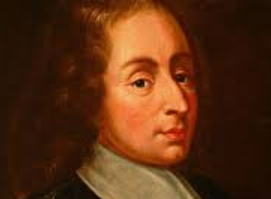
4 months ago
The whole title by which you possess your property, is not a title of nature but of a human institution.
4 months ago
Harmony thus appears as a temporary adjustment, established among all forces acting upon a given spot — a provisory adaptation; and that adjustment will only last under one condition: that of being continually modified; of representing every moment the resultant of all conflicting actions. Let but one of those forces be hampered in its action for some time and harmony disappears. Force will accumulate its effect; it must come to light, it must exercise its action, and if other forces hinder its manifestation it will not be annihilated by that, but will end by upsetting the present adjustment, by destroying harmony, in order to find a new form of equilibrium and to work to form a new adaptation. Such is the eruption of a volcano, whose imprisoned force ends by breaking the petrified lavas which hindered them to pour forth the gases, the molten lavas, and the incandescent ashes. Such, also, are the revolutions of mankind.

4 months ago
Heraclitus says that Pittacus, when he had got Alcæus into his power, released him, saying, "Forgiveness is better than revenge."
▼
Source
Pittacus, 3.
4 months ago
Few men knew so perfectly as he knew how to be touching without ceasing to be masculine, nor how to go down into the dark pits of human life without forgetting the broad sunlight, nor how to keep habitually close to visible and palpable fact while eagerly addicted to speculation.
▼
Source
John Morley, "Joseph de Maistre," in Critical Miscellanies (1909), pp. 276–277
4 months ago
There are hardly any truths upon which we always remain agreed, and still fewer objects of pleasure which we do not change every hour, I do not know whether there is a means of giving fixed rules for adapting discourse to the inconstancy of our caprices.
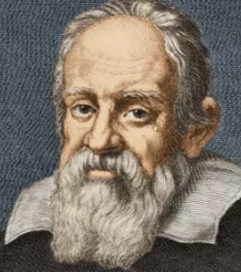
4 months ago
I am certainly interested in a tribunal in which, for having used my reason, I was deemed little less than a heretic. Who knows but men will reduce me from the profession of a philosopher to that of historian of the Inquisition! But they behave to me in order that I may become the ignoramus and the fool of Italy...
▼
Source
p. 244

4 months ago
Agriculture is now a motorized food industry, the same thing in its essence as the production of corpses in the gas chambers and the extermination camps, the same thing as blockades and the reduction of countries to famine, the same thing as the manufacture of hydrogen bombs.
▼
Source
Four Lectures on Technology (1949)
4 months ago
Throughout the history of our civilization, two traditions, two opposing tendencies have confronted each other: the Roman and the Popular; the imperial and the federalist; the authoritarian and the libertarian. And this is so, once more, on the eve of the social revolution. Between these two currents, always manifesting themselves, always at grips with each other — the popular trend and that which thirsts for political and religious domination — we have made our choice. We seek to recapture the spirit which drove people in the twelfth century to organise themselves on the basis of free agreement and individual initiative as well as of the free federation of the interested parties. And we are quite prepared to leave the others to cling to the imperial, the Roman and canonical tradition.
▼
Source
X
4 months ago
Of a rich man who was niggardly he said, "That man does not own his estate, but his estate owns him."
▼
Source
Bion, 3.
4 months ago
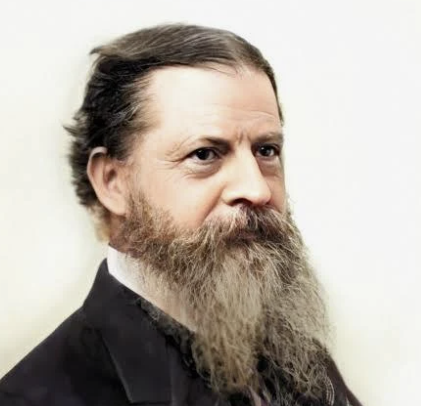
To suppose universal laws of nature capable of being apprehended by the mind and yet having no reason for their special forms, but standing inexplicable and irrational, is hardly a justifiable position. Uniformities are precisely the sort of facts that need to be accounted for. That a pitched coin should sometimes turn up heads and sometimes tails calls for no particular explanation; but if it shows heads every time, we wish to know how this result has been brought about. Law is par excellence the thing that wants a reason.
4 months ago
In contrast to “Blessed are they who do not see and still believe,” he speaks of “seeing and still not believing.”
▼
Source
p. 30
4 months ago
Let us take, for example, the orchard—the marais—of M. Ponce, the author of a well known work on the culture maraîchere.., covered only two and seven-tenths acres. The outlay for his establishment, including a steam engine for watering... reached £1,136. ...When returning from Paris they brought in manure, for which £100 was spent every year. Another £100 was spent on rent and taxes. But how to enumerate all that was gathered every year... More than 20,000 pounds of carrots... 20,000 pounds of onions, radishes and other vegetables... 6,000 heads of cabbage; 3,000 of cauliflower; 5,000 baskets of tomatoes, 5,000 dozen of choice fruit; and 154,000 heads of salad; in short, a total of 250,000 pounds of vegetables. The soil was made to such an amount out of forcing beds that every year 250 cubic yards of loam had been sold. Similar examples could have been given by the dozen... No less than 2,125 acres are cultivated round Paris in that way by 5,000 persons, and thus not only the 2,000,000 Parisians are supplied with vegetables, but the surplus is also sent to London.
4 months ago
When a man reproached him for going into unclean places, he said, "The sun too penetrates into privies, but is not polluted by them."
▼
Source
Diogenes, 6.

4 months ago
Man alone has the power of self-realization, the power to be a self-determining subject in all processes of becoming, for he alone has an understanding of potentialities and a knowledge of ‘notions.’ His very existence is the process of actualizing his potentialities, of molding his life according to the notions of reason. P. 9

4 months ago
A brilliant man is his own best company, unless he can find other company of the same sort.
4 months ago
The first character of a general idea so resulting is that it is living feeling. A continuum of this feeling, infinitesimal in duration, but still embracing innumerable parts, and also, though infinitesimal, entirely unlimited, is immediately present. And in its absence of boundedness a vague possibility of more than is present is directly felt.

4 months ago
Great towns are but a large sort of prison to the soul, like cages to birds, or pounds to beasts.
▼
Source
p. 82 (Cities)
4 months ago
I conclude that there is no such thing as a language, not if a language is anything like what many philosophers and linguists have supposed. There is therefore no such thing to be learned, mastered, or born with. We must give up the idea of a clearly defined shared structure which language-users acquire and then apply to cases. And we should try again to say how convention in any important sense is involved in language; or, as I think, we should give up the attempt to illuminate how we communicate by appeal to conventions.
▼
Source
Davidson, Donald. "[http://www.hf.uio.no/csmn/english/research/news-and-events/events/davidson_derangement.pdf A nice derangement of epitaphs]." Philosophical grounds of rationality: Intentions, categories, ends 4 (1986): 157.
4 months ago
An integral part of totalitarian control is the attack on critical and independent thought. The appeal to facts is substituted for the appeal to reason. No reason can sanction a regime that uses the greatest productive apparatus man has ever created in the interest of an increasing restriction on human satisfactions—no reason except the fact that the economic system can be retained in no other way. Just as the Fascist emphasis on action and change prevents the insight into necessity of rational courses of action and change, [[Giovanni Gentile|[Giovanni] Gentile]]’s deification of thinking prevents the liberation of thought from the shackles of ‘the given.’ P. 405
4 months ago
Some words shall herein be capitalised when used, not as vernacular, but as terms defined. Thus an "idea" is the substance of an actual unitary thought or fancy; but "Idea," nearer Plato's idea of ἰδέα, denotes anything whose Being consists in its mere capacity for getting fully represented, regardless of any person's faculty or impotence to represent it.
▼
Source
I
4 months ago
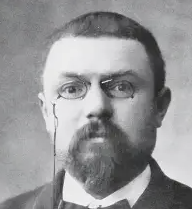
Thought is only a flash between two long nights, but this flash is everything.
▼
Source
Quoted in H. L. Mencken, A New Dictionary of Quotations (Alfred A. Knopf, Inc., 1942)
4 months ago
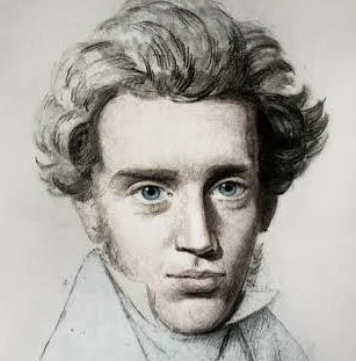
There are many people who reach their conclusions about life like schoolboys; they cheat their master by copying the answer out of a book without having worked out the sum for themselves.
▼
Source
[http://books.google.com/books?id=2iwmAQAAMAAJ&q=%22There+are+many+people+who+reach+their+conclusions+about+life+like+schoolboys+they+cheat+their+master+by+copying+the+answer+out+of+a+book+without+having+worked+out+the+sum+for+themselves%22&pg=PA53#v=onep
4 months ago
It is interesting to note that Newton was not impressed by Descartes' great argument for God's existence derived from the idea of a perfect Being, nor by other metaphysical arguments that we have mentioned; yet Newton's own arguments for God's existence from the uniformity and suitability of different parts of the universe would not have seemed like proofs to Descartes.
4 months ago
It takes brains to make money, but any dam fool can inherit. P.S.: I never inherited any money.
▼
Source
p. 10
4 months ago
Man today can do more than the culture heros and half-gods; he has solved many insoluble problems. But he has also betrayed the hope and destroyed the truth which were preserved in the sublimations of higher culture. To be sure, the higher culture was always in contradiction with social reality, and only a privileged minority enjoyed its blessings and represented its ideals. The two antagonistic spheres of society have always coexisted; the higher culture has always been accommodating, while the reality was rarely disturbed by its ideals and its truth. Today's novel feature is the flattening out of the antagonism between culture and social reality through the obliteration of the oppositional, alien, and transcendent elements in the higher culture by virtue of which it constituted another dimension of reality. This liquidation of two-dimensional culture takes place not through the denial and rejection of the “cultural values,” but through their wholesale incorporation into the established order, through their reproduction and display on a massive scale.
▼
Source
pp. 56-57
4 months ago
It may indeed be true that in order to act we need a certain amount of self-confidence and intellectual self-assurance. It may also be true that the very form of expression, in which we clothe our thoughts, tends to impose upon them an absolute tone.
4 months ago
The wish to talk to God is absurd. We cannot talk to one we cannot comprehend — and we cannot comprehend God; we can only believe in Him. The uses of prayer are thus only subjective.
▼
Source
A lecture at Königsberg (1775), as quoted in A New Dictionary of Quotations on Historical Principles from Ancient and Modern Sources (1946) by H. L. Mencken, p. 955
4 months ago
Professor Klein then speaks of "that artistic finish that we admire in Euclid's Elements," and mentions Allman's important historical work. I heartily concur in this estimate of Euclid, and desire to contrast it with the error of Charles S. Peirce, in the Nation, where he speaks of "Euclid's proof (Elements Bk. I., props. 16 and 17)" as "really quite fallacious, because it uses no premises not as true in the case of spherics." Our bright American seems to have forgotten Euclid's Postulate 6 (Axiom 12 in Gregory, Axiom 9 in Heiberg), "Two straight lines cannot enclose a space;" that is, two straights having crossed never recur.
▼
Source
George Bruce Halstead, "Klein's Evanston Lectures," [http://books.google.com/books?id=XAsPAAAAIAAJ&pg=PA101 Annals of Mathematics Vol.8] (1894)
4 months ago
Or... they observe an astronomic phenomenon... an eclipse of the moon, and... suppose... this... is perceived simultaneously from all points of the earth. That is not altogether true, since the propagation of light is not instantaneous; if absolute exactitude were desired, there would be a correction... according to a complicated rule.
4 months ago
The similarity between Christ and Socrates consists essentially in their dissimilarity. Just as philosophy begins with doubt, so also a life that may be called human begins with irony.
4 months ago
What is called "objectivity," scientific for instance (in which I firmly believe, in a given situation) imposes itself only within a context which is extremely vast, old, firmly established, or rooted in a network of conventions … and yet which still remains a context.
▼
Source
Limited Inc (1977)
4 months ago
There is no concept more familiar... than... spiritual energy, yet there is none... more opaque scientifically.
4 months ago
Your friend is the man who knows all about you, and still likes you.
▼
Source
p. 112
4 months ago
If the progressing rationality of advanced industrial society tends to liquidate, as an “irrational rest,” the disturbing elements of Time and Memory, it also tends to liquidate the disturbing rationality contained in this irrational rest. Recognition and relation to the past as present counteracts the functionalization of thought by and in the established reality. It militates against the closing of the universe of discourse and behavior it renders possible the development of concepts which destabilize and transcend the closed universe by comprehending it as historical universe. Confronted with the given society as object of its reflection, critical thought becomes historical consciousness as such, it is essentially judgment. Far from necessitating an indifferent relativism, it searches in the real history of man for the criteria of truth and falsehood, progress and regression. The mediation of the past with the present discovers the factors which made the facts, which determined the war of life, which established the masters and the servants; it projects the limits and the alternatives. When this critical consciousness speaks, it speaks “le langage de la connaissance” (Roland Barthes) which breaks open a closed universe of discourse and its petrified structure. The key terms of this language are not hypnotic nouns which evoke endlessly the same frozen predicates. They rather allow of an open development; they even unfold their content in contradictory predicates. The Communist Manifesto provides a classical example. Here the two key terms, Bourgeoisie and Proletariat, each “govern” contrary predicates. The “bourgeoisie” is the subject of technical progress, liberation, conquest of nature, creation of social wealth, and of the perversion and destruction of these achievements. Similarly, the "proletariat” carries the attributes of total oppression and of the total defeat of oppression. Such dialectical relation of opposites in and by the proposition is rendered possible by the recognition of the subject as an historical agent whose identity constitutes itself in and against its historical practice, in and against its social reality. The discourse develops and states the conflict between the thing and its function, and this conflict finds linguistic expression in sentences which join contradictory predicates in a logical unit—conceptual counterpart of the objective reality. In contrast to all Orwellian language, the contradiction is demonstrated, made explicit, explained, and denounced.
▼
Source
p. 99-100
4 months ago
The concept of space is not abstracted from external sensations.
4 months ago
Posito I assume and when I say posito, I have the right to assume the unlikely; therefore posito, I assume that Mr. A.A., whose promises supposedly have not weakened him, went to work and wrote the system. Posito, I assume, and when I say posito, I have the right to assume what is more unreasonable than the most unreasonable; therefore; posito, I assume that if Mr. A.A. did not write the system, then Mr. B.B. wrote it-then what? Let us linger for a moment on this thought, with which, of course, we have all been familiar for several years: the thought of the prospect for the hope of the system. Therefore, in order to be very brief, posito, I assume that the system appeared here in Copenhagen, then what? Then one would indeed have to read it, unless Mr. C.C. would instantly be kind and philanthropic enough to promise a summary of the system and also position us in the point of view; then we would again be saved by the promise. If this does not happen, then of course one would have to read it. How troublesome, and who would finally benefit from that?
▼
Source
Prefaces, Nichol, 1997 p. 39-40
4 months ago
The time is out of joint. The world is going badly. It is worn but its wear no longer counts. Old age or youth-one no longer counts in that way. The world has more than one age. We lack the measure of the measure. We no longer realize the wear, we no longer take account of it as of a single age in the progress of history. Neither maturation, nor crisis, nor even agony. Something else. What is happening is happening to age itself, it strikes a blow at the teleological order of history. What is coming, in which the untimely appears, is happening to time but it does not happen in time. Contretemps. The time is out of joint. Theatrical speech, Hamlet's speech before the theater of the world, of history, and of politics. The age is off its hinges. Everything, beginning with time, seems out of kilter, unjust, dis-adjusted. The world is going very badly, it wears as it grows, as the Painter also says at the beginning of Timon of Athens (which is Marx's play, is it not). For, this time, it is a painter's speech, as if he were speaking of a spectacle or before a tableau: "How goes the world?-It wears, sir, as it grows.
▼
Source
Wear and Tears (tableu of a ageless world)
4 months ago
In its most general form and from the point of view of physics, love is the internal, affectively apprehended, aspect of the affinity which links and draws together the elements of the world, centre to centre. This is how it has been understood by the great philosophers from Plato, the poet, to Nicolas of Cusa and other representatives of frigid scholasticism. Once this definition has been accepted, it gives rise to a series of important consequences. Love is power of producing inter-centric relationship. It is present, therefore (at least in a rudimentary state), in all the natural centres, living and pre-living, which make up the world; and it represents, too, the most profound, most direct, and most creative form of inter-action that it is possible to conceive between those centres. Love, in fact, is the expression and the agent of universal synthesis.
▼
Source
[https://archive.org/stream/ActivationOfEnergy/Activation_of_Energy#page/n65/mode/2up pp. 70–71]
4 months ago
On Dᴏᴠᴇ’s green brink the fair Tʀᴇᴍᴇʟʟᴀ stood,And view’d her playful image in the flood;To each rude rock, lone dell, and echoing groveSung the sweet sorrows of her 𝘴𝘦𝘤𝘳𝘦𝘵 love.‘Oh, stay!—return!’—along the sounding shoreCry’d the sad Naiads,——she return’d no more!—Now girt with clouds the sullen Evening frown’d,And withering Eurus swept along the ground;The misty moon withdrew her horned light,And sunk with Hesper in the skirt of night;No dim electric streams, (the northern dawn,)With meek effulgence quiver’d o’er the lawn;No star benignant shot one transient rayTo guide or light the wanderer on her way.Round the dark craggs the murmuring whirlwinds blow,Woods groan above, and waters roar below;As o’er the steeps with pausing foot she moves,The pitying Dryads shriek amid their groves;She flies,—she stops,—she pants—she looks behind,And hears a demon howl in every wind.—As the bleak blast unfurls her fluttering vest,Cold beats the snow upon her shuddering breast;Through her numb’d limbs the chill sensations dart,And the keen ice bolt trembles at her heart.‘I sink, I fall! oh, help me, help!’ she cries,Her stiffening tongue the unfinish’d sound denies;Tear after tear adown her cheek succeeds,And pearls of ice bestrew the glittering meads;Congealing snows her lingering feet surround,Arrest her flight, and root her to the ground;With suppliant arms she pours the silent prayer;Her suppliant arms hang crystal in the air;Pellucid films her shivering neck o’erspread,Seal her mute lips, and silver o’er her head,Veil her pale bosom, glaze her lifted hands,And shrined in ice the beauteous statue stands.—Dᴏᴠᴇ’s azure nymphs on each revolving yearFor fair Tʀᴇᴍᴇʟʟᴀ shed the tender tear;With rush-wove crowns in sad procession move,And sound the sorrowing shell to hapless love.
▼
Source
[Tremella], The Botanic Garden (1791), Part ii, Canto i, ll. 373-412.
4 months ago
The scientific abstraction from concreteness, the quantification of qualities which yield exactness as well as universal validity, involve a specific concrete experience of the Lebenswelt—a specific mode of “seeing” the world. And this “seeing,” in spite of its “pure,” disinterested character, is seeing within a purposive, practical context. It is anticipating (Voraussehen) and projecting (Vorhaben). Galilean science is the science of methodical, systematic anticipation and projection. But—and this is decisive—of a specific anticipation and projection—namely, that which experiences, comprehends, and shapes the world) in terms of calculable, predictable relationships among exactly identifiable units. In this project, universal quantifiability is a prerequisite for the domination of nature. Individual, non-quantifiable qualities stand in the way of an organization of men and things in accordance with the measurable power to be extracted from them. But this is a specific, socio-historical project, and the consciousness which undertakes this project is the hidden subject of Galilean science.
▼
Source
[describing the view of Husserl] p. 164
4 months ago
The means employed by Nature to bring about the development of all the capacities of men is their antagonism in society, so far as this is, in the end, the cause of a lawful order among men.
▼
Source
Fourth Thesis
4 months ago
Libraries are as the shrine where all the relics of the ancient saints, full of true virtue, and that without delusion or imposture, are preserved and reposed.
4 months ago
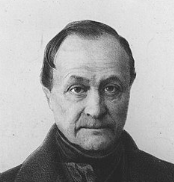
It was under Catholic Feudalism that they were first united; a union for which their incorporation into the Roman empire had prepared them, and which was finally organized by the incomparable genius of Charlemagne.
▼
Source
p. 88
4 months ago
Spontaneous love can reach the point of despair, shows that it is in despair, that even when it is happy it loves with the power of despair.
▼
Source
p. 40
4 months ago
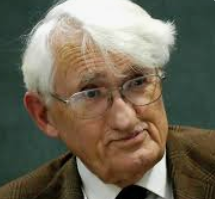
This investigation aims to analyze the type "bourgeois public sphere". Its particular approach is required, to begin with, by the difficulties specific to an object whose complexity precludes exclusive reliance on the specialized methods of a single discipline. Rather, the category. "public sphere" must be investigated within the broad field formerly reflected in the perspective of the traditional science of "politics."' When particular social-scientific discipline, this object disintegrates. The problems that result from fusing aspects of sociology and economics, of constitutional law and political science, and of social and intellectual history are obvious: given the present state of differentiation and specialization in the social sciences, scarcely anyone will be able to master several, let alone all, of these disciplines.
▼
Source
p.xvii

4 months ago
Why is it that we entertain the belief that for every purpose odd numbers are the most effectual?
▼
Source
Book XXVIII, sec. 23.
CivilSimian.com created by AxiomaticPanic, CivilSimian, Kalokagathia