
4 months ago
As to the Approbation or Esteem of those Blockheads who call themselves the Public, & whom a Bookseller, a Lord, a Priest, or a Party can guide, I do most heartily despise it.
▼
Source
Letter 138, To Gilbert Elliot of Minto; August 9, 1757
4 months ago
For he who is unmusical is a child in music; he who is without letters is a child in learning; he who is untaught, is a child in life.
▼
Source
Book III, ch. 19, § 6.

4 months ago
The Ionians were optimistic, heathenly materialists... Every philosopher of the period seems to have had his own theory regarding the nature of the universe around him. ...The sixth century scene evokes the image of an orchestra expectantly tuning up, each player absorbed in his own instrument only, deaf to the caterwaulings of the others. Then there is a dramatic silence, the conductor enters the stage, raps three times with his baton, and harmony emerges from the chaos. The maestro is Pythagoras of Samos, whose influence on the ideas, and thereby on the destiny, of the human race was probably greater than that of any single man before or after him.
▼
Source
Arthur Koestler, The Sleepwalkers: A History of Man's Changing Vision of the Universe (1959, 1963)
4 months ago
For a large class of cases — though not for all — in which we employ the word meaning it can be explained thus: the meaning of a word is its use in the language.
▼
Source
§ 43, this has often been quoted as simply: The meaning of a word is its use in the language.
4 months ago
Understanding is not such that we either enjoy it or lack it altogether. To be human and to be aware is to encounter only what is in some manner understood. Thus, it may be said that understanding is an unsought condition; we inexorably inhabit a world of intelligibles.
▼
Source
I. On the Theoretical Understanding of Human Conduct

4 months ago
The best lightning-rod for your protection is your own spine.
▼
Source
p. 236
4 months ago
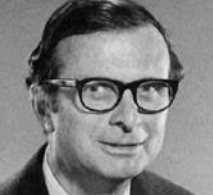
The concern of OR with finding an optimum decision, policy, or design is one of its essential characteristics. It does not seek merely to define a better solution to a problem than the one in use; it seeks the best solution... [It] can be characterized as the application of scientific methods, techniques, and tools to problems involving the operations of systems so as to provide those in control of the operations with optimum solutions to the problems.
▼
Source
p. 8, cited in: R.L. McCown (2001) "Learning to bridge the gap between science-based decision support and the practice of farming". In: Aust. J. Agric. Res., Vol 52, p. 560-561
4 months ago
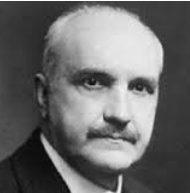
The pint would call the quart a dualist, if you tried to pour the quart into him.
▼
Source
p. 60
4 months ago
Take any action allow'd to be vicious: Wilful murder, for instance. Examine it in all lights, and see if you can find that matter of fact, or real existence, which you call vice. In which-ever way you take it, you find only certain passions, motives, volitions and thoughts. There is no other matter of fact in the case. The vice entirely escapes you, as long as you consider the object. You never can find it, till you turn your reflexion into your own breast, and find a sentiment of disapprobation, which arises in you, towards this action. Here is a matter of fact; but 'tis the object of feeling, not of reason. It lies in yourself, not in the object. So that when you pronounce any action or character to be vicious, you mean nothing, but that from the constitution of your nature you have a feeling or sentiment of blame from the contemplation of it. Vice and virtue, therefore, may be compar'd to sounds, colours, heat and cold, which, according to modern philosophy, are not qualities in objects, but perceptions in the mind[.]
▼
Source
Part 1, Section 1
4 months ago
Don't explain your philosophy. Embody it.
▼
Source
Has been ascribed to Epictetus since around 2016, (e.g. on [https://web.archive.org/web/20180925074300/https://dailystoic.com/stoic-quotes/ this Daily Stoic web page]). It may be an attempt to summarise the start of [https://en.wikisource.org/wiki/Epictet
4 months ago
To give the greater authority and effect to his communications Pythagoras hid himself during the day at least from the great body of his pupils, and was only seen by them at night. Indeed there is no reason to suppose that any one was admitted into his entire familiarity. When he came forth, he appeared in a long garment of the purest white, with a flowing beard, and a garland upon his head. He is said to have been of the finest symmetrical form, with a majestic carriage, and a grave and awful countenance. He suffered his followers to believe that he was one of the Gods, the Hyperborean Apollo, and is said to have told Abaris that he assumed the human form, that he might the better invite men to an easiness of approach and to confidence in him. -->
4 months ago
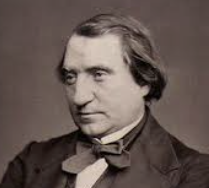
No place in the world has had a comparable role to that of the nameless mountain or valley where mankind first attained self-consciousness. Let us be proud ... of the old patriarchs who, at the foot of Imaiis, laid the foundations of what we are and of what we shall become.
▼
Source
Poliakov, L. (1974). The Aryan myth : a history of racist and nationalist ideas in Europe page 208
4 months ago
310. A pupil and a teacher. The pupil will not let anything be explained to him, for he continually interrupts with doubts, for instance as to the existence of things, the meaning for words, etc. The teacher says "Stop interrupting me and do as I tell you. So far your doubts don't make sense at all."

4 months ago
Instructors can impart only a fraction of the teaching. It is through your own devoted practice that the mysteries of the Art of Peace are brought to life.
4 months ago
[N]o one has had so steady and constant and above all so natural, a vision of what we require and what we are capable of in the way of aspiration and independence.
▼
Source
Henry James, Partial Portraits (1888), p. 9
4 months ago
The religious Weltanschauung, … describes a certain kind of relationship – such as love, adoration and obedience – between men and other men, or between men and some superior being. or between men and "Nature".
▼
Source
p. 238 as cited in: Charles François (2006) "Ethics and enlightened personal responsibility" in: Wisdom, Knowledge, and Management. C.West Churchman and Related Works Series Volume 2, 2006, pp 161-168
4 months ago
... I once shook hands with Longfellow at a garden party in 1881; and I often saw Dr. Holmes, who was our neighbor in Beacon Street: but Emerson I never saw.
▼
Source
p. 50
4 months ago
And any practice, recommended to him, which either serves to no purpose in life, or offers the strongest violence to his natural inclinations; that practice he will the more readily embrace, on account of those very circumstances, which should make him absolutely reject it. It seems the more purely religious, because it proceeds from no mixture of any other motive or consideration. And if, for its sake, he sacrifices much of his ease and quiet, his claim of merit appears still to rise upon him, in proportion to the zeal and devotion which he discovers. In restoring a loan, or paying a debt, his divinity is nowise beholden to him; because these acts of justice are what he was bound to perform, and what many would have performed, were there no god in the universe. But if he fast a day, or give himself a sound whipping; this has a direct reference, in his opinion, to the service of God. No other motive could engage him to such austerities. By these distinguished marks of devotion, he has now acquired the divine favour; and may expect, in recompence, protection and safety in this world, and eternal happiness in the next.
▼
Source
Part XIV - Bad influence of popular religions on morality
4 months ago
If we consider the results obtained together, we will not be able to doubt the conclusion to be drawn from them. The ancient priestly geometry of the Indians not only knew the Pythagorean theorem, but it even played the main role in their calculations; with its help, they constructed elements that the Greeks found in a completely different way; with its help, they also found the irrational quantities. And it was precisely these two things that Pythagoras introduced into the Greek-Italian world; these two things, according to the Greeks, he invented. Indeed, even more! The way in which Pythagoras proved his theorem was also, in all likelihood, the same as that which we find in the Vedic Shulba Sutras. After examining the Shulba Sutras, we could have said: If Pythagoras really was in India, as we previously suggested, and initiated himself into the priestly wisdom of the Brahmins, then he could have brought precisely these theorems of geometric science to Greece; — and history has been telling us for several millennia now that this was indeed the case!
▼
Source
Leopold von Schroeder’s [https://archive.org/stream/pythagorasunddie00schr/pythagorasunddie00schr_djvu.txt Pythagoras und die Inder], 1884 quoted from Bhaskar Kamble, The Imperishable Seed: How Hindu Mathematics Changed the World and why this History was
4 months ago
If you want to go down deep you do not need to travel far; indeed, you don't have to leave your most immediate and familiar surroundings.
▼
Source
p. 50e

4 months ago
Human intellect is natures attempt at self criticism.
▼
Source
[http://www.allamaiqbal.com/poet/prose/english/stray.pdf Stray Reflections]
4 months ago
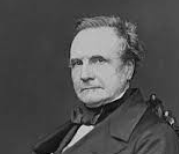
We have already mentioned what may, perhaps, appear paradoxical to some of our readers, — that the division of labour can be applied with equal success to mental as to mechanical operations, and that it ensures in both the same economy of time.
▼
Source
p. 191; Ch. 20. "On the division of mental labour"
4 months ago
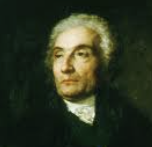
Faith and patriotism are the two great thaumaturges of this world. Both are divine; all their actions are prodigies. Do not go to them talking of examination, choice, or discussion; they will say that you blaspheme. They know only two words: submission and belief; with these two levers they raise the world. Even their errors are sublime. These two children of Heaven prove their origin to all eyes by creating and conserving; but if they unite, join their forces, and together take possession of a nation, they exalt it, they divinize it, and they increase its forces a hundred-fold.
▼
Source
p. 88
4 months ago
But though all the general rules of art are founded only on experience and on the observation of the common sentiments of human nature, we must not imagine, that, on every occasion, the feelings of men will be conformable to these rules.
4 months ago
A philosopher who is not taking part in discussions is like a boxer who never goes into the ring.
▼
Source
Conversation of 1930

4 months ago
Carnap, who has so far probably advanced the work of the Vienna Circle the most towards empiricism, made an attempt to create a constitutive constructive system; in this he distinguished two languages: a ‘monologizing’ (phenomenalist) one and an ‘intersubjective’ (physicalist) one. He tries to deduce the physical one from the phenomenalist.
▼
Source
p. 54
4 months ago
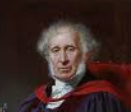
I would advise you not to expect too much happiness, even from the fulfillment of all your wishes. The moment you have distinguished yourself you become an object of envy and malice ; men whom you believed to be lovers of knowledge you will then find to be lovers only of fame, and haters of all knowledge that has not come from themselves. You will find that a life of science has in it no superiority to any other, unless it is pursued from a higher principle than the mere ambition of notoriety, and that demagogue or a philosopher differ only in the objects of their selfishness. As you will now have experienced how unsatisfying even the pursuit of knowledge is when insulated from higher objects, I hope, if you have not been fortunate enough to begin the study earlier, that you will devote yourself to the most extraordinary of all subjects, one which infinitely surpasses the mechanism of the heavens or the chemistry of the material world, the revelation of your duty and the destiny of man as contained in The Bible — a book which occupied the best hours of the manhood of Newton, of Locke, and of Euler.
▼
Source
In a 1830 letter to James David Forbes, as found in Life and letters of James David Forbes, p. 40.
4 months ago
It is written, By me kings reign. This is not a phrase of the church, a metaphor of the preacher; it is a literal truth, simple and palpable. It is a law of the political world. God makes kings in the literal sense. He prepares royal races; maturing them under a cloud which conceals their origin. They appear at length crowned with glory and honour; they take their places; and this is the most certain sign of their legitimacy.
▼
Source
Preface
4 months ago
It has ever appeared to me, that the difference between the whig and the tory of England is, that the whig deduces his rights from the Anglo-Saxon source, and the tory from the Norman. And Hume, the great apostle of toryism, says, in so many words, note AA to chapter 42, that, in the reign of the Stuarts, “it was the people who encroached upon the sovereign, not the sovereign who attempted, as is pretended, to usurp upon the people.” This supposes the Norman usurpations to be rights in his successors. And again, C, 159, “the commons established a principle, which is noble in itself, and seems specious, but is belied by all history and experience, that the people are the origin of all just power.” And where else will this degenerate son of science, this traitor to his fellow men, find the origin of just powers, if not in the majority of the society? Will it be in the minority? Or in an individual of that minority?
▼
Source
Thomas Jefferson to John Cartwright (5 June 1824), quoted in Thomas Jefferson, Writings, ed. Merrill D. Peterson (1984), p. 1491

4 months ago
One courageous act has sufficed to upset in a few days the entire governmental machinery, to make the colossus tremble; another revolt has stirred a whole province into turmoil, and the army, till now always so imposing, has retreated before a handful of peasants armed with sticks and stones. The people observe that the monster is not so terrible as they thought they begin dimly to perceive that a few energetic efforts will be sufficient to throw it down. Hope is born in their hearts, and let us remember that if exasperation often drives men to revolt, it is always hope, the hope of victory, which makes revolutions. The government resists; it is savage in its repressions. But, though formerly persecution killed the energy of the oppressed, now, in periods of excitement, it produces the opposite result. It provokes new acts of revolt, individual and collective, it drives the rebels to heroism; and in rapid succession these acts spread, become general, develop. The revolutionary party is strengthened by elements which up to this time were hostile or indifferent to it.

4 months ago
We take pleasure in watching an athlete break a record, hearing a soprano in full flight, or reading a philosopher of depth and insight. Human accomplishment is the ultimate spectator sport. Apply as much historical analysis to it as we wish, and we’ll not unlock all its mysteries. The continuous capacity of genius to surpass understanding remains a human constant.
▼
Source
"[http://denisdutton.com/murray_review.htm Of Human Accomplishment]", The New Criterion (February 2004)
4 months ago
Final causes or intentions are the torment of modern philosophy, which neglects nothing to get rid of them. From this, among other things, comes its great axiom: nature creates only individuals. Indeed, since all classification supposes order, this philosophy has denied classes to deny order. In order to establish this marvellous reasoning, it fixes its suspicious eyes on the differences between beings to dispense itself from turning them to their similarities. It does not want to recognize that nuances between classes and individuals constitute another order, and that diversity in resemblance supposes intention more visibly than mere resemblance.
4 months ago
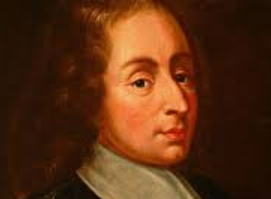
There are some men who expose themselves to damnation so foolishly by avarice, by brutality, by debauches, by violence, by excesses, by blasphemies! ...it is always a great folly for a man to expose himself to damnation... He must despise desire and its kingdom, and aspire to that kingdom of love in which all the subjects breathe nothing but love, and desire nothing but the benefits of love.
4 months ago
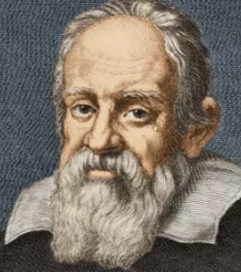
Persisting in their original resolve to destroy me and everything mine by any means they can think of, these men are aware of my views in astronomy and philosophy. They know that as to the arrangement of the parts of the universe, I hold the sun to be situated motionless in the center of the revolution of the celestial orbs while the earth revolves about the sun. They know also that I support this position not only by refuting the arguments of Ptolemy and Aristotle, but by producing many counter-arguments; in particular, some which relate to physical effects whose causes can perhaps be assigned in no other way. In addition there are astronomical arguments derived from many things in my new celestial discoveries that plainly confute the Ptolemaic system while admirably agreeing with and confirming the contrary hypothesis.
▼
Source
Variant translation: I hold that the Sun is located at the centre of the revolutions of the heavenly orbs and does not change place, and that the Earth rotates on itself and moves around it. Moreover … I confirm this view not only by refuting Ptolemy's an
4 months ago
These societies already begin to encroach everywhere on the functions of the State, and strive to substitute free action of volunteers for that of a centralized State. In England we see arise insurance companies against theft; societies for coast defense, volunteer societies for land defense, which the State endeavors to get under its thumb, thereby making them instruments of domination, although their original aim was to do without the State. Were it not for Church and State, free societies would have already conquered the whole of the immense domain of education. And, in spite of all difficulties, they begin to invade this domain as well, and make their influence already felt.And when we mark the progress already accomplished in that direction, in spite of and against the State, which tries by all means to maintain its supremacy of recent origin; when we see how voluntary societies invade everything and are only impeded in their development by the State, we are forced to recognize a powerful tendency, a latent force in modern society.

4 months ago
He used to say that other men lived to eat, but that he ate to live.
▼
Source
Socrates, 16.
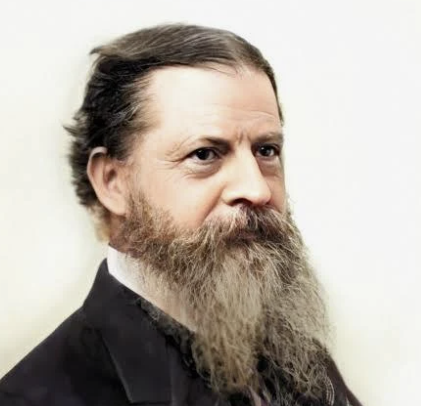
4 months ago
Few persons care to study logic, because everybody conceives himself to be proficient enough in the art of reasoning already. But I observe that this satisfaction is limited to one's own ratiocination and does not extend to that of other men. We come to the full possession of our power of drawing inferences the last of all our faculties, for it is not so much a natural gift as a long and difficult art.
▼
Source
"Illustrations of the Logic of Science" First Paper — The Fixation of Belief", in Popular Science Monthly, Vol. 12 (November 1877)
4 months ago
These five rules [above] form all that is necessary to render proofs convincing, immutable, and to say all, geometrical; and the eight rules together render them even more perfect.
4 months ago
It now remains that we find the amount of time of descent through the channel. This we shall obtain from the marvelous property of the pendulum, which is that it makes all its vibrations, large or small, in equal times. This requires, once and for all, that two or three or four patient and curious friends, having noted a fixed star that stands against some fixed marker, taking a pendulum of any length, shall go counting its vibrations during the whole time of return of the fixed star to its original point, and this will be the number of vibrations in 24 hours. From the number of these we can find the number of vibrations of any other pendulums, longer or shorter, at will, so that if for example those counted by us in 24 hours were 234,567, then taking another shorter pendulum with which one counts 800 vibrations while another counts 150 of the longer pendulum, we already have, by the golden rule, the number of vibrations for the whole time of 24 hours; and if we want to know the time of descent through the channel, we can easily find not only the minutes, seconds, and sixtieths of seconds, but beyond that as we please. It is true that we can pass a more exact measure by having observed the flow of water through a thin passage, for by collecting this and having weighed what passes in one minute, for example, then by weighing what passes in the time of descent through the channel we can find the most exact measure and quantity of this time, especially by making use of a balance so precise as to weigh one sixtieth of a grain.

4 months ago
Nevertheless, the ultimate business of philosophy is to preserve the force of the most elemental words in which Dasein expresses itself, and to keep the common understanding from levelling them off to that unintelligibility which functions in turn as a source of pseudo-problems.
▼
Source
Macquarrie & Robinson translation
4 months ago
We can already catch glimpses of a world in which the bonds which bind the individual are no longer laws, but social habits--the result of the need felt by each one of us to seek the support, the co-operation, the sympathy of his neighbours. Assuredly the idea of a society without a State will give rise to at least as many objections as the political economy of a society without private capital. We have all been brought up from our childhood to regard the State as a sort of Providence; all our education, the Roman history we learned at school, the Byzantine code which we studied later under the name of Roman law, and the various sciences taught at the universities, accustom us to believe in Government and in the virtues of the State providential. To maintain this superstition whole systems of philosophy have been elaborated and taught; all politics are based on this principle; and each politician, whatever his colours, comes forward and says to the people, "Give me the power, and I both can and will free you from the miseries which press so heavily upon you."
▼
Source
Ch. 3 : Anarchist Communism
4 months ago
The question was once put to him, how we ought to behave to our friends; and the answer he gave was, "As we should wish our friends to behave to us."
▼
Source
Aristotle, 9.

4 months ago
Before Descartes, some of the ancients made the essence of matter consist in solid extension. But this opinion, of which all the Cartesians have made much, has at all times been victoriously combated...
▼
Source
Ch. III Concerning the Extension of Matter
4 months ago
Logical analysis applied to mental phenomenon shows that there is but one law of mind, namely that ideas tend to spread continuously and to affect certain others which stand to them in a peculiar relation of affectibility. In this spreading they lose intensity, and especially the power of affecting others, but gain generality and become welded with other ideas.
4 months ago
Philosophy will not be able to bring about a direct change of the present state of the world. This is true not only of philosophy but of all merely human meditations and endeavors. Only a god can still save us. I think the only possibility of salvation left to us is to prepare readiness, through thinking and poetry, for the appearance of the god or for the absence of the god during the decline; so that we do not, simply put, die meaningless deaths, but that when we decline, we decline in the face of the absent god.
4 months ago
Few books have exercised so pernicious an influence upon the general development of economic thought as Malthus's Essay on the Principle of Population exercised for three consecutive generations. It appeared at the right time, like all books which have had any influence... and it summed up the ideas already current in the minds of the wealth-possessing minority. It was precisely when the ideas of equality and liberty, awakened by the French and American revolutions, were still permeating in the minds of the poor, while the richer classes had become tired of their amateur excursions into the same domains, that Malthus came to assert, in reply to Godwin, that no equality is possible; that the poverty of the many is not due to institutions, but is a natural law... and that law cannot be changed by any change of institutions.
4 months ago
Among what he called his precepts were such as these: Do not stir the fire with a sword. Do not sit down on a bushel. Do not devour thy heart.
▼
Source
Pythagoras, 17.

4 months ago
We have reached the point where the Objective Logic turns into the Subjective Logic, or, where subjectivity emerges as the true form of objectivity. We may sum up Hegel’s analysis in the following schema: The true form of reality requires freedom. Freedom requires self-consciousness and knowledge of the truth. Self-consciousness and knowledge of the truth are the essentials of the subject. The form of reality must be conceived as subject. P. 154-155
4 months ago
Why should we divide the sensitive principle which thinks in man? ...For a thing that is divided can no longer without absurdity be regarded as indivisible.
4 months ago
Fourth, this supreme law, which is celestial and living harmony, does not so much as demand that the special ideas shall surrender their peculiar arbitrariness and caprice entirely; for that would be self-destructive. It only requires that they influence and be influenced by one another.
CivilSimian.com created by AxiomaticPanic, CivilSimian, Kalokagathia