

4 months ago
It should be added, perhaps, that the forcefulness of Heidegger's "aristocratic" arguments depends in large part on the personality of the lecturer. One is caught as in a political rally by the slow intensity of his speech. The contemptuous epigrams with which he dismisses the protests of logic or good sense sting the listeners ears with their acidity; and his prophetic solemnity when he invokes the quest for being ties one as spellbound as if one were a novice taking his first steps into the Eleusinian mysteries.
▼
Source
Marjorie Glicksman, "A Note on the Philosophy of Heidegger". The Journal of Philosophy, Vol 35 no 4, Feb 17, 1938, pp. 93-104.

4 months ago
Having been brought up in a serf-owner's family, I entered active life, like all young men of my time, with a great deal of confidence in the necessity of commanding, ordering, scolding, punishing, and the like. But when, at an early stage, I had to manage serious enterprises and to deal with men, and when each mistake would lead at once to heavy consequences, I began to appreciate the difference between acting on the principle of command and discipline and acting on the principle of common understanding. The former works admirably in a military parade, but it is worth nothing where real life is concerned, and the aim can be achieved only through the severe effort of many converging wills.
▼
Source
[http://dwardmac.pitzer.edu/anarchist_archives/kropotkin/memoirs/memoirs3_7.html Part III, Sect. 7]

4 months ago
Xenophanes speaks thus:—And no man knows distinctly anything,And no man ever will.
▼
Source
Pyrrho, 8.

4 months ago
The transition from philosophy to the domain of state and society had been an intrinsic part of Hegel’s system. P. 251

4 months ago
The soul is... but an empty word, of which no one has any idea, and which an enlightened man should use only to signify the part in us that thinks...
4 months ago
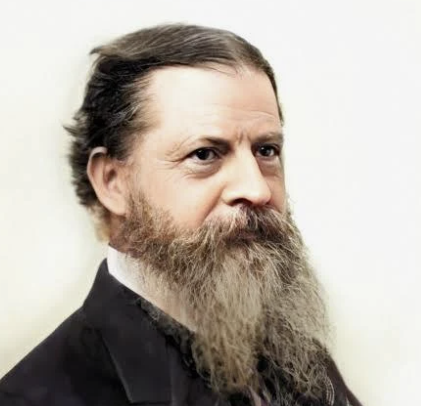
I think that I have succeeded in making it clear that this doctrine gives room for explanations of many facts which without it are absolutely and hopelessly inexplicable; and further that it carries along with it the following doctrines: first, a logical realism of the most pronounced type; second, objective idealism; third, tychism, with its consequent thoroughgoing evolutionism. We also notice that the doctrine presents no hindrences to spiritual influences, such as some philosophies are felt to do.
4 months ago
Boyle entertains the hypothesis of a universal matter, the concept of atoms of different shapes and sizes, and the possibility of existence of substances that might properly be called elements... The atomic theory as originally conceived by Democritus and Epicurus, developed by Lucretius, and resurrected by Gassendi from about 1647 on, was doubtless the source from which Boyle derived his ideas, ...as he cites both Epicurus and Gassendi. Boyle, however... avoids any dogmatic assertion of these hypotheses. It is plain, however, that these atoms or "corpuscles" as he calls them are a constant element of his thought.
▼
Source
John Maxson Stillman, The Story of Alchemy and Early Chemistry (1924)
4 months ago
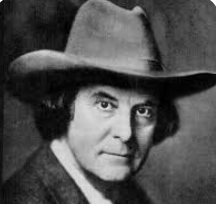
If you want work well done, select a busy man ‚ the other kind has no time.
▼
Source
The Note Book (1927)
4 months ago
All liberation depends on the consciousness of servitude, and the emergence of this consciousness is always hampered by the predominance of needs and satisfactions which, to a great extent, have become the individual's own.
▼
Source
p. 7
4 months ago
All the evolution we know of proceeds from the vague to the definite.
▼
Source
Vol. VI, par. 191
4 months ago
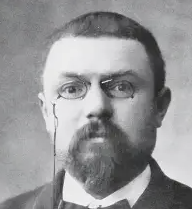
It is the sidereal day, that is, the duration of the rotation of the earth, which is the constant unit of time. ...However ...many astronomers ...think that the tides act as a check on our globe, and that the rotation of the earth is becoming slower and slower. Thus would be explained the apparent acceleration of the motion of the moon...
4 months ago
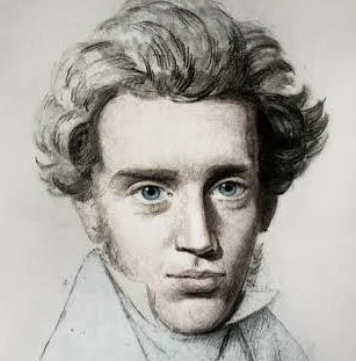
Consciousness presupposes itself, and asking about its origin is an idle and just as sophistical a question as that old one, "What came first, the fruit-tree or the stone? Wasn't there a stone out of which came the first fruit-tree? Wasn't there a fruit-tree from which came the first stone? Journals and Papers, Hannay, 1996 1843 IVA49
4 months ago
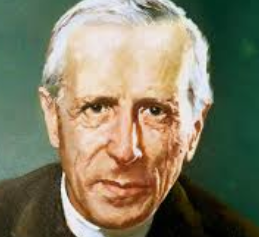
There is neither spirit nor matter in the world; the stuff of the universe is spirit-matter. No other substance but this could produce the human molecule. I know very well that this idea of spirit-matter is regarded as a hybrid monster, a verbal exorcism of a duality which remains unresolved in its terms. But I remain convinced that the objections made to it arise from the mere fact that few people can make up their minds to abandon an old point of view and take the risk of a new idea. ... Biologists or philosophers cannot conceive a biosphere or noosphere because they are unwilling to abandon a certain narrow conception of individuality. Nevertheless, the step must be taken. For in fact, pure spirituality is as unconceivable as pure materiality. Just as, in a sense, there is no geometrical point, but as many structurally different points as there are methods of deriving them from different figures, so every spirit derives its reality and nature from a particular type of universal synthesis.
▼
Source
A Sketch of a Personalistic Universe (1936)
4 months ago
There have always existed three ways of keeping the people loving and loyal. One is to leave them alone, to trust them and not to interfere. This plan, however, has very seldom been practised, because the politicians regard the public as a cow to be milked, and something must be done to make it stand quiet. So they try Plan Number Two, which consists in hypnotizing the public by means of shows, festivals, parades, prizes and many paid speeches, sermons and editorials, wherein and whereby the public is told how much is being done for it, and how fortunate it is in being protected and wisely cared for by its divinely appointed guardians. Then the band strikes up, the flags are waved, three passes are made, one to the right and two to the left; and we, being completely under the hypnosis, hurrah ourselves hoarse. Plan Number Three is a very ancient one and is always held back to be used in case Number Two fails. It is for the benefit of the people who do not pass readily under hypnotic control. If there are too many of these, they have been known to pluck up courage and answer back to the speeches, sermons and editorials. Sometimes they refuse to hurrah when the bass-drum plays, in which case they have occasionally been arrested for contumacy and contravention by stocky men, in wide-awake hats, who lead the strenuous life. This Plan Number Three provides for an armed force that shall overawe, if necessary, all who are not hypnotized. The army is used for two purposes — to coerce disturbers at home, and to get up a war at a distance, and thus distract attention from the troubles near at hand. Napoleon used to say that the only sure cure for internal dissension was a foreign war: this would draw the disturbers away, on the plea of patriotism, so they would win enough outside loot to satisfy them, or else they would all get killed, it really didn't matter much; and as for loot, if it was taken from foreigners, there was no sin. A careful analyst might here say that Plan Number Three is only a variation of Plan Number Two — the end being gained by hypnotic effects in either event, for the army is conscripted from the people to use against the people, just as you turn steam from a boiler into the fire-box to increase the draft. ...
▼
Source
[http://www.gutenberg.org/etext/20318 Vol. XIV: Great Musicians,] Chapter 8: "Ludwig van Beethoven," pp. 228-230
4 months ago
The soul contains few secrets and longings which cannot be sensibly discussed, analyzed, and polled. Solitude, the very condition which sustained the individual against and beyond his society, has become technically impossible. Logical and linguistic analysis demonstrate that the old metaphysical problems are illusory problems; the quest for the “meaning” of things can be reformulated as the quest for the meaning of words, and the established universe of discourse and behavior can provide perfectly adequate criteria for the answer.
▼
Source
p. 71
4 months ago
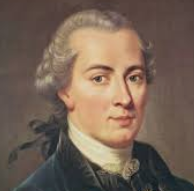
By a lie a man throws away and, as it were, annihilates his dignity as a man. A man who himself does not believe what he tells another … has even less worth than if he were a mere thing. … makes himself a mere deceptive appearance of man, not man himself.
▼
Source
Doctrine of Virtue as translated by Mary J. Gregor (1964), p. 93
4 months ago
Human justice is very prolix, and yet at times quite mediocre; divine justice is more concise and needs no information from the prosecution, no legal papers, no interrogation of witnesses, but makes the guilty one his own informer and helps him with eternity's memory."
▼
Source
Eighteen Upbuilding Discourses, Against Cowardliness p. 351
4 months ago
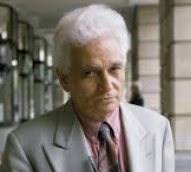
1) Différance is the systematic play of differences, of the traces of differences, of the spacing by means of which elements are related to each other. This spacing is the simultaneously active and passive (the a of différance indicates this indecision as concerns activity and passivity, that which cannot be governed by or distributed between the terms of this opposition) production of the intervals without which the "full" terms would not signify, would not function.
▼
Source
p. 21
4 months ago
Now when sufficient elements have sufficiently agglomerated, this essentially convergent movement will attain such intensity and such quality that mankind, taken as a whole, will be obliged—as happened to the individual forces of instinct—to reflect upon itself at a single point; that is to say, in this case, to abandon its organo-planetary foothold so as to shift its centre on to the transcendent centre of its increasing concentration. This will be the end and the fulfillment of the spirit of the earth. The end of the world: the wholesale internal introversion upon itself of the , which has simultaneously reached the uttermost limit of its complexity and its centrality. The end of the world: the overthrow of equilibrium, detaching the mind, fulfilled at last, from its material matrix, so that it will henceforth rest with all its weight on God-Omega.
4 months ago
The way to learn to earn a living is to go at it and earn a living.
4 months ago
Nobody really thinks who does not abstract from that which is given, who does not relate the facts to the factors which have made them, who does not — in his mind — undo the facts. Abstractness is the very life of thought, the token of its authenticity.
▼
Source
p. 134
4 months ago
I freely admit that the remembrance of David Hume was the very thing that many years ago first interrupted my dogmatic slumber and gave a completely different direction to my researches in the field of speculative philosophy.
▼
Source
Variant translation: I freely admit: it was David Hume's remark that first, many years ago, interrupted my dogmatic slumber and gave a completely different direction to my enquiries in the field of speculative philosophy.
4 months ago
Where is the boundary for the single individual in his concrete existence between what is lack of will and what is lack of ability; what is indolence and earthly selfishness and what is the limitation of finitude? For an existing person, when is the period of preparation over, when this question will not arise again in all its initial, troubled severity; when is the time in existence that is indeed a preparation? Let all the dialecticians convene-they will not be able to decide this for a particular individual in concreto.
▼
Source
Concluding Unscientific Postscript, Hong p. 490
4 months ago
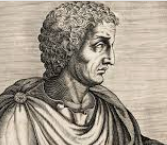
Man is the only one that knows nothing, that can learn nothing without being taught. He can neither speak nor walk nor eat, and in short he can do nothing at the prompting of nature only, but weep.
▼
Source
Book VII, sec. 4.
4 months ago
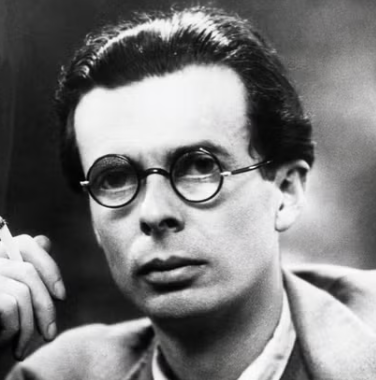
'There are quiet places also in the mind', he said meditatively. 'But we build bandstands and factories on them. Deliberately — to put a stop to the quietness. ... All the thoughts, all the preoccupations in my head — round and round, continually What's it for? What's it all for? To put an end to the quiet, to break it up and disperse it, to pretend at any cost that it isn't there. Ah, but it is; it is there, in spite of everything, at the back of everything. Lying awake at night — not restlessly, but serenely, waiting for sleep — the quiet re-establishes itself, piece by piece; all the broken bits ... we've been so busily dispersing all day long. It re-establishes itself, an inward quiet, like the outward quiet of grass and trees. It fills one, it grows — a crystal quiet, a growing, expanding crystal. It grows, it becomes more perfect; it is beautiful and terrifying ... For one's alone in the crystal, and there's no support from the outside, there is nothing external and important, nothing external and trivial to pull oneself up by or stand on ... There is nothing to laugh at or feel enthusiast about. But the quiet grows and grows. Beautifully and unbearably. And at last you are conscious of something approaching; it is almost a faint sound of footsteps. Something inexpressively lovely and wonderful advances through the crystal, nearer, nearer. And, oh, inexpressively terrifying. For if it were to touch you, if it were to seize you and engulf you, you'd die; all the regular, habitual daily part of you would die ... one would have to begin living arduously in the quiet, arduously in some strange, unheard of manner.
▼
Source
Antic Hay (1923)
4 months ago
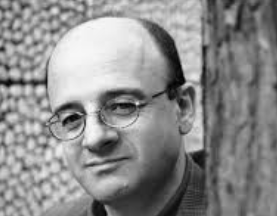
Philosophy is an inventory of thoughts in the flow of life.
4 months ago
When I heard that Herbert Marcuse had died, I immediately thought, "The same year as John Wayne." For people like me Marcuse was something of a star, a presence, a symbol of certain values. I felt connected to him, though not in any simple I discovered his books at a time when I was groping toward a radicalism that would make sense of my experience as a middle-class American. Eros and Civilization and One Dimensional Man excited me because they were about problems I was struggling with the relation of psychology to politics, the idea of a cultural revolution, the prospects for radical change in a society where most people had enough to eat. Still, my copies of the books are filled with comments like "European elitism" and "glib" and "what bullshit!" As my politics matured, I found that I disagreed with most of what Marcuse said and hated what the new left made of his ideas. In some ways I defined my political outlook in reaction to Marcuse's, an acknowledgment that he'd made certain territory his own. In his monolithically bleak view of advanced capitalism and his contempt for American workers' enjoyment of their material gains, Marcuse was hardly distinguishable from conservative critics of mass culture…The Times quotes Marcuse wistfully referring to the "heroic period" of "the hippies and yippies." I wonder if he understood how thoroughly his heroes' values were rooted in mass culture. What did he think it meant when the Yippies got the Chicago police and the news media to cooperate in bringing revolutionary theater to millions? But then, he may have been more appreciative of such ironies than I tend to assume.
▼
Source
Ellen Willis Herbert Marcuse, 1898-1979 (August 1979) in Beginning to See the Light: Pieces of a Decade (1981)
4 months ago
All natural philosophers, who wished to proceed mathematically in their work, have hence invariably (although unknown to themselves) made use of metaphysical principles, and must make use of such, it matters not how energetically they may otherwise repudiate any claim of metaphysics on their science.
▼
Source
Preface, Tr. Bax (1883)
4 months ago
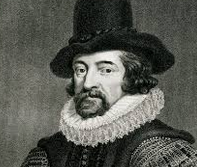
Whence we see spiders, flies, or ants entombed and preserved forever in amber, a more than royal tomb.
▼
Source
Historia Vitæ et Mortis; Sylva Sylvarum, Cent. i. Exper. 100, reported in Bartlett's Familiar Quotations, 10th ed. (1919)
4 months ago
My doubt goes like this: How could the Loving One have the heart to let human beings become so guilty that they got his murder on their consciences?
▼
Source
p. 63
4 months ago
The realist, then, would seek in behalf of philosophy the same renunciation the same rigour of procedure, that has been achieved in science. This does not mean that he would reduce philosophy to natural or physical science. He recognizes that the philosopher has undertaken certain peculiar problems, and that he must apply himself to these, with whatever method he may find it necessary to employ. It remains the business of the philosopher to attempt a wide synoptic survey of the world, to raise underlying and ulterior questions, and in particular to examine the cognitive and moral processes. And it is quite true that for the present no technique at all comparable with that of the exact sciences is to be expected. But where such technique is attainable, as for example in symbolic logic, the realist welcomes it. And for the rest he limits himself to a more modest aspiration. He hopes that philosophers may come like scientists to speak a common language, to formulate common problems and to appeal to a common realm of fact for their resolution. Above all he desires to get rid of the philosophical monologue, and of the lyric and impressionistic mode of philosophizing. And in all this he is prompted not by the will to destroy but by the hope that philosophy is a kind of knowledge, and neither a song nor a prayer nor a dream. He proposes, therefore, to rely less on inspiration and more on observation and analysis. He conceives his function to be in the last analysis the same as that of the scientist. There is a world out yonder more or less shrouded in darkness, and it is important, if possible, to light it up. But instead of, like the scientist, focussing the mind's rays and throwing this or that portion of the world into brilliant relief, he attempts to bring to light the outlines and contour of the whole, realizing too well that in diffusing so widely what little light he has, he will provide only a very dim illumination.
▼
Source
Chap XXV.
4 months ago
Maybe this world is another planet's Hell.
▼
Source
As quoted in Peter's Quotations: Ideas for Our Time (1979) by Laurence J. Peter, p. 239 | Point Counter Point (New York: The Modern Library, 1928), Chapter XVII, p. 263 [https://archive.org/details/pointcounterpoin0000aldo_k3u2/page/262/mode/2up?q=%22plan
4 months ago
To have a right to do a thing is not at all the same as to be right in doing it.
▼
Source
A Short History of England (1917)
4 months ago
it is absurd … to hope that maybe another Newton may some day arise, to make intelligible to us even the genesis of but a blade of grass.
▼
Source
("Dialectic of Teleological Judgment" §75)
4 months ago
The natural philosophy of Democritus and some others, who did not suppose a mind or reason in the frame of things, but attributed the form thereof able to maintain itself to infinite essays or proofs of nature, which they term fortune, seemeth to me... in particularities of physical causes more real and better inquired than that of Aristotle and Plato; whereof both intermingled final causes, the one as a part of theology, and the other as a part of logic, which were the favourite studies respectively of both those persons. Not because those final causes are not true, and worthy to be inquired, being kept within their own province; but because their excursions into the limits of physical causes hath bred a vastness and solitude in that tract.
▼
Source
Book VII, 7
4 months ago
To one unnamed, whose name will one day be named, is dedicated, with this little work, the entire authorship, as it was from the beginning. (Dedication) P. 163
4 months ago
Obviously, the faster we process information, the more rich and complex our models or glosses — our reality-tunnels — will become. Resistance to new information, however, has a strong neurological foundation in all animals, as indicated by studies of imprinting and conditioning. Most animals, including most domesticated primates (humans) show a truly staggering ability to "ignore" certain kinds of information — that which does not "fit" their imprinted/conditioned reality-tunnel. We generally call this "conservatism" or "stupidity", but it appears in all parts of the political spectrum, and in learned societies as well as in the Ku Klux Klan.
▼
Source
Quantum Psychology : How Brain Software Programs You and Your World (1990), p. 45
4 months ago
The course of every intellectual, if he pursues his journey long and unflinchingly enough, ends in the obvious, from which the non-intellectuals have never stirred. ...The thoroughly contemptible man may have valuable opinions, just as in some ways the admirable man can have detestable opinions. ...Many intellectuals, of course, don't get far enough to reach the obvious again. They remain stuck in a pathetic belief in rationalism and the absolute supremacy of mental values and the entirely conscious will. You've got to go further than the nineteenth-century fellows, for example; as far at least as Protagoras and Pyrrho, before you get back to the obvious in which the nonintellectuals have always remained. ...these nonintellectuals aren't the modern canaille who read the picture papers and... are preoccupied with making money... They take the main intellectualist axiom for granted—that there's an intrinsic superiority in mental, conscious, voluntary life over physical, intuitive, instinctive, emotional life. The whole of modern civilization is based on the idea that the specialized function which gives a man his place in society is more important than the whole man, or rather is the whole man, all the rest being irrelevant or even (since the physical, intuitive, instinctive and emotional part of man doesn't contribute appreciably to making money or getting on in an industrialized world) positively harmful and detestable. ...The nonintellectuals I'm thinking of are very different beings. ...There were probably quite a lot of them three thousand years ago. But the combined efforts of Plato and Aristotle, Jesus, Newton and big business have turned their descendants into the modern bourgeoisie and proletariat. The obvious that the intellectual gets back to, if he goes far enough, isn't of course the same as the obvious of the nonintellectuals. For their obvious is life itself and his recovered obvious is only the idea of that life. Not many can put flesh and blood on the idea and turn it into reality. The intellectuals who, like Rampion, don't have to return to the obvious, but have always believed in it and lived it, while at the same time leading the life of the spirit, are rarer still.
▼
Source
Ch. 26; note: the character Mark Rampion, a writer, painter and fierce critic of modern society, is based on D. H. Lawrence.
4 months ago
There runs a strange law through the length of human history — that men are continually tending to undervalue their environment, to undervalue their happiness, to undervalue themselves. The great sin of mankind, the sin typified by the fall of Adam, is the tendency, not towards pride, but towards this weird and horrible humility. This is the great fall, the fall by which the fish forgets the sea, the ox forgets the meadow, the clerk forgets the city, every man forgets his environment and, in the fullest and most literal sense, forgets himself. This is the real fall of Adam, and it is a spiritual fall. It is a strange thing that many truly spiritual men, such as General Gordon, have actually spent some hours in speculating upon the precise location of the Garden of Eden. Most probably we are in Eden still. It is only our eyes that have changed.
▼
Source
"Introduction"
4 months ago
All metaphysical theories are inconclusively vulnerable to positivist attack.
▼
Source
Ch. 9, p. 127
4 months ago
England and France, the two most civilized nations on earth, who are in contrast to each other because of their different characters, are, perhaps chiefly for that reason, in constant feud with one another. Also, England and France, because of their inborn characters, of which the acquired and artificial character is only the result, are probably the only nations who can be assumed to have a particular and, as long as both national characters are not blended by the force of war, unalterable characteristics. That French has become the universal language of conversation, especially in the feminine world, and that English is the most widely used language of commerce among tradesmen, probably reflects the difference in their continental and insular geographic situation.
▼
Source
Kant, Immanuel (1996), page 226
4 months ago
No one has yet been found so firm of mind and purpose as resolutely to compel himself to sweep away all theories and common notions, and to apply the understanding, thus made fair and even, to a fresh examination of particulars. Thus it happens that human knowledge, as we have it, is a mere medley and ill-digested mass, made up of much credulity and much accident, and also of the childish notions which we at first imbibed.
▼
Source
Aphorism 97
4 months ago
It is of this sort of divine service I used the expression that, in comparison with the Christianity of the New Testament, it is playing Christianity. The expression is essentially true and characterizes the thing perfectly. For what does it mean to play, when one reflects how the word must be understood in this connection? It means to imitate, to counterfeit, a danger when there is no danger, and to do it in such a way that the more art is applied to it, the more delusive the pretense is that the danger is present.
▼
Source
p. 121
4 months ago
And Spaceship Earth, that glorious and bloody circus, continued its four-billion-year-long spiral orbit about the Sun; the engineering, I must admit, was so exquisite that none of the passengers felt any motion at all. Those on the dark side of the ship mostly slept and voyaged into worlds of freedom and fantasy; those on the light side moved about the tasks appointed for them by their rulers, or idled waiting for the next order from above.
4 months ago
The second doctrine of the Perennial Philosophy — that it is possible to know the Divine Ground by a direct intuition higher than discursive reasoning — is to be found in all the great religions of the world. A philosopher who is content merely to know about the ultimate Reality — theoretically and by hearsay — is compared by Buddha to a herdsman of other men's cows. Mohammed uses an even homelier barnyard metaphor. For him the philosopher who has not realized his metaphysics is just an ass bearing a load of books. Christian, Hindu, Taoist teachers wrote no less emphatically about the absurd pretensions of mere learning and analytic reasoning.
4 months ago
One of the actual and certain consequences of the idea that all men are equal is immediately to produce very great men.
▼
Source
Ch 1: "The Dickens Period"
4 months ago
I, for one, while I would not choose to dismiss Kant, am certainly prepared to dismiss his writing style. It was, indeed, in his own day, profitably parodied by Fichte.
▼
Source
Stephen K. Roney, “Postmodernist Prose and George Orwell”, Academic Questions (Spring 2002)
4 months ago
It is a sad fate for a man to die too well known to everybody else, and still unknown to himself
▼
Source
A translation of chorus lines in a classical tragedy by Seneca the Younger, Thyestes, lines 401-403, appearing in Essays, Civil and Moral by Francis Bacon, part XI, Of Great Place. The original lines in latin are Illi mors gravis incubate/Qui notus nimis
4 months ago
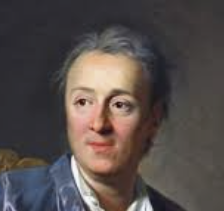
How old the world is! I walk between two eternities... What is my fleeting existence in comparison with that decaying rock, that valley digging its channel ever deeper, that forest that is tottering and those great masses above my head about to fall? I see the marble of tombs crumbling into dust; and yet I don’t want to die!
▼
Source
Salon of 1767 (1798), Oeuvres esthétiques
4 months ago
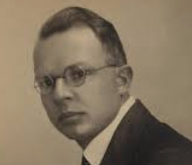
By the logical syntax of a language, we mean the formal theory of the linguistic forms of that language -- the systematic statement of the formal rules which govern it together with the development of the consequences which follow from these rules. A theory, a rule, a definition, or the like is to be called formal when no reference is made in it either to the meaning of the symbols (for examples, the words) or to the sense of the expressions (e.g. the sentences), but simply and solely to the kinds and order of the symbols from which the expressions are constructed.
▼
Source
p. 1
CivilSimian.com created by AxiomaticPanic, CivilSimian, Kalokagathia