
4 months ago
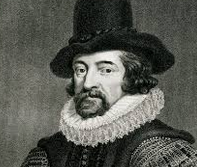
Whence we see spiders, flies, or ants entombed and preserved forever in amber, a more than royal tomb.
▼
Source
Historia Vitæ et Mortis; Sylva Sylvarum, Cent. i. Exper. 100, reported in Bartlett's Familiar Quotations, 10th ed. (1919)
4 months ago
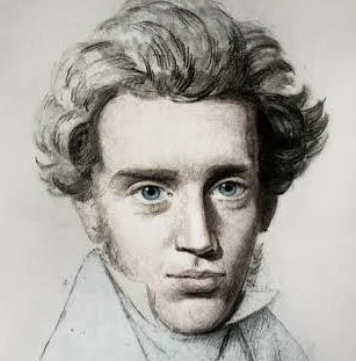
My doubt goes like this: How could the Loving One have the heart to let human beings become so guilty that they got his murder on their consciences?
▼
Source
p. 63
4 months ago
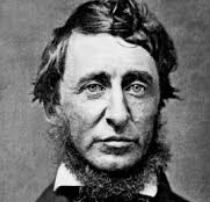
The realist, then, would seek in behalf of philosophy the same renunciation the same rigour of procedure, that has been achieved in science. This does not mean that he would reduce philosophy to natural or physical science. He recognizes that the philosopher has undertaken certain peculiar problems, and that he must apply himself to these, with whatever method he may find it necessary to employ. It remains the business of the philosopher to attempt a wide synoptic survey of the world, to raise underlying and ulterior questions, and in particular to examine the cognitive and moral processes. And it is quite true that for the present no technique at all comparable with that of the exact sciences is to be expected. But where such technique is attainable, as for example in symbolic logic, the realist welcomes it. And for the rest he limits himself to a more modest aspiration. He hopes that philosophers may come like scientists to speak a common language, to formulate common problems and to appeal to a common realm of fact for their resolution. Above all he desires to get rid of the philosophical monologue, and of the lyric and impressionistic mode of philosophizing. And in all this he is prompted not by the will to destroy but by the hope that philosophy is a kind of knowledge, and neither a song nor a prayer nor a dream. He proposes, therefore, to rely less on inspiration and more on observation and analysis. He conceives his function to be in the last analysis the same as that of the scientist. There is a world out yonder more or less shrouded in darkness, and it is important, if possible, to light it up. But instead of, like the scientist, focussing the mind's rays and throwing this or that portion of the world into brilliant relief, he attempts to bring to light the outlines and contour of the whole, realizing too well that in diffusing so widely what little light he has, he will provide only a very dim illumination.
▼
Source
Chap XXV.
4 months ago
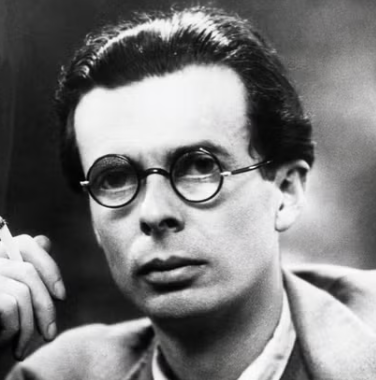
Maybe this world is another planet's Hell.
▼
Source
As quoted in Peter's Quotations: Ideas for Our Time (1979) by Laurence J. Peter, p. 239 | Point Counter Point (New York: The Modern Library, 1928), Chapter XVII, p. 263 [https://archive.org/details/pointcounterpoin0000aldo_k3u2/page/262/mode/2up?q=%22plan
4 months ago
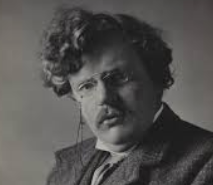
To have a right to do a thing is not at all the same as to be right in doing it.
▼
Source
A Short History of England (1917)
4 months ago
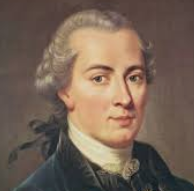
it is absurd … to hope that maybe another Newton may some day arise, to make intelligible to us even the genesis of but a blade of grass.
▼
Source
("Dialectic of Teleological Judgment" §75)
4 months ago
The natural philosophy of Democritus and some others, who did not suppose a mind or reason in the frame of things, but attributed the form thereof able to maintain itself to infinite essays or proofs of nature, which they term fortune, seemeth to me... in particularities of physical causes more real and better inquired than that of Aristotle and Plato; whereof both intermingled final causes, the one as a part of theology, and the other as a part of logic, which were the favourite studies respectively of both those persons. Not because those final causes are not true, and worthy to be inquired, being kept within their own province; but because their excursions into the limits of physical causes hath bred a vastness and solitude in that tract.
▼
Source
Book VII, 7
4 months ago
To one unnamed, whose name will one day be named, is dedicated, with this little work, the entire authorship, as it was from the beginning. (Dedication) P. 163
4 months ago
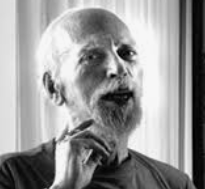
Obviously, the faster we process information, the more rich and complex our models or glosses — our reality-tunnels — will become. Resistance to new information, however, has a strong neurological foundation in all animals, as indicated by studies of imprinting and conditioning. Most animals, including most domesticated primates (humans) show a truly staggering ability to "ignore" certain kinds of information — that which does not "fit" their imprinted/conditioned reality-tunnel. We generally call this "conservatism" or "stupidity", but it appears in all parts of the political spectrum, and in learned societies as well as in the Ku Klux Klan.
▼
Source
Quantum Psychology : How Brain Software Programs You and Your World (1990), p. 45
4 months ago
The course of every intellectual, if he pursues his journey long and unflinchingly enough, ends in the obvious, from which the non-intellectuals have never stirred. ...The thoroughly contemptible man may have valuable opinions, just as in some ways the admirable man can have detestable opinions. ...Many intellectuals, of course, don't get far enough to reach the obvious again. They remain stuck in a pathetic belief in rationalism and the absolute supremacy of mental values and the entirely conscious will. You've got to go further than the nineteenth-century fellows, for example; as far at least as Protagoras and Pyrrho, before you get back to the obvious in which the nonintellectuals have always remained. ...these nonintellectuals aren't the modern canaille who read the picture papers and... are preoccupied with making money... They take the main intellectualist axiom for granted—that there's an intrinsic superiority in mental, conscious, voluntary life over physical, intuitive, instinctive, emotional life. The whole of modern civilization is based on the idea that the specialized function which gives a man his place in society is more important than the whole man, or rather is the whole man, all the rest being irrelevant or even (since the physical, intuitive, instinctive and emotional part of man doesn't contribute appreciably to making money or getting on in an industrialized world) positively harmful and detestable. ...The nonintellectuals I'm thinking of are very different beings. ...There were probably quite a lot of them three thousand years ago. But the combined efforts of Plato and Aristotle, Jesus, Newton and big business have turned their descendants into the modern bourgeoisie and proletariat. The obvious that the intellectual gets back to, if he goes far enough, isn't of course the same as the obvious of the nonintellectuals. For their obvious is life itself and his recovered obvious is only the idea of that life. Not many can put flesh and blood on the idea and turn it into reality. The intellectuals who, like Rampion, don't have to return to the obvious, but have always believed in it and lived it, while at the same time leading the life of the spirit, are rarer still.
▼
Source
Ch. 26; note: the character Mark Rampion, a writer, painter and fierce critic of modern society, is based on D. H. Lawrence.
4 months ago
There runs a strange law through the length of human history — that men are continually tending to undervalue their environment, to undervalue their happiness, to undervalue themselves. The great sin of mankind, the sin typified by the fall of Adam, is the tendency, not towards pride, but towards this weird and horrible humility. This is the great fall, the fall by which the fish forgets the sea, the ox forgets the meadow, the clerk forgets the city, every man forgets his environment and, in the fullest and most literal sense, forgets himself. This is the real fall of Adam, and it is a spiritual fall. It is a strange thing that many truly spiritual men, such as General Gordon, have actually spent some hours in speculating upon the precise location of the Garden of Eden. Most probably we are in Eden still. It is only our eyes that have changed.
▼
Source
"Introduction"
4 months ago
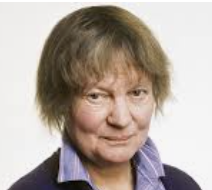
All metaphysical theories are inconclusively vulnerable to positivist attack.
▼
Source
Ch. 9, p. 127
4 months ago
England and France, the two most civilized nations on earth, who are in contrast to each other because of their different characters, are, perhaps chiefly for that reason, in constant feud with one another. Also, England and France, because of their inborn characters, of which the acquired and artificial character is only the result, are probably the only nations who can be assumed to have a particular and, as long as both national characters are not blended by the force of war, unalterable characteristics. That French has become the universal language of conversation, especially in the feminine world, and that English is the most widely used language of commerce among tradesmen, probably reflects the difference in their continental and insular geographic situation.
▼
Source
Kant, Immanuel (1996), page 226
4 months ago
No one has yet been found so firm of mind and purpose as resolutely to compel himself to sweep away all theories and common notions, and to apply the understanding, thus made fair and even, to a fresh examination of particulars. Thus it happens that human knowledge, as we have it, is a mere medley and ill-digested mass, made up of much credulity and much accident, and also of the childish notions which we at first imbibed.
▼
Source
Aphorism 97
4 months ago
It is of this sort of divine service I used the expression that, in comparison with the Christianity of the New Testament, it is playing Christianity. The expression is essentially true and characterizes the thing perfectly. For what does it mean to play, when one reflects how the word must be understood in this connection? It means to imitate, to counterfeit, a danger when there is no danger, and to do it in such a way that the more art is applied to it, the more delusive the pretense is that the danger is present.
▼
Source
p. 121
4 months ago
And Spaceship Earth, that glorious and bloody circus, continued its four-billion-year-long spiral orbit about the Sun; the engineering, I must admit, was so exquisite that none of the passengers felt any motion at all. Those on the dark side of the ship mostly slept and voyaged into worlds of freedom and fantasy; those on the light side moved about the tasks appointed for them by their rulers, or idled waiting for the next order from above.
4 months ago
The second doctrine of the Perennial Philosophy — that it is possible to know the Divine Ground by a direct intuition higher than discursive reasoning — is to be found in all the great religions of the world. A philosopher who is content merely to know about the ultimate Reality — theoretically and by hearsay — is compared by Buddha to a herdsman of other men's cows. Mohammed uses an even homelier barnyard metaphor. For him the philosopher who has not realized his metaphysics is just an ass bearing a load of books. Christian, Hindu, Taoist teachers wrote no less emphatically about the absurd pretensions of mere learning and analytic reasoning.
4 months ago
One of the actual and certain consequences of the idea that all men are equal is immediately to produce very great men.
▼
Source
Ch 1: "The Dickens Period"
4 months ago
I, for one, while I would not choose to dismiss Kant, am certainly prepared to dismiss his writing style. It was, indeed, in his own day, profitably parodied by Fichte.
▼
Source
Stephen K. Roney, “Postmodernist Prose and George Orwell”, Academic Questions (Spring 2002)
4 months ago
It is a sad fate for a man to die too well known to everybody else, and still unknown to himself
▼
Source
A translation of chorus lines in a classical tragedy by Seneca the Younger, Thyestes, lines 401-403, appearing in Essays, Civil and Moral by Francis Bacon, part XI, Of Great Place. The original lines in latin are Illi mors gravis incubate/Qui notus nimis
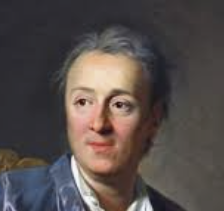
4 months ago
How old the world is! I walk between two eternities... What is my fleeting existence in comparison with that decaying rock, that valley digging its channel ever deeper, that forest that is tottering and those great masses above my head about to fall? I see the marble of tombs crumbling into dust; and yet I don’t want to die!
▼
Source
Salon of 1767 (1798), Oeuvres esthétiques
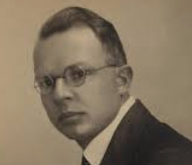
4 months ago
By the logical syntax of a language, we mean the formal theory of the linguistic forms of that language -- the systematic statement of the formal rules which govern it together with the development of the consequences which follow from these rules. A theory, a rule, a definition, or the like is to be called formal when no reference is made in it either to the meaning of the symbols (for examples, the words) or to the sense of the expressions (e.g. the sentences), but simply and solely to the kinds and order of the symbols from which the expressions are constructed.
▼
Source
p. 1
4 months ago
These effects of mescalin are the sort of effects you could expect to follow the administration of a drug having the power to impair the efficiency of the cerebral reducing valve. When the brain runs out of sugar, the undernourished ego grows weak, can't be bothered to undertake the necessary chores, and loses all interest in those spatial and temporal relationships which mean so much to an organism bent on getting on in the world. As Mind at Large seeps past the no longer watertight valve, all kinds of biologically useless things start to happen. ... Other persons discover a world of visionary beauty. To others again is revealed the glory, the infinite value and meaningfulness of naked existence, of the given, unconceptualized event.
▼
Source
describing his experiment with mescaline, p. 26
4 months ago
I must frankly say that Bernard Shaw always seems to me to use the word God not only without any idea of what it means, but without one moment's thought about what it could possibly mean. He said to some atheist, "Never believe in a God that you cannot improve on." The atheist (being a sound theologian) naturally replied that one should not believe in a God whom one could improve on; as that would show that he was not God.
▼
Source
"The Philosopher"
4 months ago
Are we not madder than those first inhabitants of the plain of Sennar? We know that the distance separating the earth from the sky is infinite, and yet we do not stop building our tower.
▼
Source
No. 4

4 months ago
Water and navigation had that role to play. Locked in the ship from which he could not escape, the madman was handed over to the thousand-armed river, to the sea where all paths cross, and the great uncertainty that surrounds all things. A prisoner in the midst of the ultimate freedom, on the most open road of all, chained solidly to the infinite crossroads. He is the Passenger par excellence, the prisoner of the passage. It is not known where he will land, and when he lands, he knows not whence he came. His truth and his home are the barren wasteland between two lands that can never be his own. [...] One thing is certain: the link between water and madness is deeply rooted in the dream of the Western man.
▼
Source
Part One: 1. Stultifera Navis
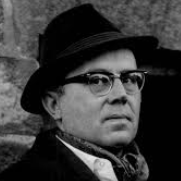
4 months ago
When heaven and earth have passed away, perhaps the conservative mind and the libertarian mind may be joined in synthesis, but not until then.
4 months ago
Children are nowhere taught, in any systematic way, to distinguish true from false, or meaningful from meaningless, statements. Why is this so? Because their elders, even in the democratic countries, do not want them to be given this kind of education.
▼
Source
Chapter 11 (p. 106)
4 months ago
Men that are men again: Who goes home? Tocsin and trumpeter! Who goes home? For there's blood on the grass and blood on the foam, And blood on the body, when Man comes home. And a voice valedictory: Who is for victory? Who is for liberty? Who goes home?
▼
Source
Ch. XXI: "The Road to Roundabout" ("Who Goes Home?", by Patrick Dalroy)
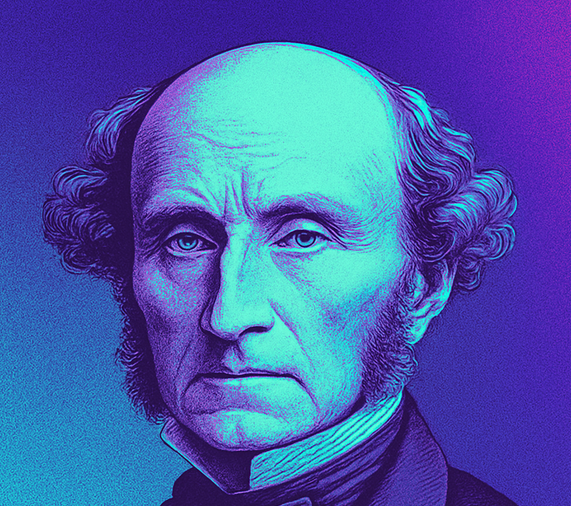
4 months ago
The tendency has always been strong to believe that whatever received a name must be an entity or thing, having an independent existence of its own; and if no real entity answering to the name could be found, men did not for that reason suppose that none existed, but imagined that it was something peculiarly abstruse and mysterious, too high to be an object of sense. The meaning of all general, and especially of all abstract terms, became in this way enveloped in a mystical base...
▼
Source
Note to [http://books.google.com/books?id=GxIuAAAAIAAJ&printsec=frontcover&dq=james+mill&ei=jsFoR7yAOYfQiwHEzdVv&ie=ISO-8859-1#PPA5,M1 Analysis of the Phenomena of the Human Mind] (1829) by James Mill, edited with additional notes by John Stuart Mill (186
4 months ago
How easy it is to tell tales!
4 months ago
In the ceremonies of the public execution, the main character was the people, whose real and immediate presence was required for the performance.
▼
Source
Chapter One, pp. 56

4 months ago
We were two of a kind, and our relationship would endure as long as we did: but it could not make up entirely for the fleeting riches to be had from encounters with different people.
▼
Source
On her relationship with Jean-Paul Sartre, as quoted in [http://www.theguardian.com/world/2005/jun/10/gender.politicsphilosophyandsociety "Did Simone de Beauvoir's open 'marriage' make her happy?"] by Lisa Appignanesi, in The Guardian (9 June 2005) and he
4 months ago
In a time of sceptic moths and cynic rusts, And fattened lives that of their sweetness tire In a world of flying loves and fading lusts, It is something to be sure of a desire. Lo, blessed are our ears for they have heard; Yea, blessed are our eyes for they have seen: Let the thunder break on man and beast and bird And the lightning. It is something to have been.
▼
Source
The Great Minimum
4 months ago
Truth gains more even by the errors of one who, with due study and preparation, thinks for himself, than by the true opinions of those who only hold them because they do not suffer themselves to think.
▼
Source
Ch. II: Of the Liberty of Thought and Discussion
4 months ago
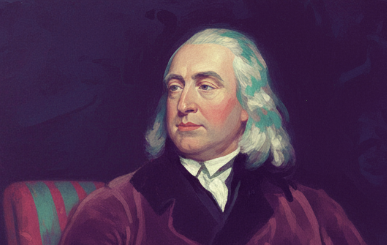
In principle and in practice, in a right track and in a wrong one, the rarest of all human qualities is consistency.
▼
Source
Ch. 1: Of the Principle of Utility
4 months ago
The critical ontology of ourselves has to be considered not, certainly, as a theory, a doctrine, nor even as a permanent body of knowledge that is accumulating; it has to be conceived as an attitude, an ethos, a philosophical life in which the critique of what we are is at one and the same time the historical analysis of the limits that are imposed on us and an experiment with the possibility of going beyond them.
4 months ago
Sex pleasure in woman, as I have said, is a kind of magic spell; it demands complete abandon; if words or movements oppose the magic of caresses, the spell is broken.
▼
Source
Bk. 2, Pt.. 4, Ch. 3: Sexual Initiation. p. 396
4 months ago
In the days when Stevenson's ancestors the Covenanters were fighting with the Cavaliers, a fine old Cavalier of the Episcopalian persuasion made a rather interesting remark; that the change he really hated was represented by saying 'The Lord' instead of 'Our Lord.' The latter implied affection, the former only fear; indeed he described the former succinctly as the talk of devils. And this is so far true that the very eloquent language in which the name of 'The Lord' has figured has generally been the language of might and majesty and even terror. And there really was implied in it in varying degrees the idea of glorifying God for His greatness rather than His goodness. And again there occurred the natural inversion of ideas. Since the Puritan was content to cry with the Moslem: 'God is great,' so the descendant of the Puritan is always a little inclined to cry with the Nietzschean: 'Greatness is God.' In some of the really evil extremes, this sentiment shaded darkly into a sort of diabolism.
▼
Source
Ch. V: "The Scottish Stories"
4 months ago
The object of this Essay is to explain as clearly as I am able grounds of an opinion which I have held from the very earliest period when I had formed any opinions at all on social political matters, and which, instead of being weakened or modified, has been constantly growing stronger by the progress reflection and the experience of life. That the principle which regulates the existing social relations between the two sexes — the legal subordination of one sex to the other — is wrong itself, and now one of the chief hindrances to human improvement; and that it ought to be replaced by a principle of perfect equality, admitting no power or privilege on the one side, nor disability on the other.
▼
Source
Ch. 1
4 months ago
Athuroglossos is characterized by..: (1) When you have "a mouth like a running spring," you cannot distinguish those occasions when you should speak from those when you should remain silent; or that which must be said from that which must remain unsaid; or the circumstances and situations where speech is required from those where one ought to remain silent. (2) As Plutarch notes... you have no regard for the value of logos, for rational discourse as a means of gaining access to truth.

4 months ago
Anyone who holds a true opinion without understanding is like a blind man on the right road.
▼
Source
Plato, Republic, 506c
4 months ago
The dynamic element in my philosophy, taken as a whole, can be seen as an obstinate and untiring battle against the spirit of abstraction.
▼
Source
p. 1
4 months ago
In my education, as in that of everyone, the moral influences, which are so much more important than all others, are also the most complicated, and the most difficult to specify with any approach to completeness.
▼
Source
([https://archive.org/details/autobiography01mill/page/38/mode/1up p. 38])
4 months ago
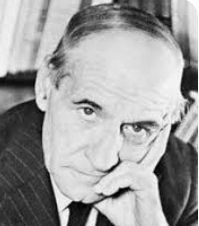
Nobility is defined by the demands it makes on us — by obligations, not by rights. Noblesse oblige. "To live as one likes is plebeian; the noble man aspires to order and law" (Goethe). The privileges of nobility are not in their origin concessions or favours; on the contrary, they are conquests. And their maintenance supposes, in principle, that the privileged individual is capable of reconquering them, at any moment, if it were necessary, and anyone were to dispute them.… It is annoying to see the degeneration suffered in ordinary speech by a word so inspiring as "nobility." For, by coming to mean for many people hereditary "noble blood," it is changed into something similar to common rights, into a static, passive quality which is received and transmitted like something inert. But the strict sense, the etymon of the word nobility is essentially dynamic. Noble means the "well known," that is, known by everyone, famous, he who has made himself known by excelling the anonymous mass.… "Nobility" does not appear as a formal expression until the Roman Empire, and then precisely in opposition to the hereditary nobles, then in decadence.
▼
Source
Chap. VII: Noble Life And Common Life, Or Effort And Inertia
4 months ago
When the feeling of pleasure or pain in the soul is most intense, all of us naturally suppose that the object of this intense feeling is then plainest and truest; but this is not the case. ...because each pleasure and pain is a sort of nail which nails and rivets the soul to the body, and engrosses her and makes her believe that to be true which the body affirms to be true; and from agreeing with the body and having the same delights she is obliged to have the same habits and ways, and is not likely ever to be pure at her departure to the world below, but is always saturated with the body; so that she soon [after death] sinks into another body and there germinates and grows, and has therefore no part in the communion of the divine and pure and simple.

4 months ago
—Poets and anarchists are always the first to go. —Where. —To the frontline. Wherever it is.
4 months ago
My education, which was wholly his work, had been conducted without any regard to the possibility of its ending in this result; and I saw no use in giving him the pain of thinking that his plans had failed, when the failure was probably irremediable, and, at all events, beyond the power of his remedies. Of other friends, I had at that time none to whom I had any hope of making my condition intelligible. It was however abundantly intelligible to myself; and the more I dwelt upon it, the more hopeless it appeared.
▼
Source
([https://archive.org/details/autobiography01mill/page/135/mode/1up p. 135])
4 months ago
No one knows toward what center human things are going to gravitate in the near future, and hence the life of the world has become scandalously provisional. Everything that today is done in public and in private — even in one's inner conscience — is provisional, the only exception being certain portions of certain sciences. He will be a wise man who puts no trust in all that is proclaimed, upheld, essayed, and lauded at the present day. All that will disappear as quickly as it came. All of it, from the mania for physical sports (the mania, not the sports themselves) to political violence; from "new art" to sun-baths at idiotic fashionable watering-places. Nothing of all that has any roots; it is all pure invention, in the bad sense of the word, which makes it equivalent to fickle caprice. It is not a creation based on the solid substratum of life; it is not a genuine impulse or need. In a word, from the point of view of life it is false. We are in presence of the contradiction of a style of living which cultivates sincerity and is at the same time a fraud. There is truth only in an existence which feels its acts as irrevocably necessary. There exists today no politician who feels the inevitableness of his policy, and the more extreme his attitudes, the more frivolous, the less inspired by destiny they are. The only life with its roots fixed in earth, the only autochthonous life, is that which is made of inevitable acts. All the rest, all that it is in our power to take or to leave or to exchange for something else, is mere falsification of life. Life today is the fruit of an interregnum, of an empty space between two organizations of historical rule — that which was, that which is to be. For this reason it is essentially provisional. Men do not know what institutions to serve in truth; women do not know what type of men they in truth prefer. The European cannot live unless embarked upon some great unifying enterprise. When this is lacking, he becomes degraded, grows slack, his soul is paralyzed. We have a commencement of this before our eyes today. The groups which up to today have been known as nations arrived about a century ago at their highest point of expansion. Nothing more can be done with them except lead them to a higher evolution. They are now mere past accumulating all around Europe, weighing it down, imprisoning it. With more vital freedom than ever, we feel that we cannot breathe the air within our nations, because it is confined air. What was before a nation open to all the winds of heaven, has turned into something provincial, an enclosing space.
▼
Source
Chapter XIV: Who Rules The World?
4 months ago
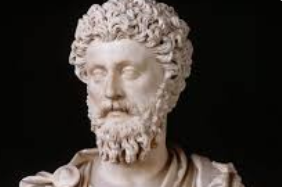
Not to display anger or other emotions. To be free of passion and yet full of love.
▼
Source
I, 9 (Hays translation)
CivilSimian.com created by AxiomaticPanic, CivilSimian, Kalokagathia