
4 months ago
God offers to every mind its choice between truth and repose.
▼
Source
Intellect
4 months ago
It is true that our everyday view of the world is not quite naively realistic, but that is what it would like to be. Common-sense is naively realistic wherever it does not think that there is some positive reason why it should cease to be so. And this is so in the vast majority of its perceptions. When we see a tree we think that it is really green and really waving about in precisely the same way as it appears to be. We do not think of our object of perception being 'like' the real tree, we think that what we perceive is the tree, and that it is just the same at a given moment whether it be perceived or not, except that what we perceive may be only a part of the real tree.
▼
Source
Perception, Physics, and Reality : An Enquiry into the Information that Physical Science can Supply about the Real (1914), Ch. 1 : On The Arguments Against Naïf Realism Independent of the Causal Theory of Perception
4 months ago
Matters of religion should never be matters of controversy. We neither argue with a lover about his taste, nor condemn him, if we are just, for knowing so human a passion.
▼
Source
Ch. VI
4 months ago
By this means all knowledge degenerates into probability; and this probability is greater or less, according to our experience of the veracity or deceitfulness of our understanding, and according to the simplicity or intricacy of the question.
▼
Source
Part 4, Section 1
4 months ago
Remember that you ought to behave in life as you would at a banquet. As something is being passed around it comes to you; stretch out your hand, take a portion of it politely. It passes on; do not detain it. Or it has not come to you yet; do not project your desire to meet it, but wait until it comes in front of you. So act toward children, so toward a wife, so toward office, so toward wealth.
▼
Source
(15).

4 months ago
Pythagoras, as everyone knows, said that "all things are numbers." This statement, interpreted in a modern way, is logical nonsense, but what he meant was not exactly nonsense. He discovered the importance of numbers in music and the connection which he established between music and arithmetic survives in the mathematical terms "harmonic mean" and "harmonic progression." He thought of numbers as shapes, as they appear on dice or playing cards. We still speak of squares or cubes of numbers, which are terms that we owe to him. He also spoke of oblong numbers, triangular numbers, pyramidal numbers, and so on. These were the numbers of pebbles [or calculi] (or as we would more naturally say, shot) required to make the shapes in question.
▼
Source
Bertrand Russell, in A History of Western Philosophy (1945), Book One, Part I, Chapter III, Pythagoras, p. 35
4 months ago
To be free in an age like ours, one must be in a position of authority. That in itself would be enough to make me ambitious.
▼
Source
Letter to his elder sister Henriette (1841).
4 months ago
So in the end when one is doing philosophy one gets to the point where one would like just to emit an inarticulate sound.
▼
Source
§ 261

4 months ago
In a real battle, atemi is seventy percent, technique is thirty percent.
▼
Source
As quoted in Total Aikido (1997) by Gōzō Shioda, p. 24
4 months ago
Never lose an opportunity of seeing anything that is beautiful; for beauty is God's handwriting—a wayside sacrament. Welcome it in every fair face, in every fair sky, in every fair flower, and thank God for it as a cup of blessing.
▼
Source
Though attributed to Emerson in Edwards' A Dictionary of Thoughts (1908), p. 37, this quote originates in Politics for the People (1848) by Charles Kingsley.
4 months ago
We are always obliged to think about the larger system. If we fail to do this, then our thinking becomes fallacious.
▼
Source
p. 27
4 months ago
Prosperity, both for individuals and for states, means possessions; and possessions mean burdens and harness and slavery; and slavery for the mind, too, because it is not only the rich man's time that is pre-empted, but his affections, his judgement, and the range of his thoughts.
▼
Source
"The Irony of Liberalism"
4 months ago
By liberty, then, we can only mean a power of acting or not acting, according to the determinations of the will.
▼
Source
§ 8.23
4 months ago
Pythagoras' teachings have enormous relevance in understanding both the sources of our culture and, perhaps more importantly, where it may be heading or may need to head. But to appreciate this we have to understand him in modern terms.
4 months ago
Philosophers often behave like little children who scribble some marks on a piece of paper at random and then ask the grown-up "What's that?" — It happened like this: the grown-up had drawn pictures for the child several times and said "this is a man," "this is a house," etc. And then the child makes some marks too and asks: what's this then?
▼
Source
p. 17e
4 months ago
When you bow deeply to the universe, it bows back; when you call out the name of God, it echoes inside you.
4 months ago
He began where many poets end, seeking at once the upper air, the region of pure thought and ideality. ... Emerson was the freest and most ideal of them all, and what came to him by inheritance or prophetic forecast he gave like a victor.
▼
Source
Edmund Clarence Stedman, Poets of America (1885), pp. 176–177
4 months ago
The design of my philosophical life is based on an examination of the following question: is it possible to secure improvement in the human condition by means of the human intellect? The verb 'to secure' is (for me) terribly important, because problem solving often appears to produce improvement, but the so-called 'solution' often makes matters worse in the larger system (e.g., the many food programs of the last quarter century may well have made world-wide starvation even worse than no food programs would have done.) The verb ‘to secure' means that in the larger system over time the improvement persists.I have to admit that the philosophical question is much more difficult than my very limited intellect can handle. I don't know what 'human condition' and 'human intellect' mean, though I've done my best to tap the wisdom of such diverse fields as depth psychology, economics, sociology, anthropology, public health, management science, education, literature, and history. But to me the essence of philosophy is to pose serious and meaningful questions that are too difficult for any of us to answer in our lifetimes. Wisdom, or the love of wisdom, is just that: thought likes solutions, wisdom abhors them.
▼
Source
p. 19; cited in Werner Ulrich (1998) '" C. West Churchman-75 years". in: Systems practice. December 1988, Volume 1, Issue 4, pp 341-350
4 months ago
A child educated only at school is an uneducated child.
▼
Source
[http://books.google.com/books?id=O4weAQAAMAAJ&q=educated+only+at+school+#search_anchor “Why I Am Not a Marxist”] “Modern Monthly: Volume: 9″ (April 1935); Page: 77-79.
4 months ago
The heights of popularity and patriotism are still the beaten road to power and tyranny ; flattery to treachery ; standing armies to arbitrary government ; and the glory of God to the temporal interest of the clergy.
▼
Source
Part I, Essay 8: Of Public Credit (This appears as a footnote in editions H to P. Other editions include it in the body of the text, and some number it Essay 9.)
4 months ago
I am showing my pupils details of an immense landscape which they cannot possibly know their way around.
▼
Source
p. 56e

4 months ago
You tell us who were they who pulled down the gates of Khyber?Who were they that reduced the city that was the pride of Caesar?Fake gods that men had made, who did break and shatter?Who routed infidel armies and destroyed them with bloody slaughter?Who put out and made cold the 'sacred' flame in Iran?Who retold the story of the one God, Yazdan?
▼
Source
(Singh, p. 36)
4 months ago
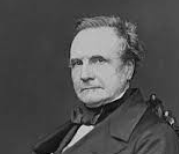
On two occasions I have been asked, — "Pray, Mr. Babbage, if you put into the machine wrong figures, will the right answers come out?" In one case a member of the Upper, and in the other a member of the Lower, House put this question. I am not able rightly to apprehend the kind of confusion of ideas that could provoke such a question.
▼
Source
Passages from the Life of a Philosopher (1864), ch. 5 "Difference Engine No. 1"
4 months ago
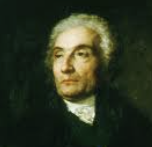
Providence has given the French nation precisely two instruments, two arms, so to speak, with which it stirs up the world – the French language and the spirit of proselytism that forms the essence of the nation's character.
▼
Source
Chapter II, p. 20
4 months ago
In such a chain, too, or succession of objects, each part is caused by that which preceded it, and causes that which succeeds it. Where then is the difficulty? But the WHOLE, you say, wants a cause. I answer, that the uniting of these parts into a whole, like the uniting of several distinct countries into one kingdom, or several distinct members into one body, is performed merely by an arbitrary act of the mind, and has no influence on the nature of things. Did I show you the particular causes of each individual in a collection of twenty particles of matter, I should think it very unreasonable, should you afterwards ask me, what was the cause of the whole twenty. This is sufficiently explained in explaining the cause of the parts.
▼
Source
Cleanthes to Demea, Part IX
4 months ago
Well, God has arrived. I met him on the 5:15 train. He has a plan to stay in Cambridge permanently.
▼
Source
John Maynard Keynes, after meeting with Wittgenstein at his arrival in Cambridge, in a letter to his wife Lydia Lopokova (18 January 1929)

4 months ago
ANARCHISM (from the Gr. ἅν, and άρχη, contrary to authority), the name given to a principle or theory of life and conduct under which society is conceived without government — harmony in such a society being obtained, not by submission to law, or by obedience to any authority, but by free agreements concluded between the various groups, territorial and professional, freely constituted for the sake of production and consumption, as also for the satisfaction of the infinite variety of needs and aspirations of a civilized being. In a society developed on these lines, the voluntary associations which already now begin to cover all the fields of human activity would take a still greater extension so as to substitute themselves for the state in all its functions. They would represent an interwoven network, composed of an infinite variety of groups and federations of all sizes and degrees, local, regional, national and international temporary or more or less permanent — for all possible purposes: production, consumption and exchange, communications, sanitary arrangements, education, mutual protection, defence of the territory, and so on; and, on the other side, for the satisfaction of an ever-increasing number of scientific, artistic, literary and sociable needs. Moreover, such a society would represent nothing immutable. On the contrary — as is seen in organic life at large — harmony would (it is contended) result from an ever-changing adjustment and readjustment of equilibrium between the multitudes of forces and influences, and this adjustment would be the easier to obtain as none of the forces would enjoy a special protection from the state.
▼
Source
[http://dwardmac.pitzer.edu/Anarchist_Archives/kropotkin/britanniaanarchy.html Kropotkin's entry on "Anarchism" in the Encyclopædia Britannica (1910)]
4 months ago
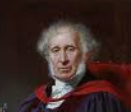
It is God alone that can pronounce upon the real condition of the heart and soul, out of which are the issues of life. A true phrenological fact, therefore, which we can force a sound mind to believe must involve, in one of its aspects, a species of knowledge which ist is not in the power of man, and still less within his province, to attain; and in the other, a physical fact, which can be seen only in the brain itself, and which cannot be interfered from any external sign.
4 months ago
Reason can make little headway on its own and struggles to be heard; often it has to be – so to speak – armed by the fearsome epigram. French wit pricks like a needle, so that the thread goes through the hole.
▼
Source
"Sixth Dialogue," p. 160
4 months ago
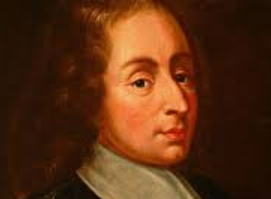
For as old age is that period of life most remote from infancy, who does not see that old age in this universal man ought not to be sought in the times nearest his birth, but in those most remote from it?
▼
Source
Preface to the Treatise on Vacuum (c.1651)
4 months ago
Legislators confounded in one code the two currents of custom of which we have just been speaking, the maxims which represent principles of morality and social union wrought out as a result of life in common, and the mandates which are meant to ensure external existence to inequality. Customs, absolutely essential to the very being of society, are, in the code, cleverly intermingled with usages imposed by the ruling caste, and both claim equal respect from the crowd. "Do not kill," says the code, and hastens to add, "And pay tithes to the priest." "Do not steal," says the code, and immediately after, "He who refuses to pay taxes, shall have his hand struck off." Such was law; and it has maintained its two-fold character to this day. Its origin is the desire of the ruling class to give permanence to customs imposed by themselves for their own advantage. Its character is the skillful commingling of customs useful to society, customs which have no need of law to insure respect, with other customs useful only to rulers, injurious to the mass of the people, and maintained only by the fear of punishment.
▼
Source
II

4 months ago
He said that men ought to remember those friends who were absent as well as those who were present.
▼
Source
Thales, 9.
4 months ago
De Maistre and Edgar Poe taught me how to think.
▼
Source
Charles Baudelaire, Mon cœur mis à nu (1864), p. 131
4 months ago
God only pours out his light into the mind after having subdued the rebellion of the will by an altogether heavenly gentleness which charms and wins it.
4 months ago
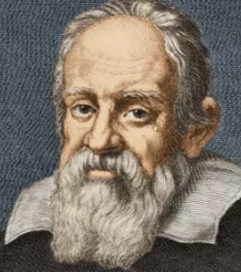
If what we are discussing were a point of law or of the humanities, in which neither true nor false exists, one might trust in subtlety of mind and readiness of tongue and in the greater experience of the writers, and expect him who excelled in those things to make his reasoning most plausible, and one might judge it to be the best. But in the natural sciences, whose conclusions are true and necessary and have nothing to do with human will, one must take care not to place oneself in the defense of error; for here a thousand Demostheneses and a thousand Aristotles would be left in the lurch by every mediocre wit who happened to hit upon the truth for himself. Therefore, Simplicio, give up this idea and this hope of yours that there may be men so much more learned, erudite, and well-read than the rest of us as to be able to make that which is false become true in defiance of nature.
▼
Source
Salviati, p. 61
4 months ago
Far be it from us not to recognize the importance of the second factor, moral teaching — especially that which is unconsciously transmitted in society and results from the whole of the ideas and comments emitted by each of us on facts and events of every-day life. But this force can only act on society under one condition, that of not being crossed by a mass of contradictory immoral teachings resulting from the practice of institutions.In that case its influence is nil or baneful. Take Christian morality: what other teaching could have had more hold on minds than that spoken in the name of a crucified God, and could have acted with all its mystical force, all its poetry of martyrdom, its grandeur in forgiving executioners? And yet the institution was more powerful than the religion: soon Christianity — a revolt against imperial Rome — was conquered by that same Rome; it accepted its maxims, customs, and language. The Christian church accepted the Roman law as its own, and as such — allied to the State — it became in history the most furious enemy of all semi-communist institutions, to which Christianity appealed at Its origin.
4 months ago
Like sending owls to Athens, as the proverb goes.
▼
Source
Plato, 32.
4 months ago
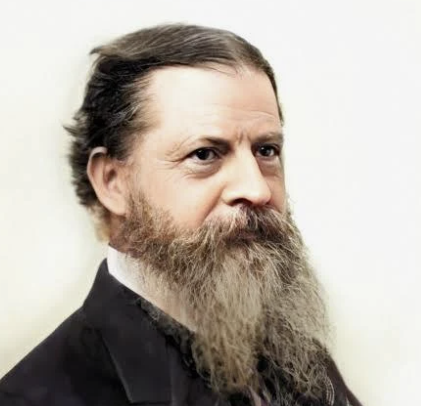
Any character or proposition either concerns one subject, two subjects, or a plurality of subjects. For example, one particle has mass, two particles attract one another, a particle revolves about the line joining two others. A fact concerning two subjects is a dual character or relation; but a relation which is a mere combination of two independent facts concerning the two subjects may be called degenerate, just as two lines are called a degenerate conic. In like manner a plural character or conjoint relation is to be called degenerate if it is a mere compound of dual characters. A sign is in a conjoint relation to the thing denoted and to the mind. If this triple relation is not of a degenerate species, the sign is related to its object only in consequence of a mental association, and depends upon a habit. Such signs are always abstract and general, because habits are general rules to which the organism has become subjected. They are, for the most part, conventional or arbitrary. They include all general words, the main body of speech, and any mode of conveying a judgment. For the sake of brevity I will call them tokens.
4 months ago
Nature, which alone is good, is wholly familiar and common.
4 months ago
It is only in order to shield your ignorance that you put the Lord at every turn to the refuge of a miracle.
▼
Source
Giorgio de Santillana attributed this remark to the Dialogue in The Crime of Galileo (1955), but it does not appear there. A vaguely similar exchange appears in the Fourth Day of the Dialogue, when Salviati asks Simplicio why he resorts to a miracle to ex

4 months ago
Modern philosophy is usually considered to have begun with Descartes (1596-1650), who lived a generation after Galileo. The following is the usual image of Descartes and his philosophy: During the Middle Ages philosophy stood - if it stood independently at all - under the exclusive domination of theology and gradually degenerated into a mere analysis of concepts and elucidations of traditional opinion and propositions. It petrified into an academic knowledge which no longer concerned man and was unable to illuminate reality as a whole. Then Descartes appeared and liberated philosophy from this position. He began by doubting everything, but this doubt finally did run into something which could no longer be doubted, for, inasmuch as the skeptic doubts, he cannot doubt that he, the skeptic, is present and must be present in order to doubt at all. As I doubt I must admit that "I am." The "I," accordingly, is the indubitable. As a doubter, Descartes forced men into doubt in this way; he led them to think of themselves, as their "I." Thus the "I," human subjectivity, came to be declared the center of thought. From here originated the I-viewpoint of modern times and its subjectivism. p. 98-99
4 months ago
The mine of the future will be well ventilated, with a temperature as easily regulated as that of a library; there will be no horses doomed to die below the earth: underground traction will be carried on by means of an automatic cable put in motion at the pit's mouth.
▼
Source
Ch. 10 : Agreeable Work
4 months ago
All things are in common among friends.
▼
Source
Diogenes, 6.

4 months ago
If there is a revelation, it can not then contradict nature.
4 months ago
Suppose a surface to be part red and part blue; so that every point on it is either red or blue, and of course, no part can be both red and blue. What then, is the color of the surface in the immediate neighborhood of the point. ...it follows that the boundary is half red and half blue. In like manner, we find it necessary to hold that consciousness essentially occupies time... Thus, the present is half past and half time to come. ...Take another case: the velocity of a particle at any instant of time is its mean velocity during an infinitesimal instant in which that time is consumed. Just so, my immediate feeling is my feeling through an infinitesimal duration containing the present instant.
4 months ago
The tenor of Derridian philosophy shares with Heidegger’s a dangerous proclivity towards the bombastic translations of problems of being and knowledge into strident moral dilemmas. Like the cosmic drama of Being repressed by being in Heidegger, Derrida’s protests against phonocentrism sound more like lay sermonizing than genuine analytical argument.
▼
Source
J.G. Merquior (1986). From Paris to Prague: A Critique of Structuralist and Poststructualist Thought. London: Verso, , pp 226
4 months ago
As to the sudden industrial progress which has been achieved during our own century, and which is usually ascribed to the triumph of individualism and competition, it certainly has a much deeper origin than that. Once the great discoveries of the fifteenth century were made, especially that of the pressure of the atmosphere, supported by a series of advances in natural philosophy — and they were made under the medieval city organization, — once these discoveries were made, the invention of the steam-motor, and all the revolution which the conquest of a new power implied, had necessarily to follow... To attribute, therefore, the industrial progress of our century to the war of each against all which it has proclaimed, is to reason like the man who, knowing not the causes of rain, attributes it to the victim he has immolated before his clay idol. For industrial progress, as for each other conquest over nature, mutual aid and close intercourse certainly are, as they have been, much more advantageous than mutual struggle.
4 months ago
Epicurus laid down the doctrine that pleasure was the chief good.
▼
Source
Epicurus, 6.

4 months ago
Positive philosophy made its counter-attack against critical rationalism on two fronts. Comte fought against the French form of negative philosophy, against the heritage of Descartes and the Enlightenment. In Germany, the struggle was directed against Hegel’s system. Schelling received an express commission from Frederick William IV ‘to destroy the dragon seed’ of Hegelianism, while Stahl, another anti-Hegelian, became the philosophical spokesman of the Prussian monarchy in 1840. P. 326
4 months ago
The 'Natural History of the Soul' begins by showing that as yet no philosopher, from Aristotle down to Malebranche, had been able to account for the nature of the soul.
CivilSimian.com created by AxiomaticPanic, CivilSimian, Kalokagathia