
4 months ago
What should we gain by a definition, as it can only lead us to other undefined terms?
▼
Source
p. 26
4 months ago
By following entirely the guidance of lust, in the manner of fools, man loses his intellectual energy, injures his body, and perishes before his natural time; sighs and cares multiply; there is an increase of envy, hatred, and warfare, for the purpose of taking what another possesses. The cause of all this is the circumstance that the ignorant considers physical enjoyment as an object to be sought for its own sake. God in His wisdom has therefore given us such commandments as would counteract that object, and prevent us altogether from directing our attention to it, and has debarred us from everything that leads only to excessive desire and to lust. This is an important thing included in the objects of our Law.
▼
Source
Ch.33
4 months ago
The Indian teaching, through its clouds of legends, has yet a simple and grand religion, like a queenly countenance seen through a rich veil. It teaches to speak truth, love others, and to dispose trifles. The East is grand - and makes Europe appear the land of trifles .... all is soul and the soul is Vishnu ... cheerful and noble is the genius of this cosmogony. Hari is always gentle and serene - he translates to heaven the hunter who has accidentally shot him in his human form, he pursues his sport with boors and milkmaids at the cow pens; all his games are benevolent and he enters into flesh to relieve the burdens of the world.
▼
Source
Quoted in S. Londhe, A Tribute to Hinduism (New Delhi: Pragun Publication, 2008)
4 months ago
Every child has an enormous drive to demonstrate competence. If humans are not required to earn a living to be provided survival needs, many are going to want very much to be productive, but not at those tasks they did not choose to do but were forced to accept in order to earn money. Instead, humans will spontaneously take upon themselves those tasks that world society really needs to have done.
4 months ago
Fanaticism consists in redoubling your efforts when you have forgotten your aim.
4 months ago
If people differ in an absolutely general way in their estimations of epistemic relevance, and if we follow the holism of meaning and individuate intentional states by way of the totality of their epistemic bonds, the consequence will be that two people (or, for that matter, two temporal sections of the same person) will never be in the same intentional state. Therefore, two people can never be subsumed under the same intentional generalizations. And, therefore, intentional generalization can never be successful. And, therefore again, there is no hope for an intentional psychology.
▼
Source
Fodor & E. Lepore (1992) Holism: A Shopper's Guide, Blackwell.
4 months ago
The life of man is of no greater importance to the universe than that of an oyster.
▼
Source
On Suicide
4 months ago
Do you suppose that you can do the things you do now, and yet be a philosopher? Do you suppose that you can eat in the same fashion, drink in the same fashion, give way to anger and to irritation, just as you do now?
▼
Source
Book III, ch. 15, § 10 (= Enchiridion 29 § 10).

4 months ago
Nicomachus concludes his first book with a theorem that indicates that mathematics was not yet free from ethical and æsthetic mixture. From Pythagoras onward two ideas were widespread in Greek, especially Platonic, philosophy. These are that the beautiful and the definite are prior to the ugly and the indefinite, and that from them are formed all the parts and classes of the infinite and indefinite. Nicomachus aims to show that in mathematics the same principle holds good in that from equality may be derived all the species of inequality.
▼
Source
George Johnson, [https://books.google.com/books?id=FIpNAAAAMAAJ The Arithmetical Philosophy of Nicomachus of Gersa] (1916)
4 months ago
Our language can be seen as an ancient city: a maze of little streets and squares, of old and new houses, and of houses with additions from various periods; and this surrounded by a multitude of new boroughs with straight regular streets and uniform houses.
▼
Source
§ 18
4 months ago
A philosophical essay leaves much to the reader, often saying too little for fear of saying too much; its attention is concentrated, but it does not stay to cross all the ts of the argument; its mood is cautious without being defensive; it is personal but never merely 'subjective'; it does not dissemble the conditionality of the conclusions it throws up and although it may enlighten it does not instruct. It is, in short, a well-considered intellectual adventure recollected in tranquility.
▼
Source
Preface
4 months ago
Natural religion supplies still all the facts which are disguised under the dogma of popular creeds. The progress of religion is steadily to its identity with morals.
▼
Source
p. 223
4 months ago
The systems approach to problems does not mean that the most generally formulated problem must be solved in one research project. However desirable this may be, it is seldom possible to realize it in practice. In practice, parts of the total problem are usually solved in sequence. In many cases the total problem cannot be formulated in advance but the solution of one phase of it helps define the next phase. For example, a production control project may require determination of the most economic production quantities of different items. Once these are found it may turn out that these quantities cannot be produced on the available equipment in the available time. This, then, gives rise to a new problem whose solution will affect the solution obtained in the first phase.
▼
Source
p. 7
4 months ago
Eternal vigilance is the price of knowledge.
▼
Source
p. 58
4 months ago
Actions may be laudable or blameable; but they cannot be reasonable: Laudable or blameable, therefore, are not the same with reasonable or unreasonable. The merit and demerit of actions frequently contradict, and sometimes controul our natural propensities. But reason has no such influence. Moral distinctions, therefore, are not the offspring of reason. Reason is wholly inactive, and can never be the source of so active a principle as conscience, or a sense of morals.
▼
Source
Part 1, Section 1
4 months ago
Tentative efforts lead to tentative outcomes. Therefore, give yourself fully to your endeavors. Decide to construct your character through excellent actions, and determine to pay the price for a worthy goal. The trials you encounter will introduce you to your strengths. Remain steadfast... and one day you will build something that endures, something worthy of your potential.
▼
Source
Has been ascribed to Epictetus since the late 1990s, (e.g. [https://books.google.com/books?id=7SBbAAAAYAAJ&q=%22Therefore,+give+yourself+fully+to+your+endeavors%22 The Nassau Herald (1999), page 220]). The first sentence ("Tentative efforts lead to tentat
4 months ago
When in the end Pythagoras thought himself fully qualified for the task he had all along had in view, he was no less strict in prescribing ample preliminaries to his own scholars. At the time that a pupil was proposed to him, the master, we are told, examined him with multiplied questions as to his principles, his habits and intentions, observed minutely his voice and manner of speaking, his walk and his gestures, the lines of his countenance, and the expression and management of his eye, and, when he was satisfied with these, then and not till then admitted him as a probationer. It is to be supposed that all this must have been personal. As soon however as this was over, the master was withdrawn from the sight of the pupil; and a noviciate of three and five, in all eight years, was prescribed to the scholar, during which time he was only to hear his instructor from behind a curtain, and the strictest silence was enjoined him through the whole period. As the instructions Pythagoras received in Egypt and the East admitted of no dispute, so in his turn he required an unreserved submission from those who heard him: autos iphae "the master has said it," was deemed a sufficient solution to all doubt and uncertainty.
4 months ago
Thus, the Semitic race is recognizable almost solely through negative characteristics: it has neither mythology, nor epic, nor science, nor philosophy, nor fiction, nor plastic arts, nor civil life; in sum an absence of complexity, of nuance, an exclusive sentiment of unity.
▼
Source
quoted in Arvidsson, Stefan (2006), Aryan Idols: Indo-European Mythology as Ideology and Science, translated by Sonia Wichmann, Chicago and London: The University of Chicago Press.96
4 months ago
253. At the core of all well-founded belief, lies belief that is unfounded.
4 months ago
Your spirit is the true shield.
4 months ago
[A] great original thinker, who had his earthly abode at the opposite extremity of our village. ... People that had lighted on a new thought or a thought that they fancied new, came to Emerson, as the finder of a glittering gem hastens to a lapidary.
▼
Source
Nathaniel Hawthorne, [http://www.gutenberg.org/files/9221/9221-h/9221-h.htm Mosses from an Old Manse] (1846)
4 months ago
Design, properly viewed, is an enormous liberation of the intellectual spirit, for it challenges this spirit to an unbounded speculation about possibilities.
▼
Source
p. 13; cited in Jong S. Jun, Frank P. Sherwood (2007) The Social Construction of Public Administration. p. 76
4 months ago
At midday the daily food of all Spaniards was the puchero or cocido, as the dish is really called which the foreigners call pot-pourri or olla podrida. This contains principally yellow chick-peas, with a little bacon, some potatoes or other vegetables and normally also small pieces of beef or sausage, all boiled in one pot at a very slow fire; the liquid of the same makes the substantial broth that is served first.
▼
Source
p. 14
4 months ago
We may observe, that, notwithstanding the dogmatical, imperious style of all superstition, the conviction of the religionists, in all ages, is more affected than real, and scarcely ever approaches, in any degree, to that solid belief and persuasion, which governs us in the common affairs of life. Men dare not avow, even to their own hearts, the doubts which they entertain on such subjects: They make a merit of implicit faith; and disguise to themselves their real infidelity, by the strongest asseverations and most positive bigotry. But nature is too hard for all their endeavours, and suffers not the obscure, glimmering light, afforded in those shadowy regions, to equal the strong impressions, made by common sense and by experience. The usual course of men's conduct belies their words, and shows, that their assent in these matters is some unaccountable operation of the mind between disbelief and conviction, but approaching much nearer to the former than to the latter.
▼
Source
Part XII - With regard to doubt or conviction
4 months ago
As a moral philosopher, many of his precepts relating to the conduct of life will be found in the verses which bear the name of the Golden Verses of Pythagoras. It is probable they were composed by some one of his school, and contain the substance of his moral teaching. The speculations of the early philosophers did not end in the investigation of the properties of number and space. The Pythagoreans attempted to find, and dreamed they had found, in the forms of geometrical figures and in certain numbers, the principles of all science and knowledge, whether physical or moral. The figures of Geometry were regarded as having reference to other truths besides the mere abstract properties of space. They regarded the unit, as the point; the duad, as the line; the triad, as the surface; and the tetractys, as the geometrical volume. They assumed the pentad as the physical body with its physical qualities. They seem to have been the first who reckoned the elements to be five in number, on the supposition of their derivation from the five regular solids. They made the cube, earth; the pyramid, fire; the octohedron, air; the icosahedron, water; and the dodecahedron, aether. The analogy of the five senses and the five elements was another favourite notion of the Pythagoreans.
▼
Source
Robert Potts, [https://books.google.com/books?id=GLZjAAAAcAAJ&pg=PR3 Euclid's Elements of Geometry] (1845) Introduction pp. iii-iv
4 months ago
You can't be reluctant to give up your lie and still tell the truth.
▼
Source
p. 44e

4 months ago
Democracy is a system where people are counted but not weighed.
▼
Source
Zarb-i-Kalim (The Rod of Moses) (1935) | This specific wording as quoted in Voices of Resurgent Islam (1983), Oxford University Press, John Esposito, p. 180 | Variant rendering: "Democracy is a system in which heads are counted but not weighed." As quoted
4 months ago
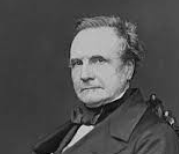
It appears to me, that any explanation of the cheapness of manufactured articles, as consequent upon the division of labour, would be incomplete if the following principle were omitted to be stated.
4 months ago
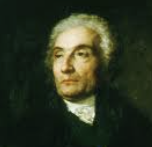
Government is a true religion: it has its dogmas, its mysteries, and its ministers. To annihilate it or submit it to the discussion of each individual is the same thing; it lives only through national reason, that is to say through political faith, which is a creed.
▼
Source
p. 87
4 months ago
It is natural for us to seek a Standard of Taste; a rule, by which the various sentiments of men may be reconciled; at least, a decision, afforded, confirming one sentiment, and condemning another.
4 months ago
Philosophy is like trying to open a safe with a combination lock: each little adjustment of the dials seems to achieve nothing, only when everything is in place does the door open.
▼
Source
Conversation of 1930 | Similar to Wittgenstein's written notes of the "Big Typescript" published in Philosophical Occasions 1912-1951 (1993) edited by James Carl Klagge and Alfred Nordmann, p. 175: Philosophical problems can be compared to locks on safes,

4 months ago
At first the Vienna Circle analysed ‘physics’ in a narrower sense almost exclusively; now psychology, biology,sociology. The task of this movement is unified science and nothing less.
▼
Source
p. 52
4 months ago
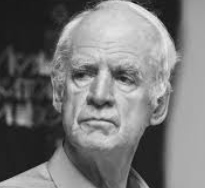
To know who I am is a species of knowing where I stand. My identity is defined by the commitments and identifications which provide the frame or horizon within which I can try to determine from case to case what is good, or valuable, or what ought to be done, or what I endorse or oppose. In other words, it is the horizon within which I am capable of taking a stand.
▼
Source
Sources of the Self: The Making of the Modern Identity (ed. Cambridge University Press, 1992) - ISBN: 9780521429498
4 months ago
The return to order will not be painful, because it will be natural and because it will be favoured by a secret force whose action is wholly creative. We will see precisely the opposite of what we have seen. Instead of these violent commotions, painful divisions, and perpetual and desperate oscillations, a certain stability, and indefinable peace, a universal well-being will announce the presence of sovereignty. There will be no shocks, no violence, no punishment even, except those which the true nation will approve. Even crime and usurpation will be treated with a measured severity, with a calm justice that belongs to legitimate power only. The king will bind up the wounds of the state with a gentle and paternal hand. In conclusion, this is the great truth with which the French cannot be too greatly impressed: the restoration of the monarchy, what they call the counter-revolution, will be not a contrary revolution, but the contrary of revolution.
▼
Source
Chapter X, p. 105
4 months ago
Every one knows that judicious matter and charms of style have rendered Hume's history the manual of every student. I remember well the enthusiasm with which I devoured it when young, and the length of time, the research and reflection which were necessary to eradicate the poison it had instilled into my mind. It was unfortunate that he first took up the history of the Stuarts, became their apologist, and advocated all their enormities... [H]e still continues to be put into the hands of all our young people, and to infect them with the poison of his own principles of government. It is this book which has undermined the free principles of the English government, has persuaded readers of all classes that these were usurpations on the legitimate and salutary rights of the crown, and has spread universal toryism over the land.
▼
Source
Thomas Jefferson to William Duane (12 August 1810), quoted in Thomas Jefferson, Writings, ed. Merrill D. Peterson (1984), pp. 1228–1229

4 months ago
Whoever has a slight knowledge of history and a fairly clear head knows perfectly well from the beginning that theoretical propaganda for revolution will necessarily express itself in action long before the theoreticians have decided that the moment to act has come. Nevertheless, the cautious theoreticians are angry at these madmen, they excommunicate them, they anathematize them. But the madmen win sympathy, the mass of the people secretly applaud their courage, and they find imitators. In proportion as the pioneers go to fill the jails and the penal colonies, others continue their work; acts of illegal protest, of revolt, of vengeance, multiply. Indifference from this point on is impossible. Those who at the beginning never so much as asked what the "madmen" wanted, are compelled to think about them, to discuss their ideas, to take sides for or against. By actions which compel general attention, the new idea seeps into people's minds and wins converts. One such act may, in a few days, make more propaganda than thousands of pamphlets. Above all, it awakens the spirit of revolt: it breeds daring. The old order, supported by the police, the magistrates, the gendarmes and the soldiers, appeared unshakable, like the old fortress of the Bastille, which also appeared impregnable to the eyes of the unarmed people gathered beneath its high walls equipped with loaded cannon. But soon it became apparent that the established order has not the force one had supposed.
4 months ago
Did you even know, until now, that human thought was capable of this degree of corruption? Yet Hegel grew out of Kant, Fichte, and Schelling, as naturally as Green, Bradley, and all the other later idealists, grew out of him. I mention these historical commonplaces, in case anyone should entertain the groundless hope of writing Hegel off as an isolated freak.
▼
Source
[https://https://web.maths.unsw.edu.au/~jim/wrongthoughts.html The Plato Cult and Other Philosophical Follies], 1991. Page 204.
4 months ago
In all that architecture has of the great and eternally beautiful, it is completely a production of the religious spirit. From the ruins of Tentyra to St Peter's in Rome, all the monuments speak; the genius of architecture is really only at ease in temples. It is there that above caprice, fashion, pettiness, licence, and finally all the gnawing cares of talent, it works without discomfort for glory and immortality.
▼
Source
p. 289
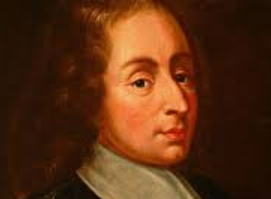
4 months ago
It is not your strength and your natural power that subjects all these people to you. Do not pretend then to rule them by force or to treat them with harshness. Satisfy their reasonable desires; alleviate their necessities; let your pleasure consist in being beneficent; advance them as much as you can, and you will act like the true king of desire.
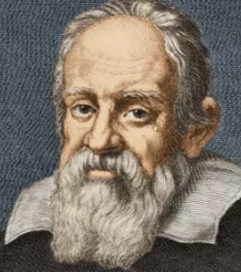
4 months ago
The passage of time has revealed to everyone the truths that I previously set forth; and, together with the truth of the facts, there has come to light the great difference in attitude between those who simply and dispassionately refused to admit the discoveries to be true, and those who combined with their incredulity some reckless passion of their own. Men who were well grounded in astronomical and physical science were persuaded as soon as they received my first message. There were others who denied them or remained in doubt only because of their novel and unexpected character, and because they had not yet had the opportunity to see for themselves. These men have by degrees come to be satisfied. But some, besides allegiance to their original error, possess I know not what fanciful interest in remaining hostile not so much toward the things in question as toward their discoverer. No longer being able to deny them, these men now take refuge in obstinate silence, but being more than ever exasperated by that which has pacified and quieted other men, they divert their thoughts to other fancies and seek new ways to damage me.
4 months ago
We know well the means by which this association of the lord, priest, merchant, judge, soldier, and king founded its domination. It was by the annihilation of all free unions: of village communities, guilds, trades unions, fraternities, and mediæval cities. It was by confiscating the land of the communes and the riches of the guilds; it was by the absolute and ferocious prohibition of all kinds of free agreement between men; it was by massacre, the wheel, the gibbet, the sword, and the fire that Church and State established their domination, and that they succeeded henceforth to reign over an incoherent agglomeration of subjects, who had no direct union more among themselves.It is now hardly thirty or forty years ago that we began to reconquer, by struggle, by revolt, the first steps of the right of association, that was freely practised by the artisans and the tillers of the soil through the whole of the middle ages.And, already now, Europe is covered by thousands of voluntary associations for study and teaching, for industry, commerce, science, art, literature, exploitation, resistance to exploitation, amusement, serious work, gratification and self-denial, for all that makes up the life of an active and thinking being. We see these societies rising in all nooks and corners of all domains: political, economic, artistic, intellectual. Some are as shortlived as roses, some hold their own since several decades, and all strive — while maintaining the independence of each group, circle, branch, or section — to federate, to unite, across frontiers as well as among each nation; to cover all the life of civilized men with a net, meshes of which are intersected and interwoven.

4 months ago
Being asked whether it was better to marry or not, he replied, "Whichever you do, you will repent it."
▼
Source
Socrates, 16.
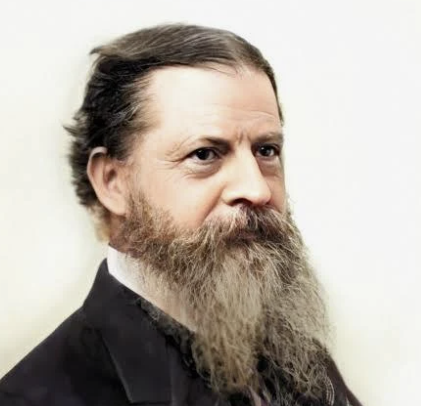
4 months ago
The Scientific Attitude and Fallibilism in Philosophical Writings of Peirce, selected and edited with an introducton by Justus Buchler. p. 49
▼
Source
See also Aristotle#Metaphysics A.1
4 months ago
Rules necessary for demonstrations. To prove all propositions, and to employ nothing for their proof but axioms fully evident of themselves, or propositions already demonstrated or admitted; Never to take advantage of the ambiguity of terms by failing mentally to substitute definitions that restrict or explain them.
4 months ago
It seems to me proper to adorn the Author's thought here with its conformity to a conception of Plato's regarding the determination of the various speeds of equable motion in the celestial motions of revolution. ...he said that God, after having created the movable celestial bodies, in order to assign to them those speeds with which they must be moved perpetually in equable circular motion, made them depart from rest and move through determinate spaces in that natural straight motion in which we sensibly see our moveables to be moved from the state of rest, successively accelerating. And he added that these having been made to gain that degree [of speed] which it pleased God that they should maintain forever, He turned their straight motion into circulation, the only kind [of motion] that is suitable to be conserved equably, turning always without retreat from or approach toward any pre-established goal desired by them. The conception is truly worthy of Plato, and it is to be more esteemed to the extent that its foundations, of which Plato remained silent, but which were discovered by our Author in removing their poetical mask or semblance, show it the guise of a true story.
▼
Source
I. Bernard Cohen's thesis: Galileo believed only circular (not straight line) motion may be conserved (perpetual), see The New Birth of Physics (1960). | Sagredo, Day Four, Stillman Drake translation (1974) pp.283-284

4 months ago
In order to remain silent Da-sein must have something to say.
▼
Source
Stambaugh translation
4 months ago
We must recognize, and loudly proclaim, that every one, whatever his grade in the old society, whether strong or weak, capable or incapable, as, before everything, THE RIGHT TO LIVE, and that society is bound to share amongst all, without exception , the means of existence at its disposal.
▼
Source
Ch. 2 : Well-Being for All, p. 71
4 months ago
Asked what he gained from philosophy, he answered, "To do without being commanded what others do from fear of the laws."
▼
Source
Aristotle, 9.

4 months ago
Write as if thou wert alone in the universe and hadst nothing to fear from the jealousies and prejudices of the people. Otherwise thou wilt miss thy purpose.
▼
Source
Preface, Oeuvres philosophiques de Monsieur de La Mettrie (1764) as quoted by Paul Carus, The Mechanistic Principle and the Non-mechanical (1913) [https://books.google.com/books?id=wGNRAAAAYAAJ&pg=PA102 p. 102.]
4 months ago
The tendency to regard continuity, in the sense in which I shall define it, as an idea of prime importance in philosophy conveniently may be be termed synechism. The present paper is intended chiefly to show what synechism is, and what it leads to.
CivilSimian.com created by AxiomaticPanic, CivilSimian, Kalokagathia