

3 months 4 weeks ago
If thou intend to do any good; tarry not till to-morrow! for thou knowest not what may chance thee this night.
3 months 4 weeks ago
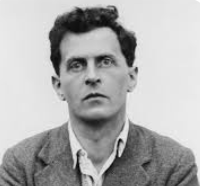
The logical picture of the facts is the thought. (3)
▼
Source
Original German: Das logische Bild der Tatsachen ist der Gedanke.
3 months 4 weeks ago
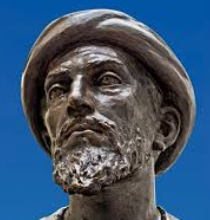
Scripture says:—If a man should rise, pretend to be a prophet, and show you his signs by which he desired to convince you that his words are true, know that God intends thereby to prove to the nations how firmly you believe in the truth of God's Word, and how well you have comprehended the true Essence of God; that you cannot be misled by any tempter to corrupt your faith in God. Your religion will then afford a guidance to all who seek the truth, and of all religions man will choose that which is so firmly established that it is not shaken by the performance of a miracle. For a miracle cannot prove that which is impossible; it is useful only as a confirmation of that which is possible, as we have explained in our Mishneh-torah.
▼
Source
Ch.24
3 months 4 weeks ago
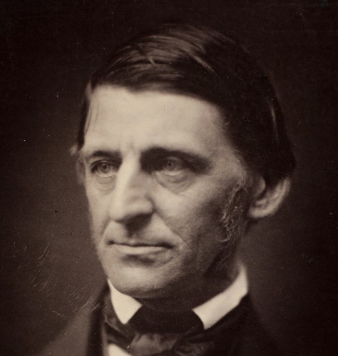
A great man quotes bravely, and will not draw on his invention when his memory serves him with a word just as good.
▼
Source
Quotation and Originality
3 months 4 weeks ago
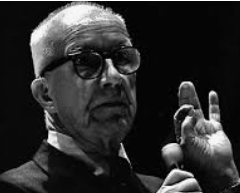
But it can hardly be read in a week. It takes some study.

3 months 4 weeks ago
Since wise people are in the habit of invoking the divinities at the beginning of any philosophic consideration, this is all the more necessary on studying that one which is justly named after the divine Pythagoras. Inasmuch as it emanated from the divinities it could not be apprehended without their inspiration and assistance. Besides, its beauty and majesty so surpasses human capacity, that it cannot be comprehended in one glance. Gradually only can some details of it be mastered when, under divine guidance we approach the subject with a quiet mind. Having therefore invoked the divine guidance, and adapted ourselves and our style to the divine circumstances, we shall acquiesce in all the suggestions that come to us. Therefore we shall not begin with any excuses for the long neglect of this sect, nor by any explanations about its having been concealed by foreign disciplines, or mystic symbols, nor insist that it has been obscured by false and spurious writings, nor make apologies for any special hindrances to its progress. For us it is sufficient that this is the will of the Gods, which all enable us to undertake tasks even more arduous than these. Having thus acknowledged our primary submission to the divinities, our secondary devotion shall be to the prince and father of this philosophy as a leader.
▼
Source
Ch. 1 : Importance of the Subject
3 months 4 weeks ago
If now I…say "Stealing money is wrong," I produce a sentence which has no factual meaning — that is, expresses no proposition which can be either true or false. It is as if I had written "Stealing money!!" — where the shape and thickness of the exclamation marks show, by a suitable convention, that a special sort of moral disapproval is the feeling which is being expressed.
▼
Source
p. 107.
3 months 4 weeks ago
For what is lacking now is not quibbles; nay, the books of the Stoics are full of quibbles
▼
Source
Book I, ch. 29, § 56
3 months 4 weeks ago
The school of the Pythagoras and those of the Neo-Platonists kept up the tradition for Greece, and we know that Pythagoras gained some of his learning in India, while Plato studied, and was initiated in the schools of Egypt. More precise information has been published of the Grecian schools than of others; the Pythagorean had pledged disciples as well as an outer discipline, the inner circle passing through three degrees during five years of probation.
▼
Source
Annie Besant, The Ancient Wisdom, p. 21 (1897)
3 months 4 weeks ago
To speak frankly, the family bond in the civilizee regime causes fathers to desire the death of their children and children to desire the death of their fathers.
3 months 4 weeks ago
Every explanation is after all an hypothesis.
▼
Source
Ch. 7 : Remarks on Frazer's Golden Bough, p. 123
3 months 4 weeks ago
Maimonides states that the intention of his work is to explain the meaning of Biblical words of various kinds, as well as of Biblical parables. Such an explanation is necessary, because the external meaning of both lends itself to grave misunderstanding. Since the internal meaning, being hidden, is a secret, the explanation of each such word or parable is the revelation of a secret.
▼
Source
Leo Strauss, Persecution and the Art of Writing (1952), 3. Literary Character of the Guide for the Perplexed
3 months 4 weeks ago
We do not count a man's years until he has nothing else to count.
▼
Source
Old Age
3 months 4 weeks ago
In the meanwhile I retire to my well-earned bath-chair, from which I shall watch with a fatherly eye the philosophic gambols of my younger friends as they dance to the highly syncopated pipings of Herr Wittgenstein's flute.
▼
Source
From the Preface to Mind and Its Place in Nature (1925)
3 months 4 weeks ago
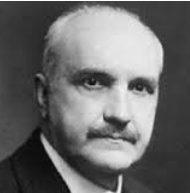
Injustice in this world is not something comparative; the wrong is deep, clear, and absolute in each private fate.
▼
Source
Ch. IV: The Aristocratic Ideal
3 months 4 weeks ago
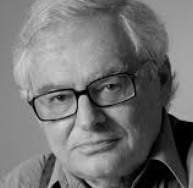
The degree of confirmation assigned to any given hypothesis is sensitive to properties of the entire belief system … simplicity, plausibility, and conservatism are properties that theories have in virtue of their relation to the whole structure of scientific beliefs taken collectively. A measure of conservatism or simplicity would be a metric over global properties of belief systems.
▼
Source
p. 107–108 as cited in: Philip Robbins, "[http://plato.stanford.edu/entries/modularity-mind/ Modularity of Mind]", The Stanford Encyclopedia of Philosophy (Summer 2010 Edition), Edward N. Zalta (ed.)
3 months 4 weeks ago
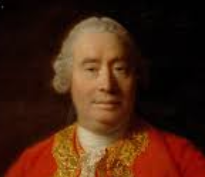
The admirers and followers of the Alcoran insist on the excellent moral precepts interspersed through that wild and absurd performance. But it is to be supposed, that the Arabic words, which correspond to the English, equity, justice, temperance, meekness, charity were such as, from the constant use of that tongue, must always be taken in a good sense; and it would have argued the greatest ignorance, not of morals, but of language, to have mentioned them with any epithets, besides those of applause and approbation. But would we know, whether the pretended prophet had really attained a just sentiment of morals? Let us attend to his narration; and we shall soon find, that he bestows praise on such instances of treachery, inhumanity, cruelty, revenge, bigotry, as are utterly incompatible with civilized society. No steady rule of right seems there to be attended to; and every action is blamed or praised, so far only as it is beneficial or hurtful to the true believers.
▼
Source
David Hume, Of the Standard of Taste, 1760
3 months 4 weeks ago
For what is it that everyone is seeking? To live securely, to be happy, to do everything as they wish to do, not to be hindered, not to be subject to compulsion.
▼
Source
Book IV, ch. 1, § 46.
3 months 4 weeks ago
The votaries of Pythagoras of Samos have this story to tell of him, that he was not an Ionian at all, but that, once on a time in Troy, he had been Euphorbus, and that he had come to life after death, but had died as the songs of Homer relate. And they say that he declined to wear apparel made from dead animal products and, to guard his purity, abstained from all flesh diet, and from the offering of animals in sacrifice. For that he would not stain the altars with blood; nay, rather the honey-cake and frankincense and the hymn of praise, these they say were the offerings made to the Gods by this man, who realized that they welcome such tribute more than they do the hecatombs note and the knife laid upon the sacrificial basket. For they say that he had of a certainty social intercourse with the gods, and learnt from them the conditions under which they take pleasure in men or are disgusted, and on this intercourse he based his account of nature.
▼
Source
Philostratus, Life of Apollonius, translation by F.C. Conybeare, [http://www.livius.org/sources/content/philostratus-life-of-apollonius/philostratus-life-of-apollonius-1.1-5/#1.1 Book 1, § 1]
3 months 4 weeks ago
Your questions refer to words; so I have to talk about words. You say: The point isn't the word, but its meaning, and you think of the meaning as a thing of the same kind as the word, though also different from the word. Here the word, there the meaning.
▼
Source
§ 120
3 months 4 weeks ago
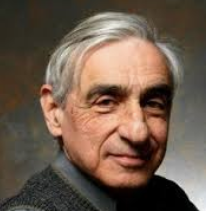
Writers who opted out of the referential system and who avoided or escaped the common experience are not part of the Jewish political tradition, even if they are still Jews writing about politics. Karl Marx on class struggle, Sigmund Freud on transference and political leadership, Emile Durkheim on socialism and "moral education," George Simmel on the philosophy of money—these text do not fall within the tradition. Baruch Spinoza's political theology does, despite his excommunication, for Spinoza writes always with the tradition in mind: the Hebrew Bible is his first text; the greatest of medieval Jewish philosophers, Moses Maimonides, is his crucial reference. Modern secular writers like Ahad Ha-am (Asher Ginsberg) and Micha Josef Berdichevsky, schooled in the communities of eastern Europe, still know the tradition and work within it, or at least start from it—even if one of their purposes is an antitraditionalist critique: criticism is a form of engagement. Many of their successors, by contrast, are largely ignorant and entirely disengaged.
3 months 4 weeks ago
These preachers of beauty, which light the world with their admonishing smile.
▼
Source
p. 248 (Stars)
3 months 4 weeks ago
Deception, in turn , suggests morality: the morality of deceiving people into thinking something is so when it is not. The moral principle is this: whoever attempts to tame a part of a wicked problem, but not the whole, is morally wrong.
▼
Source
p. 142 cited in: Rob Hundman (2010) Weerbarstig veranderen. p. 38
3 months 4 weeks ago
Our dignity is not in what we do, but in what we understand. The whole world is doing things.
▼
Source
p. 199
3 months 4 weeks ago
Nature has pointed out a mixed kind of life as most suitable to the human race, and secretly admonished them to allow none of these biases to draw too much, so as to incapacitate them for other occupations and entertainments. Indulge your passion for science, says she, but let your science be human, and such as may have a direct reference to action and society. Abstruse thought and profound researches I prohibit, and will severely punish, by the pensive melancholy which they introduce, by the endless uncertainty in which they involve you, and by the cold reception which your pretended discoveries shall meet with, when communicated. Be a philosopher; but, amidst all your philosophy, be still a man.
▼
Source
Section 1 : Of The Different Species of Philosophy
3 months 4 weeks ago
It is certain that Pythagoras awakened the deepest intellectual sympathy of his age, and that his doctrines exerted a powerful influence upon the mind of Plato. His cardinal idea was that there existed a permanent principle 'of unity beneath the forms, changes, and other phenomena of the universe. Aristotle asserted that he taught that “ numbers are the first principles of all entities.” Ritter has expressed the opinion that the formula of Pythagoras should be taken symbolically, which is doubtless correct. (p. XV Before the Veil)
▼
Source
Before the Veil, xv.
3 months 4 weeks ago
612. At the end of reasons comes persuasion.

3 months 4 weeks ago
The Art of Peace is the principle of nonresistance. Because it is nonresistant, it is victorious from the beginning. Those with evil intentions or contentious thoughts are instantly vanquished. The Art of Peace is invincible because it contends with nothing.
3 months 4 weeks ago
Modern technics, even apart from the special arts that it fostered, had a cultural contribution to make in its own right. Just as science underlined the respect for fact, so technics emphasized the importance of function: in this domain, as Emerson pointed out, the beautiful rests on the foundation of the necessary.
▼
Source
Lewis Mumford, Technics and Civilization (1934) Ch. 7 "Assimilation of the Machine"
3 months 4 weeks ago
The enemies will be asking reasonable questions, like Isn't politics the way matters are really decided, and isn't the rational systems approach simply one political device, to be used when politically expedient? Or isn't morality essentially inexpressible in terms of concepts and words, and doesn't this essentially ineffable quality of our lives lead us humans to decide the way we do? Or, isn't religious imagery really the basis of all our perspectives and concepts, including the perspective of the systems approach? And what is it that carries the values we humans cherish? It is not the ego or the mind, but, say our basic aesthetic feeling, which cannot be conceptualized. And finally, and most generally, why is a rational, holistic approach desirable for the human species, especially since it so often gets out of hand, missing the vital essence of the specific and individual, the here and now, encompassing "everything" to the exclusion of every thing?
▼
Source
p. 69; As cited in: [http://phd-take-2.wikispaces.com/The+Systems+Approach+and+its+Enemies Book Review: The Systems Approach and its Enemies]
3 months 4 weeks ago
In the Gospels, for instance, we sometimes find the kingdom of heaven illustrated by principles drawn from observation of this world rather than from an ideal conception of justice; ... They remind us that the God we are seeking is present and active, that he is the living God; they are doubtless necessary if we are to keep religion from passing into a mere idealism and God into the vanishing point of our thought and endeavour.
▼
Source
[http://hdl.handle.net/2027/uc2.ark:/13960/t3028sf4m?urlappend=%3Bseq=72 Interpretations of Poetry and Religion] (1900), p. 54
3 months 4 weeks ago
Hear the verbal protestations of all men: Nothing so certain as their religious tenets. Examine their lives: You will scarcely think that they repose the smallest confidence in them. The greatest and truest zeal gives us no security against hypocrisy: The most open impiety is attended with a secret dread and compunction. No theological absurdities so glaring that they have not, sometimes, been embraced by men of the greatest and most cultivated understanding. No religious precepts so rigorous that they have not been adopted by the most voluptuous and most abandoned of men.
▼
Source
Part XV - General corollary
3 months 4 weeks ago
§1. The aim of Book X of Euclid's treatise on the Elements is to investigate the commensurable and incommensurable, the rational and irrational continuous quantities. This science (or knowledge) had its origin in the sect (or school) of Pythagoras, but underwent an important development at the hands of the Athenian, Theaetetus, who had a natural aptitude for this as for other branches of mathematics most worthy of admiration.
▼
Source
p. 63.
3 months 4 weeks ago
The less somebody knows and understands himself the less great he is, however great may be his talent. For this reason our scientists are not great.
▼
Source
p. 51e

3 months 4 weeks ago
Overflowing with the wine of Truth is the cup of IndiaAll philosophers of the Western world have acknowledged IndiaIt is the result of the elegant thinking of IndiansThat higher than the sky is the position of IndiaThis country has had many people of angelic dispositionOn whose account world renowned is the name of IndiaIndia is proud of the existence of RamaSpiritual people consider him prelate of IndiaThis alone is the miracle of this light of righteousnessThat brighter than world’s morning is the evening of IndiaHe was expert in sword craft, was unique in braveryWas matchless in piety and in the enthusiasm of love.
▼
Source
[http://www.allamaiqbal.com/poetry.php?bookbup=22&orderno=112&lang_code=en&lang=2&conType=en Rama]. Translated by: M.A.K. Khalil. | Variant: "The cup of India is brimful of the wine of truth. All philosophers of the western world (have acknowleged) Rāma o
3 months 4 weeks ago
In the making both of lace and of statues, the to the artists can only be reduced by producing a larger number of them through more extended education. The expense of the raw material is small in both. The expense of labour in lacemaking is very large, and it is perhaps considerable also in sculpture. The discovery of more convenient localities yielding marble, may make some diminution in its cost; and the improved manufacture of thread may slightly reduce the price of lace. A reduction in the price of labour may to a very moderate extent reduce the cost of the raw material of both. But it is evident that any very great reduction is not to be expected.Let us now contrast this possible reduction with the past history of some industrial art. The plain made at , called patent net, will supply us with a good example. In the year 1813 that lace was sold in the piece at the rate of 218. a-yard. At the present time lace of the same kind, but of a better quality, is sold under the same circumstances at 3d. per yard. Thus, in less than forty years the price of the industrial produce has diminished to one eighty-fourth part of its original price.
3 months 4 weeks ago
The mixture of children and men is precisely one of the most beautiful features of aristocratic government. All roles are distributed wisely in the world: that of the young is to do good, and that of old age is to prevent evil. The impetuosity of young men, who demand only action and creation, is very useful to the State; but they are too likely to innovate and destroy, and they would do much evil without the elderly, who are there to stop them. The latter in their turn oppose even useful reforms; they are too inflexible, they do not know how to accommodate themselves to circumstances, and sometimes a twenty-year old senator can very well be placed beside another of eighty.
▼
Source
p. 137
3 months 4 weeks ago
Look round the world: contemplate the whole and every part of it: You will find it to be nothing but one great machine, subdivided into an infinite number of lesser machines, which again admit of subdivisions, to a degree beyond what human senses and faculties can trace and explain. All these various machines, and even their most minute parts, are adjusted to each other with an accuracy, which ravishes into admiration all men, who have ever contemplated them. The curious adapting of means to ends, throughout all nature, resembles exactly, though it much exceeds, the productions of human contrivance; of human design, thought, wisdom, and intelligence.
▼
Source
Philo to Cleanthes, Part II
3 months 4 weeks ago
It is so characteristic, that just when the mechanics of reproduction are so vastly improved, there are fewer and fewer people who know how the music should be played.
▼
Source
p. 96

3 months 4 weeks ago
I do not think the line of division runs between people with secular and those with transcendental creeds, but rather between people with a centralized and dominating zeal which may possibly lead to self-sacrifice and the sacrifice of others, without tolerance in principle, and people who are tolerant on principle, having perhaps some transcendental creed, or because they, as empiricists, see the multiplicity of all arguing.
▼
Source
Otto Neurath (1983) "The orchestration of the sciences by the encyclopedism of logical empiricism." In R. S. Cohen, M. Neurath, & C. R. Fawcett (Eds.), Otto Neurath: Philosophical papers, 1913–1946 (pp. 230–242). Boston: Riedel. (First published 1946); p.
3 months 4 weeks ago
Truths physical have an- origin as divine as truths religious, In the time of Galileo they triumphed over the casuistry and secular power of the Church ; and in our own day the incontrovertible truths of primeval life have won as noble a victory over the errors of a speculative theology, and a false interpretation of the word of God. Science ever has been, and ever must be the safeguard of religion. The grandeur of her truths may transcend our failing reason, but those who cherish and lean upon truths equally grand, but certainly more incomprehensible, ought to see in the marvels of the material world the best defence and illustration of the mysteries of their faith.
▼
Source
More Worlds Than One: The Creed of the Philosopher and the Hope of the Christian (1856), p. 132
3 months 4 weeks ago
If we do not return to the old maxims, if education is not restored into the hands of priests, and if science is not every where placed in the second rank, the evils which await us are incalculable: we shall become brutalized by science, and this is the lowest degree of brutality.
▼
Source
XXXIX, p. 112
3 months 4 weeks ago
It is therefore important to discover whether there is any answer to Hume within the framework of a philosophy that is wholly or mainly empirical. If not, there is no intellectual difference between sanity and insanity. The lunatic who believes that he is a poached egg is to be condemned solely on the ground that he is in a minority, or rather—since we must not assume democracy—on the ground that the government does not agree with him. This is a desperate point of view, and it must be hoped that there is some way of escaping from it.
▼
Source
Bertrand Russell; A History of Western Philosophy, Book Three, Part I, Chapter 17. Hume

3 months 4 weeks ago
The confused mass of rules of conduct called law, which has been bequeathed to us by slavery, serfdom, feudalism, and royalty, has taken the place of those stone monsters, before whom human victims used to be immolated, and whom slavish savages dared not even touch lest they should be slain by the thunderbolts of heaven.
▼
Source
I

3 months 4 weeks ago
When Diogenes observed how other men were harassed throughout their whole lives, ever plotting against one another, ever encompassed by a thousand ills and never able to enjoy a moment’s rest, nay, not even during the great festivals nor when they proclaimed a truce; and when he beheld that they did or suffered all this simply in order to keep themselves alive, and that their greatest fear was lest their so-called necessities should fail them, and how, furthermore, they planned and strove to leave great riches to their children, he marvelled that he too did not do the like, but was the only independent man in the world.
▼
Source
p. 268
3 months 4 weeks ago
A woman can only be superior as a woman; as soon as she wants to emulate man, she is nothing but an ape.
▼
Source
Letter to his daughter Constance de Maistre, Lettres, 146
3 months 4 weeks ago
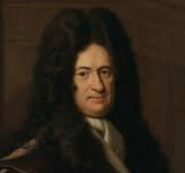
I have seen something of the project of M. de St. Pierre, for maintaining a perpetual peace in Europe. I am reminded of a device in a cemetery, with the words: Pax perpetua; for the dead do not fight any longer: but the living are of another humor; and the most powerful do not respect tribunals at all.
▼
Source
Letter 11 to Grimarest: Passages Concerning the Abbe de St. Pierre's 'Project for Perpetual Peace (June 1712). Taken from Leibniz: Political Writings (2nd Edition, 1988), Edited by Patrick Riley.
3 months 4 weeks ago
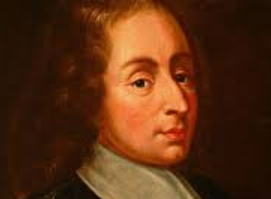
One, knowing the duties of man and being ignorant of his impotence, is lost in presumption, and that the other, knowing the impotence and being ignorant of the duty, falls into laxity; whence it seems that since the one leads to truth, the other to error, there would be formed from their alliance a perfect system of morals. But instead of this peace, nothing but war and a general ruin would result from their union; for the one establishing certainty, the other doubt, the one the greatness of man, the other his weakness, they would destroy the truths as well as the falsehoods of each other. So that they cannot subsist alone because of their defects, nor unite because of their opposition, and thus they break and destroy each other to give place to the truth of the Gospel. This it is that harmonizes the contrarieties by a wholly divine act, and uniting all that is true and expelling all that is false, thus makes of them a truly celestial wisdom in which those opposites accord that were incompatible in human doctrines.
3 months 4 weeks ago
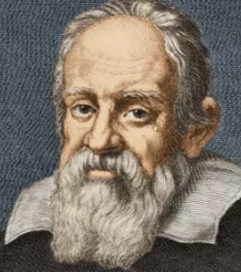
I would say here something that was heard from an ecclesiastic of the most eminent degree [probably Caesar Baronius]: "The intention of the Holy Ghost is to teach us how one goes to heaven, not how heaven goes."
▼
Source
Variant translation: I would say here something that was heard from an ecclesiastic of the most eminent degree: "That the intention of the Holy Spirit is to teach us how one goes to heaven, not how the heavens go."
3 months 4 weeks ago
Once a German jurist of great renown, Ihering, wanted to sum up the scientific work of his life and write a treatise, in which he proposed to analyze the factors that preserve social life in society. "Purpose in Law" (Der Zweck im Rechte), such is the title of that book, which enjoys a well-deserved reputation.He made an elaborate plan of his treatise, and, with much erudition, discussed both coercive factors which are used to maintain society: wagedom and the different forms of coercion which are sanctioned by law. At the end of his work he reserved two paragraphs only to mention the two non-coercive factors — the feeling of duty and the feeling of mutual sympathy — to which he attached little importance, as might be expected from a writer in law.But what happened? As he went on analyzing the coercive factors he realized their insufficiency. He consecrated a whole volume to their analysis, and the result was to lessen their importance! When he began the last two paragraphs, when he began to reflect upon the non-coercive factors of society, he perceived, on the contrary, their immense, outweighing importance; and instead of two paragraphs, he found himself obliged to write a second volume, twice as large as the first, on these two factors: voluntary restraint and mutual help; and yet, he analyzed but an infinitesimal part of these latter — those which result from personal sympathy — and hardly touched free agreement, which results from social institutions.
CivilSimian.com created by AxiomaticPanic, CivilSimian, Kalokagathia