

3 months 4 weeks ago
In the heat of our pursuit for fundamental human rights, Black people have been continually cautioned to be patient. We are advised that as long as we remain faithful to the existing democratic order, the glorious moment will eventually arrive when we will come into our own as full-fledged human beings.
3 months 4 weeks ago
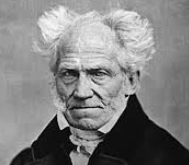
Keats, entirely a stranger to error, could believe that the nightingale enchanting him was the same one Ruth heard amid the alien corn of Bethlehem in Judah; Stevenson posits a single bird that consumes the centuries: "the nightingale that devours time." Schopenhauer — impassioned, lucid Schopenhauer — provides a reason: the pure corporeal immediacy in which animals live, oblivious to death and memory. He then adds, not without a smile: Whoever hears me assert that the grey cat playing just now in the yard is the same one that did jumps and tricks there five hundred years ago will think whatever he likes of me, but it is a stranger form of madness to imagine that the present-day cat is fundamentally an entirely different one.
▼
Source
Jorge Luis Borges in "A History of Eternity" as translated in Selected Non-Fictions Vol. 1, (1999), edited by Eliot Weinberger

3 months 4 weeks ago
The surest means of not losing your mind on the spot: remembering that everything is unreal, and will remain so...
3 months 4 weeks ago
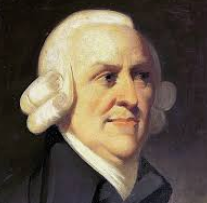
Thus the labour of a manufacture adds, generally, to the value of the materials which he works upon, that of his own maintenance, and of his masters profits. The labour of a menial servant, on the contrary, adds to the value of nothing.
▼
Source
Chapter III, p. 364 (see Proverbs 14-23 KJV).
3 months 4 weeks ago
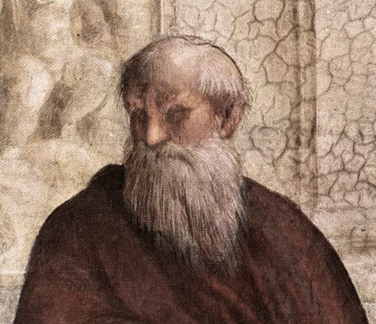
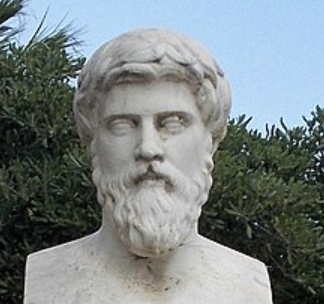
Hence, as Narcissus, by catching at the shadow, plunged himself in the stream and disappeared, so he who is captivated by beautiful bodies, and does not depart from their embrace, is precipitated, not with his body, but with his soul, into a darkness profound and repugnant to intellect (the higher soul), through which, remaining blind both here and in Hades, he associates with shadows.
▼
Source
First Ennead, Book VI, as translated by Thomas Taylor, [https://books.google.com/books?id=vEt0LaOue8IC The Eleusinian and Bacchic Mysteries: A Dissertation] (1891) pp. 43-44.
3 months 4 weeks ago
The measure of a man's life is the well spending of it, and not the length.

3 months 4 weeks ago
The evidence of science and history is that humans are only ever partly and intermittently rational, but for modern humanists the solution is simple: human beings must in future be more reasonable. These enthusiasts for reason have not noticed that the idea that humans may one day be more rational requires a greater leap of faith than anything in religion. Since it requires a miraculous breach in the order of things, the idea that Jesus returned from the dead is not as contrary to reason as the notion that human beings will in future be different from how they have always been.
▼
Source
An Old Chaos: Humanism and Flying Saucers (p. 75)
3 months 4 weeks ago
Happiness depends upon ourselves
▼
Source
An interpretative gloss of Aristotle's position in Nicomachean Ethics book 1 section 9, tacitly inserted by J. A. K. Thomson in his English translation The Ethics of Aristotle (1955). The original Greek at [https://www.perseus.tufts.edu/hopper/text?doc=Pe
3 months 4 weeks ago
Put in a nut-shell, my thesis amounts to this. The repeated attempts made by Rudolf Carnap to show that the demarcation between science and metaphysics coincides with that between sense and nonsense have failed. The reason is that the positivistic concept of 'meaning' or 'sense' (or of verifiability, or of inductive confirmability, etc.) is inappropriate for achieving this demarcation — simply because metaphysics need not be meaningless even though it is not science. In all its variations demarcation by meaninglessness has tended to be at the same time too narrow and too wide: as against all intentions and all claims, it has tended to exclude scientific theories as meaningless, while failing to exclude even that part of metaphysics which is known as 'rational theology'.
▼
Source
Ch 11. "The Demarcation between Science and Metaphysics." (Summary, p. 253)
3 months 4 weeks ago
The peculiar and amusing nature of those answers stems from the fact that modern history is like a deaf person who is in the habit of answering questions that no one has put to them. If the purpose of history be to give a description of the movement of humanity and of the peoples, the first question — in the absence of a reply to which all the rest will be incomprehensible — is: what is the power that moves peoples? To this, modern history laboriously replies either that Napoleon was a great genius, or that Louis XIV was very proud, or that certain writers wrote certain books. All that may be so and mankind is ready to agree with it, but it is not what was asked.
▼
Source
Vol 2, pt 5, p 236 — Selected Works, Moscow, 1869
3 months 4 weeks ago
Once we realize that the principles of our actions have no other support than our blind choice, we really do not believe in them anymore... In order to live, we have to silence the easily silenced voice of reason, which tells us that our principles are in themselves as good or as bad an any other principles. The more we cultivate reason, the more we cultivate nihilism...
▼
Source
p. 6

3 months 4 weeks ago
You shall have joy, or you shall have power, said God; you shall not have both.
▼
Source
October 1842
3 months 4 weeks ago
It should be remembered that the ancestors of many of today's most ardent liberals could not have imagined life without slavery, life without lynching, life without segregation.
▼
Source
Chapter Two
3 months 4 weeks ago
To have grazed every form of failure, including success.
3 months 4 weeks ago
Such taxes [upon the necessaries of life], when they have grown up to a certain height, are a curse equal to the barrenness of the earth and the inclemency of the heavens; and yet it is in the richest and most industrious countries that they have been most generally imposed. No other countries could support so great a disorder.
▼
Source
Chapter II, paragraph 36, p. 500.
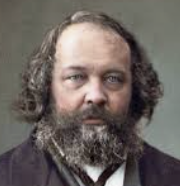
3 months 4 weeks ago
Freedom is the absolute right of every human being to seek no other sanction for his actions but his own conscience, to determine these actions solely by his own will, and consequently to owe his first responsibility to himself alone.
▼
Source
As quoted in Anarchism: From Theory to Practice, Daniel Guérin, New York: NY, Monthly Review Press (1970) p. 31
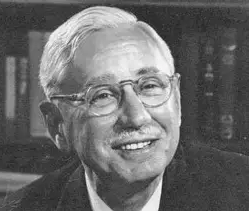
3 months 4 weeks ago
India will teach us the tolerance and gentleness of mature mind, understanding spirit and a unifying, pacifying love for all human beings.

3 months 4 weeks ago
Every body is in place; but nothing essentially incorporeal, or any thing of this kind, has any locality.
▼
Source
1
3 months 4 weeks ago
'[S]cientific knowledge' always remained sheer guesswork... controlled by criticism and experiment. ...[T]his assumption is sufficient for solving the problem of induction—called by Kant 'the problem of Hume'— without sacrificing empiricism...[i.e.,] without adopting a principle of induction and ascribing to it a priori validity. For guesses are not 'induced from observations' (although they may ...be suggested ...by observations). This ... allows us to accept ...(...without Russell's limits of empiricism) Hume's logical criticism of induction and to give up ...an inductive logic, for certainty, and even for probability, while continuing ...scientific search for truth.
3 months 4 weeks ago
The conscience of a man of our circle, if he retains but a scrap of it, cannot rest, and poisons all the comforts and enjoyments of life supplied to us by the labour of our brothers, who suffer and perish at that labour. And not only does every conscientious man feel this himself (he would be glad to forget it, but cannot do so in our age) but all the best part of science and art - that part which has not forgotten the purpose of its vocation - continually reminds us of our cruelty and of our unjustifiable position. The old firm justifications are all destroyed; the new ephemeral justifications of the progress of science for science's sake and art for art's sake do not stand the light of simple common sense. Men's consciences cannot be set at rest by new excuses, but only by a change of life which will make any justification of oneself unnecessary as there will be nothing needing justification.
3 months 4 weeks ago
“Culture” means … the cultivation of the mind, the taking care and improving of the native faculties of the mind in accordance with the nature of the mind. Just as the soil needs cultivators of the soil, the mind needs teachers. But teachers are not as easy to come by as farmers. The teachers themselves are pupils and must be pupils. But there cannot be an infinite regress: ultimately there must be teachers who are not in turn pupils. Those teachers who are not in turn pupils are the great minds.
▼
Source
“What is liberal education,” p. 3
3 months 4 weeks ago
I had better never see a book than to be warped by its attraction clean out of my own orbit, and made a satellite instead of a system. The one thing in the world, of value, is the active soul.
▼
Source
par. 15
3 months 4 weeks ago
In the aftermath of the war, we find one of the most hidden eras of US history; and that is the period of radical reconstruction. It certainly remains the most radical era in the entire history of the United States of America. And this is an era that is rarely acknowledged in historical texts. ... There were progressive laws passed challenging male supremacy. This is an era that is rarely acknowledged. During that era of course we had the creation of what we now call historically black colleges and universities and there was economic development. This period didn’t last very long. From the aftermath of the abolition of slavery, we might take 1865 as that day until 1877 when a radical reconstruction was overturned—and not only was it overturned but it was erased from the historical record—and so in the 1960s we confronted issues that should have been resolved in the 1860s. One hundred years later.
3 months 4 weeks ago
Despair, Suffering, Depression, Death
3 months 4 weeks ago
Nothing but the most exemplary morals can give dignity to a man of small fortune.
▼
Source
Chapter I, Part III, Article III, p. 874.
3 months 4 weeks ago
At the present time a serious, strong state can have but one sound foundation — military and bureaucratic centralization. Between a monarchy and the most democratic republic there is only one essential difference: in the former, the world of officialdom oppresses and robs the people for the greater profit of the privileged and propertied classes, as well as to line its own pockets, in the name of the monarch; in the latter, it oppresses and robs the people in exactly the same way, for the benefit of the same classes and the same pockets, but in the name of the people’s will. In a republic a fictitious people, the "legal nation" supposedly represented by the state, smothers the real, live people. But it will scarcely be any easier on the people if the cudgel with which they are beaten is called the people's cudgel.
3 months 4 weeks ago
Life is that which can hold a purpose for three thousand years and never yield. The individual fails, but life succeeds. The individual is foolish, but life holds in its blood and seed the wisdom of generations. The individual dies, but life, tireless and undiscourageble, goes on, wondering, longing, planning, trying, mounting, longing.
▼
Source
Ch. 5 : On Death
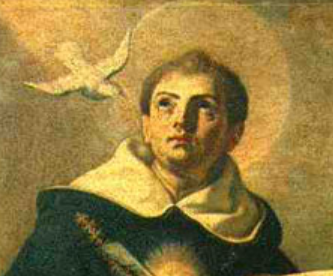
3 months 4 weeks ago
Suppose a person entering a house were to feel heat on the porch, and going further, were to feel the heat increasing, the more they penetrated within. Doubtless, such a person would believe there was a fire in the house, even though they did not see the fire that must be causing all this heat. A similar thing will happen to anyone who considers this world in detail: one will observe that all things are arranged according to their degrees of beauty and excellence, and that the nearer they are to God, the more beautiful and better they are.
▼
Source
Art. 1

3 months 4 weeks ago
Some people steal from others, or defraud them, or enslave them, seizing their product and preventing them from living as they choose, or forcibly exclude others from competing in exchanges. None of these are permissible modes of transition from one situation to another.
▼
Source
Ch. 7 : Distributive Justice, Section I, The Entitlement Theory, p. 152
3 months 4 weeks ago
The Churches as Churches—as institutions affirming their own infallibility—are anti-Christian institutions. Between the Churches as such and Christianity, not only is there nothing in common except the name, but they are two quite opposite and opposing principles. The one represents pride, violence, self-assertion, immobility and death: the other humility, penitence, meekness, progress, and life.
▼
Source
Chapter III, Christianity Misunderstood by Believers
3 months 4 weeks ago
But is the latter possibility to be dismissed out of hand? An interesting alternative is available to those readers who agree with Waterfield that the Republic has little to offer as a work of political philosophy, but who at the same time find the ethical reading – especially in Waterfield’s extreme formulation – ultimately unconvincing. The thesis is most closely associated with the twentieth-century American philosopher Leo Strauss, though it has been pursued by a number of others, most prominently Allan Bloom. In essence, it agrees that the Republic is a dialogue in which an authoritarian system of government is outlined, but contends that [Plato]’s purpose in doing so is ironic: the aim is to highlight the preposterousness of the just city.
▼
Source
D. J. Sheppard, Plato's Republic: An Edinburgh Philosophical Guide (2009)
3 months 4 weeks ago
This is the value of the Communities; not what they have done, but the revolution which they indicate as on the way.
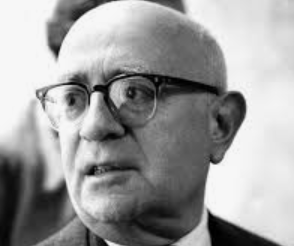
3 months 4 weeks ago
In organized groups such as the army or the Church there is either no mention of love whatsoever between the members, or it is expressed only in a sublimated and indirect way, through the mediation of some religious imagine in the love of whom the members unite and whose all-embracing love they are supposed to imitate in their attitude towards each other. ... It is one of the basic tenets of fascist leadership to keep primary libidinal energy on an unconscious level so as to divert its manifestations in a way suitable to political ends.
▼
Source
“Freudian Theory and the Pattern of Fascist Propaganda,” The Essential Frankfurt School Reader (1982), p. 123
3 months 4 weeks ago
Part of the problem with policing, prisons, and surveillance is that it's a one-size-fits-all model. Angela Davis says this perfectly-there is no one alternative. There are a million alternatives. And the issue is to figure out which alternative works for what situation. I don't like to use the word alternative, but I will in this case. It's like what works for this particular situation that we're in? What works for these people? How are we going to actually address this based on human needs? These are the things that we're interested in as PIC abolitionists. I think that makes us actually again incredibly creative. Always generative. And also not afraid, again, of failure.
▼
Source
Mariame Kaba, We Do This Til We Free Us (2021)
3 months 4 weeks ago
The essence of liberalism is negotiation, a cautious half measure, in the hope that the definitive dispute, the decisive bloody battle, can be transformed into a parliamentary debate and permit the decision to be suspended forever in an everlasting discussion.
3 months 4 weeks ago
Now, sir, I stand here in the land where Adam Smith was born, the parent and patriarch of political economy—the man who first taught us that in our intercourse with other nations, as well as among ourselves, it was better to have our hands free than to have our hands and arms in manacles—who taught the great doctrines of Free Trade, and who has imbued the world with these doctrines.
▼
Source
William Ewart Gladstone, speech in Dundee (29 October 1890), quoted in A. W. Hutton and H. J. Cohen (eds.), The Speeches of The Right Hon. W. E. Gladstone on Home Rule, Criminal Law, Welsh and Irish Nationality, National Debt and the Queen's Reign, 1888–1
3 months 4 weeks ago
In order to correctly define art, it is necessary, first of all, to cease to consider it as a means to pleasure and consider it as one of the conditions of human life. ...Reflecting on it in this way, we cannot fail to observe that art is one of the means of affective communication between people.
3 months 4 weeks ago
A man's natural rights are his own, against the whole world; and any infringement of them is equally a crime, whether committed by one man, or by millions; whether committed by one man, calling himself a robber, (or by any other name indicating his true character,) or by millions, calling themselves a government.
▼
Source
p. 7
3 months 4 weeks ago
Seeing only what is fair, Sipping only what is sweet, Thou dost mock at fate and care.
▼
Source
To the Humble Bee, st. 6
3 months 4 weeks ago
Words of the jargon sound as if they said something higher than what they mean.
▼
Source
p. 9
3 months 4 weeks ago
You request my presence at the Olympic Games, and for that reason you have sent envoys. For myself, I would come for the spectacle of physical struggle, except that I would be abandoning the greater struggle for virtue.
▼
Source
Epp. Apoll. 24
3 months 4 weeks ago
Smith had no illusion that this would be easy to do, nor did he suffer from the delusion that such an exercise would, in any sense, be perfect. But he did have the conviction that the exercise could still be very useful, and the best should not be made into an enemy of the good.
▼
Source
Amartya Sen, “Values and Justice”, Journal of Economic Methodology, Vol. 19, No. 2, June 2012, 101–108.
3 months 4 weeks ago
Nekhludoff recalled his relations with the wife of the district commander, and a flood of shameful recollections came upon him. "There is a disgusting bestiality in man," he thought; "but when it is in a primitive state, one looks down upon and despises it, whether he is carried away with or withstands it. But when this same bestiality hides itself under a so-called aesthetic, poetic cover, and demands to be worshiped, then, deifying the beast, one gives himself up to it, without distinguishing between the good and the bad. Then it is horrible."
▼
Source
Ch. 73
3 months 4 weeks ago
It is better and more satisfactory to acquit a thousand guilty persons than to put a single innocent one to death.
▼
Source
Sefer Hamitzvot [Book of the Commandments], commentary on Negative Commandment 290, as translated by Charles B. Chavel (1967); also in Defending the Human Spirit : Jewish Law's Vision for a Moral Society (2006) by Warren Goldstein, p. 269
3 months 4 weeks ago
Nature magically suits the man to his fortunes, by making these the fruit of his character.
▼
Source
Fate

3 months 4 weeks ago
Not to know how one has become what one is, means one has a grossly inadequate idea of what one is.
▼
Source
p. 4
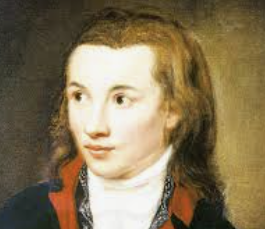
3 months 4 weeks ago
We are on a mission: we are called to the cultivation of the earth.
▼
Source
Fragment No. 32; Variant translations: We are on a mission.We are called to form the earth. We are on a mission.We are called to educate the earth.

3 months 4 weeks ago
One whose intentions and thoughts are cultivated will disregard wealth and nobility. One whose greatest concern is for the Way and righteousness will take lightly kings and dukes. It is simply that when one examines oneself on the inside, external goods carry little weight. A saying goes, "The gentleman makes things his servants. The petty man is servant to things."
▼
Source
Readings in Classical Chinese Philosophy (2001), p. 263 | A similar phrase to the saying is found in the 3rd millennium BCE Sumerian text Instructions of Shuruppak by Šuruppak: "You should not serve things; things should serve you."[http://etcsl.orinst.ox
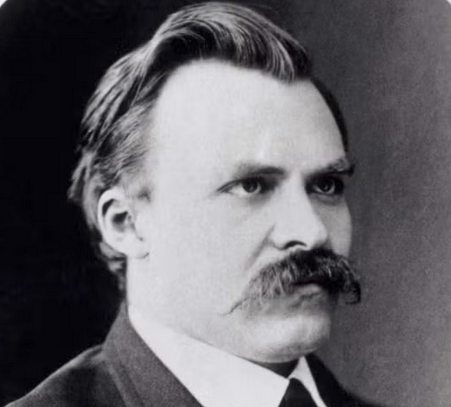
3 months 4 weeks ago
The horrible or the absurd is uplifting, because it is only seemingly horrible or absurd. The Dionysian power of enchantment here proves itself, even at the highest point of this vision of the world; all that is actual gives way to seeming and behind it is announced the unitary nature of the Will, wholly wrapped in the glory of wisdom and truth, in dazzling brilliance. Illusion, delusion is at its peak.
▼
Source
page 48
3 months 4 weeks ago
We measure the earth, sun, stars, and ocean depths. We burrow into the depths of the earth for gold. We search for rivers and mountains on the moon. We discover new stars and know their magnitudes. We sound the depths of gorges and build clever machines. Each day brings a new invention. What don't we think of! What can't we do! But there is something else, the most important thing of all, that we are missing. We do not know exactly what it is. We are like a small child who knows he does not feel well but cannot explain why. We are uneasy, because we know a lot of superfluous facts; but we do not know what is really important—ourselves.
▼
Source
p. 10
CivilSimian.com created by AxiomaticPanic, CivilSimian, Kalokagathia