
3 months 4 weeks ago
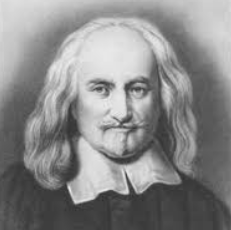
For it is not the bare Words, but the Scope of the writer that giveth true light, by which any writing is to bee interpreted; and they that insist upon single Texts, without considering the main Designe, can derive no thing from them clearly; but rather by casting atomes of Scripture, as dust before mens eyes, make everything more obscure than it is; an ordinary artifice of those who seek not the truth, but their own advantage.
▼
Source
The Third Part, Chapter 43, p. 331

3 months 4 weeks ago
He thinks that Hero-worship, done differently in every different epoch of the world, is the soul of all social business among men; that the doing of it well, or the doing of it ill, measures accurately what degree of well-being or of ill- being there is in the world's affairs. He thinks that we, on the whole, do our Hero-worship worse than any Nation in this world ever did it before: that the Burns an Exciseman, the Byron a Literary Lion, are intrinsically, all things considered, a baser and falser phenomenon than the Odin a God, the Mahomet a Prophet of God. It is this Editor's clear opinion, accordingly, that we must learn to do our Hero-worship better; that to do it better and better, means the awakening of the Nation's soul from its asphyxia, and the return of blessed life to us,—Heaven's blessed life, not Mammon's galvanic accursed one. To resuscitate the Asphyxied, apparently now moribund, and in the last agony if not resuscitated: such and no other seems the consummation. 'Hero-worship,' if you will,—yes, friends; but, first of all, by being ourselves of heroic mind.
3 months 4 weeks ago
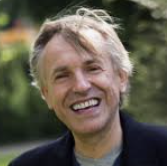
From a young age, I've viewed the animals we abuse and kill as akin - functionally, intellectually and emotionally - to small children. Small children are vulnerable. Typically, they don't need "liberating". Infants and toddlers in particular need looking after. The problem - when I was a teenager - was that most of interventions I could think of to alleviate wild animal suffering might easily make things worse in the long run. Thus if we sought to rescue herbivores, then obligate carnivores (and their young) would starve. If we were to phase out carnivorous predators altogether, then there would a population explosion of "prey" species. Lots of herbivores would then starve too. The food chain seemed an inexorable fact of the world - a fact as immutable as, say, the Second Law of Thermodynamics. Only after reading Eric Drexler's classic "Engines of Creation: The Coming Era of Nanotechnology" did I gradually come to realize that there were technical solutions to all these problems - notably in vitro meat, immunocontraception, neurochips to modulate behaviour, nanobots to manage marine ecosystems, and ultimately rewriting the vertebrate genome.
▼
Source
"[https://www.hedweb.com/hedethic/interviewoct2009.html Interview with Pensata Animal]", Pensata Animal, 25 Oct. 2009
3 months 4 weeks ago
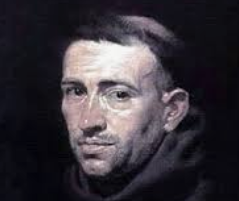
The head of Christians does not, as a rule, have power to punish secular wrongs with a capital penalty and other bodily penalties and it is for thus punishing such wrongs that temporal power and riches are chiefly necessary; such punishment is granted chiefly to the secular power. The pope therefore, can, as a rule, correct wrongdoers only with a spiritual penalty. It is not, therefore, necessary that he should excel in temporal power or abound in temporal riches, but it is enough that Christians should willingly obey him.
▼
Source
"A Letter to the Friars Minor" (1334) as translated in A Letter to the Friars Minor and other Writings (1995) edited by A. S. McGrade and John Kilcullen, p. 204.
3 months 4 weeks ago
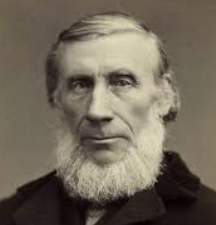
To legislation... the Puritans resorted. Instead of guiding, they repressed, and thus pitted themselves against the unconquerable impulses of human nature. Believing that nature to be depraved, they felt themselves logically warranted in putting it in irons. But they failed; and their failure ought to be a warning to their successors.
3 months 4 weeks ago
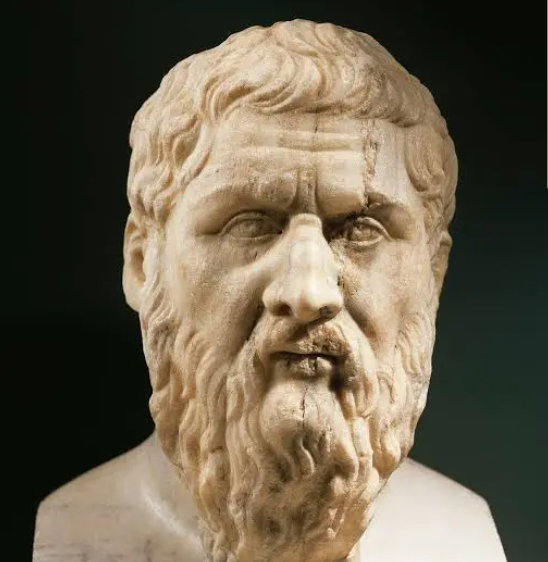
Wise men talk because they have something to say; fools, because they would like to say something. As empty vessels make the loudest sounds, so they that have the least wit are the greatest babblers.
▼
Source
Often attributed to Plato, it cannot be found completely in any of his writings ([http://languagelog.ldc.upenn.edu/nll/?p=796 see this]). The quote is attributed to Plato in A Dictionary of Thoughts: Being a Cyclopedia of Laconic Quotations from the Best
3 months 4 weeks ago
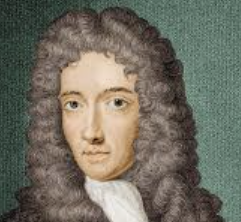
He illustrates this position by stating the following general principles. The phenomena afforded by trade, are (most of them) a part of the history of Nature, and therefore may both challenge the naturalist's curiosity and add to his knowledge. Nor will it, he adds, justify learned men in the neglect and contempt of this part of natural history, that the men from whom it must be learned are illiterate mechanics, and the things which are exhibited are works of Art and not of Nature.
▼
Source
Ch.2 History of Exhibitions

3 months 4 weeks ago
Whenever I happen to be in a city of any size, I marvel that riots do not break out everyday: Massacres, unspeakable carnage, a doomsday chaos. How can so many human beings coexist in a space so confined without hating each other to death?
3 months 4 weeks ago
What a People are the poor Thibet idolaters, compared with us and our "religions," which issue in the worship of King Hudson as our Dalai-Lama! They, across such hulls of abject ignorance, have seen into the heart of the matter; we, with our torches of knowledge everywhere brandishing themselves, and such a human enlightenment as never was before, have quite missed it. Reverence for Human Worth, earnest devout search for it and encouragement of it, loyal furtherance and obedience to it: this, I say, is the outcome and essence of all true "religions," and was and ever will be. We have not known this. No; loud as our tongues sometimes go in that direction, we have no true reverence for Human Intelligence, for Human Worth and Wisdom: none, or too little,—and I pray for a restoration of such reverence, as for the change from Stygian darkness to Heavenly light, as for the return of life to poor sick moribund Society and all its interests. Human Intelligence means little for most of us but Beaver Contrivance, which produces spinning-mules, cheap cotton, and large fortunes. Wisdom, unless it give us railway scrip, is not wise. True nevertheless it forever remains that Intellect is the real object of reverence, and of devout prayer, and zealous wish and pursuit, among the sons of men; and even, well understood, the one object.
3 months 4 weeks ago
All that matters is the pleasure-pain axis. Pain and pleasure disclose the world's inbuilt metric of (dis)value. Our overriding ethical obligation is to minimise suffering. After we have reprogrammed the biosphere to wipe out experience below "hedonic zero", we should build a "triple S" civilisation based on gradients of superhuman bliss. The nature of ultimate reality baffles me. But intelligent moral agents will need to understand the multiverse if we are to grasp the nature and scope of our wider cosmological responsibilities. My working assumption is non-materialist physicalism. Formally, the world is completely described by the equation(s) of physics, presumably a relativistic analogue of the universal Schrödinger equation. Tentatively, I'm a wavefunction monist who believes we are patterns of qualia in a high-dimensional complex Hilbert space. Experience discloses the intrinsic nature of the physical: the "fire" in the equations. The solutions to the equations of QFT or its generalisation yield the values of qualia. What makes biological minds distinctive, in my view, isn't subjective experience per se, but rather non-psychotic binding. Phenomenal binding is what consciousness is evolutionarily "for". Without the superposition principle of QM, our minds wouldn't be able to simulate fitness-relevant patterns in the local environment. When awake, we are quantum minds running subjectively classical world-simulations. I am an inferential realist about perception. Metaphysically, I explore a zero ontology [...] the total information content of reality must be zero on pain of a miraculous creation of information ex nihilo. Epistemologically, I incline to a radical scepticism that would be sterile to articulate. Alas, the history of philosophy twinned with the principle of mediocrity suggests I burble as much nonsense as everyone else.
▼
Source
Reply to "[https://qr.ae/TWKfFG What are your philosophical positions in one paragraph?]", Quora, 30 Dec. 2018
3 months 4 weeks ago
Our vulnerability to ressentiment is unavoidable (and probably incurable) in a kind of society in which relative equality of political and other rights and formally acknowledged social equality go hand in hand with enormous differences in genuine power, possessions and education; a society in which everyone “has the right” to consider himself equal to everybody else, while in fact being unequal to them.
▼
Source
[paraphrasing the view of Max Scheler], p. 25.
3 months 4 weeks ago
And as for the close connection between philosophy and poetry, we can refer to a little-known statement by Thomas Aquinas in his Commentary on Aristotle's Metaphysics [I, 3]: the Philosopher is akin to the Poet in this, that both are concerned with the mirandum, the "wondrous," the astonishing, or whatever calls for astonishment or wonder. This statement is not that easy to fathom, since Thomas, like Aristotle, was a very sober thinker, completely opposed to any Romantic confusion of properly distinct realms. But on the basis of their common orientation towards the "wonderful" (the mirandum — something not to be found in the world of work!) — on this basis, then, of this common transcending-power, the philosophical act is related to the "wonderful," is in fact more closely related to it than to the exact, special sciences; to this point we shall return.
▼
Source
pp. 68–69 | The Aquinas quote cited — "The reason why the philosopher can be compared to the poet is that both are concerned with wonder" — is the epigraph of "The Philosophical Act".
3 months 4 weeks ago
Throughout the Middle Ages the Timaeus... shaped the scientific imagination of the West, and together with Genesis challenged medieval thinkers to fashion their own "likely story" of the world's beginnings.
▼
Source
, Catching the Light: The Entwined History of Light and Mind (1993)
3 months 4 weeks ago
One should be wary of assuming that we're the folk who can properly look after ourselves, whereas our descendants, if they become genetically pre-programmed ecstatics, will get trapped in robot-serviced states of infantile dependence. For it shouldn't be forgotten that exuberantly happy people also have a fierce will to survive. They love life dearly. They take on daunting challenges against seemingly impossible odds. One of the hallmarks of many endogenous depressive states, on the other hand, is so-called behavioural despair. If one learns that apparently no amount of effort can rescue one from an aversive stimulus, then one tends to sink into a lethargic stupor. This syndrome of "learned helplessness" may persist even when the opportunity to escape from the nasty stimulus subsequently arises.
▼
Source
4. Objections, [https://www.hedweb.com/hedethic/hedon4.htm#die 4.2]
3 months 4 weeks ago
The tone in which an Englishman expresses anger would, in Italy, be only a mark of surprise.
▼
Source
As quoted in David Booth, The principles of English composition (1831), p. 8.
3 months 4 weeks ago
Modern religious teachings have little or nothing to say about the place of prudence in life or in the hierarchy of virtues.
3 months 4 weeks ago
The only subversive mind is the one that questions the obligation to exist; all the others, the anarchist at the top of the list, compromise with the established order.
3 months 4 weeks ago
The force that had been lent my father he honorably expended in manful well-doing. A portion of this planet bears beneficent traces of his strong hand and strong head. Nothing that he undertook to do but he did it faithfully and like a true man. I shall look on the houses he built with a certain proud interest. They stand firm and sound to the heart all over his little district.
3 months 4 weeks ago
I have assumed throughout that the persons in the original position are rational.
▼
Source
Chapter III, Section 25, pg. 142
3 months 4 weeks ago
It is known to all persons who are conversant in experimental philosophy, that there are many little attentions and precautions necessary to be observed in the conducting of experiments, which cannot well be described in words, but which it is needless to describe, since practice will necessarily suggest them; though, like all other arts in which the hands and fingers are made use of, it is only much practice that can enable a person to go through complex experiments, of this or any kind, with ease and readiness.
▼
Source
Experiments and Observations of Different Kinds of Air (1775)
3 months 4 weeks ago
Violated, dishonored, wading in blood, dripping filth – there stands bourgeois society. This is it [in reality]. Not all spic and span and moral, with pretense to culture, philosophy, ethics, order, peace, and the rule of law – but the ravening beast, the witches’ sabbath of anarchy, a plague to culture and humanity. Thus it reveals itself in its true, its naked form.
▼
Source
Ch. 1
3 months 4 weeks ago
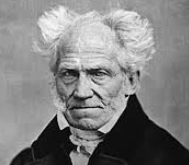
Just as the witticism brings two very different real objects under one concept, the pun brings two different concepts, by the assistance of accident, under one word.
▼
Source
[http://books.google.com/books?id=US0bhPS4h2UC&pg=PA79 Volume I, Book I]
3 months 4 weeks ago
Three in the morning. I realize this second, then this one, then the next: I draw up the balance sheet for each minute. And why all this? Because I was born. It is a special type of sleeplessness that produces the indictment of birth.
3 months 4 weeks ago
As you introduced Schiller to your countrymen, so you have placed before the Germans our great Prussian King in his full figure; like a living statue. What you said long years ago of the "Hero as Man of Letters"—that he is under the noble obligation to be true,—has been fulfilled in yourself; but, more fortunate than those of whom you then spoke, you may rejoice in what you have accomplished, and continue your work in full vigour, which may God long preserve to you. Accept with my cordial congratulations the assurance of my sincere respect.
▼
Source
Otto von Bismarck to Thomas Carlyle on his History of Frederick the Great (2 December 1875), quoted in New Letters of Thomas Carlyle, Volume II, ed. Alexander Carlyle (1904), pp. 319-320
3 months 4 weeks ago
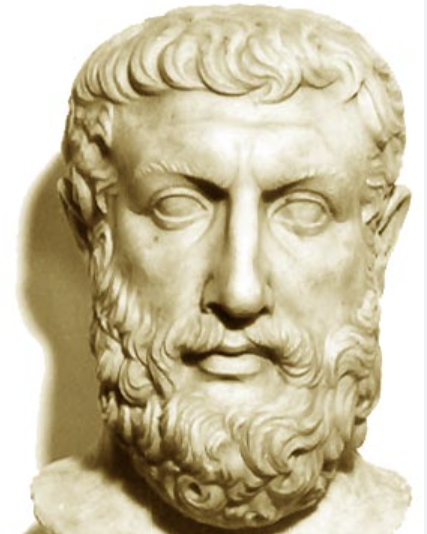
The crisis at the heart of Parmenides' argument, "is or is not," rules out any candidate for an ultimate entity in an explanation of what there is that is subject to coming-to-be, passing-away, or alteration of any sort. Such an entity must be a whole, complete, unchanging unity: it must be a thing that is of a single kind … But it does not follow from this that there can be only one such entity. Parmenides' arguments allow for a plurality of fundamental, predicationally unified entities that can be used to explain the world reported by the senses.
▼
Source
Patricia Curd, in The Legacy of Parmenides (1997), p. 241
3 months 4 weeks ago
The key innovation in Rawl's scenario, designed to ensure that undue selfishness among the participants in this exercise in reflection cancels itself out, is what he calls the "veil of ignorance". Everyone gets to vote on a favored design of society, but when you decide which society you would be happy to live in and give your allegiance to, you vote without knowing your particular role or niche in it will be. You may be a senator or a surgeon or a street sweeper or a soldier; you don't get to find out until after you have voted. Choosing from behind the veil of ignorance ensures that people will give due consideration to the likely effects, the costs and benefits, for all the citizenry, including those worse off.
▼
Source
Daniel Dennett, Darwin's Dangerous Idea, p. 456
3 months 4 weeks ago
It is hardly possible not to suspect the truth of this doctrine of atonement, when we consider that the general maxims to which it may be reduced, are nowhere laid down, or asserted, in the Scriptures, but others quite contrary to them.
▼
Source
Part II : Opinions Relating to the Doctrine of Atonement, § I : That Christ did not die to make satisfaction for the sins of men.
3 months 4 weeks ago
Those who do not move, do not notice their chains.
3 months 4 weeks ago
Now if plurality and difference belong only to the appearance-form; if there is but one and the same Entity manifested in all living things: it follows that, when we obliterate the distinction between the ego and the non-ego, we are not the sport of an illusion. Rather are we so, when we maintain the reality of individuation, — a thing the Hindus call Maya, that is, a deceptive vision, a phantasma. The former theory we have found to be the actual source of the phaenomenon of Compassion; indeed Compassion is nothing but its translation into definite expression. This, therefore, is what I should regard as the metaphysical foundation of Ethics, and should describe it as the sense which identifies the ego with the non-ego, so that the individual directly recognises in another his own self, his true and very being. From this standpoint the profoundest teaching of theory pushed to its furthest limits may be shown in the end to harmonise perfectly with the rules of justice and loving-kindness, as exercised; and conversely, it will be clear that practical philosophers, that is, the upright, the beneficent, the magnanimous, do but declare through their acts the same truth as the man of speculation wins by laborious research … He who is morally noble, however deficient in mental penetration, reveals by his conduct the deepest insight, the truest wisdom; and puts to shame the most accomplished and learned genius, if the latter's acts betray that his heart is yet a stranger to this great principle, — the metaphysical unity of life.
▼
Source
Part IV, Ch. 2, [https://archive.org/stream/basisofmorality00schoiala#page/273/mode/2up pp. 273]-274
3 months 4 weeks ago
Late at night. I feel like falling into a frenzy, doing some unprecedented thing to release myself, but I don't see against whom, against what...
3 months 4 weeks ago
Those who still think that Carlyle was in some sense more or less Liberal should read his chapter on Democracy in Past and Present. Most of it is occupied with praise of William the Conqueror, and with a description of the pleasant lives enjoyed by serfs in his day. Then comes a definition of liberty : “ The true liberty of a man , you would say, consisted in his finding out, or being forced to find out, the right path, and to walk thereon"...He passes on to the statement that democracy " means despair of finding any Heroes to govern you, and contented putting up with the want of them." The chapter ends by stating, in eloquent prophetical language, that, when democracy shall have run its full course, the problem that will remain is " that of finding government by your Real-Superiors." Is there one word in all this to which Hitler would not subscribe?
▼
Source
Bertrand Russell, "The Ancestry of Fascism", in In Praise of Idleness and other Essays, Allen & Unwin, London, 1935. Also quoted in William A. Robson, "The Political Quarterly" in the Thirties, Allen Lane, London, 1971
3 months 4 weeks ago
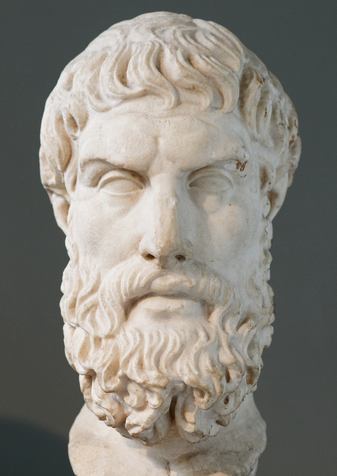
Temperance is that discreet regulation of the desires and passions, by which we are enabled to enjoy pleasures without suffering any consequent inconvenience. They who maintain such a constant self-command, as never to be enticed by the prospect of present indulgence, to do that which will be productive of evil, obtain the truest pleasure by declining pleasure.
3 months 4 weeks ago
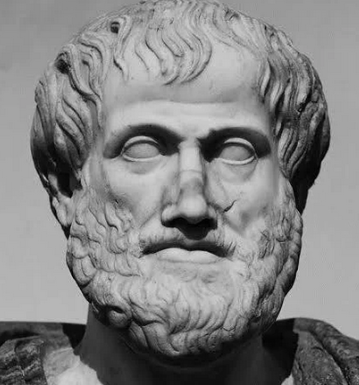
The premises of demonstrative knowledge must be true, primary, immediate, more knowable than and prior to the conclusion, which is further related to them as effect to cause... The premises must be the cause of the conclusion, more knowable than it, and prior to it; its causes, since we possess scientific knowledge of a thing only when we know its cause; prior, in order to be causes; antecedently known, this antecedent knowledge being not our mere understanding of the meaning, but knowledge of the fact as well. Now 'prior' and 'more knowable' are ambiguous terms, for there is a difference between what is prior and more knowable in the order of being and what is prior and knowable to man. I mean that objects nearer to sense are prior and more knowable to man; objects without qualification prior and more knowable are those further from sense. Now the most universal causes are furthest from sense and particular causes are nearest to sense, and they are thus exactly opposed to each other.
▼
Source
I.2, 71b.9 sqq
3 months 4 weeks ago
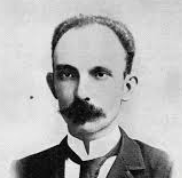
Only those who hate the Negro see hatred in the Negro.
▼
Source
Manifesto of Montecristi (1895)
3 months 4 weeks ago
According to the way it is generally used today, the term 'ethics' relates above all to the domain of human rights, 'the rights of man'- or, by derivation, the rights of living beings. We are supposed to assume the existence of a universally recognizable human subject possessing 'rights' that are in some sense natural: the right to live, to avoid abusive, to enjoy 'fundamental' liberties (of opinion, of expression, of democratic choice in the election of governments, etc.) These rights are held to be self-evident, and the result of a wide consensus. 'Ethics' is a matter of busying ourselves with these rights, of making sure that they are respected.
▼
Source
Chapter One, "Does Man Exist?"
3 months 4 weeks ago
For the purpose of acquiring gain, everything else is pushed aside or thrown overboard, for example, as is philosophy by the professors of philosophy.
▼
Source
E. Payne, trans. (1974) Vol. 1, p. 347
3 months 4 weeks ago
No position is so false as having understood and still remaining alive.
3 months 4 weeks ago
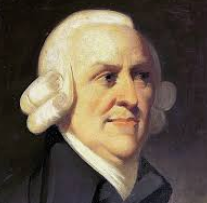
How selfish soever man may be supposed, there are evidently some principles in his nature, which interest him in the fortune of others, and render their happiness necessary to him, though he derives nothing from it except the pleasure of seeing it.
▼
Source
Section I, Chap. I.
3 months 4 weeks ago
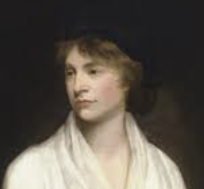
About nine o'clock this morning the King passed by my window, moving silently along excepting now and then a few strokes on the drum, which rendered the stillness more awful through empty streets... I can scarcely tell you why, but an association of ideas made the tears flow insensibly from my eyes, when I saw Louis, sitting with more dignity than I expected from his character, in a hackney coach, going to meet death where so many of his race have triumphed... I have been alone ever since, and though my mind is calm, I cannot dismiss the lively images that have filled my imagination all the day. Nay, do not smile, but pity me; for once or twice, lifting my eyes from the paper, I have seen eyes glare through a glass door opposite my chair, and bloody hands shook at me... I wish I had even kept the cat with me! I want to see something alive; death, in so many frightful shapes, has taken hold of my fancy. I am going to bed, and for the first time in my life I cannot put out the candle.
▼
Source
Letter to Gilbert Imlay (26 December 1792), quoted in C. Kegan Paul, 'Memoir', Mary Wollstonecraft: Letters to Imlay, with Prefatory Memoir by C. Kegan Paul (1879), pp. xxxiv-xxxv
3 months 4 weeks ago
But voice is a certain sound of that which is animated; for nothing inanimate emits a voice; but they are said to emit a voice from similitude, as a pipe, and a lyre, and such other inanimate things, have extension, modulation, and dialect; for thus it appears, because voice, also, has these.
▼
Source
Book II: On the soul; In: Aristotle (1808). Works, Vol. 4. p. 63 (412a-424b)
3 months 4 weeks ago
What right do white racist, who believe their race is superior, have for complaining about black racists, who see something special in their own race? What right do black racists, who see a special character in their race, have for complaining about white racists? White men who think their race makes them superior to black men admit the idea of racial difference and authorize and initiate black racists. Black men who proclaim their race — when what they are really proclaiming is the spiritual identity that distinguishes one ethnic group from another — authorize and incite white racists. Peace demands of Nature the recognition of human rights; discrimination is contrary to Nature and the enemy of peace. Whites who isolate themselves also isolate Negroes. Negroes who isolate themselves incite and isolate whites.
3 months 4 weeks ago
Logic is justly considered the basis of all other sciences, even if only for the reason that in every argument we employ concepts taken from the field of logic, and that ever correct inference proceeds in accordance with its laws.
▼
Source
Introduction to Logic: and to the Methodology of Deductive Sciences. (1941/2013) Tr. Olaf Helmer, pp. 108-110.
3 months 4 weeks ago
The poet presents the imagination with images from life and human characters and situations, sets them all in motion and leaves it to the beholder to let these images take his thoughts as far as his mental powers will permit. This is why he is able to engage men of the most differing capabilities, indeed fools and sages together. The philosopher, on the other hand, presents not life itself but the finished thoughts which he has abstracted from it and then demands that the reader should think precisely as, and precisely as far as, he himself thinks. That is why his public is so small.
▼
Source
Vol. 2 "On Philosophy and the Intellect" as translated in Essays and Aphorisms (1970), as translated by R. J. Hollingdale
3 months 4 weeks ago
To found a family. I think it would have been easier for me to found an empire.
3 months 4 weeks ago
It is the necessary, though very slow and gradual, consequence of a certain propensity in human nature which has in view no such extensive utility; the propensity to truck, barter, and exchange one thing for another.
▼
Source
Chapter II
3 months 4 weeks ago
It appears to me impossible that I should cease to exist, or that this active, restless spirit, equally alive to joy and sorrow, should only be organised dust — ready to fly abroad the moment the spring snaps, or the spark goes out which kept it together. Surely something resides in this heart that is not perishable, and life is more than a dream.
3 months 4 weeks ago
On the whole, a man who denies the existence of the effects arranged according to the causes in the question of arts, or whose wisdom cannot understand it, then he has no knowledge of the art of its Maker.
3 months 4 weeks ago
Be ruled by time, the wisest counsellor of all.
▼
Source
Pericles (Tr. Dryden and Clough)
3 months 4 weeks ago
Talk of secularism is meaningful when it refers to the weakness of traditional religious belief or the lack of power of churches and other religious bodies. That is what is meant when we say Britain is a more secular country than the United States, and in this sense secularism is an achievable condition. But if it means a type of society in which religion is absent, secularism is a kind of contradiction, for it is defined by what it excludes. Post-Christian secular societies are formed by the beliefs they reject, whereas a society that had truly left Christianity behind would lack the concepts that shaped secular thought.
▼
Source
Post-Apocalypse: After Secularism (pp. 267-8)
3 months 4 weeks ago
The life of money-making is one undertaken under compulsion, and wealth is evidently not the good we are seeking; for it is merely useful and for the sake of something else.
▼
Source
Book I, 1096a.5
CivilSimian.com created by AxiomaticPanic, CivilSimian, Kalokagathia