
3 months 4 weeks ago
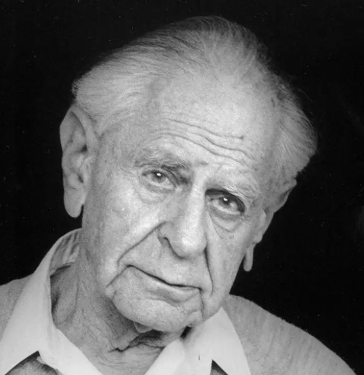
Science may be described as the art of systematic over-simplification — the art of discerning what we may with advantage omit.
▼
Source
The Open Universe : An Argument for Indeterminism (1992), p. 44
3 months 4 weeks ago
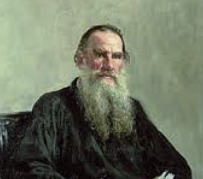
Not only does the action of Governments not deter men from crimes; on the contrary, it increases crime by always disturbing and lowering the moral standard of society. Nor can this be otherwise, since always and everywhere a Government, by its very nature, must put in the place of the highest, eternal, religious law (not written in books but in the hearts of men, and binding on every one) its own unjust, man-made laws, the object of which is neither justice nor the common good of all but various considerations of home and foreign expediency.
▼
Source
The Meaning of the Russian Revolution (1906), a work about the 1905 Russian Revolution.
3 months 4 weeks ago
Like stones rolling down hills, fair ideas reach their objectives despite all obstacles and barriers. It may be possible to speed or hinder them, but impossible to stop them.

3 months 4 weeks ago
Progressive art can assist people to learn not only about the objective forces at work in the society in which they live, but also about the intensely social character of their interior lives. Ultimately, it can propel people toward social emancipation.
▼
Source
"For a People's Culture." Political Affairs, March 1995.
3 months 4 weeks ago
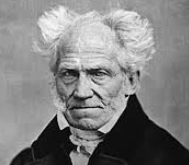
The chief objection I have to Pantheism is that it says nothing. To call the world "God" is not to explain it; it is only to enrich our language with a superfluous synonym for the word "world".
▼
Source
On Pantheism as quoted in Faiths of Famous Men in Their Own Words (1900) by John Kenyon Kilbourn; also in Religion: A Dialogue and Other Essays (2007), p. 40

3 months 4 weeks ago
When we know what words are worth, the amazing thing is that we try to say anything at all, and that we manage to do so. This requires, it is true, a supernatural nerve.
3 months 4 weeks ago
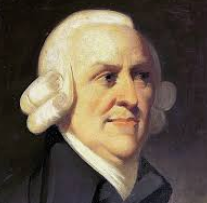
In England, and in all Roman Catholic countries, the lottery of the church is in reality much more advantageous than is necessary.
▼
Source
Chapter X, Part II, p. 155.
3 months 4 weeks ago
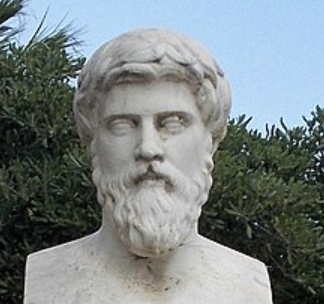
A soldier told Pelopidas, "We are fallen among the enemies." Said he, "How are we fallen among them more than they among us?"
▼
Source
63 Pelopidas

3 months 4 weeks ago
Evangelical atheists preach the need for a scientific view of things, but a settled view does not go with scientific method. If we know anything it is that most of the theories that prevail at any one time are false. Scientific theories are not components of a world-view but tools we use to tinker with the world.
▼
Source
Sweet Morality (p. 224)
3 months 4 weeks ago
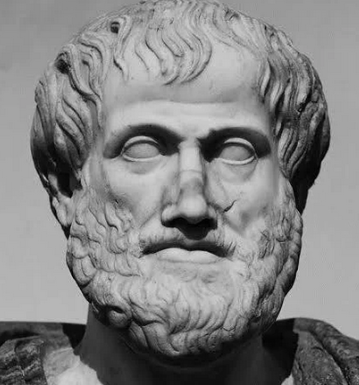
A whole is that which has beginning, middle, and end.
▼
Source
1450b.26
3 months 4 weeks ago
There is no history of mankind, there is only an indefinite number of histories of all kinds of aspects of human life. And one of these is the history of political power. This is elevated into the history of the world. But this, I hold, is an offence against every decent conception of mankind. It is hardly better than to treat the history of embezzlement or of robbery or of poisoning as the history of mankind. For the history of power politics is nothing but the history of international crime and mass murder (including it is true, some of the attempts to suppress them). This history is taught in schools, and some of the greatest criminals are extolled as heroes.
▼
Source
Vol 2, Ch. 25 "Has History any Meaning?" Variant: There is no history of mankind, there are only many histories of all kinds of aspects of human life. And one of these is the history of political power. This is elevated into the history of the world.
3 months 4 weeks ago
Everything comes in time to him who knows how to wait.
▼
Source
Bk. X, ch. 16
3 months 4 weeks ago
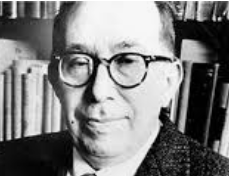
No bloody or unbloody change of society can eradicate the evil in man: as long as there will be men, there will be malice, envy and hatred, and hence there cannot be a society which does not have to employ coercive restraint.
▼
Source
The City and Man, p. 5 (1964)

3 months 4 weeks ago
Four snakes gliding up and down a hollow for no purpose that I could see — not to eat, not for love, but only gliding.
▼
Source
April 11, 1834
3 months 4 weeks ago
This is not the first period during which we have confronted the difficult problem of using difference as a way of bringing people together, rather than as incontrovertible evidence of separation. There are more options than sameness, opposition, or hierarchical relations. One of the basic challenges confronting women of color today, as Audre Lorde has pointed out, is to think about and act upon notions of equality across difference. There are so many ways in which we can conceptualize coalitions, alliances, and networks that we would be doing ourselves a disservice to argue that there is only one way to construct relations across racial and ethnic boundaries. We cannot assume that if it does not unfold in one particular way, then it is not an authentic coalition.
3 months 4 weeks ago
What an incitation to hilarity, hearing the word goal while following a funeral procession!
3 months 4 weeks ago
The commodities of Europe were almost all new to America, and many of those of America were new to Europe. A new set of exchanges, therefore, began..and which should naturally have proved as advantageous to the new, as it certainly did to the old continent. The savage injustice of the Europeans rendered an event, which ought to have been beneficial to all, ruinous and destructive to several of those unfortunate countries.
▼
Source
Chapter I, p. 481.
3 months 4 weeks ago
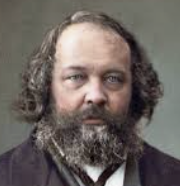
What all other men are is of the greatest importance to me. However independent I may imagine myself to be, however far removed I may appear from mundane considerations by my social status, I am enslaved to the misery of the meanest member of society. The outcast is my daily menace. Whether I am Pope, Czar, Emperor, or even Prime Minister, I am always the creature of their circumstance, the conscious product of their ignorance, want and clamoring. They are in slavery, and I, the superior one, am enslaved in consequence.
▼
Source
Solidarity in Liberty: The Workers' Path to Freedom (1867)
3 months 4 weeks ago
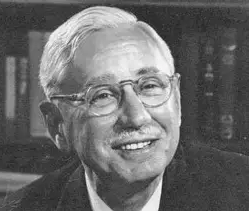
Science tells us how to heal and how to kill; it reduces the death rate in retail and then kills us wholesale in war; but only wisdom — desire coordinated in the light of all experience — can tell us when to heal and when to kill. To observe processes and to construct means is science; to criticize and coordinate ends is philosophy: and because in these days our means and instruments have multiplied beyond our interpretation and synthesis of ideals and ends, our life is full of sound and fury, signifying nothing. For a fact is nothing except in relation to desire; it is not complete except in relation to a purpose and a whole. Science without philosophy, facts without perspective and valuation, cannot save us from havoc and despair. Science gives us knowledge, but only philosophy can give us wisdom.
▼
Source
Introduction : On the Uses of Philosophy
3 months 4 weeks ago
It is extremely difficult to say whether he wishes to expound moral philosophy with historical examples, or decorate the narration of important affairs...with philosophical arguments.
▼
Source
Francesco Sansovino, dedication to Plutarch, Le vite de gli uomini illustri (Venice, 1564), quoted in Peter Burke, 'A Survey of the Popularity of Ancient Historians, 1450–1700', History and Theory, Vol. 5, No. 2 (1966), p. 142
3 months 4 weeks ago
Near-ubiquitous technological monitoring is a consequence of the decline of cohesive societies that has occurred alongside the rising demand for individual freedom.
▼
Source
In the Puppet Theatre: An Iron Mountain and a Shifting Spectacle (p. 121)
3 months 4 weeks ago
In matter-theory, as in astronomy, the Church's commitment to Aristotle was in due course to prove an embarassment. In both branches of science his speculative distinction between terrestrial and celestial matter was insecure from the very beginning. His own most loyal commentator, ... had already dreamt of a theory unifying all things, and John Philoponos... had rejected the distinction between terrestrial and celestial matter outright. Nevertheless, it was still an axiom of almost a thousand years later.
▼
Source
, , The Architecture of Matter (1962)
3 months 4 weeks ago
By 'arguing...' I mean... criticizing... inviting... criticism; and trying to learn from it.
3 months 4 weeks ago
The man is making preparations for a year, and does not know that he will die before evening. And I remembered God's second saying, "Learn what is not given to man." 'What dwells in man" I already knew. Now I learnt what is not given him. It is not given to man to know his own needs.
▼
Source
Ch. XI
3 months 4 weeks ago
We believe that failing to call a spade a spade is not scientific.
▼
Source
p. 50
3 months 4 weeks ago
Undoubtedly we have no questions to ask which are unanswerable. We must trust the perfection of the creation so far, as to believe that whatever curiosity the order of things has awakened in our minds, the order of things can satisfy. Every man's condition is a solution in hieroglyphic to those inquiries he would put. He acts it as life, before he apprehends it as truth.
▼
Source
Introduction
3 months 4 weeks ago
To reiterate, rather than try to imagine one single alternative to the existing system of incarceration, we might envision an array of alternatives that will require radical transformations of many aspects of our society. Alternatives that fail to address racism, male dominance, homophobia, class bias, and other structures of domination will not, in the final analysis, lead to decarceration and will not advance the goal of abolition.
▼
Source
Chapter Six
3 months 4 weeks ago
With success and a literary career one becomes an unquestioning part of the mechanism, whereas the only truly important years are those in which one is unknown.
3 months 4 weeks ago
Civil government, so far as it is instituted for the security of property, is in reality instituted for the defence of the rich against the poor, or of those who have some property against those who have none at all.
▼
Source
Chapter I, Part II, 775.
3 months 4 weeks ago
The liberty of man consists solely in this: that he obeys natural laws because he has himself recognized them as such, and not because they have been externally imposed upon him by any extrinsic will whatever, divine or human, collective or individual.
3 months 4 weeks ago
Man is as young as the risks he takes.
▼
Source
Ch. 2 : On Youth

3 months 4 weeks ago
Muhammad seduced the people by promises of carnal pleasure to which the concupiscence of the flesh goads us. His teaching also contained precepts that were in conformity with his promises, and he gave free rein to carnal pleasure. In all this, as is not unexpected, he was obeyed by carnal men. As for proofs of the truth of his doctrine, he brought forward only such as could be grasped by the natural ability of anyone with a very modest wisdom. Indeed, the truths that he taught he mingled with many fables and with doctrines of the greatest falsity. He did not bring forth any signs produced in a supernatural way, which alone fittingly gives witness to divine inspiration; for a visible action that can be only divine reveals an invisibly inspired teacher of truth. On the contrary, Muhammad said that he was sent in the power of his arms—which are signs not lacking even to robbers and tyrants. What is more, no wise men, men trained in things divine and human, believed in him from the beginning, Those who believed in him were brutal men and desert wanderers, utterly ignorant of all divine teaching, through whose numbers Muhammad forced others to become his followers by the violence of his arms. Nor do divine pronouncements on the part of preceding prophets offer him any witness. On the contrary, he perverts almost all the testimonies of the Old and New Testaments by making them into fabrications of his own, as can be seen by anyone who examines his law. It was, therefore, a shrewd decision on his part to forbid his followers to read the Old and New Testaments, lest these books convict him of falsity. It is thus clear that those who place any faith in his words believe foolishly.
▼
Source
I, 6, 4 (trans. Anton C. Pegis)
3 months 4 weeks ago
I do have a great respect for Popper. I mean, I think... he's nearer to... I mean, Popper's ambition, in relation to science, at least, was to discriminate between, sort of, science and what he called pseudo-science.
▼
Source
John Maynard Smith, about [http://www.webofstories.com/play/john.maynard.smith/99;jsessionid=6EB67F14376B2F470FD8DAEEAE9633D7 Karl Popper and the philosophy of science] (April 1997)
3 months 4 weeks ago
Once ... I was offered a lift by some carters ... It was the Thursday before Easter. I was seated in the first cart, with a strong, red, coarse carman, who evidently drank. On entering a village we saw a well-fed, naked, pink pig being dragged out of the first yard to be slaughtered. It squealed in a dreadful voice, resembling the shriek of a man. Just as we were passing they began to kill it. A man gashed its throat with a knife. The pig squealed still more loudly and piercingly, broke away from the men, and ran off covered with blood. Being near-sighted I did not see all the details. I saw only the human-looking pink body of the pig and heard its desperate squeal; but the carter saw all the details and watched closely. They caught the pig, knocked it down, and finished cutting: its throat. When its squeals ceased the carter sighed heavily. 'Do men really not have to answer for such things?' he said.
▼
Source
Ch. IX
3 months 4 weeks ago
For a philosophy based on faith is no longer philosophy. Perhaps it was this unresolved conflict which has prevented Western thought from ever coming to rest. Perhaps it is this conflict which is at the bottom of a kind of thought which is philosophic indeed but no longer Greek: modern philosophy. It is in trying to understand modern philosophy that we come across Machiavelli. Machiavelli is the only political thinker whose name has come into common use for designating a kind of politics, which exists and will continue to exist independently of his influence, a politics guided exclusively by considerations of 'expediency, which uses all means, fair or foul, iron or poison, for achieving its ends-its end being the aggrandizement of one's country or fatherland-but also using the father land in the service of the self-aggrandizement of the politician or statesman or one's party.
3 months 4 weeks ago
The imitator dooms himself to hopeless mediocrity. The inventor did it because it was natural to him, and so in him it has a charm. In the imitator something else is natural, and he bereaves himself of his own beauty, to come short of another man's.
▼
Source
p. 26
3 months 4 weeks ago
What the civil rights movement did, it seems to me, was to create a new terrain for asking new questions and moving in new directions. It's not a betrayal that people like Colin Powell and Condoleeza Rice and the Black conservatives who are the heart of government are where they are. As a matter of fact, the civil rights movement demanded access, right? But I don't think that we can assume that what was done in the 1950s and 1960s is going to do the work of the 1980s and 1990s.
3 months 4 weeks ago
The rulers of Great Britain have, for more than a century past, amused the people with the imagination that they possessed a great empire on the west side of the Atlantic. This empire, however, has hitherto existed in imagination only.
▼
Source
Chapter III, Part V, p. 1032 (Last Page).
3 months 4 weeks ago
His learning is enormous and interconnected … His ability to surround a subject, to anticipate objection, to see through weakness and pretense, to exact all the implications of a contention, to ask a huge number of relevant questions about a seemingly settled matter, to enlarge into full significance what has only been sketched by others, is amazing.
▼
Source
George Kateb, in a review of Anarchy, State, and Utopia (1974), in The American Scholar (as quoted on back of the softcover edition).
3 months 4 weeks ago
And therefore just as a brigand caught in broad daylight in the act cannot persuade us that he did not lift his knife in order to rob his victim of his purse, and had no thought of killing him, we too, it would seem, cannot persuade ourselves or others that the soldiers and policemen around us are not to guard us, but only for defense against foreign foes, and to regulate traffic and fetes and reviews; we cannot persuade ourselves and others that we do not know that the men do not like dying of hunger, bereft of the right to gain their subsistence from the earth on which they live; that they do not like working underground, in the water, or in the stifling heat, for ten to fourteen hours a day, at night in factories to manufacture objects for our pleasure. One would imagine it impossible to deny what is so obvious. Yet it is denied.
▼
Source
Chapter XII, Conclusion—Repent Ye, for the Kingdom of Heaven is at Hand
3 months 4 weeks ago
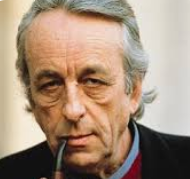
Marx compellingly proved it in Capital Volume Two, that no production is possible which does not allow for the reproduction of the material conditions of productions: the reproduction of the means of production.
▼
Source
p.128
3 months 4 weeks ago
For nature beats in perfect tune, And rounds with rhyme her every rune, Whether she work in land or sea, Or hide underground her alchemy. Thou canst not wave thy staff in air, Or dip thy paddle in the lake, But it carves the bow of beauty there, And the ripples in rhymes the oar forsake.
▼
Source
Wood-notes, no. II, st. 7
3 months 4 weeks ago
In the general tendency toward specialization, philosophy too has established itself as a specialized discipline, one purified of all specific content. In so doing, philosophy has denied its own constitutive concept: the intellectual freedom that does not obey the dictates of specialized knowledge.
▼
Source
p. 6

3 months 4 weeks ago
A Right Mind, and Generous Affection, [has] more Beauty and Charm, than all other Symmetrys in the World besides.
▼
Source
Vol. 2, p. 209; "Miscellany III".
3 months 4 weeks ago
Whoever asserts a value, must bring its influence to bear. Whoever maintains that it has value regardless of the influence brought to bear by any individual human being who endorses it, is simply cheating.
3 months 4 weeks ago
He said that the maintenance of public works was a duty of government; and his list of such works included all that at that time could have been possibly socialized—roads, canals, bridges, harbours, etc. Private enterprise could not be expected to erect or maintain these services, and this was a limited sort of socialism... [H]is concessions to Protectionism went very far. The doctrine of defence as prior to opulence was not stated only in respect of the Navigation Act: "if any particular manufacture was necessary for the defence of the society it might not always be prudent to depend upon our neighbours for the supply; and, if such manufacture could not otherwise be supported at home, it might not be unreasonable that all the other branches of industry should be taxed in order to support it". This goes a long way with modern Protectionism.
▼
Source
D. H. MacGregor, Economic Thought and Policy (1949), p. 81
3 months 4 weeks ago
Truth is ... one approach to the attainment of the good, but in and of itself, it is neither the good nor the beautiful ... Socrates, Pascal, and others regarded knowledge of the truth with regard to purposeless objects as incongruous with the good ... [by] exposing deception, truth destroys illusion, which is the principle attribute of beauty.
3 months 4 weeks ago
Children learn the fundamental principles of natural law at a very early age. Thus they very early understand that one child must not, without just cause, strike or otherwise hurt, another; that one child must not assume any arbitrary control or domination over another; that one child must not, either by force, deceit, or stealth, obtain possession of anything that belongs to another; that if one child commits any of these wrongs against another, it is not only the right of the injured child to resist, and, if need be, punish the wrongdoer, and compel him to make reparation, but that it is also the right, and the moral duty, of all other children, and all other persons, to assist the injured party in defending his rights, and redressing his wrongs. These are fundamental principles of natural law, which govern the most important transactions of man with man. Yet children learn them earlier than they learn that three and three are six, or five and five ten. Their childish plays, even, could not be carried on without a constant regard to them; and it is equally impossible for persons of any age to live together in peace on any other conditions.It would be no extravagance to say that, in most cases, if not in all, mankind at large, young and old, learn this natural law long before they have learned the meanings of the words by which we describe it. In truth, it would be impossible to make them understand the real meanings of the words, if they did not understand the nature of the thing itself. To make them understand the meanings of the words justice and injustice before knowing the nature of the things themselves, would be as impossible as it would be to make them understand the meanings of the words heat and cold, wet and dry, light and darkness, white and black, one and two, before knowing the nature of the things themselves. Men necessarily must know sentiments and ideas, no less than material things, before they can know the meanings of the words by which we describe them.
▼
Source
Section IV, p. 9–10
3 months 4 weeks ago
The measure of action is the sentiment from which it proceeds. The greatest action may easily be one of the most private circumstance.
▼
Source
Goethe; or, The Writer
3 months 4 weeks ago
Seek to please all the citizens, even though Your house may be in an ungracious city. For such a course will favour win from all: But haughty manners oft produce destruction.
CivilSimian.com created by AxiomaticPanic, CivilSimian, Kalokagathia