
3 months 4 weeks ago
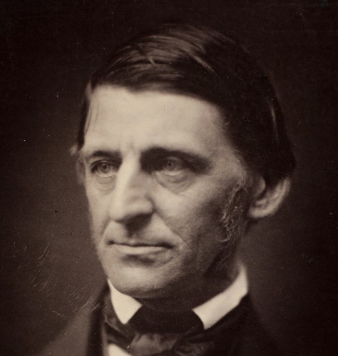
The faith that stands on authority is not faith.
▼
Source
The Over-soul
3 months 4 weeks ago
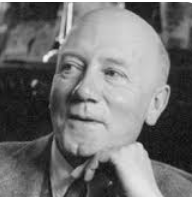
There certainly are changes of fashion in philosophy. When a new kind is in vogue, many things in the philosophy of an earlier day, which are of permanent value and perhaps highly relevant to contemporary problems, tend to be altogether forgotten or carelessly and ignorantly dismissed, simply because they occur in an out-of-date setting and are clad in an unfashionable dress. It is now quite certain that much of permanent value in Scholastic philosophy was ignored or contemned from this cause by Locke, Berkeley, Hume, and their followers. I have little doubt that the same is true mutatis mutandis of the attitude of many present-day philosophers towards the systems of monistic idealism which were fashionable at the beginning of this century. It is consoling to a philosopher's vanity not to pry too closely into the history of his subject, for otherwise he is liable to find that his discoveries have been anticipated and his fallacies refuted in advance by predecessors whom he has ignored or despised.
▼
Source
From Philosophy (I), in Inquiry (1), (1958)
3 months 4 weeks ago
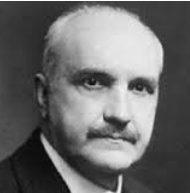
Experience has repeatedly confirmed that well-known maxim of Bacon's that "a little philosophy inclineth a man's mind to atheism, but depth in philosophy bringeth men's minds about to religion." At the same time, when Bacon penned that sage epigram... he forgot to add that the God to whom depth in philosophy brings back men's minds is far from being the same from whom a little philosophy estranges them.
▼
Source
Ch. I
3 months 4 weeks ago
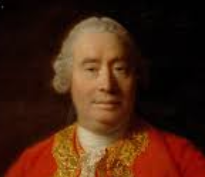
Nature may certainly produce whatever can arise from habit: Nay, habit is nothing but one of the principles of nature, and derives all its force from that origin.
▼
Source
Part 3, Section 16
3 months 4 weeks ago
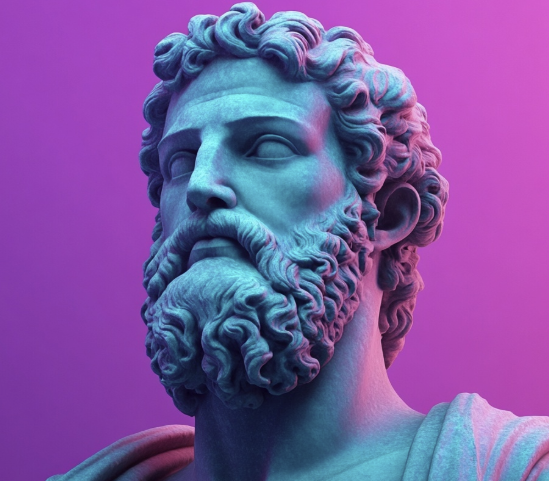
Ἐφ' ἑκάστου τῶν προσπιπτόντων μέμνησο ἐπιστρέφων ἐπὶ σεαυτὸν ζητεῖν, τίνα δύναμιν ἔχεις πρὸς τὴν χρῆσιν αὐτοῦ. ἐὰν καλὸν ἴδῃς ἢ καλήν, εὑρήσεις δύναμιν πρὸς ταῦτα ἐγκράτειαν· ἐὰν πόνος προσφέρηται, εὑρήσεις καρτερίαν· ἂν λοιδορία, εὑρήσεις ἀνεξικακίαν. καὶ οὕτως ἐθιζόμενόν σε οὐ συναρπάσουσιν αἱ φαντασίαι.
▼
Source
With every accident, ask yourself what abilities you have for making a proper use of it. If you see an attractive person, you will find that self-restraint is the ability you have against your desire. If you are in pain, you will find fortitude. If you he

3 months 4 weeks ago
Pythagoras transformed the study of geometry into a liberal education, examining the principles of the science from the beginning and probing the theorems in an immaterial and intellectual manner: he it was who discovered the theory of irrationals [or 'proportions'] and the construction of the cosmic figures.
▼
Source
Proclus A Commentary on the First Book of Eudlid's Elements (c. 450 AD), as quoted by Thomas Little Heath, A History of Greek Mathematics (1921) [https://archive.org/details/historyofgreekma01heat Vol. 1], p. 128, citing Proclus on Eucl. I, p. 65. 15-21.
3 months 4 weeks ago
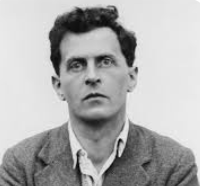
When I obey a rule, I do not choose. I obey the rule blindly.
▼
Source
§ 219

3 months 4 weeks ago
Aiki is not a technique to fight with or defeat an enemy. It is the way to reconcile the world and make human beings one family.
▼
Source
As quoted in It's A Lot Like Dancing… : An Aikido Journey (1993 by Terry Dobson Riki Moss, and Jan E. Watson -
3 months 4 weeks ago
An ounce of action is worth a ton of theory.
▼
Source
This expression is widely misattributed to Emerson in journalism, tweets, and memes on the internet. This quotation in an earlier phrasing of Jared Eliot's statement “It used to be the Saying of an old Man, That an Ounce of Experience is better than a Pou
3 months 4 weeks ago
The idea of a ‘system approach’ is both quite popular and quite unpopular. It’s popular because it sounds good to say that the whole system is being considered, but it’s quite unpopular because it sounds either like a lot of nonsense or else downright dangerous – so much evil can be created under the guise of serving the whole.
▼
Source
p. 11
3 months 4 weeks ago
To the mind of the ancients, who knew something of such matters, liberty and prosperity seemed hardly compatible, yet modern liberalism wants them together.
▼
Source
"The Irony of Liberalism"
3 months 4 weeks ago
What would become of history, had we not a dependence on the veracity of the historian, according to the experience, what we have had of mankind?
▼
Source
§ 8.18
3 months 4 weeks ago
Pythagoras stands at the fountainhead of our culture. The ideas he set in motion were, according to Daniel Boorstin, "among the most potent in modern history," resulting directly in many of the pillars upon which the modern world is built. In particular, the very existence of science becomes possible only when it is realized that inner, purely subjective, mathematical forms have a resonance with the form and behavior of the external world — a Pythagorean perception. And a world at peace — that is to say, in a nuclear age, the survival of our planet — is predicated upon ideas of universal brotherhood to which Pythagoras, while not the sole author, made an enormous contribution. Even the seeming remoteness of Pythagorean teaching helps one to realize that the current world view, while it seems destined to dominate the planet, is fleeting and temporary and, like others before it, will pass.
3 months 4 weeks ago
You always hear people say that philosophy makes no progress and that the same philosophical problems which were already preoccupying the Greeks are still troubling us today. But people who say that do not understand the reason why it has to be so. The reason is that our language has remained the same and always introduces us to the same questions. ... I read: "philosophers are no nearer to the meaning of 'Reality' than Plato got,...". What a strange situation. How extraordinary that Plato could have got even as far as he did! Or that we could not get any further! Was it because Plato was so extremely clever?
▼
Source
p. 15e
3 months 4 weeks ago
When life is victorious, there is birth; when it is thwarted, there is death. A warrior is always engaged in a life-and-death struggle for Peace.
3 months 4 weeks ago
We are told of his mode of preparing an essay,—of the slow-growing medley of thoughts on a topic, at last brought out and strung at random, like a child's variegated beads.
▼
Source
Edmund Clarence Stedman, Poets of America (1885), p. 160
3 months 4 weeks ago
It would be a good thing, if the systems planner's germination was moral outrage and not just a mild felt need. In other words, I do not think we should view the major problems of the world today with calm objectivity. We shouldn't first ask ourselves for a precise and operational definition of malnutrition. We should begin with 'kids are starving in great numbers, damn it all!
▼
Source
p. 17
3 months 4 weeks ago
The idea of Christ is much older than Christianity.
▼
Source
The Idea of Christ in the Gospels (1946)
3 months 4 weeks ago
But such is the nature of the human mind, that it always lays hold on every mind that approaches it; and as it is wonderfully fortified by an unanimity of sentiments, so is it shocked and disturbed by any contrariety. Hence the eagerness, which most people discover in a dispute; and hence their impatience of opposition, even in the most speculative and indifferent opinions.
▼
Source
Part I, Essay 8: Of Parties in General
3 months 4 weeks ago
Freud's fanciful pseudo-explanations (precisely because they are brilliant) perform a disservice. (Now any ass has these pictures available to use in "explaining" symptoms of an illness.
▼
Source
p. 55e

3 months 4 weeks ago
Would we have played with our lives for nothing but worldly gain? If our people had run after earth's goods and gold,Need they have smashed idols, and not idols sold?
▼
Source
Shikwa. [https://archive.org/details/ShikwaJawabIShikwaIqbalsDialogueWithAllahTrKhushwantSinghIqbal]
3 months 4 weeks ago
But a much graver charge attaches itself, if not to our clergy, certainly to those who have the distribution of ecclesiastical patronage. The richest Church in the world maintains that its funds are quite insufficient for the purposes of religion and that our working clergy are ill-paid, and church accommodation insufficient. It calls therefore upon the nation to endow it with larger funds, and yet, while reluctant to sacrifice its own superfluities, it approves of its rich sinecures being given to reward, — not the professional service of its indefatigable parochial clergy, but those of its members who, having devoted the greater part of their time to scientific researches, have political or private interest enough to obtain such advancement. But this mode of rewarding merit is neither creditable to the Church nor advantageous to science. It tempts into the Church talents which some of its distinguished members maintain to be naturally of a disqualifying, if not of an antagonistic nature to the pursuits of religion; whilst, on the other hand, it makes a most unjust and arbitrary distinction amongst men of science themselves. It precludes those who cannot conscientiously subscribe to Articles, at once conflicting and incomprehensible, from the acquisition of that preferment and that position in society, which thus in many cases, must be conferred on less scrupulous, and certainly less distinguished inquirers into the works of nature. As the honorary distinctions of orders of knight hood are not usually bestowed on the clerical profession, its members generally profess to entertain a great contempt for them, and pronounce them unfit for the recognition of scientific merit.
▼
Source
p. 225-226
3 months 4 weeks ago
If Providence erases, it is no doubt in order to write.
▼
Source
Chapter II, p. 20
3 months 4 weeks ago
You need only look around you, replied PHILO, to satisfy yourself with regard to this question. A tree bestows order and organisation on that tree which springs from it, without knowing the order; an animal in the same manner on its offspring; a bird on its nest; and instances of this kind are even more frequent in the world than those of order, which arise from reason and contrivance. To say, that all this order in animals and vegetables proceeds ultimately from design, is begging the question; nor can that great point be ascertained otherwise than by proving, a priori, both that order is, from its nature, inseparably attached to thought; and that it can never of itself, or from original unknown principles, belong to matter.
▼
Source
Philo to Demea, Part VII
3 months 4 weeks ago
Three years after Einstein’s General Theory of Relativity was verified by Eddington, ending belief in fixed space and time, Ludwig Wittgenstein, one of the key figures of our period, published his Tractatus Logico-Philosophicus, which cumulatively over the decades tended to destroy confidence in philosophy as a guide to human reason. For half a century Wittgenstein’s influence on academic philosophy was immense. By the early 1990s doubts were raised about his sanity: was he a genius, or simply a madman? But by then much damage had been done. A leading Logical Positivist like Sir A.J. Ayer, who at the time of his death in 1989 was widely regarded as the world’s leading philosopher, remarked with some complacency that philosophy demonstrated that man was ignorant rather than knowledgeable: ‘[It] tends to show that we can’t really know lots of things which we think we know.’ Empirical popular knowledge, usually termed ‘common sense’, had been dismissed contemptuously by Bertrand Russell as ‘the metaphysics of savages’.
▼
Source
Paul Johnson, Modern Times: A History of the World from the 1920s to the 1980s, 1991

3 months 4 weeks ago
America is just the country that shows how all the written guarantees in the world for freedom are no protection against tyranny and oppression of the worst kind. There the politician has come to be looked upon as the very scum of society. The peoples of the world are becoming profoundly dissatisfied and are not appeased by the promise of the social-democrats to patch up the State into a new engine of oppression.
▼
Source
Speech (26 September 1891); as quoted in Peter Kropotkin : From Prince to Rebel (1990) by George Woodcock and Ivan Avakumovic, p. 269
3 months 4 weeks ago
If it has been revealed to man that the Almighty made him out of the dust of the earth, and breathed into his nostrils the breath of life, it is in vain to tell a Christian that man was originally a speck of albumen, and passed through the stages of monads and monkeys, before he attained his present intellectual preeminence. If it be a received truth that the Creator has repeatedly interposed in the government of the universe and displayed his immediate agency in miraculous interpositions, it is an insult to any reader to tell him that the being slumbers on his throne and rules under a "primal arrangement in his counsels," and "by a code of laws of unbending operation."
3 months 4 weeks ago
All pain is a punishment, and every punishment is inflicted for love as much as for justice.
▼
Source
"Fifth Dialogue," p. 149
3 months 4 weeks ago
The hospitality of primitive peoples, respect for human life, the sense of reciprocal obligation, compassion for the weak, courage, extending even to the sacrifice of self for others which is first learnt for the sake of children and friends, and later for that of members of the same community — all these qualities are developed in man anterior to all law, independently of all religion, as in the case of the social animals. Such feelings and practices are the inevitable results of social life. Without being, as say priests and metaphysicans, inherent in man, such qualities are the consequence of life in common. But side by side with these customs, necessary to the life of societies and the preservation of the race, other desires, other passions, and therefore other habits and customs, are evolved in human association. The desire to dominate others and impose one's own will upon them; the desire to seize upon the products of the labor of a neighboring tribe; the desire to surround oneself with comforts without producing anything, while slaves provide their master with the means of procuring every sort of pleasure and luxury — these selfish, personal desires give rise to another current of habits and customs.
▼
Source
II

3 months 4 weeks ago
When Thales was asked what was difficult, he said, "To know one’s self." And what was easy, "To advise another."
▼
Source
Thales, 9.
3 months 4 weeks ago
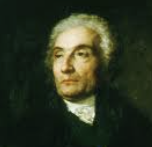
Joseph de Maistre is another of those men whose word, like that of Burke, has vitality. In imaginative power he is altogether inferior to Burke. On the other hand his thought moves in closer order than Burke's, more rapidly, more directly; he has fewer superfluities. Burke is a great writer, but Joseph de Maistre's use of the French language is more powerful, more thoroughly satisfactory, than Burke's use of the English. It is masterly; it shows us to perfection of what that admirable instrument, the French language, is capable.
▼
Source
Matthew Arnold, "Joseph de Maistre on Russia" in English Literature and Irish Politics (1873), p. 87
3 months 4 weeks ago
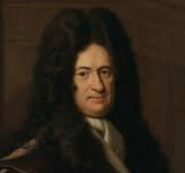
Thus there is nothing waste, nothing dead in the universe; no chaos, no confusions, save in appearence. We might compare this to the appearence of a pond in the distance, where we can see the confused movement and swarming of the fish, without distinguishing the fish themselves.Thus we are that each living body has a dominante entelechy, which in case of an animal is the soul, but the members of this living body are full of other living things, plants and animals, of which each has in turn ita dominant entelechy or soul.
▼
Source
Monadology (69-70).
3 months 4 weeks ago
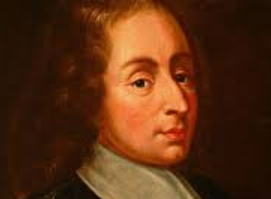
They [men] have corrupted this [God's supernatural] order by making profane things what they should make of holy things, because in fact, we believe scarcely any thing except which pleases us.
3 months 4 weeks ago
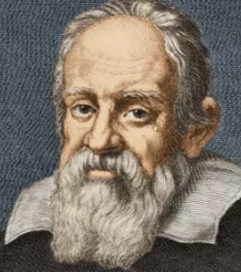
I cannot without great astonishment — I might say without great insult to my intelligence — hear it attributed as a prime perfection and nobility of the natural and integral bodies of the universe that they are invariant, immutable, inalterable, etc., while on the other hand it is called a great imperfection to be alterable, generable, mutable, etc. For my part I consider the earth very noble and admirable precisely because of the diverse alterations, changes, generations, etc. that occur in it incessantly. If, not being subject to any changes, it were a vast desert of sand or a mountain of jasper, or if at the time of the flood the waters which covered it had frozen, and it had remained an enormous globe of ice where nothing was ever born or ever altered or changed, I should deem it a useless lump in the universe, devoid of activity and, in a word, superfluous and essentially non-existent. This is exactly the difference between a living animal and a dead one; and I say the same of the moon, of Jupiter, and of all other world globes. The deeper I go in considering the vanities of popular reasoning, the lighter and more foolish I find them. What greater stupidity can be imagined than that of calling jewels, silver, and gold "precious," and earth and soil "base"? People who do this ought to remember that if there were as great a scarcity of soil as of jewels or precious metals, there would not be a prince who would not spend a bushel of diamonds and rubies and a cartload of gold just to have enough earth to plant a jasmine in a little pot, or to sow an orange seed and watch it sprout, grow, and produce its handsome leaves, its fragrant flowers, and fine fruit. It is scarcity and plenty that make the vulgar take things to be precious or worthless; they call a diamond very beautiful because it is like pure water, and then would not exchange one for ten barrels of water. Those who so greatly exalt incorruptibility, inalterability, etc. are reduced to talking this way, I believe, by their great desire to go on living, and by the terror they have of death. They do not reflect that if men were immortal, they themselves would never have come into the world. Such men really deserve to encounter a Medusa's head which would transmute them into statues of jasper or of diamond, and thus make them more perfect than they are.
▼
Source
Sagredo | Variant translation: I cannot without great wonder, nay more, disbelief, hear it being attributed to natural bodies as a great honor and perfection that they are impassable, immutable, inalterable, etc.: as conversely, I hear it esteemed a great
3 months 4 weeks ago
Practised for centuries, repression has so badly succeeded that it has but led us into a blind alley from which we can only issue by carrying torch and hatchet into the institutions of our authoritarian past.
3 months 4 weeks ago
Aristippus said that a wise man’s country was the world.
▼
Source
Aristippus, 13.
3 months 4 weeks ago
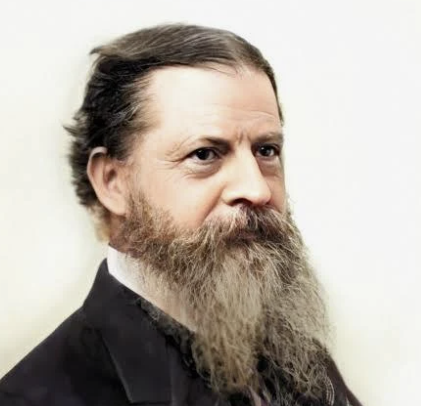
The entire universe is perfused with signs, if it is not composed exclusively of signs.
▼
Source
Quoted in Essays in Zoosemiotics (1990) by Thomas A. Sebeok ISSN 08385858 -->
3 months 4 weeks ago
The best books are those, which those who read them believe they themselves could have written.
3 months 4 weeks ago
I have never met a man so ignorant that I could not learn something from him.
▼
Source
As quoted in The Story of Civilization : The Age of Reason Begins, 1558-1648 (1935) by Will Durant, p. 605

3 months 4 weeks ago
Mathematics is as little a natural science as philosophy is one of the humanities. Philosophy in its essence belongs as little in the philosophical faculty as mathematics belongs to natural science. To house philosophy and mathematics in this way today seems to be a blemish or a mistake in the catalog of the universities. Plato put over the entrance to his Academy the words: "Let no one who has not grasped the mathematical enter here!" p. 69,75
3 months 4 weeks ago
It is not sufficient to distribute the profits realized by a trade in equal parts, if at the same time thousands of other workers are exploited. It is a case of PRODUCING THE GREATEST AMOUNT OF GOODS NECESSARY TO THE WELL-BEING OF ALL, WITH THE LEAST POSSIBLE WASTE OF HUMAN ENERGY.
▼
Source
Ch. 8 : Ways and Means
3 months 4 weeks ago
One of the sayings of Diogenes was that most men were within a finger’s breadth of being mad; for if a man walked with his middle finger pointing out, folks would think him mad, but not so if it were his forefinger.
▼
Source
Diogenes, 6.
3 months 4 weeks ago
I reduce to two the systems of philosophy which deal with man's soul. The first and older system is materialism; the second is spiritualism.
3 months 4 weeks ago
Indeed, even this last moment will be recognized like the rest, at least, be just beginning to be so.
3 months 4 weeks ago
It is rather difficult to describe Heidegger’s face because he could never look straight into one’s eyes for long. His natural expression revealed a reflective brow, an inscrutable countenance, and downcast eyes, which now and again would cast a quick glance to assess the situation. Forced, in conversation, to look one straight in the face, he would appear reserved and insecure, for he lacked the gift of candid communication with other people. Hence his natural expression was one of cautious, peasant-sly mistrust
▼
Source
Karl Löwith, Heidegger’s colleague, as quoted in Ettinger, Hannah Arendt/Martin Heidegger, p. 11.
3 months 4 weeks ago
One single war — we all know — may be productive of more evil, immediate and subsequent, than hundreds of years of the unchecked action of the mutual-aid principle may be productive of good.
3 months 4 weeks ago
The chief good is the suspension of the judgment, which tranquillity of mind follows like its shadow.
▼
Source
Pyrrho, 11.

3 months 4 weeks ago
When capitalism is negated, social processes no longer stand under the rule of blind natural laws. P. 318
3 months 4 weeks ago
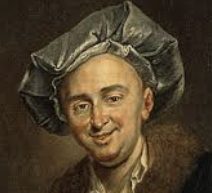
In the year 1742 he... received there a position as surgeon to the Guard. In this capacity he made a campaign in Germany, and... was seized by a violent fever, and used this opportunity in order to institute observations upon himself as to the influence of quickened circulation upon thought. He came to the conclusion that thought is nothing but a consequence of the organisation of our mechanism. ...[H]e tried during his convalescence to explain the mental functions by the help of anatomy, and he had his conjectures printed under the title of a 'Natural History of the Soul.' The regimental chaplain sounded the alarm, and soon a universal cry of indignation was raised... His books were recognised as heretical, and he could no longer continue to be surgeon of the Guard. ...about the same time ...writing a satire on his rivals, the foremost Paris practitioners. ...He fled in the year 1746 to Leyden. Here he wrote ...a new satire upon the charlatanism and ignorance of doctors, and soon afterwards (1748) appeared also his 'Homme Machine.'
3 months 4 weeks ago
The next simplest feature that is common to all that comes before the mind, and consequently, the second category, is the element of Struggle.
▼
Source
Lecture II : The Universal Categories, § 2 : Struggle, CP 5.45
CivilSimian.com created by AxiomaticPanic, CivilSimian, Kalokagathia