

3 months 4 weeks ago
The sciences that are expressed by numbers or by other small signs, are easily learned; and... this facility rather than its demonstrability is what has made the fortune of algebra.
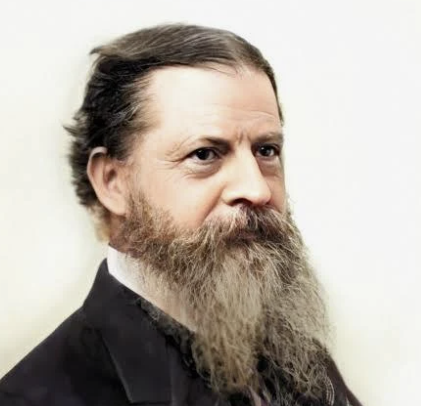
3 months 4 weeks ago
Second, by this and other means we are driven to perceive, what is quite evident in itself, that instantaneous feelings flow together in a continuum of feeling, which has in a modified degree the peculiar vivacity of feeling and has gained generality. And in reference to such general ideas, or continua of feeling, the difficulties about resemblance and suggestion and reference to the external, cease to have any force.
3 months 4 weeks ago
The first question we should face is: What is the aim of a physical theory? To this question diverse answers have been made, but all of them may be reduced to two main principles:"A physical theory," certain logicians have replied, "has for its object the explanation of a group of laws experimentally established.""A physical theory," other thinkers have said, "is an abstract system whose aim is to summarize and classify logically a group of experimental laws without claiming to explain these laws...Now these two questions — Does there exist a material reality distinct from sensible appearances? and What is the nature of reality? — do not have their source in experimental method, which is acquainted only with sensible appearances and can discover nothing beyond them. The resolution of these questions transcends the methods used by physics; it is the object of metaphysics.Therefore, if the aim of physical theories is to explain experimental laws, theoretical physics is not an autonomous science; it is subordinate to metaphysics...Now, to make physical theories depend on metaphysics is surely not the way to let them enjoy the privilege of universal consent.
3 months 4 weeks ago
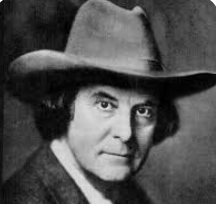
Freedom cannot be bestowed — it must be achieved.
▼
Source
Elbert Hubbard, in his essay on Booker T. Washington in Little Journeys For 1908, p. 21; Franklin D. Roosevelt later used this line on the occasion of the 74th anniversary of the Emancipation Proclamation: "In the truest sense, freedom cannot be bestowed;

3 months 4 weeks ago
The capabilities (intellectual and material) of contemporary society are immeasurably greater than ever before—which means that the scope of society's domination over the individual is immeasurably greater than ever before. Our society distinguishes itself by conquering the centrifugal social forces with Technology rather than Terror, on the dual basis of an overwhelming efficiency and an increasing standard of living.
▼
Source
p. xliii
3 months 4 weeks ago
The idea does not belong to the soul; it is the soul that belongs to the idea.
▼
Source
Vol. I, par. 216
3 months 4 weeks ago
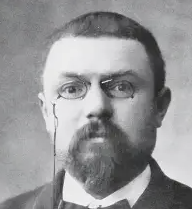
It is often said that experiments should be made without preconceived ideas. That is impossible. Not only would it make every experiment fruitless, but even if we wished to do so, it could not be done. Every man has his own conception of the world, and this he cannot so easily lay aside. We must, for example, use language, and our language is necessarily steeped in preconceived ideas.
▼
Source
Ch. IX: Hypotheses in Physics, Tr. George Bruce Halsted (1913)
3 months 4 weeks ago
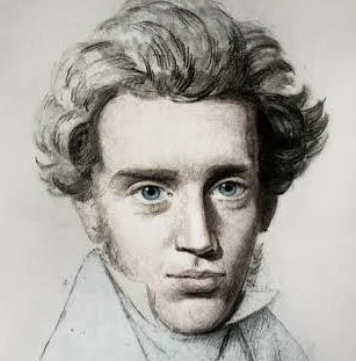
To stand on one leg and prove God's existence is a very different thing from going on one's knees and thanking Him.
▼
Source
1841
3 months 4 weeks ago
When a change occurs in Nature, the quantity of action necessary for that change is as small as possible.
3 months 4 weeks ago
"Should we have an Eleventh Commandment?" asked a youth of the Greatest Living Actress. "Most assuredly, no - we have ten too many now!" answered the divine Sara.
▼
Source
p. 17
3 months 4 weeks ago
No matter how close and familiar the temple or cathedral were to the people who lived around them, they remained in terrifying or elevating contrast to the daily life of the slave, the peasant, and the artisan—and perhaps even to that of their masters. Whether ritualized or not, art contains the rationality of negation. In its advanced positions, it is the Great Refusal—the protest against that which is. The modes in which man and things are made to appear, to sing and sound and speak, are modes of refuting, breaking, and recreating their factual existence. But these modes of negation pay tribute to the antagonistic society to which they are linked. Separated from the sphere of labor where society reproduces itself and its misery, the world of art which they create remains, with all its truth, a privilege and an illusion. In this form it continues, in spite of all democratization and popularization, through the nineteenth and into the twentieth century. The “high culture” in which this alienation is celebrated has its own rites and its own style. The salon, the concert, opera. theater are designed to create and invoke another dimension of reality. Their attendance requires festive-like preparation; they cut off and transcend everyday experience. Now this essential gap between the arts and the order of the day, kept open in the artistic alienation, is progressively closed by the advancing technological society. And with its closing, the Great Refusal is in turn refused; the “other dimension” is absorbed into the prevailing state of affairs. The works of alienation are themselves incorporated into this society and circulate as part and parcel of the equipment which adorns and psychoanalyzes the prevailing state of affairs.
▼
Source
pp. 63-64
3 months 4 weeks ago
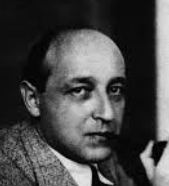
Every bureaucracy, therefore, in accord with the peculiar emphasis on its own position, tends to generalize its own experience and to overlook the fact that the realm of administration and of smoothly functioning order represents only a part of the total political reality. Bureaucratic thought does not deny the possibility of the science of politics, but regards it as identical with the science of administration. Thus irrational factors are overlooked, and when these nevertheless force themselves to the fore, they are treated as "routine matters of state."
3 months 4 weeks ago
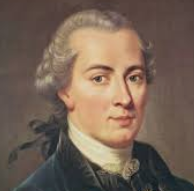
Constitutional freedom, as the right of every citizen to have to obey no other law than that to which he has given his consent or approval;
3 months 4 weeks ago
With the disappearance of the great French mathematician has disappeared the one man whose thought could carry all other thoughts, the one mind who, through a sort of rediscovery, could penetrate to its very depth all the knowledge which the mind of man can comprehend. And that is why the demise of this man at the peak of his intellectual strength is such a disaster. Discoveries will lag, groping efforts will be drawn out; for, the potent luminous brain will not be there to coordinate disjointed research, or to cast the daring plummet of a new theory into a world of obscure facts suddenly revealed by experience.
▼
Source
Paul Painlevé, Eulogy (c. 1912) as quoted by Tobias Dantzig, Henri Poincaré, Critic of Crisis: Reflections on His Universe of Discourse (1954)
3 months 4 weeks ago
Old age realizes the dreams of youth: look at Dean Swift; in his youth he built an asylum for the insane, in his old age he was himself an inmate.
▼
Source
Swenson, 1959, p. 21
3 months 4 weeks ago
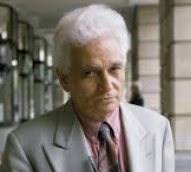
By virtue of its innermost intention, and like all questions about language, structuralism escapes the classical history of ideas which already supposes structuralism’s possibility, for the latter naively belongs to the province of language and propounds itself within it.Nevertheless, by virtue of an irreducible region of irreflection and spontaneity within it, by virtue of the essential shadow of the undeclared, the structuralist phenomenon will deserve examination by the historian of ideas. For better or for worse. Everything within this phenomenon that does not in itself transparently belong to the question of the sign will merit this scrutiny; as will everything within it that is methodologically effective, thereby possessing the kind of infallibil-ity now ascribed to sleepwalkers and formerly attributed to instinct, which was said to be as certain as it was blind.
▼
Source
Force and Signification
3 months 4 weeks ago
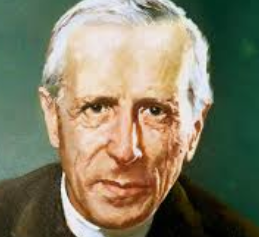
Is evolution a theory, a system or a hypothesis? It is much more: it is a general condition to which all theories, all hypotheses, all systems must bow and which they must satisfy henceforward if they are to be thinkable and true. Evolution is a light illuminating all facts, a curve that all lines must follow.
3 months 4 weeks ago
Life without absorbing occupation is hell — joy consists in forgetting life.
3 months 4 weeks ago
The philosopher … subjects experience to his critical judgment, and this contains a value judgment — namely, that freedom from toil is preferable to toil, and an intelligent life is preferable to a stupid life. It so happened that philosophy was born with these values. Scientific thought had to break this union of value judgment and analysis, for it became increasingly clear that the philosophic values did not guide the organisation of society.
▼
Source
p. 126
3 months 4 weeks ago
The method of the science not being practiced much nowadays, except what logic prescribes to all sciences generally, that fitted for the peculiar nature of metaphysics being simply ignored, it is no wonder that those who everlastingly turn the Sisyphean stone of this inquiry do not seem so far to have made much progress. Though here I neither can nor will expatiate upon so important and extensive a subject, I shall briefly shadow forth what constitutes no despicable part of this method, namely, the infection between sensuous and intellectual cognition, not only as creeping in on those incautious in the application of principles, but even producing spurious principles under the appearance of axioms.
3 months 4 weeks ago
The meaning lies in the appropriation. Hence the book’s joyous giving of itself. Here there are no worldly “mine” and “thine” that separate and prohibit appropriating what is the neighbor's. Admiration is in part really envy and thus a misunderstanding; and criticism, for all its justification, is in part really opposition and thus a misunderstanding; and recognition in a mirror is only a fleeting acquaintance and thus a misunderstanding-but to see correctly and not want to forget what the mirror is incapable of effecting, that is the appropriation, and the appropriation is the reader’s even greater, is his triumphant giving of himself.
▼
Source
p. 6 : Preface

3 months 4 weeks ago
In comparing various authors with one another, I have discovered that some of the gravest and latest writers have transcribed, word for word, from former works, without making acknowledgment.
▼
Source
Book I, Dedication, sec. 22.
3 months 4 weeks ago
Whence this secret Chain between each Person and Mankind? How is my Interest connected with the most distant Parts of it?
▼
Source
An Inquiry into the Original of our Ideas of Beauty and Virtue (1725), Treatise II: An Inquiry concerning Moral Good and Evil, Sect. I
3 months 4 weeks ago
To understand the scope and significance of women's involvement in radical political movements, we must have some idea of the contradictions and patterns of this participation as they have appeared in the past. The struggle of other women to define ideology, translate feminist consciousness into practice, and scale major obstacles provides us with a historical base by which we can more accurately assess the current potential of feminist radicalism and understand the real portent of Herbert Marcuse's observation that the "Women's Liberation movement today is perhaps the most important and potentially the most radical political movement we have"
▼
Source
Jane Slaughter and Robert Korn European Women on the Left (1981)
3 months 4 weeks ago
Everyone can see that philosophy can have her belief in a millennium, but her millennarianism is not Utopian, since the Idea can help, though only from afar, to bring the millennium to pass. The only question is: Does Nature reveal anything of a path to this end? And I say: She reveals something, but very little. This great revolution seems to require so long for its completion that the short period during which humanity has been following this course permits us to determine its path and the relation of the parts to the whole with as little certainty as we can determine, from all previous astronomical observation, the path of the sun and his host of satellites among the fixed stars. Yet, on the fundamental premise of the systematic structure of the cosmos and from the little that has been observed, we can confidently infer the reality of such a revolution. Moreover, human nature is so constituted that we cannot be indifferent to the most remote epoch our race may come to, if only we may expect it with certainty. Such indifference is even less possible for us, since it seems that our own intelligent action may hasten this happy time for our posterity. For that reason, even faint indications of approach to it are very important to us.
▼
Source
Eighth Thesis
3 months 4 weeks ago
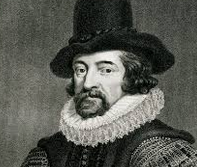
I bequeath my soul to God (…). My body to be buried obscurely. For my name and memory, I leave it to men's charitable speeches, and to foreign nations, and the next age.
▼
Source
His will (1626)
3 months 4 weeks ago
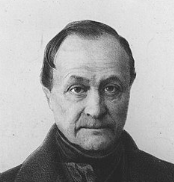
Notwithstanding the eminent difficulties of the mathematical theory of sonorous vibrations, we owe to it such progress as has yet been made in acoustics. The formation of the differential equations proper to the phenomena is, independent of their integration, a very important acquisition, on account of the approximations which mathematical analysis allows between questions, otherwise heterogeneous, which lead to similar equations. This fundamental property, whose value we have so often to recognize, applies remarkably in the present case; and especially since the creation of mathematical thermology, whose principal equations are strongly analogous to those of vibratory motion. This means of investigation is all the more valuable on account of the difficulties in the way of direct inquiry into the phenomena of sound. We may decide the necessity of the atmospheric medium for the transmission of sonorous vibrations; and we may conceive of the possibility of determining by experiment the duration of the propagation, in the air, and then through other media; but the general laws of the vibrations of sonorous bodies escape immediate observation. We should know almost nothing of the whole case if the mathematical theory did not come in to connect the different phenomena of sound, enabling us to substitute for direct observation an equivalent examination of more favorable cases subjected to the same law. For instance, when the analysis of the problem of vibrating chords has shown us that, other things being equal, the number of oscillations is hi inverse proportion to the length of the chord, we see that the most rapid vibrations of a very short chord may be counted, since the law enables us to direct our attention to very slow vibrations. The same substitution is at our command in many cases in which it is less direct.
▼
Source
Bk. 3, chap. 4; as cited in: Moritz (1914, 240)
3 months 4 weeks ago
God's greatness lies in forgiving, in showing mercy, and in this greatness He is greater than the heart which condemns itself. Behold, this is that greatness of God which we have to speak of especially within the sanctuary; for here we know God differently, more closely – from the other side, if one may say so – that out there, where doubtless He is revealed, is to be known in His works, whereas here He is to be known as He has revealed Himself, as He would be known by Christians. The tokens of God's greatness can be known in nature everyone can behold with wonder, or rather there is no special token, for the works themselves are the tokens; thus every one can see the rainbow and must wonder when he sees it. But the token of God's greatness in showing mercy exists only for faith; this token is in fact the Sacrament. God's greatness in nature is manifest, but God's greatness in showing mercy is a secret which has to be believed.
▼
Source
Soren Kierkegaard, Three Discourses at the Communion on Fridays.1 John 3:20 From Cristian Discourses & The Lilies of the Field & The Birds of the Air, & Discourses at the Communion on Fridays 1848 Translated by Walter Lowrie 1940, 1961 Galaxy Books P. 298
3 months 4 weeks ago
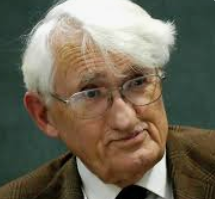
What Kant regarded as a unique (Copernican) turn to transcendental reflection becomes in Hegel a general mechanism for turning consciousness back upon itself. This mechanism has been switched on and off time and time again in the development of spirit. As the subject becomes conscious of itself, it destroys one form of consciousness after another. This process epitomizes the subjective experience that what initially appears to the subject as a being in itself can become content only in the forms imparted to it by the subject. The transcendental philosopher’s experience is thus, according to Hegel, reenacted naively whenever an in-itself becomes a for-the-subject. What Hegel calls “Dialectical” is the reconstruction of this recurrent experience and of its assimilation by the subject, which gives rise to ever more complex structures. … Hegel, it should be noted, exposes himself to a criticism. … Reconstructing successive forms of consciousness is one thing. Proving the necessity of their succession is quite another.
▼
Source
p. 5
3 months 4 weeks ago
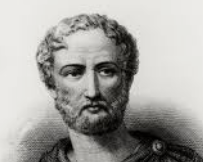
Everything was done.
▼
Source
Letter 27.
3 months 4 weeks ago
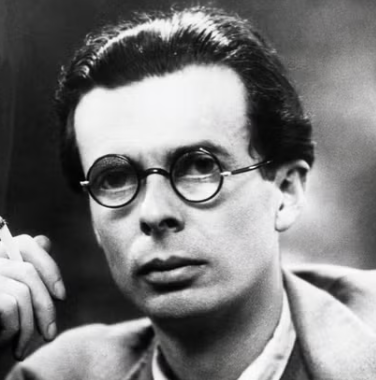
You can't worship a spirit in spirit, unless you do it now. Wallowing in the past may be good literature. As wisdom, it's hopeless. Time Regained is Paradise Lost, and Time Lost is Paradise Regained. Let the dead bury their dead. If you want to live at every moment as it presents itself, you've got to die to every other moment.
▼
Source
John Rivers in The Genius and the Goddess (1955)
3 months 4 weeks ago
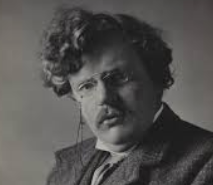
The riddles of God are more satisfying than the solutions of man.
▼
Source
"The Book of Job: An introduction", in Putnam's Monthly (June 1907) p. 356, col. 1
3 months 4 weeks ago
Philosophical knowledge is the knowledge gained by reason from concepts; mathematical knowledge is the knowledge gained by reason from the construction of concepts.
▼
Source
A 713, B 741
3 months 4 weeks ago
The obliteration of the evil hath been practised by two means, some kind of redemption or expiation of that which is past, and an inception or account de novo for the time to come. But this part seemeth sacred and religious, and justly; for all good moral philosophy (as was said) is but a handmaid to religion.
▼
Source
Book II, xxii, 14
3 months 4 weeks ago
In all the flat, lethargic, dull moments, when the sensate dominates a person, to him Christianity is a madness because it is incommensurate with any finite wherefore. But then what good is it? Answer: Be quiet, it is the absolute. And that is how it must be presented, consequently as, that is, it must appear as madness to the sensate person. And therefore it is true, so true, and also in another sense so true when the sensible person in the situation of contemporaneity (see II A) censoriously says of Christ, “He is literally nothing”-quite so, for he is the absolute. Christianity is an absolute. Christianity came into the world as the absolute, not, humanly speaking, for comfort; on the contrary, it continually speaks about how the Christian must suffer or about how a person in order to become and remain a Christian must endure sufferings that he consequently can avoid simply by refraining from becoming a Christian.
▼
Source
p. 61-62
3 months 4 weeks ago
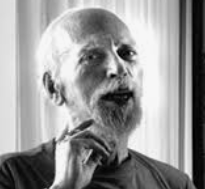
No wife, no horse, no mustache.
▼
Source
in Schrödinger's Cat Trilogy : The Trick Top Hat (1979), p. 79 | Also appears in Masks of the Illuminati (1981), p. 80 (and other pages) | appears in several of his other books in varying contexts
3 months 4 weeks ago
There was a time when I should have felt terribly ashamed of not being up-to-date. I lived in a chronic apprehension lest I might, so to speak, miss the last bus, and so find myself stranded and benighted, in a desert of demodedness, while others, more nimble than myself, had already climbed on board, taken their tickets and set out toward those bright but, alas, ever receding goals of Modernity and Sophistication. Now, however, I have grown shameless, I have lost my fears. I can watch unmoved the departure of the last social-cultural bus—the innumerable last buses, which are starting at every instant in all the world's capitals. I make no effort to board them, and when the noise of each departure has died down, “Thank goodness!” is what I say to myself in the solitude. I find nowadays that I simply don't want to be up-to-date. I have lost all desire to see and do the things, the seeing and doing of which entitle a man to regard himself as superiorly knowing, sophisticated, unprovincial; I have lost all desire to frequent the places and people that a man simply must frequent, if he is not to be regarded as a poor creature hopelessly out of the swim. “Be up-to-date!” is the categorical imperative of those who scramble for the last bus. But it is an imperative whose cogency I refuse to admit. When it is a question of doing something which I regard as a duty I am as ready as anyone else to put up with discomfort. But being up-to-date and in the swim has ceased, so far as I am concerned, to be a duty. Why should I have my feelings outraged, why should I submit to being bored and disgusted for the sake of somebody else's categorical imperative? Why? There is no reason. So I simply avoid most of the manifestations of that so-called “life” which my contemporaries seem to be so unaccountably anxious to “see”; I keep out of range of the “art” they think is so vitally necessary to “keep up with”; I flee from those “good times” in the “having” of which they are prepared to spend so lavishly of their energy and cash.
▼
Source
“Silence is Golden,” p. 55
3 months 4 weeks ago
There is something to be said for every error; but, whatever may be said for it, the most important thing to be said about it is that it is erroneous.
▼
Source
In The Illustrated London News (25 April 1931)
3 months 4 weeks ago
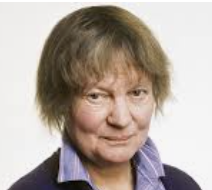
The cry of equality pulls everyone down.
▼
Source
Quoted in The Observer September 13, 1987.
3 months 4 weeks ago
The deceiver is really the fool.
▼
Source
Kant, Immanuel (1996), page 101
3 months 4 weeks ago
The human understanding is unquiet; it cannot stop or rest, and still presses onward, but in vain. Therefore it is that we cannot conceive of any end or limit to the world, but always as of necessity it occurs to us that there is something beyond... But he is no less an unskilled and shallow philosopher who seeks causes of that which is most general, than he who in things subordinate and subaltern omits to do so.
▼
Source
Aphorism 48
3 months 4 weeks ago
The world and Christianity have completely opposite conceptions. The world says of the apostles, of the Apostle Peter as their spokesman, "He is drunk,"-and the Apostle Peter admonishes, "Become sober." Consequently the secular mentality considers Christianity to be drunkenness, and Christianity considers the secular mentality to be drunkenness. "Do become reasonable, come to your senses, try to become sober"-thus does the secular mentality taunt the Christian. And the Christian says to the secular mentality, "Do become reasonable, come to your senses, become sober." The difference between secularity and Christianity is not that one has one view and the other another-no, the difference is always that they have the very opposite views, that what one calls good the other calls evil, what the one calls love the other calls selfishness, what the one calls piety the other calls impiety, What the one calls being drunk the other calls being sober. it is precisely the drunken man, the apostle, who finds it necessary to bring home to the sober (I assume) world the admonition: "Become sober!" This very admonition may, as intended, most severely wound the callous secular mentality, which as a rule cannot be wounded very easily or disconcerted.
▼
Source
Judge for Yourself, p. 96-97 1851
3 months 4 weeks ago
The worst that can happen under monarchy is rule by a single imbecile, but democracy often means the rule by an assembly of three or four hundred imbeciles.
▼
Source
The Historical Illuminatus as spoken by M. Gabriel Sartines
3 months 4 weeks ago
First Shakespeare sonnets seem meaningless; first Bach fugues, a bore; first differential equations, sheer torture. But training changes the nature of our spiritual experiences. In due course, contact with an obscurely beautiful poem, an elaborate piece of counterpoint or of mathematical reasoning, causes us to feel direct intuitions of beauty and significance. It is the same in the moral world.
▼
Source
Ch. 14, p. 333 [2012 reprint]
3 months 4 weeks ago
Lord! what a strange world in which a man cannot remain unique even by taking the trouble to go mad!
▼
Source
Book V, Chapter I: "The Empire of Notting Hill"
3 months 4 weeks ago
The very fact that the totality of our sense experiences is such that by means of thinking (operations with concepts, and the creation and use of definite functional relations between them, and the coordination of sense experiences to these concepts) it can be put in order, this fact is one which leaves us in awe, but which we shall never understand. One may say " the eternal mystery of the world is its comprehensibility." It is one of the great realizations of Immanuel Kant that the setting up of a real external world would be senseless without this comprehensibility.
▼
Source
Albert Einstein, "Physics and Reality" (1936)
3 months 4 weeks ago
The doctrine of the Novum Organum may be summed up, from our point of view, as the sovereignty of technique. It represents, not merely a preoccupation with technique combined with a recognition that technical knowledge is never the whole of knowledge, but the assertion that technique and some material for it to work upon are all that matters. Nevertheless, this is not itself the beginning of the new intellectual fashion, it is only an early and unmistakable intimation of it: the fashion itself may be said to have sprung from the exaggeration of Bacon's hopes rather than from the character of his beliefs.
▼
Source
Michael Oakeshott, "Rationalism in Politics" (1947), published in Rationalism in Politics and other essays (1962)
3 months 4 weeks ago
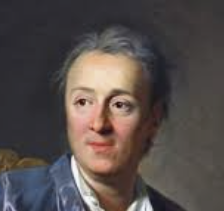
When one compares the talents one has with those of a Leibniz, one is tempted to throw away one's books and go die quietly in the dark of some forgotten corner.
▼
Source
Oeuvres complètes, vol. 7, p. 678
3 months 4 weeks ago
If we are to be morally and ethically responsible, there can be no turning back once we find, as we have found, that some of the most basic presuppositions of these values are mistaken. Playing God is indeed playing with fire. But that is what we mortals have done since Prometheus, the patron saint of dangerous discoveries. We play with fire and take the consequences, because the alternative is cowardice in the face of the unknown.
▼
Source
Sovereign Virtue (2000), p. 446
3 months 4 weeks ago
The man who comes back through the Door in the Wall will never be quite the same as the man who went out. He will be wiser but less sure, happier but less self-satisfied, humbler in acknowledging his ignorance yet better equipped to understand the relationship of words to things, of systematic reasoning to the unfathomable mystery which it tries, forever vainly, to comprehend.
CivilSimian.com created by AxiomaticPanic, CivilSimian, Kalokagathia