
3 months 4 weeks ago
That life is worth living is the most necessary of assumptions and, were it not assumed, the most impossible of conclusions.
3 months 4 weeks ago
When taken as a way of modeling cognitive architecture, really does represent an approach that is quite different from that of the classical cognitive science that it seeks to replace. Classical models of the mind were derived from the structure of Turing and Von Neumann machines. They are not, of course, committed to the details of these machines as exemplified in Turing's original formulation or in typical commercial computers—only to the basic idea that the kind of computing that is relevant to understanding cognition involves operations on symbols.. In contrast, connectionists propose to design systems that can exhibit intelligent behavior without storing, retrieving, or otherwise operating on structured symbolic expressions. The style of processing carried out in such models is thus strikingly unlike what goes on when conventional machines are computing some function.
▼
Source
Jerry A. Fodor, and Zenon W. Pylyshyn. "Connectionism and cognitive architecture: A critical analysis." Cognition 28.1-2 (1988): 3-71.
3 months 4 weeks ago
Does a man of sense run after every silly tale of hobgoblins or fairies, and canvass particularly the evidence? I never knew anyone, that examined and deliberated about nonsense who did not believe it before the end of his enquiries.
▼
Source
Letters
3 months 4 weeks ago
In each separate thing that you do consider the matters which come first, and those which follow after, and only then approach the thing itself.
▼
Source
Book III, ch. 15, § 1 (= Enchiridion 29 § 1).

3 months 4 weeks ago
Pythagoras taught, accordingly, that he had himself been originally Euphorbus, and then Callides, thirdly Hermotimus, fourthly Pyrrhus, and lastly Pythagoras; and that those things which had existed, after certain revolutions of time, came into being again; so that nothing in the world should be thought of as new. He said that true philosophy was a meditation on death; that its daily struggle was to draw forth the soul from the prison of the body into liberty: that our learning was recollection, and many other things which Plato works out in his dialogues, especially in the Phaedo and Timæus. For Plato, after having formed the Academy and gained innumerable disciples, felt that his philosophy was deficient on many points, and therefore went to Magna Græcia, and there learned the doctrines of Pythagoras from Archytas of Tarentum and Timæus of Locris: and this system he embodied in the elegant form and style which he had learned from Socrates. The whole of this, as we can prove, Origen carried over into his book Περὶ ᾿Αρχῶν, only changing the name.
▼
Source
St. Jerome, Apology Against Rufinus, Book III, sec. 40
3 months 4 weeks ago
Uttering a word is like striking a note on the keyboard of the imagination.
▼
Source
§ 6
3 months 4 weeks ago
In political activity, then, men sail a boundless and bottomless sea; there is neither harbour for shelter nor floor for anchorage, neither starting-place nor appointed destination. The enterprise is to keep afloat on an even keel; the sea is both friend and enemy; and the seamanship consists in using the resources of a traditional manner of behaviour in order to make a friend of every hostile occasion.
3 months 4 weeks ago
We are reformers in spring and summer; in autumn and winter we stand by the old — reformers in the morning, conservatives at night. Reform is affirmative, conservatism is negative; conservatism goes for comfort, reform for truth.
▼
Source
p. 223
3 months 4 weeks ago
This text is oriented toward human organizations since this has been the emphasis in the practice of O.R. in business and industry.
▼
Source
p. 7
3 months 4 weeks ago
In Walt Whitman democracy is carried into psychology and morals. The various sights, moods, and emotions are given each one vote; they are declared to be all free and equal, and the innumerable commonplace moments of life are suffered to speak like the others. Those moments formerly reputed great are not excluded, but they are made to march in the ranks with their companions—plain foot-soldiers and servants of the hour.
▼
Source
p. 53
3 months 4 weeks ago
Morals excite passions, and produce or prevent actions. Reason of itself is utterly impotent in this particular. The rules of morality, therefore, are not conclusions of our reason.
▼
Source
Part 1, Section 1
3 months 4 weeks ago
You become what you give your attention to.
▼
Source
This quote has been attributed to Epictetus since around 2016. (e.g. in this [https://web.archive.org/web/20220321040332/https://www.thephilosophyofeverything.com/blog/2016/6/30/the-philosophy-of-attention thephilosophyofeverything blog].) Sometimes appea
3 months 4 weeks ago
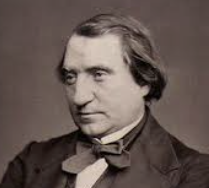
One revolution that Pythagoras worked, was that, whereas, immediately before, those who were most conspicuous among the Greeks as instructors of mankind in understanding and virtue, styled themselves sophists, professors of wisdom, this illustrious man desired to be known only by the appellation of a philosopher, a lover of wisdom. The sophists had previously brought their denomination into discredit and reproach, by the arrogance of their pretensions, and the imperious way in which they attempted to lay down the law to the world. The modesty of this appellation however did not altogether suit with the deep designs of Pythagoras, the ascendancy he resolved to acquire, and the oracular subjection in which he deemed it necessary to hold those who placed themselves under his instruction. This wonderful man set out with making himself a model of the passive and unscrupulous docility which he afterwards required from others. He did not begin to teach till he was forty years of age, and from eighteen to that period he studied in foreign countries, with the resolution to submit to all his teachers enjoined, and to make himself master of their least communicated and most secret wisdom.
3 months 4 weeks ago
Nature, on the other hand, plays a very small role in the Semitic religions: the desert is monotheistic; sublime in its immense uniformity, it primarily revealed to man the idea of 'infinite.'
▼
Source
quoted in Arvidsson, Stefan (2006), Aryan Idols: Indo-European Mythology as Ideology and Science, translated by Sonia Wichmann, Chicago and London: The University of Chicago Press."9
3 months 4 weeks ago
225. What I hold fast to is not one proposition but a nest of propositions.
3 months 4 weeks ago
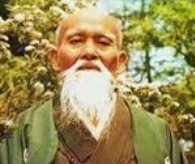
In the Art of Peace we never attack. An attack is proof that one is out of control. Never run away from any kind of challenge, but do not try to suppress or control an opponent unnaturally. Let attackers come any way they like and then blend with them. Never chase after opponents. Redirect each attack and get firmly behind it.
3 months 4 weeks ago
He is a perfect swimmer on the ocean of modern existence. He dreads no tempest, for he is sure that calm will follow it.
▼
Source
Herman Grimm, 1861 essay, as quoted in Ralph Waldo Emerson: Philosopher and Poet (1881) by Alfred Hudson Guernsey, p. 16
3 months 4 weeks ago
Knowledge is a potential for a certain type of action, by which we mean that the action would occur if certain tests were run. For example, a library plus its user has knowledge if a certain type of response will be evoked under a given set of stipulations.
▼
Source
p. 11
3 months 4 weeks ago
All his life he [the American] jumps into the train after it has started and jumps out before it has stopped; and he never once gets left behind, or breaks a leg.
▼
Source
"Materialism and Idealism" p. 175 ([http://hdl.handle.net/2027/uc1.b3923968?urlappend=%3Bseq=191 Hathi Trust])
3 months 4 weeks ago
How can you worship leeks and onions? we shall suppose a SORBONNIST to say to a priest of SAIS. If we worship them, replies the latter; at least, we do not, at the same time, eat them. But what strange object of adoration are cats and monkeys? says the learned doctor. They are at least as good as the relics or rotten bones of martyrs, answers his no less learned antagonist. Are you not mad, insists the Catholic, to cut one another's throat about the preference of a cabbage or a cucumber? Yes, says the pagan; I allow it, if you will confess, that those are still madder, who fight about the preference among volumes of sophistry, ten thousand of which are not equal in value to one cabbage or cucumber.
▼
Source
Part XII - With regard to doubt or conviction
3 months 4 weeks ago
On the question whether mathematics was discovered or invented, Pythagoras and the Pythagoreans had no doubt — mathematics was real, immutable, omnipresent, and more sublime than anything that could conceivably emerge from the human mind. The Pythagoreans literally embedded the universe into mathematics. In fact, to the Pythagoreans, God was not a mathematician — mathematics was God! ...By setting the stage, and to some extent the agenda, for the next generation of philosophers — Plato in particular — the Pythagoreans established a commanding position in Western thought.
▼
Source
Mario Livio, Is God a Mathematician? (2009)
3 months 4 weeks ago
It is not by recognizing the want of courage in someone else that you acquire courage yourself..
▼
Source
p. 44e

3 months 4 weeks ago
My forefathers were Brahmins. They spent their lives in search of God. I am spending my life in search of Man.
▼
Source
Educational Thinkers [https://books.google.com/books?id=O6Fp2zaQVVMC&pg=PA151&dq=#v=onepage&q&f=false]
3 months 4 weeks ago
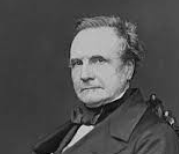
The first application of this principle [of the division of labor] must have been made in a very early stage of society; for it must soon have been apparent that more comforts and conveniences could be acquired by one man restricting his occupation to the art of making bows, another to that of building houses, a third boats, and so on. This division of labor Into trades was not, however, the result of an opinion that the general riches of the community would be increased by such an arrangement: but it must have arisen from the circumstances, of each individual so employed discovering that he himself could thus make a greater profit of his labour than by pursuing more varied occupations.
▼
Source
p. 170. Ch 19. "On the division of labour"
3 months 4 weeks ago
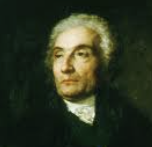
Human reason reduced to its own resources is perfectly worthless, not only for creating but also for preserving any political or religious association, because it only produces disputes, and, to conduct himself well, man needs not problems but beliefs. His cradle should be surrounded by dogmas, and when his reason is awakened, it should find all his opinions ready-made, at least all those relating to his conduct. Nothing is so important to him as prejudices. Let us not take this word in a bad sense. It does not necessarily mean false ideas, but only, in the strict sense of the word, opinions adopted before any examination. Now these sorts of opinions are man’s greatest need, the true elements of his happiness, and the Palladium of empires. Without them, there can be neither worship, nor morality, nor government. There must be a state religion just as there is a state policy; or, rather, religious and political dogmas must be merged and mingled together to form a complete common or national reason strong enough to repress the aberrations of individual reason, which of its nature is the mortal enemy of any association whatever because it produces only divergent opinions.
▼
Source
p. 87
3 months 4 weeks ago
The sentiments of men often differ with regard to beauty and deformity of all kinds, even while their general discourse is the same ... In all matters of opinion and science, the case is opposite: The difference among men is there oftener found to lie in generals than in particulars; and to be less in reality than in appearance.
3 months 4 weeks ago
Philosophy hasn't made any progress?—If someone scratches where it itches, do we have to see progress? Is it not genuine scratching otherwise, or genuine itching?
▼
Source
p. 98e

3 months 4 weeks ago
When devotion to men with an urge for new social organization replaces devotion to men with theological illumination and a way of life pleasing to God, then the actions of the innovator and his formulations are often gauged by their significance for human happiness. Behaviour is examined through the happiness it produces, which is an empirical matter; transcendence is overcome.
▼
Source
p. 327-328
3 months 4 weeks ago
The earlier views, those of Hobbes or Locke for instance, saw language as an instrument, and understood meaning in terms of designation. Discovering the meaning of words is finding what ideas or things they stood for. ... By contrast, a hermeneutical view requires a very different conception. If we are partly constituted by our self-understanding, and this in turn can be very different according to the various languages which articulate for us a background of distinctions of worth, then language does not only serve to depict ourselves and the world, it also helps constitute our lives. Certain ways of being, of feeling, of relating to each other are only possible given certain linguistic resources.
▼
Source
Human Agency and Language (Cambridge: 1985), pp. 9-10
3 months 4 weeks ago
Providence has already begun the punishment of the guilty; more than sixty regicides, the most guilty among them, have already died a violent death.
▼
Source
Chapter X, p. 97
3 months 4 weeks ago
Humean skepticism should be well distinguished from Greek skepticism. Hume's assumes as basic the truth of the empirical, of feeling, of intuition, and from that base contests general determinations and laws—because they lack justification from sense perception. Ancient skepticism was so far from making feeling and intuition the principle of truth that, on the contrary, it turned first of all against the senses.
▼
Source
G. W. F. Hegel, Encyclopedia of Philosophy (1827), cited in W. Kaufmann, Hegel (1966), pp. 69-70

3 months 4 weeks ago
When a revolutionary situation arises in a country, before the spirit of revolt is sufficiently awakened in the masses to express itself in violent demonstrations in the streets or by rebellions and uprisings, it is through action that minorities succeed in awakening that feeling of independence and that spirit of audacity without which no revolution can come to a head. Men of courage, not satisfied with words, but ever searching for the means to transform them into action, — men of integrity for whom the act is one with the idea, for whom prison, exile, and death are preferable to a life contrary to their principles, — intrepid souls who know that it is necessary to dare in order to succeed, — these are the lonely sentinels who enter the battle long before the masses are sufficiently roused to raise openly the banner of insurrection and to march, arms in hand, to the conquest of their rights.
3 months 4 weeks ago
Muggeridge: ‘Positivism will deprive man, not only of all objects of religious reverence, but of all objects of the reverence which great philosophers have always, and rightly, received.’ True, Malcolm, except for the 'and rightly' part. In fact the reverence which has been and is accorded, by pre-Positivist man, to such two-legged plagues as Plato, Kant, and Hegel, is merely insane.
▼
Source
[https://https://web.maths.unsw.edu.au/~jim/wrongthoughts.html The Plato Cult and Other Philosophical Follies], 1991. Page 201
3 months 4 weeks ago
The Christian woman is therefore a supernatural model like the angel. […] At the sight of these figures, however beautiful one can imagine them, no profane thought would dare arise in the heart of a man of taste. One owes them a certain intellectual admiration as pure as their models. Even in their clothing there is something that is not terrestrial. One must see there elegance without elaboration, poverty without ugliness, and, if the subject demands it, pomp without magnificence. They are beautiful like temples.
▼
Source
p. 288
3 months 4 weeks ago
You are in the same manner surrounded with a small circle of persons... full of desire. They demand of you the benefits of desire... You are therefore properly the king of desire. ...equal in this to the greatest kings of the earth... It is desire that constitutes their power; that is, the possession of things that men covet.
3 months 4 weeks ago
Some years ago, as Your Serene Highness well knows, I discovered in the heavens many things that had not been seen before our own age. The novelty of these things, as well as some consequences which followed from them in contradiction to the physical notions commonly held among academic philosophers, stirred up against me no small number of professors — as if I had placed these things in the sky with my own hands in order to upset nature and overturn the sciences. They seemed to forget that the increase of known truths stimulates the investigation, establishment, and growth of the arts; not their diminution or destruction.
3 months 4 weeks ago
To begin with, if man, since his origin, has always lived in societies, the State is but one of the forms of social life, quite recent as far as regards European societies. Men lived thousands of years before the first States were constituted; Greece and Rome existed for centuries before the Macedonian and Roman Empires were built up, and for us modern Europeans the centralized States date but from the sixteenth century. It was only then, after the defeat of the free mediæval Communes had been completed that the mutual insurance company between military, judicial, landlord, and capitalist authority which we call "State," could be fully established.

3 months 4 weeks ago
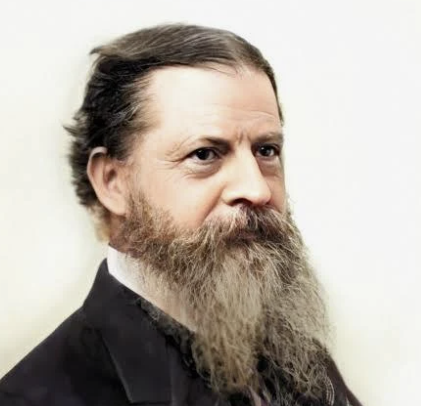
He declared that he knew nothing, except the fact of his ignorance.
▼
Source
Socrates, 16.
3 months 4 weeks ago
True science is distinctively the study of useless things. For the useful things will get studied without the aid of scientific men.
3 months 4 weeks ago
Rules necessary for axioms. Not to demand in axioms any but things perfectly evident.
3 months 4 weeks ago
The speed of the ball—thanks to opposition from the air—will not go on increasing forever. Rather, what will happen is seen in bodies of very little weight falling through no great distance; I mean, a reduction to equable motion, which will occur also in a lead or iron ball after the descent of some thousands of braccia. This bounded terminal speed will be called the maximum that such a heavy body can naturally attain through the air...
▼
Source
Salviati, Day Four, 278-279 Stillman Drake translation (1974)

3 months 4 weeks ago
The domination of the public way in which things have been interpreted has already decided upon even the possibilities of being attuned, that is, about the basic way in which Da-sein lets itself be affected by the world. The they prescribes that attunement, it determines what and how one "sees."
▼
Source
Stambaugh translation
3 months 4 weeks ago
The means of production being the collective work of humanity, the product should be the collective property of the race. Individual appropriation is neither just nor serviceable. All belongs to all.
▼
Source
Ch. 1 : Our Riches, p. 61
3 months 4 weeks ago
He was once asked what a friend is, and his answer was, "One soul abiding in two bodies."
▼
Source
Aristotle, 9.

3 months 4 weeks ago
A good prescription is still more profitable than an .
▼
Source
(c. 1734) in a successful argument to persuade his father that a medical education was preferred. As quoted by , History of Materialism and Critique of its Present Importance Tr. Ernest Chester Thomas (1882) 2nd edition, Vol. 2, [https://books.google.com/
3 months 4 weeks ago
In an article published in The Monist for January, 1891, I endeavored to show what ideas ought to form the warp of a system of philosophy, and particularly emphasized that of absolute chance. In the number of April, 1892, I argued further in favor of that way of thinking, which it will be convenient to christen tychism (from τύχη, chance). A serious student of philosophy will be in no haste to accept or reject this doctrine; but he will see in it one of the chief attitudes which speculative thought may take, feeling that it is not for an individual, nor for an age, to pronounce upon a fundamental question of philosophy. That is a task for a whole era to work out. I have begun by showing that tychism must give birth to an evolutionary cosmology, in which all the regularities of nature and of mind are regarded as products of growth, and to a Schelling-fashioned idealism which holds matter to be mere specialized and partially deadened mind.
3 months 4 weeks ago
Who is to determine what the perfect is? It could only be those who are themselves perfect and who therefore know what it means. Here yawns the abyss of that circularity in which the whole of human Dasein moves. What health is, only the healthy can say. Yet healthfulness is measured according to the essential starting point of health. What truth is, only one who is truthful can discern; but the one who is truthful is determined according to the essential starting point of truth.
▼
Source
p. 127
3 months 4 weeks ago
We thus see that the over-population fallacy does not stand the very first attempt at submitting it to a closer examination.
3 months 4 weeks ago
Pythagoras used to say that he had received as a gift from Mercury the perpetual transmigration of his soul, so that it was constantly transmigrating and passing into all sorts of plants or animals.
▼
Source
Pythagoras, 4.

3 months 4 weeks ago
We return to our analysis of qualities. Something preserves itself throughout this flux, something that passes into other things, but also stands against them as a being for itself. This something can exist only as the product of a process through which it integrates its otherness with its own proper being. Hegel says that its existence comes about through ‘the negation of the negation.’ The first negation is the otherness in which it turns, and the second is the incorporation of this other into its own self. Such a process presupposes that things possess a certain power over their movement, that they exist in a certain self-relation that enables them to ‘mediate’ their existential conditions. P. 132-133
CivilSimian.com created by AxiomaticPanic, CivilSimian, Kalokagathia