
3 months 4 weeks ago
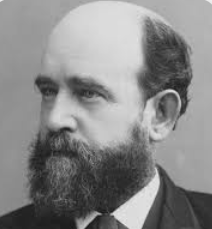
The great work of the present for every man, and every organization of men, who would improve social conditions, is the work of education — the propagation of ideas. It is only as it aids this that anything else can avail. And in this work every one who can think may aid — first by forming clear ideas himself, and then by endeavoring to arouse the thought of those with whom he comes in contact.
▼
Source
Ch. 21 : Conclusion
3 months 4 weeks ago
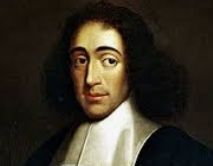
We can conceive of various kinds of democracy. But my intention is not to treat of every kind, but of that only, "wherein all, without exception, who owe allegiance to the laws of the country only, and are further independent and of respectable life, have the right of voting in the supreme council and of filling the offices of the dominion."
▼
Source
Ch. 11, Of Democracy
3 months 4 weeks ago
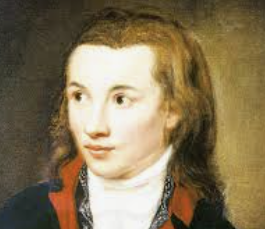
Nature is an Æolian Harp, a musical instrument; whose tones again are keys to higher strings in us.

3 months 4 weeks ago
The wind is blowing, adore the wind.
▼
Source
Symbol 8
3 months 4 weeks ago
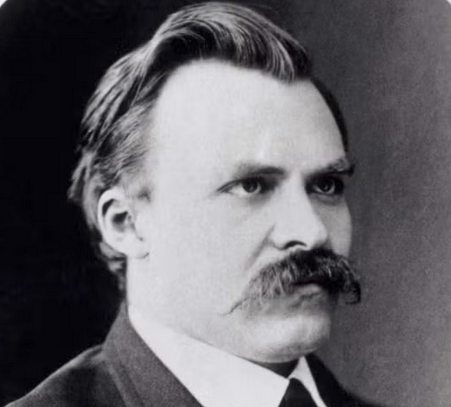
The good generally displeases us when it is beyond our ken.
3 months 4 weeks ago
Tostoy's message has not grown out-of-date. In the present "end of an age" when fear and anxiety and collective crime have expanded beyond even Tolstoy's conception of the possibilities, these essays come to us with prophetic force and urgency. He strides like a giant over all the pettifogging economists and politicians and confronts us with his unanswerable accusations, his scorn and his love of life and humanity.
▼
Source
Herbert Read, in a review of "Essays from Tula" by Tolstoy, in Freedom (13 November 1948)
3 months 4 weeks ago
The second class of evils comprises such evils as people cause to each other, when, e.g., some of them use their strength against others. These evils are more numerous than those of the first kind... they likewise originate in ourselves, though the sufferer himself cannot avert them.
▼
Source
Ch.12
3 months 4 weeks ago
Wilt thou seal up the avenues of ill? Pay every debt, as if God wrote the bill!
▼
Source
Quatrains, Suum Cuique
3 months 4 weeks ago
Unity is plural and, at minimum, is two.
▼
Source
[http://www.rwgrayprojects.com/synergetics/s02/p2400.html#224.12 224.12]
3 months 4 weeks ago
An important recurring theme in George is the purposeful corruption of the science of economics in order to serve and apologize for wealthy special interests. As a self trained economist, the academics preferred to ignore the uncomfortable realities George’s work exposed.
▼
Source
Stephen Zarlenga, 2001, https://monetary.org/articles/henry-georges-concept-of-money/
3 months 4 weeks ago
Not frequently man from man.
▼
Source
As quoted in the translation of Thomas Taylor (1818); This has been interpreted as being an exhortation to moderation in homosexual liaisons.
3 months 4 weeks ago
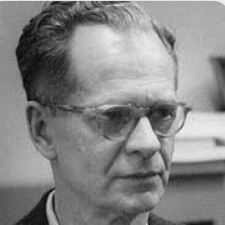
In trying to solve the terrifying problems that face us in the world today, we naturally turn to the things we do best. We play from strength, and our strength is science and technology. To contain a population explosion, we look for better methods of birth control. Threatened by a nuclear holocaust, we build bigger deterrent forces and anti-ballistic missile systems. We try to stave off world famine with new foods and better ways of growing them. Improved sanitation and medicine will, we hope, control disease; better housing and transportation will solve the problems of the ghettos, and new ways of reducing or disposing of waste will stop the pollution of the environment. We can point to remarkable achievements in all these fields, and it is not surprising that we should try to extend them. But things grow steadily worse, and it is disheartening to find that technology itself is increasingly at fault. Sanitation and medicine have made the problems of population more acute, war has acquired a new horror with the invention of nuclear weapons, and the affluent pursuit of happiness is largely responsible for pollution. As Darlington has said, ‘Every new source from which man has increased his power on the earth has been used to diminish the prospects of his successors. All his progress has been at the expense of damage to his environment which he cannot repair and could not foresee.’
▼
Source
Beyond Freedom and Dignity (1971), Chapter 1: "A Technology of Behaviour".
3 months 4 weeks ago
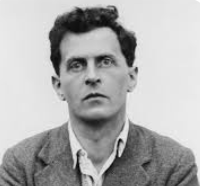
Don't get involved in partial problems, but always take flight to where there is a free view over the whole single great problem, even if this view is still not a clear one.
▼
Source
Journal entry (1 November 1914)
3 months 4 weeks ago
Even when a person suffers pain in consequence of a thorn having entered into his hand, although it is at once drawn out, it is a punishment that has been inflicted on him, and the least pleasure he enjoys is a reward; all this is meted out by strict justice; as is said in the Scripture, "all His ways are judgement" (Deut. xxxii. 4); we are only ignorant of the working of that judgement.
▼
Source
Ch.17
3 months 4 weeks ago
The imagination is not a talent of some men but is the health of every man.
▼
Source
Poetry and Imagination
3 months 4 weeks ago
The nearest each of us can come to God is by loving the truth.
3 months 4 weeks ago
In a word, neither death, nor exile, nor pain, nor anything of this kind is the real cause of our doing or not doing any action, but our inward opinions and principles.
▼
Source
Book I, ch. 11, § 33.
3 months 4 weeks ago
The best and greatest winning is a true friend; and the greatest loss is the loss of time.
3 months 4 weeks ago
I am my world. (The microcosm.) (5.63)
▼
Source
Original German: Ich bin meine welt (Der Mikrokosmos.)
3 months 4 weeks ago
Those who believe that... detailed rules originate in a certain cause, are as far from the truth as those who assume that the whole law is useless.
▼
Source
Ch.26
3 months 4 weeks ago
Every man is a new method.
▼
Source
"The Natural History of Intellect", p. 28
3 months 4 weeks ago
We are here as local information harvesters, local problem-solvers in support of the integrity of eternally regenerative Universe. The fact that we get away from physical problems doesn't mean we go away from problems. The problems are really rarely physical.

3 months 4 weeks ago
The Triad has a special beauty and fairness beyond all numbers, primarily because it is the very first to make actual the potentiality of the Monad — oddness, perfection, proportionality, unification, limit.
▼
Source
On the Triad
3 months 4 weeks ago
What is the first business of one who practices philosophy? To get rid of self-conceit. For it is impossible for anyone to begin to learn that which he thinks he already knows.
▼
Source
Book II, ch. 17, § 1.
3 months 4 weeks ago
Let us suppose that we have set the problem of finding a solution to the equation \scriptstyle x^2=2. \, This is a problem for which the Babylonians around 1700 BC found the excellent approximation \scriptstyle \sqrt{2}. ...This is the identical problem which Pythagoras asserted had no fractional solution and in whose honor he was supposed to have sacrificed a hecatomb of oxen—the problem which caused the existentialist crisis in ancient Greek mathematics. The \scriptstyle \sqrt{2} exists (as the diagonal of the unit square); yet it does not exist (as a fraction)!
▼
Source
, , The Mathematical Experience (1980) p. 180
3 months 4 weeks ago
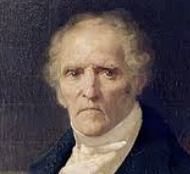
The Turks teach women that they have no souls, and are unworthy to enter paradise. The French would persuade them that they have no intellects, and are not made to engage in mental labors, and to tread the paths of art and science.
▼
Source
The Theory of Social Organization
3 months 4 weeks ago
People are deeply imbedded in philosophical, i.e., grammatical confusions. And to free them presupposes pulling them out of the immensely manifold connections they are caught up in.
▼
Source
Ch. 9 : Philosophy, p. 185
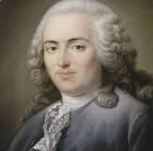
3 months 4 weeks ago
Enjoy your life without comparing to that of others. It is enough for you to know that you are good, without examining whether others are as good as you.
▼
Source
Advice to his daughter (written in hiding March 1794), quoted in Lukes, S., & Urbinati, N. (Eds.). (2012). Condorcet: Political Writings (Cambridge Texts in the History of Political Thought). Cambridge: Cambridge University Press. doi:10.1017/CBO978113910
3 months 4 weeks ago
Never self-possessed, or prudent, love is all abandonment.
▼
Source
p. 158
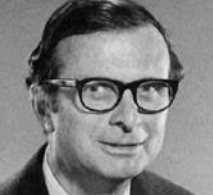
3 months 4 weeks ago
Ethical judgments can be and should be included in the scope of science
▼
Source
Cited in: John P. van Gigch (2006) Wisdom, Knowledge, and Management. p. 2
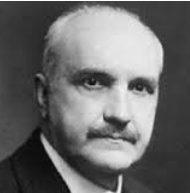
3 months 4 weeks ago
Art like life should be free, since both are experimental.
▼
Source
Ch. IX.: Justification of Art
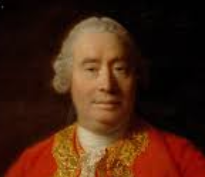
3 months 4 weeks ago
I am first affrighted and confounded with that forelorn solitude, in which I am plac'd in my philosophy, and fancy myself some strange uncouth monster, who not being able to mingle and unite in society, has been expell'd all human commerce, and left utterly abandon'd and disconsolate. Fain wou'd I run into the crowd for shelter and warmth; but cannot prevail with myself to mix with such deformity. I call upon others to join me, in order to make a company apart; but no one will hearken to me. Every one keeps at a distance, and dreads that storm, which beats upon me from every side. I have expos'd myself to the enmity of all metaphysicians, logicians, mathematicians, and even theologians; and can I wonder at the insults I must suffer? I have declar'd my disapprobation of their systems; and can I be surpriz'd, if they shou'd express a hatred of mine and of my person? When I look abroad, I foresee on every side, dispute, contradiction, anger, calumny and detraction. When I turn my eye inward, I find nothing but doubt and ignorance. All the world conspires to oppose and contradict me; tho' such is my weakness, that I feel all my opinions loosen and fall of themselves, when unsupported by the approbation of others. Every step I take is with hesitation, and every new reflection makes me dread an error and absurdity in my reasoning. For with what confidence can I venture upon such bold enterprises, when beside those numberless infirmities peculiar to myself, I find so many which are common to human nature? Can I be sure, that in leaving all established opinions I am following truth; and by what criterion shall I distinguish her, even if fortune shou'd at last guide me on her foot-steps? After the most accurate and exact of my reasonings, I can give no reason why I shou'd assent to it; and feel nothing but a strong propensity to consider objects strongly in that view, under which they appear to me. Experience is a principle, which instructs me in the several conjunctions of objects for the past. Habit is another principle, which determines me to expect the same for the future; and both of them conspiring to operate upon the imagination, make me form certain ideas in a more intense and lively manner, than others, which are not attended with the same advantages. Without this quality, by which the mind enlivens some ideas beyond others (which seemingly is so trivial, and so little founded on reason) we cou'd never assent to any argument, nor carry our view beyond those few objects, which are present to our senses. Nay, even to these objects we cou'd never attribute any existence, but what was dependent on the senses; and must comprehend them entirely in that succession of perceptions, which constitutes our self or person. Nay farther, even with relation to that succession, we cou'd only admit of those perceptions, which are immediately present to our consciousness, nor cou'd those lively images, with which the memory presents us, be ever receiv'd as true pictures of past perceptions. The memory, senses, and understanding are, therefore, all of them founded on the imagination, or the vivacity of our ideas.
▼
Source
Part 4, Section 7
3 months 4 weeks ago
Everything has two handles, the one by which it may be carried, the other by which it cannot. If your brother acts unjustly, don't lay hold on the action by the handle of his injustice, for by that it cannot be carried; but by the opposite, that he is your brother, that he was brought up with you; and thus you will lay hold on it, as it is to be carried. (43).
3 months 4 weeks ago
Number, its kinds; the first kind, intellectual in the divine mind.Number is of two kinds, the Intellectual (or immateriall) and the Scientiall. The intellectuall is that eternal substance of number, which Pythagoras in his discourse concerning the Gods asserted to be the principle most providentiall of all Heaven and Earth, and the nature that is betwixt them. Moreover, it is the root of divine Beings, and of gods, & of Dæmons. This is that which he termed the principle, fountain,and root of all things, and defined it to be that which before all things exists in the divine mind; from which and out of which all things are digested into order, and remain numbred by an indissolube series.For all things which are ordered in the world by nature according to an artificiall course in part and in whole appear to be distinguished and adorn'd by Providence and the All-creating Mind, according to Number; the exemplar being established by applying (as the reason of the principle before the impression of things) the number præxistent in the Intellect of God, maker of the world. This only in intellectual, & wholly immaterial, really a substance according to which as being the most exact artificiall reason, all things are perfected, Time, Heaven, Motion, the Stars and their various revolutions....The other kind of number, Scientiall; its principles.Scientiall Number is that which Pythagoras defines the extension and production into act of the seminall reasons which are in the Monad, or a heap of Monads, or a progressian of multitude beginning from Monad, and a regression ending in Monad.
▼
Source
Thomas Stanley, The History of Philosophy, the Third and Last Volume, in Five Parts. (1660) [https://books.google.com/books?id=xBr_KocBWUwC The First Part, Containing the Italick Sect.] pp.54-55
3 months 4 weeks ago
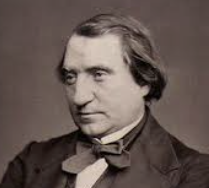
In morals, truth is but little prized when it is a mere sentiment, and only attains its full value when realized in the world as fact.
▼
Source
Ch. 5.
3 months 4 weeks ago
One can mistrust one's own senses, but not one's own belief. If there were a verb meaning "to believe falsely," it would not have any significant first person, present indicative.
▼
Source
Pt II, p. 162
3 months 4 weeks ago
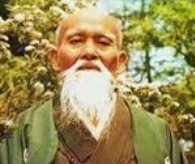
True Budo is practiced not only to destroy an enemy, it must also make him, or his own will, gladly lose his spirit (seishin) to oppose you.
▼
Source
(p. 26)
3 months 4 weeks ago
When it is dark enough, you can see the stars.
▼
Source
Widely attributed to Ralph Waldo Emerson on the internet; however, a presumably definitive source of Emerson's works at http://www.rwe.org fails to confirm any occurrence of this phrase across his works. This phrase is found in remarks attributed to Charl
3 months 4 weeks ago
In general, we can say that the larger the system becomes, the more the parts interact, the more difficult it is to understand environmental constraints, the more obscure becomes the problem of what resources should be made available, and deepest of all, the more difficult becomes the problem of the legitimate values of the system.
▼
Source
p. 77; cited in John Gall (1978) Systemantics; how systems work... and especially how they fail
3 months 4 weeks ago
Only the dead have seen the end of war.
▼
Source
"Tipperary"
3 months 4 weeks ago
... no testimony is sufficient to establish a miracle, unless the testimony be of such a kind, that its falsehood would be more miraculous, than the fact, which it endeavors to establish.
▼
Source
Section 10 : Of Miracles Pt. 1
3 months 4 weeks ago
It seems to me that they do well to study mathematics, and it is not at all strange that they have correct knowledge about each thing, what it is. For if they knew rightly the nature of the whole, they were also likely to see well what is the nature of the parts. About geometry, indeed, and arithmetic and astronomy, they have handed us down a clear understanding, and not least also about music. For these seem to be sister sciences; for they deal with sister subjects, the first two forms of being.
▼
Source
Archytas of Tarentum, On Harmony (ca. 400 BC) as quoted in Nicomachus of Gerasa: Introduction to Arithmetic (ca. 100 AD) [https://archive.org/details/NicomachusIntroToArithmetic Tr.] (1926)
3 months 4 weeks ago
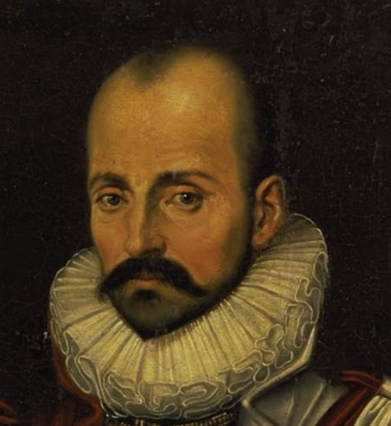
Men are like handsome race horses who first bite the bit and later like it, and rearing under the saddle a while soon learn to enjoy displaying their harness and prance proudly beneath their trappings. Men will grow accustomed to the idea that they have always been in subjection, that their fathers lived in the same way; they will think they are obliged to suffer this evil, and will persuade themselves by example and imitation of others, finally investing those who order them around with proprietary rights, based on the idea that it has always been that way. There are always a few, better endowed than others, who feel the weight of the yoke and cannot restrain themselves from attempting to shake it off: these are the men who never become tamed under subjection and who always, like Ulysses on land and sea constantly seeking the smoke of his chimney, cannot prevent themselves from peering about for their natural privileges and from remembering their ancestors and their former ways. These are in fact the men who, possessed of clear minds and far-sighted spirit, are not satisfied, like the brutish mass, to see only what is at their feet, but rather look about them, behind and before, and even recall the things of the past in order to judge those of the future, and compare both with their present condition. These are the ones who, having good minds of their own, have further trained them by study and learning. Even if liberty had entirely perished from the earth, such men would invent it. For them slavery has no satisfactions, no matter how well disguised.
▼
Source
Part 2
3 months 4 weeks ago
Nothing is so difficult as not deceiving oneself.
▼
Source
p. 34e
3 months 4 weeks ago
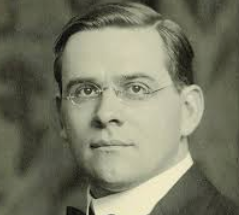
Philosophy... is that activity by which the meaning of propositions is established or discovered. Philosophy elucidates propositions, science verifies them. In the latter we are concerned with the truth of statements, but in the former with what they actually mean.
▼
Source
p. 157 ; As cited in: Uebel (2012:78)
3 months 4 weeks ago
General systems theory is considered as a formal theory (Mesarovic, Wymore), a methodology (Ashby, Klir), a way of thinking (Bertalanffy, Churchman), a way of looking at the world (Weinberg), a search for an optimal simplification (Ashby, Weinberg), didactic method (Boulding, Klir, Weinberg), metalanguage (Logren), and profession (Klir).
▼
Source
George Klir cited in: James T. Ziegenfuss (1983) Patients' rights and organizational models: sociotechnical systems research on mental health programs. p. 104
3 months 4 weeks ago
Books are “imaginative rehearsals for living,” stated novelist George Santayana. They are also a great equalizer in a diverse society. Book reading helps prepare a child for mental liberation from ignorance, fear, and falsehood.
▼
Source
[https://www.csmonitor.com/Commentary/the-monitors-view/2020/0622/The-lockdown-s-lesson-in-reading-books-aloud The lockdown’s lesson in reading books aloud, Christian Science Monitor] (22 June 2020)
3 months 4 weeks ago
Art may make a suit of clothes; but nature must produce a man.
▼
Source
Part I, Essay 15: The Epicurean
3 months 4 weeks ago
Someone who knows too much finds it hard not to lie.
▼
Source
p. 64e
3 months 4 weeks ago
It is not within our power not to desire to be happy.
CivilSimian.com created by AxiomaticPanic, CivilSimian, Kalokagathia