

5 months ago
If your opponent strikes with fire, counter with water, becoming completely fluid and free-flowing. Water, by its nature, never collides with or breaks against anything. On the contrary, it swallows up any attack harmlessly.
5 months ago
We boil at different degrees.
▼
Source
Eloquence
5 months ago
Knowledge can be considered as a collection of information, or as an activity, or as a potential. If we think of it as a collection of information, then the analogy of a computer's memory is helpful, for we can say that knowledge about something is like the storage of meaningful and true strings of symbols in a computer.
▼
Source
p. 9; cited in Daniel J. Power (2004) Decision Support Systems: Frequently Asked Questions. p. 23
5 months ago
Every moment celebrates obsequies over the virtues of its predecessor.
▼
Source
Ch. XIV
5 months ago
For do our Theologians pretend to make a monopoly of the word, action, and may not the atheists likewise take possession of it, and affirm that plants, animals, men, &c. are nothing but particular actions of one simple universal substance, which exerts itself from a blind and absolute necessity?
▼
Source
Part 4, Section 5
5 months ago
If a person gave your body to any stranger he met on his way, you would certainly be angry. And do you feel no shame in handing over your own mind to be confused and mystified by anyone who happens to verbally attack you? (28) [tr. Elizabeth Carter]

5 months ago
The combination of mathematics and theology, which began with Pythagoras, characterized religious philosophy in Greece, in the Middle Ages, and in modern times down to Kant. Orphism before Pythagoras was analogous to Asiatic mystery religions. But in Plato, Saint Augustine, Thomas Aquinas, Descartes, Spinoza, and Kant there is an intimate blending of religion and reasoning, of moral aspiration with logical admiration of what is timeless, which comes from Pythagoras, and distinguishes the intellectualized theology of Europe from the more straightforward mysticism of Asia. It is only in quite recent times that it has been possible to say clearly that Pythagoras was wrong. I do not know of any other man who has been as influential as he was in the sphere of thought. I say this because what appears as Platonism is, when analyzed, found to be in essence Pythagoreanism. The whole conception of an eternal world, revealed to the intellect but not to the senses, is derived from him. But for him, Christians would not have thought of Christ as the Word; but for him, theologians would not have sought logical proofs of God and immortality.
▼
Source
Bertrand Russell, in A History of Western Philosophy (1945), Book One, Part I, Chapter III, Pythagoras, p. 37
5 months ago
As a rule, all heroism is due to a lack of reflection, and thus it is necessary to maintain a mass of imbeciles. If they once understand themselves the ruling men will be lost.
▼
Source
Orlando, in Caliban, act 2, sc. 1 (1878).
5 months ago
But if you say: "How am I to know what he means, when I see nothing but the signs he gives?" then I say: "How is he to know what he means, when he has nothing but the signs either?"
▼
Source
§ 504

5 months ago
Muslims are we, the country is ours, China and Arabia is ours, India is ours. Under the shadow of swords we have grown up. The crescent scabbard is our national emblem.
▼
Source
Mohammed Iqbal , circa 1930, Ved Mehta "Coming Down", India , Granta 57 (London: Granta, 1997), p. 148. quoted in Savarkar and The Discourse on Islam in Pre-independent India, Amalendu Misra. Source: Journal of Asian History, Vol. 33, No. 2 (1999)
5 months ago
As soon as there is life there is danger.
▼
Source
Actually from De l'Allemagne (1813) by Madame de Stael.
5 months ago
The object of the present volume is to point out the effects and the advantages which arise from the use of tools and machines ;—to endeavour to classify their modes of action ;—and to trace both the causes and the consequences of applying machinery to supersede the skill and power of the human arm.
▼
Source
Preface
5 months ago
It is not politics that can bring true liberty to the soul; that must be achieved, if at all, by philosophy;
▼
Source
"The Irony of Liberalism"
5 months ago
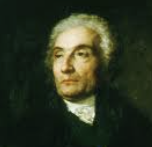
In the Koran as in the Bible, politics is divinized, and human reason, crushed by the religious ascendancy, cannot insinuate its isolating and corrosive poison into the mechanisms of government, so that citizens are believers whose loyalty is exalted to faith, and obedience to enthusiasm and fanaticism.
▼
Source
p. 78
5 months ago
Necessity may be defined in two ways, conformably to the two definitions of cause, of which it makes an essential part. It consists either in the constant conjunction of like objects, or in the inference of the understating from one object to another.
▼
Source
§ 8.27
5 months ago
It is important to recognize that the materialist, scientific paradigm that dominates the late twentieth century world and provides the basis for its dominant institutions, has its basis in the life and work of Pythagoras, one of the most significant representatives of the perennial philosophy and a founder of the magical tradition. This spirit, which gave rise to our world view, is a spirit that must be recaptured if our civilization is to flourish. The choice is a clear one to many, and was summed up in a book title by the late Pythagorean and futurist Buckminster Fuller, Utopia or Oblivion.

5 months ago
Poor, wretched, and stupid peoples, nations determined on your own misfortune and blind to your own good! You let yourselves be deprived before your own eyes of the best part of your revenues; your fields are plundered, your homes robbed, your family heirlooms taken away. You live in such a way that you cannot claim a single thing as your own; and it would seem that you consider yourselves lucky to be loaned your property, your families, and your very lives. All this havoc, this misfortune, this ruin, descends upon you not from alien foes, but from the one enemy whom you yourselves render as powerful as he is, for whom you go bravely to war, for whose greatness you do not refuse to offer your own bodies unto death. He who thus domineers over you has only two eyes, only two hands, only one body, no more than is possessed by the least man among the infinite numbers dwelling in your cities; he has indeed nothing more than the power that you confer upon him to destroy you. Where has he acquired enough eyes to spy upon you, if you do not provide them yourselves? How can he have so many arms to beat you with, if he does not borrow them from you? The feet that trample down your cities, where does he get them if they are not your own? How does he have any power over you except through you? How would he dare assail you if he had no cooperation from you? What could he do to you if you yourselves did not connive with the thief who plunders you, if you were not accomplices of the murderer who kills you, if you were not traitors to yourselves? You sow your crops in order that he may ravage them, you install and furnish your homes to give him goods to pillage; you rear your daughters that he may gratify his lust; you bring up your children in order that he may confer upon them the greatest privilege he knows — to be led into his battles, to be delivered to butchery, to be made the servants of his greed and the instruments of his vengeance; you yield your bodies unto hard labor in order that he may indulge in his delights and wallow in his filthy pleasures; you weaken yourselves in order to make him the stronger and the mightier to hold you in check.
5 months ago
I think I summed up my attitude to philosophy when I said: philosophy ought really to be written only as a poetic composition.
▼
Source
p. 24e | variant translation at [https://wittgenstein-initiative.com/writing-philosophy-as-poetry-literary-form-in-wittgenstein/ wittgenstein-initiative.com]: I think I summed up my position vis-а-vis philosophy when I said: philosophy should really be wr

5 months ago
What we have of systematic and orderly action and speech ... seems to go back to primeval systematic orderliness as found in magic. The scientific tendency to link everything with everything else, to regard nothing as indifferent, clearly already belonged to the age of magic. If we reach the dependence of human fate on empirical describable conditions, we are much closer in our way of thinking to the men of the magical times that we are commonly apt to suspect.
▼
Source
p. 320; as cited in: Cartwright (2008;199)
5 months ago
Even when provocation was great, his satire was so gentle and genial that it warmed even its object.
▼
Source
Charles Johnson Woodbury, Talks with Ralph Waldo Emerson (1890), p. 43
5 months ago
Propose to any Englishman any principle, or any instrument, however admirable, and you will observe that the whole effort of the English mind is directed to find a difficulty, a defect, or an impossibility in it. If you speak to him of a machine for peeling a potato, he will pronounce it impossible; if you peel a potato with it before his eyes, he will declare it useless because it will not slice a pineapple. Impart the same principle or show the same machine to an American or to one of our Colonists and you will observe that the whole effort of his mind is to find some new application of the principle, some new use for the instrument.
▼
Source
Quoted in Richard H. Babbage (1948), "The Work of Charles Babbage", [https://archive.org/details/proceedingsofsym0000symp_y9e6/page/20/mode/2up?q=%22Propose+to+any+Englishman%22 Annals of the Computation Laboratory of Harvard University, vol. 16] cited to
5 months ago
The earth has music for those who listen.
▼
Source
This statement is commonly associated with Santayana, but no source or attribution can be found in his works or correspondence. This quotation is appropriately attributed to Reginald Vincent Holmes' poem "The Magic of Sound", published in Fireside Fancies
5 months ago
Frenchmen, it was to the noise of hellish songs, the blasphemy of atheism, the cries of death, and the prolonged moans of slaughtered innocence, it was by the light of flames, on the debris of throne and altar, watered by the blood of the best of kings and an innumerable host of other victims, it was by the contempt of morality and the established faith, it was in the midst of every crime that your seducers and your tyrants founded what they call your liberty.
▼
Source
Chapter X, p. 84
5 months ago
The slaving Poor are incapable of any Principles: Gentlemen may be converted to true Principles, by Time and Experience. The middling Rank of Men have Curiosity and Knowledge enough to form Principles, but not enough to form true ones, or correct any Prejudices that they may have imbib'd: And 'tis among the middling Rank, that Tory Principles do at present prevail most in England.
▼
Source
Part I, Essay 9: Of The Parties of Great Britain; final lines of this essay in the 1741 and 1742 editions of Essays, Moral and Political, they were not included in later editions.
5 months ago
One might say: art shows us the miracles of nature. It is based on the concept of the miracles of nature.

5 months ago
In periods of frenzied haste toward wealth, of feverish speculation and of crisis, of the sudden downfall of great industries and the ephemeral expansion of other branches of production, of scandalous fortunes amassed in a few years and dissipated as quickly, it becomes evident that the economic institutions which control production and exchange are far from giving to society the prosperity which they are supposed to guarantee; they produce precisely the opposite result. … Human society is seen to be splitting more and more into two hostile camps, and at the same time to be subdividing into thousands of small groups waging merciless war against each other. Weary of these wars, weary of the miseries which they cause, society rushes to seek a new organization; it clamors loudly for a complete remodeling of the system of property ownership, of production, of exchange and all economic relations which spring from it.
5 months ago
From an Enlightenment or Positivist point of view, which is Hume's point of view, and mine, there is simply no avoiding the conclusion that the human race is mad. There are scarcely any human beings who do not have some lunatic beliefs or other to which they attach great importance. People are mostly sane enough, of course, in the affairs of common life: the getting of food, shelter, and so on. But the moment they attempt any depth or generality of thought, they go mad almost infallibly. The vast majority, of course, adopt the local religious madness, as naturally as they adopt the local dress. But the more powerful minds will, equally infallibly, fall into the worship of some intelligent and dangerous lunatic, such as Plato, or Augustine, or Comte, or Hegel, or Marx.
▼
Source
[https://https://web.maths.unsw.edu.au/~jim/wrongthoughts.html The Plato Cult and Other Philosophical Follies], 1991. Page 184.
5 months ago
I remember that in a widely distributed French newspaper they asked the famous author of the Génie du Christianisme, if a nymph was not a bit more beautiful than a nun. In supposing them represented by the same talent or by equal talents (a condition without which the question would make no sense), there is no doubt that the nun would be more beautiful. The error best suited to extinguishing the true sentiment of beauty is that of confusing that which pleases with that which is beautiful, or in other words, that which pleases the senses with that which pleases the intelligence.
5 months ago
Were a stranger to drop on a sudden into this world, I would show him, as a specimen of its ills, a hospital full of diseases, a prison crowded with malefactors and debtors, a field of battle strewed with carcasses, a fleet foundering in the ocean, a nation languishing under tyranny, famine, or pestilence. To turn the gay side of life to him, and give him a notion of its pleasures; whither should I conduct him? to a ball, to an opera, to court? He might justly think, that I was only showing him a diversity of distress and sorrow.
▼
Source
Demea to Philo, Part X
5 months ago
Lately, the one person that's meant a lot to me is Wittgenstein. I think his remarks on color turn into some of the most beautiful poetry I've ever read. People call Wittgenstein a philosopher and I call him a poet.
▼
Source
Leslie Marmon Silko, 1986 interview in Conversations with Leslie Marmon Silko edited by Ellen L. Arnold (2000)
5 months ago
It is only by the abolition of the State, by the conquest of perfect liberty by the individual, by free agreement, association, and absolute free federation that we can reach Communism — the possession in common of our social inheritance, and the production in common of all riches.

5 months ago
Socrates said, "Those who want fewest things are nearest to the gods."
▼
Source
Socrates, 11.

5 months ago
Mahomet established a religion by putting his enemies to death; Jesus Christ, by commanding his followers to lay down their own lives.
▼
Source
[http://books.google.pt/books?id=MGkNAAAAYAAJ&pg=PA202&dq=%22Mahomet+established+a%22&hl=pt-PT&sa=X&ei=oZmPU-fCDemp7Ab7s4HQAg&ved=0CCsQ6AEwAA#v=onepage&q=%22Mahomet%20established%20a%20religion%22&f=false Thoughts on Religion and Philosophy] (W. Collins,
5 months ago
In virtue of this monstrous system, the son of the worker, on entering life, finds no field which he may till, no machine which he may tend, no mine in which he may dog, without accepting to leave a great part of what he will produce to a master.
▼
Source
Ch. 1 : Our Riches, p. 59
5 months ago
He used to say that personal beauty was a better introduction than any letter; but others say that it was Diogenes who gave this description of it, while Aristotle called beauty "the gift of God"; that Socrates called it "a short-lived tyranny"; Theophrastus, "a silent deceit"; Theocritus, "an ivory mischief"; Carneades, "a sovereignty which stood in need of no guards".
▼
Source
Aristotle, 9.
5 months ago
Several particular maxims... are as powerful, although false, in carrying away belief, as those the most true.
5 months ago
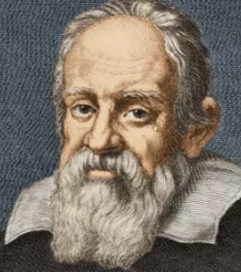
In the long run my observations have convinced me that some men, reasoning preposterously, first establish some conclusion in their minds which, either because of its being their own or because of their having received it from some person who has their entire confidence, impresses them so deeply that one finds it impossible ever to get it out of their heads. Such arguments in support of their fixed idea as they hit upon themselves or hear set forth by others, no matter how simple and stupid these may be, gain their instant acceptance and applause. On the other hand whatever is brought forward against it, however ingenious and conclusive, they receive with disdain or with hot rage — if indeed it does not make them ill. Beside themselves with passion, some of them would not be backward even about scheming to suppress and silence their adversaries.
▼
Source
p. 322

5 months ago
The grandeur of man is measured according to what he seeks and according to the urgency by which he remains a seeker.
▼
Source
Basic Questions of Philosophy: Selected "Problems" of "Logic" (Grundfragen der Philosophie: Ausgewählte "Probleme" der "Logik" (1984), translated by Richard Rojcewicz and André Schuwer, Indiana University Press, 1994, ISBN 0253004381, p. 7)
5 months ago
If we take all into consideration; if we realise the progress made in the gardening culture, and the tendency towards spreading its methods... if we watch the cultural experiments which are being made now—experiments today and realities tomorrow—and ponder over the resources kept in store by science, we are bound to say that it is utterly impossible to foresee at the present moment the limits as to the maximum number of human beings who could draw their means of subsistence from a given area of land, or as to what a variety of produce they could advantageously grow in any latitude.
5 months ago
Apollodorus says, "If any one were to take away from the books of Chrysippus all the passages which he quotes from other authors, his paper would be left empty."
▼
Source
Chrysippus, 3.

5 months ago
A geometrician has learned to perform the most difficult demonstrations and calculations, as a monkey has learned to take his little hat off and on...
5 months ago
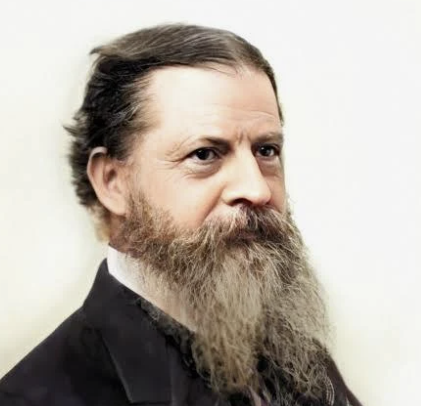
I call a sign which stands for something merely because it resembles it, an icon. Icons are so completely substituted for their objects as hardly to be distinguished from them. Such are the diagrams of geometry. A diagram, indeed, so far as it has a general signification, is not a pure icon; but in the middle part of our reasonings we forget that abstractness in great measure, and the diagram is for us the very thing. So in contemplating a painting, there is a moment when we lose the consciousness that it is not the thing, the distinction of the real and the copy disappears, and it is for the moment a pure dream, — not any particular existence, and yet not general. At that moment we are contemplating an icon.
5 months ago
The mind must not be forced; artificial and constrained manners fill it with foolish presumption, through unnatural elevation and vain and ridiculous inflation, instead of solid and vigorous nutriment.
5 months ago
Measure what is measurable, and make measurable what is not so.
▼
Source
The quote is widely misattributed to Galilei, but is actually from two French scholars, Antoine-Augustin Cournot and Thomas-Henri Martin. See "Der messende Luchs: Zwei verbreitete Fehler in der Galilei-Literatur" by Andreas Kleinert in "NTM Zeitschrift fü
5 months ago
In everything well known something worthy of thought still lurks.
▼
Source
p. xxxix

5 months ago
It is certainly much easier wholly to decline a passion than to keep it within just bounds and measures; and that which few can moderate almost anybody may prevent.
▼
Source
p. 463 (Self-denial)
5 months ago
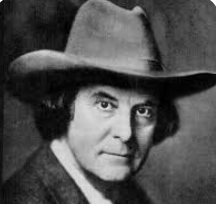
There is something that is much more scarce, something finer far, something rarer than ability. It is the ability to recognize ability. The sternest comment that can be made against employers as a class lies in the fact that men of Ability usually succeed in showing their worth in spite of their employer, and not with his assistance and encouragement.
▼
Source
The Philistine magazine, [http://books.google.com/books?id=xxI8AQAAMAAJ&q=%22There+is+something+that+is+much+more+scarce+something+finer+far+something+rarer+than+ability+It+is+the+ability+to+recognize+ability+The+sternest+comment+that+can+be+made+against+

5 months ago
Bourgeois political economy … never gets to see man who is its real subject. It disregards the essence of man and his history and is thus in the profoundest sense not a ‘science of people’ but of non-people and of an inhuman world of objects and commodities.
▼
Source
“The Foundations of Historical Materialism,” Studies in Critical Philosophy (1972), p. 9
5 months ago
Time with its continuity logically involves some other kind of continuity than its own. Time, as the universal form of change, cannot exist unless there is something to undergo change, and to undergo a change continuous in time, there must be a continuity of changeable qualities.
5 months ago
I appeal to the philosophers of all countries to unite and never again mention Heidegger or talk to another philosopher who defends Heidegger. This man was a devil. I mean, he behaved like a devil to his beloved teacher [i.e., Husserl ], and he has a devilish influence on Germany. … One has to read Heidegger in the original to see what a swindler he was.
▼
Source
Karl Popper, as quoted in "At 90, and Still Dynamic : Revisiting Sir Karl Popper and Attending His Birthday Party" by Eugene Yue-Ching Ho, in Intellectus 23 (Jul-Sep 1992)
CivilSimian.com created by AxiomaticPanic, CivilSimian, Kalokagathia