
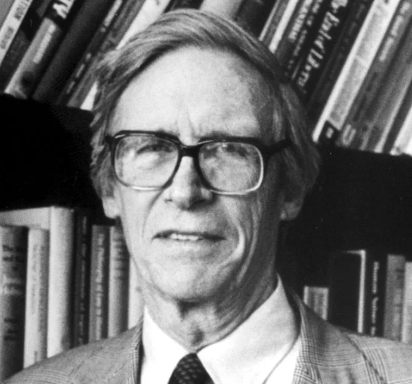
3 months 4 weeks ago
To each according to his threat advantage does not count as a principle of justice.
▼
Source
Chapter III, Section 24, pg. 141
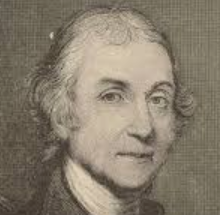
3 months 4 weeks ago
I was led into in consequence of inhabiting a house adjoining to a public brewery, where I at first amused myself with making experiments on the fixed air [carbon dioxide] which I found ready made in the process of fermentation. When I removed from that house I was under the necessity of making the fixed air for myself; and one experiment leading to another, as I have distinctly and faithfully noted in my various publications on the subject, I by degrees contrived a convenient apparatus for the purpose, but of the cheapest kind.
▼
Source
Letter to Dr. Richard Price (Oct. 19, 1771) as quoted in John Towill Rutt, [http://books.google.com/books?id=psMGAAAAQAAJ Life and Correspondence of Joseph Priestley] (1831)

3 months 4 weeks ago
The scene has thoroughly changed. The six weeks' march to Paris has come world drama. Mass murder has become a monotonous task, and yet the final solution is not one step nearer. Capitalist rule is caught in its own trap, and cannot ban the spirit that it has Gone is the first mad delirium. Gone are the patriotic street demonstrations, the chase after suspicious-looking automobiles; the false telegrams, the cholera-poisoned wells. Gone the mad stories of Russian students who hurl bombs from every bridge of Berlin, or French men flying over Nuremberg; gone the excesses of spy-hunting populace, the singing through, the coffee shops with their patriotic songs; gone the violent mobs, ready to denounce, ready to persecute women, ready to whip themselves into a delirious frenzy over every wild rumor; gone the atmosphere of ritual murder, the Kishinev air that left the policeman at the corner as the only remaining representative of human dignity.
▼
Source
Ch.1
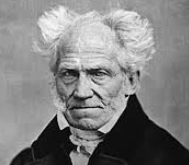
3 months 4 weeks ago
And now that I have allowed myself the jest to which in this two-sided life hardly any page can be too serious to grant a place, I part with the book with deep seriousness, in the sure hope that sooner or later it will reach those to whom alone it can be addressed; and for the rest, patiently resigned that the same fate should, in full measure, befall it, that in all ages has, to some extent, befallen all knowledge, and especially the weightiest knowledge of the truth, to which only a brief triumph is allotted between the two long periods in which it is condemned as paradoxical or disparaged as trivial. The former fate is also wont to befall its author. But life is short, and truth works far and lives long: let us speak the truth.
▼
Source
:s:The World as Will and Representation/Preface to the First Edition, last paragraph. | Mostly quoted rather incorrectly as: All truth passes through three stages. First, it is ridiculed. Second, it is violently opposed. Third, it is accepted as being sel

3 months 4 weeks ago
Having destroyed all my connections, burned my bridges, I should feel a certain freedom, and in fact I do. One so intense I am afraid to rejoice in it.

3 months 4 weeks ago
There was the puissant voice of Carlyle; so sorely strained, over-used, and mis-used since, but then fresh, comparatively sound, and reaching our hearts with true, pathetic eloquence. Who can forget the emotion of receiving in its first freshness such a sentence as that sentence of Carlyle upon Edward Irving, then just dead: ‘Scotland sent him forth a herculean man; our mad Babylon wore and wasted him with all her engines,—and it took her twelve years!’
▼
Source
Matthew Arnold, Discourses in America (1885), pp. 142-143
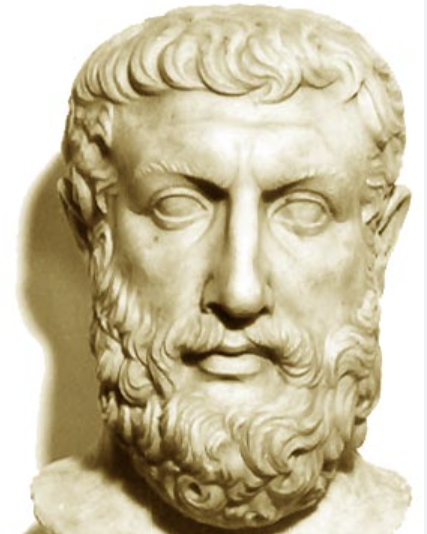
3 months 4 weeks ago
The Greek tradition was a complete contrast to that of the Far East. ...the Greeks placed logic at the pinnacle of human thinking. Their sceptical attitude towards the wielding of 'non-being' as some sort of 'something' that could be subject to logical development was exemplified by Parmenides' influential arguments against the concept of empty space. ...He maintained that you can only speak about what is: what is not cannot be thought of, and what cannot be thought of cannot be. ...more unexpected was the further conclusion that time, motion nor change could exist either.
▼
Source
John D. Barrow, The Book of Nothing (2009) chapter one "Zero—The Whole Story" p. 40
3 months 4 weeks ago
Why then in Britain has secularism become seen to be hostile to religion? Because neutrality is too often assumed to require the bleaching out of all traces of faith, excluding religious belief and discourse from public life. But it doesn't, and we can see why by appeal to the notion of public reason, articulated most clearly by the late political philosopher John Rawls. Rawls was quite clear that the religious have no obligation at all to keep their faith entirely to themselves. "Reasonable comprehensive doctrines, religious or non-religious, may be introduced in public political discussion at any time," he wrote, "provided that in due course proper political reasons – and not reasons given solely by comprehensive doctrines – are presented that are sufficient to support whatever the comprehensive doctrines are said to support."
▼
Source
Julian Baggini, in [http://www.guardian.co.uk/world/2012/feb/14/is-religion-really-under-threat?INTCMP=SRCH "Is religion really under threat?" in The Guardian (14 February 2012)]
3 months 4 weeks ago
As I conceive this doctrine to be a gross misrepresentation of the character and moral government of God, and to affect many other articles in the scheme of Christianity, greatly disfiguring and depraving it; I shall show, in a fuller manner than I mean to do with respect to any other corruption of Christianity, that it has no countenance whatever in reason, or the Scriptures; and, therefore, that the whole doctrine of atonement, with every modification of it, has been a departure from the primitive and genuine doctrine of Christianity.
▼
Source
On conventional doctrines of Jesus Christ's atonement for sins, in Part II : Opinions Relating to the Doctrine of Atonement, Introduction
3 months 4 weeks ago
Rarely was heard on her lips the phrase, “I cannot”; more frequently were heard the words, “I must.”
▼
Source
Clara Zetkin, as quoted in [https://www.marxists.org/archive/zetkin/1919/09/rosa.htm Rosa Luxemburg], marxists.org, September 1919.
3 months 4 weeks ago
The view of things [called Pantheism] … — that all plurality is only apparent, that in the endless series of individuals, passing simultaneously and successively into and out of life, generation after generation, age after age, there is but one and the same entity really existing, which is present and identical in all alike; — this theory … may be carried back to the remotest antiquity. It is the alpha and omega of the oldest book in the world, the sacred Vedas, whose dogmatic part, or rather esoteric teaching, is found in the Upanishads. There, in almost every page this profound doctrine lies enshrined; with tireless repetition, in countless adaptations, by many varied parables and similes it is expounded and inculcated. That such was, moreover, the fount whence Pythagoras drew his wisdom, cannot be doubted … That it formed practically the central point in the whole philosophy of the Eleatic School, is likewise a familiar fact. Later on, the New Platonists were steeped in the same … In the ninth century we find it unexpectedly appearing in Europe. It kindles the spirit of no less a divine than Johannes Scotus Erigena, who endeavours to clothe it with the forms and terminology of the Christian religion. Among the Mohammedans we detect it again in the rapt mysticism of the Sufi. In the West Giordano Bruno cannot resist the impulse to utter it aloud; but his reward is a death of shame and torture. And at the same time we find the Christian Mystics losing themselves in it, against their own will and intention, whenever and wherever we read of them! Spinoza's name is identified with it.
▼
Source
Part IV, Ch. 2, [https://archive.org/stream/basisofmorality00schoiala#page/269/mode/2up pp. 269]-272
3 months 4 weeks ago
Everything turns on pain; the rest is accessory, even nonexistent, for we remember only what hurts. Painful sensations being the only real ones, it is virtually useless to experience others.
3 months 4 weeks ago
Liberty he attached less importance to than economic security: in that a true man of the people. "Liberty, I am told, is a divine thing. Liberty, when it becomes the 'Liberty to die by starvation' is not so divine." It is here that Carlyle links up with the socialist trend of thought in his age.
▼
Source
A. L. Rowse, ‘Carlyle's Past and Present’, The English Spirit: Essays in History and Literature (1944), p. 227
3 months 4 weeks ago
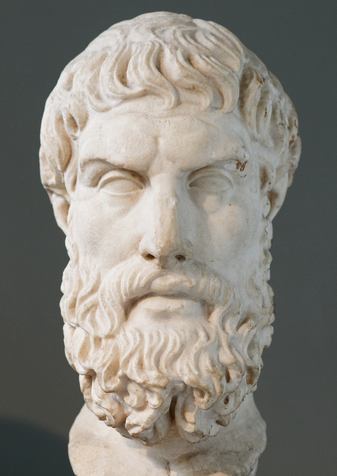
A prudent man, in order to secure his tranquility, will consult his natural disposition in the choice of his plan of life. If, for example, he be persuaded that he should be happier in a state of marriage than in celibacy, he ought to marry; but if he be convinced that matrimony would be an impediment to his happiness, he ought to remain single.
3 months 4 weeks ago
The appearances of multiplicity and motion, empty space and time, are illusions.
3 months 4 weeks ago
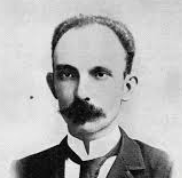
This is the age in which hills can look down upon the mountains.
▼
Source
A Morir [To Die]
3 months 4 weeks ago
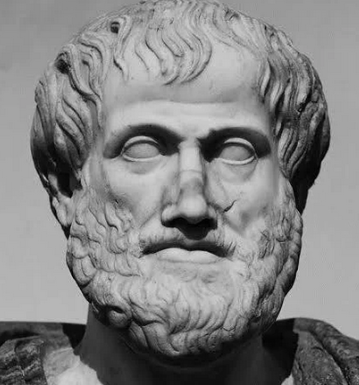
Knowledge of the fact differs from knowledge of the reason for the fact.
▼
Source
I.13, 78a.22
3 months 4 weeks ago
Everything turns on mastering the gap between the presupposition (that must be rejected) of a being of the one and the thesis of its 'there is'.
▼
Source
Meditation One: The One and the Multiple: a priori conditions of any possible ontology
3 months 4 weeks ago
Wealth is like sea-water; the more we drink, the thirstier we become.
▼
Source
E. Payne, trans. (1974) Vol. 1, p. 347
3 months 4 weeks ago
The need for novelty is the characteristic of an alienated gorilla.
3 months 4 weeks ago
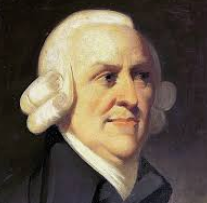
I perfectly agree with your Lordship too, that to crush the Industry of so great and so fine a province of the empire, in order to favour the monopoly of some particular towns in Scotland or England, is equally unjust and impolitic. The general opulence and improvement of Ireland might certainly, under proper management, afford much greater resources to the Government, than can ever be drawn from a few mercantile or manufacturing towns.
▼
Source
Letter to Henry Dundas (1 November 1779), quoted in Adam Smith, The Correspondence of Adam Smith, eds. E. C. Mossner and I. S. Ross (1987), p. 241
3 months 4 weeks ago
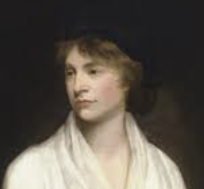
I am a strange compound of weakness and resolution! However, if I must suffer, I will endeavour to suffer in silence. There is certainly a great defect in my mind — my wayward heart creates its own misery — Why I am made thus I cannot tell; and, till I can form some idea of the whole of my existence, I must be content to weep and dance like a child — long for a toy, and be tired of it as soon as I get it.
▼
Source
Undated letter to Joseph Johnson (October? 1792), published in The Collected Letters of Mary Wollstonecraft (2004), edited by Janet Todd, p. 206.
3 months 4 weeks ago
To insist on racial divisions, on racial differences, in an already divided people, is to place obstacles in the way of public and individual happiness, which can only be obtained by bringing people together as a nation.
3 months 4 weeks ago
It is not necessary to ask whether soul and body are one, just as it is not necessary to ask whether the wax and its shape are one, nor generally whether the matter of each thing and that of which it is the matter are one. For even if one and being are spoken of in several ways, what is properly so spoken of is the actuality.
▼
Source
De Anima ii 1, 412b6–9: About the
3 months 4 weeks ago
The present article is almost wholly devoted to a single problem—the definition of truth. Its task is to construct—with reference to a given language—a materially adequate and formally correct definition of the term 'true sentence. This problem, which belongs to the classical problems of philosophy, raises considerable difficulties. For although the meaning of the term 'true sentence' in colloquial language seems to be quite clear and intelligible, all attempts to define this meaning more precisely have hitherto been fruitless, and many investigations in which this term has been used and which started with apparently evident premisses have often led to paradoxes and antinomies (for which, however, a more or less satisfactory solution has been found). The concept of truth shares in this respect the fate of other analogous concepts in the domain of the semantics of language.
▼
Source
"The Concept of Truth in Formalized Languages" (1931) in Logic, Semantics, Metamathematics: Papers from 1923 to 1938 (1956) Tr. J. H. Woodger.
3 months 4 weeks ago
Talent works for money and fame; the motive which moves genius to productivity is, on the other hand, less easy to determine. It isn’t money, for genius seldom gets any. It isn’t fame: fame is too uncertain and, more closely considered, of too little worth. Nor is it strictly for its own pleasure, for the great exertion involved almost outweighs the pleasure. It is rather an instinct of a unique sort by virtue of which the individual possessed of genius is impelled to express what he has seen and felt in enduring works without being conscious of any further motivation. It takes place, by and large, with the same sort of necessity as a tree brings forth fruit, and demands of the world no more than a soil on which the individual can flourish.
▼
Source
Vol. 2 "On Philosophy and the Intellect" as translated in Essays and Aphorisms (1970), as translated by R. J. Hollingdale
3 months 4 weeks ago
I want to proclaim a truth that would forever exile me from among the living. I know only the conditions but not the words that would allow me to formulate it.
3 months 4 weeks ago
This great increase of the quantity of work which, in consequence of the division of labour, the same number of people are capable of performing, is owing to three different circumstances; first, to the increase of dexterity in every particular workman; secondly, to the saving of the time which is commonly lost in passing from one species of work to another; and lastly, to the invention of a great number of machines which facilitate and abridge labour, and enable one man to do the work of many.
▼
Source
Chapter I
3 months 4 weeks ago
I see not the shadow of a reason to conclude that their [the sexes'] virtues should differ in respect to their nature. In fact, how can they, if virtue has only one eternal standard? I must therefore, if I reason consequentially, as strenuously maintain that they must have the same simple direction as that there is a God.
▼
Source
(26)

3 months 4 weeks ago
The Law teaches that the universe was invented and created by God, and that it did not come into being by chance or by itself.
▼
Source
Part 1: The Creation of the Universe; Opening sentence
3 months 4 weeks ago
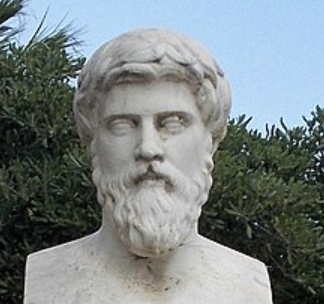
Authority and place demonstrate and try the tempers of men, by moving every passion and discovering every frailty.
▼
Source
Comparison of Demosthenes and Cicero 3 (Tr. Dryden and Clough)

3 months 4 weeks ago
Darwinist thinkers such as Richard Dawkins and Daniel Dennett are militant opponents of Christianity. Yet their atheism and humanism are versions of Christian concepts. As a defender of Darwinism, Dawkins is committed to the view that humans are like other animal species in being ‘gene machines’ ruled by the laws of natural selection. He asserts nevertheless that humans, uniquely, can defy these natural laws: ‘We, alone on earth, can rebel against the tyranny of the selfish replicators.’ In affirming human uniqueness in this way, Dawkins relies on a Christian world-view.
▼
Source
Post-Apocalypse: After Secularism (pp. 265-6)
3 months 4 weeks ago
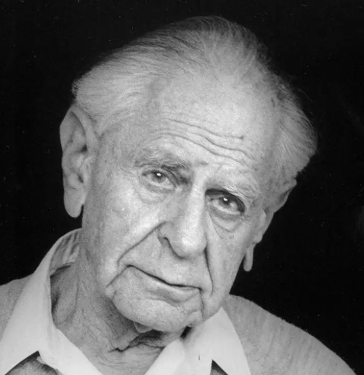
There is an almost universal tendency, perhaps an inborn tendency, to suspect the good faith of a man who holds opinions that differ from our own opinions. ... It obviously endangers the freedom and the objectivity of our discussion if we attack a person instead of attacking an opinion or, more precisely, a theory.
▼
Source
"The Importance of Critical Discussion" in On the Barricades: Religion and Free Inquiry in Conflict (1989) by Robert Basil
3 months 4 weeks ago
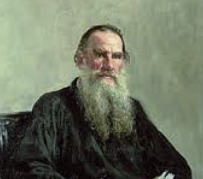
Every one who has a heart and eyes sees that you, working men, are obliged to pass your lives in want and in hard labor, which is useless to you, while other men, who do not work, enjoy the fruits of your labor—that you are the slaves of these men, and that this ought not to exist.
▼
Source
"To the Working People," Complete Works, trans. Leo Wiener, Vol 24, p. 129 (1905)
3 months 4 weeks ago
In truth, men speak too much of danger. Let others be terrified by the natural and healthy risks of life! We shall not be frightened! Poison sumac grows in a hard-working man's field, the serpent hisses from its hidden den, and the owl's eye shines in the belfry, but the sun goes on lighting the sky, and truth continues marching across the earth unscathed.
3 months 4 weeks ago
It is the mark of an educated man to look for precision in each class of things just so far as the nature of the subject admits; it is evidently equally foolish to accept probable reasoning from a mathematician and to demand from a rhetorician scientific proofs.
▼
Source
Book I, 1094b.24

3 months 4 weeks ago
Where cultural representations do not reach out beyond themselves, there is the danger that they will function as the surrogates for activism, that they will constitute both the beginning and the end of political practice.
▼
Source
"Black Nationalism: The Sixties and the Nineties." Black Popular Culture, ed. Gina Dent (Seattle, Wash: Bay Press, 1992), 324.
3 months 4 weeks ago
In the sphere of thought, absurdity and perversity remain the masters of the world, and their dominion is suspended only for brief periods.
▼
Source
"The Art of Controversy" as translated by T. Bailey Saunders
3 months 4 weeks ago
The worst is not ennui nor despair but their encounter, their collision. To be crushed between the two!
3 months 4 weeks ago
the competition of the poor takes away from the reward of the rich.
▼
Source
Chapter X, Part II, p. 154.
3 months 4 weeks ago
When Eudæmonidas heard a philosopher arguing that only a wise man can be a good general, "This is a wonderful speech," said he; "but he that saith it never heard the sound of trumpets."
▼
Source
62 Eudæmonidas
3 months 4 weeks ago
Though it is often assumed that naturalism must be hostile to religion, the opposite is true. Enemies of religion think of it as an intellectual error, which humanity will eventually grow out of. It is hard to square this view with Darwinian science – why should religion be practically universal, if it has no evolutionary value?
▼
Source
Sweet Morality (p. 224)
3 months 4 weeks ago
... the fight against suffering must be considered a duty, while the right to care for the happiness of others must be considered a privilege confined to the close circle of their friends. ... Pain, suffering, injustice, and their prevention, these are the eternal problems of public morals, the 'agenda' of public policy ...
▼
Source
Vol. 2, Ch. 24 "Oracular Philosophy and the Revolt against Reason"
3 months 4 weeks ago
A Frenchman is self-assured because he regards himself personally, both in mind and body, as irresistibly attractive to men and women. An Englishman is self-assured, as being a citizen of the best-organized state in the world, and therefore as an Englishman always knows what he should do and knows that all he does as an Englishman is undoubtedly correct. An Italian is self-assured because he is excitable and easily forgets himself and other people. A Russian is self-assured just because he knows nothing and does not want to know anything, since he does not believe that anything can be known. The German's self-assurance is worst of all, stronger and more repulsive than any other, because he imagines that he knows the truth — science — which he himself has invented but which is for him the absolute truth.
▼
Source
Bk. IX, ch. 10
3 months 4 weeks ago
Science, as the positivist understands it, is susceptible of infinite progress. That you learn in every elementary school today, I believe. Every result of science is provisional and subject to future revision, and this will never change. In other words, fifty thousand years from now there will still be results entirely different from those now, but still subject to revision. Science is susceptible of infinite progress. But how can science be susceptible of infinite progress if its object does not have an inner infinity? The belief admitted by all believers in science today — that science is by its nature essentially progressive, and eternally progressive — implies, without saying it, that being is mysterious. And here is the point where the two lines I have tried to trace do not meet exactly, but where they come within hailing distance. And, I believe, to expect more in a general way, of people in general, would be unreasonable.
▼
Source
"Why We Remain Jews" (1962)
3 months 4 weeks ago
A tragedy, then, is the imitation of an action that is serious and also, as having magnitude, complete in itself; in language ... not in a narrative form; with incidents arousing pity and fear, wherewith to accomplish its catharsis of such emotions.
▼
Source
1449b.24
3 months 4 weeks ago
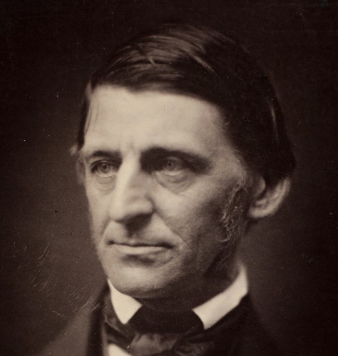
No man can have society upon his own terms. If he seeks it, he must serve it too.
▼
Source
1833
3 months 4 weeks ago
Insofar as the military contest between the North and the South was a war to overthrow the Southern slaveholding class, it was a war which had been basically conducted in the interests of the Northern bourgeoisie, i.e., the young and enthusiastic industrial capitalists who found their political voice in the Republican party. The Northern capitalists sought economic control over the entire nation. Their struggle against the Southern slaveocracy did not therefore mean that they supported the liberation of Black men or women as human beings.
3 months 4 weeks ago
There is always someone above you: beyond God Himself rises Nothingness.
3 months 4 weeks ago
The importation of gold and silver is not the principal, much less the sole benefit which a nation derives from its foreign trade.
▼
Source
Chapter I, p. 479.
CivilSimian.com created by AxiomaticPanic, CivilSimian, Kalokagathia