
3 months 4 weeks ago
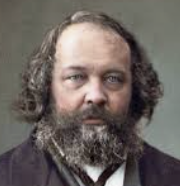
I eagerly await tomorrow's mail to have news of Russia and Poland. For now, I have to content myself with a few vague rumors which float around. I have heard about new, bloody skirmishes in Poland between the people and troops; I was told that, even in Russia, there was a conspiracy against the czar and the whole royal family. I am equally passionate about the struggle between the North and the Southern American states. Of course, my heart goes out to the North. But alas! It is the South who acted with the most force, wisdom, and solidarity, which makes them worthy of the triumph they have received in every encounter so far. It is true that the South has been preparing for war for three years now, while the North has been forced to improvise. The surprising success of the ventures of the American people, for the most part happy; the banality of the material well being, where the heart is absent; and the national vanity, altogether infantile and sustained with very little cost; all seem to have helped deprave these people, and perhaps this stubborn struggle will be beneficial to them in so much as it helps the nation regain its lost soul. This is my first impression; but it could very well be that I will change my mind upon seeing things up close. The only thing is, I will not have enough time to examine really closely.
▼
Source
[http://dwardmac.pitzer.edu/anarchist_archives/bakunin/letters/toherzenandogareff.html Letter] to Aleksandr Ivanovich Herzen and Ogareff from San Francisco (3 October 1861); published in Correspondance de Michel Bakounine (1896) edited by Michel Dragmanov
3 months 4 weeks ago
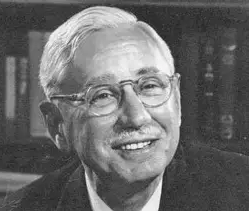
The rise of philosophy, then, often heralds the decay of a civilization. Speculation begins with nature and begets naturalism; it passes to man—first as a psychological mystery and then as a member of society—and begets individualism. Philosophers do not always desire these results; but they achieve them. They feel themselves the unwilling enemies of the state: they think of men in terms of personality while the state thinks of men in terms of social mechanism. Some philosophers would gladly hold their peace, but there is that in them which will out; and when philosophers speak, gods and dynasties fall. Most states have had their roots in heaven, and have paid the penalty for it: the twilight of the gods is the afternoon of states. Every civilization comes at last to the point where the individual, made by speculation conscious of himself as an end per se, demands of the state, as the price of its continuance, that it shall henceforth enhance rather than exploit his capacities. Philosophers sympathize with this demand, the state almost always rejects it: therefore civilizations come and civilizations go. The history of philosophy is essentially an account of the efforts great men have made to avert social disintegration by building up natural moral sanctions to take the place of the supernatural sanctions which they themselves have destroyed. To find—without resorting to celestial machinery—some way of winning for their people social coherence and permanence without sacrificing plasticity and individual uniqueness to regimentation,—that has been the task of philosophers, that is the task of philosophers.
3 months 4 weeks ago
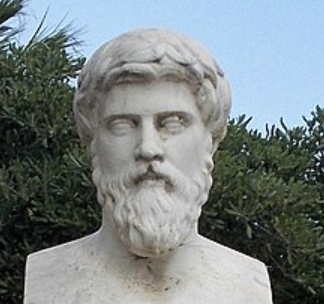
In the writings of such "pagan" philosophers as Plutarch and Porphyry we find a humanitarian ethic of the most exalted kind, which, after undergoing a long repression during medieval churchdom, reappeared, albeit but weakly and fitfully at first, in the literature of the Renaissance, to be traced more definitely in the eighteenth century school of "sensibility."
▼
Source
Henry Stephens Salt, The Humanities of Diet (Manchester: The Vegetarian Society, 1914)

3 months 4 weeks ago
Today those who peer into the future want only relief from anxiety. Unable to face the prospect that the cycles of war will continue, they are desperate to find a pattern of improvement in history. It is only natural that believers in reason, lacking any deeper faith and too feeble to tolerate doubt, should turn to the sorcery of numbers. Happily there are some who are ready to assist them. Just as the Elizabethan magus transcribed tables shown to him by angels, the modern scientific scryer deciphers numerical auguries of angels hidden in ourselves.
▼
Source
In the Puppet Theatre: Dark mirrors, Hidden Angels and an Algorithmic Prayer-Wheel (p. 99)
3 months 4 weeks ago
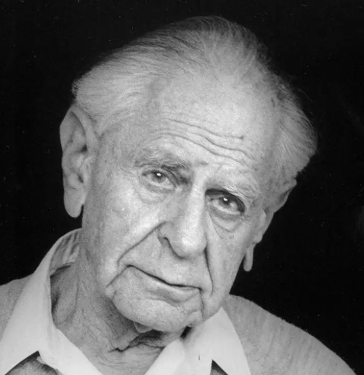
I am a rationalist. ...I mean ...[I] wish... to understand the world, and to learn by arguing with others. (...I do not say a rationalist holds the mistaken theory that men are... rational.)
3 months 4 weeks ago
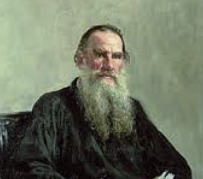
Then I remembered the first lesson God had set me: "Learn what dwells in man." And I understood that in man dwells Love! I was glad that God had already begun to show me what He had promised, and I smiled for the first time.
▼
Source
Ch. XI
3 months 4 weeks ago
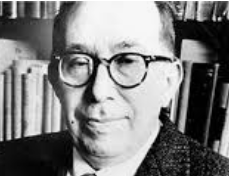
The most superficial fact regarding the Discourses, the fact that the number of its chapters equals the number of books of Livy's History, compelled us to start a chain of tentative reasoning which brings us suddenly face to face with the only New Testament quotation that ever appears in Machiavelli's two books and with an enormous blasphemy.
▼
Source
p. 49
3 months 4 weeks ago
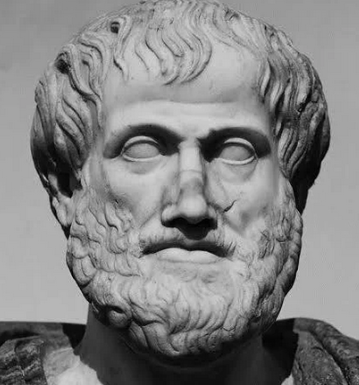
The old Greek philosophy, which in Europe in the later middle ages was synonymous with the works of Aristotle, considered motion as a thing for which a cause must be found: a velocity required a force to produce and to maintain it. The great discovery of Galileo was that not velocity, but acceleration requires a force. This is the law of inertia of which the real content is: the natural phenomena are described by differential equations of the second order.
▼
Source
Willem de Sitter, The Astronomical Aspect of the Theory of Relativity (1933)

3 months 4 weeks ago
Our age is retrospective. It builds the sepulchres of the fathers. It writes biographies, histories, and criticism. The foregoing generation beheld God and nature face to face; we, through their eyes. Why should not we also enjoy an original relation to the universe. Why should not we have a poetry and philosophy of insight and not of tradition, and a religion by revelation to us, and not the history of theirs?
▼
Source
Introduction

3 months 4 weeks ago
Positing decarceration as our overarching strategy, we would try to envision a continuum of alternatives to imprisonment - demilitarization of schools, revitalization of education at all levels, a health system that provides free physical and mental care to all, and a justice system based on reparatuon and reconciliation rather than retribution and vengeance.
▼
Source
Chapter Six

3 months 4 weeks ago
The source of an emotion is very difficult to grasp, but it comes to just that. That holds for all phenomena, for faith, etc. Why did it begin, how did it develop? and so forth—only he who has the gift of divination can perceive where it really comes from. But it is not accessible to reflection.
3 months 4 weeks ago
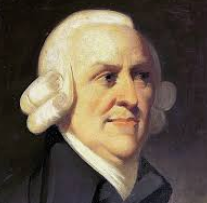
Wherever there is great property, there is great inequality.
▼
Source
Chapter I, Part II, p. 770.
3 months 4 weeks ago
We are firmly convinced that the most imperfect republic is a thousand times better than the most enlightened monarchy. In a republic, there are at least brief periods when the people, while continually exploited, is not oppressed; in the monarchies, oppression is constant. The democratic regime also lifts the masses up gradually to participation in public life--something the monarchy never does. Nevertheless, while we prefer the republic, we must recognise and proclaim that whatever the form of government may be, so long as human society continues to be divided into different classes as a result of the hereditary inequality of occupations, of wealth, of education, and of rights, there will always be a class-restricted government and the inevitable exploitation of the majorities by the minorities. The State is nothing but this domination and this exploitation, well regulated and systematised.
3 months 4 weeks ago
Childhood may be defined as the age of play; therefore some children are never young, and some adults are never old.
▼
Source
Ch. 1 : Our life begins

3 months 4 weeks ago
Truth is the ultimate end of the whole universe.
▼
Source
I, 1, 2
3 months 4 weeks ago
Popper was kind of an egocentric jerk.
▼
Source
Tim Maudlin, quoted in John Horgan, "[https://blogs.scientificamerican.com/cross-check/philosophy-has-made-plenty-of-progress/ Philosophy Has Made Plenty of Progress]" (2018)
3 months 4 weeks ago
I had wished to visit a slaughter-house, in order to see with my own eyes the reality of the question raised when vegetarianism is discussed. But at first I felt ashamed to do so, as one is always ashamed of going to look at suffering which one knows is about to take place, but which one cannot avert; and so I kept putting off my visit. But a little while ago I met on the road a butcher ... He is not yet an experienced butcher, and his duty is to stab with a knife. I asked him whether he did not feel sorry for the animals that he killed. He gave me the usual answer: 'Why should I feel sorry? It is necessary.' But when I told him that eating flesh is not necessary, but is only a luxury, he agreed; and then he admitted that he was sorry for the animals.
▼
Source
Ch. IX
3 months 4 weeks ago
In order to see the relation between philosophy as rigorous science and the alternative to it clearly, one must look at the political conflict between the two antagonists, i.e. at the essential character of that conflict.
3 months 4 weeks ago
None believeth in the soul of man, but only in some man or person old and departed.
▼
Source
p. 25
3 months 4 weeks ago
In the way we think about past movements, I encourage people to look beyond heroic male figures. While Martin Luther King is someone I revere, I don't like to allow his representation to erase the contributions of ordinary people. The 1955 Montgomery bus boycott was successful because Black women, domestic workers, refused to ride the bus. Had they not, where would we be today?
3 months 4 weeks ago
When national debts have once been accumulated to a certain degree, there is scarce, I believe, a single instance of their having been fairly and completely paid. The liberation of the public revenue, if it has ever been brought about at all, has always been brought about by bankruptcy; sometimes by an avowed one, but always by a real one, though frequently by a pretend payment.
▼
Source
Chapter III, Part V, p. 1012.

3 months 4 weeks ago
No contemporary philosopher possesses a more imaginative mind, broader interests, or greater dialectical abilities than Robert Nozick.
▼
Source
Review of Anarchy, State, and Utopia (1974), in Harper's magazine (as quoted on back of the softcover edition).
3 months 4 weeks ago
We know very well that we are only allowed to go on eating our dinner, to finish seeing the new play, or to enjoy to the end the ball, the Christmas fete, the promenade, the races or, the hunt, thanks to the policeman's revolver or the soldier's rifle, which will shoot down the famished outcast who has been robbed of his share, and who looks round the corner with covetous eyes at our pleasures, ready to interrupt them instantly, were not policeman and soldier there prepared to run up at our first call for help.
▼
Source
Chapter XII, Conclusion—Repent Ye, for the Kingdom of Heaven is at Hand
3 months 4 weeks ago
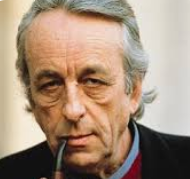
Those who are in ideology believe themselves by definition outside ideology: one of the effects of ideology is the practical denegation of the ideological character of ideology by ideology: ideology never says, ‘I am ideological’. It is necessary to be outside ideology, i.e. in scientific knowledge, to be able to say: I am in ideology (a quite exceptional case) or (the general case): I was in ideology. As is well known, the accusation of being in ideology only applies to others, never to oneself (unless one is really a Spinozist or a Marxist, which, in this matter, is to be exactly the same thing). Which amounts to saying that ideology has no outside (for itself), but at the same time that it is nothing but outside (for science and reality).
▼
Source
p. 118
3 months 4 weeks ago
Whoso walketh in solitude, And inhabiteth the wood, Choosing light, wave, rock, and bird, Before the money-loving herd, Into that forester shall pass From these companions power and grace.
▼
Source
Wood-notes, no. II, st. 4
3 months 4 weeks ago
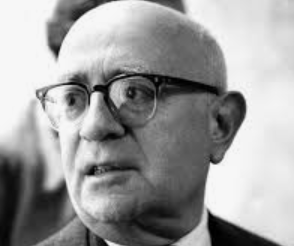
In the products of the culture industry human beings get into trouble only so that they can be rescued unharmed, usually by representatives of a benevolent collective; and then, in illusory harmony, they are reconciled with the general interest whose demands they had initially experienced as irreconcilable with their own.
▼
Source
Section 14

3 months 4 weeks ago
The Taste of Beauty, and the Relish of what is decent, just, and amiable, perfects the Character of the Gentleman, and the Philosopher. And the Study of such a Taste or Relish will, as we suppose, be ever the great Employment and Concern of him, who covets as well to be wise and good, as agreeable and polite.
▼
Source
Vol. 2, p. 207; "Miscellany III".
3 months 4 weeks ago
In spite the mountains of books written about art, no precise definition of art has been constructed. And the reason for this is that the conception of art has been based on the conception of beauty.
3 months 4 weeks ago
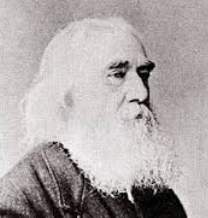
Majorities, as such, afford no guarantees for justice. They are men of the same nature as minorities. They have the same passions for fame, power, and money, as minorities; and are liable and likely to be equally — perhaps more than equally, because more boldly — rapacious, tyrannical and unprincipled, if intrusted with power. There is no more reason, then, why a man should either sustain, or submit to, the rule of the majority, than of a minority.
3 months 4 weeks ago
Thou animated torrid-zone.
▼
Source
To the Humble Bee, st. 1
3 months 4 weeks ago
The jargon makes it seem that ... the pure attention of the expression to the subject matter would be a fall into sin.
▼
Source
p. 9
3 months 4 weeks ago
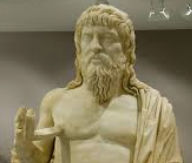
Pythagoras said that medicine is the most godlike of arts. But if the most godlike, it should tend to the soul as well as the body, or else a living thing must be unhealthy, being diseased in its higher part.
▼
Source
to Crito, Epp. Apoll. 23
3 months 4 weeks ago
Smith distinguishes with great sophistication the different kinds of reasons people have in taking an interest in the lives of others, separating out sympathy, generosity, public spirit and other motivations. Even though he acknowledged the role of mental attitudes and predispositions, he went on to discuss how reasoning, which is at the heart of rationality, must have a big role in preventing us from being – consciously or unconsciously – too self-centred, or thoughtlessly uncaring.
▼
Source
Amartya Sen, “Values and Justice”, Journal of Economic Methodology, Vol. 19, No. 2, June 2012, 101–108.
3 months 4 weeks ago
One of the most popular superstitions consists in the belief that every man is endowed with definite qualities—that some men are kind, some wicked; some wise, some foolish; some energetic, some apathetic, etc. This is not true. We may say of a man that he is oftener kind than wicked; oftener wise than foolish; oftener energetic than apathetic, and vice versa. But it would not be true to say of one man that he is always kind or wise, and of another that he is always wicked or foolish. And yet we thus divide people. This is erroneous. Men are like rivers—the water in all of them, and at every point, is the same, but every one of them is now narrow, now swift, now wide, now calm, now clear, now cold, now muddy, now warm. So it is with men. Every man bears within him the germs of all human qualities, sometimes manifesting one quality, sometimes another; and often does not resemble himself at all, manifesting no change. With some people these changes are particularly sharp. And to this class Nekhludoff belonged.
▼
Source
Ch. 57
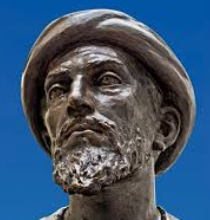
3 months 4 weeks ago
There is one disease which is widespread, and from which men rarely escape. This disease varies in degree in different men … I refer to this: that every person thinks his mind … more clever and more learned than it is … I have found that this disease has attacked many an intelligent person … They … express themselves not only upon the science with which they are familiar, but upon other sciences about which they know nothing … If met with applause … so does the disease itself become aggravated.
▼
Source
Aphorisms. Quoted in Bulletin of the History of Medicine, Vol. 3 (1935), p. 555 | Chambers Dictionary of Quotations (1997), p. 640
3 months 4 weeks ago
In different hours, a man represents each of several of his ancestors, as if there were seven or eight of us rolled up in each man's skin, — seven or eight ancestors at least, — and they constitute the variety of notes for that new piece of music which his life is.
▼
Source
Fate

3 months 4 weeks ago
Philosophers who function within analytic traditions tend to reflect on the self in a way that unwittingly impoverishes and objectifies self.
▼
Source
p. xiii
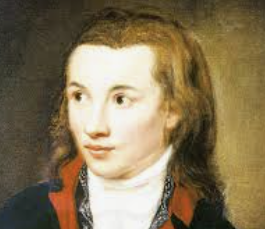
3 months 4 weeks ago
Self-alienation is the source of all degradation as well as, on the contrary, the basis of all true elevation. The first step will be a look inward, an isolating contemplation of our self. Whoever remains standing here proceeds only halfway. The second step must be an active look outward, an autonomous, determined observation of the outer world.
▼
Source
Fragment No. 24 Variant translation: The first step is to look within, the discriminating contemplation of the self. He who remains at this point only half develops. The second step must be a telling look without, independent, sustained contemplation of t

3 months 4 weeks ago
The gentleman knows that whatever is imperfect and unrefined does not deserve praise. ... He makes his eyes not want to see what is not right, makes his ears not want to hear what is not right, makes his mouth not want to speak what is not right, and makes his heart not want to deliberate over what is not right. ... For this reason, power and profit cannot sway him, the masses cannot shift him, and nothing in the world can shake him.
▼
Source
Readings in Classical Chinese Philosophy (2001), p. 260
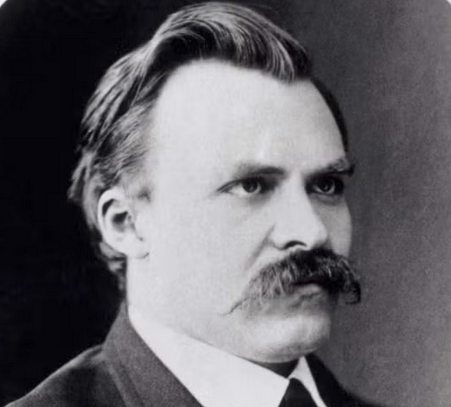
3 months 4 weeks ago
Mastery over nature, the Idée fixe of the 20th century, is Brahmanism, Indo-German.
▼
Source
Friedrich Nietzsche, Nachgelassene Fragmente. quoted in Dorothy M. Figueira, Aryans, Jews, Brahmins: Theorizing Authority Through Myths of Identity, New Delhi, Navayana Publishing Pvt Ltd. (2002), Reprint 2017
3 months 4 weeks ago
It is terrible when people do not know God, but it is worse when people identify as God what is not God.
▼
Source
p. 5
3 months 4 weeks ago
I rely on two precedents: first, to similar cases our Sages applied the verse, "It is time to do something in honour of the Lord: for they have made void thy law"... Secondly, they have said, "Let all thy acts be guided by pure intentions." ...Lastly, when I have a difficult subject before me—when I find the road narrow, and can see no other way of teaching a well established truth except by pleasing one intelligent man and displeasing ten thousand fools—I prefer to address myself to the one man, and to take no notice whatever of the condemnation of the multitude; I prefer to extricate that intelligent man from his embarrassment and show him the cause of his perplexity, so that he may attain perfection and be at peace.
3 months 4 weeks ago
Things are pretty, graceful, rich, elegant, handsome, but, until they speak to the imagination, not yet beautiful.
▼
Source
Beauty
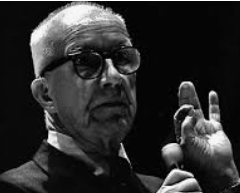
3 months 4 weeks ago
Unfortunately, in the past, man has applied his vast resources and his most incisive capabilities only to the waging of great wars-, or in preparation for such warring-the space programs having been undertaken by all nations strictly on the basis of the wartime advantages to be gained by... spying and astro-ballistics
3 months 4 weeks ago
But there is another form of monopoly, far more general and far more insidious. The accumulation of large amounts of capital under consolidated control creates a new kind of power—essentially different from the power of increase. Increase is constructive in its nature. Power from accumulation is destructive. It is often exercised with reckless disregard, not only to industry but to the personal rights of individuals. A railroad approaches a small town as a highwayman approaches his victim. “Agree to our terms or we will bypass your town” is as effective a threat as “your money or your life.” As robbers unite to plunder and divide the spoils, the trunk lines of railroads unite to raise rates and pool their earnings. The public is then forced to pay the cost of the whole maneuver, as the vanquished are forced to pay the cost of their own enslavement by a conquering army.

3 months 4 weeks ago
The ordinary surroundings of life which are esteemed by men (as their actions testify) to be the highest good, may be classed under the three heads — Riches, Fame, and the Pleasures of Sense: with these three the mind is so absorbed that it has little power to reflect on any different good.
▼
Source
I, 3 | Variant translation: The things which … are esteemed as the greatest good of all … can be reduced to these three headings, to wit : Riches, Fame, and Pleasure. With these three the mind is so engrossed that it cannot scarcely think of any other goo
3 months 4 weeks ago
Philosophy can bake no bread; but she can procure for us God, Freedom, Immortality. Which, then, is more practical, Philosophy or Economy?
▼
Source
The first sentence of this was used by William Torrey Harris for the motto of the Journal of Speculative Philosophy

3 months 4 weeks ago
There is geometry in the humming of the strings, there is music in the spacing of the spheres.
▼
Source
As quoted in The Mystery of Matter (1965) edited by Louise B. Young, p. 113
3 months 4 weeks ago
The possibility has been established for the production of...a master race, the future "masters of the earth"...made to endure for millennia — a higher kind of men who...employ democratic Europe as their most pliant and supple instrument for getting hold of the destinies of the earth.
▼
Source
Sec. 960 (Notebook W I 8. Fall 1885 - Fall 1886, KGW VIII, 1.85-6, KSA 12.87-8)
3 months 4 weeks ago
I should wish to speak of him with his own incomparable truth, yet I do not know how to give a notion of his influence without the effect of exaggeration. As much as one merely human being can help another I believe that he has helped me; he has not influenced me in æsthetics only, but in ethics, too, so that I can never again see life in the way I saw it before I knew him. Tolstoy awakens in his reader the will to be a man; not effectively, not spectacularly, but simply, really. He leads you back to the only true ideal, away from that false standard of the gentleman, to the Man who sought not to be distinguished from other men, but identified with them, to that Presence in which the finest gentleman shows his alloy of vanity, and the greatest genius shrinks to the measure of his miserable egotism. I learned from Tolstoy to try character and motive by no other test, and though I am perpetually false to that sublime ideal myself, still the ideal remains with me, to make me ashamed that I am not true to it. Tolstoy gave me heart to hope that the world may yet be made over in the image of Him who died for it, when all Cæsar's things shall be finally rendered unto Cæsar, and men shall come into their own, into the right to labor and the right to enjoy the fruits of their labor, each one master of himself and servant to every other. He taught me to see life not as a chase of a forever impossible personal happiness, but as a field for endeavor toward the happiness of the whole human family; and I can never lose this vision, however I close my eyes, and strive to see my own interest as the highest good. He gave me new criterions, new principles, which, after all, were those that are taught us in our earliest childhood, before we have come to the evil wisdom of the world.
▼
Source
William Dean Howells, My Literary Passions (1895), Ch. XXXV Tolstoy
CivilSimian.com created by AxiomaticPanic, CivilSimian, Kalokagathia