
3 months 4 weeks ago
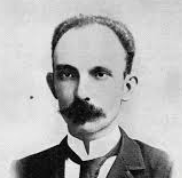
In truth, men speak too much of danger. Let others be terrified by the natural and healthy risks of life! We shall not be frightened! Poison sumac grows in a hard-working man's field, the serpent hisses from its hidden den, and the owl's eye shines in the belfry, but the sun goes on lighting the sky, and truth continues marching across the earth unscathed.

3 months 4 weeks ago
Where cultural representations do not reach out beyond themselves, there is the danger that they will function as the surrogates for activism, that they will constitute both the beginning and the end of political practice.
▼
Source
"Black Nationalism: The Sixties and the Nineties." Black Popular Culture, ed. Gina Dent (Seattle, Wash: Bay Press, 1992), 324.
3 months 4 weeks ago
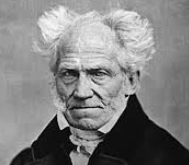
In the sphere of thought, absurdity and perversity remain the masters of the world, and their dominion is suspended only for brief periods.
▼
Source
"The Art of Controversy" as translated by T. Bailey Saunders

3 months 4 weeks ago
The worst is not ennui nor despair but their encounter, their collision. To be crushed between the two!
3 months 4 weeks ago
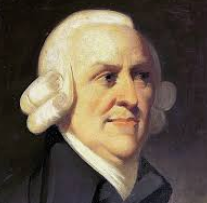
the competition of the poor takes away from the reward of the rich.
▼
Source
Chapter X, Part II, p. 154.
3 months 4 weeks ago
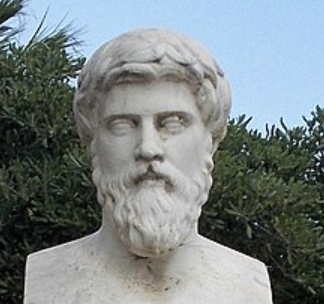
When Eudæmonidas heard a philosopher arguing that only a wise man can be a good general, "This is a wonderful speech," said he; "but he that saith it never heard the sound of trumpets."
▼
Source
62 Eudæmonidas

3 months 4 weeks ago
Though it is often assumed that naturalism must be hostile to religion, the opposite is true. Enemies of religion think of it as an intellectual error, which humanity will eventually grow out of. It is hard to square this view with Darwinian science – why should religion be practically universal, if it has no evolutionary value?
▼
Source
Sweet Morality (p. 224)
3 months 4 weeks ago
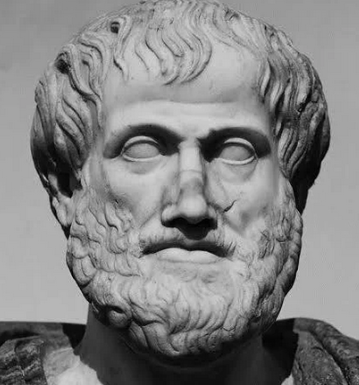
A tragedy, then, is the imitation of an action that is serious and also, as having magnitude, complete in itself; in language ... not in a narrative form; with incidents arousing pity and fear, wherewith to accomplish its catharsis of such emotions.
▼
Source
1449b.24
3 months 4 weeks ago
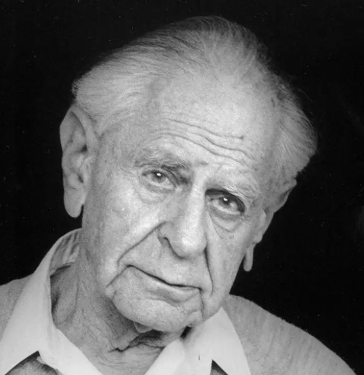
... the fight against suffering must be considered a duty, while the right to care for the happiness of others must be considered a privilege confined to the close circle of their friends. ... Pain, suffering, injustice, and their prevention, these are the eternal problems of public morals, the 'agenda' of public policy ...
▼
Source
Vol. 2, Ch. 24 "Oracular Philosophy and the Revolt against Reason"
3 months 4 weeks ago
A Frenchman is self-assured because he regards himself personally, both in mind and body, as irresistibly attractive to men and women. An Englishman is self-assured, as being a citizen of the best-organized state in the world, and therefore as an Englishman always knows what he should do and knows that all he does as an Englishman is undoubtedly correct. An Italian is self-assured because he is excitable and easily forgets himself and other people. A Russian is self-assured just because he knows nothing and does not want to know anything, since he does not believe that anything can be known. The German's self-assurance is worst of all, stronger and more repulsive than any other, because he imagines that he knows the truth — science — which he himself has invented but which is for him the absolute truth.
▼
Source
Bk. IX, ch. 10
3 months 4 weeks ago
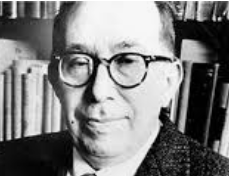
Science, as the positivist understands it, is susceptible of infinite progress. That you learn in every elementary school today, I believe. Every result of science is provisional and subject to future revision, and this will never change. In other words, fifty thousand years from now there will still be results entirely different from those now, but still subject to revision. Science is susceptible of infinite progress. But how can science be susceptible of infinite progress if its object does not have an inner infinity? The belief admitted by all believers in science today — that science is by its nature essentially progressive, and eternally progressive — implies, without saying it, that being is mysterious. And here is the point where the two lines I have tried to trace do not meet exactly, but where they come within hailing distance. And, I believe, to expect more in a general way, of people in general, would be unreasonable.
▼
Source
"Why We Remain Jews" (1962)
3 months 4 weeks ago
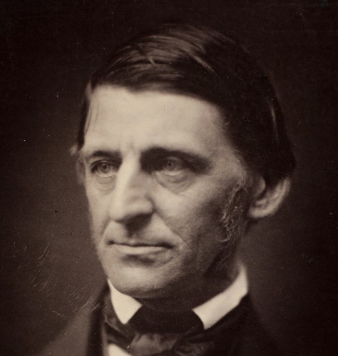
No man can have society upon his own terms. If he seeks it, he must serve it too.
▼
Source
1833
3 months 4 weeks ago
Insofar as the military contest between the North and the South was a war to overthrow the Southern slaveholding class, it was a war which had been basically conducted in the interests of the Northern bourgeoisie, i.e., the young and enthusiastic industrial capitalists who found their political voice in the Republican party. The Northern capitalists sought economic control over the entire nation. Their struggle against the Southern slaveocracy did not therefore mean that they supported the liberation of Black men or women as human beings.
3 months 4 weeks ago
There is always someone above you: beyond God Himself rises Nothingness.
3 months 4 weeks ago
The importation of gold and silver is not the principal, much less the sole benefit which a nation derives from its foreign trade.
▼
Source
Chapter I, p. 479.
3 months 4 weeks ago
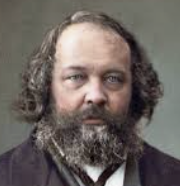
I eagerly await tomorrow's mail to have news of Russia and Poland. For now, I have to content myself with a few vague rumors which float around. I have heard about new, bloody skirmishes in Poland between the people and troops; I was told that, even in Russia, there was a conspiracy against the czar and the whole royal family. I am equally passionate about the struggle between the North and the Southern American states. Of course, my heart goes out to the North. But alas! It is the South who acted with the most force, wisdom, and solidarity, which makes them worthy of the triumph they have received in every encounter so far. It is true that the South has been preparing for war for three years now, while the North has been forced to improvise. The surprising success of the ventures of the American people, for the most part happy; the banality of the material well being, where the heart is absent; and the national vanity, altogether infantile and sustained with very little cost; all seem to have helped deprave these people, and perhaps this stubborn struggle will be beneficial to them in so much as it helps the nation regain its lost soul. This is my first impression; but it could very well be that I will change my mind upon seeing things up close. The only thing is, I will not have enough time to examine really closely.
▼
Source
[http://dwardmac.pitzer.edu/anarchist_archives/bakunin/letters/toherzenandogareff.html Letter] to Aleksandr Ivanovich Herzen and Ogareff from San Francisco (3 October 1861); published in Correspondance de Michel Bakounine (1896) edited by Michel Dragmanov
3 months 4 weeks ago
The rise of philosophy, then, often heralds the decay of a civilization. Speculation begins with nature and begets naturalism; it passes to man—first as a psychological mystery and then as a member of society—and begets individualism. Philosophers do not always desire these results; but they achieve them. They feel themselves the unwilling enemies of the state: they think of men in terms of personality while the state thinks of men in terms of social mechanism. Some philosophers would gladly hold their peace, but there is that in them which will out; and when philosophers speak, gods and dynasties fall. Most states have had their roots in heaven, and have paid the penalty for it: the twilight of the gods is the afternoon of states. Every civilization comes at last to the point where the individual, made by speculation conscious of himself as an end per se, demands of the state, as the price of its continuance, that it shall henceforth enhance rather than exploit his capacities. Philosophers sympathize with this demand, the state almost always rejects it: therefore civilizations come and civilizations go. The history of philosophy is essentially an account of the efforts great men have made to avert social disintegration by building up natural moral sanctions to take the place of the supernatural sanctions which they themselves have destroyed. To find—without resorting to celestial machinery—some way of winning for their people social coherence and permanence without sacrificing plasticity and individual uniqueness to regimentation,—that has been the task of philosophers, that is the task of philosophers.
3 months 4 weeks ago
In the writings of such "pagan" philosophers as Plutarch and Porphyry we find a humanitarian ethic of the most exalted kind, which, after undergoing a long repression during medieval churchdom, reappeared, albeit but weakly and fitfully at first, in the literature of the Renaissance, to be traced more definitely in the eighteenth century school of "sensibility."
▼
Source
Henry Stephens Salt, The Humanities of Diet (Manchester: The Vegetarian Society, 1914)
3 months 4 weeks ago
Today those who peer into the future want only relief from anxiety. Unable to face the prospect that the cycles of war will continue, they are desperate to find a pattern of improvement in history. It is only natural that believers in reason, lacking any deeper faith and too feeble to tolerate doubt, should turn to the sorcery of numbers. Happily there are some who are ready to assist them. Just as the Elizabethan magus transcribed tables shown to him by angels, the modern scientific scryer deciphers numerical auguries of angels hidden in ourselves.
▼
Source
In the Puppet Theatre: Dark mirrors, Hidden Angels and an Algorithmic Prayer-Wheel (p. 99)
3 months 4 weeks ago
The old Greek philosophy, which in Europe in the later middle ages was synonymous with the works of Aristotle, considered motion as a thing for which a cause must be found: a velocity required a force to produce and to maintain it. The great discovery of Galileo was that not velocity, but acceleration requires a force. This is the law of inertia of which the real content is: the natural phenomena are described by differential equations of the second order.
▼
Source
Willem de Sitter, The Astronomical Aspect of the Theory of Relativity (1933)
3 months 4 weeks ago
I am a rationalist. ...I mean ...[I] wish... to understand the world, and to learn by arguing with others. (...I do not say a rationalist holds the mistaken theory that men are... rational.)
3 months 4 weeks ago
Then I remembered the first lesson God had set me: "Learn what dwells in man." And I understood that in man dwells Love! I was glad that God had already begun to show me what He had promised, and I smiled for the first time.
▼
Source
Ch. XI
3 months 4 weeks ago
The most superficial fact regarding the Discourses, the fact that the number of its chapters equals the number of books of Livy's History, compelled us to start a chain of tentative reasoning which brings us suddenly face to face with the only New Testament quotation that ever appears in Machiavelli's two books and with an enormous blasphemy.
▼
Source
p. 49
3 months 4 weeks ago
Our age is retrospective. It builds the sepulchres of the fathers. It writes biographies, histories, and criticism. The foregoing generation beheld God and nature face to face; we, through their eyes. Why should not we also enjoy an original relation to the universe. Why should not we have a poetry and philosophy of insight and not of tradition, and a religion by revelation to us, and not the history of theirs?
▼
Source
Introduction
3 months 4 weeks ago
Positing decarceration as our overarching strategy, we would try to envision a continuum of alternatives to imprisonment - demilitarization of schools, revitalization of education at all levels, a health system that provides free physical and mental care to all, and a justice system based on reparatuon and reconciliation rather than retribution and vengeance.
▼
Source
Chapter Six
3 months 4 weeks ago
The source of an emotion is very difficult to grasp, but it comes to just that. That holds for all phenomena, for faith, etc. Why did it begin, how did it develop? and so forth—only he who has the gift of divination can perceive where it really comes from. But it is not accessible to reflection.
3 months 4 weeks ago
Wherever there is great property, there is great inequality.
▼
Source
Chapter I, Part II, p. 770.
3 months 4 weeks ago
We are firmly convinced that the most imperfect republic is a thousand times better than the most enlightened monarchy. In a republic, there are at least brief periods when the people, while continually exploited, is not oppressed; in the monarchies, oppression is constant. The democratic regime also lifts the masses up gradually to participation in public life--something the monarchy never does. Nevertheless, while we prefer the republic, we must recognise and proclaim that whatever the form of government may be, so long as human society continues to be divided into different classes as a result of the hereditary inequality of occupations, of wealth, of education, and of rights, there will always be a class-restricted government and the inevitable exploitation of the majorities by the minorities. The State is nothing but this domination and this exploitation, well regulated and systematised.
3 months 4 weeks ago
Childhood may be defined as the age of play; therefore some children are never young, and some adults are never old.
▼
Source
Ch. 1 : Our life begins

3 months 4 weeks ago
Truth is the ultimate end of the whole universe.
▼
Source
I, 1, 2
3 months 4 weeks ago
Popper was kind of an egocentric jerk.
▼
Source
Tim Maudlin, quoted in John Horgan, "[https://blogs.scientificamerican.com/cross-check/philosophy-has-made-plenty-of-progress/ Philosophy Has Made Plenty of Progress]" (2018)
3 months 4 weeks ago
I had wished to visit a slaughter-house, in order to see with my own eyes the reality of the question raised when vegetarianism is discussed. But at first I felt ashamed to do so, as one is always ashamed of going to look at suffering which one knows is about to take place, but which one cannot avert; and so I kept putting off my visit. But a little while ago I met on the road a butcher ... He is not yet an experienced butcher, and his duty is to stab with a knife. I asked him whether he did not feel sorry for the animals that he killed. He gave me the usual answer: 'Why should I feel sorry? It is necessary.' But when I told him that eating flesh is not necessary, but is only a luxury, he agreed; and then he admitted that he was sorry for the animals.
▼
Source
Ch. IX
3 months 4 weeks ago
In order to see the relation between philosophy as rigorous science and the alternative to it clearly, one must look at the political conflict between the two antagonists, i.e. at the essential character of that conflict.
3 months 4 weeks ago
None believeth in the soul of man, but only in some man or person old and departed.
▼
Source
p. 25
3 months 4 weeks ago
In the way we think about past movements, I encourage people to look beyond heroic male figures. While Martin Luther King is someone I revere, I don't like to allow his representation to erase the contributions of ordinary people. The 1955 Montgomery bus boycott was successful because Black women, domestic workers, refused to ride the bus. Had they not, where would we be today?
3 months 4 weeks ago
When national debts have once been accumulated to a certain degree, there is scarce, I believe, a single instance of their having been fairly and completely paid. The liberation of the public revenue, if it has ever been brought about at all, has always been brought about by bankruptcy; sometimes by an avowed one, but always by a real one, though frequently by a pretend payment.
▼
Source
Chapter III, Part V, p. 1012.
3 months 4 weeks ago
No contemporary philosopher possesses a more imaginative mind, broader interests, or greater dialectical abilities than Robert Nozick.
▼
Source
Review of Anarchy, State, and Utopia (1974), in Harper's magazine (as quoted on back of the softcover edition).
3 months 4 weeks ago
We know very well that we are only allowed to go on eating our dinner, to finish seeing the new play, or to enjoy to the end the ball, the Christmas fete, the promenade, the races or, the hunt, thanks to the policeman's revolver or the soldier's rifle, which will shoot down the famished outcast who has been robbed of his share, and who looks round the corner with covetous eyes at our pleasures, ready to interrupt them instantly, were not policeman and soldier there prepared to run up at our first call for help.
▼
Source
Chapter XII, Conclusion—Repent Ye, for the Kingdom of Heaven is at Hand
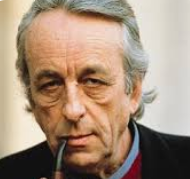
3 months 4 weeks ago
Those who are in ideology believe themselves by definition outside ideology: one of the effects of ideology is the practical denegation of the ideological character of ideology by ideology: ideology never says, ‘I am ideological’. It is necessary to be outside ideology, i.e. in scientific knowledge, to be able to say: I am in ideology (a quite exceptional case) or (the general case): I was in ideology. As is well known, the accusation of being in ideology only applies to others, never to oneself (unless one is really a Spinozist or a Marxist, which, in this matter, is to be exactly the same thing). Which amounts to saying that ideology has no outside (for itself), but at the same time that it is nothing but outside (for science and reality).
▼
Source
p. 118
3 months 4 weeks ago
Whoso walketh in solitude, And inhabiteth the wood, Choosing light, wave, rock, and bird, Before the money-loving herd, Into that forester shall pass From these companions power and grace.
▼
Source
Wood-notes, no. II, st. 4
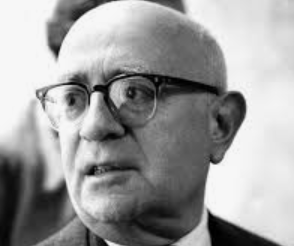
3 months 4 weeks ago
In the products of the culture industry human beings get into trouble only so that they can be rescued unharmed, usually by representatives of a benevolent collective; and then, in illusory harmony, they are reconciled with the general interest whose demands they had initially experienced as irreconcilable with their own.
▼
Source
Section 14

3 months 4 weeks ago
The Taste of Beauty, and the Relish of what is decent, just, and amiable, perfects the Character of the Gentleman, and the Philosopher. And the Study of such a Taste or Relish will, as we suppose, be ever the great Employment and Concern of him, who covets as well to be wise and good, as agreeable and polite.
▼
Source
Vol. 2, p. 207; "Miscellany III".
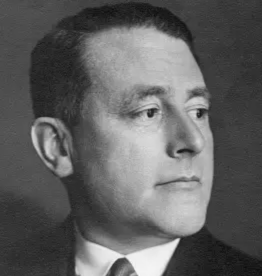
3 months 4 weeks ago
Political thought and political instinct prove themselves theoretically and practically in the ability to distinguish friend and enemy. The high points of politics are simultaneously the moments in which the enemy is, in concrete clarity, recognized as the enemy.
3 months 4 weeks ago
What the Wealth of Nations is all about is the difference between one kind of market system in commercial society and another. It is about the difference between, on the one hand, a market system dominated by merchants and manufacturers who are able to bend the government to their will in order to obtain legislation which makes what is in their private interest the law of the land, and, on the other, a truly open and competitive—"natural"—market system in which everyone who is industrious and/or has any capital has a fair chance. The withdrawal of the state is not, for Smith, the removal of government from its role as owner, entrepreneur, economic planner or re-distributor—roles readily conceivable to all who know of socialism but wholly inconceivable to Adam Smith—but its removal from the role of regulator of private enterprise, a role in which it had long been used to promote the interests of the merchants and the manufacturers over those of all others.
▼
Source
Heinz Lubasz, 'Adam Smith and the ‘free market’', in Stephen Copley and Kathryn Sutherland (eds.), Adam Smith's Wealth of Nations: New Interdisciplinary Essays (1995), p. 52
3 months 4 weeks ago
The good is the everlasting, the pinnacle of our life. ... life is striving towards the good, toward God. The good is the most basic idea ... an idea not definable by reason ... yet is the postulate from which all else follows. But the beautiful ... is just that which is pleasing. The idea of beauty is not an alignment to the good, but is its opposite, because for most part, the good aids in our victory over our predilections, while beauty is the motive of our predilections. The more we succumb to beauty, the further we are displaced from the good. ...the usual response is that there exists a moral and spiritual beauty ... we mean simply the good. Spiritual beauty or the good, generally not only does not coincide with the typical meaning of beauty, it is its opposite.
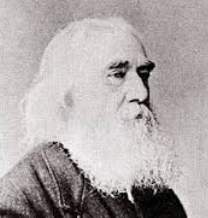
3 months 4 weeks ago
No objection can be made to these voluntary associations upon the ground that they would lack that knowledge of justice, as a science, which would be necessary to enable them to maintain justice, and themselves avoid doing injustice. Honesty, justice, natural law, is usually a very plain and simple matter, easily understood by common minds. Those who desire to know what it is, in any particular case, seldom have to go far to find it.
▼
Source
Section IV, p. 8
3 months 4 weeks ago
In actions of enthusiasm, this drawback appears: but in those lower activities, which have no higher aim than to make us more comfortable and more cowardly, in actions of cunning, actions that steal and lie, actions that divorce the speculative from the practical faculty, and put a ban on reason and sentiment, there is nothing else but drawback and negation.
▼
Source
Goethe; or, The Writer
3 months 4 weeks ago
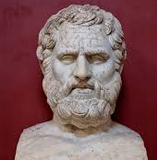
Cherish wisdom as a means of travelling from youth to old age, for it is more lasting than any other possession.
3 months 4 weeks ago
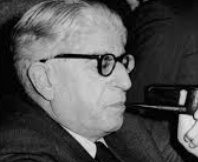
We hear only ourselves.
3 months 4 weeks ago
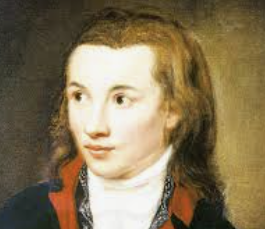
Poetry heals the wounds inflicted by reason.
▼
Source
As quoted in Quote, Unquote (1989) by Jonathan Williams, p. 136
CivilSimian.com created by AxiomaticPanic, CivilSimian, Kalokagathia