

3 months 4 weeks ago
The oldest, shortest words— "yes" and "no"— are those which require the most thought.
▼
Source
Quoted in Grist: The National Conference on State Parks magazine, 1965 [https://books.google.fr/books?id=u8VH4AZ1va4C&newbks=1&newbks_redir=0&dq=The%20oldest%2C%20shortest%20words%E2%80%94%20%22yes%22%20and%20%22no%22%E2%80%94%20are%20those%20which%20requ
3 months 4 weeks ago
There are, indeed, things that cannot be put into words. They make themselves manifest. They are what is mystical. (6.522)
▼
Source
Original German: Es gibt allerdings Unaussprechliches. Dies zeigt sich, es ist das Mystische.
3 months 4 weeks ago
It is frequently expressed in all parts of Scripture, that the worship of the stars would be followed by absence of rain, devastation of the land, bad times, diseases, and shortness of life. But abandonment of that worship, and the return to the service of God, would be the cause of the presence of rain, fertility of the ground, good times, health and length of life. Thus Scripture teaches, in order that man should abandon idolatry, the reverse of that which idolatrous priests preached to the people, for, as has been shown by us, the principal object of the Law is to remove this doctrine, and to destroy its traces.
▼
Source
Ch.30
3 months 4 weeks ago
So much of our time is spent in preparation, so much in routine and so much in retrospect, that the amount of each person’s genius is confined to a very few hours.
▼
Source
Quoted in Simon Brown (ed.) The New England Farmer, vol. 9 (January 1857) p. 18
3 months 4 weeks ago
I never try to tell anybody else what to do, number one. And number two, I think that's what the individual is all about. Each one of us has something to contribute. This really depends on each one doing their own thinking, but not following any kind of rule that I can give out, any command. We're all on the frontier, we're all in a great mystery — incredibly mysterious. Each one possesses exactly what each one is working out, and what each one works out relates to their particular set of circumstances of any one day, or any one place around the world.
3 months 4 weeks ago
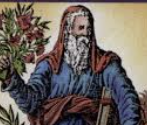
He is a priest before he is a philosopher, and he loves oracles, legends and revelations as an intuitive starting point for philosophical ideas. This gave him a character that was both mysterious and superstitious, which differs from that of the usual Greek philosophers, just as the importance given to the doctrines of the Chaldeans and Babylonian science differs from their method; while in this he is similar to the practice of the Gnostics. However, reading the treatises he composed reveals a very clear mind, a profound thinker, who in his exhortation to philosophy (composed in emulation of an early treatise by Aristotle) achieves a high level of awareness of the history of philosophy and poses and resolves concepts that are not insignificant in the context of Neoplatonism.
▼
Source
(“'School of Iamblichus”', XXX, pp. 186-187)
3 months 4 weeks ago
The propositions which are true and evident must of necessity be employed even by those who contradict them
▼
Source
Book II, ch. 20, § 1
3 months 4 weeks ago
Some fundamental unity was surely to be discerned either in the matter or the structure of things. The Ionic philosophers chose the former field: Pythagoras took the latter. ...The geometry which he had learnt in Egypt was merely practical. ...It was natural to nascent philosophy to draw, by false analogies, and the use of a brief and deceptive vocabulary,2 enormous conclusions from a very few observed facts: and it is not surprising if Pythagoras, having learnt in Egypt that number was essential to the exact description of forms and of the relations of forms, concluded that number was the cause of form and so of every other quality. Number, he inferred, is quantity and quantity is form and form is quality.Footnote2 Primitive men, on seeing a new thing, look out especially for some resemblance in it to a known thing, so that they may call both by the same name. This developes a habit of pressing small and partial analogies. It also causes many meanings to be at attached to the same word. Hasty and confused theories are the inevitable result.
▼
Source
James Gow, [https://books.google.com/books?id=9d8DAAAAMAAJ A Short History of Greek Mathematics] (1884)
3 months 4 weeks ago
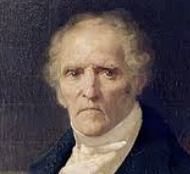
It is certain that nature inclines us toward the amorous orgy, just as much as toward the gastronomic orgy, and that while both are blameworthy in the excess, they would become praiseworthy in an order in which they could be equilibrated.
▼
Source
Charles Fourier: The Visionary and His World, J. Beecher (1986), p. 310
3 months 4 weeks ago
Bach wrote on the title page of his Orgelbüchlein: "To the glory of the most high God, and that my neighbour may be benefited thereby." That is what I would have liked to say about my work.
▼
Source
Wittgenstein in conversation with , cited in (eds.) Recollections of Wittgenstein: Hermine Wittgenstein--Fania Pascal--F.R. Leavis--John King--M. O'C. Drury, Oxford University Press, 1984; p. xvi, and p. 168.
3 months 4 weeks ago
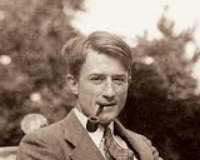
The general character and disposition of the Rationalist are, I think, not difficult to identify. At bottom he stands (he always stands) for independence of mind on all occasions, for thought free from obligation to any authority save the authority of 'reason'. His circumstances in the modern world have made him contentious: he is the enemy of authority, of prejudice, of the merely traditional, customary or habitual. His mental attitude is at once sceptical and optimistic: sceptical, because there is no opinion, no habit, no belief, nothing so firmly rooted or so widely held that he hesitates to question it and to judge it by what he calls his 'reason'; optimistic, because the Rationalist never doubts the power of his 'reason' (when properly applied) to determine the worth of a thing, the truth of an opinion or the propriety of an action.
3 months 4 weeks ago
Nature is no sentimentalist, — does not cosset or pamper us. We must see that the world is rough and surly, and will not mind drowning a man or a woman, but swallows your ships like a grain of dust. The cold, inconsiderate of persons, tingles your blood, benumbs your feet, freezes a man like an apple. The diseases, the elements, fortune, gravity, lightning, respect no persons.
▼
Source
p. 182
3 months 4 weeks ago
[C. West Churchman exposed the indifferentist position of some researchers — planners belonging to this school in the following terms:] And if our clients blow up the world, land us in starvation or totalitarianism, that is too bad, but we remained pure in heart to the last, didn't we?
▼
Source
p. 412 as cited in: Bogdan Mieczkowski, Oleg Zinam (1984) Bureaucracy, ideology, technology: quality of life East and West. p. 97
3 months 4 weeks ago
Miracles are propitious accidents, the natural causes of which are too complicated to be readily understood.
3 months 4 weeks ago
The very port and gait of a swan, or turkey, or peacock show the high idea he has entertain'd of himself; and his contempt of all others. This is the more remarkable, that in the two last species of animals, the pride always attends the beauty, and is discover'd in the male only. The vanity and emulation of nightingales in singing have been commonly remark'd. All these are evident proofs, that pride and humility are not merely human passions, but extend themselves over the whole animal creation.
▼
Source
Part 1, Section 12
3 months 4 weeks ago
Upon all occasions we ought to have these maxims ready at hand:
3 months 4 weeks ago
From of old, amid the rage of robbery and blood-lust, it came to wise men's consciousness that the human race was suffering from a malady which necessarily kept it in progressive deterioration. Many a hint from observation of the natural man, as also dim half-legendary memories, had made them guess the primal nature of this man, and that his present state is therefore a degeneration. A mystery enwrapped Pythagoras, the preacher of vegetarianism; no philosopher since him has pondered on the essence of the world, without recurring to his teaching. Silent fellowships were founded, remote from turmoil of the world, to carry out this doctrine as a sanctification from sin and misery.
▼
Source
Richard Wagner, Religion and Art (1880), translated by William Ashton Ellis, [http://users.belgacom.net/wagnerlibrary/prose/wlpr0126.htm#d0e1158 Part II]
3 months 4 weeks ago
I can die when I wish to: that is my elixir of life.
▼
Source
The Republic.
3 months 4 weeks ago
1. If you do know that here is one hand, we'll grant you all the rest.

3 months 4 weeks ago
Those who are possessed by nothing possess everything.
3 months 4 weeks ago
So gentle that he seemed only reading to one person, and yet his voice was so distinct that it filled the room in its lowest tones.
▼
Source
Charles Bradlaugh, of Emerson's manner, as quoted in Ralph Waldo Emerson, His Life, Writings, and Philosophy (1881) by George Willis Cooke, p. 179
3 months 4 weeks ago
The systems approach is not a bad idea.
▼
Source
p. 232
3 months 4 weeks ago
The empiricist thinks he believes only what he sees, but he is much better at believing than at seeing.
▼
Source
"Objections to Belief in Substance", p. 201
3 months 4 weeks ago
He is happy, whose circumstances suit his temper; but he is more excellent, who can suit his temper to any circumstances.
▼
Source
§ 6.9 : Of Qualities Useful to Ourselves, Pt. 1
3 months 4 weeks ago
Among the sages of this description, to whose useful labors the world is so much indebted, none held a more deservedly conspicuous rank than Pythagoras […] Quitting the land of his nativity […] his zeal for the acquisition of knowledge led him first to Egypt […] Having at this celebrated fountain of learning exhausted the supply without diminishing his thirst, he sought the further means of slaking it, in the then almost unexplored peninsula of India, whence he returned, bringing back with him the doctrine of Metempsychosis, the prejudices against animal diet, the mysterious notions respecting the powers of numbers, and other visionary and fanciful tenets of the East.
▼
Source
Hamilton, William. The History of Medicine, Surgery and Anatomy, Vol I. London: Henry Colburn and Richard Bentley, 1831. quoted from Bhaskar Kamble, The Imperishable Seed: How Hindu Mathematics Changed the World and why this History was Erased, Garuda Pra
3 months 4 weeks ago
Friendship ... receives its real sustenance from an equality that, to proceed without a limp, must have its two limbs equal.
▼
Source
Part 3
3 months 4 weeks ago
Nothing is so difficult as not deceiving oneself.
▼
Source
p. 39e

3 months 4 weeks ago
"Muhammad of Arabia ascended the highest Heaven and returned. I swear by God that if I had reached that point, I should never have returned.” These are the words of a great Muslim saint, ‘Abd al-Quddūs of Gangoh. In the whole range of Sufi literature it will be probably difficult to find words which, in a single sentence, disclose such an acute perception of the psychological difference between the prophetic and the mystic types of consciousness. The mystic does not wish to return from the repose of “unitary experience”; and even when he does return, as he must, his return does not mean much for mankind at large.
▼
Source
[https://www.google.com/books/edition/The_Reconstruction_of_Religious_Thought/uCh14nl09jkC?hl=en The Reconstruction of Religious Thought in Islam] (1930), p. 99
3 months 4 weeks ago
As punishments become more cruel, the minds of men, which like fluids always adjust to the level of their surroundings, become hardened, and the ever lively power of the emotions brings it about that after a hundred years of cruel tortures, the wheel causes no more fear than prison previously did. For a punishment to serve its purpose, it is only necessary that the harm that it inflicts outweighs the benefit that “the criminal can derive from the crime, and into the calculation of this balance, we must add the certainty of punishment and the loss of the good produced by the crime. Anything more than this is superfluous, and therefore tyrannical.
3 months 4 weeks ago
Santayana, indeed, is the Moses of the new naturalism, who discerned the promised land from afar but still wanders himself in the desert realms of being.
▼
Source
John Herman Randall, "The Nature of Naturalism", epilogue to Naturalism and the Human Spirit (1944)
3 months 4 weeks ago
Creating difficulties for himself for the pleasure of resolving them is a strange human mania.
▼
Source
p. 48
3 months 4 weeks ago
All sentiment is right; because sentiment has a reference to nothing beyond itself, and is always real, wherever a man is conscious of it. But all determinations of the understanding are not right; because they have a reference to something beyond themselves, to wit, real matter of fact; and are not always conformable to that standard.
▼
Source
Part I, Essay 23: Of The Standard of Taste
3 months 4 weeks ago
Ambition is the death of thought.
▼
Source
p. 77e

3 months 4 weeks ago
Finally it should be noted that the picture education, especially the pictorial statistics, are of international importance. Words carry more emotional elements than set pictures, which can be observed by people of different countries, different parties without any protest; Words divide, pictures unite.
▼
Source
Otto Neurath (1931), "Bildstatistik nach Wiener Methode", Die Volksschule 27 (1931): 569 ; Translated and cited in Sybilla Nikolow (2013) "‘Words Divide, Pictures Unite.’Otto Neurath’s Pictorial Statistics in Historical Context."
3 months 4 weeks ago
We must be careful to discriminate between our own incapacity to test truth and the necessary improbability of an event. It is plain that from our ignorance of the remote spheres of God's action we cannot judge of His works removed from our experience; but a fact is not necessarily doubtful because it cannot be reached by our ordinary senses. To recapitulate, we may lay down the following propositions: 1. That there is no real physical distinction between miracles and any other operations of the Divine energy : that we regard them differently is because we are familiar with one order of events and not the other. 2. There is nothing incredible in a miracle, and the credibility of a miraculous event is to be measured only by the evidence which sustains it. And although the extraordinary character of a phenomenon may render the event itself improbable, it does not, therefore, necessarily render it either incredible or untrue.
▼
Source
"Passages from the life of a philosopher", Appendix, p. 489
3 months 4 weeks ago
The Constitution of 1795, like its predecessors, was made for man. But there is no such thing as man in the world. In my lifetime I have seen Frenchmen, Italians, Russians, etc.; thanks to Montesquieu, I even know that one can be Persian. But as for man, I declare that I have never in my life met him; if he exists, he is unknown to me.
3 months 4 weeks ago
Standards of morality and of justice are what Hume calls "artifacts"; they are neither divinely ordained, nor an integral part of original human nature, nor revealed by pure reason. They are an outcome of the practical experience of mankind, and the sole consideration in the slow test of time is the utility each moral rule can demonstrate toward promoting human welfare. Hume may be called a precursor to Darwin in the sphere of ethics. In effect, he proclaimed a doctrine of the survival of the fittest among human conventions—fittest not in terms of good teeth but in terms of maximum social utility.
▼
Source
Christian Bay, The Structure of Freedom (1958), p. 33
3 months 4 weeks ago
The approach to philosophy that I favor, attempting to answer fundamental questions by relating them to scientific findings, is called naturalism. Many philosophers since Plato have scorned naturalism, arguing that science cannot provide answers to the deepest philosophical questions, especially ones that concern not just how the world is but how it ought to be. They think that philosophy should reach conclusions that are true a priori, which means that they are prior to sensory experiences and can be gained by reason alone. Unfortunately, despite thousands of years of trying, no one has managed to find any undisputed a priori truths. The absence of generally accepted a priori principles shows that the distinguished Platonic philosophical tradition of looking for them has failed. Wisdom must be sought more modestly.Sometimes, however, philosophy gets too modest. The highly influential Austrian/British philosopher Wittgenstein asserted that philosophy is unlike science in that all it should aim for is conceptual clarification. In his early writings, he looked to formal logic to provide the appropriate tools, and in his later work he emphasized attention to ordinary language. He claimed that philosophy “leaves everything as it is.” Much of twentieth-century philosophy in English devoted itself to the modest goal of merely clarifying existing concepts. But no one has learned much from analyzing the logic or the ordinary use of the words “wise” and “wisdom.” We need a theory of wisdom that can tell us what is important and why it is important. Such theorizing requires introducing new concepts and rejecting or modifying old ones.
▼
Source
, The Brain and the Meaning of Life (2010), Chap. 1 : We All Need Wisdom

3 months 4 weeks ago
If you reason instead of repeating what is taught you; if you analyze the law and strip off those cloudy fictions with which it has been draped in order to conceal its real origin, which is the right of the stronger, and its substance, which has ever been the consecration of all the tyrannies handed down to mankind through its long and bloody history; when you have comprehended this, your contempt for the law will be profound indeed. You will understand that to remain the servant of the written law is to place yourself every day in opposition to the law of conscience, and to make a bargain on the wrong side; and, since this struggle cannot go on forever, you will either silence your conscience and become a scoundrel, or you will break with tradition, and you will work with us for the utter destruction of all this injustice, economic, social and political.
3 months 4 weeks ago
If a lack of empirical foundations is a defect of the theory of logical probability, it is also a defect of deductive logic.
▼
Source
The Rationality of Induction, Oxford: Clarendon, 1986. Page 176, last paragraph.
3 months 4 weeks ago
There is perhaps nothing more interesting than to listen to a superior man talk of what he does not know. He advances slowly, and scarcely puts his foot down without knowing if the ground is solid; he looks for plausible analogies; he tries to attach his ideas to higher and incontestable principles; he always has the tone of looking, never that of teaching; and it often happens that, even if he is mistaken, he leaves a great enough idea of his mental honesty.
▼
Source
p. 43
3 months 4 weeks ago
If the public thought elevates you above the generality of men, let the other humble you, and hold you in a perfect equality with all mankind, for this is your natural condition.
3 months 4 weeks ago
It is futile to speak of liberty as long as economic slavery exists."Speak not of liberty — poverty is slavery!" is not a vain formula; it has penetrated into the ideas of the great working-class masses; it filters through all the present literature; it even carries those along who live on the poverty of others, and takes from them the arrogance with which they formerly asserted their rights to exploitation.

3 months 4 weeks ago
Bias used to say that men ought to calculate life both as if they were fated to live a long and a short time, and that they ought to love one another as if at a future time they would come to hate one another; for that most men were bad.
▼
Source
Bias, 5.
3 months 4 weeks ago
A few rules include all that is necessary for the perfection of the definitions, the axioms, and the demonstrations, and consequently of the entire method of the geometrical proofs of the art of persuading.
3 months 4 weeks ago
I am quite convinced; and, believe me, if I were again beginning my studies, I should follow the advice of Plato and start with mathematics, a science which proceeds very cautiously and admits nothing as established until it has been rigidly demonstrated.
▼
Source
Simplicio, First Day, page 90.

3 months 4 weeks ago
Today we decide about metaphysics and about even more elevated things at philosophy conferences. For everything that is to be done these days we must first have a meeting, and here is how it works: people come together, constantly come together, and they all wait for one another to turn up so that the others will tell them how it is, and if it doesn’t get said, never mind, everyone has had their say. It may very well be that all the talkers who are having their say have understood little of the matter in question, but still we believe that if we accumulate all that misunderstanding something like understanding will leap forth at the end of the day. Thus there are people today who travel from one meeting to the next and who are sustained by the confidence that something is really happening, that they’ve actually done something; whereas, at bottom, they’ve merely ducked out of work, seeking in chatter a place to build a nest for their helplessness—a helplessness, it is true, that they will never understand.
▼
Source
Gesamtausgabe, 20:376, as translated by David Farrell Krell in Portraits of American Continental Philosophers (1999), p. 101
3 months 4 weeks ago
Millions of human beings have labored to create this civilization on which we pride ourselves today. Other millions, scattered through the globe, labor to maintain it. Without them nothing would be left in fifty years but ruins.
▼
Source
Ch. 1 : Our Riches
3 months 4 weeks ago
Wealth is the sinews of affairs.
▼
Source
Bion, 48.
3 months 4 weeks ago
The law of habit exhibits a striking contrast to all physical laws in the character of its commands. A physical law is absolute. What it requires is an exact relation. Thus, a physical force introduces into a motion a component motion to be combined with the rest by the parallelogram of forces; but the component motion must actually take place exactly as required by the law of force. On the other hand, no exact conformity is required by the mental law. Nay, exact conformity would be in downright conflict with the law ; since it would instantly crystallise thought and prevent all further formation of habit. The law of mind only makes a given feeling more likely to arise. It thus resembles the "non-conservative" forces of physics, such as viscosity and the like, which are due to statistical uniformities in the chance encounters of trillions of molecules.
CivilSimian.com created by AxiomaticPanic, CivilSimian, Kalokagathia