

7 months 1 week ago
Reaching and understanding is the process of bringing about an agreement on the presupposed basis of validity claims that are mutually recognized.
▼
Source
source
p. 23



8 months 1 day ago
In his arms, my lady lay asleep, wrapped in a veil. He woke her then and trembling and obedient. She ate that burning heart out of his hand; Weeping I saw him then depart from me.
▼
Source
source
Chapter I, First Sonnet (tr. Mark Musa)
4 months 1 week ago
It is the simple hypotheses of which one must be most wary; because these are the ones that have the most chances of passing unnoticed.
▼
Source
source
Thermodynamique: Leçons professées pendant le premier semestre 1888-1889 (1892), Preface

7 months 1 week ago
Repentance for one's evil deeds is the safeguard of life.

7 months 3 weeks ago
It was truly very good reason that we should be beholden to God only, and to the favour of his grace, for the truth of so noble a belief, since from his sole bounty we receive the fruit of immortality, which consists in the enjoyment of eternal beatitude.... The more we give and confess to owe and render to God, we do it with the greater Christianity.
▼
Source
source
Ch. 12
7 months 2 weeks ago
Aeschylus had a clear eye for the commonest things. His genius was only an enlarged common sense. He adverts with chaste severity to all natural facts. His sublimity is Greek sincerity and simpleness, naked wonder which mythology had not helped to explain... Whatever the common eye sees at all and expresses as best it may, he sees uncommonly and describes with rare completeness. The multitude that thronged the theatre could no doubt go along with him to the end... The social condition of genius is the same in all ages. Aeschylus was undoubtedly alone and without sympathy in his simple reverence for the mystery of the universe.
▼
Source
source
January 29, 1840
4 months 3 days ago
Why should I not regard this as desirable-not because the fire, burns me, but because it does not overcome me?
7 months 2 weeks ago
Man has to awaken to wonder - and so perhaps do peoples. Science is a way of sending him to sleep again.
▼
Source
source
p. 5e

8 months 4 days ago
For it still seemed to me that it is not we who sin, but some other nature sinned in us. And it gratified my pride to be beyond blame, and when I did anything wrong not to have to confess that I had done wrong. I loved to excuse my soul and to accuse something else inside me (I knew not what) but which was not I. But, assuredly, it was I, and it was my impiety that had divided me against myself. That sin then was all the more incurable because I did not deem myself a sinner.
▼
Source
source
A. Outler, trans. (Dover: 2002), Book 5, Chapter 10, p. 77

7 months 2 weeks ago
I fancy I need more than another to speak (rather than write), with such a formidable tendency to the lapidary style. I build my house of boulders.
▼
Source
source
Letter to Thomas Carlyle, 30 October 1841
7 months 2 weeks ago
God offers to every mind its choice between truth and repose.
▼
Source
source
Intellect

6 months 2 weeks ago
Privilege is a regulation rendering a few men, and those only, by the accident of their birth, eligible to certain situations. It kills all liberal ambition in the rest of mankind, by opposing to it an apparently insurmountable bar. It diminishes it in the favored class itself, by showing them the principal qualification as indefeasibly theirs. Privilege entitles a favored few to engross to themselves gratifications which the system of the universe left at large to all her sons; it puts into the hands of those few the means of oppression against the rest of their species; it fill them witth vain-glory, and affords them every incitement to insolence and a lofty disregard to the feeling and interests of others.
▼
Source
source
Book V, Chapter 11, "Moral Effects of Aristocracy"
7 months 2 weeks ago
In all affairs - love, religion, politics, or business - it's a healthy idea, now and then, to hang a question mark on the things you have long taken for granted.
▼
Source
source
As quoted in The Reader's Digest, Vol. 37 (1940), p. 90; no specific source given.
5 months 3 weeks ago
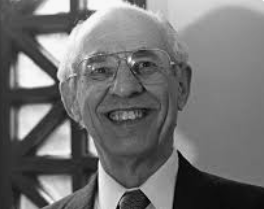
In conclusion, then, no satisfactory interpretation of quantum mechanics exists today. The questions posed by the confrontation between the Copenhagen interpretation and the hidden variable theorists go to the very foundations of microphysics, but the answers given by hidden variable theorists and Copenhagenists are alike unsatisfactory. Human curiosity will not rest until those questions are answered, but whether they will be answered by conceptual innovations within the framework of the present theory or only within the framework of an as yet unforeseen theory is unknown. The first step toward answering them has been attempted here. It is the modest but essential step of becoming clear on the nature and magnitude of the difficulties.
▼
Source
source
A philosopher looks at quantum mechanics
6 months 2 weeks ago
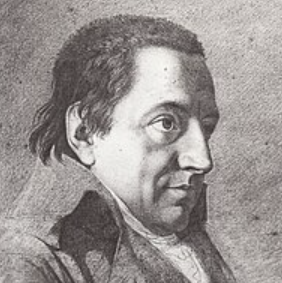
Only through blind Instinct, in which the only possible guidance of the Imperative is awanting, does the Power in Intuition remain undetermined; where it is schematised as absolute it becomes infinite; and where it is presented in a determinate form, as a principle, it becomes at least manifold. By the above-mentioned act of Intelligising, the Power liberates itself from Instinct, to direct itself towards Unity.
7 months 2 weeks ago
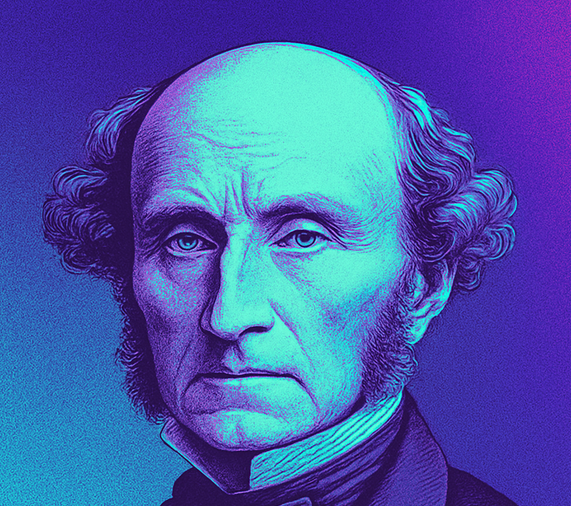
It is in this way that all my books have been composed. They were always written at least twice over; a first draft of the entire work was completed to the very end of the subject, then the whole begun again de novo; but incorporating, in the second writing, all sentences and parts of sentences of the old draft, which appeared as suitable to my purpose as anything which I could write in lieu of them. I have found great advantages in this system of double redaction. It combines, better than any other mode of composition, the freshness and vigour of the first conception, with the superior precision and completeness resulting from prolonged thought. In my own case, moreover, I have found that the patience necessary for a careful elaboration of the details of composition and expression, costs much less effort after the entire subject has been once gone through, and the substance of all that I find to say has in some manner, however imperfect, been got upon paper.
▼
Source
source
(p. 222)

6 months 1 week ago
Technical progress and more comfortable living permit the systematic inclusion of libidinal components into the realm of commodity production and exchange. But no matter how controlled the mobilization of instinctual energy may be (it sometimes amounts to a scientific management of libido), no matter how much it may serve as a prop for the status quo-it is also gratifying to the managed individuals, just as racing the outboard motor, pushing the power lawn mower, and speeding the automobile are fun.
▼
Source
source
p. 75

4 months 3 weeks ago
In the long run, there is nothing to stop intelligent agents from identifying the molecular signature of experience below hedonic zero and eliminating it altogether - even in insects. Nociception is vital; pain is optional. I tentatively predict that the world's last unpleasant experience in our forward light-cone will be a precisely datable event - perhaps some micro-pain in an obscure marine invertebrate a few centuries hence.
▼
Source
source
The Radical Plan to Phase out Earth's Predatory Species, io9, 30 Jul. 2014

3 months 2 weeks ago
To change your mind and to follow him who sets you right is to be nonetheless the free agent that you were before. Remember that to change thy opinion and to follow him who corrects thy error is as consistent with freedom as it is to persist in thy error.
▼
Source
source
(Long translation) VIII, 16


6 months ago
There is a physical, not moral, impossibility of supplying the wants of the intellect in the state of civilisation at which we have arrived. The stimulus, the training, the time, are all three wanting to us; or, in other words, the means and inducements are not there. Look at the poor lives we lead. It is a wonder that we are so good as we are, not that we are so bad. In looking round we are struck with the power of the organisations we see, not with their want of power. Now and then, it is true, we are conscious that there is an inferior organisation, but, in general, just the contrary.

7 months 2 weeks ago
They show as little Reason as Conscience who put the matter by with saying - "Men, in some cases, are lawfully made Slaves, and why may not these?" So men, in some cases, are lawfully put to death, deprived of their goods, without their consent; may any man, therefore, be treated so, without any conviction of desert? Nor is this plea mended by adding-"They are set forth to us as slaves, and we buy them without farther inquiry, let the sellers see to it." Such men may as well join with a known band of robbers, buy their ill-got goods, and help on the trade; ignorance is no more pleadable in one case than the other; the sellers plainly own how they obtain them. But none can lawfully buy without evidence that they are not concurring with Men-Stealers; and as the true owner has a right to reclaim his goods that were stolen, and sold; so the slave, who is proper owner of his freedom, has a right to reclaim it, however often sold.

8 months 2 weeks ago
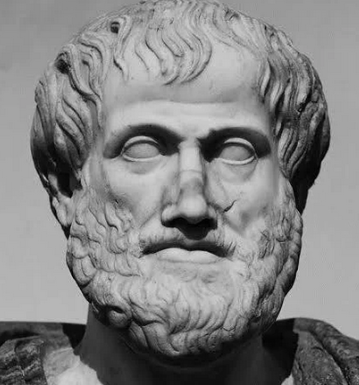
It is the mark of an educated man to look for precision in each class of things just so far as the nature of the subject admits; it is evidently equally foolish to accept probable reasoning from a mathematician and to demand from a rhetorician scientific proofs.


6 months 2 days ago
Once again, I experienced that overwhelming joy in the universe that I had felt in London outside the V and A. But this time, my consciousness of the world seemed larger, more complex. It was the mystic's sensation of oneness, of everything blending into everything else. Everything I looked at reminded me of something else, which also became present to my consciousness, as if I were simultaneously seeing a million worlds and smelling a million scents and hearing a million sounds-- not mixed up, but each separate and clear. I was overwhelmed with a sense of my smallness in the face of this vast, beautiful, objective universe, this universe whose chief miracle is that it exists, as well as myself. It is no dream, but a great garden in which life is trying to obtain a foothold. I experienced a desire to burst into tears of gratitude; then I controlled it, and the feeling subsided into a calm sense of immense, infinite beauty.
▼
Source
source
pp. 237-238

6 months 3 weeks ago
The public, therefore, among a democratic people, has a singular power, which aristocratic nations cannot conceive; for it does not persuade others to its beliefs, but it imposes them and makes them permeate the thinking of everyone by a sort of enormous pressure of the mind of all upon the individual intelligence.
▼
Source
source
Book One, Chapter II.

3 months 2 weeks ago
There is perhaps nothing more interesting than to listen to a superior man talk of what he does not know. He advances slowly, and scarcely puts his foot down without knowing if the ground is solid; he looks for plausible analogies; he tries to attach his ideas to higher and incontestable principles; he always has the tone of looking, never that of teaching; and it often happens that, even if he is mistaken, he leaves a great enough idea of his mental honesty.
▼
Source
source
p. 43
5 months 2 weeks ago
Does the interiorization of media such as letters alter the ratio among our senses and change mental processes?
▼
Source
source
(p. 28)
3 months 2 weeks ago
A vehement eros runs through the Universe. It is like the ether: harder than steel, softer than air. It cuts through and passes beyond all things, it flees and escapes.
8 months 1 week ago
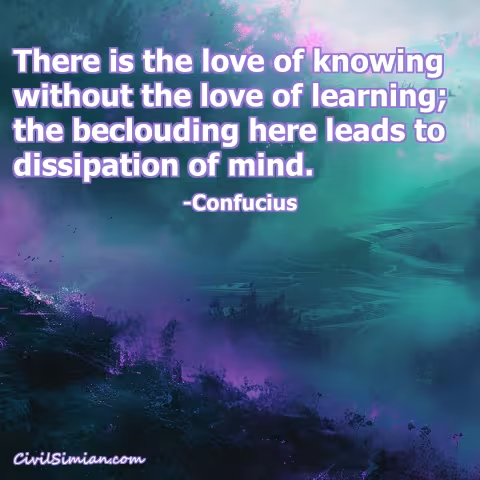
When I walk along with two others, they may serve me as my teachers. I will select their good qualities and follow them, their bad qualities and avoid them.
5 months 2 weeks ago
In the spiritual realm nothing is indifferent: what is not useful is harmful.
▼
Source
source
VII

5 months 2 weeks ago
The fact that life evolved out of nearly nothing, some 10 billion years after the universe evolved out of literally nothing, is a fact so staggering that I would be mad to attempt words to do it justice.
▼
Source
source
From tail to tale on the path of pilgrims in life, The Scotsman
5 months 1 week ago
Can we find nothing good to say about TV? Well, yes, it brings scattered solitaries into a sort of communion. TV allows your isolated American to think that he participates in the life of the entire country. It does not actually place him in a community, but his heart is warmed with the suggestion (on the whole false) that there is a community somewhere in the vicinity and that his atomized consciousness will be drawn back toward the whole.
▼
Source
source
The Distracted Public (1990), p. 159

3 months 2 weeks ago
The mother principle is that governments are republican only in proportion as they embody the will of their people, and execute it.
7 months 2 weeks ago
This sacrifice of common sense is the certain badge which distinguishes slavery from freedom; for when men yield up the privilege of thinking, the last shadow of liberty quits the horizon.
▼
Source
source
"Reflections on Titles", Pennsylvania Magazine
7 months 2 weeks ago
Each of the parts of philosophy is a philosophical whole, a circle rounded and complete in itself. In each of these parts, however, the philosophical Idea is found in a particular specificality or medium. The single circle, because it is a real totality, bursts through the limits imposed by its special medium, and gives rise to a wider circle. The whole of philosophy in this way resembles a circle of circles. The Idea appears in each single circle, but, at the same time, the whole Idea is constituted by the system of these peculiar phases, and each is a necessary member of the organisation.
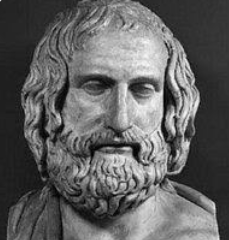
7 months 2 days ago
When it comes to consideration of how to do well in running the city, which must proceed entirely through justice and soundness of mind.
▼
Source
source
As quoted in Protagoras by Plato
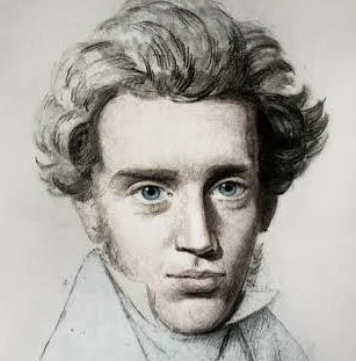
8 months 2 weeks ago
A man who for a long time has gone around hiding a secret becomes mentally deranged. At this point one would imagine that his secret would have to come out, but despite his derangement his soul still sticks to its hideout, and those around him become even more convinced that the false story he told to deceive them is the truth. He is healed of his insanity, knows everything that has gone on, and thereby perceives that nothing has been betrayed. Was this gratifying to him or not; he might wish to have disposed of his secret in his madness; it seems as if there were a fate which forced him to remain in his secret and would not let him go away from it. Or was it for the best, was there a guardian spirit who helped him keep his secret.
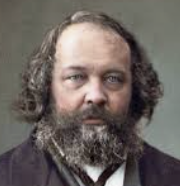
6 months 2 weeks ago
A person is strong only when he stands upon his own truth, when he speaks and acts from his deepest convictions. Then, whatever the situation he may be in, he always knows what he must say and do. He may fall, but he cannot bring shame upon himself or his cause. If we seek the liberation of the people by means of a lie, we will surely grow confused, go astray, and lose sight of our objective, and if we have any influence at all on the people we will lead them astray as well - in other words, we will be acting in the spirit of reaction and to its benefit.
▼
Source
source
"Appendix A"

6 months 2 days ago
The liturgy of emptiness dispels the capitalist economy of the commodity.
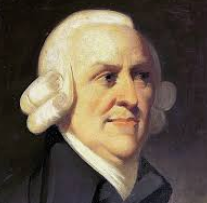
7 months 3 weeks ago
In this consists the difference between the character of a miser and that of a person of exact economy and assiduity. The one is anxious about small matters for their own sake; the other attends to them only in consequence of the scheme of life which he has laid down to himself.
▼
Source
source
Chap. VI.

7 months 3 weeks ago
This species works intentionally on its own destruction (by war). This, however, does not keep the rational creatures of such a constantly advancing culture, even in the midst of war, from promising to mankind in coming centuries an unequivocal prospect of bliss which will never end.
▼
Source
source
Kant, Immanuel (1996), page 185
7 months 3 weeks ago
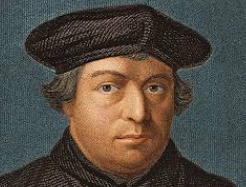
Few are the women and maidens who would let themselves think that one could at the same time be joyous and modest. They are all bold and coarse in their speech, in their demeanor wild and lewd. That is now the fashion of being in good cheer. But it is specially evil that the young maiden folk are exceedingly bold of speech and bearing, and curse like troopers, to say nothing of their shameful words and scandalous coarse sayings, which one always hears and learns from another.
6 months 2 weeks ago
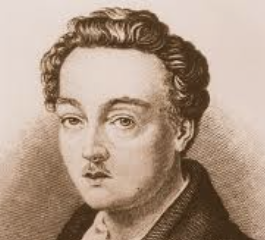
Murder begins where self-defense ends.
▼
Source
source
Act I.
CivilSimian.com created by AxiomaticPanic, CivilSimian, Kalokagathia