
Balance isn't good for everything. A balance that agrees to destroy SOME life is not a good balance...


In a well worn metaphor, a parallel is drawn between the life of man and the metamorphosis of the caterpillar into the butterfly; but the comparison may be more just as well as more novel, if for its former term we take the mental progress of the race. History shows that the human mind, fed by constant accessions of knowledge, periodically grows too large for its theoretical coverings, and bursts them asunder to appear in new habiliments, as the feeding and growing grub, at intervals, casts its too narrow skin and assumes another, itself but temporary. Truly the imago state of Man seems to be terribly distant, but every moult is a step gained, and of such there have been many.
Division of labor is a justification for sloth.

Materialism ends up denying the existence of any irreducible subjective qualitative states of sentience or awareness.

To tell the truth, I couldn't care less about the relativity of knowledge, simply because the world does not deserve to be known.

This proof can at most, therefore, demonstrate the existence of an architect of the world, whose efforts are limited by the capabilities of the material with which he works, but not of a creator of the world, to whom all things are subject.

"War," says Machiavel, "ought to be the only study of a prince;" and by a prince he means every sort of state, however constituted. "He ought," says this great political doctor, "to consider peace only as a breathing-time, which gives him leisure to contrive, and furnishes ability to execute military plans." A meditation on the conduct of political societies made old Hobbes imagine that war was the state of nature.
The realer religion is, so much the more it means its own overcoming. It wills to cease to be the special domain "Religion" and wills to become life. It is concerned in the end not with specific religious acts, but with redemption from all that is specific.
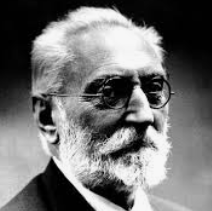
Everything in me that conspires to break the unity and continuity of my life conspires to destroy me and consequently to destroy itself. Every individual in a people who conspires to break the spiritual unity and continuity of that people tends to destroy it and to destroy himself as a part of that people.
Christianity is at the very root of the evil that has corrupted the West. This is the truth, and it admits no doubt.
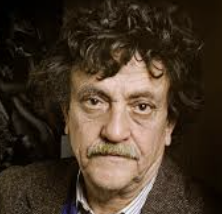
I do feel that evolution is being controlled by some sort of divine engineer. I can't help thinking that. And this engineer knows exactly what he or she is doing and why, and where evolution is headed. That's why we've got giraffes and hippopotami and the clap.
Nothing surpasses the pleasures of idleness: even if the end of the world were to come, I would not leave my bed at an ungodly hour.
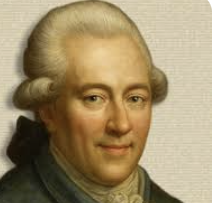
We do not think good metaphors are anything very important, but I think that a good metaphor is something even the police should keep an eye on...
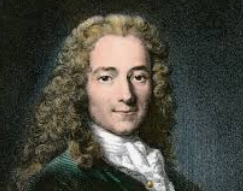
There are truths which are not for all men, nor for all times.
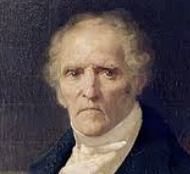
As for civilization, from which at last we are about to escape, so far from being the social destiny of man, it is only a transient stage - a state of temporary evil with which globes are afflicted during the first ages of their career; it is for the human race a disease of infancy, like teething; but it is a disease which has been prolonged in our globe at least twenty centuries beyond its natural term, owing to the neglect on the part of the ancient philosophy to study association and passional attraction.
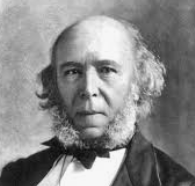
Unlike private enterprise which quickly modifies its actions to meet emergencies - unlike the shopkeeper who promptly finds the wherewith to satisfy a sudden demand - unlike the railway company which doubles its trains to carry a special influx of passengers; the law-made instrumentality lumbers on under all varieties of circumstances at its habitual rate. By its very nature it is fitted only for average requirements, and inevitably fails under unusual requirements.
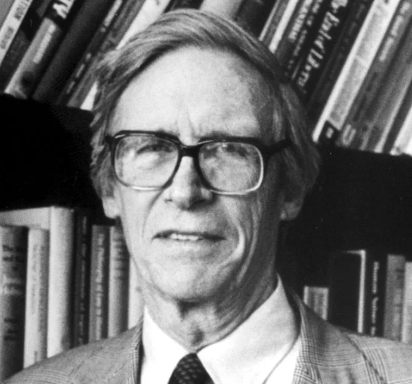
The fault of the utilitarian doctrine is that it mistakes impersonality for impartiality.
The idea that the citizen owes loyalty to a country, a territory, a jurisdiction and all those who reside within it - the root assumption of democratic politics, and one that depends upon the nation as its moral foundation - that idea has no place in the minds and hearts of many who now call themselves citizens of European states.
Men are what their mothers made them.
Truths obtained by Induction are made compact and permanent by being expressed in 'Technical Terms'.
Let men be happy, informed, skillful, well behaved, and productive.

Don't hold yourselves cheap, seeing that the creator of all things and of you estimates your value so high, so dear, that he pours out for you every day the most precious blood of his only-begotten Son.
The notion of nothingness is not characteristic of laboring humanity: those who toil have neither time nor inclination to weigh their dust; they resign themselves to the difficulties or the doltishness of fate; they hope: hope is a slave's virtue.
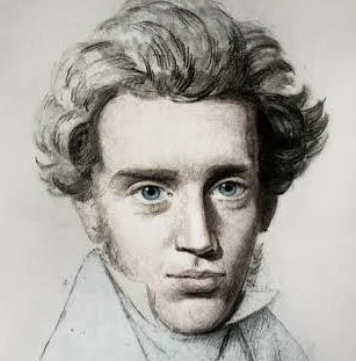
If one prefers to have little with blessing, to have truth with concern, to suffer instead of exulting over imagined victories, then one presumably will not be disposed to praise the knowledge, as if what it bestows were at all proportionate to the trouble it causes, although one would not therefore deny that through its pain it educates a person, if he is honest enough to want to be educated rather than to be deceived, out of the multiplicity to seek the one, out of abundance to seek the one thing needful, as this is plainly and simply offered precisely according to the need for it.
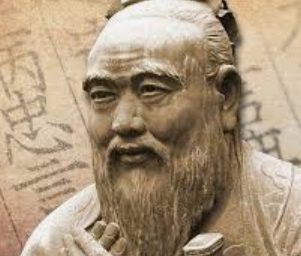
Earnest in practicing the ordinary virtues, and careful in speaking about them, if, in his practice, he has anything defective, the superior man dares not but exert himself; and if, in his words, he has any excess, he dares not allow himself such license. Thus his words have respect to his actions, and his actions have respect to his words; is it not just an entire sincerity which marks the superior man?
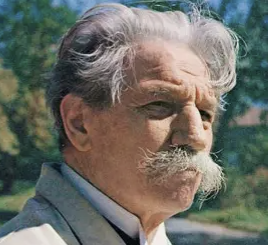
At sunset of the third day, near the village of Igendja, we moved along an island set in the middle of the wide river. On a sandback to our left, four hippopotamuses and their young plodded along in our same direction. Just then, in my great tiredness and discouragement, the phrase "Reverence for Life" struck me like a flash. As far as I knew, it was a phrase I had never heard nor ever read. I realized at once that it carried within itself the solution to the problem that had been torturing me. Now I knew that a system of values which concerns itself only with our relationship to other people is incomplete and therefore lacking in power for good. Only by means of reverence for life can we establish a spiritual and humane relationship with both people and all living creatures within our reach. Only in this fashion can we avoid harming others, and, within the limits of our capacity, go to their aid whenever they need us.
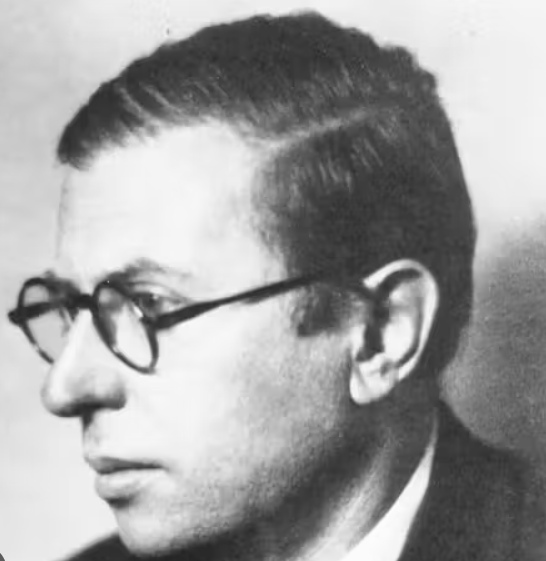
For man holds his ground only by surpassing himself, in the same sense in which it is said that one ceases to love if one does not love increasingly everyday.

But there is only one thing which gathers people into seditious commotion, and that is oppression.
I am looking forward very much to getting back to Cambridge, and being able to say what I think and not to mean what I say: two things which at home are impossible. Cambridge is one of the few places where one can talk unlimited nonsense and generalities without anyone pulling one up or confronting one with them when one says just the opposite the next day.
No epoch is homogeneous; whatever you may have assigned as the dominant note of a considerable period, it will always be possible to produce men, and great men, belonging to the same time, who exhibit themselves as antagonistic to the tone of their age.
I have come to believe that the motion of the Earth cannot be detected by any optical experiment.
Time will prolong time, and life will serve life. In this field that is both limited and bulging with possibilities, everything to himself, except his lucidity, seems unforeseeable to him. What rule, then, could emanate from that unreasonable order? The only truth that might seem instructive to him is not formal: it comes to life and unfolds in men. The absurd mind cannot so much expect ethical rules at the end of its reasoning as, rather, illustrations and the breath of human lives.
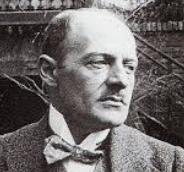
To its very core, the mind of ressentiment man is filled with envy, the impulse to detract, malice, and secret vindictiveness. These affects have become fixed attitudes, detached from all determinate objects. Independently of his will, this man's attention will be instinctively drawn by all events which can set these affects in motion. The ressentiment attitude even plays a role in the formation of perceptions, expectations, and memories. It automatically selects those aspects of experience which can justify the factual application of this pattern of feeling.
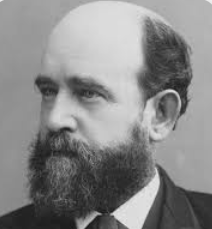
It is too narrow an understanding of production which confines it merely to the making of things. Production includes not merely the making of things, but the bringing of them to the consumer. The merchant or storekeeper is thus as truly a producer as is the manufacturer, or farmer, and his stock or capital is as much devoted to production as is theirs.
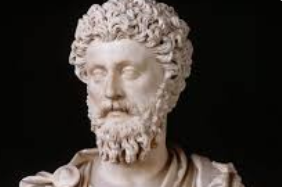
As the nature of the universal has given to every rational being all the powers that it has, so we have received from it this power also. For as the universal nature converts and fixes in its predestined place everything which stands in the way and opposes it, and makes such things a part of itself, so also the rational animal is able to make every hindrance its own material, and to use it for such purpose as it may have designed.
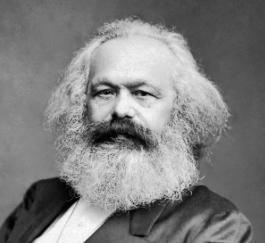
Every one knows that there are no real forests in England. The deer in the parks of the great are demurely domestic cattle, fat as London alderman.

The process begins with the individual woman's acceptance that American women, without exception, are socialized to be racist, classist and sexist, in varying degrees, and that labeling ourselves feminists does not change the fact that we must consciously work to rid ourselves of the legacy of negative socialization.
Life is too short to occupy oneself with the slaying of the slain more than once. One of a series of exchanges when Richard Owen repeated generally repudiated claims about the Gorilla brain in a Royal Institution lecture.
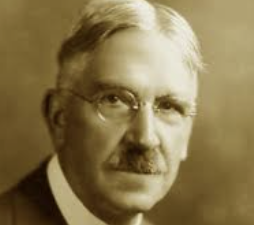
What happens in the movement of art is emergence of new materials of experience demanding expression, and therefore involving in their expression new forms and techniques.
'BUT science and art! You are denying science and art: that is you are denying that by which humanity lives.' People constantly make this rejoinder to me, and they employ: this method in order to reject my arguments without examination. 'He rejects science and art, he wishes man to revert to a state of savagery - why listen to him or discuss with him?' But this is unjust. Not only do I not repudiate science, that is, the reasonable activity of humanity, and art - the expression of that reasonable activity - but it is just on behalf of that reasonable activity and its expression that I speak, only that It may be possible for mankind to escape from the savage state into which it is rapidly lapsing thanks to the false teaching of our time. It is only on that account that I speak as I do.

To ascend to the origin of things and speculate on the creation, is not the business of the natural philosopher. An humbler field is sufficient for him in the endeavor to discover, as far as our faculties will permit; what are these primary qualities impressed on matter, and to discover the spirit of the laws of nature
Environment is process, not container.
It is not, what a lawyer tells me I may do; but what humanity, reason, and justice, tell me I ought to do.
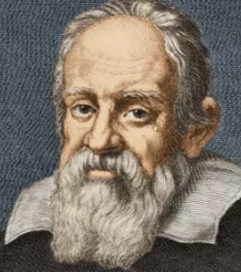
I esteem myself happy to have as great an ally as you in my search for truth. I will read your work ... all the more willingly because I have for many years been a partisan of the Copernican view because it reveals to me the causes of many natural phenomena that are entirely incomprehensible in the light of the generally accepted hypothesis. To refute the latter I have collected many proofs, but I do not publish them, because I am deterred by the fate of our teacher Copernicus who, although he had won immortal fame with a few, was ridiculed and condemned by countless people (for very great is the number of the stupid).
If there is a sin against life, it consists perhaps not so much in despairing of life as in hoping for another life and in eluding the implacable grandeur of this life.
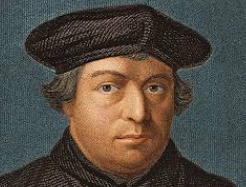
The human being, corrupted to the root, can neither desire nor perform anything but evil.
I should as soon think of swimming across Charles River when I wish to go to Boston, as of reading all my books in originals when I have them rendered for me in my mother tongue.
CivilSimian.com created by AxiomaticPanic, CivilSimian, Kalokagathia