

4 months 3 days ago
Is it for this purpose that we are strong-that we may have light burdens to bear?
6 months 5 days ago
Passion is like suffering, and like suffering it creates its object. It is easier for the fire to find something to burn than for something combustible to find the fire.
6 months 2 weeks ago
The nature of the Absolute State consists herein, -that all individual powers be directed towards the Life of the Race,-in place of which Race, the State puts the aggregate of its own Citizens. It therefore becomes necessary, first, that all Individuals, without exception, should be taken into equal consideration by the State; and second, that every Individual, with all his individual powers, without exception or reserve, should be taken into equal consideration. In a State so constituted, where all, as Individuals, are dedicated to the Race, it follows at the same time, that all without exception, with all the Rights which belong to them as component parts of the Race, are dedicated to all the other individual members of the State.
▼
Source
source
p. 150-151

7 months 2 weeks ago
If we take a survey of ages and of countries, we shall find the women, almost - without exception - at all times and in all places, adored and oppressed. Man, who has never neglected an opportunity of exerting his power, in paying homage to their beauty, has always availed himself of their weakness He has been at once their tyrant and their slave.
6 months 4 days ago
In America I was liberated from a certain naïve belief in culture and attained the capacity to see culture from the outside. To clarify the point: in spite of all social criticism and all consciousness of the primacy of economic factors, the fundamental importance of the mind-"Geist"-was quasi a dogma self-evident to me from the very beginning. The fact that this was not a foregone conclusion, I learned in America, where no reverential silence in the presence of everything intellectual prevailed.
▼
Source
source
as quoted in The Origin of Negative Dialectics (Free Press: 1977), p. 187
8 months 2 weeks ago
What must be remembered in any case is that secret complicity that joins the logical and the everyday to the tragic.
7 months 2 weeks ago
The virtues of society are the vices of the saints.
▼
Source
source
Circles
7 months 2 weeks ago
He advanced toward me without moving his hat, or making the least inclination of his body; but there appeared more real politeness in the open, humane air of his countenance, than in drawing one leg behind the other, and carrying that in the hand which is made to be worn on the head. "Friend," said he, "I perceive thou art a stranger, if I can do thee any service thou hast only to let me know it." "Sir," I replied, bowing my body, and sliding one leg toward him, as is the custom with us, "I flatter myself that my curiosity, which you will allow to be just, will not give you any offence, and that you will do me the honor to inform me of the particulars of your religion." "The people of thy country," answered the Quaker, "are too full of their bows and their compliments; but I never yet met with one of them who had so much curiosity as thyself. Come in and let us dine first together."
▼
Source
source
Voltaire's account of meeting the Quaker Andrew Pit
6 months 2 weeks ago
Not official revolutionary commissars in any sort of sashes, but rather revolutionary propagandists are to be dispatched into all the provinces and communes and particularly among the peasants who cannot be revolutionised by principles, nor by the decrees of any dictatorship, but only by the act of revolution itself, that is to say, by the consequences that will inevitably ensure in every commune from complete cessation of the legal and official existence of the state.
4 months 1 week ago
As for one-party rule, it was questioned neither by the Left Opposition nor by the Right [wing of the Communist party]. All were prisoners of their own doctrine and their own past: all had worked with a will to create the apparatus of violence that crushed them. Bukharin's hopeless attempt to form a league with Kamenev was no more than a pitiful epilogue to his career. In November 1929 the deviationists performed a public act of penance, but even this did not save them. Stalin's victory was complete; the collapse of the Bukharinite opposition meant the triumph of autocracy in the party and in the country. In December 1929 Stalin's fiftieth birthday was celebrated as a major historical event, and from this point we may date the "cult of personality". Trotsky's prophecy of 1903 had come true: party rule had become Central Committee rule, and this in turn had becorne the personal tyranny of a dictator.
▼
Source
source
(pp. 42-3)
3 months 2 weeks ago
If you do the job in a principled way, with diligence, energy and patience, if you keep yourself free of distractions, and keep the spirit inside you undamaged, as if you might have to give it back at any moment- If you can embrace this without fear or expectation-can find fulfillment in what you're doing now, as Nature intended, and in superhuman truthfulness (every word, every utterance)-then your life will be happy.
▼
Source
source
(Hays translation)- III, 12
7 months 2 weeks ago
The atheist who affects to reason, and the fanatic who rejects reason, plunge themselves alike into inextricable difficulties. The one perverts the sublime and enlightening study of natural philosophy into a deformity of absurdities by not reasoning to the end. The other loses himself in the obscurity of metaphysical theories, and dishonours the Creator, by treating the study of his works with contempt. The one is a half-rational of whom there is some hope, the other a visionary to whom we must be charitable.
▼
Source
source
A Discourse, &c. &c.

8 months 3 days ago
What is food to one, is to others bitter poison.
▼
Source
source
Book IV, line 637 (reported in Bartlett's Familiar Quotations) Compare: "What's one man's poison, signor, / Is another's meat or drink", Beaumont and Fletcher, Love's Cure (1647), Act III, scene 2

4 months 1 week ago
The crop of spiritual talent that is born to you, of human nobleness and intellect and heroic faculty, this is infinitely more important than your crops of cotton or corn, or wine or herrings or whale-oil, which the Newspapers record with such anxiety every season.
5 months 2 weeks ago
History is the life of nations and of humanity. To seize and put into words, to describe directly the life of humanity or even of a single nation, appears impossible.
▼
Source
source
Epilogue II, ch. 1
7 months 2 weeks ago
Instinct leads, intelligence does but follow.
▼
Source
source
Statement of 1902 quoted in The William James Reader (2007), Vol I, p. 264

7 months 2 weeks ago
I have lived an honest and useful life to mankind; my time has been spend in doing good and I die in perfect composure and resignation to the will of my Creator, God.
▼
Source
source
Last will (1809), as quoted in The Fortnightly Review, vol. 31, pp. 398-399
7 months 3 weeks ago
The mad mob does not ask how it could be better, only that it be different. And when it then becomes worse, it must change again. Thus they get bees for flies, and at last hornets for bees. Whether Soldiers Can Also Be in a State of Grace
▼
Source
source
1526
6 months 1 day ago
What would become of the rich, if not for the poor? What would become of these idle, parasitic ladies, who squander more in a week than their victims earn in a year, if not for the eighty million wage-workers? Equality, who ever heard of such a thing?
6 months 1 day ago
The Americans have always been more open to my ideas. In fact, I could earn a living in America just by lecturing. One of my brightest audiences, incidentally, were the prisoners in a Philadelphia gaol - brighter than my students at university.
▼
Source
source
Interview with Paul Newman in Abraxas Unbound #7
3 months 4 weeks ago
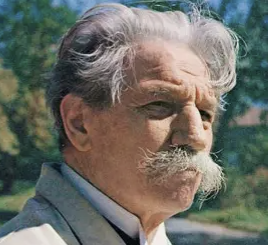
It is the fate of every truth to be an object of ridicule when it is first acclaimed. It was once considered foolish to suppose that black men were really human beings and ought to be treated as such. What was once foolish has now become a recognized truth. Today it is considered as exaggeration to proclaim constant respect for every form of life as being the serious demand of a rational ethic. But the time is coming when people will be amazed that the human race existed so long before it recognized that thoughtless injury to life is incompatible with real ethics. Ethics is in its unqualified form extended responsibility to everything that has life.
8 months 2 weeks ago
The slave begins by demanding justice and ends by wanting to wear a crown. He must dominate in his turn.
7 months 2 weeks ago
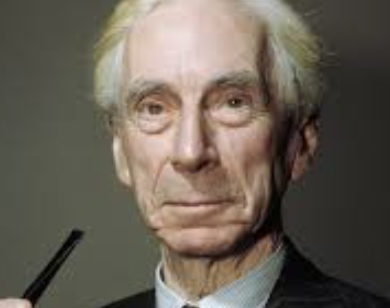
When I was a child the atmosphere in the house was one of puritan piety and austerity. There were family prayers at eight o'clock every morning. Although there were eight servants, food was always of Spartan simplicity, and even what there was, if it was at all nice, was considered too good for children. For instance, if there was apple tart and rice pudding, I was only allowed the rice pudding. Cold baths all the year round were insisted upon, and I had to practice the piano from seven-thirty to eight every morning although the fires were not yet lit. My grandmother never allowed herself to sit in an armchair until the evening. Alcohol and tobacco were viewed with disfavor although stern convention compelled them to serve a little wine to guests. Only virtue was prized, virtue at the expense of intellect, health, happiness, and every mundane good.
▼
Source
source
p. 9
6 months 1 day ago
It is the fallacy of all intellectuals to believe that intellect can grasp life. It cannot, because it works in terms of symbols and language. There is another factor involved: consciousness. If the flame of consciousness is low, a symbol has no power to evoke reality, and intellect is helpless.
▼
Source
source
p. 112
4 months 1 week ago
Two difficulties: (1) Can we transform psychologic time, which is qualitative, into a quantitative time? (2) Can we reduce to one and the same measure facts which transpire in different worlds [of conscious beings]!
5 months 3 weeks ago
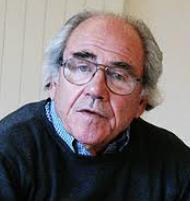
The need to speak, even if one has nothing to say, becomes more pressing when one has nothing to say, just as the will to live becomes more urgent when life has lost its meaning.
▼
Source
source
(p. 30)
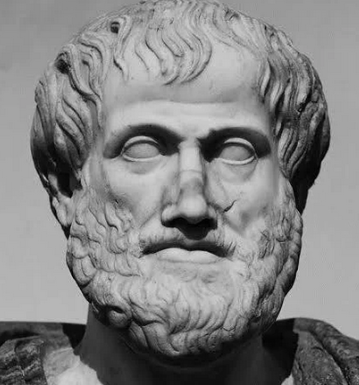
8 months 2 weeks ago
Wit is cultured insolence.
3 months 2 weeks ago
With silent strides Odysseus then shot back the bolt,passed lightly through the courtyard and sped down the street.Some saw him take the graveyard's zigzag mountain path,some saw him leap on rocks that edged the savage shore,some visionaries saw him in the dead of nightswimming and talking secretly with the sea-demons,but only a small boy saw him in a lonely dreamsit crouched and weeping by the dark sea's foaming edge.
▼
Source
source
Book II, line 457
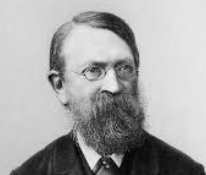
6 months 2 weeks ago
Not bodies produce sensations, but element-complexes (sensation-complexes) constitute the bodies. When the physicist considers the bodies as the permanent reality, the `elements' as the transient appearance, he does not realise that all `bodies' are only mental symbols for element-complexes (sensation-complexes)
▼
Source
source
p. 23, as quoted in Lenin as Philosopher: A Critical Examination of the Philosophical Basis of Leninism (1948) by Anton Pannekoek, p. 33
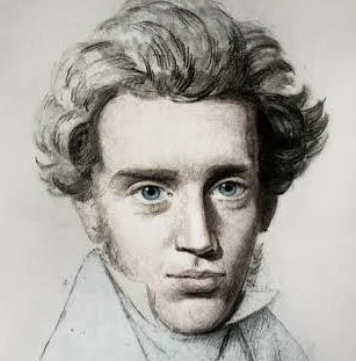
8 months 2 weeks ago
It is love that leniently and mercifully says: I forgive you everything-if you are forgiven only little, then it is because you love only little. Justice severely sets the boundary and says: No further! This is the limit. For you there is no forgiveness, and there is nothing more to be said.
5 months 2 weeks ago
The more you make people alike, the more competition you have. Competition is based on the principle of conformity.
▼
Source
source
(p. 135)
8 months 1 week ago
A scholar who loves comfort is not worthy of the name.
8 months 3 days ago
What should a philosopher say, then, in the face of each of the hardships of life? "It was for this that I've been training myself, it was for this that I was practising."
▼
Source
source
Book III, ch. 10,7.
6 months 2 weeks ago
If I were to go blind, what would bother me the most would be no longer to be able to stare idiotically at the passing clouds.
5 months 2 weeks ago
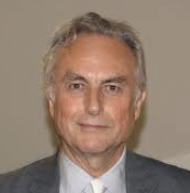
I am very conscious that you can't condemn people of an earlier era by the standards of ours. Just as we don't look back at the 18th and 19th centuries and condemn people for racism in the same way as we would condemn a modern person for racism, I look back a few decades to my childhood and see things like caning, like mild pedophilia, and can't find it in me to condemn it by the same standards as I or anyone would today.
▼
Source
source
Giles Whittell, "The world according to Richard Dawkins" (2013-09-07), The Times
5 months 2 weeks ago
We measure the earth, sun, stars, and ocean depths. We burrow into the depths of the earth for gold. We search for rivers and mountains on the moon. We discover new stars and know their magnitudes. We sound the depths of gorges and build clever machines. Each day brings a new invention. What don't we think of! What can't we do! But there is something else, the most important thing of all, that we are missing. We do not know exactly what it is. We are like a small child who knows he does not feel well but cannot explain why. We are uneasy, because we know a lot of superfluous facts; but we do not know what is really important-ourselves.
▼
Source
source
p. 10
6 months 1 day ago
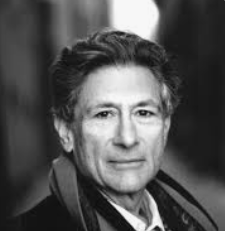
The history of other cultures is non-existent until it erupts in confrontation with the United States.
▼
Source
source
Chap 4, Sect 2
7 months 3 weeks ago
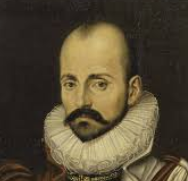
God's justice and His power are inseparable; 'tis in vain we invoke His power in an unjust cause. We are to have our souls pure and clean, at that moment at least wherein we pray to Him, and purified from all vicious passions; otherwise we ourselves present Him the rods wherewith to chastise us; instead of repairing anything we have done amiss, we double the wickedness and the offence when we offer to Him, to whom we are to sue for pardon, an affection full of irreverence and hatred. Which makes me not very apt to applaud those whom I observe to be so frequent on their knees, if the actions nearest to the prayer do not give me some evidence of amendment and reformation
▼
Source
source
Ch. 56. Of Prayers, tr. Cotton, rev. W. Carew Hazlitt, 1877
3 months 4 weeks ago
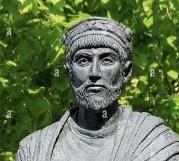
Are you not aware that all offerings whether great or small that are brought to the gods with piety have equal value, whereas without piety, I will not say hecatombs, but, by the gods, even the Olympian sacrifice of a thousand oxen is merely empty expenditure and nothing else?
▼
Source
source
Oration to the Cynic Heracleios
6 months 1 week ago
England is the paradise of individuality, eccentricity, heresy, anomalies, hobbies, and humors.
▼
Source
source
"The British Character"
6 months 2 weeks ago
No sound ought to be heard in the church but the healing voice of Christian charity.
6 months 2 weeks ago
A conscientious man would be cautious how he dealt in blood.
▼
Source
source
Letter to the Sheriffs of Bristol (3 April 1777); as published in The Works of the Right Hon. Edmund Burke (1899), vol. 2, p. 206
6 months 1 week ago
If the task of philosophy is to break the domination of words over the human mind, then my concept notation, being developed for these purposes, can be a useful instrument for philosophers. I believe the cause of logic has been advanced already by the invention of this concept notation.
▼
Source
source
Begriffsschrift (1879) Preface to the Begriffsschrift
8 months 1 week ago
What the great learning teaches, is to illustrate illustrious virtue; to renovate the people; and to rest in the highest excellence. The point where to rest being known, the object of pursuit is then determined; and, that being determined, a calm unperturbedness may be attained to. To that calmness there will succeed a tranquil repose. In that repose there may be careful deliberation, and that deliberation will be followed by the attainment of the desired end.
6 months 1 day ago
These left me in no doubt that something was trying to communicate with us, but that direct communication would be counterproductive. It seemed to be an important part of the scheme to create a sense of mystery.
▼
Source
source
p. 352
7 months 3 weeks ago
Besides, you also have many Jews living in the country, who do much harm... You should know the Jews blaspheme and violate the name of our Savior day for day... for that reason you, Milords and men of authority, should not tolerate but expel them. They are our public enemies and incessantly blaspheme our Lord Jesus Christ, they call our Blessed Virgin Mary a harlot and her Holy Son a bastard and to us they give the epithet of changelings and abortions. Therefore deal with them harshly as they do nothing but excruciatingly blaspheme our Lord Jesus Christ, trying to rob us of our lives, our health, our honor and belongings.
▼
Source
source
Sermon at Eisleben, a few days before his death, February, 1546. See The Jews by Zuhdī Fātiḥ, 1972
5 months 2 weeks ago
You will die - and it will all be over. You will die and find out everything - or cease asking.
▼
Source
source
Bk. V, Ch. 1
CivilSimian.com created by AxiomaticPanic, CivilSimian, Kalokagathia