This could be a reply to the previous post: Be gentle to all and stern with yourself. -Teresa of Avila


In the presence of God himself man stands always like a solitary tree in the wilderness.
It is best to bear what cannot be changed.

It's not worth the bother of killing yourself, since you always kill yourself too late.
Psychoanalysis pretends to investigate the Unconscious. The Unconscious by definition is what you are not conscious of. But the Analysts already know what's in it. They should, because they put it all in beforehand. It's like an Easter Egg hunt.

Rest satisfied with doing well, and leave others to talk of you as they please.
We all labour against our own cure, for death is the cure of all diseases.
With respect to modern languages, French, as I have before observed, is indispensible. Next to this the Spanish is most important to an American. Our connection with Spain is already important and will become daily more so. Besides this the antient part of American history is written chiefly in Spanish.
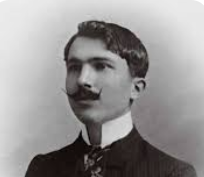
How difficult, how extremely difficult for the soul to sever itself from its body the world: from mountains, seas, cities, people. The soul is an octopus and these are its tentacles. ... No force anywhere on earth is as imperialistic as the human soul. It occupies and is occupied in turn, but it always considers its empire too narrow. Suffocating, it desires to conquer the world in order to breathe freely.
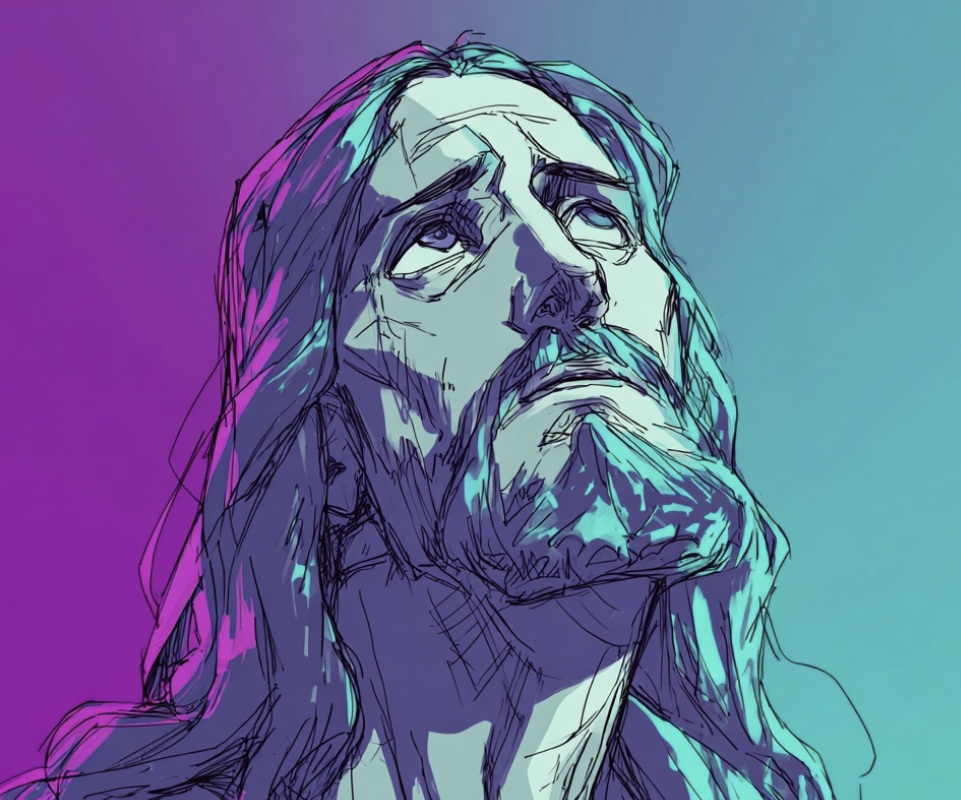
The foxes have holes, and the birds of the air have nests; but the Son of man hath not where to lay his head.

We are and irrefutable arbiters of value, and in the world of value Nature is only a part. Thus in this world we are greater than Nature. In the world of values, Nature in itself is neutral, neither good nor bad deserving of neither admiration nor censure. It is we who create value and our desires which confer value. In this realm we are kings, and we debase our kingship if we bow down to Nature. It is for us to determine our good life, not for Nature - not even for Nature personified as God.
What maintains the marriage and what is it? Only the knowledge of the hearts, that is its beginning and end.
Is it just I who cannot found a school, or can a philosopher never do so?
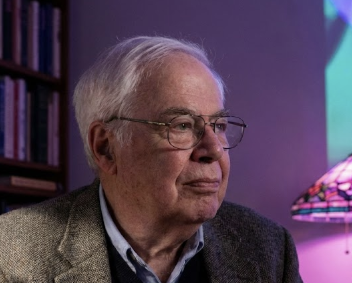
I think of the course of human history as a long, swelling, increasingly polyphonic poem - a poem that leads up to nothing save itself. When the species is extinct, "human nature's total message" will not be a set of propositions, but a set of vocabularies - the more, and the more various, the better.
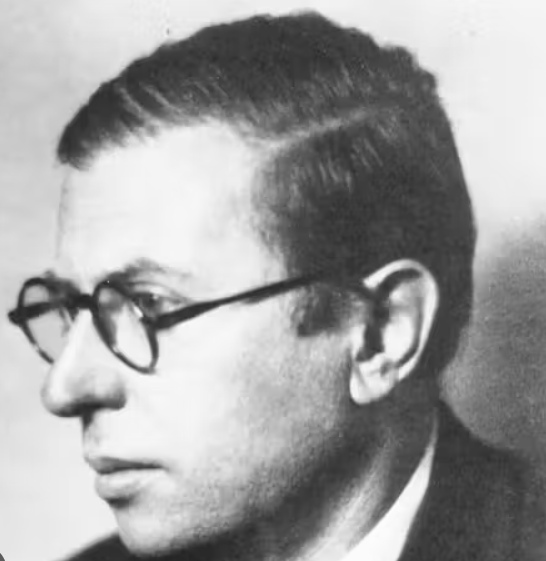
The Communist Party has one objective: the creation of a socialist economy; and one means: the utilization of the class struggle.
Becky Sharp's acute remark that it is not difficult to be virtuous on ten thousand a year, has its application to nations; and it is futile to expect a hungry and squalid population to be anything but violent and gross.
Normally man's mind is composed only of a consciousness of his immediate needs, which is to say that this consciousness at any moment can be defined as ''his awareness of his own power to satisfy those needs.'' He thinks in terms of what he intends to do in half an hour's time, a day's time, a month's time an no more. He never asks himself: what are the ''limits'' of my powers? In a sense, he is like a man who has a fortune is the bank, who never asks himself, How much money have I got, but only, Have I enough for a pound of cheese, a new tie, etc.

With what consistency, or decency they complain so loudly of attempts to enslave them, while they hold so many hundred thousands in slavery; and annually enslave many thousands more, without any pretence of authority, or claim upon them?
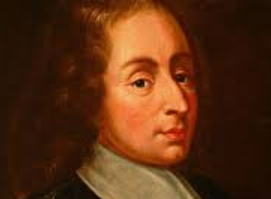
Rules for Axioms. I. Not to omit any necessary principle without asking whether it is admittied, however clear and evident it may be. II. Not to demand, in axioms, any but things that are perfectly evident in themselves.
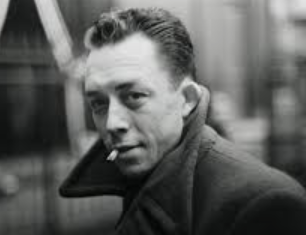
Perhaps we cannot prevent this world from being a world in which children are tortured. But we can reduce the number of tortured children. And if you don't help us, who else in the world can help us do this?
Consider MacArthur and his Republican supporters. So limited is his intelligence and his imagination that he is never puzzled for one moment. All we have to do is to go back to the days of the Opium War. After we have killed a sufficient number of millions of Chinese, the survivors among them will perceive our moral superiority and hail MacArthur as a saviour. But let us not be one-sided. Stalin, I should say, is equally simple- minded and equally out of date. He, too, believes that if his armies could occupy Britain and reduce us all to the economic level of Soviet peasants and the political level of convicts, we should hail him as a great deliverer and bless the day when we were freed from the shackles of democracy. One of the painful things about our time is that those who feel certainty are stupid, and those with any imagination and understanding are filled with doubt and indecision.
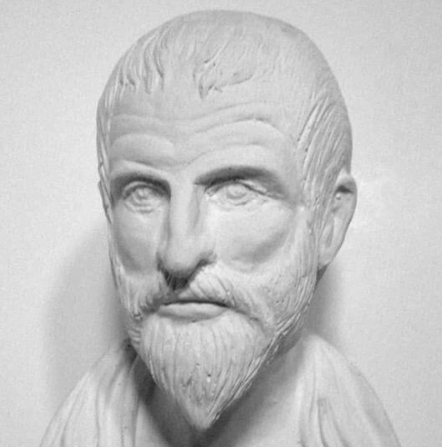
Again, Amyclas the Heracleotean, one of Plato's familiars, and Menæchmus, the disciple, indeed, of Eudoxus, but conversant with Plato, and his brother Dinostratus, rendered the whole of geometry as yet more perfect. But Theudius, the Magnian, appears to have excelled, as well in mathematical disciplines, as in the rest of philosophy. For he constructed elements egregiously, and rendered many particulars more universal. Besides, Cyzicinus the Athenian, flourished at the same period, and became illustrious in other mathematical disciplines, but especially in geometry. These, therefore, resorted by turns to the Academy, and employed themselves in proposing common questions.
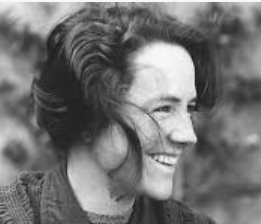
I kept looking at the flowers in a vase near me: lavender sweet peas, fragile winged and yet so still, so perfectly poised, apart, and complete. They are self-sufficient, a world in themselves, a whole - perfect. Is that then, perfection? Is what those sweet peas had what I have, occasionally in moments like that? But flowers always have it - poise, completion, fulfillment, perfection; I only occasionally, like that moment. For that moment I and the sweet peas had an understanding.
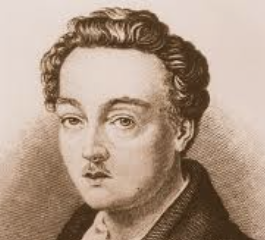
How many women does one need to sing the scale of love all the way up and down?
And at once I saw with great clarity that human beings possess two bodies. One is the physical body, the other -- just as real, just as self-contained -- is the emotional body. Like the physical body, the emotional body reaches a certain level of growth, and then stops. But it stops rather sooner than the physical body. So most of us possess the emotional body of a retarded adolescent.
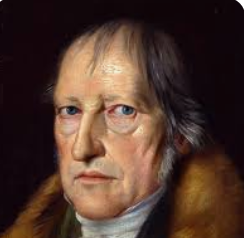
India has always been an object of yearning, a realm of wonder, a world of magic... India is the land of dreams. India had always dreamt - more of the Bliss that is man's final goal. And this has helped India to be more creative in history than any other nation. Hence the effervescence of myths and legends, religious and philosophies, music, and dances and the different styles of architecture." ...
For me fiction is a manner of philosophizing ... Philosophy may be only a shadow of the reality it tries to grasp, but the novel is altogether more satisfactory. I am almost tempted to say that no philosopher is qualified to do his job unless he is also a novelist ... I would certainly exchange any of the works of Whitehead or Wittgenstein for the novels they ought to have written.
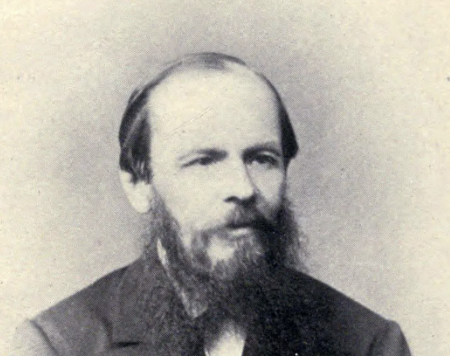
Dreams, as we all know, are very queer things: some parts are presented with appalling vividness, with details worked up with the elaborate finish of jewellery, while others one gallops through, as it were, without noticing them at all, as, for instance, through space and time. Dreams seem to be spurred on not by reason but by desire, not by the head but by the heart, and yet what complicated tricks my reason has played sometimes in dreams, what utterly incomprehensible things happen to it!
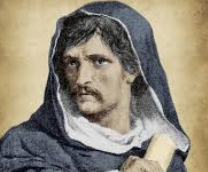
Of the eternal corporeal substance (which is not producible ex nihilo, nor reducible ad nihilum, but rarefiable, condensable, formable, arrangeable, and "fashionable") the composition is dissolved, the complexion is changed, the figure is modified, the being is altered, the fortune is varied, only the elements remaining what they are in substance, that same principle persevering which was always the one material principle, which is the true substance of things, eternal, ingenerable and incorruptible.

I believe in Christianity as I believe that the sun has risen. Not only because I see it, but because by it I see everything else.
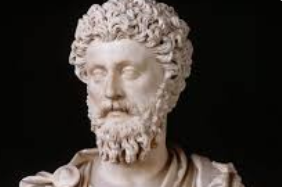
Look to the essence of a thing, whether it be a point of doctrine, of practice, or of interpretation.
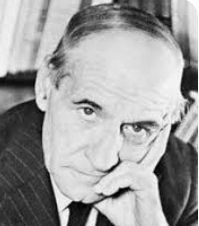
Human life, by its very nature, has to be dedicated to something, an enterprise glorious or humble, a destiny illustrious or trivial. We are faced with a condition, strange but inexorable, involved in our very existence.
Keep on, then, seeking first the Kingdom and his righteousness, and all these other things will be added to you. So never be anxious about the next day, for the next day will have its own anxieties. Each day has enough of its own troubles.
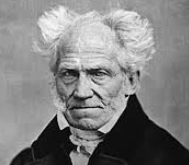
Do not shorten the morning by getting up late, or waste it in unworthy occupations or in talk; look upon it as the quintessence of life, as to a certain extent sacred. Evening is like old age: we are languid, talkative, silly. Each day is a little life: every waking and rising a little birth, every fresh morning a little youth, every going to rest and sleep a little death.
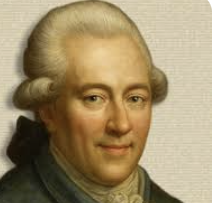
He was then in his fifty-fourth year, when even in the case of poets reason and passion begin to discuss a peace treaty and usually conclude it not very long afterwards.

Only when the true ends of society have nothing to do with the sublime does "culture" become necessary as a veneer to cover over the void. Culture can at best appreciate the monuments of earlier faith; it cannot produce them.
But after these, Pythagoras changed that philosophy, which is conversant about geometry itself, into the form of a liberal doctrine, considering its principles in a more exalted manner; and investigating its theorems immaterially and intellectually; who likewise invented a treatise of such things as cannot be explained in geometry, and discovered the constitution of the mundane figures.

In skating over thin ice our safety is our speed.
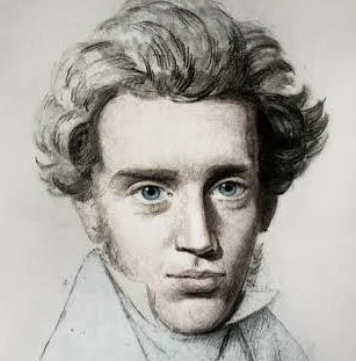
If the genius is an artist, then he accomplishes his work as art, but neither he nor his work of art has a telos outside him.
The everyday world demands our attention, and prevents us from sinking into ourselves. As a romantic, I have always resented this: I like to sink into myself. The problems and anxieties of living make it difficult. Well, now I had an anxiety that referred to something inside of me, and it reminded me that my inner world was just as real and important as the world around me.
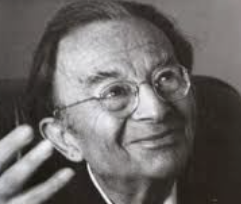
What most people in our culture mean by being lovable is essentially a mixture between being popular and having sex appeal.
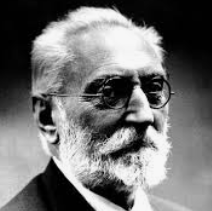
Once the needs of hunger are satisfied - and they are soon satisfied - the vanity, the necessity - for it is a necessity - arises of imposing ourselves upon and surviving in others. Man habitually sacrifices his life to his purse, but he sacrifices his purse to his vanity. He boasts even of his weakness and his misfortunes, for want of anything better to boast of, and is like a child who, in order to attract attention, struts about with a bandaged finger.
We say that someone occupies an official position, whereas it is the official position that occupies him.
A man's thinking goes on within his consciousness in a seclusion in comparison with which any physical seclusion is an exhibition to public view.
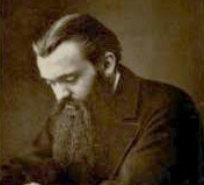
By scientific thought we mean the application of past experience to new circumstances by means of an observed order of events. By saying that this order of events is exact we mean that it is exact enough to correct experiments by, but we do not mean that it is theoretically or absolutely exact, because we do not know. The process of inference [is] in itself an assumption of uniformity, and... as the known exactness of the uniformity became greater, the stringency of the inference [is] increased. By saying that the order of events is reasonable we do not mean that everything has a purpose, or that everything can be explained, or that everything has a cause; for neither of these is true. But we mean that to every reasonable question there is an intelligible answer, which either we or posterity may know by the exercise of scientific thought.
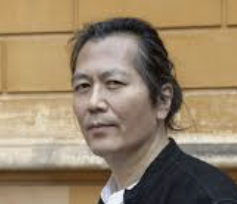
A screen bans reality.
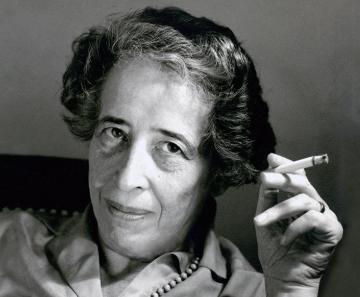
What makes it so plausible to assume that hypocrisy is the vice of vices is that integrity can indeed exist under the cover of all other vices except this one. Only crime and the criminal, it is true, confront us with the perplexity of radical evil; but only the hypocrite is really rotten to the core.
The essence of the modern state is the union of the universal with the full freedom of the particular, and with the welfare of individuals.
CivilSimian.com created by AxiomaticPanic, CivilSimian, Kalokagathia