


8 months 6 days ago
Suppose a person entering a house were to feel heat on the porch, and going further, were to feel the heat increasing, the more they penetrated within. Doubtless, such a person would believe there was a fire in the house, even though they did not see the fire that must be causing all this heat. A similar thing will happen to anyone who considers this world in detail: one will observe that all things are arranged according to their degrees of beauty and excellence, and that the nearer they are to God, the more beautiful and better they are.
▼
Source
source
Art. 1
3 months 2 weeks ago
Let there be freedom from perturbations with respect to the things which come from the external cause; and let there be justice in the things done by virtue of the internal cause, that is, let there be movement and action terminating in this, in social acts, for this is according to thy nature.
▼
Source
source
IX, 31
6 months 2 weeks ago
I decline the election. - It has ever been my rule through life, to observe a proportion between my efforts and my objects. I have never been remarkable for a bold, active, and sanguine pursuit of advantages that are personal to myself.
▼
Source
source
Speech at Bristol on declining the poll (9 September 1780), quoted in The Works of the Right Honourable Edmund Burke, Vol. II (1855), p. 170
7 months 2 weeks ago
It is a political axiom that power follows property.
▼
Source
source
Chapter 12 (p. 113)
6 months 3 weeks ago
When shall we see poets born? After a time of disasters and great misfortunes, when harrowed nations begin to breathe again. And then, shaken by the terror of such spectacles, imaginations will paint things entirely strange to those who have not witnessed them.
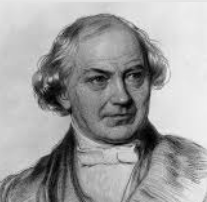
3 months 2 weeks ago
If terms are systematically good, they are not to be rejected because they are etymologically inaccurate.
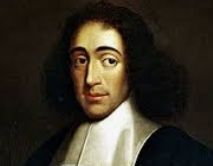
7 months 3 weeks ago
I had hoped that out of so many stories you would at least have produced one or two, which could hardly be questioned, and which would clearly show that ghosts or spectres exist. The case you relate... seems to me laughable. In like manner it would be tedious here to examine all the stories of people, who have written on these trifles. To be brief, I cite the instance of Julius Caesar, who, as Suetonius testifies, laughed at such things and yet was happy. ...And so should all who reflect on the human imagination, and the effects of the emotions, laugh at such notions; whatever Lavater and others, who have gone dreaming with him in the matter, may produce to the contrary.
▼
Source
source
Letter to Hugo Boxel (October 1674) The Chief Works of Benedict de Spinoza (1891) Tr. R. H. M. Elwes, Vol. 2, Letter 58 (54).
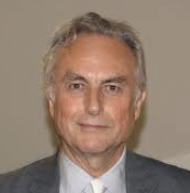
5 months 2 weeks ago
Darwin made it possible to be an intellectually fulfilled atheist.
▼
Source
source
Chapter 1 "Explaining the Very Improbable" (p. 6)
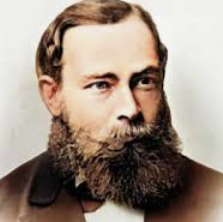
6 months 1 week ago
We suppose, it would seem, that concepts grow in the individual mind like leaves on a tree, and we think to discover their nature by studying their growth; we seek to define them psychologically, in terms of the human mind. But this account makes everything subjective, and if we follow it through to the end, does away with truth. What is known as the history of concepts is really a history either of our knowledge of concepts or of the meanings of words.
▼
Source
source
Translation J. L. Austin (Oxford, 1950) as quoted by Stephen Toulmin, Human Understanding: The Collective Use and Evolution of Concepts (1972) Vol. 1, p. 56.

7 months 2 weeks ago
I have at last come to the end of the Faerie Queene: and though I say "at last", I almost wish he had lived to write six books more as he had hoped to do - so much have I enjoyed it.
▼
Source
source
On Edmund Spenser's long poem in a letter to Arthur Greeves (7 March 1916), published in The Collected Letters of C.S. Lewis
8 months 2 weeks ago
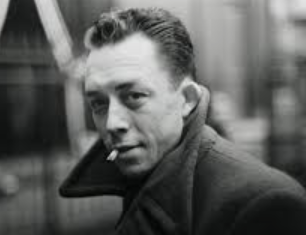
Art is the activity that exalts and denies simultaneously. "No artist tolerates reality," says Nietzsche.
3 months 2 weeks ago
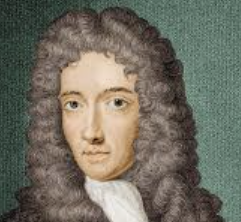
Not that I at all disallow the use of reasoning upon experiments, or the endeavouring to discern as early as we can the confederations, and differences, and tendencies of things: for such an absolute suspension of the exercise of reasoning were exceeding troublesome, if not impossible. And, as in that rule of arithmetic, which is commonly called regula falsi by proceeding upon a conjecturally-supposed number, as if it were that, which we inquire after, we are wont to come to the knowledge of the true number sought for; so in physiology it is sometimes conducive to the discovery of truth, to permit the understanding to make an hypothesis, in order to the explication of this or that difficulty, that by examining how far the phænomena are, or are not, capable of being solved by that hypothesis, the understanding may, even by its own errors, be instructed.
7 months 3 weeks ago
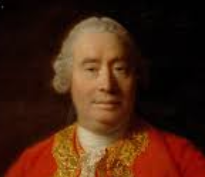
There is no method of reasoning more common, and yet none more blameable, than in philosophical debates to endeavour to refute any hypothesis by a pretext of its dangerous consequences to religion and morality. When any opinion leads us into absurdities, 'tis certainly false; but 'tis not certain an opinion is false, because 'tis of dangerous consequence.
▼
Source
source
Part 3, Section 2

7 months 3 weeks ago
The mariner of old said to Neptune in a great tempest, "O God! thou mayest save me if thou wilt, and if thou wilt thou mayest destroy me; but whether or no, I will steer my rudder true."
▼
Source
source
Book II, Ch. 16. Of Glory
6 months 2 weeks ago
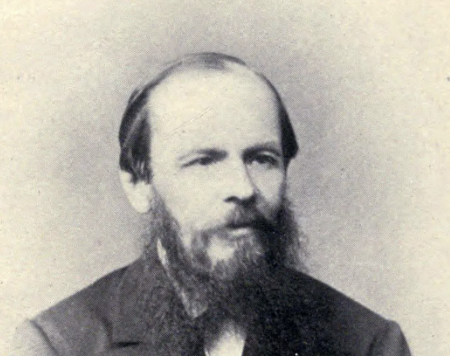
I have never in my life met a man like him for noble simplicity, and boundless truthfulness. I understood from the way he talked that anyone who chose could deceive him, and that he would forgive anyone afterwards who had deceived him, and that was why I grew to love him.
▼
Source
source
Part 4, Chapter 8
6 months 1 week ago
The mental operation by which one achieves new concepts and which one denotes generally by the inadequate name of induction is not a simple but rather a very complicated process. Above all, it is not a logical process although such processes can be inserted as intermediary and auxiliary links. The principle effort that leads to the discovery of new knowledge is due to abstraction and imagination.
▼
Source
source
3rd edition, p. 318ff, As quoted by Phillip Frank, Philosophy of Science: The Link Between Science and Philosophy
8 months 2 weeks ago
The papers were always talking about the debt owed to society. According to them, it had to be paid. But that doesn't speak to the imagination. What really counted was the possibility of escape, a leap to freedom, out of the implacable ritual, a wild run for it that would give whatever chance for hope there was. Of course, hope meant being cut down on some street corner, as you ran like mad, by a random bullet. But when I really thought it through, nothing was going to allow me such a luxury. Everything was against it; I would just be caught up in the machinery again.


3 months 2 weeks ago
When a series of progressive numbers is given as the result of observation, it may generally be reduced to law by combinations of arithmetical and geometrical progressions. A true formula for a progressive series of numbers cannot commonly be obtained from a narrow range of observations.
8 months ago
Five rules are of absolute necessity, and cannot be dispensed with without essential defect and often without error.
7 months 3 weeks ago
If reason (I mean abstract reason, derived from inquiries a priori) be not alike mute with regard to all questions concerning cause and effect, this sentence at least it will venture to pronounce, That a mental world, or universe of ideas, requires a cause as much, as does a material world, or universe of objects; and, if similar in its arrangement, must require a similar cause. For what is there in this subject, which should occasion a different conclusion or inference? In an abstract view, they are entirely alike; and no difficulty attends the one supposition, which is not common to both of them.
▼
Source
source
Philo to Cleanthes, Part IV
3 months 2 weeks ago
When alterations in technical terms become necessary, it is desirable that the new term should contain in its form some memorial of the old one.
4 months 2 days ago
Show me that the good in life does not depend upon life's length, but upon the use we make of it; also, that it is possible, or rather usual, for a man who has lived long to have lived too little. Say to me when I lie down to sleep: "You may not wake again!" And when I have waked: "You may not go to sleep again!" Say to me when I go forth from my house: "You may not return!" And when I return: "You may never go forth again!"

8 months 2 weeks ago
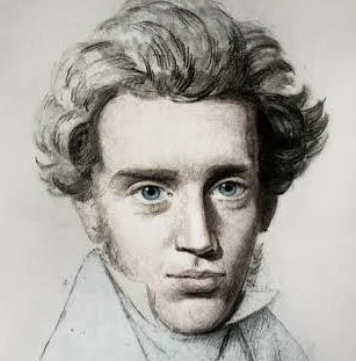
Death cannot explain itself. The earnestness consists precisely in this, that the observer must explain it to himself.
5 months 2 weeks ago
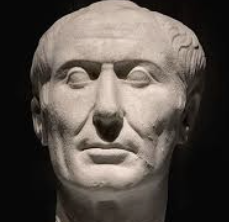
There is but a step between a proud man's glory and his disgrace.
▼
Source
source
Maxim 138
7 months 3 weeks ago
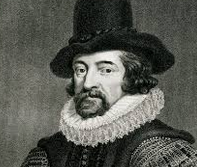
The human understanding when it has once adopted an opinion (either as being the received opinion or as being agreeable to itself) draws all things else to support and agree with it. And though there be a greater number and weight of instances to be found on the other side, yet these it either neglects and despises, or else by some distinction sets aside and rejects, in order that by this great and pernicious predetermination the authority of its former conclusions may remain inviolate.
▼
Source
source
Aphorism 46
7 months 2 weeks ago
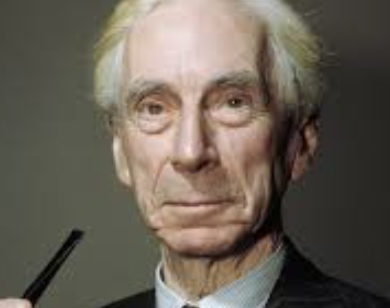
At the present stage in the development of the art of war, there is only way of coping with them, and that is to keep out of war. In all the densely populated countries of Western Europe, it seems almost certain that, within a few days of the outbreak of war, panic will seize the surviving inhabitants of the capitals and the industrial areas, leading to anarchy, starvation, and paralysis of all warlike effort. The only sensible course, therefore, is to prevent war if possible, and to remain neutral if war occurs.
▼
Source
source
Letter to The New Statesman and Nation (10 August 1935)
6 months 3 weeks ago
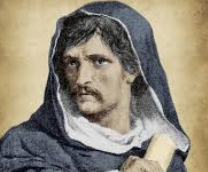
I cleave the heavens and soar to the infinite. And while I rise from my own globe to others And penetrate ever further through the eternal field, That which others saw from afar, I leave far behind me. Variant translation: While I venture out beyond this tiny globe Into reaches past the bounds of starry night I leave behind what others strain to see afar.
7 months 1 week ago
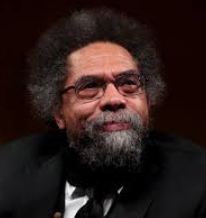
The Democratic Party is beyond redemption at this point when it comes to seriously speaking to the needs of poor and working people... The neofascism that's escalating is predicated on the rottenness of a system in which the Democratic Party facilitates that frustration and desperation because it can't present an alternative... If America is unable to present an alternative to the Democratic Party, then we're going fascist.
7 months 2 weeks ago
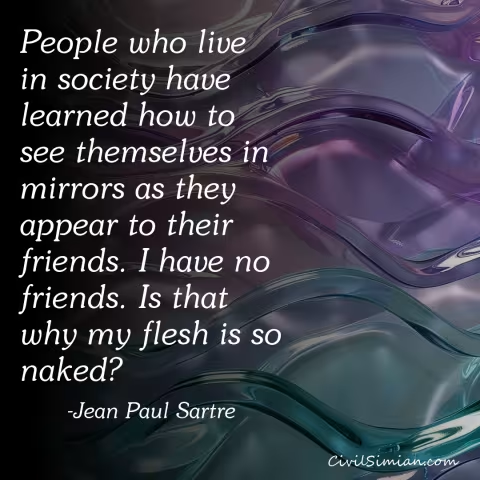
There's a Bible on that shelf there. But I keep it next to Voltaire - poison and antidote.
▼
Source
source
In Kenneth Harris Talking To: Bertrand Russell, 1971
3 months 3 weeks ago
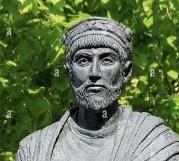
The visible world has, as I have said, subsisted around him from all eternity: and the Light also which surrounds the world has also its place from all eternity, not intermittently, nor in different degrees at different times, but constantly and in an equable manner. But whosoever will attempt to estimate, as far as thought goes, this external Nature, by the measure of Time, he will very easily discover respecting the Sun, Sovereign of all things, of how many blessings he is, from all eternity, the author to the world.
6 months 2 weeks ago
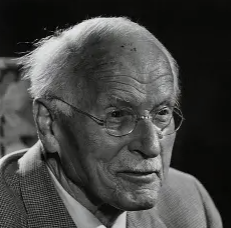
I am an orphan, alone; nevertheless I am found everywhere. I am one, but opposed to myself. I am youth and old man at one and the same time. I have known neither father nor mother, because I have had to be fetched out of the deep like a fish, or fell like a white stone from heaven. In woods and mountains I roam, but I am hidden in the innermost soul of man. I am mortal for everyone, yet I am not touched by the cycle of aeons.
▼
Source
source
Combining alchemical assertions
6 months 1 week ago
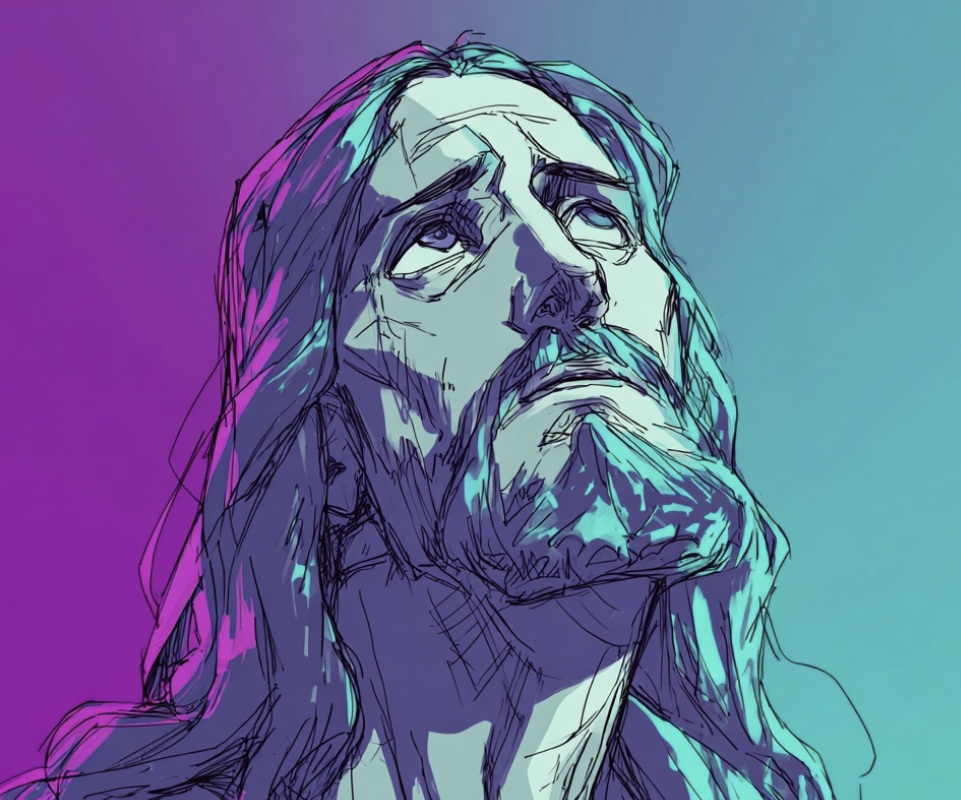
Recognize what is in your sight, and that which is hidden from you will become plain to you. For there is nothing hidden which will not become manifest.

4 months 3 weeks ago
Throughout the years in which the US was punishing countries that departed from fiscal prudence, it was borrowing on a colossal scale to finance tax cuts and fund its over-stretched military commitments. Now, with federal finances critically dependent on continuing large inflows of foreign capital, it will be the countries that spurned the American model of capitalism that will shape America's economic future.
5 months 2 weeks ago
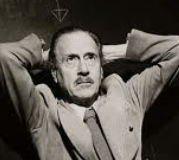
Our book technology has Gutenberg at one end and the Ford assembly lines at the other. Both are obsolete.
▼
Source
source
(p. 99)

7 months 2 weeks ago
Some people talk as if meeting the gaze of absolute goodness would be fun. They need to think again. They are still only playing with religion. Goodness is either the great safety or the great danger-according to the way you react to it.
▼
Source
source
Book I, Chapter 5, "We Have Cause to Be Uneasy"

6 months 1 day ago
A truly powerful holder of power does not simply elicit agreement, but enthusiasm and excitement.
7 months 3 weeks ago
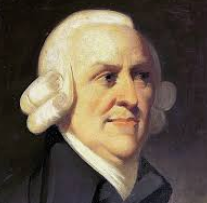
It is unjust that the whole of society should contribute towards an expence of which the benefit is confined to a part of the society.
▼
Source
source
Chapter I, Part IV, Conclusion, p. 881.

7 months 2 weeks ago
The christian religion is a parody on the worship of the Sun, in which they put a man whom they call Christ, in the place of the Sun, and pay him the same adoration which was originally paid to the Sun.
▼
Source
source
An Essay on the Origin of Free-Masonry (1803-1805); found in manuscript form after Paine's death and thought to have been written for an intended part III of The Age of Reason. It was partially published in 1810 and published in its entirety in 1818.

8 months 3 days ago
Do not despair: one thief was saved. Do not presume: one thief was damned.
▼
Source
source
Attributed to St. Augustine in The Repentance of Robert Greene, Master of Arts (1592) by Robert Greene.

6 months ago
Corruption of politics has nothing to do with the morals, or the laxity of morals, of various political personalities. Its cause is altogether a material one. Politics is the reflex of the business and industrial world, the mottos of which are: "To take is more blessed than to give"; "buy cheap and sell dear"; "one soiled hand washes the other." There is no hope even that woman, with her right to vote, will ever purify politics.
6 months 4 days ago
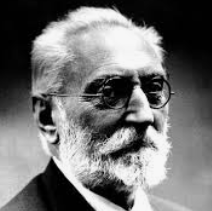
It has often been said that every man who has suffered misfortunes prefers to be himself, even with his misfortunes, rather than to be someone else without them. For unfortunate men, when they preserve their normality in their misfortune - that is to say, when they endeavor to persist in their own being - prefer misfortune to non-existence. For myself I can say that when a as a youth, and even as a child, I remained unmoved when shown the most moving pictures of hell, for even then nothing appeared to me quite so horrible as nothingness itself. It was a furious hunger of being that possessed me, an appetite for divinity, as one of our ascetics [San Juan de los Angeles] has put it.

4 months 1 week ago
The other big issue is an emotional one. We tend to feel the greatest bonds of solidarity with people that are close to us. There are very few true citizens of the world. We're citizens of individual countries and we really feel the closest bonds to people that live within our nation, and therefore... the nation becomes a kind of social glue. But if you're going to make a national identity compatible with liberalism, it has to be the right kind of national identity. It has to be one that is open to all of the citizens that actually live in the territory of the nation. It can't exclude certain groups by race, by ethnicity, by religious belief and the like, and therefore it needs to be an open identity that is based on essentially liberal ideas.
▼
Source
source
24:46:00

4 months 1 week ago
He who would write heroic poems should make his whole life a heroic poem.
▼
Source
source
Life of Schiller.
CivilSimian.com created by AxiomaticPanic, CivilSimian, Kalokagathia