

7 months 2 weeks ago
Apart from autograph hunters, I get... many letters from Hindus, beseeching me to adopt some form of mysticism, from young Americans, asking me where I think the line should be drawn in petting, and from Poles, urging me to admit that while all other nationalism may be bad that of Poland is wholly noble. I get letters from engineers who cannot understand Einstein, and from parsons who think that I cannot understand Genesis, from husbands whose wives have deserted them - not (they say) that that would matter, but the wives have taken the furniture with them, and what in these circumstances should an enlightened male do? ...I get letters (concerning whose genuineness I am suspicious) trying to get me to advocate abortion, and I get letters from young mothers asking my opinion of bottle-feeding.
▼
Source
source
Letter to Mr C. L. Aiken, March 19, 1930
5 months 2 weeks ago
Materialism ends up denying the existence of any irreducible subjective qualitative states of sentience or awareness.
▼
Source
source
Consciousness and Language (2002) p. 47.

7 months 2 weeks ago
There lies before us, if we choose, continual progress in happiness, knowledge, and wisdom. Shall we, instead, choose death, because we cannot forget our quarrels? We appeal as human beings to human beings: Remember your humanity, and forget the rest. If you can do so, the way lies open to a new Paradise; if you cannot, there lies before you the risk of universal death.
6 months 3 weeks ago
Seeing therefore they are both [heat and pain] immediately perceived at the same time, and the fire affects you only with one simple, or uncompounded idea, it follows that this same simple idea is both the intense heat immediately perceived, and the pain; and consequently, that the intense heat immediately perceived, is nothing distinct from a particular sort of pain.
▼
Source
source
Philonous to Hylas
7 months 1 week ago
Someone who knows too much finds it hard not to lie.
▼
Source
source
p. 64e

8 months 2 weeks ago
Artistic creation is a demand for unity and a rejection of the world.
3 months 1 week ago
Generations to come, it may well be, will scarce believe that such a man as this one ever in flesh and blood walked upon this Earth.
6 months 2 weeks ago
When any work seems to have required immense force and labor to affect it, the idea is grand. Stonehenge, neither for disposition nor ornament, has anything admirable; but those huge rude masses of stone, set on end, and piled each on other, turn the mind on the immense force necessary for such a work. Nay, the rudeness of the work increases this cause of grandeur, as it excludes the idea of art and contrivance; for dexterity produces another sort of effect, which is different enough from this.
▼
Source
source
Part II Section XII
5 months 2 weeks ago
Don't turn back when you are just at the goal.
▼
Source
source
Maxim 580



7 months 1 week ago
Amy Kofman: Have you read all the books in here?Derrida: No, only four of them. But I read those very, very carefully.
▼
Source
source
Derrida (2003 documentary), referring to his personal library

3 months 2 weeks ago
All the science in the world began in temples, and the first astronomers especially were priests. I do not say that it necessary to begin again with the antique initiation, and to change the presidents of our academies into hierophants, but I say that all things begin again as they began, that they all carry an original principle that modifies itself according to the different character of nations and the progressive advance of the human mind, but which however always shows itself in one way or another. Priests have preserved everything, brooded over everything, and taught us everything.
▼
Source
source
p. 283

6 months 2 days ago
Marcus Garvey, Elijah Muhammad, Malcolm X, Martin Luther King, Stokely Carmichael, Amiri Baraka and other black male leaders have righteously supported patriarchy. They have all argued that it is absolutely necessary for black men to relegate black women to a subordinate position both in the political sphere and in home life.
6 months 1 week ago
The subconscious is ceaselessly murmuring, and it is by listening to these murmurs that one hears the truth.
▼
Source
source
Ch. 2, sect. 2
5 months 1 week ago
Why is it after a century of socialist disasters, and an intellectual legacy that has been time and again exploded, the left-wing position remains, as it were, the default position to which thinking people gravitate when called upon for a comprehensive philosophy? Why are "right-wingers" marginalised in the educational system, denounced in the media and regarded by our political class as untouchable, fit only to clean up after the orgies of luxurious nonsense indulged in by their moral superiors?
6 months ago
It is thought pretty to say that "Women have no passion." If passion is excitement in the daily social intercourse with men, women think about marriage much more than men do; it is the only event of their lives. It ought to be a sacred event, but surely not the only event of a woman's life, as it is now. Many women spend their lives in asking men to marry them, in a refined way. Yet it is true that women are seldom in love. How can they be?
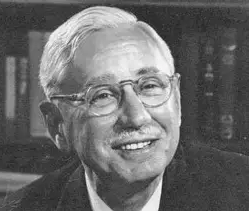
4 months 1 week ago
She is a woman now, and not an idle girl, not a domestic ornament or a sexual convenience anymore.
▼
Source
source
On the maturation of women, Ch. 4 : On Old Age
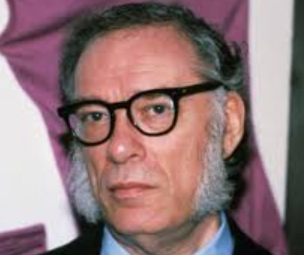
8 months 2 weeks ago
We face eternity now. We have no universe left, no outside phenomena, no emotions, no passions. Nothing but ourselves and thought. We face an eternity of introspection, when all through history we have never known what to do with ourselves on a rainy Sunday.
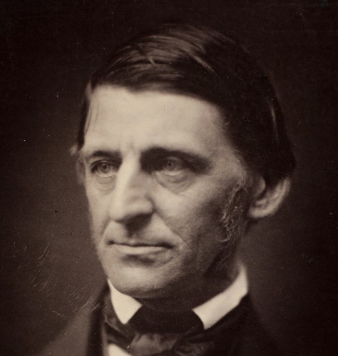
7 months 2 weeks ago
What potent blood hath modest May!
▼
Source
source
May-Day

7 months 1 week ago
Truth is best (of all that is) good. As desired, what is being desired is truth for him who (represents) the best truth.
▼
Source
source
Ahunuvaiti Gatha; Yasna 27, 14.
5 months 2 weeks ago
The audience, as ground, shapes and controls the work of art.
▼
Source
source
p. 48

3 months 2 weeks ago
We haven't accepted - we can't really believe - that the most characteristic product of our age of scientific miracles is junk, but that is so. And we still think and behave as though we face an unspoiled continent, with thousands of acres of living space for every man. We still sing "America the Beautiful" as though we had not created in it, by strenuous effort, at great expense, and with dauntless self-praise, an unprecedented ugliness.
▼
Source
source
"The Rise"
7 months 3 weeks ago
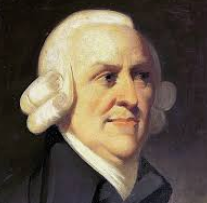
The statesman who should attempt to direct people in what manner they ought to employ their capitals, would not only load himself with a most unnecessary attention, but assume an authority which could safely be trusted, not only to no single person, but to no council or senate whatever, and which would nowhere be so dangerous as in the hands of a man who had folly and presumption enough to fancy himself fit to exercise it.
▼
Source
source
Chapter II

6 months ago
The people are asleep; they remain indifferent. They forge their own chains and do the bidding of their masters to crucify their Christs.
▼
Source
source
(p. 304)

3 months 2 weeks ago
When speaking of the new testament that you should read all the histories of Christ, as well of those whom a council of ecclesiastics have decided for us to be Pseudo-evangelists, as those they named Evangelists. Because these Pseudo-evangelists pretended to inspiration as much as the others, and you are to judge their pretensions by your own reason, & not by the reason of those ecclesiastics. Most of these are lost. There are some however still extant, collected by Fabricius which I will endeavor to get & send you.

6 months 2 weeks ago
The world must be romanticized. In this way the originary meaning may be found again.
▼
Source
source
As quoted in The Experience of the Foreign : Culture and Translation in Romantic Germany (1992) by Antoine Berman Variant translation: Romanticize the world.
7 months 2 weeks ago
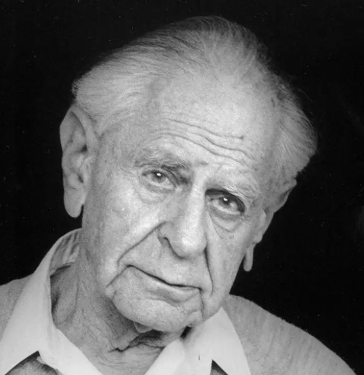
If the many, the specialists, gain the day, it will be the end of science as we know it - of great science. It will be a spiritual catastrophe comparable in its consequences to nuclear armament.
▼
Source
source
K. Popper, The Myth of the Framework, London: Routledge. As quoted in The Cambridge Companion to Karl Popper (2016) by J. Shearmur, G. Stokes

6 months 3 weeks ago
You may set the Negro free, but you cannot make him otherwise than an alien to the European. Nor is this all we scarcely acknowledge the common features of humanity in this stranger whom slavery has brought among us. His physiognomy is to our eyes hideous, his understanding weak, his tastes low; and we are almost inclined to look upon him as a being intermediate between man and the brutes.
▼
Source
source
Chapter XVIII.
5 months 1 week ago
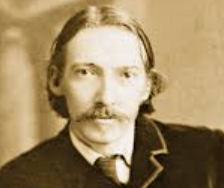
The old land is still the true love, the others are but pleasant infidelities.
▼
Source
source
Pt. I, ch. IV
6 months 2 weeks ago
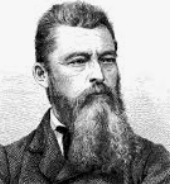
God, I have said, is the fulfiller, or the reality, of the human desires for happiness, perfection, and immortality. From this it may be inferred that to deprive man of God is to tear the heart out of his breast. But I contest the premises from which religion and theology deduce the necessity and existence of God, or of immortality, which is the same thing. I maintain that desires which are fulfilled only in the imagination, or from which the existence of an imaginary being is deduced, are imaginary desires, and not the real desires of the human heart; I maintain that the limitations which the religious imagination annuls in the idea of God or immortality, are necessary determinations of the human essence, which cannot be dissociated from it, and therefore no limitations at all, except precisely in man's imagination.
▼
Source
source
Lecture XXX, Atheism alone a Positive View
6 months 2 weeks ago
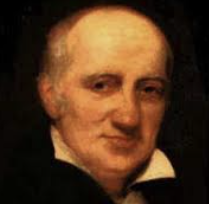
I did not hate the author of my misfortunes - truth and justice acquit me of that; I rather pitied the hard destiny to which he seemed condemned. But I thought with unspeakable loathing of those errors, in consequence of which every man is fated to be, more or less, the tyrant or the slave. I was astonished at the folly of my species, that they did not rise up as one man, and shake off chains so ignominious, and misery so insupportable. So far as related to myself, I resolved - and this resolution has never been entirety forgotten by me - to hold myself disengaged from this odious scene, and never fill the part either of the oppressor or the sufferer.

7 months 2 weeks ago
The example of the Jews, in many things, may not be imitated by us; they had not only orders to cut off several nations altogether, but if they were obliged to war with others, and conquered them, to cut off every male; they were suffered to use polygamy and divorces, and other things utterly unlawful to us under clearer light.
7 months 3 weeks ago
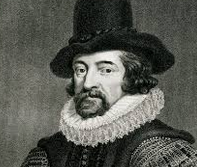
There are and can be only two ways of searching into and discovering truth. The one flies from the senses and particulars to the most general axioms, and from these principles, the truth of which it takes for settled and immovable, proceeds to judgment and to the discovery of middle axioms. And this way is now in fashion. The other derives axioms from the senses and particulars, rising by a gradual and unbroken ascent, so that it arrives at the most general axioms last of all. This is the true way, but as yet untried.
▼
Source
source
Aphorism 19
4 months 1 week ago
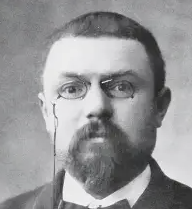
Is the position tenable, that certain phenomena, possible in Euclidean space, would be impossible in non-Euclidean space, so that experience, in establishing these phenomena, would directly contradict the non-Euclidean hypothesis? For my part I think no such question can be put. To my mind it is precisely equivalent to the following, whose absurdity is patent to all eyes: are there lengths expressible in meters and centimeters, but which can not be measured in fathoms, feet, and inches, so that experience, in ascertaining the existence of these lengths, would directly contradict the hypothesis that there are fathoms divided into six feet?
▼
Source
source
Ch. V: Experiment and Geometry (1905) Tr. George Bruce Halstead

6 months 3 weeks ago
Shakespeare's fault is not the greatest into which a poet may fall. It merely indicates a deficiency of taste.
3 months 2 weeks ago
With all these blessings, what more is necessary to make us a happy and prosperous people? Still one thing more, fellow-citizens,-A wise and frugal Government, which shall restrain men from injuring one another, shall leave them otherwise free to regulate their own pursuits of industry and improvement, and shall not take from the mouth of labor the bread it has earned. This is the sum of good government, and this is necessary to close the circle of our felicities.
6 months 2 weeks ago
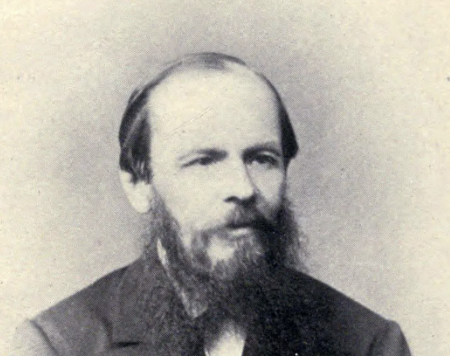
All is in a man's hands and he lets it all slip from cowardice, that's an axiom. It would be interesting to know what it is men are most afraid of. Taking a new step, uttering a new word is what they fear most. Variant translation: "Taking a new step, uttering a new word, is what people fear most."
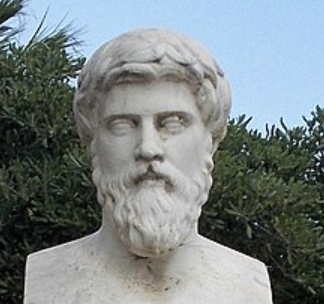
7 months 5 days ago
Diogenes the Cynic, when a little before his death he fell into a slumber, and his physician rousing him out of it asked him whether anything ailed him, wisely answered, "Nothing, sir; only one brother anticipates another,-Sleep before Death."
8 months 2 weeks ago
Those who need myths are indeed poor. Here the gods serve as beds or resting places as the day races across the sky.

6 months 2 weeks ago
Tolerance - the function of an extinguished ardor - tolerance cannot seduce the young.
5 months 1 week ago
Is there anything in life so disenchanting as attainment?
▼
Source
source
The Suicide Club, The Adventure of the Hansom Cabs.
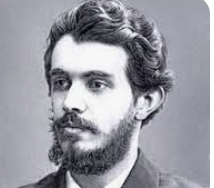
6 months 4 days ago
Nobody is bound to have an optimistic outlook on the future: that is not a precept of the Christian religion. ... It is a matter of immense importance that illusions should be dispelled and man come face to face with positive realities.
▼
Source
source
p. 131

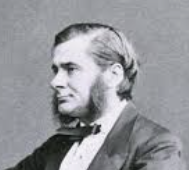
5 months 3 days ago
Perhaps the most valuable result of all education is the ability to make yourself do the thing you have to do, when it ought to be done, whether you like it or not; it is the first lesson that ought to be learned; and, however early a man's training begins, it is probably the last lesson that he learns thoroughly.
▼
Source
source
Technical Education
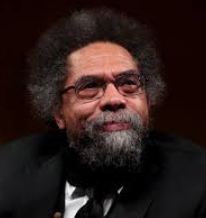
7 months 1 week ago
I remind young people everywhere I go, one of the worst things the older generation did was to tell them for twenty-five years "Be successful, be successful, be successful" as opposed to "Be great, be great, be great". There's a qualitative difference.
▼
Source
source
Speech in San Francisco: Democracy Matters
8 months 2 days ago
When you do anything from a clear judgment that it ought to be done, never shun the being seen to do it, even though the world should make a wrong supposition about it; for, if you don't act right, shun the action itself; but, if you do, why are you afraid of those who censure you wrongly?
▼
Source
source
(35).
CivilSimian.com created by AxiomaticPanic, CivilSimian, Kalokagathia