

6 months 1 week ago
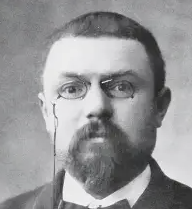
As we can not give a general definition of energy, the principle of the conservation of energy signifies simply that there is something which remains constant.
8 months 5 days ago
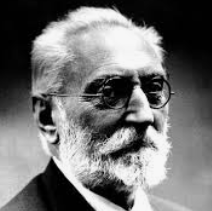
I have told you that... we know nothing save what we have first, in one way or another, desired; and it may even be added that we can know nothing well save what we love, save what we pity.
8 months 3 weeks ago
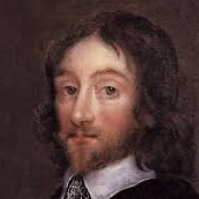
Times before you, when even the living men were Antiquities; when the living might exceed the dead, and to depart this world, could not be properly said, to go unto the greater number. Dedication
10 months 3 weeks ago
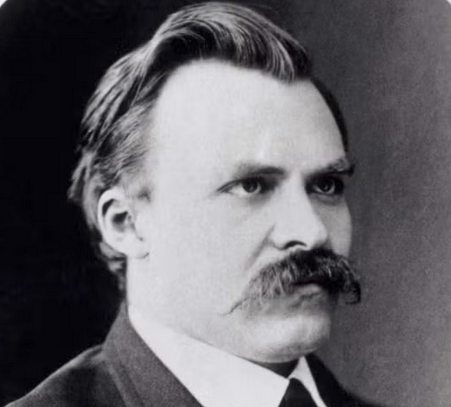
Whereas the man of action binds his life to reason and its concepts so that he will not be swept away and lost, the scientific investigator builds his hut right next to the tower of science so that he will be able to work on it and to find shelter for himself beneath those bulwarks which presently exist. And he requires shelter, for there are frightful powers which continuously break in upon him, powers which oppose scientific "truth" with completely different kinds of "truths" which bear on their shields the most varied sorts of emblems.
8 months 1 week ago
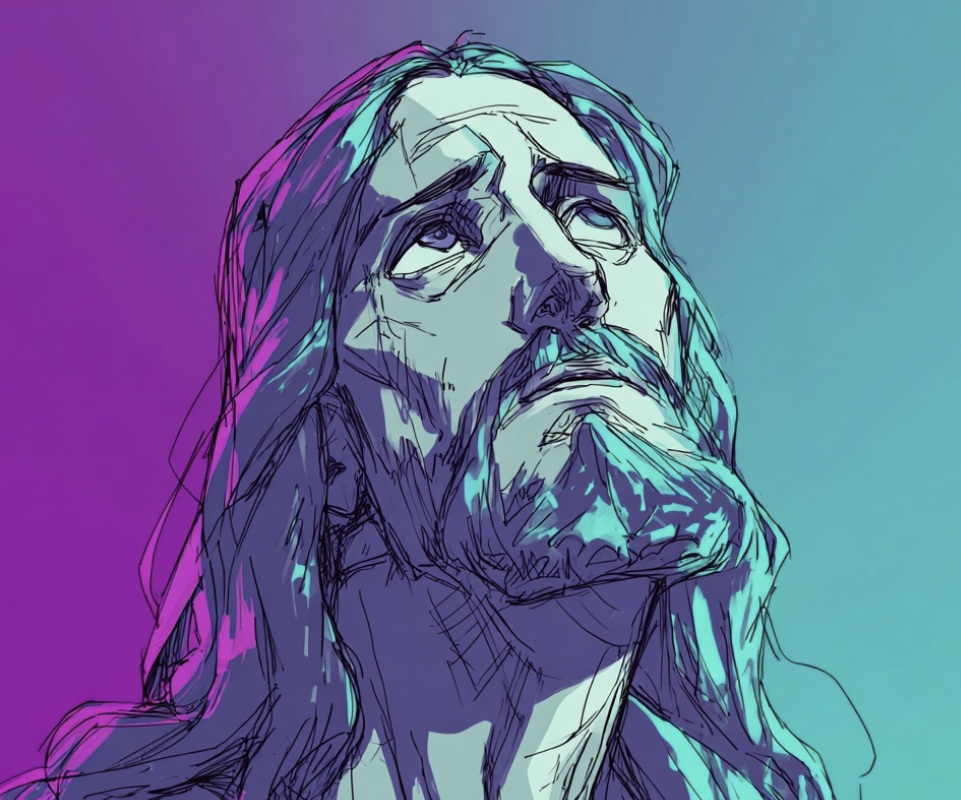
Blessed art thou, Simon Barjona: for flesh and blood hath not revealed it unto thee, but my Father which is in heaven. And I say also unto thee, That thou art Peter, and upon this rock I will build my church; and the gates of hell shall not prevail against it. And I will give unto thee the keys of the kingdom of heaven: and whatsoever thou shalt bind on earth shall be bound in heaven: and whatsoever thou shalt loose on earth shall be loosed in heaven.
▼
Source
source
16:17-19 (KJV)

8 months 1 week ago
The philosopher ... subjects experience to his critical judgment, and this contains a value judgment - namely, that freedom from toil is preferable to toil, and an intelligent life is preferable to a stupid life. It so happened that philosophy was born with these values. Scientific thought had to break this union of value judgment and analysis, for it became increasingly clear that the philosophic values did not guide the organisation of society.
▼
Source
source
p. 126



9 months 2 weeks ago
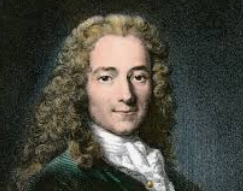
It requires twenty years for a man to rise from the vegetable state in which he is within his mother's womb, and from the pure animal state which is the lot of his early childhood, to the state when the maturity of reason begins to appear. It has required thirty centuries to learn a little about his structure. It would need eternity to learn something about his soul. It takes an instant to kill him.
▼
Source
source
"Man: General Reflection on Man", 1771

10 months 2 weeks ago
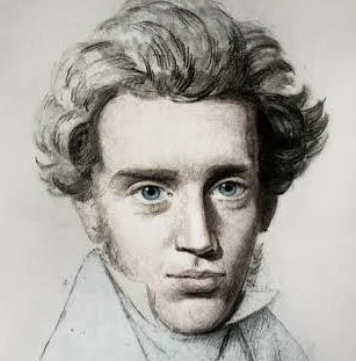
Out of love, God becomes man. He says: Here you see what it is to be a human being; but he adds: Take care, for I am also God - blessed is he who takes no offense at me.
▼
Source
source
As translated by Howard V. Hong and EdnaH. Hong (1980) Variant translation; Out of love, God becomes man. He says: "See, here is what it is to be a human being."

6 months 1 week ago
That liberal world that emerged after 1945 led to one of the most spectacularly successful periods in human history. There was material progress. There was stability. There was human freedom. There was the flourishing of many human activities that can only take place in a liberal, and therefore free society...
▼
Source
source
10:06

9 months 2 weeks ago
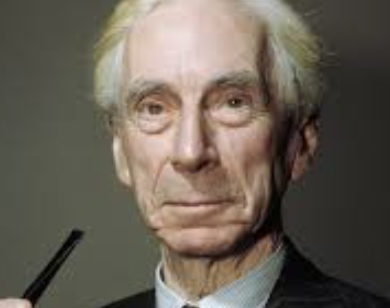
Every philosophical problem, when it is subjected to the necessary analysis and justification, is found either to be not really philosophical at all, or else to be, in the sense in which we are using the word, logical.
▼
Source
source
p. 33

10 months 2 weeks ago
What the age needs is not a genius - it has had geniuses enough, but a martyr, who in order to teach men to obey would himself be obedient unto death. What the age needs is awakening. And therefore someday, not only my writings but my whole life, all the intriguing mystery of the machine will be studied and studied. I never forget how God helps me and it is therefore my last wish that everything may be to his honour.
8 months 1 week ago
Life, individual or collective, personal or historic, is the one entity in the universe whose substance is compact of danger, of adventure. It is, in the strict sense of the word, drama. ... The primary, radical meaning of life appears when it is employed in the sense not of biology, but of biography. For the very strong reason that the whole of biology is quite definitely only a chapter in certain biographies, it is what biologists do in the portion of their lives open to biography.
▼
Source
source
Chap.IX: The Primitive and the Technical

9 months 1 week ago
At the end of the Middle Ages, leprosy disappeared from the Western world. In the margins of the community, at the gates of cities, there stretched wastelands which sickness had ceased to haunt but had left sterile and long uninhabitable. For centuries, these reaches would belong to the non-human. From the fourteenth to the seventeenth century, they would wait, soliciting with strange incantations a new incarnation of disease, another grimace of terror, renewed rites of purification and exclusion.
▼
Source
source
Part One: 1. Stultifera Navis

5 months 2 weeks ago
To be sane in a mad time is bad for the brain, worse for the heart.
▼
Source
source
"The Mad Farmer Manifesto: The First Amendment" in The Country of Marriage
7 months 3 weeks ago
I have studied these things - you have not.
▼
Source
source
Reported as Newton's response, whenever Edmond Halley would say anything disrespectful of religion, by Sir David Brewster in The Life of Sir Isaac Newton (1831)

8 months 4 days ago
The number 2 thought of by one man cannot be added to the number 2 thought of by another man so as to make up the number 4.
▼
Source
source
Oppression and Liberty (1958), p. 82
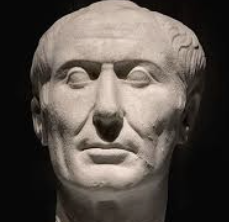
7 months 2 weeks ago
It is only the ignorant who despise education.
▼
Source
source
Maxim 571
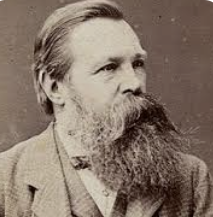
8 months 2 weeks ago
Wherever big industries displaced manufacture, the bourgeoisie developed in wealth and power to the utmost and made itself the first class of the country. The result was that wherever this happened, the bourgeoisie took political power into its own hands and displaced the hitherto ruling classes, the aristocracy, the guildmasters, and their representative, the absolute monarchy. The bourgeoisie annihilated the power of the aristocracy, the nobility, by abolishing the entailment of estates - in other words, by making landed property subject to purchase and sale, and by doing away with the special privileges of the nobility. It destroyed the power of the guildmasters by abolishing guilds and handicraft privileges. In their place, it put competition - that is, a state of society in which everyone has the right to enter into any branch of industry, the only obstacle being a lack of the necessary capital.
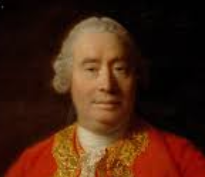
9 months 3 weeks ago
In all determinations of morality, this circumstance of public utility is ever principally in view; and wherever disputes arise, either in philosophy or common life, concerning the bounds of duty, the question cannot, by any means, be decided with greater certainty, than by ascertaining, on any side, the true interests of mankind. If any false opinion, embraced from appearances, has been found to prevail; as soon as farther experience and sounder reasoning have given us juster notions of human affairs, we retract our first sentiment, and adjust anew the boundaries of moral good and evil.
▼
Source
source
§ 2.17 : Of Benevolence, Pt. 2
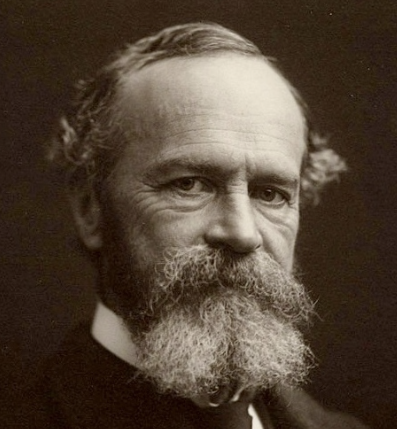
9 months 2 weeks ago
The plain fact is that men's minds are built, as has been often said, in water-tight compartments. Religious after a fashion, they yet have many other things in them beside their religion, and unholy entanglements and associations inevitably obtain. The basenesses so commonly charged to religion's account are thus, almost all of them, not chargeable at all to religion proper, but rather to religion's wicked practical partner, the spirit of corporate dominion. And the bigotries are most of them in their turn chargeable to religion's wicked intellectual partner, the spirit of dogmatic dominion, the passion for laying down the law in the form of an absolutely closed-in theoretic system. The ecclesiastical spirit in general is the sum of these two spirits of dominion.
▼
Source
source
Lectures XIV and XV, "The Value of Saintliness"
9 months 2 weeks ago
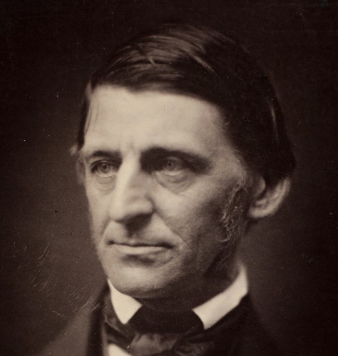
Solvency is maintained by means of the national debt, on the principle, "If you will not lend me the money, how can I pay you?"
▼
Source
source
Ability
6 months 3 days ago
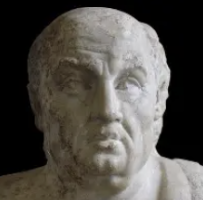
If you are wise, mingle these two elements: do not hope without despair, or despair without hope.
▼
Source
source
Line 12 Alternate translation: Hope not without despair, despair not without hope. (translated by Zachariah Rush).
9 months 2 weeks ago
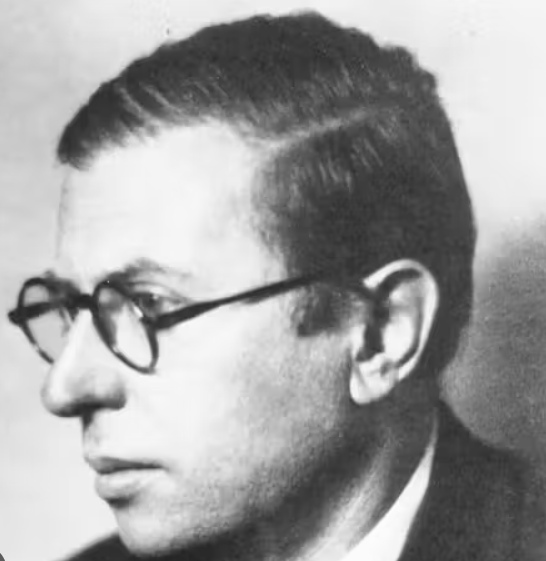
Every age has its own poetry; in every age the circumstances of history choose a nation, a race, a class to take up the torch by creating situations that can be expressed or transcended only through poetry.
▼
Source
source
"Orphée Noir (Black Orpheus)"
5 months 1 week ago
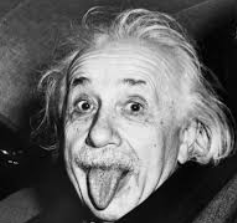
When a man after long years of searching chances on a thought which discloses something of the beauty of this mysterious universe, he should not therefore be personally celebrated. He is already sufficiently paid by his experience of seeking and finding. In science, moreover, the work of the individual is so bound up with that of his scientific predecessors and contemporaries that it appears almost as an impersonal product of his generation.
9 months 2 weeks ago
The universe is what it is, not what I choose that it should be.
▼
Source
source
The Value of Free Thought: How to Become a Truth-seeker and Break the Chains of Mental Slavery (1944), p. 24
9 months 2 weeks ago
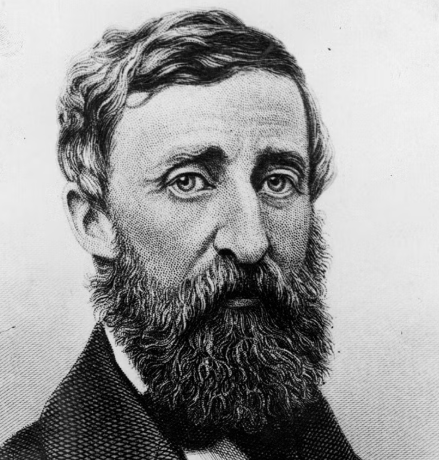
I am here to plead his cause with you. I plead not for his life, but for his character - his immortal life; and so it becomes your cause wholly, and is not his in the least. Some eighteen hundred years ago Christ was crucified; this morning, perchance, Captain Brown was hung. These are the two ends of a chain which is not without its links. He is not Old Brown any longer; he is an angel of light.

7 months 2 weeks ago
If the slave-owner of our times has no slave, John, whom he can send to the cesspool, he has five shillings, of which hundreds of such Johns are in such need that the slave-owner of our times may choose any one out of hundreds of Johns and be a benefactor to him by giving him the preference, and allowing him, rather than another, to climb down into the cesspool.
▼
Source
source
Chapter 8: Slavery Exists Among Us
9 months 3 weeks ago
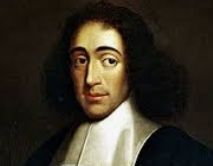
Needs must it be hard, since it is so seldom found. How would it be possible, if salvation were ready to our hand, and could without great labour be found, that it should be by almost all men neglected? But all things excellent are as difficult as they are rare.
▼
Source
source
Part V, Prop. XLII, Scholium
8 months 5 days ago
Faith which does not doubt is dead faith.
▼
Source
source
La Agonía del Cristianismo (The Agony of Christianity)
5 months 2 weeks ago
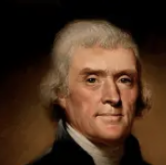
The truth is, that the greatest enemies of the doctrine of Jesus are those, calling themselves the expositors of them, who have perverted them to the structure of a system of fancy absolutely incomprehensible, and without any foundation in his genuine words. And the day will come when the mystical generation of Jesus, by the supreme being as his father in the womb of a virgin will be classed with the fable of the generation of Minerva in the brain of Jupiter ... But may we hope that the dawn of reason and freedom of thought in these United States will do away with this artificial scaffolding, and restore to us the primitive and genuine doctrines of this most venerated reformer of human errors.
▼
Source
source
Letter to John Adams (11 April 1823) (Scan at The Library of Congress)

9 months ago
It is requisite to defend those who are unjustly accused of having acted injuriously, but to praise those who excel in a certain good.
▼
Source
source
Pythagorean Ethical Sentences From Stobæus
5 months 1 week ago
It can scarcely be denied that the supreme goal of all theory is to make the irreducible basic elements as simple and as few as possible without having to surrender the adequate representation of a single datum of experience.
8 months 2 weeks ago
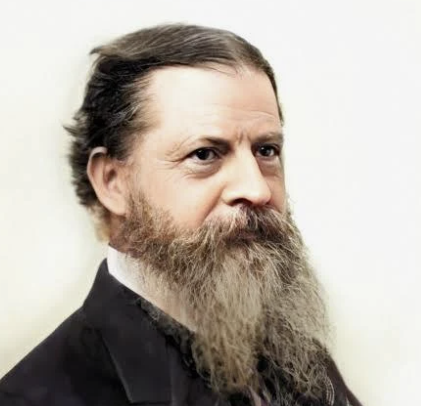
Philosophy, as I understand the word, is a positive theoretical science, and a science in an early stage of development. As such it has no more to do with belief than any other science. Indeed, I am bound to confess that it is at present in so unsettled a condition, that if the ordinary theorems of molecular physics and of archaeology are but the ghosts of beliefs, then to my mind, the doctrines of the philosophers are little better than the ghosts of ghosts. I know this is an extremely heretical opinion.
▼
Source
source
Lecture II : The Universal Categories, §3. Laws: Nominalism, CP 5.61
7 months 2 weeks ago
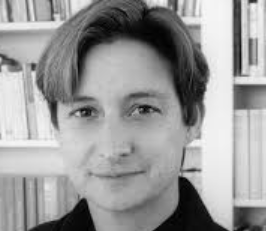
There is no practice of nonviolence that does not negotiate fundamental ethical and political ambiguities, which means that "nonviolence" is not an absolute principle, but the name of an ongoing struggle.
▼
Source
source
p. 23
6 months 1 week ago
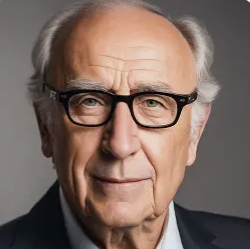
To my complete surprise, that exposure to out-of-date scientific theory and practice radically undermined some of my basic conceptions about the nature of science and the reasons for its special success.Those conceptions were ones I had previously drawn partly from scientific training itself and partly from a long-standing avocational interest in the philosophy of science. Somehow, whatever their pedagogic utility and their abstract plausibility, those notions did not at all fit the enterprise that historical study displayed. Yet they were and are fundamental to many discussions of science, and their failures of verisimilitude therefore seemed thoroughly worth pursuing. The result was a drastic shift in my career plans, a shift from physics to history of science and then, gradually, from relatively straightforward historical problems back to the more philosophical concerns that had initially led me to history.
8 months 3 weeks ago
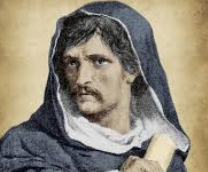
Of the eternal corporeal substance (which is not producible ex nihilo, nor reducible ad nihilum, but rarefiable, condensable, formable, arrangeable, and "fashionable") the composition is dissolved, the complexion is changed, the figure is modified, the being is altered, the fortune is varied, only the elements remaining what they are in substance, that same principle persevering which was always the one material principle, which is the true substance of things, eternal, ingenerable and incorruptible.
▼
Source
source
As translated by Arthur Imerti
10 months 1 week ago
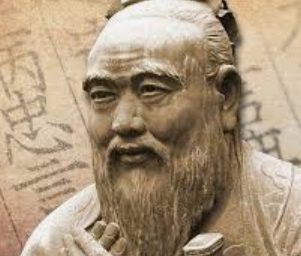
The Superior Man has nothing to compete for. But if he must compete, he does it in an archery match, wherein he ascends to his position, bowing in deference. Descending, he drinks (or has [the winner] drink) the ritual cup. Note: Bowing is a courtesy for the host who invites him as well drinking a cup.
9 months 2 weeks ago
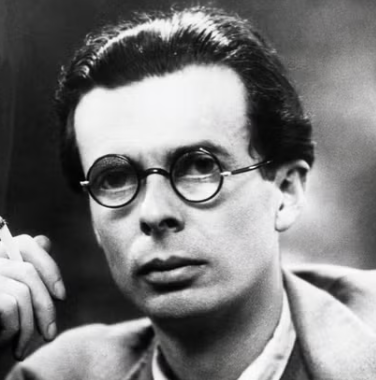
To the gross senses the chair seems solid and substantial. But the gross senses and be refined by means of instruments. Closer observations are made, as the result of which we are forced to conclude that the chair is "really" a swarm of electric charges whizzing about in empty space. ... While the substantial chair is an abstraction easily made from the memories of innumerable sensations of sight and touch, the electric charge chair is a difficult and far-fetched abstraction from certain visual sensations so excessively rare (they can only come to us in the course of elaborate experiments) that not one man in a million has ever been in the position to make it for himself. The overwhelming majority of us accept the electric-charge chair on authority, as good Catholics accept transubstantiation.
▼
Source
source
"One and Many," pp. 8-9
7 months 2 weeks ago
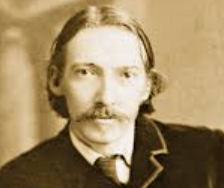
A faculty for idleness implies a catholic appetite and a strong sense of personal identity.
▼
Source
source
An Apology for Idlers.
5 months 2 weeks ago
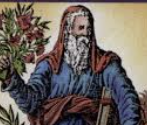
The Pythagoreans called the monad "intellect" because they thought that intellect was akin to the One; for among the virtues, they likened the monad to moral wisdom; for what is correct is one. And they called it "being," "cause of truth," "simple," "paradigm," "order," "concord," "what is equal among the greater and the lesser," "the mean between intensity and slackness," "moderation in plurality," "the instant now in time," and moreover they call it "ship," "chariot," "friend," "life," "happiness."
▼
Source
source
On the Monad
CivilSimian.com created by AxiomaticPanic, CivilSimian, Kalokagathia