




7 months 2 weeks ago
An atheist is just somebody who feels about Yahweh the way any decent Christian feels about Thor or Baal or the golden calf. As has been said before, we are all atheists about most of the gods that humanity has ever believed in. Some of us just go one god further.
▼
Source
source
Richard Dawkins on militant atheism,
10 months 2 weeks ago
Time will prolong time, and life will serve life. In this field that is both limited and bulging with possibilities, everything to himself, except his lucidity, seems unforeseeable to him. What rule, then, could emanate from that unreasonable order? The only truth that might seem instructive to him is not formal: it comes to life and unfolds in men. The absurd mind cannot so much expect ethical rules at the end of its reasoning as, rather, illustrations and the breath of human lives.
9 months 2 weeks ago
There is no knowledge that is not power.
▼
Source
source
Old Age
5 months 3 weeks ago
If the rulers sincerely desire the empire to be wealthy and dislike to have it poor, desire to have it orderly and dislike to have it chaotic, they should bring about universal love and mutual aid. This is the way of the sage-kings and the way to order for the world, and it should not be neglected.
▼
Source
source
Book 4; Universal Love II
8 months 1 week ago
Man is a creation of desire, not a creation of need.
▼
Source
source
The Psychoanalysis of Fire, ch. 2, "Fire and Reverie"
7 months 2 weeks ago
If Mormonism is able to endure, unmodified, until it reaches the third and fourth generation, it is destined to become the greatest power the world has ever known.
▼
Source
source
This quote originates in Thomas J. Yates, "Count Tolstoi and the 'American Religion' ", Improvement Era (February 1939)
10 months 1 week ago
See a person's means (of getting things). Observe his motives. Examine that in which he rests. How can a person conceal his character? See a person's "being", observe his motive, notice his result. How can a person conceal his character?
8 months 4 days ago
Words of the jargon sound as if they said something higher than what they mean.
▼
Source
source
p. 9
7 months 2 weeks ago
Everybody tends to merge his identity with other people at the speed of light. It's called being mass man.
6 months 3 days ago
To animals not only human virtues but even human vices are forbidden: their whole constitution, mental and bodily, is unlike that of human beings...they possess intellect, the greatest attribute of all, but in a rough and inexact condition. It is, consequently, able to grasp those visions and semblances which rouse it to action, but only in a cloudy and indistinct fashion. Their impulses and outbreaks are violent, and that they do not feel fear, anxieties, grief, or anger, but some semblances of these feelings: wherefore they quickly drop them and adopt the converse of them: they graze after showing the most vehement rage and terror, and after frantic bellowing and plunging they straightaway sink into quiet sleep.
7 months 1 week ago
The modern world gives proof at every point that it is far easier to destroy institutions than to create them. Nevertheless, few people seem to understand this truth.
▼
Source
source
Rousseau & the origins of liberalism, The New Criterion
8 months 3 weeks ago
Were the happiness of the next world as closely apprehended as the felicities of this, it were a martyrdom to live.
▼
Source
source
Chapter IV
8 months 1 day ago
Self-expression is impossible in relation with other men; their self-expression interferes with it. The greatest heights of self-expression in poetry, music, painting - are achieved by men who are supremely alone.
▼
Source
source
Chapter Eight, The Outsider as a Visionary

6 months 1 week ago
Paris, which for sixty years past has been the City of Insurrections. The French People had plumed themselves on being, whatever else they were not, at least the chosen "soldiers of liberty," who took the lead of all creatures in that pursuit, at least; and had become, as their orators, editors and litterateurs diligently taught them, a People whose bayonets were sacred, a kind of Messiah People, saving a blind world in its own despite, and earning for themselves a terrestrial and even celestial glory very considerable indeed.

7 months 1 week ago
[On members of the Nazi Party] The most shocking, but also important thing, is they were not the uneducated masses. The majority had academic degrees. We like to think that education provides immunity to racist and fascist ideology. And it doesn't.
9 months 1 week ago
I will begin to speak when I am not going to say what were better left unsaid.
▼
Source
source
Quoted by Plutarch, Life of Cato the Younger, 4 Bernadotte Perrin, ed. Plutarch's Lives, Vol. 8, LCL 100 (1919), pp. 247, 361

6 months 4 days ago
An appeal to men's self-sacrificing disposition and self-renouncing love ought at least to have lost its seductive plausibility when, after an activity of thousands of years, it has left nothing behind but the - misery of today. Why then still fruitlessly expect self-sacrifice to bring us better times? Why not rather hope for them from usurpation? Salvation comes no longer from the giver, the bestower, the loving one, but from the taker, the appropriator (usurper), the owner. Communism, and, consciously, egoism-reviling humanism, still count on love.
▼
Source
source
Cambridge 1995, p. 274
5 months 2 weeks ago
No one will deny that the soul of Pythagoras was sent to mankind from Apollo's domain, having either been one of his attendants, or more intimate associates, which may be inferred both from his birth, and his versatile wisdom.
▼
Source
source
Ch. 2 : Youth, Education, Travels

8 months 1 week ago
The Superego, in censoring the unconscious and in implanting conscience, also censors the censor.
▼
Source
source
p. 76
9 months 2 weeks ago
It requires twenty years for a man to rise from the vegetable state in which he is within his mother's womb, and from the pure animal state which is the lot of his early childhood, to the state when the maturity of reason begins to appear. It has required thirty centuries to learn a little about his structure. It would need eternity to learn something about his soul. It takes an instant to kill him.
▼
Source
source
"Man: General Reflection on Man", 1771
9 months 2 weeks ago
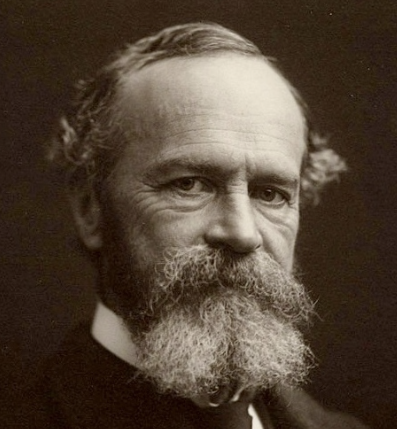
All our scientific and philosophic ideals are altars to unknown gods.
▼
Source
source
Lecture at the Harvard Divinity School (13 March 1884); published in the The Unitarian Review and Religious Magazine as The Dilemma of Determinism

6 months 1 week ago
For both the pragmatic... and... moral reasons... liberalism became the dominant doctrine of the 20th century, and should... continue to be defended....
▼
Source
source
12:32
5 months 1 week ago
We are inclined to overemphasize the material influences in history. The Russians especially make this mistake. Intellectual values and ethnic influences, tradition and emotional factors are equally important. If this were not the case, Europe would today be a federated state, not a madhouse of nationalism.
9 months 2 weeks ago
People are not aware how entirely, in former ages, the law of superior strength was the rule of life; how publicly and openly it was avowed, I do not say cynically or shamelessly - for these words imply a feeling that there was something in it to be ashamed of, and no such notion could find a place in the faculties of any person in those ages, except a philosopher or a saint.
▼
Source
source
Ch. 1
10 months 1 day ago
If they have entered into the spirit if these rules, and if the rules have made sufficient impression on them to become rooted and established in their minds, they will feel how much difference there is between what is said here and what a few logicians may perhaps have written by chance approximating to it in a few passages of their works.
6 months 2 weeks ago
An empire derives no advantage from the caresses of two turtledoves who spend a year cooing to each other in public meetings.
▼
Source
source
Charles Fourier: The Visionary and His World, J. Beecher (1986), p. 315
10 months 2 weeks ago
Self-preservation has frequently knuckled under to that tremendous yearning to get even.
9 months 2 weeks ago
I entered the Communist Party because its cause was just and I will leave it when it ceases to be just.
▼
Source
source
Hugo to Hoederer, Act 5, sc. 3

5 months 2 weeks ago
We know enough of our own history by now to be aware that people exploit what they have merely concluded to be of value, but they defend what they love. To defend what we love we need a particularizing language, for we love what we particularly know.
7 months 1 week ago
We know of no great revolution which might not have been prevented by compromise early and graciously made... [I]n all movements of the human mind which tend to great revolutions there is a crisis at which moderate concession may amend, conciliate, and preserve.
▼
Source
source
'Hallam', The Edinburgh Review (September 1828), quoted in T. B. Macaulay, Critical and Historical Essays Contributed to The Edinburgh Review, Vol. I (1843), p. 216
6 months 3 weeks ago
There is no fundamental biological reason why the human genome can't be rewritten to allow everyone to be "in" love with everyone else - if we should so choose. But simply loving each other will be miraculous enough; and will probably suffice. An empty religious piety can be transformed into a biological reality.
▼
Source
source
"Brave New World? A Defence of Paradise-Engineering", BLTC Research, 1998
6 months 1 week ago
The idea of universal human dignity ultimately comes out of Christianity... the view that all human beings are equal in the sight of God because they have the capacity for moral choice. As Western thought developed in the 17th-18th centuries, this took on a secular form under thinkers like Jean-Jacques Rousseau or Immanuel Kant or Georg Hegel, who argued that human equality is... based on human autonomy.
▼
Source
source
11:12
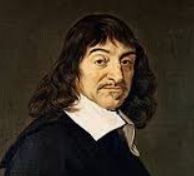
9 months 3 weeks ago
Staying as I am, one foot in one country and the other in another, I find my condition very happy, in that it is free.
▼
Source
source
Letter to Elisabeth of Bohemia, Princess Palatine, Paris, June/July 1648
8 months 4 days ago
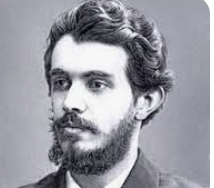
Ethics occupies a central place in philosophy because it is concerned with sin, with the origin of good and evil and with moral valuations. And since these problems have a universal significance, the sphere of ethics is wider than is generally supposed. It deals with meaning and value and its province is the world in which the distinction between good and evil is drawn, evaluations are made and meaning is sought.
▼
Source
source
The Destiny of Man (1931), p. 15
7 months 2 weeks ago
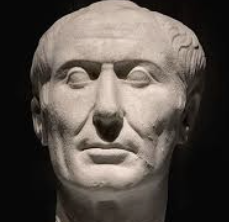
Pardon one offence and you encourage the commission of many.
▼
Source
source
Maxim 750
6 months 3 days ago
But he has no fear; unconquered he looks down from a lofty height upon his sufferings.
9 months 2 weeks ago
He that uses his words loosely and unsteadily will either not be minded or not understood.
▼
Source
source
Book III, Ch. 10, sec. 31
5 months 2 weeks ago
The ultimate most holy form of theory is action. Not to look on passively while the spark leaps from generation to generation, but to leap and to burn with it!
9 months 3 weeks ago
Good and strong will. Mechanism must precede science (learning). Also in morals and religion? Too much discipline makes one narrow and kills proficiency. Politeness belongs, not to discipline, but to polish, and thus comes last.
▼
Source
source
Part III : Selection on Education from Kant's other Writings, Ch. I Pedagogical Fragments, # 9
9 months 2 weeks ago
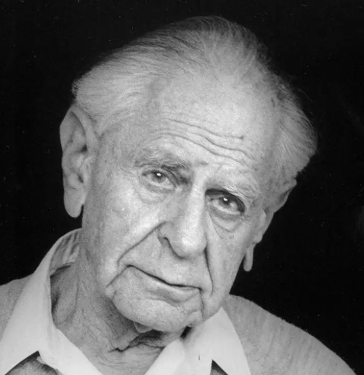
The more we learn about the world, and the deeper our learning, the more conscious, specific, and articulate will be our knowledge of what we do not know, our knowledge of our ignorance. For this, indeed, is the main source of our ignorance - the fact that our knowledge can be only finite, while our ignorance must necessarily be infinite. Variant translation: The more we learn about the world, and the deeper our learning, the more conscious, clear, and well-defined will be our knowledge of what we do not know, our knowledge of our ignorance. The main source of our ignorance lies in the fact that our knowledge can only be finite, while our ignorance must necessarily be infinite.
8 months 2 weeks ago
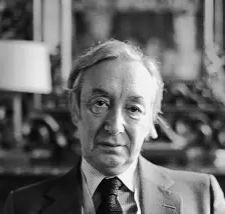
The problem of induction is, roughly speaking, the problem of finding a way to prove that certain empirical generalizations which are derived from past experience will hold good also in the future. There are only two ways of approaching this problem on the assumption that it is a genuine problem, and it is easy to see that neither of them can lead to its solution.
▼
Source
source
p. 49.
7 months 1 week ago
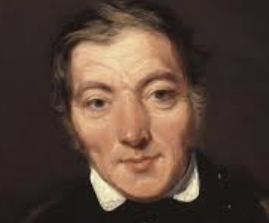
The advantage of pure, and the disadvantage of impure air are experienced each time we breathe, and all who understand the causes of disease know that an impure atmosphere is most unfavourable to the enjoyment of health, and an efficient cause to shorten human existence within the natural life of man. It is therefore most desirable that decisive measures should be devised and generally adopted to ensure to all a pure atmosphere, in which to live during their lives.
▼
Source
source
3rd Part
8 months 1 week ago
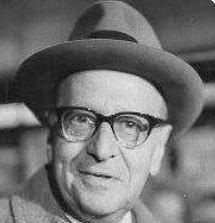
The idea that an aim can be reasonable for its own sake-on the basis of virtues that insight reveals it to have in itself-without reference to some kind of subjective gain or advantage, is utterly alien to subjective reason, even where it rises above the consideration of immediate utilitarian values and devotes itself to reflection about the social order as a whole.
▼
Source
source
p. 4.
CivilSimian.com created by AxiomaticPanic, CivilSimian, Kalokagathia