


6 months 2 weeks ago
The contradictory conceptual couple, identity and difference, is not the adequate framework for understanding the organization of the multitude. Instead we are a multiplicity of singular forms of life and at the same time share a common global existence. The anthropology of the multitude is an anthropology of singularity and commonality.
▼
Source
source
127
6 months 3 days ago
A great step towards independence is a good-humored stomach, one that is willing to endure rough treatment.
▼
Source
source
Line 3.

9 months 3 weeks ago
Is it not a noble farce, wherein kings, republics, and emperors have for so many ages played their parts, and to which the whole vast universe serves for a theatre?
▼
Source
source
Book II, Ch. 36. Of the most Excellent Men
7 months 3 weeks ago
The Intentionality of the mind not only creates the possibility of meaning, but limits its forms.
▼
Source
source
P. 166.



8 months 3 weeks ago
The man who makes his religion a means to the gaining of this world, will lose both worlds alike; whereas the man who gives up this world for the sake of religion, will get both worlds alike.
▼
Source
source
The Faith and Practice of Al-Ghazali, Allen & Unwin (1963), p. 152.
5 months 1 week ago
Life is like riding a bicycle. To keep your balance you must keep moving.
▼
Source
source
Letter to his son Eduard (5 February 1930), as quoted in Walter Isaacson, Einstein: His Life and Universe (2007), p. 367
7 months 3 weeks ago
Before we can establish any immutable 'principles' of administration, we must be able to describe, in words, exactly how an administrative organization looks and exactly how it works.
▼
Source
source
p. xiv.
7 months 4 weeks ago
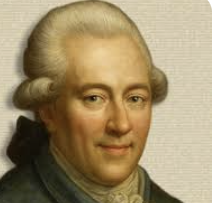
We do not think good metaphors are anything very important, but I think that a good metaphor is something even the police should keep an eye on...
▼
Source
source
E 91 Variant translation: A good metaphor is something even the police should keep an eye on.

9 months 2 weeks ago
But the chief design of this paper is not to disprove it, which many have sufficiently done; but to entreat Americans to consider.

6 months 1 week ago
No sadder proof can be given by a man of his own littleness than disbelief in great men.
6 months 1 week ago
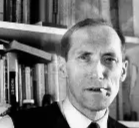
We sometimes imagine, under the influence of Spenglerian philosophy or some other kind of "historical morphology," that we live in a similar age [to the Romans], the last witnesses of a condemned civilization. But condemned by whom? Not by God, but by some supposed "historical laws." For although we do not know any historical laws, we are in fact able of inventing them quite freely, and such laws, once invented, can then be realized in the form of self-fulfilling prophecies.
▼
Source
source
Looking for the Barbarians

9 months 2 weeks ago
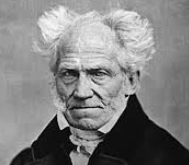
If at times I have thought myself unfortunate, it is because of a confusion, an error. I have mistaken myself for someone else... Who am I really? I am the author of The World as Will and Representation, I am the one who has given an answer to the mystery of Being that will occupy the thinkers of future centuries. That is what I am, and who can dispute it in the years of life that still remain for me?
▼
Source
source
From The Total Library by Jorge Luis Borges, 1999
9 months 2 weeks ago
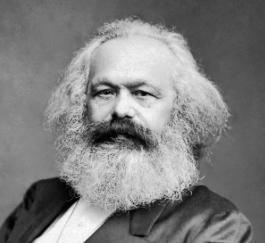
Private property has made us so stupid and one-sided that an object is only ours when we have it - when it exists for us as capital, or when it is directly possessed, eaten, drunk, worn, inhabited, etc., - in short, when it is used by us. Although private property itself again conceives all these direct realizations of possession as means of life, and the life which they serve as means is the life of private property - labour and conversion into capital. In place of all these physical and mental senses there has therefore come the sheer estrangement of all these senses - the sense of having. The human being had to be reduced to this absolute poverty in order that he might yield his inner wealth to the outer world.
▼
Source
source
p. 87, The Marx-Engels Reader

7 months 1 week ago
Far less import than your belief of whether god exists is what you think your belief entails. Does it direct your behaviour by rules and commandments that are set out before you or does it require you to think them through yourself? Does it require you to try to make sense of the world, or does it give up on sense itself? And I think these are the crucial distinctions. Not whether you add belief in a god to them.
9 months 2 weeks ago
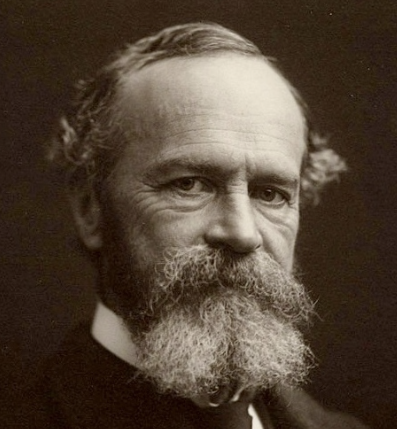
The moral flabbiness born of the exclusive worship of the bitch-goddess SUCCESS. That - with the squalid cash interpretation put on the word success - is our national disease.
▼
Source
source
To H. G. Wells, 9/11/1906
9 months 3 weeks ago
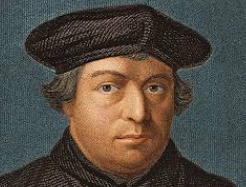
The veneration of Mary is inscribed in the very depths of the human heart.
▼
Source
source
Weimar edition of Martin Luther's Works (Translation by William J. Cole) 10, III, p. 313
8 months 2 weeks ago
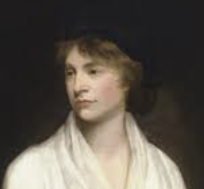
It appears to me impossible that I should cease to exist, or that this active, restless spirit, equally alive to joy and sorrow, should only be organised dust - ready to fly abroad the moment the spring snaps, or the spark goes out which kept it together. Surely something resides in this heart that is not perishable, and life is more than a dream.
5 months 1 week ago
How can it be that mathematics, being, after all, a product of human thought which is independent of experience, is so admirably appropriate to the objects of reality? Is human reason, then, without experience, merely by taking thought, able to fathom the properties of real things?
10 months 1 week ago
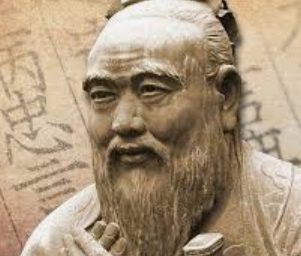
Perfect is the virtue which is according to the Mean! Rare have they long been among the people, who could practice it!
6 months 2 weeks ago
Between ourselves and our real natures we interpose that wax figure of idealizations and selections which we call our character.
▼
Source
source
Ch. VI: "Some Necessary Iconoclasm", p. 168.

9 months 1 week ago
The question here is the same as the question I addressed with regard to madness, disease, delinquency and sexuality. In all of these cases, it was not a question of showing how these objects were for a long time hidden before being finally discovered, nor of showing how all these objects are only wicked illusions or ideological products to be dispelled in the light of reason finally having reached its zenith. It was a matter of showing by what conjunctions a whole set of practices-from the moment they become coordinated with a regime of truth-was able to make what does not exist (madness, disease, delinquency, sexuality, etcetera), nonetheless become something.
▼
Source
source
Lecture 1, January 10, 1979, p. 19
9 months 2 weeks ago
It is not how things are in the world that is mystical, but that it exists.
▼
Source
source
(6.44) Variant translation: The mystical is not how the world is, but that it is. Original German: Nicht wie die Welt ist, ist das Mystische, sondern dass sie ist.
9 months 3 weeks ago
If you don't know how to die, don't worry; Nature will tell you what to do on the spot, fully and adequately. She will do this job perfectly for you; don't bother your head about it.
7 months 2 weeks ago
Money alone sets all the world in motion.
▼
Source
source
Maxim 656
9 months 3 weeks ago
For my own part, I cannot without grief see so much as an innocent beast pursued and killed that has no defence, and from which we have received no offence at all.
▼
Source
source
Ch. 11, tr. Cotton, 1685
8 months 1 week ago
The more the concept of reason becomes emasculated, the more easily it lends itself to ideological manipulation and to propagation of even the most blatant lies. ... Subjective reason conforms to anything.
▼
Source
source
pp. 24-25.
6 months 1 week ago
Yet with every allowance, one feels it difficult to see how any mortal ever could consider this Koran as a Book written in Heaven, too good for the Earth; as a well-written book, or indeed as a book at all; and not a bewildered rhapsody; written, so far as writing goes, as badly as almost any book ever was!

8 months 2 days ago
Plagued by Western habits of either-or, dualistic thinking, we all may fail to understand that race, class and gender interconnect to sustain a corporate ruling class. In the language of African-American essayist bell hooks, they are interlocking systems of oppression. Neither Latina nor Anglo women should yield to the temptation of making a hierarchy of oppressions where battles are fought over whether racism is "worse" than sexism, or class oppression is "deeper" than racism, etc. Instead of hierarchies we need bridges which, after all, exist to make two ends meet.
▼
Source
source
Elizabeth Martinez, De Colores Means All of Us

9 months 2 days ago
Incorporeal hypostases, in descending, are distributed into parts, and multiplied about individuals with a diminution of power; but when they ascend by their energies beyond bodies, they become united, and proceed into a simultaneous subsistence, through exuberance of power.
9 months 2 weeks ago
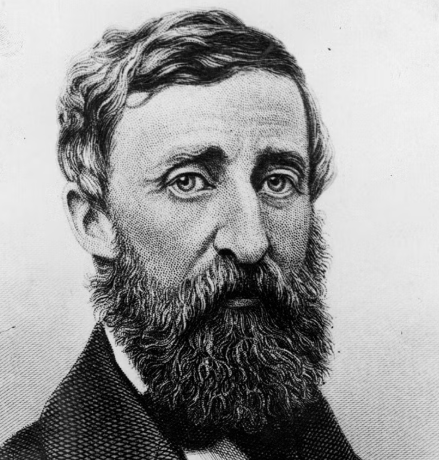
We may well be ashamed to tell what things we have read or heard in our day. I do not know why my news should be so trivial, - considering what one's dreams and expectations are, why the developments should be so paltry. The news we hear, for the most part, is not news to our genius. It is the stalest repetition.
▼
Source
source
p. 491
9 months 2 weeks ago
A new moral outlook is called for in which submission to the powers of nature is replaced by respect for what is best in man. It is where this respect is lacking that scientific technique is dangerous.
▼
Source
source
Attributed to Russell at the end of Isaac Asimov's short story Franchise with no specific source given.
10 months 2 weeks ago
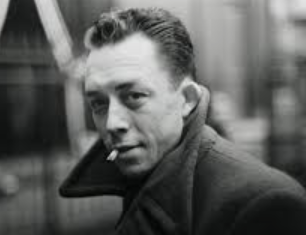
One might think that a period which, in a space of fifty years, uproots, enslaves, or kills seventy million human beings should be condemned out of hand. But its culpability must still be understood... In more ingenuous times, when the tyrant razed cities for his own greater glory, when the slave chained to the conqueror's chariot was dragged through the rejoicing streets, when enemies were thrown to the wild beasts in front of the assembled people, the mind did not reel before such unabashed crimes, and the judgment remained unclouded. But slave camps under the flag of freedom, massacres justified by philanthropy or by a taste for the superhuman, in one sense cripple judgment. On the day when crime dons the apparel of innocence, through a curious transposition peculiar to our times, it is innocence that is called upon to justify itself.
6 months 3 days ago
Thus they are deceived by the likeness of blows, and are appeased by the pretended tears of those who deprecate their wrath, and thus an unreal grief is healed by an unreal revenge.
9 months 3 weeks ago
When anyone tells me, that he saw a dead man restored to life, I immediately consider with myself, whether it be more probable, that this person should either deceive or be deceived, or that the fact, which he relates, should really have happened. I weigh the one miracle against the other; and according to the superiority, which I discover, I pronounce my decision, and always reject the greater miracle. If the falsehood of his testimony would be more miraculous, than the event which he relates; then, and not till then, can he pretend to command my belief or opinion.
▼
Source
source
Section 10 : Of Miracles Pt. 1
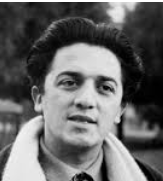
6 months 3 weeks ago
No critic writing about a film could say more than the film itself, although they do their best to make us think the opposite.
▼
Source
source
"Film Critics"

8 months 4 days ago
Every time that a man has, with a pure heart, called upon Osiris, Dionysus, Buddha, the Tao, etc., the Son of God has answered him by sending the Holy Spirit. And the Holy Spirit has acted upon his soul, not by inciting him to abandon his religious tradition, but by bestowing upon him light - and in the best of cases the fullness of light - in the heart of that same religious tradition. ... It is, therefore, useless to send out missions to prevail upon the peoples of Asia, Africa or Oceania to enter the Church.
▼
Source
source
Section 8
6 months 3 days ago
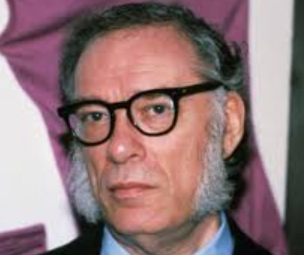
The wise man is joyful, happy and calm, unshaken, he lives on a plane with the gods.
10 months 2 weeks ago
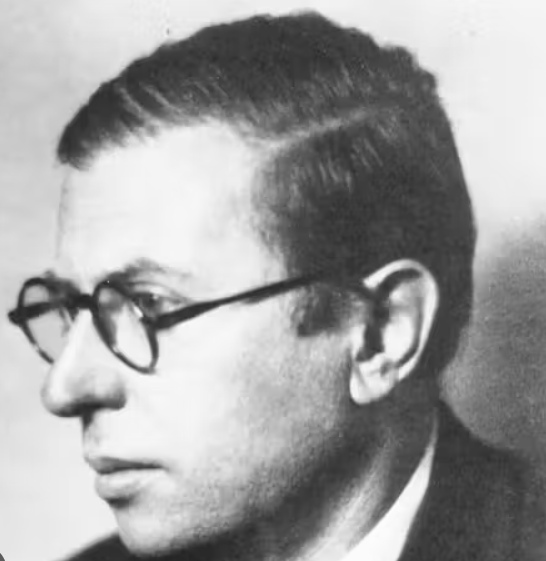
Often, writers on historical events tend to consider ... a loss of willingness to fight as a sign of "decadence," as though there were something despicable about not being a bully and not being willing to engage in mass murder. Perhaps we ought to feel instead that to cease to be warlike means to begin to be civilized and decent.
9 months 2 weeks ago
...the impossible must be supposed in order to explain the superdetermination of the event
▼
Source
source
p. 301

9 months 1 week ago
Tis not sufficient to combine well-chosen words in a well-ordered line.
▼
Source
source
Book I, satire iv, line 54 (translated by John Conington)

5 months 4 weeks ago
Only when the true ends of society have nothing to do with the sublime does "culture" become necessary as a veneer to cover over the void. Culture can at best appreciate the monuments of earlier faith; it cannot produce them.
▼
Source
source
"Commerce and Culture," p. 280.
10 months 3 days ago
If the room is smoky, if only moderately, I will stay; if there is too much smoke I will go. Remember this, keep a firm hold on it, the door is always open.
▼
Source
source
Book I, ch. 25, 18.
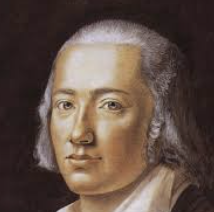
8 months 2 weeks ago
Being at one is god-like and good, but human, too human, the mania Which insists there is only the One, one country, one truth, and one way.
▼
Source
source
"The Root of All Evil" as translated by Michael Hamburger
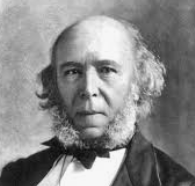
8 months 2 weeks ago
People ... become so preoccupied with the means by which an end is achieved, as eventually to mistake it for the end. Just as money, which is a means of satisfying wants, comes to be regarded by a miser as the sole thing to be worked for, leaving the wants unsatisfied; so the conduct men have found preferable because most conducive to happiness, has come to be thought of as intrinsically preferable: not only to be made a proximate end (which it should be), but to be made an ultimate end, to the exclusion of the true ultimate end.
▼
Source
source
Ethics (New York:1915), § 14, pp. 38-39
10 months 2 days ago
For no fact is so simple we believe it at first sight, And there is nothing that exists so great or marvellous That over time mankind does not admire it less and less.
▼
Source
source
Book II, lines 1026-1029 (tr. Stallings)
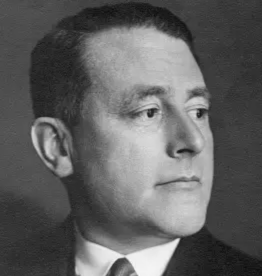
5 months 2 weeks ago
The specific political distinction to which political actions and motives can be reduced is that between friend and enemy.

10 months 4 days ago
There is another form of temptation, more complex in its peril. It originates in an appetite for knowledge. From this malady of curiosity are all those strange sights exhibited in the theatre. Hence do we proceed to search out the secret powers of nature (which is beside our end), which to know profits not, and wherein men desire nothing but to know.
▼
Source
source
X, 35
CivilSimian.com created by AxiomaticPanic, CivilSimian, Kalokagathia