

8 months ago
Newton's law is nothing but the statistics of gravitation, it has no power whatever. Let us get rid of the idea of power from law altogether. Call law tabulation of facts, expression of facts, or what you will; anything rather than suppose that it either explains or compels.
▼
Source
source
Suggestions for Thought : Selections and Commentaries (1994), edited by Michael D. Calabria and Janet A. MacRae, p. 41

9 months 2 weeks ago
I am very fond of truth, but not at all of martyrdom.
▼
Source
source
Letter to Jean le Rond d'Alembert, 8 February 1776
8 months 2 days ago
We find here the final application of the doctrine of objective immortality. Throughout the perishing occasions in the life of each temporal Creature, the inward source of distaste or of refreshment, the judge arising out of the very nature of things, redeemer or goddess of mischief, is the transformation of Itself, everlasting in the Being of God. In this way, the insistent craving is justified - the insistent craving that zest for existence be refreshed by the ever-present, unfading importance of our immediate actions, which perish and yet live for evermore.
5 months 2 weeks ago
Think not so much of what thou hast not as of what thou hast: but of the things which thou hast, select the best, and then reflect how eagerly they would have been sought, if thou hadst them not. At the same time, however, take care that thou dost not, through being so pleased with them, accustom thyself to overvalue them, so as to be disturbed if ever thou shouldst not have them.
▼
Source
source
Variant Translation: Let not thy mind run on what thou lackest as much as on what thou hast already. VII, 27

6 months 1 week ago
The crop of spiritual talent that is born to you, of human nobleness and intellect and heroic faculty, this is infinitely more important than your crops of cotton or corn, or wine or herrings or whale-oil, which the Newspapers record with such anxiety every season.
8 months 1 day ago
Often what is absent has more power than what is present.
9 months 2 weeks ago
A dog cannot relate his autobiography; however eloquently he may bark, he cannot tell you that his parents were honest but poor.
▼
Source
source
Human Knowledge: Its Scope and Limits (1948), part II, chapter 1, p. 74

8 months 2 weeks ago
No one should forget: Eros alone can fulfill life; knowledge, never. Only Eros makes sense; knowledge is empty infinity; - for thoughts, there is always time; life has its time; there is no thought that comes too late; any desire can become a regret.

9 months 2 weeks ago
Love may forgive all infirmities and love still in spite of them: but Love cannot cease to will their removal.
8 months 1 week ago
Even the most inspired verse, which boasts not without a relative justification to be immortal, becomes in the course of ages a scarcely legible hieroglyphic; the language it was written in dies, a learned education and an imaginative effort are requisite to catch even a vestige of its original force. Nothing is so irrevocable as mind.
10 months 3 days ago
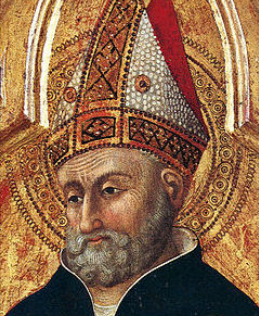
Man desires to praise thee, for he is a part of thy creation; he bears his mortality about with him and carries the evidence of his sin and the proof that thou dost resist the proud. Still he desires to praise thee, this man who is only a small part of thy creation. Thou hast prompted him, that he should delight to praise thee, for thou hast made us for thyself and restless is our heart until it comes to rest in thee.
▼
Source
source
I, 1
1 year 2 months ago
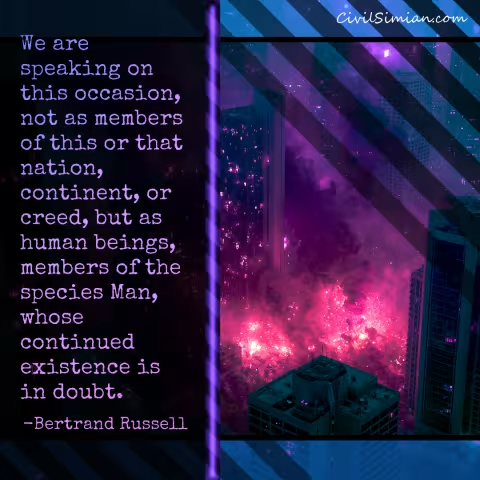
No subgroup, race, nationalism, religious group, gender based groups or other identity essence based groups will ever be more important than, and should never ethically take precedence over the existence based universal group, the human group. Universal identity takes precedence over subgroup identity, and when we are forced to subgroup in reaction to injustice, that is the only ethical subgroup.
8 months 1 week ago
Lichtenberg ... held something of the following kind: one should neither affirm the existence of God nor deny it. ... It is not that he wished to leave certain perspectives open, nor to please everyone. It is rather that he was identifying himself, for his part, with a consciousness of self, of the world, and of others that was "strange" (the word is his) in a sense which is equally well destroyed by the rival explanations.
▼
Source
source
pp. 45-46
10 months 2 weeks ago
What is asked of a man that he may be able to pray for his enemies? To pray for one's enemies is the hardest thing of all. That is why it exasperates us so much in our present day situation.
8 months 1 week ago
The young man who has not wept is a savage, and the old man who will not laugh is a fool.
▼
Source
source
Ch. 3, P. 57
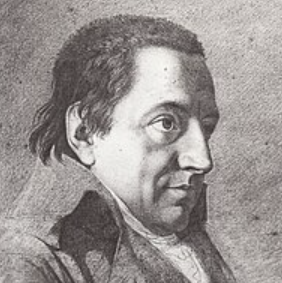
8 months 2 weeks ago
The Teutons believed that the only possible way to get rid of barbarism was to become Romans. The immigrants to what was formerly Roman soil became as Roman as they possibly could. But in their imagination the term "barbarous" soon acquired the secondary meaning of " common, plebeian, and loutish," and in this way "Roman," on the contrary, became synonymous with " distinguished."
▼
Source
source
Consequences of the Difference p. 81
5 months 2 weeks ago
No longer let thy breathing only act in concert with the air which surrounds thee, but let thy intelligence also now be in harmony with the intelligence which embraces all things. For the intelligent power is no less diffused in all parts and pervades all things for him who is willing to draw it to him than the aërial power for him who is able to respire it.
▼
Source
source
VIII, 54
5 months 2 weeks ago
Of Fronto, to how much envy and fraud and hypocrisy the state of a tyrannous king is subject unto, and how they who are commonly called [Eupatridas Gk.], i.e. nobly born, are in some sort incapable, or void of natural affection.
▼
Source
source
I, 8
5 months 1 week ago
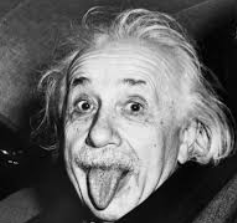
I do not think that religion is the most important element. We are held together rather by a body of tradition, handed down from father to son, which the child imbibes with his mother's milk. The atmosphere of our infancy predetermines our idiosyncrasies and predilections.
7 months 6 days ago
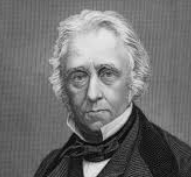
In all ages a chief cause of the intestine disorders of states has been that the natural distribution of power and the legal distribution of power have not corresponded with each other.
▼
Source
source
Speech in the House of Commons (28 February 1832), quoted in Speeches of the Right Honourable T. B. Macaulay, M.P. (1854), p. 91
10 months 2 weeks ago
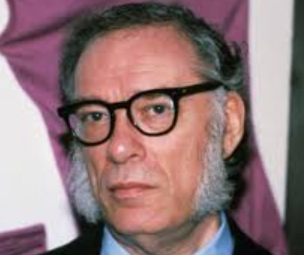
The military mind remains unparalleled as a vehicle of creative stupidity.
9 months 2 weeks ago
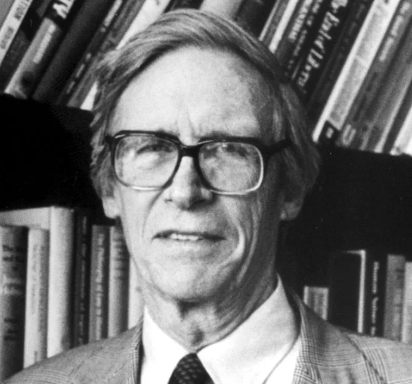
An individual who finds that he enjoys seeing others in positions of lesser liberty understands that he has no claim whatever to this enjoyment.
▼
Source
source
Chapter I, Section 6, pg. 31
8 months 2 weeks ago
Sadness makes you God's prisoner.
8 months 2 weeks ago
To live in a saint's heart? I'm afraid of setting the sky ablaze.
9 months 3 weeks ago
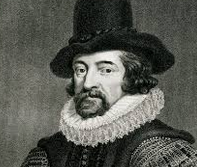
But the best demonstration by far is experience, if it go not beyond the actual experiment.
▼
Source
source
Aphorism 70
7 months 2 weeks ago
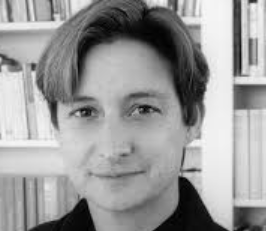
There is no gender identity behind the expressions of gender; that identity is performatively constituted by the very "expressions" that are said to be its results.
▼
Source
source
Gender Trouble: Feminism and the Subversion of Identity


8 months 3 weeks ago
General ideas are no proof of the strength, but rather of the insufficiency of the human intellect.
▼
Source
source
Book One, Chapter III.
8 months 2 weeks ago
Creation is in fact a fault, man's famous sin thereby appearing as a minor version of a much graver one. What are we guilty of, except of having followed, more or less slavishly, the Creator's example? Easy to recognize in ourselves the fatality which was His: not for nothing have we issued from the hands of a wicked and woebegone god, a god accursed.
9 months 3 weeks ago
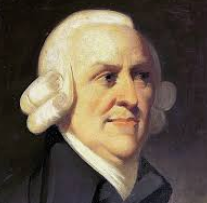
It would be too ridiculous to go about seriously to prove that wealth does not consist in money, or in gold and silver; but in what money purchases, and is valuable only for purchasing. Money no doubt, makes always a part of the national capital; but it has already been shown that it generally makes but a small part, and always the most unprofitable part of it.
▼
Source
source
Chapter I, p. 470.
8 months 1 week ago
The soul, too, has her virginity and must bleed a little before bearing fruit.
▼
Source
source
"Normal Madness," Ch. 3, P. 56
8 months 2 weeks ago
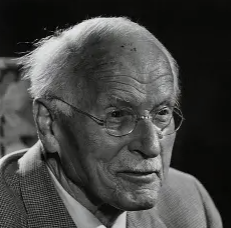
It is astounding that man, the instigator, inventor and vehicle of all these developments, the originator of all judgements and decisions and the planner of the future, must make himself such a quantité negligeable.
▼
Source
source
p 45
9 months 2 weeks ago
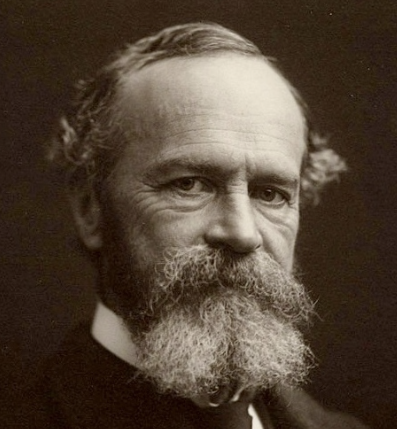
Truth happens to an idea. It becomes true, is made true by events. Its verity is in fact an event, a process: the process namely of its verifying itself, its veri-fication. Its validity is the process of its valid-ation.
▼
Source
source
Lecture VI, Pragmatism's Conception of Truth

9 months 2 weeks ago
Eloquence may strike the ear, but the language of poverty strikes the heart; the first may charm like music, but the second alarms like a knell.
▼
Source
source
The Case of the Officers of Excise (1772), p. 20
8 months 2 weeks ago
Life is writing. The sole purpose of mankind is to engrave the thoughts of divinity onto the tablets of nature.
▼
Source
source
"On Philosophy: To Dorothea," in Theory as Practice (1997), p. 420
9 months 2 weeks ago
The trade of governing has always been monopolized by the most ignorant and the most rascally individuals of mankind.
▼
Source
source
Earliest citation to Paine appears to be in "Freedom: A Journal of Anarchist Communism Vol. XXIV". Not found in any of his works.

5 months 4 weeks ago
There are two kinds of openness, the openness of indifference-promoted with the twin purposes of humbling our intellectual pride and letting us be whatever we want to be, just as long as we don't want to be knowers-and the openness that invites us to the quest for knowledge and certitude, for which history and the various cultures provide a brilliant array of examples for examination.
▼
Source
source
p. 41.
7 months 2 weeks ago
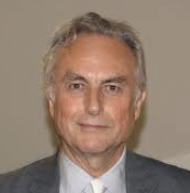
We don't need fossils - the case for evolution is watertight without them; so it is paradoxical to use gaps in the fossil record as though they were evidence against evolution.
▼
Source
source
The Greatest Show on Earth: The Evidence for Evolution (2009) (p. 164)
9 months 3 weeks ago
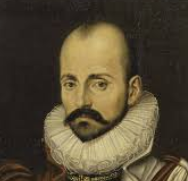
The art of dining well is no slight art, the pleasure not a slight pleasure.
1 year 1 month ago
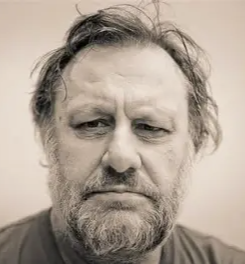
Canned laughter: After some supposedly funny or witty remark you can hear the laughter and applause included in the soundtrack of the show itself - here we have the exact counterpart of the Chorus in classical tragedy; it is here that we have to look for 'living Antiquity.' That is to say, why this laughter? The first possible answer - that it serves to remind us when to laugh - is interesting enough, because it implies the paradox that laughter is a matter of duty and not of some spontaneous feeling; but this answer is not sufficient because we do not usually laugh. The only correct answer would be that the Other - embodied in the television set - is relieving us even of our duty to laugh - is instead laughing for us. So even if, tired from a hard days stupid work, all evening we did nothing but gaze drowsily into the television screen, we can say afterwards that objectively, through the medium of the other, we had a really good time.
8 months 4 days ago
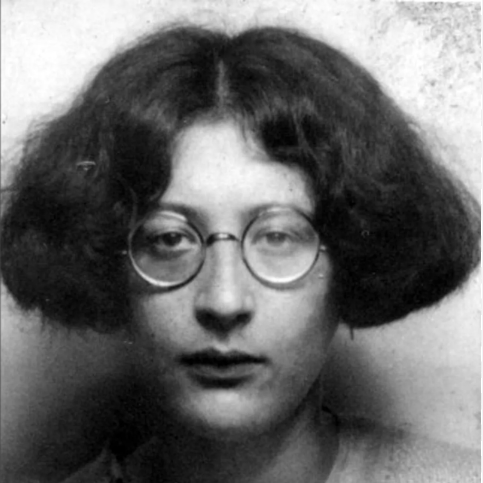
It is not in a person's nature to desire what he already has. Desire is a tendency, the start of a movement toward something, toward a point from which one is absent. If, at the very outset, this movement doubles back on itself toward its point of departure, a person turns round and round like a squirrel in a cage or a prisoner in a condemned cell. Constant turning soon produces revulsion. All workers, especially though not exclusively those who work under inhumane conditions, are easily the victims of revulsion, exhaustion and disgust and the strongest are often the worst affected.
▼
Source
source
p. 245
8 months 3 weeks ago
Few men think; yet all have opinions.
▼
Source
source
Philonous to Hylas. The Second Dialogue. This appears in a passage first added in the third edition
7 months 2 weeks ago
Age may have one side, but assuredly Youth has the other. There is nothing more certain than that both are right, except perhaps that both are wrong. Let them agree to differ; for who knows but what agreeing to differ may not be a form of agreement rather than a form of difference?
▼
Source
source
Crabbed Age and Youth.
9 months 3 weeks ago
I know that a Christian should be humble, but against the Pope I am going to be proud and say to him: "You, Pope, I will not have you for my boss, for I am sure that my doctrine is divine."
▼
Source
source
Chapter 2, Verse 6
9 months 2 weeks ago
It may be expedient but it is not just that some should have less in order that others may prosper.
▼
Source
source
Chapter I, Section 3, pg. 15
7 months 1 week ago
People reserve their best thinking for their professional specialties and, next in line, for serious matters confronting the alert citizen -economics, politics, the disposal of nuclear waste, etc. The day's work done, they want to be entertained.
▼
Source
source
p. 16
9 months 3 weeks ago
The wise and virtuous man is at all times willing that his own private interests should be sacrificed to the public interest of his own particular society--that the interests of this order of society be sacrificed to the greater interest of the state. He should therefore he equally willing that all those inferior interests should be sacrificed to the greater society of all sensible and intelligent beings.
▼
Source
source
Section II, Chap. III; cited by Reinhold Niebuhr, The Children of Light and the Children of Darkness, New York: Charles Scribner's Sons, 1941, 24-25.
CivilSimian.com created by AxiomaticPanic, CivilSimian, Kalokagathia