Rebrand: Hey guys, it's The Dog of Sinope! Need anything dog...besides a bath *laughter*....
Get out of my sunlight...Alex.....


There are two sides to every question.
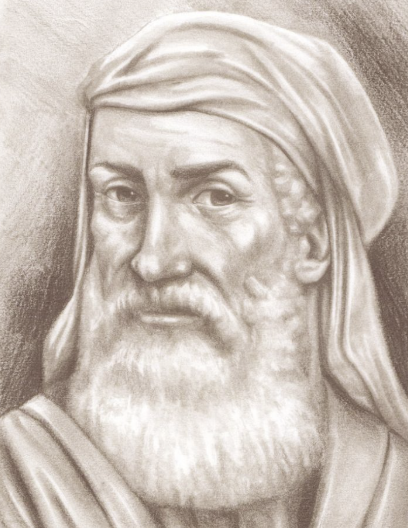
With deep roots Ether plunged into earth.
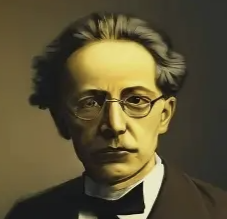
Apart from any other basis which might justify a superiority, education, as a power, raised him who possessed it over the weak, who lacked it, and the educated man counted in his circle, however large or small it was, as the mighty, the powerful, the imposing one: for he was an authority.
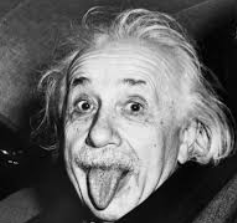
But what can be the attraction of getting to know such a tiny section of nature thoroughly, while one leaves everything subtler and more complex shyly and timidly alone? Does the product of such a modest effort deserve to be called by the proud name of a theory of the universe? In my belief the name is justified; for the general laws on which the structure of theoretical physics is based claim to be valid for any natural phenomenon whatsoever. With them, it ought to be possible to arrive at the description, that is to say, the theory, of every natural process, including life, by means of pure deduction, if that process of deduction were not far beyond the capacity of the human intellect. The physicist's renunciation of completeness for his cosmos is therefore not a matter of fundamental principle.
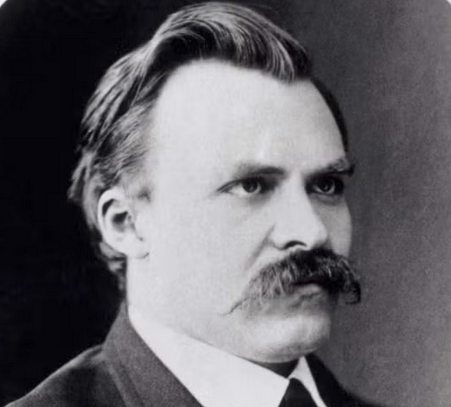
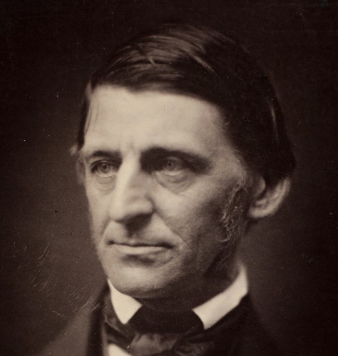
He is great who is what he is from Nature, and who never reminds us of others.
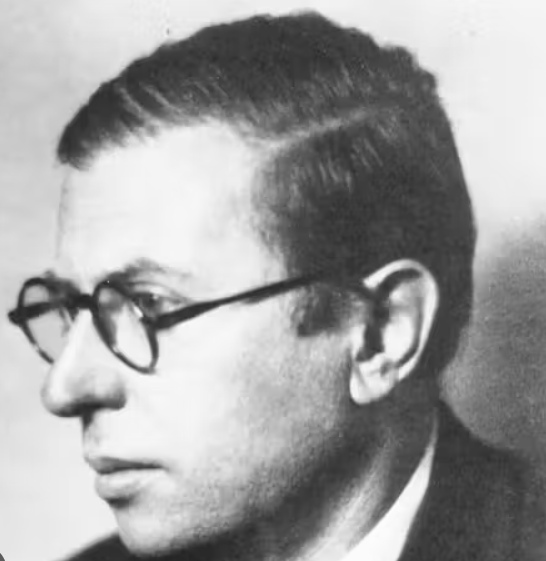
The homosexual never thinks of himself when someone is branded in his presence with the name homosexual. ...His sexual tastes will doubtless lead him to enter into relationships with this suspect category, but he would like to make use of them without being likened to them. Here, too, the ban that is cast on certain men by society has destroyed all possibility of reciprocity among them. Shame isolates.
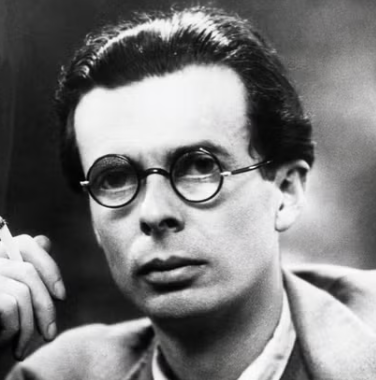
At this point we find ourselves confronted by a very disquieting question: Do we really wish to act upon our knowledge?
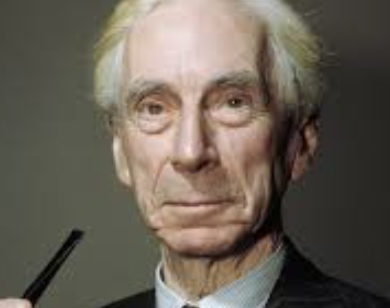
An extra-terrestrial philosopher, who had watched a single youth up to the age of twenty-one and had never come across any other human being, might conclude that it is the nature of human beings to grow continually taller and wiser in an indefinite progress towards perfection; and this generalisation would be just as well founded as the generalisation which evolutionists base upon the previous history of this planet.
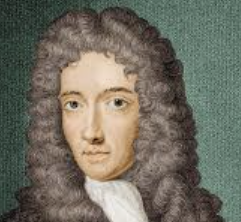
I am glad (sayes Eleutherius) to see the Vanity or Envy of the canting Chymists thus discover'd and chastis'd; and I could wish, that Learned Men would conspire together to make these deluding Writers sensible, that they must no longe[r] hope with Impunity to abuse the World. For whilst such Men are quietly permitted to publish Books with promising Titles, and therein to Assert what they please, and contradict others, and ev'n themselves as they please, with as little danger of being confuted as of being understood, they are encourag'd to get themselves a name, at the cost of the Readers, by finding that intelligent Men are wont for the reason newly mention'd, to let their Books and Them alone: And the ignorant and credulous (of which the number is still much greater then that of the other) are forward to admire most what they least understand.
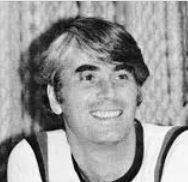
One persistent strand in utopian thinking, as we have often mentioned, is the feeling that there is some set of principles obvious enough to be accepted by all men of good will, precise enough to give unambiguous guidance in particular situations, clear enough so that all will realize its dictates, and complete enough to cover all problems which actually arise. Since I do not assume that there are such principles, I do not presume that the political realm will whither away. The messiness of the details of a political apparatus and the details of how it is to be controlled and limited do not fit easily into one's hopes for a sleek, simple utopian scheme.
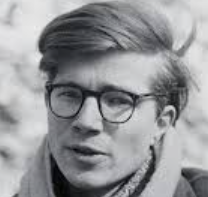
The evolutionary urge drives man to seek for intenser forms of fulfillment, since his basic urge is for more life, more consciousness, and this contentment has an air of stagnation that the healthy mind rejects. (This recognition lies at the centre of my own 'outsider theory': that there are human beings to whom comfort means nothing, but whose happiness consists in following an obscure inner-drive, an 'appetite for reality'.)
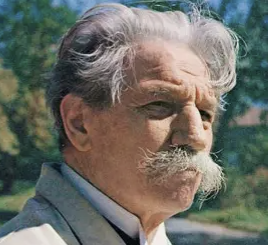
Never for a moment do we lay aside our mistrust of the ideals established by society, and of the convictions which are kept by it in circulation. We always know that society is full of folly and will deceive us in the matter of humanity. ... humanity meaning consideration for the existence and the happiness of individual human beings.
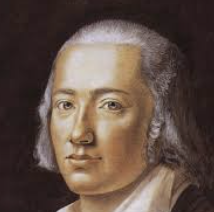
What is all that men have done and thought over thousands of years, compared with one moment of love. But in all Nature, too, it is what is nearest to perfection, what is most divinely beautiful! There all stairs lead from the threshold of life. From there we come, to there we go.
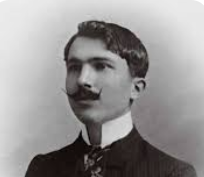
Where are we going? Do not ask! Ascend, descend. There is no beginning and no end. Only this present moment exists, full of bitterness, full of sweetness, and I rejoice in it all.
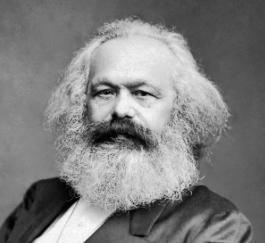
What chance has Vulcan against Roberts & Co., Jupiter against the lightning-rod and Hermes against the Credit Mobilier? All mythology overcomes and dominates and shapes the forces of nature in the imagination and by the imagination; it therefore vanishes with the advent of real mastery over them.
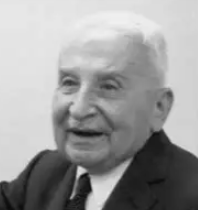
It is a double-edged makeshift to entrust an individual or a group of individuals with the authority to resort to violence. The enticement implied is too tempting for a human being. The men who are to protect the community against violent aggression easily turn into the most dangerous aggressors. They transgress their mandate. They misuse their power for the oppression of those whom they were expected to defend against oppression. The main political problem is how to prevent the police power from becoming tyrannical. This is the meaning of all the struggles for liberty.
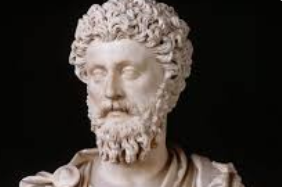
Have I done something for the general interest? Well then I have had my reward. Let this always be present to thy mind, and never stop doing such good.
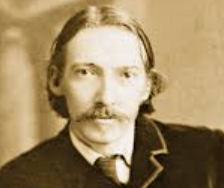
Though the coming of the day is still the most inspiriting, yet day's departure, also, and the return of night refresh, renew, and quiet us; and in the pastures of the dusk we stand, like cattle, exulting in the absence of the load.
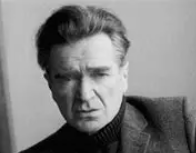
The refutation of suicide: is it not inelegant to abandon a world which has so willingly put itself at the service of our melancholy?
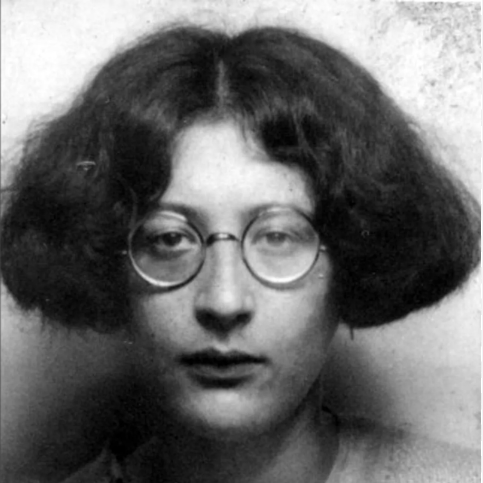
The miser deprives himself of his treasure because of his desire for it.
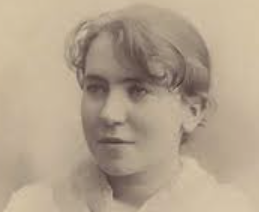
Needless to say, I am not opposed to woman suffrage on the conventional ground that she is not equal to it. I see neither physical, psychological, nor mental reasons why woman should not have the equal right to vote with man. But that can not possibly blind me to the absurd notion that woman will accomplish that wherein man has failed. If she would not make things worse, she certainly could not make them better. To assume, therefore, that she would succeed in purifying something which is not susceptible of purification, is to credit her with supernatural powers. Since woman's greatest misfortune has been that she was looked upon as either angel or devil, her true salvation lies in being placed on earth; namely, in being considered human, and therefore subject to all human follies and mistakes. Are we, then, to believe that two errors will make a right? Are we to assume that the poison already inherent in politics will be decreased, if women were to enter the political arena?
The need of a constantly expanding market for its products chases the bourgeoisie over the whole surface of the globe. It must nestle everywhere, settle everywhere, establish connections everywhere.
The good life, as I conceive it, is a happy life. I do not mean that if you are good you will be happy; I mean that if you are happy you will be good.
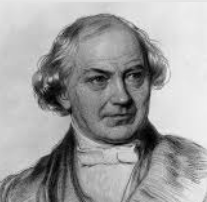
In the Ancient Period of Science, Technical Terms were formed in three different ways:-by appropriating common words and fixing their meaning;-by constructing terms containing a description;-by constructing terms containing reference to a theory.
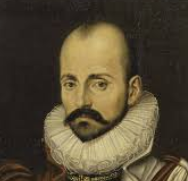
I will follow the good side right to the fire, but not into it if I can help it.
People seem not to see that their opinion of the world is also a confession of character.
The methods of coping with crime have no doubt undergone several changes, but mainly in a theoretic sense. In practice, society has retained the primitive motive in dealing with the offender; that is, revenge.
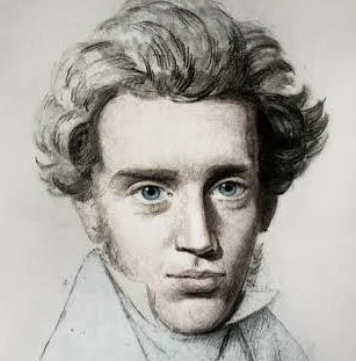
I have never worked as hard as now. I go for a brief walk in the morning. Then I come home and sit in my room without interruption until about three o'clock. My eyes can barely see. Then with my walking stick in hand I sneak off to the restaurant, but am so weak that I believe that if somebody were to call out my name, I would keel over and die. Then I go home and begin again. In my indolence during the past months I had pumped up a veritable shower bath, and now I have pulled the string and the ideas are cascading down upon me: healthy, happy, merry, gay, blessed children born with ease and yet all of them with the birthmark of my personality.
I am enough of an artist to draw freely upon my imagination. Imagination is more important than knowledge. Knowledge is limited. Imagination encircles the world.
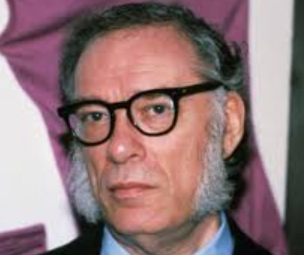
The same man who could not find it in his conscience to curb his curiosity into the nuclear studies that might someday kill half of Earth would risk his life to save that of an unimportant fellow man.
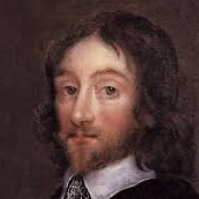
I intend no Monopoly, but a Community in Learning; I study not for my own sake only, but for theirs that study not for themselves.
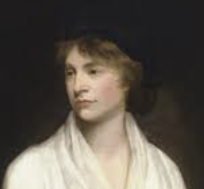
It appears to me impossible that I should cease to exist, or that this active, restless spirit, equally alive to joy and sorrow, should only be organised dust - ready to fly abroad the moment the spring snaps, or the spark goes out which kept it together. Surely something resides in this heart that is not perishable, and life is more than a dream.

Science is not distinguished from myth by science being literally true and myth only a type of poetic analogy. While their aims are different, both are composed of symbols we use to deal with a slippery world.
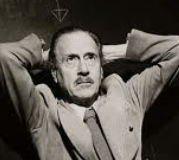
Since Sputnik there is no Nature. Nature is an item contained in a man-made environment of satellites and information.
If your parent is just, revere him; if not, bear with him.
Marxism was a philosophical or semi-philosophical doctrine and a political ideology which was used by the communist state as the main source of legitimacy and the obligatory faith.

Accent is the soul of language; it gives to it both feeling and truth.

The distinction between true and false consciousness, real and immediate interest still is meaningful. But this distinction itself must be validated. Men must come to see it and to find their way from false to true consciousness, from their immediate to their real interest. They can do so only if they live in need of changing their way of life, of denying the positive, of refusing. It is precisely this need which the established society manages to repress to the degree to which it is capable of "delivering the goods" on an increasingly large scale, and using the scientific conquest of nature for the scientific conquest of man.
In ourselves alone the absolute light keeps shining, a sigillum falsi et sui, mortis et vitae aeternae [false signal and signal of eternal life and death itself], and the fantastic move to it begins: to the external interpretation of the daydream, the cosmic manipulation of a concept that is utopian in principle. Finding this concept, finding the right for whose sake it behoves us to live, to be organized, to have time-this is where we are headed, why we are clearing the metaphysically constitutive trails afresh, calling for what is not, building into the blue that lines all edges of the world; this is why we build ourselves into the blue and search for truth and reality where mere factuality vanishes.
For truth itself does not have the privilege to be employed at any time and in every way; its use, noble as it is, has its circumscriptions and limits.
Capitals accumulate faster than the population; thus wages; thus population; thus grain prices; thus the difficulty of production and hence the exchange values.
CivilSimian.com created by AxiomaticPanic, CivilSimian, Kalokagathia