

8 months 2 weeks ago
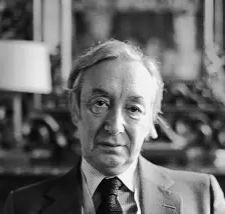
The ground for taking ignorance to be restrictive of freedom is that it causes people to make choices which they would not have made if they had seen what the realization of their choices involved.
▼
Source
source
"The Concept of Freedom".
9 months 2 weeks ago
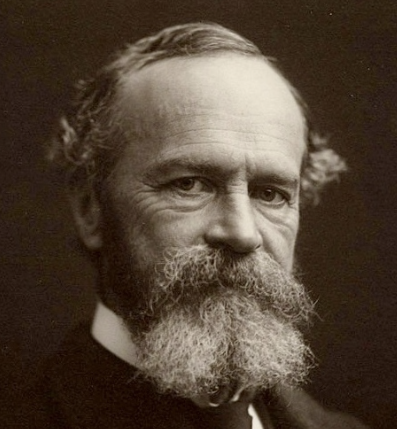
Need and struggle are what excite and inspire us; our hour of triumph is what brings the void. Not the Jews of the captivity, but those of the days of Solomon's glory are those from whom the pessimistic utterances in our Bible come.
▼
Source
source
"Is Life Worth Living?"
8 months 4 days ago
Every peasant has a lawyer inside of him, just as every lawyer, no matter how urbane he may be, carries a peasant within himself.
▼
Source
source
Civilization is Civilism
8 months 2 weeks ago
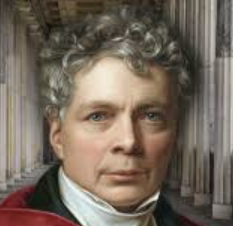
What is Europe really but a sterile trunk which owes everything to oriental grafts?
▼
Source
source
Letter of 18 December 1806 to Windischmann, quoted by Rene Gerard, L'Orient et la pensée romantique allemande, Paris 1963,, p. 213. quoted in Poliakov, L. (1974).
5 months 2 weeks ago
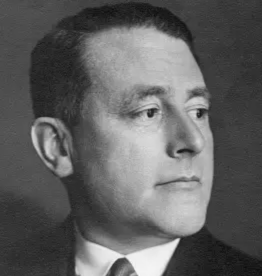
What remains is the remarkable and, for many, certainly disquieting diagnosis that all genuine political theories presuppose man to be evil, i.e., by no means an unproblematic but a dangerous and dynamic being.
8 months 2 days ago
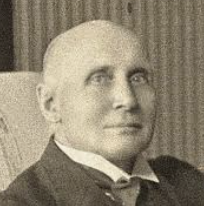
Thus the universe is to be conceived as attaining the active self-expression of its own variety of opposites of its own freedom and its own necessity, of its own multiplicity and its own unity, of its own imperfection and its own perfection. All the opposites are elements in the nature of things, and are incorrigibly there. The concept of God is the way in which we understand this incredible fact that what cannot be, yet is.
7 months 2 weeks ago
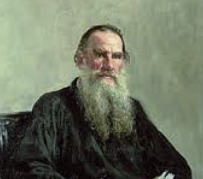
Despite the fact that the doctors treated him, bled him, and gave him medicines to drink, he recovered.
▼
Source
source
[sometimes quoted as "Though the doctors treated him, let his blood, and gave him medications to drink, he nevertheless recovered."] Bk. XV, ch. 12
5 months 2 weeks ago
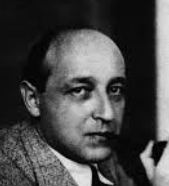
A modern theory of knowledge which takes account of the relational as distinct from the merely relative character of all historical knowledge must start with the assumption that there are spheres of thought in which it is impossible to conceive of absolute truth existing independently of the values and position of the subject and unrelated to the social context. Even a god could not formulate a proposition on historical subjects like 2 x 2 = 4, for what is intelligible in history can be formulated only with reference to problems and conceptual constructions which themselves arise in the flux of historical experience.
10 months 2 weeks ago
Without the interplay of human against human, the chief interest in life is gone; most of the intellectual values are gone; most of the reason for living is gone.

9 months 2 weeks ago
I think all the great religions of the world - Buddhism, Hinduism, Christianity, Islam, and Communism - both untrue and harmful. It is evident as a matter of logic that, since they disagree, not more than one of them can be true. With very few exception, the religions which a man accepts is that of the community in which he lives, which makes it obvious that the influence of environment is what has led him to accept the religion in question.
▼
Source
source
Preface, 1957
8 months 2 weeks ago
So long as man remains free he strives for nothing so incessantly and so painfully as to find someone to worship. But man seeks to worship what is established beyond dispute, so that all men would agree at once to worship it. For these pitiful creatures are concerned not only to find what one or the other can worship, but to find community of worship is the chief misery of every man individually and of all humanity from the beginning of time. For the sake of common worship they've slain each other with the sword. They have set up gods and challenged one another, 'Put away your gods and come and worship ours, or we will kill you and your gods!' And so it will be to the end of the world, even when gods disappear from the earth; they will fall down before idols just the same.
9 months 2 weeks ago
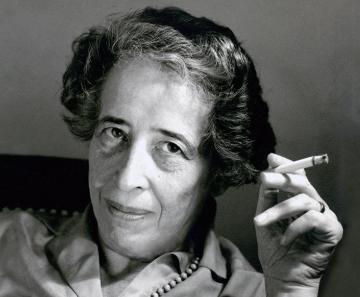
Man's urge for change and his need for stability have always balanced and checked each other, and our current vocabulary, which distinguishes between two factions, the progressives and the conservatives, indicates a state of affairs in which this balance has been thrown out of order. No civilization - the man-made artifact to house successive generations - would ever have been possible without a framework of stability, to provide the wherein for the flux of change. Foremost among the stabilizing factors, more enduring than customs, manners and traditions, are the legal systems that regulate our life in the world and our daily affairs with each other.
▼
Source
source
"Civil Disobedience"
9 months 3 weeks ago
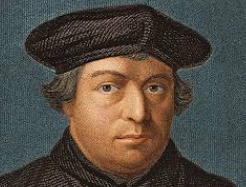
It is always necessary that the substance or essence of a person be good before there can be any good works and that good works follow and proceed from a person who is already good. Christ says in Matthew 7:18: "A good tree cannot bear bad fruit, nor can a bad tree bear good fruit." ... The fruit does not make the tree good or bad but the tree itself is what determines the nature of the fruit. In the same way, a person first must be good or bad before doing a good or bad work.
▼
Source
source
pp. 74-75
8 months 1 week ago
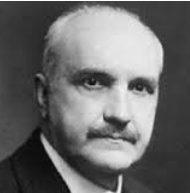
History is nothing but assisted and recorded memory. It might almost be said to be no science at all, if memory and faith in memory were not what science necessarily rest on. In order to sift evidence we must rely on some witness, and we must trust experience before we proceed to expand it. The line between what is known scientifically and what has to be assumed in order to support knowledge is impossible to draw. Memory itself is an internal rumour; and when to this hearsay within the mind we add the falsified echoes that reach us from others, we have but a shifting and unseizable basis to build upon. The picture we frame of the past changes continually and grows every day less similar to the original experience which it purports to describe.
▼
Source
source
Ch. 2 "History"
10 months 2 days ago
If it is my interest to have a farm, it is my interest to take it away from my neighbour; if it is my interest to have a cloak, it is my interest also to steal it from a bath. This is the source of wars, seditions, tyrannies, plots.
▼
Source
source
Book I, ch. 22, 14.
7 months 2 weeks ago
Logic is figure without a ground.
▼
Source
source
(p. 241)
5 months 2 weeks ago
I am not alone in my fear, nor alone in my hope, nor alone in my shouting. A tremendous host, an onrush of the Universe fears, hopes, and shouts with me. I am an improvised bridge, and when Someone passes over me, I crumble away behind Him.
8 months 2 weeks ago
Among all my patients in the second half of life-that is to say, over thirty-five-there has not been one whose problem in the last resort was not that of finding a religious outlook on life. It is safe to say that every one of them fell ill because he had lost what the living religions of every age have given their followers, and none of them has been really healed who did not regain his religious outlook.
▼
Source
source
Chap. 11 (Psychotherapists or the Clergy), p. 229
9 months 2 weeks ago
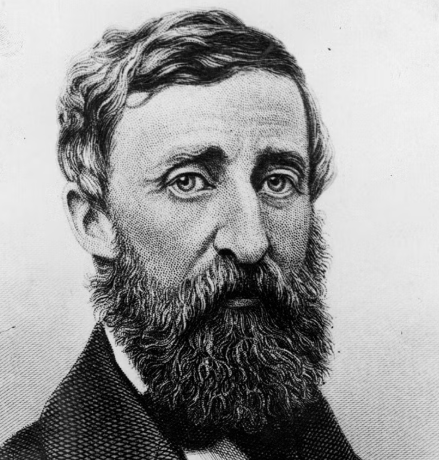
And now, at half-past ten o'clock, I hear the cockerels crow in Hubbard's barns, and morning is already anticipated. It is the feathered, wakeful thought in us that anticipates the following day.
▼
Source
source
July 11, 1851

8 months 2 weeks ago
It's not worth the bother of killing yourself, since you always kill yourself too late.
8 months 3 days ago
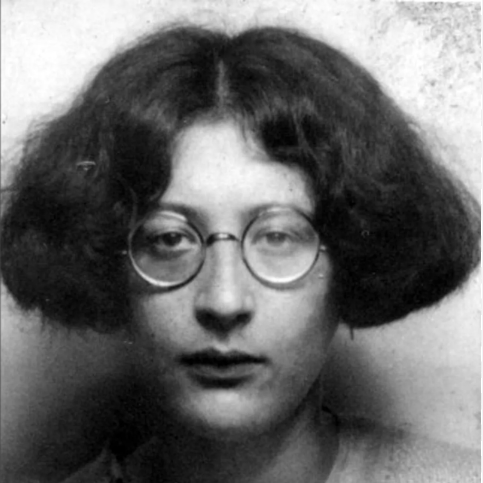
The human soul has need of consented obedience and of liberty. Consented obedience is what one concedes to an authority because one judges it to be legitimate. It is not possible in relation to a political power established by conquest or coup d'etat nor to an economic power based upon money. Liberty is the power of choice within the latitude left between the direct constraint of natural forces and the authority accepted as legitimate. The latitude should be sufficiently wide for liberty to be more than a fiction, but it should include only what is innocent and should never be wide enough to permit certain kinds of crime.
9 months 2 weeks ago
Some part of life - perhaps the most important part - must be left to the spontaneous action of individual impulse, for where all is system there will be mental and spiritual death.
9 months 3 weeks ago
If you are a preacher of mercy, do not preach an imaginary but the true mercy. If the mercy is true, you must therefore bear the true, not an imaginary sin. God does not save those who are only imaginary sinners. Be a sinner, and let your sins be strong (sin boldly), but let your trust in Christ be stronger, and rejoice in Christ who is the victor over sin, death, and the world. We will commit sins while we are here, for this life is not a place where justice resides. We, however, says Peter (2. Peter 3:13) are looking forward to a new heaven and a new earth where justice will reign.
▼
Source
source
Letter 99, Paragraph 13. Erika Bullmann Flores, Tr. from: Dr. Martin Luther's Saemmtliche SchriftenDr. Johann Georg Walch Ed. (St. Louis: Concordia Publishing House, N.D.), Vol. 15, cols. 2585-2590.
6 months 1 week ago
One of the most striking signs of the decay of art is the intermixing of different genres.
▼
Source
source
Propylaea (1798) Introduction
5 months 3 weeks ago
Zeal to do all that is in one's power is, in truth, a proof of piety.
▼
Source
source
Fragment of a Letter to a Priest
9 months 2 weeks ago
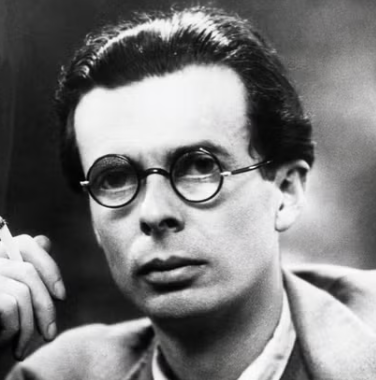
I strongly suspect that most of the great knowers of Suchness paid very little attention to art.... (To a person whose transfigured and transfiguring mind can see the All in every this, the first-rateness or tenth-rateness of even a religious painting will be a matter of the most sovereign indifference.) Art, I suppose, is only for beginners, or else for those resolute dead-enders, who have made up their minds to be content with the ersatz of Suchness, with symbols rather than with what they signify, with the elegantly composed recipe in lieu of actual dinner.
9 months 1 week ago
The enmity of one's kindred is far more bitter than the enmity of strangers.
8 months 4 days ago
To say that everything is idea or that everything is spirit, is the same as saying that everything is matter or that everything is energy, for if everything is idea or spirit, just as my consciousness is, it is not plain why the diamond should not endure for ever, if my consciousness, because it is idea or spirit, endures forever.
5 months 4 weeks ago
Lenin may be proud of what his comrades are doing; the Russian workers are acquiring immortal glory in attempting the realization of what hitherto had been only an abstract idea.....
▼
Source
source
"For Lenin," Soviet Russia, Official Organ of The Russian Soviet Government Bureau, Vol. II, New York: NY, January-June 1920 (April 10, 1920), p. 356

9 months 2 weeks ago
Too busy with the crowded hour to fear to live or die.
▼
Source
source
Quatrains, Nature
8 months ago
Obviously, Anarchism, or any other social theory, making man a conscious social unit, will act as a leaven for rebellion.
8 months 1 day ago
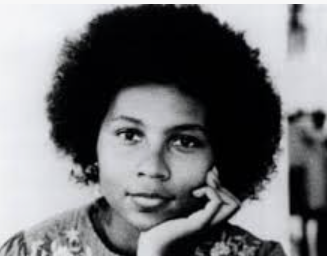
Today's fashion magazines may carry an article about the dangers of anorexia while bombarding its readers with images of emaciated young bodies representing the height of beauty and desirability.
▼
Source
source
As quoted in Feminism is for Everybody: Passionate Politics (2014), p.34
10 months 2 weeks ago
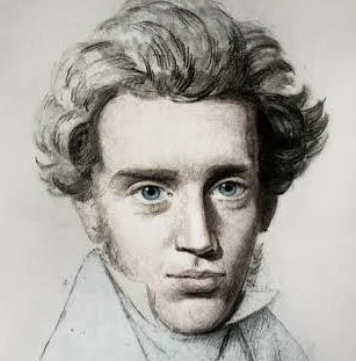
In an age as agitated as ours, it no longer suffices just to be advertised in the newspaper. To be advertised in this way is the same thing as being consigned to oblivion. If one is to be noticed, once must as least appear on the first page under a hand that points to and, as it were, announces or advertises the advertisement.
7 months 4 weeks ago
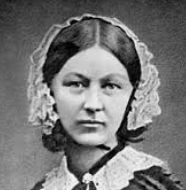
There is a physical, not moral, impossibility of supplying the wants of the intellect in the state of civilisation at which we have arrived. The stimulus, the training, the time, are all three wanting to us; or, in other words, the means and inducements are not there. Look at the poor lives we lead. It is a wonder that we are so good as we are, not that we are so bad. In looking round we are struck with the power of the organisations we see, not with their want of power. Now and then, it is true, we are conscious that there is an inferior organisation, but, in general, just the contrary.
10 months 2 weeks ago
Milton Ashe is not the type to marry a head of hair and a pair of eyes.
8 months 2 weeks ago
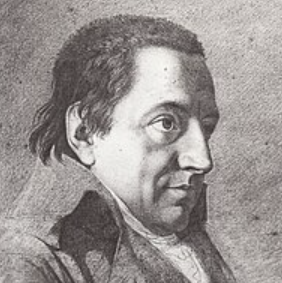
A living language can stand on a higher level of culture in comparison with another, but it can never in itself attain that perfection of development which a dead language quite easily attains. In the latter the connotation of words is fixed, and the possibilities of suitable combinations will also gradually become exhausted. Hence, he who wishes to speak this language must speak it just as it is; but, after he has once learnt to do this, the language speaks itself in his mouth and thinks and imagines for him.
▼
Source
source
Consequences of the Difference p. 85
8 months 1 day ago
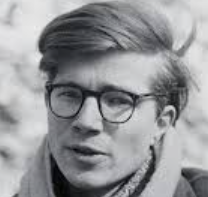
What is so remarkable about Crowley the 'magician' is that he remains Crowley the scientist, and always applies the same probing intellectual curiosity to every field he surveys. This is ultimately the most impressive quality about his mind, and the one that might -- if he had concentrated on developing it to the full -- have brought him the fame that he craved. Crowley's tragedy was that he never concentrated long enough to develop anything to the full.
▼
Source
source
p. 150
9 months 3 weeks ago
The true Gospel has it that we are justified by faith alone, without the deeds of the Law.
▼
Source
source
Chapter 2
9 months 2 weeks ago
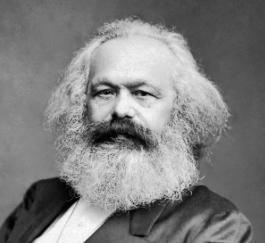
Money does not arise by convention, any more than the state does. It arises out of exchange, and arises naturally out of exchange; it is a product of the same.
▼
Source
source
Notebook I, The Chapter on Money, p. 85.

8 months 1 week ago
The notion contradicts reality when the latter has become self-contradictory. Hegel says that a prevailing social form can be successfully attacked by thought only if this form has come into open contradiction with its own 'truth,' in other words, if it can no longer fulfill the demands of its own contents.
8 months 2 weeks ago
An anxious man constructs his terrors, then installs himself within them: a stay-at-home in a yawning chasm.

8 months 3 weeks ago
I know of no country in which there is so little independence of mind and real freedom of discussion as in America.
▼
Source
source
Chapter XV.
9 months 2 weeks ago
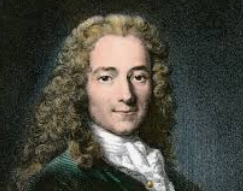
I opened with that which good Catholics have more than once made to Huguenots. "My dear sir," said I, "were you ever baptized?" "No, friend," replied the Quaker, "nor any of my brethren." "Zounds!" said I to him, "you are not Christians then!" "Friend," replied the old man, in a soft tone of voice, "do not swear; we are Christians, but we do not think that sprinkling a few drops of water on a child's head makes him a Christian." "My God!" exclaimed I, shocked at his impiety, "have you then forgotten that Christ was baptized by St. John?" "Friend," replied the mild Quaker, "once again, do not swear. Christ was baptized by John, but He Himself never baptized any one; now we profess ourselves disciples of Christ, and not of John." "Mercy on us," cried I, "what a fine subject you would be for the holy inquisitor! In the name of God, my good old man, let me baptize you."
▼
Source
source
Voltaire's account of his conversations with Andrew Pit

8 months 4 weeks ago
When going to the temple to adore Divinity neither say nor do any thing in the interim pertaining to the common affairs of life.
▼
Source
source
Symbol 1
5 months 2 weeks ago
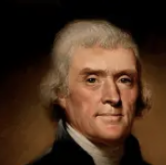
I am not afraid to appeal to the nation at large, to posterity, and still less to that Being Who sees Himself our motives, Who will judge us from His own knowledge of them.
▼
Source
source
Writings (1904), Vol. XI, p. 44, to Abigail Adams on July 22, 1804.

10 months 2 days ago
Custom renders love attractive; for that which is struck by oft-repeated blows however lightly, yet after long course of time is overpowered and gives way. See you not too that drops of water falling on rocks after long course of time scoop a hole through these rocks?
▼
Source
source
Book IV, lines 1283-1287 (tr. Munro)
CivilSimian.com created by AxiomaticPanic, CivilSimian, Kalokagathia