

8 months 4 days ago
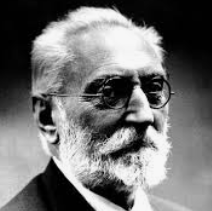
It appears to me to be indisputable that he who I am to-day derives, by a continuous series of states of consciousness, from him who was in my body twenty years ago. Memory is the basis of individual personality, just as tradition is the basis of the collective personality of a people. We live in memory, and our spiritual life is at bottom simply the effort of our memory to persist, to transform itself into hope, the effort of our past to transform itself into our future.
9 months 1 week ago
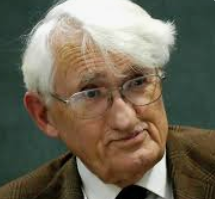
Reaching and understanding is the process of bringing about an agreement on the presupposed basis of validity claims that are mutually recognized.
▼
Source
source
p. 23
5 months 3 weeks ago
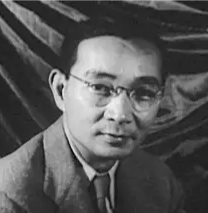
If compelled to indicate my religion on an immigration blank, I might be tempted to put down the word "Taoist," to the amazement of the customs officer who probably never heard of it.
▼
Source
source
The Wisdom of Laotse (1948), Introduction, p. 15
9 months 2 weeks ago
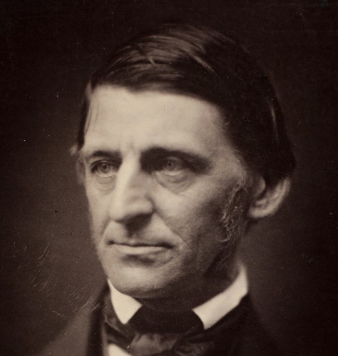
No congress, nor mob, nor guillotine, nor fire, nor all together, can avail, to cut out, burn, or destroy the offense of superiority in persons. The superiority in him is inferiority in me.
▼
Source
source
p. 65
9 months 2 weeks ago
Epicurus, the great teacher of happiness, has correctly and finely divided human needs into three classes. First there are the natural and necessary needs which, if they are not satisfied, cause pain. Consequently, they are only victus et amictus [food and clothing] and are easy to satisfy. Then we have those that are natural yet not necessary, that is, the needs for sexual satisfaction. ... These needs are more difficult to satisfy. Finally, there are those that are neither natural nor necessary, the needs for luxury, extravagance, pomp, and splendour, which are without end and very difficult to satisfy.
▼
Source
source
E. Payne, trans. (1974) Vol. 1, p. 346

5 months 2 weeks ago
With respect to the new Government, nine or ten States will probably have accepted by the end of this month. The others may oppose it. Virginia, I think, will be of this number. Besides other objections of less moment, she will insist on annexing a bill of rights to the new Constitution, i.e. a bill wherein the Government shall declare that, 1. Religion shall be free; 2. Printing presses free; 3. Trials by jury preserved in all cases; 4. No monopolies in commerce; 5. No standing army. Upon receiving this bill of rights, she will probably depart from her other objections; and this bill is so much to the interest of all the States, that I presume they will offer it, and thus our Constitution be amended, and our Union closed by the end of the present year.
▼
Source
source
Letter to Mr. Dumas
9 months 2 weeks ago
It is certain that we cannot escape anguish, for we are anguish.
8 months 2 weeks ago
Men without their choice derive benefits from that association; without their choice they are subjected to duties in consequence of these benefits; and without their choice they enter into a virtual obligation as binding as any that is actual. Look through the whole of life and the whole system of duties. Much the strongest moral obligations are such as were never the results of our option. I allow, that if no supreme ruler exists, wise to form, and potent to enforce, the moral law, there is no sanction to any contract, virtual or even actual, against the will of prevalent power. On that hypothesis, let any set of men be strong enough to set their duties at defiance, and they cease to be duties any longer.
▼
Source
source
p. 442
8 months 1 week ago
The Thou encounters me by grace - it cannot be found by seeking. But that I speak the basic word to it is a deed of my whole being, is my essential deed.
7 months 3 days ago
Rousseau's writings are so admirably adapted to touch both these classes that the effect they produced, especially in France, is easily intelligible.
▼
Source
source
"On The Natural Inequality of Men"
5 months 2 weeks ago
We took the liberty to make some enquiries concerning the ground of their pretensions to make war upon nations who had done them no injury, and observed that we considered all mankind as our friends who had done us no wrong, nor had given us any provocation. The Ambassador [of Tripoli] answered us that it was founded on the Laws of their Prophet, that it was written in their Koran, that all nations who should not have acknowledged their authority were sinners, that it was their right and duty to make war upon them wherever they could be found, and to make slaves of all they could take as Prisoners, and that every Musselman who should be slain in battle was sure to go to Paradise.
▼
Source
source
Letter from the commissioners (John Adams, Thomas Jefferson) to John Jay, 28 March 1786, in Thomas Jefferson Travels: Selected Writings, 1784-1789, by Anthony Brandt, pp. 104-105

7 months 4 weeks ago
Women are never supposed to have any occupation of sufficient importance not to be interrupted, except "suckling their fools "; and women themselves have accepted this, have written books to support it, and have trained themselves so as to consider whatever they do as not of such value to the world or to others, but that they can throw it up at the first "claim of social life." They have accustomed themselves to consider intellectual occupation as a merely selfish amusement, which it is their " duty " to give up for every trifler more selfish than themselves.

6 months 1 week ago
It is now almost my sole rule of life to clear myself of cants and formulas, as of poisonous Nessus shirts.
▼
Source
source
Letter to His Wife (1835).
8 months 2 weeks ago
To prove cannot mean anything other than to bring the other person to my own conviction. The truth lies only in the unification of "I" and "You." The Other of pure thought, however, is the sensuous intellect in general. In the field of philosophy, proof therefore consists only in the fact that the contradiction between sensuous intellect and pure thought is disposed, so that thought is true not only for itself but also for its opposite.
▼
Source
source
Z. Hanfi, trans., in The Fiery Brook (1972), p. 75
10 months 2 weeks ago
The objective of all human arrangements is through distracting one's thoughts to cease to be aware of life.
9 months 2 weeks ago
Aims, principles, &c., have a place in our thoughts, in our subjective design only; but not yet in the sphere of reality. That which exists for itself only, is a possibility, a potentiality; but has not yet emerged into Existence. A second element must be introduced in order to produce actuality - viz. actuation, realization; and whose motive power is the Will - the activity of man in the widest sense.
9 months 3 weeks ago
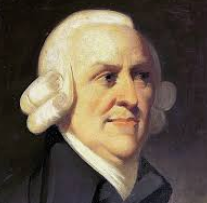
In public, as well as in private expences, great wealth may, perhaps, frequently be admitted as an apology for great folly.
▼
Source
source
Chapter V, p. 563.
5 months 2 weeks ago
At every moment of crisis an array of men risk their lives in the front ranks as standard-bearers of God to fight and take upon themselves the whole responsibility of the battle. Once long ago it was the priests, the kings, the noblemen, or the burghers who created civilizations and set divinity free. Today God is the common worker made savage by toil and rage and hunger
8 months 1 week ago
I know well that many of my readers do not think as I do. This also is most natural and confirms the theorem. For although my opinion turn out erroneous, there will always remain the fact that many of those dissentient readers have never given five minutes' thought to this complex matter. How are they going to think as I do? But by believing that they have a right to an opinion on the matter without previous effort to work one out for themselves, they prove patently that they belong to that absurd type of human being which I have called the "rebel mass." It is precisely what I mean by having one's soul obliterated, hermetically closed. Here it would be the special case of intellectual hermetism.
▼
Source
source
Chap. VIII: The Masses Intervene In Everything, And Why Their Intervention Is Solely By Violence
5 months 2 weeks ago
Yet the hour of emancipation is advancing, in the march of time. It will come.
10 months 2 days ago
Show me someone who is ill and yet happy, in danger and yet happy, dying and yet happy, exiled and yet happy. Show me such a person; by the gods, how greatly I long to see a Stoic!
▼
Source
source
Book II, ch. 19, 24.

9 months 2 weeks ago
We have, in fact, two kinds of morality side by side; one which we preach but do not practise, and another which we practise but seldom preach.
▼
Source
source
Ch. 8: Eastern and Western Ideals of Happiness

8 months 3 weeks ago
It is manifest... that every soul and spirit hath a certain continuity with the spirit of the universe, so that it must be understood to exist and to be included not only there where it liveth and feeleth, but it is also by its essence and substance diffused throughout immensity... The power of each soul is itself somehow present afar in the universe... Naught is mixed, yet is there some presence. Anything we take in the universe, because it has in itself that which is All in All, includes in its own way the entire soul of the world, which is entirely in any part of it.
8 months 2 days ago
The English never abolish anything. They put it in cold storage.
▼
Source
source
Ch. 36, January 19, 1945.
9 months 2 weeks ago
Scientific Method... is even less existent than some other non-existent subjects.
9 months 2 weeks ago
A man fits out a ship at a great expense and sends it to the West Indies with a crew of men and boys, and after six months or a year, it comes back with a load of pine-apples; now, if no more gets accomplished than the speculator commonly aims at, if it simply turns out what is called a successful venture, I am less interested in this expedition than in some child's first excursions a-huckleberrying, in which it is introduced into a new world, experiences a new development, though it brings home only a gill of berries in its basket.

6 months 3 weeks ago
Nothing is too terrible to be true if it is consistent with the laws of nature.
▼
Source
source
The Pinprick Argument, BLTC Research, 2005

8 months 2 weeks ago
Illusion begets and sustains the world; we do not destroy one without destroying the other. Which is what I do every day. An apparently ineffectual operation, since I must begin all over again the next day.


9 months 2 weeks ago
The eye may see for the hand, but not for the mind.
9 months 3 weeks ago
I am firmly convinced, therefore, that to set up a republic which is to last a long time, the way to set about it is to constitute it as Sparta and Venice were constituted; to place it in a strong position, and so to fortify it that no one will dream of taking it by a sudden assault; and, on the other hand, not to make it so large as to appear formidable to its neighbors. It should in this way be able to enjoy its form of government for a long time. For war is made on a commonwealth for two reasons: to subjugate it, and for fear of being subjugated by it.
▼
Source
source
Book 1, Ch. 6 (as translated by LJ Walker and B Crick)
5 months 3 weeks ago
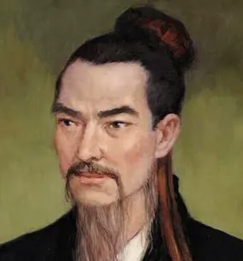
The murder of one person is called unrighteous and incurs one death penalty. Following this argument, the murder of ten persons will be ten times as unrighteous and there should be ten death penalties; the murder of a hundred persons will be a hundred times as unrighteous and there should be a hundred death penalties. All the gentlemen of the world know that they should condemn these things, calling them unrighteous. But when it comes to the great unrighteousness of attacking states, they do not know that they should condemn it. On the contrary, they applaud it, calling it righteous.
▼
Source
source
Book 5: Condemnation of Offensive War I
9 months 2 weeks ago
Self-command is the main elegance.
▼
Source
source
p. 205
6 months 3 days ago
If the press was to be free, nothing would be so important as precisely its liberation from every coercion that could be put on it in the name of a law. And, that it might come to that, I my own self should have to have absolved myself from obedience to the law.
▼
Source
source
Cambridge 1995, p. 249
10 months 2 weeks ago
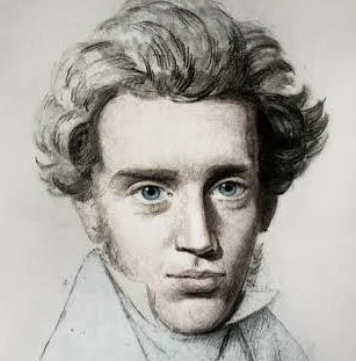
What, exactly, have the errors of exegesis and philosophy done in order to confuse Christianity, and how have they confused Christianity? Quite briefly and categorically, they have simply forced back the sphere of paradox-religion into the sphere of aesthetics, and in consequence have succeeded in brings Christian terminology to such a pass that terms which, so long as they remain within their sphere, are qualitative categories, can be put to almost any use as clever expressions.
7 months 2 weeks ago
My main theme is the extension of the nervous system in the electric age, and thus, the complete break with five thousand years of mechanical technology. This I state over and over again. I do not say whether it is a good or bad thing. To do so would be meaningless and arrogant.
▼
Source
source
Letter to Robert Fulford, 1964. Letters of Marshall McLuhan (1987), p. 300

9 months 1 week ago
In order to remain silent Da-sein must have something to say.
▼
Source
source
Stambaugh translation
6 months 3 weeks ago
If we want eternal life, then we'll need to rewrite our bug-ridden genetic code and become god-like. "May all that have life be delivered from suffering", said Gautama Buddha. It's a wonderful sentiment. Sadly, only hi-tech solutions can ever eradicate suffering from the living world. Compassion alone is not enough.
▼
Source
source
Interview with Nick Bostrom and David Pearce, Dec. 2007
7 months ago
Religion holds the solution to all problems of human relationship, whether they are between parents and children or nation and nation. Sooner or later, man has always had to decide whether he worships his own power or the power of God. When threats force him to look at the limitations of his human power, he's often ready to seek his spiritual one. What we need is patience and awe of God's plan in human history!
▼
Source
source
In Quote: The Weekly Digest, vol. 38, no. 19 (8 November 1959) p. 13

9 months 2 weeks ago
Even the best things are not equal to their fame.
▼
Source
source
Pearls of Thought (1881) p. 87
10 months 2 weeks ago
It is an odd fact that anyone who wishes to start a war must always make it appear that he is fighting in a just cause even if the real motive is naked aggression. Fortunately for the would-be aggressor, a "just cause" is very easy to find.
8 months 2 weeks ago
To live classically and to realize antiquity practically within oneself is the summit and goal of philology.
▼
Source
source
Philosophical Fragments, P. Firchow, trans. (1991) § 147
8 months 3 days ago
The discourse on the Text should itself be nothing other than text, research, textual activity, since the Text is that social space which leaves no language safe, outside, nor any subject of the enunciation in position as judge, master, analyst, confessor, decoder. The theory of the Text can coincide only with a practice of writing.
▼
Source
source
Conclusion
9 months 2 weeks ago
Since he is unable to be the beloved, he will become the lover.
▼
Source
source
p. 90
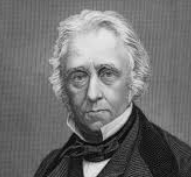
7 months 6 days ago
I would not give up the keys to the granary, because I know that, by doing so, I should turn scarcity into a famine.
▼
Source
source
Sullivan, p. 266
7 months 3 days ago
Even purely intellectual progress brings about its revenges. Problems settled in a rough and ready way by rude men, absorbed in action, demand renewed attention and show themselves to be still unread riddles when men have time to think. The beneficent demon, doubt, whose name is Legion and who dwells amongst the tombs of old faiths, enters into mankind and thenceforth refuses to be cast out. Sacred customs, venerable dooms of ancestral wisdom, hallowed by tradition and professing to hold good for all time, are put to the question. Cultured reflection asks for their credentials; judges them by its own standards; finally, gathers those of which it approves into ethical systems, in which the reasoning is rarely much more than a decent pretext for the adoption of foregone conclusions.

9 months 1 week ago
For why do you hasten to remove things that hurt your eyes, but if anything gnaws your mind, defer the time of curing it from year to year?
▼
Source
source
Book I, epistle ii, lines 37-39; translation by C. Smart
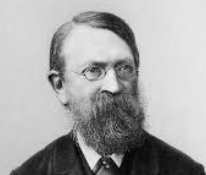
8 months 1 week ago
Scientists believe there is a hierarchy of facts and that among them may be made a judicious choice. They are right, since otherwise there would be no science... One need only open the eyes to see that the conquests of industry which have enriched so many practical men would never have seen the light, if these practical men alone had existed and if they had not been preceded by unselfish devotees who died poor, who never thought of utility, and yet had a guide far other than caprice.As Mach says, these devotees have spared their successors the trouble of thinking.
▼
Source
source
Henri Poincaré, The Value of Science (1907) Author's Essay Prefatory to the Translation: "The Choice of Facts," p.4, Tr. George Bruce Halsted
10 months 2 weeks ago
It is my own experience ... that commentators are far more ingenious at finding meaning than authors are at inserting it.
CivilSimian.com created by AxiomaticPanic, CivilSimian, Kalokagathia