

8 months 2 weeks ago
It might be wiser for me to avoid Camarina and say nothing of theologians. They are a proud, susceptible race. They will smother me under six hundred dogmas. They will call me heretic and bring thunderbolts out of their arsenals, where they keep whole magazines of them for their enemies. Still they are Folly's servants, though they disown their mistress. They live in the third heaven, adoring their own persons and disdaining the poor crawlers upon earth. They are surrounded with a bodyguard of definitions, conclusions, corollaries, propositions explicit, and propositions implicit. ...They will tell you how the world was created. They will show you the crack where Sin crept in and corrupted mankind.
▼
Source
source
as quoted by James Anthony Froude, Life and Letters of Erasmus: Lectures Delivered at Oxford 1893-4
7 months 5 days ago
The End of the Life of Mankind on Earth is this,-that in this Life they may order all their relations with FREEDOM according to REASON.
▼
Source
source
p. 5

6 months 4 weeks ago
Such abstraction which refuses to accept the given universe of facts as the final context of validation, such "transcending" analysis of the facts in the light of their arrested and denied possibilities, pertains to the very structure of social theory.
▼
Source
source
p. xliii

6 months 1 week ago
Violence as a tool is already operating in the world before anyone takes it up: that fact alone neither justifies nor discounts the use of the tool. What seems most important, however, is that the tool is already part of a practice, presupposing a world conducive to its use; that the use of the tool builds or rebuilds a specific kind of world, activating a sedimented legacy of use. When any of us commit acts of violence, we are, in and through those acts, building a more violent world.
▼
Source
source
p. 19
8 months 6 days ago
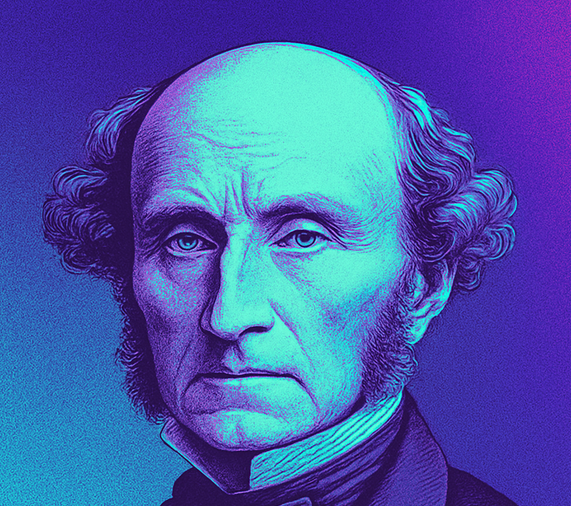
The writers by whom, more than by any others, a new mode of political thinking was brought home to me, were those of the St. Simonian school in France. In 1829 and 1830 I became acquainted with some of their writings. They were then only in the earlier stages of their speculations. They had not yet dressed out their philosophy as a religion, nor had they organized their scheme of Socialism. They were just beginning to question the principle of hereditary property. I was by no means prepared to go with them even this length; but I was greatly struck with the connected view which they for the first time presented to me, of the natural order of human progress; and especially with their division of all history into organic periods and critical periods.
▼
Source
source
(p. 163)
4 months 2 weeks ago
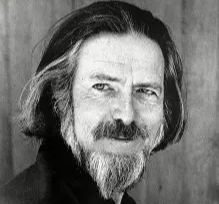
We have, as a result of two thousand years of Christianity, sex on the brain. Which isn't always the best place for it.

8 months 2 weeks ago
Again and again our foe, religion, has given birth to deeds sinful and unholy.
▼
Source
source
Book I, lines 82-83 (tr. C. Bailey)
8 months 1 week ago
She is rightly called not only the mother of the man, but also the Mother of God ... It is certain that Mary is the Mother of the real and true God.
▼
Source
source
Weimar edition of Martin Luther's Works, English translation edited by J. Pelikan [Concordia: St. Louis], Vol. 11, Vol. 24, 107
8 months 4 days ago
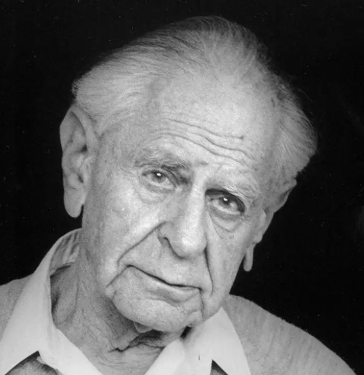
Why do I think that we, the intellectuals, are able to help? Simply because we, the intellectuals, have done the most terrible harm for thousands of years. Mass murder in the name of an idea, a doctrine, a theory, a religion - that is all our doing, our invention: the invention of the intellectuals. If only we would stop setting man against man - often with the best intentions - much would be gained. Nobody can say that it is impossible for us to stop doing this.
8 months 2 weeks ago
If it is my interest to have a farm, it is my interest to take it away from my neighbour; if it is my interest to have a cloak, it is my interest also to steal it from a bath. This is the source of wars, seditions, tyrannies, plots.
▼
Source
source
Book I, ch. 22, 14.
6 months 3 weeks ago
"There is no God," cry the masses more and more vociferously; and with the loss of God man loses his sense of values - is, as it were, massacred because he feels himself of no account.

8 months 5 days ago
It is a serious thing to live in a society of possible gods and goddesses, to remember that the dullest most uninteresting person you talk to may one day be a creature which, if you saw it now, you would be strongly tempted to worship, or else a horror and a corruption such as you now meet, if at all, only in a nightmare. All day long we are, in some degree helping each other to one or the other of these destinations. It is in the light of these overwhelming possibilities, it is with the awe and the circumspection proper to them, that we should conduct all of our dealings with one another, all friendships, all loves, all play, all politics. There are no ordinary people. You have never talked to a mere mortal. Nations, cultures, arts, civilizations - these are mortal, and their life is to ours as the life of a gnat. But it is immortals whom we joke with, work with, marry, snub, and exploit - immortal horrors or everlasting splendors.
8 months 6 days ago
I find the Englishman to be him of all men who stands firmest in his shoes. They have in themselves what they value in their horses, - mettle and bottom.
▼
Source
source
Manners

4 months 5 days ago
The politicians have kept the environmental movement quiet by designating wilderness areas. And in the meantime, they've let corporations run completely out of control, and extraordinarily destructively, in the economic landscapes, without any acknowledgement at all that the natural world is out there just the same as it is in the parks.
6 months 2 weeks ago
I do not regard the late Carl Sagan as any kind of authority. On the contrary, as this book will show, I regard him in many ways as a dubious publicity seeker and careerist, more concerned to maintain his reputation as the brilliant and sceptical representative of hard-headed science than to look squarely and honestly at the facts.
▼
Source
source
In short, a bit of a crook. pp. xix-xx
9 months 3 days ago
Those who purge the soul believe that the soul can receive no benefit from any teachings offered to it until someone by cross-questioning reduces him who is cross-questioned to an attitude of modesty, by removing the opinions that obstruct the teachings, and thus purges him and makes him think that he knows only what he knows, and no more.
4 months 3 weeks ago
Normal science, the activity in which most scientists inevitably spend almost all their time, is predicated on the assumption that the scientific community knows what the world is like. Normal science often suppresses fundamental novelties because they are necessarily subversive of its basic commitments.
▼
Source
source
p. 5
8 months 5 days ago
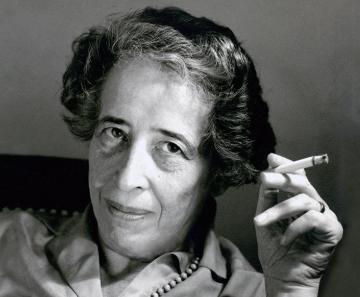
Kant stated that he had "found it necessary to deny knowledge to make room for faith," but all he had "denied" was knowledge of things that are unknowable, and he had not made room for faith but for thought.
▼
Source
source
p. 63
4 months 3 weeks ago
Scientific revolutions are inaugurated by a growing sense... that an existing paradigm has ceased to function adequately in the exploration of an aspect of nature to which that paradigm itself had previously led the way. p. 91
▼
Source
source
2012 ed.
5 months 4 weeks ago
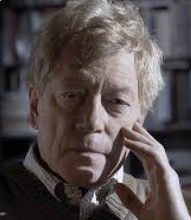
A developed legal system, with elaborate common law rights, and supported by a system of natural justice, was the most precious legacy of our empire. If it were still permissible to defend colonization, I should justify it in terms of this bequest, and at the same time contrast the colonization of Africa with the Soviet "colonization" of eastern Europe, which has advanced not by the generation but by the destruction of law.
▼
Source
source
A colonial inheritance once again cast off', The Times (6 September 1983), p. 10
8 months 5 days ago
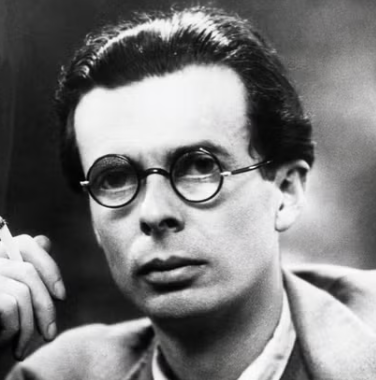
The original scriptures of most religions are poetical and unsystematic. Theology, which generally takes the form of a reasoned commentary on the parables and aphorisms of the scriptures, tends to make its appearance at a later stage of religious history. The Bhagavad-Gita occupies an intermediate position between scripture and theology; for it combines the poetical qualities of the first with the clear-cut methodicalness of the second... one of the clearest and most comprehensive summaries of the Perennial Philosophy ever to have been made. Hence its enduring value, not only for Indians, but for all mankind.
8 months 1 week ago
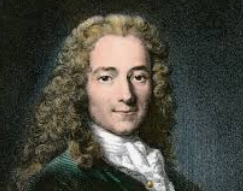
May we not return to those scoundrels of old, the illustrious founders of superstition and fanaticism, who first took the knife from the altar to make victims of those who refused to be their disciples?
▼
Source
source
Letter to Frederick II of Prussia (December 1740), published in Oeuvres complètes de Voltaire, Vol. 7 (1869), edited by Georges Avenel, p. 105; as translated by Richard Aldington
7 months 1 week ago
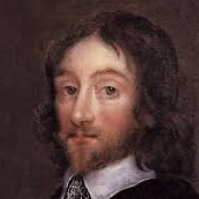
There is surely a Physiognomy, which those experienced and Master Mendicants observe... For there are mystically in our faces certain Characters that carry in them the motto of our Souls, wherein he that cannot read A.B.C. may read our natures.
▼
Source
source
Section 2
8 months 5 days ago
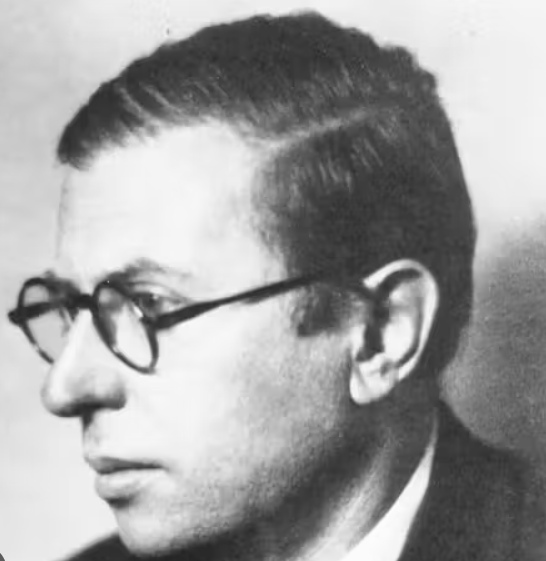
What do we mean by saying that existence precedes essence? We mean that man first of all exists, encounters himself, surges up in the world-and defines himself afterwards. If man as the existentialist see him is not definable, it is because to begin with he is nothing. He will not be anything until later, and then he will be what he makes of himself. Thus, there is no human nature, because there is no God to have a conception of it. Man simply is. Not that he is simply what he conceives himself to be, but he is what he wills, and as he conceives himself after already existing - as he wills to be after that leap towards existence. Man is nothing else but that which he makes of himself. That is the first principle of existentialism.
▼
Source
source
p. 28
4 months 4 days ago
In death too, there is always something of the rich cat that lets the mouse run before devouring it.
▼
Source
source
Traces (1930), p. 30


5 months 3 weeks ago
I'm delighted to hear someone make the claim that there is moral progress because it can be such a incendiary thing to say, and its something that I say and deeply believe in.
8 months 1 week ago
Tell your master that if there were as many devils at Worms as tiles on its roofs, I would enter.
▼
Source
source
Psalm. Ein feste Burg ist unser Gott (translated by Frederic H. Hedge), Reported in Bartlett's Familiar Quotations, 10th ed. (1919).
4 months 2 days ago
When you wake up in the morning, tell yourself: The people I deal with today will be meddling, ungrateful, arrogant, dishonest, jealous, and surly. They are like this because they can't tell good from evil. (Hays translation) Say to yourself in the early morning: I shall meet today inquisitive, ungrateful, violent, treacherous, envious, uncharitable men. All these things have come upon them through ignorance of real good and ill.
▼
Source
source
II, 1
8 months 1 week ago
We are speaking on this occasion, not as members of this or that nation, continent, or creed, but as human beings, members of the species Man, whose continued existence is in doubt.

8 months 6 days ago
The foundation of irreligious criticism is: Man makes religion, religion does not make man.
7 months 6 days ago
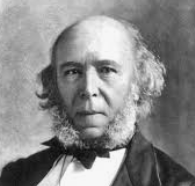
The poverty of the incapable, the distresses that come upon the imprudent, the starvation of the idle, and those shoulderings aside of the weak by the strong, which leave so many "in shallows and in miseries," are the decrees of a large, far-seeing benevolence.
▼
Source
source
Pt. III, Ch. 25 : Poor-Laws
6 months 1 week ago
Whatever is referred to must exist. Let us call this the axiom of existence.
▼
Source
source
P. 77.
3 months 3 weeks ago
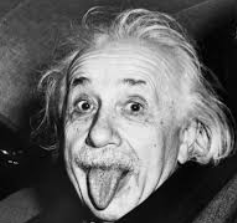
It is easy to follow in the sacred writings of the Jewish people the development of the religion of fear into the moral religion, which is carried further in the New Testament. The religions of all civilized peoples, especially those of the Orient, are principally moral religions. An important advance in the life of a people is the transformation of the religion of fear into the moral religion. But one must avoid the prejudice that regards the religions of primitive peoples as pure fear religions and those of the civilized races as pure moral religions. All are mixed forms, though the moral element predominates in the higher levels of social life.
8 months 2 weeks ago
By protracting life, we do not deduct one jot from the duration of death.
▼
Source
source
Book III, lines 1087-1088 (tr. Rouse)
6 months 4 weeks ago
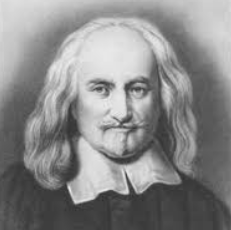
As first a man cannot lay down the right of resisting them, that assault him by force, to take away his life; because he cannot be understood to ayme thereby, at any Good to himself.
▼
Source
source
The First Part, Chapter 14, p. 66
7 months 1 week ago
Since therefore, as well those degrees of heat that are not painful, as those that are, can exist in a thinking substance; may we not conclude that external bodies are absolutely incapable of any degree of heat whatsoever?
▼
Source
source
Philonous to Hylas. Hylas replies with, "So it seems".
6 months 4 weeks ago
The spontaneous reproduction of superimposed needs by the individual does not establish autonomy; it only testifies to the efficacy of the control.
▼
Source
source
p. 8
4 months 4 weeks ago
Marxism was a philosophical or semi-philosophical doctrine and a political ideology which was used by the communist state as the main source of legitimacy and the obligatory faith.
▼
Source
source
New Preface, p. v
8 months 3 weeks ago
Sincerity is that whereby self-completion is effected, and its way is that by which man must direct himself.
7 months 3 weeks ago
To abjure the notion of the "truly human" is to abjure the attempt to divinize the self as a replacement for a divinized world.
▼
Source
source
Contingency, Irony, and Solidarity (1989), p. 35
8 months 3 weeks ago
Bad times, hard times, this is what people keep saying; but let us live well, and times shall be good. We are the times: Such as we are, such are the times.
▼
Source
source
80:8

7 months 3 weeks ago
The capacity to reason is a special sort of capacity because it can lead us to places that we did not expect to go.
▼
Source
source
Chapter 4, Reason, p. 88
CivilSimian.com created by AxiomaticPanic, CivilSimian, Kalokagathia