



5 months 1 week ago
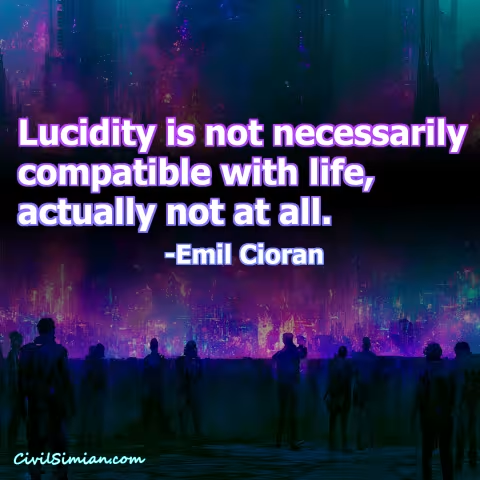
For those who live inside a myth, it seems a self-evident fact. Human progress is a fact of this kind. If you accept it you have a place in the grand march of humanity. Humankind is, of course, not marching anywhere. 'Humanity' is a fiction composed from billions of individuals for each of whom life is singular and final. But the myth of progress is extremely potent. When it loses its power those who have lived by it are - as Conrad put it, describing Kayerts and Carlier - 'like those lifelong prisoners who, liberated after many years, do not know what use to make of their freedoms'. When faith in the future is taken from them, so is the image they have of themselves. If they then opt for death, it is because without that faith they can no longer make sense of living.
▼
Source
source
An Old Chaos: The Call of Progress (pp. 6-7)

7 months 1 week ago
The man who makes his religion a means to the gaining of this world, will lose both worlds alike; whereas the man who gives up this world for the sake of religion, will get both worlds alike.
▼
Source
source
The Faith and Practice of Al-Ghazali, Allen & Unwin (1963), p. 152.
4 months 2 weeks ago
Bishop Berkeley destroyed this world in one volume octavo; and nothing remained after his time, but mind - which experienced a similar fate from the hand of Mr. Hume, in 1737.
▼
Source
source
Introduction
7 months 2 weeks ago
All the good are friends of one another.
▼
Source
source
As quoted in Stromata, v. 14. by Clement of Alexandria
4 months 2 weeks ago
That you may know that they whom anger possesses are not sane, look at their appearance; for as there are distinct symptoms which mark madmen, such as a bold and menacing air, a gloomy brow, a stern face
7 months 1 day ago
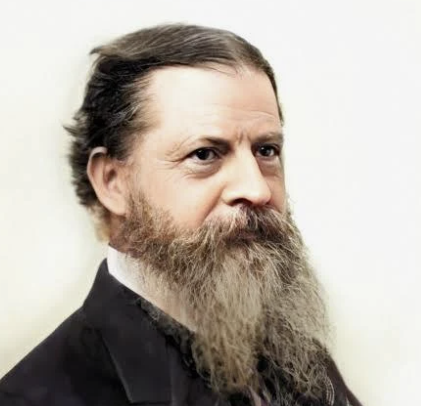
It is ...easy to be certain. One has only to be sufficiently vague.
▼
Source
source
Vol. IV, par. 237

6 months 2 weeks ago
The fundamental tenet of Steiner's teaching is that if we take the trouble to recognize the independent existence of the inner worlds of thought, and keep the mind turned in that direction, we shall soon become increasingly conscious of their reality. We are not, as Sartre believed, stranded in the universe of matter like a whale on a beach. That inner world is our natural home. Moreover, once we grasp this truth, we can also recognize that we ourselves possess an "essential ego," a "true self," a fundamental identity that goes far beyond our usual feeble sense of being "me."
▼
Source
source
p. 26

4 months 3 weeks ago
Can there be a more horrible object in existence than an eloquent man not speaking the truth?
▼
Source
source
Address as Lord Rector of Edinburgh University, (1866), reported in Bartlett's Familiar Quotations, 10th ed. (1919).

8 months 1 week ago
There is a sort of gratification in doing good which makes us rejoice in ourselves.
▼
Source
source
Book III, Ch. 2
4 months 3 weeks ago
A real man is he whose goodness is a part of himself.
▼
Source
source
"Discipline and Character", no. 45

8 months 1 week ago
Religion should be .... successively freed from all statutes based on history, and one purely moral religion rule over all, in order that God might be all in all. The veil must fall. The leading-string of sacred tradition with all its appendices becomes by degrees useless, and at last a fetter ... The humiliating difference between laymen and clergymen must disappear, and equality spring from true liberty. All this, however, must not be expected from an exterior revolution, which acts violently, and depends upon fortune In the principle of pure moral religion, which is a sort of divine revelation constantly taking place in the soul of man, must be sought the ground for a passage to the new order of things, which will be accomplished by slow and successive reforms.
▼
Source
source
As quoted in German Thought, From The Seven Years' War To Goethe's Death : Six Lectures (1880) by Karl Hillebrand, p. 208
6 months 3 days ago
It's misleading to suppose there's any basic difference between education & entertainment. This distinction merely relieves people of the responsibility of looking into the matter.
▼
Source
source
(1957) from "Classroom Without Walls", Explorations Vol. 7, 1957; reprinted in Explorations in Communication ed. E. Carpenter & M. McLuhan, (Boston: Beacon, 1960); and again in McLuhan: Hot and Cool ed. G. E. Stearn (NY: Dial, 1967).
6 months 5 days ago
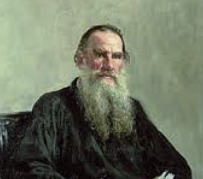
When I started life Hegelianism was the basis of everything: it was in the air, found expression in magazine and newspaper articles, in novels and essays, in art, in histories, in sermons, and in conversation. A man unacquainted with Hegel had no right to speak: he who wished to know the truth studied Hegel. Everything rested on him; and suddenly forty years have gone by and there is nothing left of him, he is not even mentioned - as though he had never existed. And what is most remarkable is that, like pseudo-Christianity, Hegelianism fell not because anyone refuted it, but because it suddenly became evident that neither the one nor the other was needed by our learned, educated world.
▼
Source
source
Chapter XXIX
7 months 5 days ago
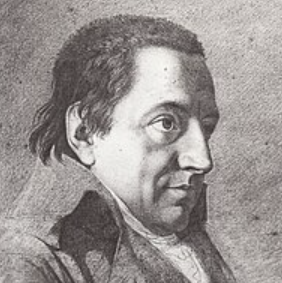
Reason does not exist for the sake of life, but life for the sake of reason. An existence which does not of itself satisfy reason and solve all her doubts, cannot be the true one.
▼
Source
source
Jane Sinnett, trans 1846 p.94

5 months ago
The fundamental political question is why do people obey a government. The answer is that they tend to enslave themselves, to let themselves be governed by tyrants. Freedom from servitude comes not from violent action, but from the refusal to serve. Tyrants fall when the people withdraw their support.
▼
Source
source
This quote is a paraphrase of the contents of the first chapter of Discourse on Voluntary Servitude. The quote appears in an edition titled Politics of Obedience: The Discourse of Voluntary Servitude edited by Murray Rothbard and Harry Kurz (1975), p. 39
9 months 1 week ago
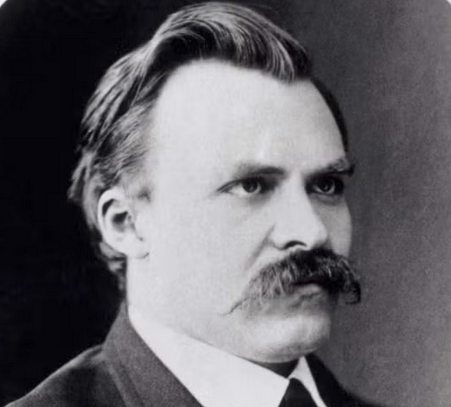
A thinker sees his own actions as experiments and questions as attempts to find out something. Success and failure are for him answers above all.

8 months 3 weeks ago
O sons of Peace, sons of the One Catholic [Church], walk in your way, and sing as you walk. Travelers do this in order to keep up their spirits.
▼
Source
source
p.427
8 months 6 days ago
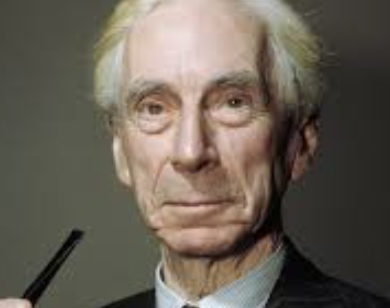
I've got a one-dimensional mind.
▼
Source
source
Said to Rupert Crawshay-Williams; Russell Remembered (1970), p. 31
4 months 3 weeks ago
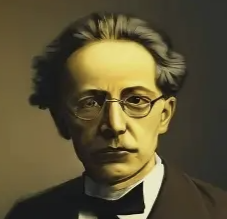
If religion has put forward the proposition that we are all of us sinners, I set another against it: we are all of us perfect! Because, in each moment, we are all we can be, and never need to be more.
▼
Source
source
Landstreicher, p. 226
4 months 1 week ago
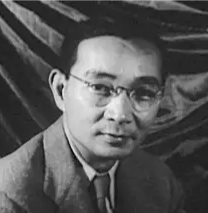
I like to think of criticism as the highest intellectual effort that mankind is capable of, and above all, I like to think of self-criticism as the most difficult attainment of an educated man.
▼
Source
source
"The Function of Criticism at the Present Time", in The China Critic, Vol. III, no. 4 (23 January 1930), p. 81
7 months 3 weeks ago
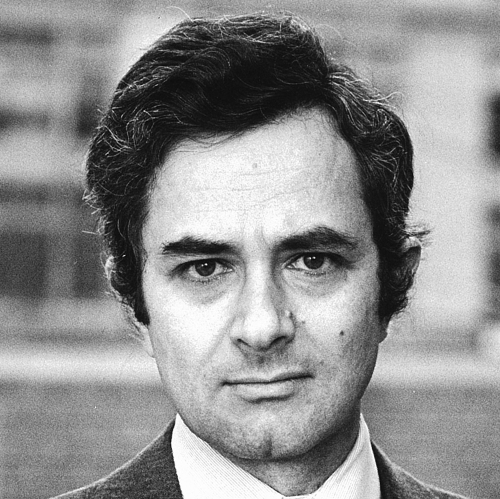
To look for a single general theory of how to decide the right thing to do is like looking for a single theory of how to decide what to believe.
▼
Source
source
"The Fragmentation of Value" (1977), p. 135.
8 months 3 weeks ago
All those of you who rejoice in peace, now it is time to judge the truth....Undoubtedly in days gone by there were holy men as Scripture tells,For God stated that he left behind seven thousand men in safety,And there are many priests and kings who are righteous under the law,There you find so many of the prophets, and many of the people too.Tell me which of the righteous of that time claimed an altar for himself?That wicked nation perpetrated a very large number of crimes,They sacrificed to idols and may prophets were put to death,Yet not a single one of the righteous withdrew from unity.The righteous endured the unrighteous while waiting for the winnower:They all mingled in one temple but were not mingled in their hearts;They said such things against them yet they had a single altar.
▼
Source
source
Early Christian Latin Poets, 2000, Carolinne White, Routledge, London, ISBN 0415187826 ISBN 9780415187824 p. 55.
6 months 2 weeks ago
I believe that man is the product of natural evolution that is born from the conflict of being a prisoner and separated from nature, and from the need to find unity and harmony with it.
5 months 4 weeks ago
The conservative response to modernity is to embrace it, but to embrace it critically, in full consciousness that human achievements are rare and precarious, that we have no God-given right to destroy our inheritance, but must always patiently submit to the voice of order, and set an example of orderly living.
▼
Source
source
"Eliot and Conservatism" (p. 208)
4 months 4 weeks ago
Thought must never submit, neither to a dogma, nor to a party, nor to a passion, nor to an interest, nor to a preconceived idea, nor to whatever it may be, save to the facts themselves, because, for thought, submission would mean ceasing to be.
▼
Source
source
Speech, University of Brussels (19 November 1909), during the festival for the 75th anniversary of the university's foundation; published in Œuvres de Henri Poincaré (1956), p. 152

4 months 5 days ago
May it be to the world, what I believe it will be, (to some parts sooner, to others later, but finally to all), the signal of arousing men to burst the chains under which monkish ignorance and superstition had persuaded them to bind themselves, and to assume the blessings and security of self-government.
▼
Source
source
Letter to Roger C. Weightman, on the decision for Independence made in 1776, often quoted as if in reference solely to the document the Declaration of Independence

7 months 1 day ago
We must live, you used to say, as if we were never going to die. - Didn't you know that's how everyone lives, including those obsessed with Death?
8 months 4 days ago
It seems to me certain that more people are killed out of righteous stupidity than out of wickedness.
▼
Source
source
p. 368
4 months 5 days ago
The system of banking we have both equally and ever reprobated. I contemplate it as a blot left in all our Constitutions, which, if not covered, will end in their destruction, which is already hit by the gamblers in corruption, and is sweeping away in its progress the fortunes and morals of our citizens. Funding I consider as limited, rightfully, to a redemption of the debt within the lives of a majority of the generation contracting it; every generation coming equally, by the laws of the Creator of the world, to the free possession of the earth he made for their subsistence, unincumbered by their predecessors, who, like them, were but tenants for life.
▼
Source
source
Letter to John Taylor (28 May 1816) ME 15:18: The Writings of Thomas Jefferson "Memorial Edition" (20 Vols., 1903-04) edited by Andrew A. Lipscomb and Albert Ellery Bergh, Vol. 15, p. 18
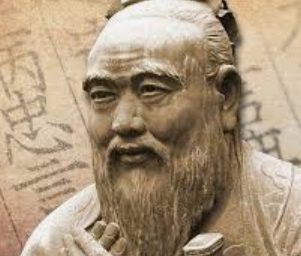
8 months 3 weeks ago
Let the states of equilibrium and harmony exist in perfection, and a happy order will prevail throughout heaven and earth, and all things will be nourished and flourish.
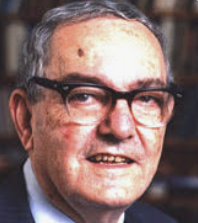
6 months 2 weeks ago
In the process of decision those alternatives are chosen which are considered to be appropriate means of reaching desired ends. Ends themselves, however, are often merely instrumental to more final objectives. We are thus led to the conception of a series, or hierarchy, of ends. Rationality has to do with the construction of means-ends chains of this kind.
▼
Source
source
p. 62.

5 months ago
While Trump is not going to be president, Trumpism is going to survive. ...The Democrats need to look very very carefully at those election results because ...the Republicans did well not necessarily because people love what they represent, but because they don't like what the Democrats represent... Unless they sort out what that is, they are going to continue to lose elections.
▼
Source
source
28:52:00
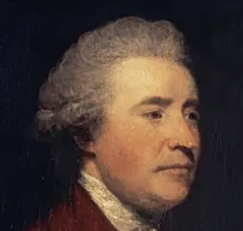
7 months 6 days ago
Falsehood and delusion are allowed in no case whatever: But, as in the exercise of all the virtues, there is an œconomy of truth. It is a sort of temperance, by which a man speaks truth with measure that he may speak it the longer.

8 months 4 days ago
The hatefulness of a hated person is "real"-in hatred you see men as they are; you are disillusioned; but the loveliness of a loved person is merely a subjective haze concealing a "real" core of sexual appetite or economic association. Wars and poverty are "really" horrible; peace and plenty are mere physical facts about which men happen to have certain sentiments.
▼
Source
source
Letter XXX

6 months 2 weeks ago
By mortifying vanity we do ourselves no good. It is the want of interest in our life which produces it; by filling up that want of interest in our life we can alone remedy it. And, did we even see this, how can we make the difference? How obtain the interest which society declares she does not want, and we cannot want?
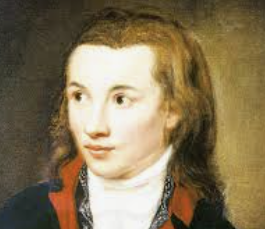
7 months 3 days ago
Friends, the soil is poor, we must sow seeds in plenty for us to garner even modest harvests.
▼
Source
source
Motto
4 months 5 days ago
The government of the United States have no idea of paying their debt in a depreciated medium, and... in the final liquidation of the payments which shall have been made, due regard will be had to an equitable allowance for the circumstance of depreciation.
▼
Source
source
Letter to Jean Baptiste de Ternant, 1791. ME 8:247
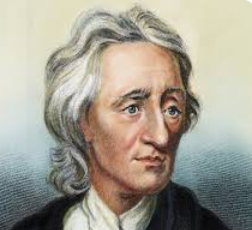
8 months 1 week ago
"...the church of England, when she baptizes any one, makes him not a Christian [...] the church of England is mistaken, and makes none but socinians Christians"
▼
Source
source
279
4 months 2 weeks ago
I do not mean to be disrespectful, but the attempt of the Lords to stop the progress of reform reminds me very forcibly of the great storm at Sidmouth, and of the conduct of the excellent Mrs Partington on that occasion. In the winter of 1824 there set in a great flood upon that town - the tide rose to an incredible height - the waves rushed in upon the houses, and everything was threatened with destruction. In the midst of this sublime and terrible storm, Dame Partington, who lived upon the beach, was seen at the door of her house with mop and pattens, trundling her mop, squeezing out the sea-water, and vigorously pushing away the Atlantic Ocean. The Atlantic was roused; Mrs. Partington's spirit was up. But I need not tell you that the contest was unequal.
▼
Source
source
The Atlantic Ocean beat Mrs. Partington. Speech at Taunton
9 months 1 week ago
There are ages in which the rational man and the intuitive man stand side by side, the one in fear of intuition, the other with scorn for abstraction. The latter is just as irrational as the former is inartistic. They both desire to rule over life: the former, by knowing how to meet his principle needs by means of foresight, prudence, and regularity; the latter, by disregarding these needs and, as an "overjoyed hero," counting as real only that life which has been disguised as illusion and beauty.
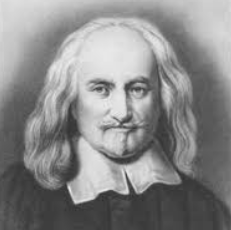
6 months 4 weeks ago
No man's error becomes his own Law; nor obliges him to persist in it.
▼
Source
source
The Second Part, Chapter 26, p. 144

8 months 6 days ago
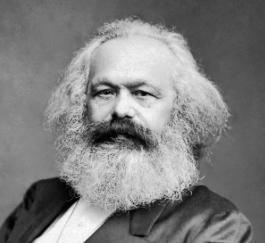
The whole mystery of commodities, all the magic and necromancy that surrounds the products of labor as long as they take the form of commodities, vanishes therefore, so soon as we come to other forms of production.
▼
Source
source
Vol. I, ch.1, section 4.
7 months 1 day ago
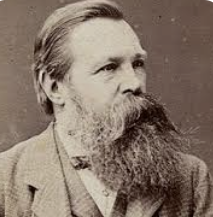
Democracy would be wholly valueless to the proletariat if it were not immediately used as a means for putting through measures directed against private property and ensuring the livelihood of the proletariat.
6 months 2 weeks ago
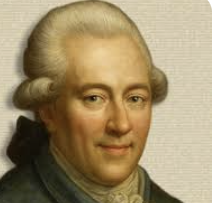
Once the good man was dead, one wore his hat and another his sword as he had worn them, a third had himself barbered as he had, a fourth walked as he did, but the honest man that he was - nobody any longer wanted to be that.
▼
Source
source
C 36
8 months 4 days ago
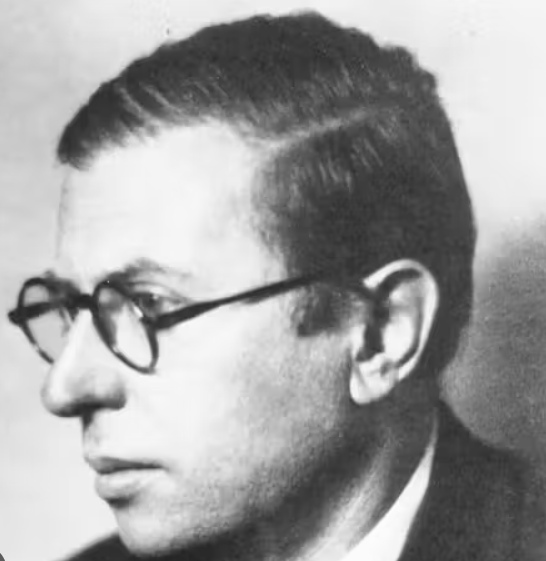
For the moment, the jazz is playing; there is no melody, just notes, a myriad of tiny tremors. The notes know no rest, an inflexible order gives birth to them then destroys them, without ever leaving them the chance to recuperate and exist for themselves.... I would like to hold them back, but I know that, if I succeeded in stopping one, there would only remain in my hand a corrupt and languishing sound. I must accept their death; I must even want that death: I know of few more bitter or intense impressions.
CivilSimian.com created by AxiomaticPanic, CivilSimian, Kalokagathia