

6 months 3 weeks ago
Whit Meynell was a sociologist; he had got into an intellectual muddle early on in life and never managed to get out.
▼
Source
source
The Philosopher's Pupil (1983) p. 165.

5 months 2 days ago
A questioner asks: If human nature is evil, then where do ritual and rightness come from? I reply: ritual and rightness are always created by the conscious activity of the sages.
▼
Source
source
Sources of Chinese Tradition (1999), vol. 1, p. 180

6 months 4 weeks ago
O faithless and perverse generation, how long shall I be with you? how long shall I suffer you? bring him hither to me.
▼
Source
source
17:17 (KJV)
7 months 1 week ago
The good of the people must be the great purpose of government. By the laws of nature and of reason, the governors are invested with power to that end. And the greatest good of the people is liberty. It is to the state what health is to the individual.
▼
Source
source
Article on Government

7 months 2 weeks ago
When the wise man opens his mouth, the beauties of his soul present themselves to the view, like the statues in a temple.
▼
Source
source
Pythagorean Ethical Sentences From Stobæus



4 months 3 weeks ago
Love is ever the beginning of Knowledge as fire is of light.
▼
Source
source
Essays, Death of Goethe.
6 months 3 weeks ago
No work of art can be instantaneously perceived because there is the no opportunity for conservation and increase in tension, and hence none for that release and unfolding which gives volume to a work of art.
▼
Source
source
p. 189
4 months 2 days ago
To her who gives and takes back all, to nature, the man who is instructed and modest says, Give what thou wilt; take back what thou wilt. And he says this not proudly, but obediently and well pleased with her.
▼
Source
source
X, 14

4 months 2 weeks ago
Why then do you occupy me with the words rather than with the works of wisdom? Make me braver, make me calmer, make me the equal of Fortune, make me her superior.
6 months 5 days ago
One is ashamed to say how little is needed for all men to be delivered from those calamities which now oppress them; it is only needful not to lie.
▼
Source
source
Ch. 17

8 months 4 days ago
If anything extraordinary seems to have happened, we can always say that we have been the victims of an illusion. If we hold a philosophy which excludes the supernatural, this is what we always shall say.
▼
Source
source
Ch. 1: "The Scope of this Book"
4 months 3 weeks ago
There is a science of Dynamics in man's fortunes and nature, as well as of Mechanics. There is a science which treats of, and practically addresses, the primary, unmodified forces and energies of man, the mysterious springs of Love, and Fear, and Wonder, of Enthusiasm, Poetry, Religion, all which have a truly vital and infinite character; as well as a science which practically addresses the finite, modified developments of these, when they take the shape of immediate "motives," as hope of reward, or as fear of punishment.
3 months 3 weeks ago
Generations to come, it may well be, will scarce believe that such a man as this one ever in flesh and blood walked upon this Earth.
4 months 3 weeks ago
Undue cultivation of the inward or Dynamical province leads to idle, visionary, impracticable courses, and, especially in rude eras, to Superstition and Fanaticism, with their long train of baleful and well-known evils. Undue cultivation of the outward, again, though less immediately prejudicial, and even for the time productive of many palpable benefits, must, in the long-run, by destroying Moral Force, which is the parent of all other Force, prove not less certainly, and perhaps still more hopelessly, pernicious. This, we take it, is the grand characteristic of our age. By our skill in Mechanism, it has come to pass, that in the management of external things we excel all other ages; while in whatever respects the pure moral nature, in true dignity of soul and character, we are perhaps inferior to most civilised ages.
9 months 6 days ago
I do not know, my listener, what your crime, your guilt, your sins are, but surely we are all more or less of the guilt of loving only little. Take comfort, then, in these words just as I take comfort in them.

8 months 6 days ago
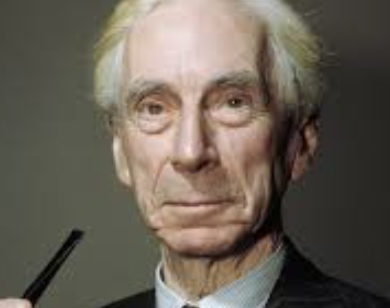
When I found myself regarded as respectable, I began to wonder what sins I had committed. I must be very wicked, I thought. I began to engage in the most uncomfortable introspection. Interview with Irwin Ross, September 1957;If there were a God, I think it very unlikely that he would have such an uneasy vanity as to be offended by those who doubt his existence.
▼
Source
source
Collected Papers of Bertrand Russell (2005), p. 385

8 months 5 days ago
Our chief want in life, is somebody who shall make us do what we can.
▼
Source
source
Considerations by the Way
4 months 2 weeks ago
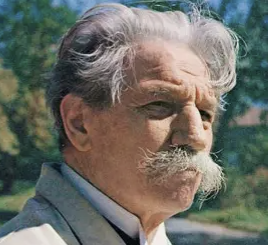
Only when an ideal of peace is born in the minds of the peoples will the institutions set up to maintain this peace effectively fulfill the function expected of them.
7 months 6 days ago
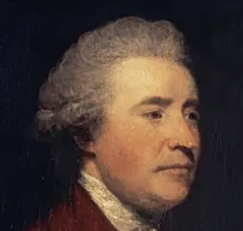
It is the love of the people; it is their attachment to their government, from the sense of the deep stake they have in such a glorious institution, which gives you both your army and your navy, and infuses into both that liberal obedience, without which your army would be a base rabble, and your navy nothing but rotten timber.

4 months 3 weeks ago
There are depths in man which go down the length of the lowest Hell, as there are heights which reach the highest Heaven; - for are not both Heaven and Hell made out of him, everlasting Miracle and Mystery that he is?
▼
Source
source
Pt. III, Bk. I, ch. 4. This was slightly paraphrased in A Dictionary of Thoughts : Being a Cyclopedia of Laconic Quotations from the Best Authors, Both Ancient and Modern (1891) edited by Tryon Edwards. p. 327.
4 months 3 weeks ago
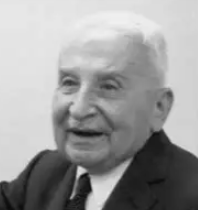
The only certain fact about Russian affairs under the Soviet regime with regard to which all people agree is: that the standard of living of the Russian masses is much lower than ... the paragon of capitalism, the United States of America. If we were to regard the Soviet regime as an experiment, we would have to say that the experiment has clearly demonstrated the superiority of capitalism and the inferiority of socialism.
8 months 1 week ago
Nature has willed that man should, by himself, produce everything that goes beyond the mechanical ordering of his animal existence, and that he should partake of no other happiness or perfection than that which he himself, independently of instinct, has created by his own reason.
▼
Source
source
Third Thesis
7 months 3 weeks ago
And since these things are so, we must suppose that there are contained many things and of all sorts in the things that are uniting, seeds of all things, with all sorts of shapes and colours and savours.
▼
Source
source
Frag. B 4, quoted in John Burnet's Early Greek Philosophy, (1920), Chapter 6.
4 months 2 weeks ago
Bishop Berkeley destroyed this world in one volume octavo; and nothing remained after his time, but mind - which experienced a similar fate from the hand of Mr. Hume, in 1737.
▼
Source
source
Introduction

7 months 3 weeks ago
Let us consider first the view that it is always wrong to take an innocent human life. We may call this the "sanctity of life" view. People who take this view oppose abortion and euthanasia. They do not usually, however, oppose the killing of nonhuman animals-so perhaps it would be more accurate to describe this view as the "sanctity of human life" view. The belief that human life, and only human life, is sacrosanct is a form of speciesism.
▼
Source
source
Ch. 1: All Animals Are Equal
8 months 1 week ago
Judges of elegance and taste consider themselves as benefactors to the human race, whilst they are really only the interrupters of their pleasure ... There is no taste which deserves the epithet good, unless it be the taste for such employments which, to the pleasure actually produced by them, conjoin some contingent or future utility: there is no taste which deserves to be characterized as bad, unless it be a taste for some occupation which has mischievous tendency.
▼
Source
source
Théorie des peines et des récompenses (1811); translation by Richard Smith, The Rationale of Reward, J. & H. L. Hunt, London, 1825, Bk. 3, Ch. 1

7 months 1 day ago
Love's great (and sole) originality is to make happiness indistinct from misery.
8 months 3 weeks ago
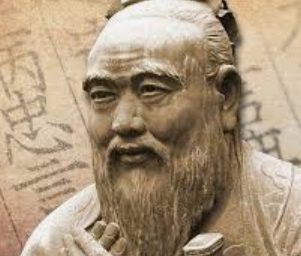
If you would govern a state of a thousand chariots (a small-to-middle-size state), you must pay strict attention to business, be true to your word, be economical in expenditure and love the people. You should use them according to the seasons.

5 months 2 days ago
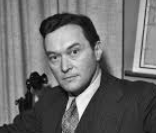
Love, in spite of the romantics, is not self-sustaining; it endures only when the lovers love many things together, and not merely each other.
▼
Source
source
Ch. XIV: "Love in the Great Society", §6, pp. 308-309
8 months 5 days ago
Do not be too timid and squeamish about your actions. All life is an experiment. The more experiments you make the better.
▼
Source
source
November 11, 1842
6 months 1 day ago
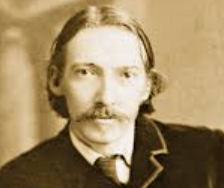
Man is a creature who lives not upon bread alone, but principally by catchwords; and the little rift between the sexes is astonishingly widened by simply teaching one set of catchwords to the girls and another to the boys.
▼
Source
source
Virginibus Puerisque, Ch. 2.
7 months 1 day ago
To conceive a thought - just one, but one that would tear the universe to pieces.
8 months 6 days ago
If the Russians still adhered to the Greek Orthodox religion, if they had instituted parliamentary government, and if they had a completely free press which daily vituperated us, then - provided they still had armed forces as powerful as they have now - we should still hate them if they gave us ground for thinking them hostile.
4 months 3 weeks ago
It would be foolish to assert that there is no power above mine. Only the attitude that I take toward it will be quite another than that of the religious age: I shall be the enemy of every higher power, while religion teaches us to make it our friend and be humble toward it.
▼
Source
source
Dover 2005, p. 184
7 months 3 days ago
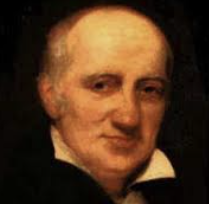
The pistol and dagger may as easily be made the auxiliaries of vice, as of virtue.
▼
Source
source
Book IV, "Of Tyrannicide"

6 months 3 weeks ago
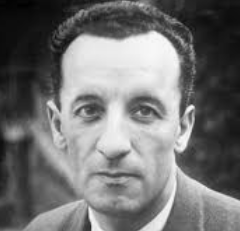
Theology recognizes the contingency of human existence only to derive it from a necessary being, that is, to remove it. Theology makes use of philosophical wonder only for the purpose of motivating an affirmation which ends it. Philosophy, on the other hand, arouses us to what is problematic in our own existence and in that of the world, to such a point that we shall never be cured of searching for a solution.
▼
Source
source
p. 44

8 months ago
We are aware of all the inconveniences of prison, and that it is dangerous when it is not useless. And yet one cannot 'see' how to replace it. It is the detestable solution, which one seems unable to do without.
▼
Source
source
Part Four, Complete and austere institutions
7 months 6 days ago
You had that action and counteraction which, in the natural and in the political world, from the reciprocal struggle of discordant powers draws out the harmony of the universe.
▼
Source
source
Volume iii, p. 277
4 months 2 weeks ago
Correspondences are like small clothes before the invention of suspenders; it is impossible to keep them up.
▼
Source
source
Vol. II, letter to Catherine Crowe (31 January 1841), pp. 441-442
6 months 4 weeks ago
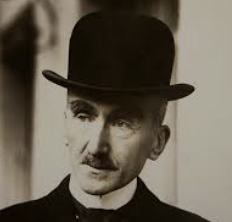
A philosopher worthy of the name has never said more than a single thing: and even then it is something he has tried to say, rather than actually said. And he has said only one thing because he has seen only one point: and at that it was not so much a vision as a contact...
▼
Source
source
"L'intuition philosophique (Philosophical Intuition)" (10 April 1911); translated by Mabelle L. Andison in: Henri Bergson, The Creative Mind: An Introduction to Metaphysics, Courier Dover Publications, 2012, p. 91
4 months 3 weeks ago
Talk never yet could guide any man's or nation's affairs; nor will it yours, except towards the Limbus Patrum, where all talk, except a very select kind of it, lodges at last.
6 months 3 days ago
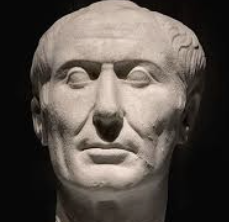
Powerful indeed is the empire of habit.
▼
Source
source
Maxim 305
7 months 6 days ago
Never wholly separate in your Mind the merits of any Political Question from the Men who are concerned in it.
▼
Source
source
Letter to Charles-Jean-François Depont (November 1789), quoted in Alfred Cobban and Robert A. Smith (eds.), The Correspondence of Edmund Burke, Volume VI: July 1789-December 1791 (1967), p. 47
7 months 1 day ago
Death is too exact; it has all the reasons on its side. Mysterious for our instincts, it takes shape, to our reflection, limpid, without glamor, and without the false lures of the unknown. By dint of accumulating non-mysteries and monopolizing non-meanings, life inspires more dread than death: it is life which is the Great Unknown.
CivilSimian.com created by AxiomaticPanic, CivilSimian, Kalokagathia