


6 months 3 weeks ago
The will is a unity of two different aspects or moments: first, the individual's ability to abstract from every specific condition and, by negating it, to return to the absolute liberty of the pure ego; secondly, the individual's act of freely adopting a concrete condition, freely affirming his existence as a particular, limited ego.
▼
Source
source
P. 185
7 months ago
In an article published in The Monist for January, 1891, I endeavored to show what ideas ought to form the warp of a system of philosophy, and particularly emphasized that of absolute chance. In the number of April, 1892, I argued further in favor of that way of thinking, which it will be convenient to christen tychism (from τύχη, chance). A serious student of philosophy will be in no haste to accept or reject this doctrine; but he will see in it one of the chief attitudes which speculative thought may take, feeling that it is not for an individual, nor for an age, to pronounce upon a fundamental question of philosophy. That is a task for a whole era to work out. I have begun by showing that tychism must give birth to an evolutionary cosmology, in which all the regularities of nature and of mind are regarded as products of growth, and to a Schelling-fashioned idealism which holds matter to be mere specialized and partially deadened mind.



7 months ago
A human being possessed by a belief and not eager to pass it on to others is a phenomenon alien to the earth, where our mania for salvation makes life unbreathable.
6 months 2 days ago
There is but a step between a proud man's glory and his disgrace.
▼
Source
source
Maxim 138
8 months 6 days ago
A mother gave her children Aesop's fables to read, in the hope of educating and improving their minds; but they very soon brought the book back, and the eldest, wise beyond his years, delivered himself as follows: This is no book for us; it's much too childish and stupid. You can't make us believe that foxes and wolves and ravens are able to talk; we've got beyond stories of that kind! In these young hopefuls you have the enlightened Rationalists of the future.
▼
Source
source
"Similes, Parables and Fables" Parerga and Paralipomena
6 months 2 days ago
No one knows what he can do till he tries.
▼
Source
source
Maxim 786
6 months ago
Books are good enough in their own way, but they are a mighty bloodless substitute for life.
▼
Source
source
An Apology for Idlers.
4 months 4 days ago
I would rather be exposed to the inconveniences attending too much liberty, than those attending too small a degree of it.
▼
Source
source
Letter to Archibald Stuart , Philadelphia
8 months 5 days ago
Mystery is delightful, but unscientific, since it depends upon ignorance.
▼
Source
source
The Analysis of Mind (1921), Lecture I: Recent Criticisms of "Consciousness"


6 months 2 weeks ago
Disciplinary society is still governed by no. Its negativity produces madmen and criminals. In contrast, achievement society creates depressives and losers.
▼
Source
source
Source: Page 8
7 months 3 weeks ago
On James's view, "true" resembles "good" or "rational" in being a normative notion, a compliment paid to sentences that seem to be paying their way and that fit with other sentences which are doing so.
▼
Source
source
Introduction to Consequences of Pragmatism
7 months ago
I used to ask myself, over a coffin: "What good did it do the occupant to be born?," I now put the same question about anyone alive.
5 months ago
Ethical control may survive in small groups, but the control of the population as a whole must be delegated to specialists-to police, priests, owners, teachers, therapists, and so on, with their specialized reinforcers and their codified contingencies.
▼
Source
source
Beyond Freedom and Dignity (1971), p. 155
4 months 4 weeks ago
What has philosophy got to do with measuring anything? It's the mathematicians you have to trust, and they measure the skies like we measure a field.
▼
Source
source
Matteo in Concerning the New Star

4 months 4 days ago
The poem is important, but not more than the people whose survival it serves...
▼
Source
source
In A Motel Parking Lot, Thinking Of Dr. Williams
4 months 2 days ago
When we reflect, that the Inquisition, by its restrictions, and authority, would have prevented the French revolution,-it is hard to say, whether the Sovereign, who, wholly, and without reserve, gave up this instrument, would not, in reality, be doing an injury to humanity.
▼
Source
source
p. 31

8 months 3 days ago
God is the solitude of men. There was only me: I alone decided to commit Evil; alone, I invented Good. I am the one who cheated, I am the one who performed miracles, I am the one accusing myself today, I alone can absolve myself; me, the man.
▼
Source
source
Act 10, sc. 4

8 months 3 days ago
... in such a matter he would never have been guided by his first thoughts (which would probably have been right) nor even by his twenty-first (which would have at least been explicable). Beyond doubt he would have prolonged deliberation till his hundred-and-first; and they would be infallibly and invincibly wrong. This is what always happens to the deliberations of a simple man who thinks he is a subtle one.
8 months 5 days ago
India has always been an object of yearning, a realm of wonder, a world of magic... India is the land of dreams. India had always dreamt - more of the Bliss that is man's final goal. And this has helped India to be more creative in history than any other nation. Hence the effervescence of myths and legends, religious and philosophies, music, and dances and the different styles of architecture." ...
▼
Source
source
quoted in Patri, Umesh Hindu scriptures and American transcendentalists 1st ed. quoted from Londhe, S. (2008).

4 months 3 weeks ago
It is a most earnest thing to be alive in this world; to die is not sport for a man. Man's life never was a sport to him; it was a stern reality, altogether a serious matter to be alive!

8 months 1 week ago
Once conform, once do what others do because they do it, and a kind of lethargy steals over all the finer senses of the soul.

5 months ago
Reality and history, however, are not dialectical, and no idealist rhetorical gymnastics can make them conform to the dialect.
▼
Source
source
131
8 months 5 days ago
If any philosopher had been asked for a definition of infinity, he might have produced some unintelligible rigmarole, but he would certainly not have been able to give a definition that had any meaning at all.
▼
Source
source
Ch. 5: Mathematics and the Metaphysicians
4 months 2 weeks ago
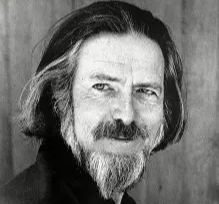
Listen intently to a voice singing without words. It may charm you into crying, force you to dance, fill you with rage, or make you jump for joy. You can't tell where the music ends and the emotions begin, for the whole thing is a kind of music-the voice playing on your nerves as the breath plays on a flute. All experience is just that, except that its music has many more dimensions than sound. It vibrates in the dimensions of sight, touch, taste, and smell, and in the intellectual dimension of symbols and words-all evoking and playing upon each other.
▼
Source
source
p. 95
6 months 2 weeks ago
Eros, erotic desire, conquers depression. It delivers us from the inferno of the same to the utopia, indeed utopia, of the wholly other.

4 months 3 weeks ago
The virtues are not poured into us, they are natural. Seek, and you will find them: neglect, and you will lose them.
▼
Source
source
Uses and Sanctions, no. 22
7 months 2 weeks ago
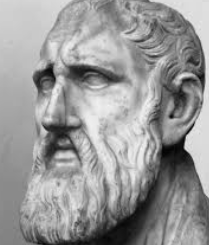
No evil is honorable; but death is honorable; therefore death is not evil.
▼
Source
source
As quoted in Epistles No. 82, by Seneca the Younger
8 months 1 week ago
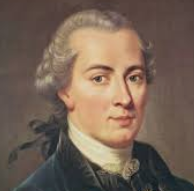
Human reason has this peculiar fate that in one species of its knowledge it is burdened by questions which, as prescribed by the very nature of reason itself, it is not able to ignore, but which, as transcending all its powers, it is also not able to answer.
▼
Source
source
Preface, A vii
8 months 5 days ago
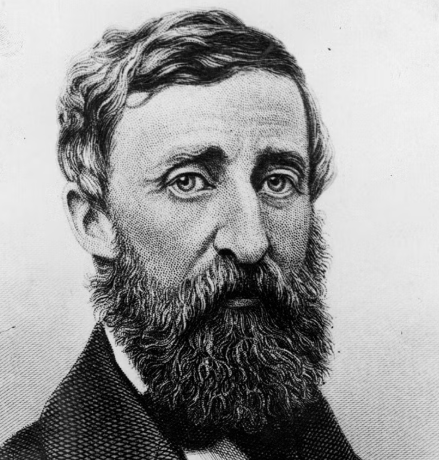
Nothing makes the earth seem so spacious as to have friends at a distance; they make the latitudes and longitudes.
▼
Source
source
Pearls of Thought (1881) p. 95
7 months 5 days ago
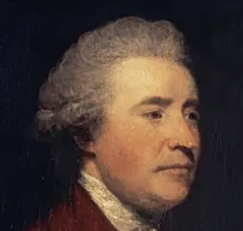
I have no idea of a liberty unconnected with honesty and justice. Nor do I believe, that any good constitutions of government, or of freedom, can find it necessary for their security to doom any part of the people to a permanent slavery. Such a constitution of freedom, if such can be, is in effect no more than another name for the tyranny of the strongest faction; and factions in republics have been, and are, full as capable as monarchs, of the most cruel oppression and injustice.
▼
Source
source
Speech at Bristol Previous to the Election (6 September 1780), quoted in The Works of the Right Honourable Edmund Burke, Vol. II (1855), p. 163

7 months 2 weeks ago
Holding fast to these things, you will know the worlds of gods and mortals which permeates and governs everything. And you will know, as is right, nature similar in all respects, so that you will neither entertain unreasonable hopes nor be neglectful of anything.
▼
Source
source
As quoted in Divine Harmony: The Life and Teachings of Pythagoras by John Strohmeier and Peter Westbrook.
4 months 4 days ago
Freedom of person, securing every one from imprisonment, or other bodily restraint, but by the laws of the land. This is effected by the well-known law of habeas corpus.
4 months 4 days ago
If the debt which the banking companies owe be a blessing to anybody, it is to themselves alone, who are realizing a solid interest of eight or ten per cent on it. As to the public, these companies have banished all our gold and silver medium, which, before their institution, we had without interest, which never could have perished in our hands, and would have been our salvation now in the hour of war; instead of which they have given us two hundred million of froth and bubble, on which we are to pay them heavy interest, until it shall vanish into air... We are warranted, then, in affirming that this parody on the principle of 'a public debt being a public blessing,' and its mutation into the blessing of private instead of public debts, is as ridiculous as the original principle itself. In both cases, the truth is, that capital may be produced by industry, and accumulated by economy; but jugglers only will propose to create it by legerdemain tricks with paper.
▼
Source
source
ME 13:423
7 months 5 days ago
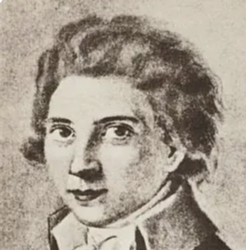
Romantic poetry ... recognizes as its first commandment that the will of the poet can tolerate no law above itself.
▼
Source
source
Philosophical Fragments, P. Firchow, trans. (1991) § 116
4 months 4 days ago
A lively and lasting sense of filial duty is more effectually impressed on the mind of a son or daughter by reading King Lear, than by all the dry volumes of ethics, and divinity, that ever were written.
▼
Source
source
Letter to Robert Skipwith (3 August 1771) ; also in The Writings of Thomas Jefferson (19 Vols., 1905) edited by Andrew A. Lipscomb and Albert Ellery Bergh, Vol. 4, p. 239
8 months 5 days ago
Truth never turns to rebuke falsehood; her own straightforwardness is the severest correction.
▼
Source
source
Pearls of Thought (1881) p. 264
6 months 1 day ago
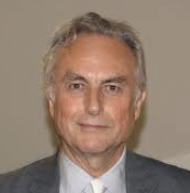
Just because science so far has failed to explain something, such as consciousness, to say it follows that the facile, pathetic explanations which religion has produced somehow by default must win the argument is really quite ridiculous.
▼
Source
source
Steve Paulson, "The flying spaghetti monster" Salon.com

5 months 1 week ago
The basis of science is the empirical method, which uses the senses to build up a picture of the world; but science tells us that our senses have evolved to help us get by, not to show us the world as it is. Science is only a systematic examination of our impressions, and in the end all each of us has left are our own sensations ... The end-result of the empirical method, then, is that each individual is left alone with their own experiences. We can escape this solitude, Balfour suggested, only if we accept that there is a divine mind.
▼
Source
source
Cross-correspondences (p. 69-70)
6 months 2 weeks ago
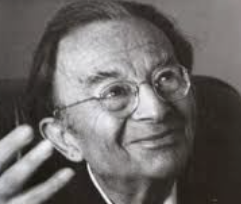
By necrophilia is meant love for all that is violence and destruction; the desire to kill; the worship of force; attraction to death, to suicide, to sadism; the desire to transform the organic into the inorganic by means of "order." The necrophile, lacking the necessary qualities to create, in his impotence finds it easy to destroy because for him it serves only one quality: force.
6 months 2 weeks ago
If the passion for truthfulness is merely controlled and stilled without being satisfied, it will kill the activities it is supposed to support. This may be one of the reasons why, at the present time, the study of the humanities runs a risk of sliding from professional seriousness, through professionalization, to a finally disenchanted careerism.
▼
Source
source
p. 3
CivilSimian.com created by AxiomaticPanic, CivilSimian, Kalokagathia