

7 months ago
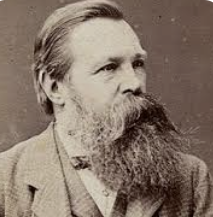
It is a universal revolution and will, accordingly, have a universal range.
8 months 6 days ago
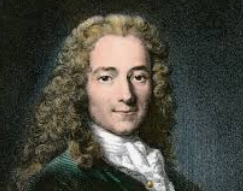
Fools have a habit of believing that everything written by a famous author is admirable. For my part I read only to please myself and like only what suits my taste.

4 months ago
Militarism in both its forms - as war and as armed peace - is a legitimate child, a logical result of capitalism, which can only be overcome with the destruction of capitalism, and that hence whoever honestly desires world peace and liberation from the tremendous burden of armaments must also desire Socialism. Only in this way can real Social Democratic enlightenment and recruiting be carried on in connection with the armaments debate.

5 months 2 weeks ago
The world's biggest power is the youth and beauty of a woman.
8 months 3 days ago
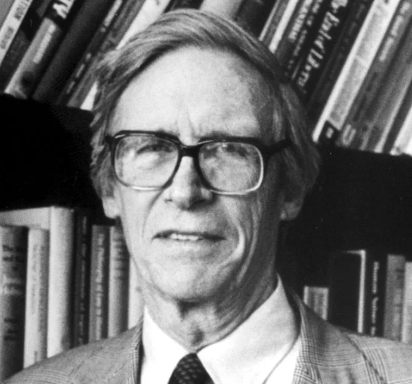
First of all, no one knows his place in society, his class position or social status; nor does he know his fortune in the distribution of natural assets and abilities, his intelligence and strength, and the like. Nor, again, does anyone know his conception of the good, the particulars of his rational plan of life, or even the special features of psychology such as his aversion to risk or liability to optimism or pessimism. More than this, I assume that the parties do not know the particular circumstances of their own society. That is, they do not know its particular economic or political situation, or the level of civilization and culture it has been able to achieve. The persons in the original position have no information as to which generation they belong.
▼
Source
source
p. 117


4 months 2 weeks ago
Now why, if freedom is striven after for love of the I after all - why not choose the I himself as beginning, middle, and end?
▼
Source
source
Dover 2005, p. 163
8 months 3 weeks ago
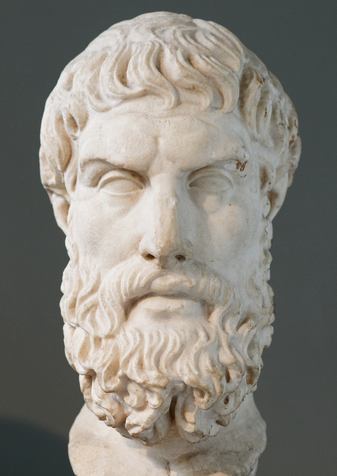
Among the things held to be just by law, whatever is proved to be of advantage in men's dealings has the stamp of justice, whether or not it be the same for all; but if a man makes a law and it does not prove to be mutually advantageous, then this is no longer just. And if what is mutually advantageous varies and only for a time corresponds to our concept of justice, nevertheless for that time it is just for those who do not trouble themselves about empty words, but look simply at the facts.
8 months 5 days ago
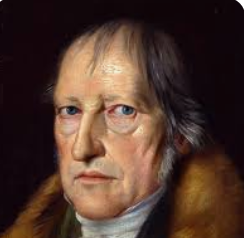
The goal to be reached is the mind's insight into what knowing is. Impatience asks for the impossible, wants to reach the goal without the means of getting there. The length of the journey has to be borne with, for every moment is necessary, ... because by nothing less could that all-pervading mind ever manage to become conscious of what itself is - for that reason, the individual mind, in the nature of the case, cannot expect by less toil to grasp what its own substance contains.
▼
Source
source
Preface (J. B. Baillie translation), § 29
4 months ago
The production relations of capitalist society approach more and more the production relations of socialist society. But on the other hand, its political and juridical relations established between capitalist society and socialist society a steadily rising wall. This wall is not overthrown, but is on the contrary strengthened and consolidated by the development of social reforms and the course of democracy. Only the hammer blow of revolution, that is to day, the conquest of political power by the proletariat can break down this wall.
▼
Source
source
Ch. 7

8 months 2 weeks ago
Although life is a matter of indifference, the use which you make of it is not a matter of indifference.
▼
Source
source
Book II, ch. 6, 1.
9 months 5 days ago
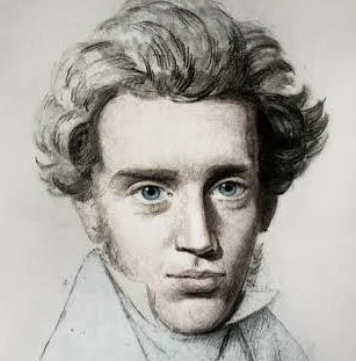
Let us suppose that a man believes in eternal life on Christ's word. In that case he believes without any fuss about being profound and searching and philosophical and racking his brains.
8 months 1 week ago
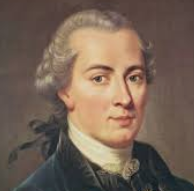
Since men in their endeavors behave, on the whole, not just instinctively, like the brutes, nor yet like rational citizens of the world according to some agreed-on plan, no history of man conceived according to a plan seems to be possible, as it might be possible to have such a history of bees or beavers. One cannot suppress a certain indignation when one sees men's actions on the great world-stage and finds, beside the wisdom that appears here and there among individuals, everything in the large woven together from folly, childish vanity, even from childish malice and destructiveness. In the end, one does not know what to think of the human race, so conceited in its gifts.
▼
Source
source
Introduction
8 months 5 days ago
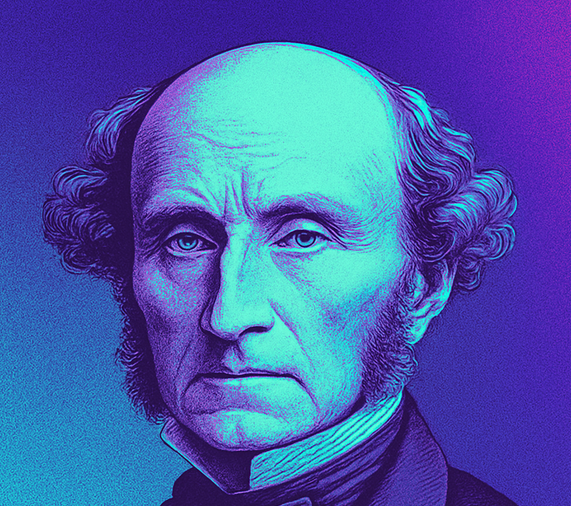
My education, which was wholly his work, had been conducted without any regard to the possibility of its ending in this result; and I saw no use in giving him the pain of thinking that his plans had failed, when the failure was probably irremediable, and, at all events, beyond the power of his remedies. Of other friends, I had at that time none to whom I had any hope of making my condition intelligible. It was however abundantly intelligible to myself; and the more I dwelt upon it, the more hopeless it appeared.
▼
Source
source
(p. 135)
7 months 1 week ago
Doth the reality of sensible things consist in being perceived? or, is it something distinct from their being perceived, and that bears no relation to the mind?
▼
Source
source
Philonous to Hylas
4 months 4 weeks ago
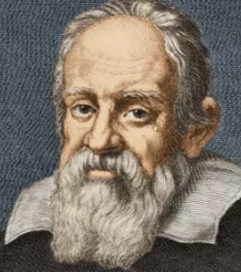
Well, since paradoxes are at hand, let us see how it might be demonstrated that in a finite continuous extension it is not impossible for infinitely many voids to be found.
▼
Source
source
Salviati, First Day, Stillman Drake translation
6 months 4 days ago
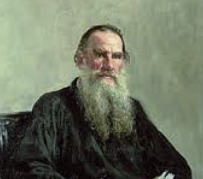
Honest work is much better than a mansion.
▼
Source
source
p. 82
7 months ago
The introduction of free competition is thus public declaration that from now on the members of society are unequal only to the extent that their capitals are unequal, that capital is the decisive power, and that therefore the capitalists, the bourgeoisie, have become the first class in society. Free competition is necessary for the establishment of big industry, because it is the only condition of society in which big industry can make its way.

7 months 1 week ago
When the end comes, you will be esteemed by the world and rewarded by God, not because you have won the love and respect of the princes of the earth, however powerful, but rather for having loved, defended and cherished one such as I ... what you receive from others is a testimony to their virtue; but all that you do for others is the sign and clear indication of your own.
▼
Source
source
Dedication
5 months 3 weeks ago
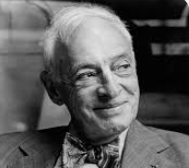
I am an American, Chicago born - Chicago, that somber city - and go at things as I have taught myself, free-style, and will make the record in my own way: first to knock, first admitted; sometimes an innocent knock, sometimes a not so innocent.
▼
Source
source
Ch. 1 (opening line)

9 months 1 day ago
What, then, is that incalculable feeling that deprives the mind of the sleep necessary to life? A world that can be explained even with bad reasons is a familiar world. But, on the other hand, in a universe suddenly divested of illusions and lights, man feels an alien, a stranger. His exile is without remedy since he is deprived of the memory of a lost home or the hope of a promised land. This divorce between man and his life, the actor and his setting, is properly the feeling of absurdity.

6 months 1 day ago
The world and the universe is an extremely beautiful place, and the more we understand about it the more beautiful does it appear. It is an immensely exciting experience to be born in the world, born in the universe, and look around you and realise that before you die you have the opportunity of understanding an immense amount about that world and about that universe and about life and about why we're here. We have the opportunity of understanding far, far more than any of our predecessors ever. That is such an exciting possibility, it would be such a shame to blow it and end your life not having understood what there is to understand.
8 months 2 weeks ago
Be bold to look towards God and say, "Use me henceforward for whatever you want; I am of one mind with you; I am yours; I refuse nothing that seems good to you; lead me where you will; wrap me in what clothes you will."
▼
Source
source
Book II, ch. 16, 42
4 months 5 days ago
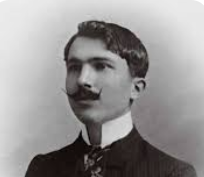
Gather together in your heart all terrors, recompose all details. Salvation is a circle; close it!
8 months ago
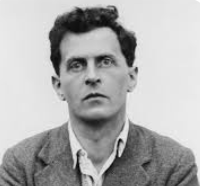
I would really like to slow down the speed of reading with continual punctuation marks. For I would like to be read slowly. (As I myself read.)
▼
Source
source
p. 77e
5 months 3 weeks ago
In politics continental Europe was infantile - horrifying. What America lacked, for all its political stability, was the capacity to enjoy intellectual pleasures as though they were sensual pleasures. This is what Europe offered, or was said to offer.
▼
Source
source
"My Paris" (1983), p. 235

7 months ago
If just once you were depressed for no reason, you have been so all your life without knowing.

6 months 3 weeks ago
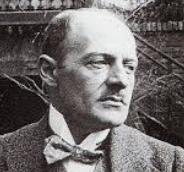
Beyond all conscious lying and falsifying, there is a deeper "organic mendacity." Here the falsification is not formed in consciousness, but at the same stage of the mental process as the impressions and value feelings themselves: on the road of experience into consciousness. There is "organic mendacity" whenever a man's mind admits only those impressions which serve his "interest" or his instinctive attitude. Already in the process of mental reproduction and recollection, the contents of his experience are modified in this direction. He who is "mendacious" has no need to lie! In his case, the automatic process of forming recollections, impressions, and feelings is involuntarily slanted, so that conscious falsification becomes unnecessary.
▼
Source
source
L. Coser, trans. (1973), pp. 77-78

4 months 3 weeks ago
All work is as seed sown; it grows and spreads, and sows itself anew.
4 months 2 weeks ago
I do not mean to be disrespectful, but the attempt of the Lords to stop the progress of reform reminds me very forcibly of the great storm at Sidmouth, and of the conduct of the excellent Mrs Partington on that occasion. In the winter of 1824 there set in a great flood upon that town - the tide rose to an incredible height - the waves rushed in upon the houses, and everything was threatened with destruction. In the midst of this sublime and terrible storm, Dame Partington, who lived upon the beach, was seen at the door of her house with mop and pattens, trundling her mop, squeezing out the sea-water, and vigorously pushing away the Atlantic Ocean. The Atlantic was roused; Mrs. Partington's spirit was up. But I need not tell you that the contest was unequal.
▼
Source
source
The Atlantic Ocean beat Mrs. Partington. Speech at Taunton

7 months 3 weeks ago
We are but dust and shadow.
▼
Source
source
Book IV, ode vii, line 16
6 months 3 weeks ago
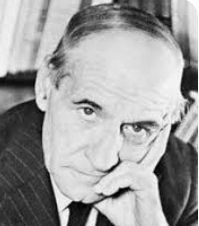
The metaphor is perhaps one of man's most fruitful potentialities. Its efficacy verges on magic, and it seems a tool for creation which God forgot inside one of His creatures when He made him. All our other faculties keep us within the realm of the real, of what is already there. The most we can do is to combine things or to break them up. The metaphor alone furnishes an escape; between the real things, it lets emerge imaginary reefs, a crop of floating islands. A strange thing, indeed, the existence in man of this mental activity which substitutes one thing for another - from an urge not so much to get at the first as to get rid of the second.
▼
Source
source
"Taboo and Metaphor"

6 months 2 weeks ago
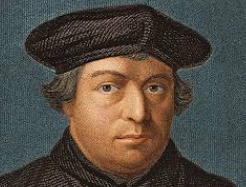
Once we can see how this question of freedom of the will has been vitiated by post-romantic philosophy, with its inbuilt tendency to laziness and boredom, we can also see how it came about that existentialism found itself in a hole of its own digging, and how the philosophical developments since then have amounted to walking in circles round that hole.
▼
Source
source
p. 214
8 months 1 week ago
We may search long to find where God is, but we shall find Him in those who keep the words of Christ. For the Lord Christ saith, " If any man love me, he will keep my words; and we will make our abode with him."
▼
Source
source
p. 278
6 months 3 weeks ago
Is it not altogether absurd that, under actual circumstances, the average man does not feel spontaneously, and without being preached at, an ardent enthusiasm for those sciences and the related ones of biology?... Every day furnishes a new invention which this average man utilises. Every day produces a new anesthetic or vaccine from which this average man benefits. ... How is it, nevertheless, that there is no sign of the masses imposing on themselves any sacrifice of money or attention in order to endow science more worthily? Far from this being the case, the post-war period has converted the man of science into a new social pariah.
▼
Source
source
Chap.IX: The Primitive and the Technical
6 months 1 week ago
Organizations and institutions permit stable expectations to be formed by each member of the group as to the behavior of the other members under specified conditions.
▼
Source
source
p. 100.
8 months 1 week ago
Character means that the person derives his rules of conduct from himself and from the dignity of humanity. Character is the common ruling principle in man in the use of his talents and attributes. Thus it is the nature of his will, and is good or bad. A man who acts without settled principles, with no uniformity, has no character. A man may have a good heart and yet no character, because he is dependent upon impulses and does not act according to maxims. Firmness and unity of principle are essential to character.
▼
Source
source
Part III : Selection on Education from Kant's other Writings, Ch. I Pedagogical Fragments, # 14
7 months 5 days ago
In England ... everything becomes professional ... even the rogues of that island are pedants.
▼
Source
source
"Selected Aphorisms from the Lyceum (1797)"

8 months 3 weeks ago
For creation is not a change, but that dependence of the created existence on the principle from which it is instituted, and thus is of the genus of relation; whence nothing prohibits it being in the created as in the subject. Creation is thus said to be a kind of change, according to the way of understanding, insofar as our intellect accepts one and the same thing as not existing before and afterwards existing.
▼
Source
source
II, 18, 2 (see also Summa Theologica I, q. 45, art. 3 ad 2)
8 months ago
We are asleep. Our Life is a dream. But we wake up sometimes, just enough to know that we are dreaming.
8 months 5 days ago
The pursuit of philosophy is founded on the belief that knowledge is good, even if what is known is painful. A man imbued with the philosophic spirit, whether a professional philosopher or not, will wish his beliefs to be as true as he can make them, and will, in equal measure, love to know and hate to be in error. This principle has a wider scope than may be apparent at first sight.
4 months 3 weeks ago
Nothing is great but truth, and the smallest truth is great. The other day I had a thought, which I put like this: Even a harmful truth is useful, for it can be harmful only for the moment and will lead to other truths, which must always become useful, very much so. Conversely, even a useful error is harmful, for it can be useful only for the moment, enticing us into other errors, which become more and more harmful.
▼
Source
source
Letter to Charlotte von Stein (1787) in Goethe's World View: Presented in His Reflections and Maxims (1963), Edited with an Introduction by Frederick Ungar, Translated by Heinz Norden, pp. 72-73, Frederick Ungar Publishing Company, New York.

6 months 3 weeks ago
The novel, the novel proper that is, is about people's treatment of each other, and so it is about human values.
▼
Source
source
Ch. 10, p. 138
7 months 1 week ago
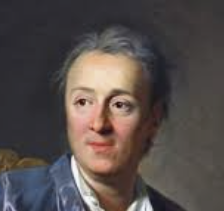
Power acquired by violence is only a usurpation, and lasts only as long as the force of him who commands prevails over that of those who obey.
▼
Source
source
Article on Political Authority, Vol. 1
7 months 3 weeks ago
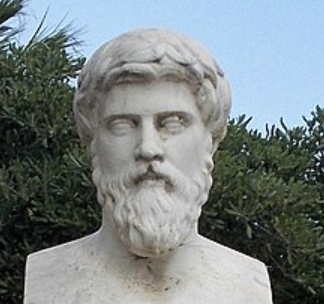
When Philip had news brought him of divers and eminent successes in one day, "O Fortune!" said he, "for all these so great kindnesses do me some small mischief."
▼
Source
source
34 Philip
4 months 1 day ago
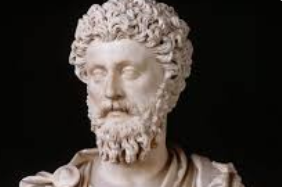
A little time, and thou shalt close thy eyes; and him who has attended thee to thy grave, another soon will lament.
▼
Source
source
X, 34
CivilSimian.com created by AxiomaticPanic, CivilSimian, Kalokagathia