

4 months 1 week ago
When nobody in the world loves any other, naturally the strong will overpower the weak, the many will oppress the few, the wealthy will mock the poor, the honoured will disdain the humble, the cunning will deceive the simple. Therefore all the calamities, strifes, complaints, and hatred in the world have arisen out of want of mutual love. Therefore the benevolent disapproved of this want.
▼
Source
source
Book 4; Universal Love II
8 months 3 weeks ago
The end of living, or the ultimate good, which is to be sought for its own sake, according to the universal opinion of mankind, is happiness; yet men, for the most part, fail in the pursuit of this end, either because they do not form a right idea of the nature of happiness, or because they do not make use of proper means to attain it.

8 months 6 days ago
Divorce is probably of nearly the same age as marriage. I believe, however, that marriage is some weeks the more ancient.
▼
Source
source
"Divorce", 1771
8 months 3 days ago
It is for the sake of order that I seduced Clytemnestra, for the sake of order that I killed my king. I wanted for order to rule and that it rule through me. I have lived without desire, without love, without hope: I made order. Oh! terrible and divine passion!
▼
Source
source
Aegistheus, Act 2
4 months 2 weeks ago
Just as the wave cannot exist for itself, but is ever a part of the heaving surface of the ocean, so must I never live my life for itself, but always in the experience which is going on around me. It is an uncomfortable doctrine which the true ethics whisper into my ear. You are happy, they say; therefore you are called upon to give much.
▼
Source
source
Chapter 26

8 months 1 week ago
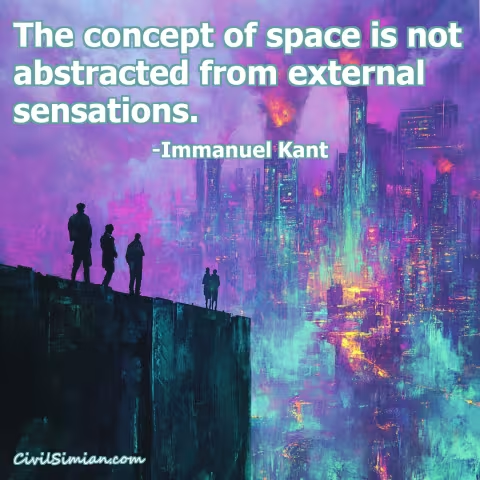
The concept of space, therefore, is a pure intuition, being a singular concept, not made up by sensations, but itself the fundamental form of all external sensation.
8 months 3 weeks ago
Music is associated not only with speculation but with morality. When rhythms and modes reach an intellect through the ear, they doubtless affect and reshape that mind according to their particular character.
8 months 3 days ago
One always dies too soon - or too late. And yet, life is there, finished: the line is drawn, and it must all be added up. You are nothing other than your life.
▼
Source
source
Inès, Act 1, sc. 5

7 months 3 weeks ago
Life grants nothing to us mortals without hard work.
▼
Source
source
Book I, satire ix, line 59
8 months 6 days ago
Fools admire everything in an author of reputation.

7 months ago
Beware of thinkers whose minds function only when they are fueled by a quotation.
8 months 5 days ago
The reader is nowhere raised into and sustained in a bigger, purer or rarer region of thought than in the Bhagavad Gita. The Gita's sanity and sublimity have impressed the minds of even soldiers and merchants.
▼
Source
source
A Tribute to Hinduism, 2008
7 months 5 days ago
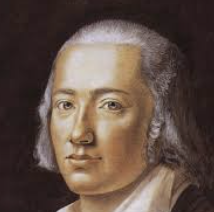
It was not delight, not wonder that arose among us, it was the peace of heaven. A thousand times have I said it to her and to myself: the most beautiful is also the most sacred. And such was everything in her. Like her singing, even so was her life.

7 months ago
This world was created from God's fear of solitude. In other words, us, the creatures, have no other meaning but to distract the Creator. Poor clowns of the absolute, we forget that we live dramas for the boredom of a spectator, whose claps have never reached the ears of a mortal.
6 months 4 days ago
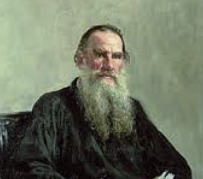
Quite often a man goes on for years imagining that the religious teaching that had been imparted to him since childhood is still intact, while all the time there is not a trace of it left in him.
▼
Source
source
Pt. I, ch. 1
3 months 3 weeks ago
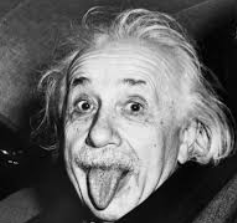
The whole of science is nothing more than a refinement of every day thinking.
▼
Source
source
"[https://www.sciencedirect.com/science/article/abs/pii/S0016003236910475 Physics and Reality]" (as translated by Jean Piccard) in the Journal of the Franklin Institute Vol. 221, Issue 3 (March 1936), at p. 349

7 months 2 days ago
The rights and duties of man thus simplified, it seems almost impertinent to attempt to illustrate truths that appear so incontrovertible: yet such deeply rooted prejudices have clouded reason, and such spurious qualities have assumed the name of virtues, that it is necessary to pursue the course of reason as it has been perplexed and involved in error, by various adventitious circumstances, comparing the simple axiom with casual deviations.Men, in general, seem to employ their reason to justify prejudices, which they have imbibed, they cannot trace how, rather than to root them out. The mind must be strong that resolutely forms its own principles; for a kind of intellectual cowardice prevails which makes many men shrink from the task, or only do it by halves. Yet the imperfect conclusions thus drawn, are frequently very plausible, because they are built on partial experience, on just, though narrow, views.
▼
Source
source
Ch. 1

8 months 3 days ago
For the Supernatural, entering a human soul, opens to it new possibilities both of good and evil. From that point the road branches: one way to sanctity, love, humility, the other to spiritual pride, self-righteousness, persecuting zeal. And no way back to the mere humdrum virtues and vices of the unawakened soul. If the Divine call does not make us better, it will make us very much worse. Of all bad men religious bad men are the worst. Of all created beings the wickedest is one who originally stood in the immediate presence of God.
▼
Source
source
Reflections on the Psalms (1958), p. 32
8 months 5 days ago
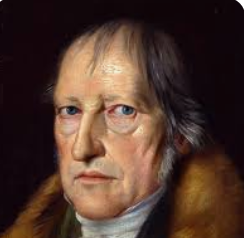
There are Plebes in all classes.
▼
Source
source
As quoted by Julien Coupat in Interview with Julien Coupat, 2009
9 months 1 week ago
The pride connected with knowing and sensing lies like a blinding fog over the eyes and senses of men, thus deceiving them concerning the value of existence. For this pride contains within itself the most flattering estimation of the value of knowing. Deception is the most general effect of such pride, but even its most particular effects contain within themselves something of the same deceitful character.

8 months 1 week ago
Needs must it be hard, since it is so seldom found. How would it be possible, if salvation were ready to our hand, and could without great labour be found, that it should be by almost all men neglected? But all things excellent are as difficult as they are rare.
▼
Source
source
Part V, Prop. XLII, Scholium

4 months 2 days ago
Long live the king,' cry the loving and the loyal, beside themselves with joy. 'Long live the king,' responds the republican hypocrite in dire terror. What does it matter? There is only one cry. And the king is crowned.
▼
Source
source
Chapter IX, p. 79
7 months ago
By capitulating to life, this world has betrayed nothingness. . . . I resign from movement, and from my dreams. Absence! You shall be my sole glory. . . . Let "desire" be forever stricken from the dictionary, and from the soul! I retreat before the dizzying farce of tomorrows. And if I still cling to a few hopes, I have lost forever the faculty of hoping.
6 months 3 weeks ago
Reason is like an open secret that can become known to anyone at any time; it is the quiet space into which everyone can enter through his own thought.
▼
Source
source
As quoted in Philosophy for a Time of Crisis : An Interpretation, with Key Writings by Fifteen Great Modern Thinkers (1959) by Adrienne Koch, Ch. 18, "Karl Jaspers : A New Humanism"

6 months ago
You don't have to be a scientist - you don't have to play the Bunsen burner - in order to understand enough science to overtake your imagined need and fill that fancied gap. Science needs to be released from the lab into the culture.
7 months ago
Communism is the doctrine of the conditions of the liberation of the proletariat.

8 months 1 week ago
For truth itself does not have the privilege to be employed at any time and in every way; its use, noble as it is, has its circumscriptions and limits.
▼
Source
source
Ch. 13

7 months 2 days ago
The pistol and dagger may as easily be made the auxiliaries of vice, as of virtue.
▼
Source
source
Book IV, "Of Tyrannicide"
6 months 2 weeks ago
He who knows himself properly can very soon learn to know all other men. It is all reflection.
▼
Source
source
G 8

8 months 4 days ago
For in spite of language, in spite of intelligence and intuition and sympathy, one can never really communicate anything to anybody.
▼
Source
source
"Sermons in Cats"
6 months 1 week ago
The problem with all this--the problem I discussed in the first lecture--is that if the causes/background conditions distinction is fundamentally subjective, not descriptive of the world in itself, then current philosophical explanations of the metaphysical nature of reference are bankrupt.
▼
Source
source
Lecture II: Realism and Reasonableness
7 months ago
We are fulfilled only when we aspire to nothing, when we are impregnated by that nothing to the point of intoxication.

8 months 4 days ago
What point of morals, of manners, of economy, of philosophy, of religion, of taste, of the conduct of life, has he not settled? What mystery has he not signified his knowledge of? What office, or function, or district of man's work, has he not remembered? What king has he not taught state, as Talma taught Napoleon? What maiden has not found him finer than her delicacy? What lover has he not outloved? What sage has he not outseen? What gentleman has he not instructed in the rudeness of his behavior?
▼
Source
source
Shakespeare; or, The Poet
6 months 2 weeks ago
A leftist government doesn't exist because being on the left has nothing to do with governments.
▼
Source
source
from L'Abécédaire de Gilles Deleuze: G comme Gauche ("Gilles Deleuze's Alphabet Book: Left-wing Politics"), 1988-1989.
7 months 2 days ago
There is, properly speaking, no Misfortune in the world. Happiness and Misfortune stand in continual balance. Every Misfortune is, as it were, the obstruction of a stream, which, after overcoming this obstruction, but bursts through with the greater force.
7 months 2 days ago
It depends only on the weakness of our organs and of our self-excitement (Selbstberuhrung), that we do not see ourselves in a Fairy-world. All Fabulous Tales (Mahrchen) are merely dreams of that home world, which is everywhere and nowhere. The higher powers in us, which one day as Genies, shall fulfil our will, are, for the present, Muses, which refresh us on our toilsome course with sweet remembrances.
8 months 1 week ago
It is a thorny undertaking, and more so than it seems, to follow a movement so wandering as that of our mind, to penetrate the opaque depths of its innermost folds, to pick out and immobilize the innumerable flutterings that agitate it.
▼
Source
source
Ch. 6. Of Preparation, tr. E. J. Trechmann, 1927

4 months 3 weeks ago
We are firm believers in the maxim that for all right judgment of any man or thing it is useful, nay, essential, to see his good qualities before pronouncing on his bad.
▼
Source
source
Goethe.
9 months 1 week ago
All that exists that can be denied deserves to be denied; and being truthful means: to believe in an existence that can in no way be denied and which is itself true and without falsehood.
6 months 3 weeks ago
The great man, whether we comprehend him in the most intense activity of his work or in the restful equipoise of his forces, is powerful, involuntarily and composedly powerful, but he is not avid for power. What he is avid for is the realization of what he has in mind, the incarnation of the spirit.
▼
Source
source
p. 151
4 months 5 days ago
Death gestured with his hands and bade the king thrice welcome.
▼
Source
source
Book VIII, line 168

6 months 6 days ago
What television does is rent us friends and relatives who are quite satisfactory. The child watching TV loves these people, you know -- they're in color, and they're talking to the child. Why wouldn't a child relate to these people? And you know, if you can't sleep at 3 o'clock in the morning, you can turn on a switch, and there are your friends and relatives, and they obviously like you. And they're charming. Who wouldn't want Peter Jennings for a relative? This is quite something, to rent artificial friends and relatives right inside the house.
▼
Source
source
Interviewed by Frank Houston, "The Salon Interview: Kurt Vonnegut", Salon

6 months 2 weeks ago
The most disheartening tendency common among readers is to tear out one sentence from a work, as a criterion of the writer's ideas or personality.
CivilSimian.com created by AxiomaticPanic, CivilSimian, Kalokagathia