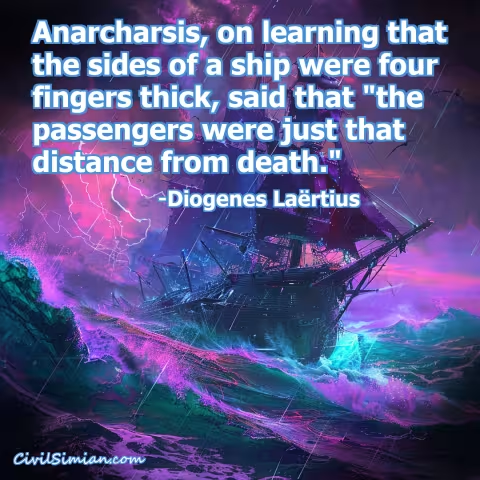


Written around 1720....


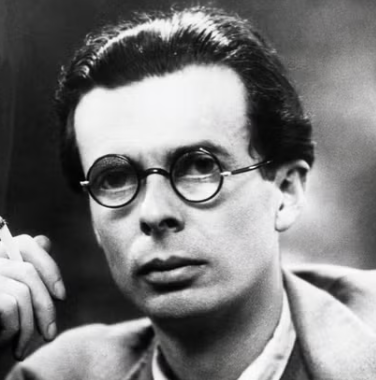
A man who has trained himself in goodness come to have certain direct intuitions about character, about the relations between human beings, about his own position in the world - intuitions that are quite different from the intuitions of the average sensual man.
If it is not right, do not do it, if it is not true, do not say it. For let thy efforts be -
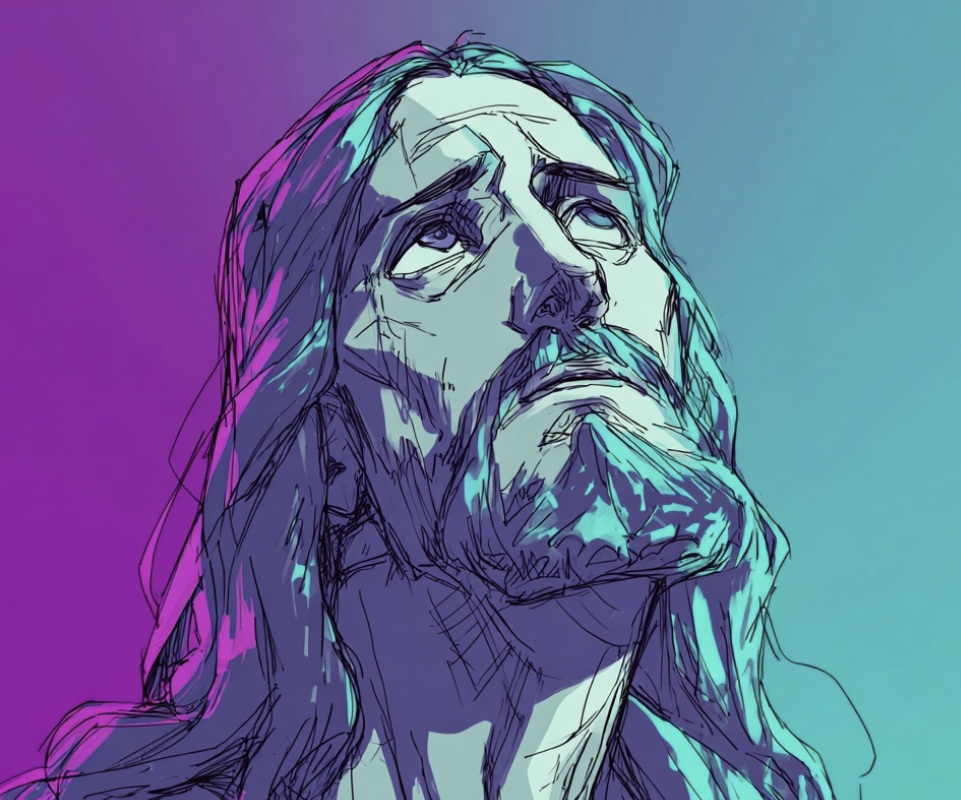
The Spirit of the Lord is on me, because he has anointed me to proclaim good news to the poor. He has sent me to proclaim freedom for the prisoners and recovery of sight for the blind, to set the oppressed free, to proclaim the year of the Lord's favor.
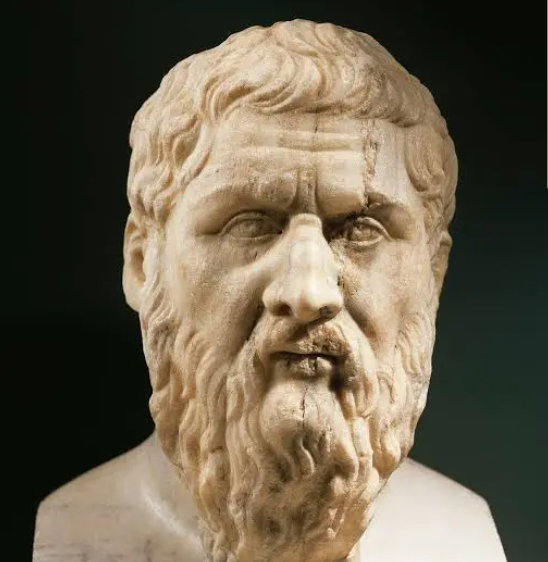
The greatest and noblest conceptions have no image wrought plainly for human vision, which he who wishes to satisfy the mind of the inquirer can apply to some one of his senses and by mere exhibition satisfy the mind. We must therefore endeavor by practice to acquire the power of giving and understanding a rational definition of each one of them; for immaterial things, which are the noblest and greatest, can be exhibited by reason only, and it is for their sake that all we are saying is said. But it is always easier to practice in small matters than in greater ones.
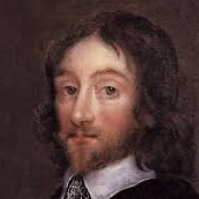
Thus is man that great and true Amphibium, whose nature is disposed to live not only like other creatures in diverse elements, but in divided and distinguished worlds.
It is a bad plan that admits of no modification.
I am not an Atheist. I do not know if I can define myself as a Pantheist. The problem involved is too vast for our limited minds. May I not reply with a parable? The human mind, no matter how highly trained, cannot grasp the universe. We are in the position of a little child, entering a huge library whose walls are covered to the ceiling with books in many different tongues. The child knows that someone must have written those books. It does not know who or how. It does not understand the languages in which they are written. The child notes a definite plan in the arrangement of the books, a mysterious order, which it does not comprehend, but only dimly suspects. That, it seems to me, is the attitude of the human mind, even the greatest and most cultured, toward God. We see a universe marvelously arranged, obeying certain laws, but we understand the laws only dimly. Our limited minds cannot grasp the mysterious force that sways the constellations. I am fascinated by Spinoza's Pantheism. I admire even more his contributions to modern thought. Spinoza is the greatest of modern philosophers because he is the first philosopher who deals with the soul and the body as one, not as two separate things.
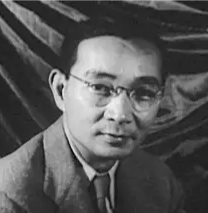
The world I believe is far too serious, and being far too serious, is it has need of a wise and merry philosophy.

The individual begins that long effort as an Outsider; he may finish it as a saint.
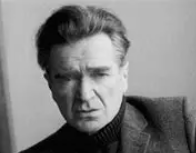
How can you know if you are in the truth? The criterion is simple enough: if others make a vacuum around you, there is not a doubt in the world that you are closer to the essential than they are.
Never accept compliments or criticism from someone you wouldn't take advice from.
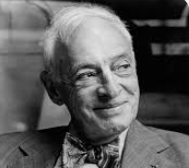
In the greatest confusion there is still an open channel to the soul. It may be difficult to find because by midlife it is overgrown, and some of the wildest thickets that surround it grow out of what we describe as our education. But the channel is always there, and it is our business to keep it open, to have access to the deepest part of ourselves-to that part of us which is conscious. ... The independence of this consciousness, which has the strength to be immune to the noise of history and the distractions of our immediate surroundings, is what the life struggle is all about. The soul has to find and hold its ground against hostile forces, sometimes embodied in ideas which frequently deny its very existence, and which indeed often seem to be trying to annul it altogether.

Take not thine enemy for thy friend; nor thy friend for thine enemy!
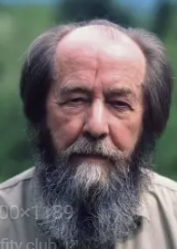
A state of war only serves as an excuse for domestic tyranny.
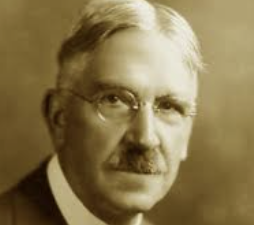
The discovery that mass changes with velocity, a discovery made when minute bodies came under consideration, finally forced surrender of the notion that mass is a fixed and inalienable possession of ultimate elements or individuals, so that time is now considered to be their fourth dimension.
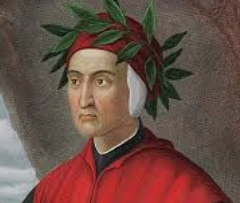
Love and the gracious heart are a single thing...one can no more be without the otherthan the reasoning mind without its reason.
The Age of Empty Freedom ... does not know that man must first through labour, industry, and art, learn how to know; but it has a certain fixed standard for all conceptions, and an established Common Sense of Mankind always ready and at hand, innate within itself and there present without trouble on its part;-and those conceptions and this Common Sense are to it the measure of the efficient and the real. It has this great advantage over the Age of Science, that it knows all things without having learned anything; and can pass judgment upon whatever comes before it at once and without hesitation,-without needing any preliminary evidence:-'That which I do not immediately comprehend by the conceptions which dwell within me, is nothing,'-says Empty Freedom.
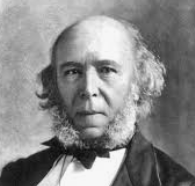
The poverty of the incapable, the distresses that come upon the imprudent, the starvation of the idle, and those shoulderings aside of the weak by the strong, which leave so many "in shallows and in miseries," are the decrees of a large, far-seeing benevolence.
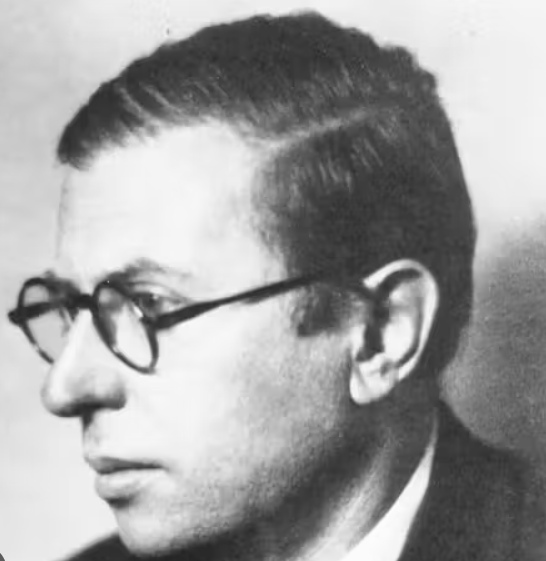
I tell you in truth: all men are Prophets or else God does not exist.

Alas, the Hero from of old has had to cramp himself into strange shapes: the world knows not well at any time what to do with him, so foreign is his aspect in the world!
Patience cometh by the grace of the Soul.
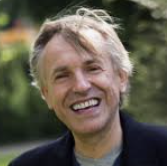
If we want eternal life, then we'll need to rewrite our bug-ridden genetic code and become god-like. "May all that have life be delivered from suffering", said Gautama Buddha. It's a wonderful sentiment. Sadly, only hi-tech solutions can ever eradicate suffering from the living world. Compassion alone is not enough.
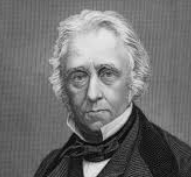
Our liberty is neither Greek nor Roman; but essentially English. It has a character of its own,-a character which has taken a tinge from the sentiments of the chivalrous ages, and which accords with the peculiarities of our manners and of our insular situation. It has a language, too, of its own, and a language singularly idiomatic, full of meaning to ourselves, scarcely intelligible to strangers.
It had been, when I read it, only a vaguely pregnant piece of nonsense. Now it was all as clear as day, as evident as Euclid. Of course the Dharma-Body of the Buddha was the hedge at the bottom of the garden. At the same time, and no less obviously, it was these flowers, it was anything that I-or rather the blessed Not-I, released for a moment from my throttling embrace-cared to look at.
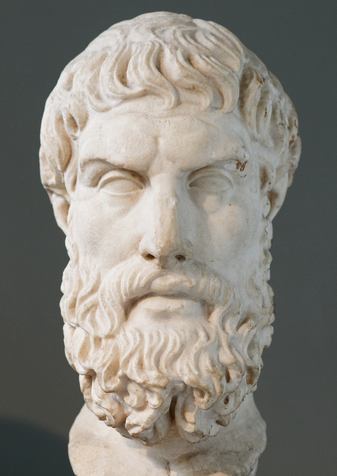
The happiness which belongs to man, is that state in which he enjoys as many of the good things, and suffers as few of the evils incident to human nature as possible; passing his days in a smooth course of permanent tranquility. A wise man, though deprived of sight or hearing, may experience happiness in the enjoyment of the good things which yet remain; and when suffering torture, or laboring under some painful disease, can mitigate the anguish by patience, and can enjoy, in his afflictions, the consciousness of his own constancy.
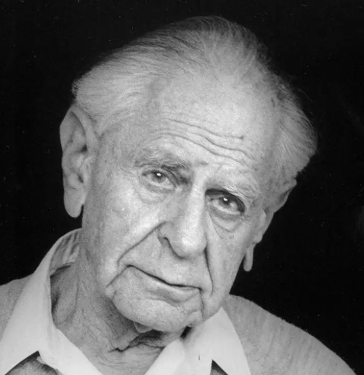
I disbelieve in specialization and... experts. ...[P]aying too much respect to the specialist ...[is] destroying the commonwealth of learning, the rationalist tradition, and science ...
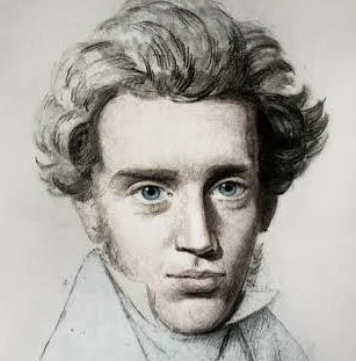
Once in his early youth a man allowed himself to be so far carried away in an overwrought irresponsible state as to visit a prostitute. It is all forgotten. Now he wants to get married. Then anxiety stirs. He is tortured day and night with the thought that he might possibly be a father, that somewhere in the world there could be a created being who owed his life to him. He cannot share his secret with anyone; he does not even have any reliable knowledge of the fact. –For this reason the incident must have involved a prostitute and taken place in the wantonness of youth; had it been a little infatuated or an actual seduction, it would be hard to imagine that he could know nothing about it, but now this this very ignorance is the basis of his agitated torment. On the other hand, precisely because of the rashness of the whole affair, his misgivings do not really start until he actually falls in love.
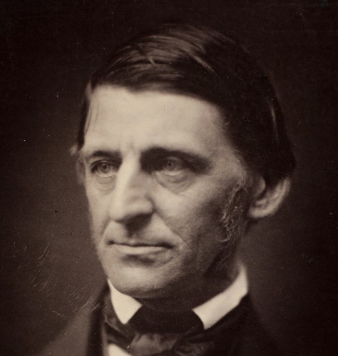
England's genius filled all measure Of heart and soul, of strength and pleasure, Gave to the mind its emperor, And life was larger than before: Nor sequent centuries could hit Orbit and sum of Shakespeare's wit. The men who lived with him became Poets, for the air was fame.
The true Gospel has it that we are justified by faith alone, without the deeds of the Law.
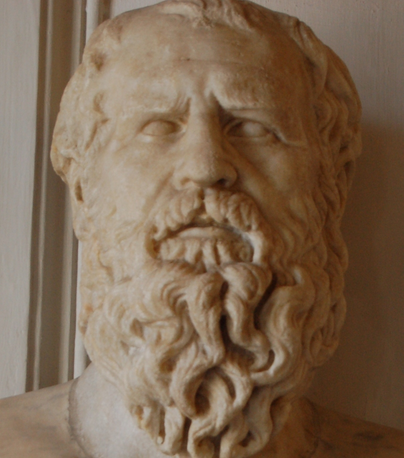
A lifetime is a child playing, playing checkers; the kingdom belongs to a child.
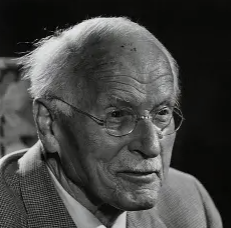
No one can flatter himself that he is immune to the spirit of his own epoch, or even that he possesses a full understanding of it. Irrespective of our conscious convictions, each one of us, without exception, being a particle of the general mass, is somewhere attached to, colored by, or even undermined by the spirit which goes through the mass. Freedom stretches only as far as the limits of our consciousness.
We have always thought that Mr. Darwin has unnecessarily hampered himself by adhering so strictly to his favourite "Natura non facit saltum." We greatly suspect that she does make considerable jumps in the way of variation now and then, and that these saltations give rise to some of the gaps which appear to exist in the series of known forms.
Everywhere and at all times it is in thy power piously to acquiesce in thy present condition, and to behave justly to those who are about thee, and to exert thy skill upon thy present thoughts, that nothing shall steal into them without being well examined.
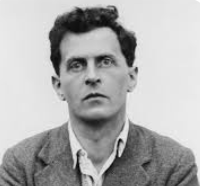
A serious and good philosophical work could be written consisting entirely of jokes.
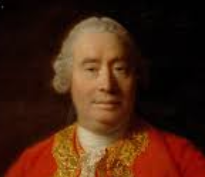
I say, then, that belief is nothing but a more vivid, lively, forcible, firm, steady conception of an object, than what the imagination alone is ever able to attain.
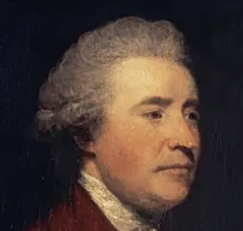
One that confounds good and evil is an enemy to the good.
When Fortune is on our side, popular favor bears her company.

The system of technological production that we have today has been justified in terms of creating more goods to feed more people and to meet more needs. But it actually destroys more of the resources that we need in order to meet those multiple needs. If we shift to an ecological perception, a diversity perception, we realize that some of the instruments of which we are very proud are actually extremely primitive for dealing with nature. To me that is the great lesson of ecological awareness at the turn of the millennium.
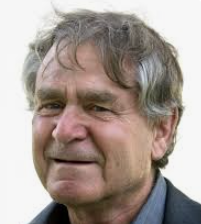
Probability fractions arise from our knowledge and from our ignorance.
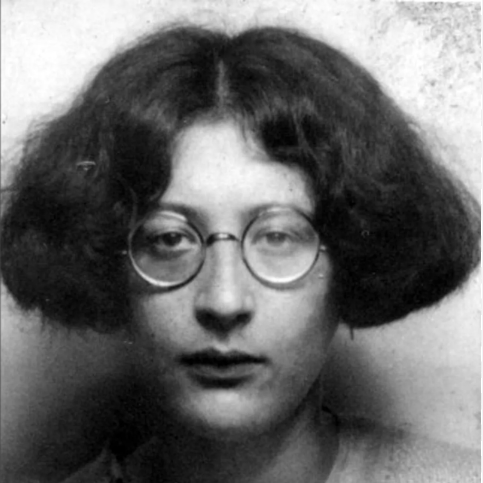
God's love for us is not the reason for which we should love him. God's love for us is the reason for us to love ourselves.

In his seminar on The Ethic of Psychoanalysis, Lacan speaks of the role of the Chorus in classical tragedy: we, the spectators, came to the theatre worried, full of everyday problems, unable to adjust without reserve to the problems of the play, that is to feel the required fears and compassions - but not problem, there is a chorus, who feels the sorrow and the compassion instead of us - or, more precisely, we feel the required emotions through the medium of the chorus: 'You are then relieved of all worries, even if you do not feel anything, the Chorus will do so in your place.'
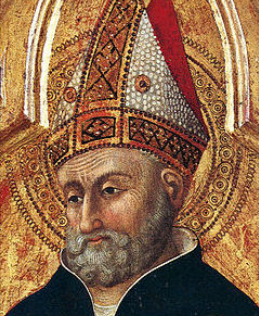
As the soul is the life of the body, so God is the life of the soul. As therefore the body perishes when the soul leaves it, so the soul dies when God departs from it.
In order to succeed, we must first believe that we can.
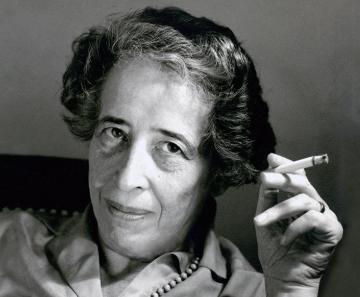
The cultural treasures of the past, believed to be dead, are being made to speak, in the course of which it turns out that they propose things altogether different than what had been thought.
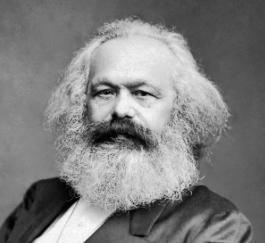
The executive of the modern State is but a committee for managing the common affairs of the whole bourgeoisie.
Govern your tongue before all other things, following the gods.
I refuse to make money out of my science. My laurel is not for sale like so many bales of cotton.
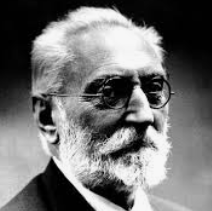
"The bitterest sorrow that man can know is to aspire to do much and to achieve nothing"... so Herodotus relates that a Persian said to a Theban at a banquet (book ix., chap. xvi.). And it is true. With knowledge and desire we can embrace everything , or almost everything; with the will nothing, or almost nothing. And contemplation is not happiness - no! not if this contemplation implies impotence. And out of this collision between our knowledge and our power pity arises.
CivilSimian.com created by AxiomaticPanic, CivilSimian, Kalokagathia