


7 months ago
Death poses a problem which replaces all the others. What is deadly to philosophy, to the naive belief in the hierarchy of perplexities.
9 months 6 days ago
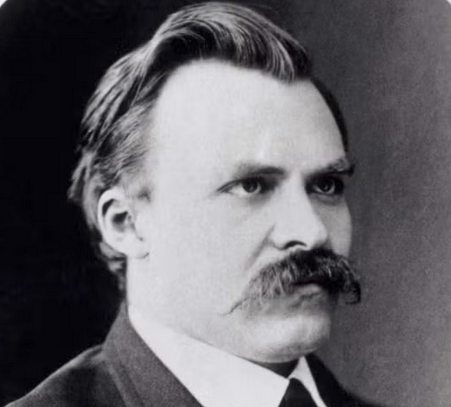
Whereas the man of action binds his life to reason and its concepts so that he will not be swept away and lost, the scientific investigator builds his hut right next to the tower of science so that he will be able to work on it and to find shelter for himself beneath those bulwarks which presently exist. And he requires shelter, for there are frightful powers which continuously break in upon him, powers which oppose scientific "truth" with completely different kinds of "truths" which bear on their shields the most varied sorts of emblems.
9 months 5 days ago
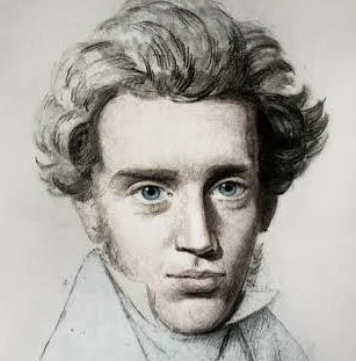
My hearers, this discourse has not wandered out into the world to look for conflict, it has not tried to get the better of anybody, it has not even tried to uphold anybody, as though there was battle without. It has spoken to you; not by way of explaining anything to you, but trying to speak secretly with you about your relationship to that secret wisdom mentioned in our text. Oh that nothing may upset you in respect to this, “neither life nor death nor things present nor things to come nor any other creature” (Romans 8:38) –not this discourse, which, though it may have profited you nothing, yet has striven for what after all is the first and the last, to help you have what the Scripture calls “faith in yourself before God.
7 months ago
Criticism is a misconception: we must read not to understand others but to understand ourselves.

7 months 4 weeks ago
Is it surprising that prisons resemble factories, schools, barracks, hospitals, which all resemble prisons?
▼
Source
source
Discipline and Punish (1977) as translated by Alan Sheridan, p. 228
4 months 3 weeks ago
In science, as in the playing card experiment, novelty emerges only with difficulty, manifested by resistance, against a background provided by expectation.
▼
Source
source
p. 64
4 months 1 week ago
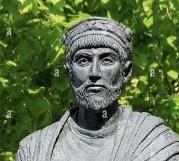
A very weighty argument is this - namely, that neither does the light which descends from thence, chiefly upon the world, mix itself with anything, nor admit of dirtiness or pollution, but remains entirely, and in all things that are, free from defilement, admixture, and suffering. Besides, we must pay attention to the other kinds of phenomena, both to the Intelligible, and yet more to the Sensible - whatever are connected with matter, or will manifest themselves in relation to our subject.

4 months 3 weeks ago
Our grand business undoubtedly is, not to see what lies dimly at a distance, but to do what lies clearly at hand.
6 months 3 weeks ago
There is nothing impossible in the existence of the supernatural: its existence seems to me decidedly probable.
▼
Source
source
The Genteel Tradition at Bay
7 months 1 week ago
It has been said that love robs those who have it of their wit, and gives it to those who have none.
▼
Source
source
Paradoxe sur le Comédien
8 months 1 week ago
All natural capacities of a creature are destined to evolve completely to their natural end. First Thesis Variant translations: All natural capacities of a creature are destined sooner or later to be developed completely and in conformity with their end. All natural capacities of a creature are destined to develop themselves completely and to their purpose.
8 months 3 days ago
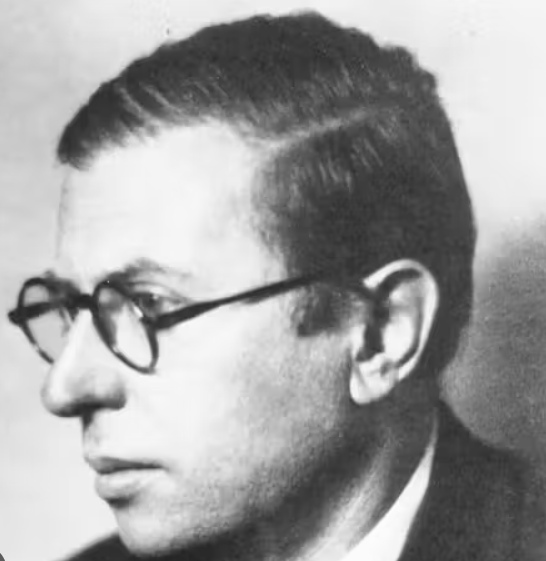
Ha! to forget. How childish! I feel you in my bones. Your silence screams in my ears. You may nail your mouth shut, you may cut out your tongue, can you keep yourself from existing? Will you stop your thoughts.
▼
Source
source
Inès reiterating to Garcin that they cannot ignore one another, Act 1, sc. 5
6 months 1 week ago
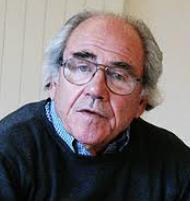
Not only does reality resist those who still criticize it, but it also abandons those who defend it. Maybe it is a way for reality to get its revenge from those who claim to believe in it for the sole purpose of eventually transforming it: sending back its supporters to their own desires.
6 months 2 weeks ago
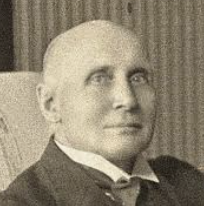
The universities are schools of education, and schools of research. But the primary reason for their existence is not to be found either in the mere knowledge conveyed to the students or in the mere opportunities for research afforded to the members of the faculty. Both these functions could be performed at a cheaper rate, apart from these very expensive institutions. Books are cheap, and the system of apprenticeship is well understood. So far as the mere imparting of information is concerned, no university has had any justification for existence since the popularization of printing in the fifteenth century. Yet the chief impetus to the foundation of universities came after that date, and in more recent times has even increased. The justification for a university is that it preserves the connection between knowledge and the zest of life, by uniting the young and the old in the imaginative consideration of learning.

6 months 2 weeks ago
Some philosophers fail to distinguish propositions from judgments; ... But in the real world it is more important that a proposition be interesting than that it be true. The importance of truth is that it adds to interest.
▼
Source
source
p. 259.

4 months ago
One Step Forward, Two Steps Backward, written by Lenin, an outstanding member of the Iskra group, is a methodical exposition of the ideas of the ultra-centralist tendency in the Russian movement. The viewpoint presented with incomparable vigor and logic in this book, is that of pitiless centralism.

7 months 3 weeks ago
Thou shouldst not become presumptuous through life; for death comes upon thee at last, and the perishable part falls to the ground.
4 months 1 week ago
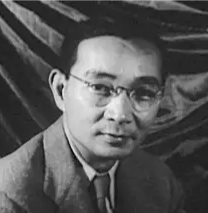
The world I believe is far too serious, and being far too serious, is it has need of a wise and merry philosophy.
▼
Source
source
Ch. I : The Awakening, p. 13

8 months 2 weeks ago
It is the act of an ill-instructed man to blame others for his own bad condition; it is the act of one who has begun to be instructed, to lay the blame on himself; and of one whose instruction is completed, neither to blame another, nor himself.
▼
Source
source
(5) [tr. George Long (1888)].
4 months 3 days ago
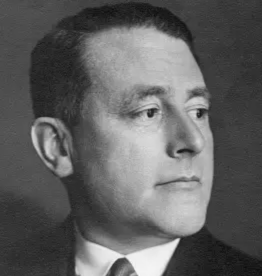
The enemy is not merely any competitor or just any partner of a conflict in general. He is also not the private adversary whom one hates. An enemy exists only when, at least potentially, one fighting collectivity of people confronts a similar collectivity. The enemy is solely the public enemy, because everything that has a relationship to such a collectivity of men, particularly to a whole nation, becomes public by virtue of such a relationship.

6 months 2 weeks ago
The erotic is never free of secrecy.
6 months ago
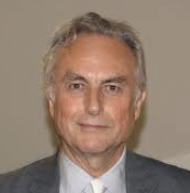
Natural selection is an extremely simple process, in the sense that very little machinery needs to be set up in order for it to work. Of course the effects and consequences of natural selection are complex in the extreme. But in order to set natural selection going on a real planet, all that is required is the existence of inherited information.
▼
Source
source
Chapter 2, "Silken Fetters" (p. 68)

8 months 1 week ago
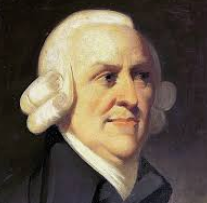
China is a much richer country than any part of Europe.
▼
Source
source
Chapter XI, Part III, (First Period) p. 221.
6 months 1 day ago
Familiarity breeds contempt.
6 months ago
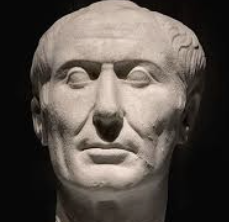
I speak as a biologist. There aren't many absolutely clear distinctions in biology. Mostly what we have is a spectrum. But the male-female divide is exceptional in biology. It really is a true binary.
▼
Source
source
Interviewed by Judith Woods, as cited in "Richard Dawkins interview: 'I shall continue to use every one of the prohibited words'", The Telegraph
6 months 2 days ago
Does the interiorization of media such as letters alter the ratio among our senses and change mental processes?
▼
Source
source
(p. 28)
4 months 3 days ago
Discovery depends upon the previous cultivation or natural clearness of the appropriate Idea, and therefore no discovery is the work of accident.
5 months ago
Every identity, such (third) critics say, even the multitude, must be defined by its remained, those outside of it, call them excluded, the abject, or the subaltern. ... There can certainly be points or nodes outside a network but none are necessarily outside. Its boundaries are indefinite and open. ... None is necessarily excluded but this inclusion is not guaranteed: the expansion of the common is a practical, political manner.
▼
Source
source
226

7 months 4 days ago
To be in love is not the same as loving. You can be in love with a woman and still hate her.
4 months 3 days ago
On bourgeois ground ... change is impossible anyway even if it were desired. In fact, bourgeois interest would like to draw every other interest opposed to it into its own failure; so, in order to drain the new life, it makes its own agony apparently fundamental, apparently ontological. The futility of bourgeois existence is extended to be that of the human situation in general, of existence per se.
▼
Source
source
The Principle of Hope (1959), N. Plaice, trans. (1986), p. 4
6 months 4 weeks ago
People think they have taken quite an extraordinarily bold step forward when they have rid themselves of belief in hereditary monarchy and swear by the democratic republic. In reality, however, the state is nothing but a machine for the oppression of one class by another, and indeed in the democratic republic no less than in the monarchy.
▼
Source
source
Introduction to 1891 edition of Karl Marx's, The Civil War in France
5 months 3 weeks ago
It seems hard for the American people to believe that anything could be more exciting than the times themselves. What we read daily and view on the TV has thrust imagined forms into the shadow. We are staggeringly rich in facts, in things, and perhaps, like the nouveau riche of other ages, we want our wealth faithfully reproduced by the artist.
▼
Source
source
Facts That Put Fancy to Flight (1962), p. 67
7 months 4 weeks ago
Scepticism is not irrefutable, but obviously nonsensical, when it tries to raise doubts where no questions can be asked. For doubt can exist only where a question exists, a question only where an answer exists, and an answer only where something can be said.
6 months 3 days ago
As soon as men live entirely in accord with the law of love natural to their hearts and now revealed to them, which excludes all resistance by violence, and therefore hold aloof from all participation in violence - as soon as this happens, not only will hundreds be unable to enslave millions, but not even millions will be able to enslave a single individual.
▼
Source
source
V
7 months 4 days ago
Toleration is good for all, or it is good for none.
▼
Source
source
Speech on the Bill for the Relief of Protestant Dissenters
8 months 2 days ago
I say a murder is abstract. You pull the trigger and after that you do not understand anything that happens.
▼
Source
source
Act 5, sc. 2
8 months 4 days ago
We need not suppose that when po+B40wer resides in an exclusive class, that class will knowingly and deliberately sacrifice the other classes to themselves: it suffices that, in the absence of its natural defenders, the interest of the excluded is always in danger of being overlooked: and, when looked at, is seen with very different eyes from those of the persons whom it directly concerns.
▼
Source
source
Ch. III: The Ideally Best Polity
7 months ago
Who Rebels? Who rises in arms? Rarely the slave, but almost always the oppressor turned slave.
4 months ago
Now a man need not be very conversant in the writings of Chymists to observe, in how Laxe, Indefinite, and almost Arbitrary Senses they employ the Terms of Salt, Sulphur and Mercury; of which I could never find that they were agreed upon any certain Definitions or setled Notions; not onely differing Authors, but not unfrequently one and the same, and perhaps in the same Book, employing them in very differing senses.

8 months 3 weeks ago
This is one of the most intricate problems of religion. For if you look into the traditional arguments (Hadith) about this problem you will find them contradictory; such also being the case with arguments of reason. The contradiction in the arguments of the first kind is found in the Qur'an and the Hadith.
6 months 4 weeks ago
Just as Marx used to say about the French Marxists of the late 'seventies: All I know is that I am not a Marxist.
▼
Source
source
Letter to Conrad Schmidt
7 months 4 days ago
And now once again I asked myself the question: do I love her? And once more I could not answer, that is to say, again, for the hundredth time, I answered that I hated her.
9 months 2 days ago
Zeus, the god of gods, who rules according to law, and is able to see into such things, perceiving that an honourable race was in a woeful plight, and wanting to inflict punishment on them, that they might be chastened and improve, collected all the gods into their most holy habitation, which, being placed in the centre of the world, beholds all created things.
8 months 3 days ago
Real power begins where secrecy begins.
▼
Source
source
Part 3, Ch. 12, § 1
8 months 5 days ago
When I come to my own beliefs, I find myself quite unable to discern any purpose in the universe, and still more unable to wish to discern one.
▼
Source
source
"Is There a God?", 1952
8 months 5 days ago
The great thing however is, in the show of the temporal and the transient to recognize the substance which is immanent and the eternal which is present. For the work of Reason (which is synonymous with the Idea) when considered in its own actuality, is to simultaneously enter external existence and emerge with an infinite wealth of forms, phenomena and phases - a multiplicity that envelops its essential rational kernel with a motley outer rind with which our ordinary consciousness is earliest at home. It is this rind that the Concept must penetrate before Reason can find its own inward pulse and feel it still beating even in the outward phases. But this infinite variety of circumstances which is formed in this element of externality by the light of the rational essence shining in it - all this infinite material, with its regulatory laws - is not the object of philosophy....To comprehend what is, is the task of philosophy: and what is is Reason.
▼
Source
source
Works, VII, 17.

CivilSimian.com created by AxiomaticPanic, CivilSimian, Kalokagathia