

8 months 4 days ago
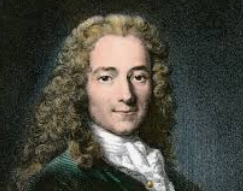
"Optimism," said Cacambo, "What is that?" "Alas!" replied Candide, "It is the obstinacy of maintaining that everything is best when it is worst!
6 months 3 weeks ago
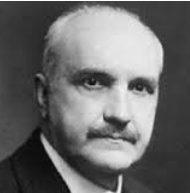
To call war the soil of courage and virtue is like calling debauchery the soil of love.
▼
Source
source
Ch. III: Industry, Government, the peasants
4 months 2 weeks ago
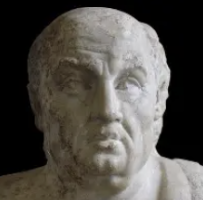
Or, if you enjoy living with Greeks also, spend your time with Socrates and with Zeno: the former will show you how to die if it be necessary; the latter how to die before it is necessary. Live with Chrysippus, with Posidonius: they will make you acquainted with things earthly and things heavenly; they will bid you work hard over something more than neat turns of language and phrases mouthed forth for the entertainment of listeners; they will bid you be stout of heart and rise superior to threats. The only harbour safe from the seething storms of this life is scorn of the future, a firm stand, a readiness to receive Fortune's missiles full in the breast, neither skulking nor turning the back.
3 months 4 weeks ago
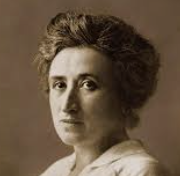
Every right of suffrage, like any political right in general, is not to be measured by some sort of abstract scheme of "justice," or in terms of any other bourgeois-democratic phrases, but by the social and economic relationships for which it is designed. The right of suffrage worked out by the Soviet government is calculated for the transition period from the bourgeois-capitalist to the socialist form of society, that is, it is calculated for the period of the proletarian dictatorship. But, according to the interpretation of this dictatorship which Lenin and Trotsky represent, the right to vote is granted only to those who live by their own labor and is denied to everyone else.
▼
Source
source
Chapter Five, "The Question of Suffrage"


5 months 3 weeks ago
Can we find nothing good to say about TV? Well, yes, it brings scattered solitaries into a sort of communion. TV allows your isolated American to think that he participates in the life of the entire country. It does not actually place him in a community, but his heart is warmed with the suggestion (on the whole false) that there is a community somewhere in the vicinity and that his atomized consciousness will be drawn back toward the whole.
▼
Source
source
The Distracted Public (1990), p. 159
6 months 4 weeks ago
Since in the Middle Ages the psychic relation to woman was expressed in the collective worship of Mary, the image of woman lost a value to which human beings had a natural right. This value could find its natural expression only through individual choice, and it sank into the unconscious when the individual form of expression was replaced by a collective one. In the unconscious the image of woman received an energy charge that activated the archaic and infantile dominants. And since all unconscious contents, when activated by dissociated libido, are projected upon the external object, the devaluation of the real woman was compensated by daemonic features. She no longer appeared as an object of love, but as a persecutor or witch. The consequence of increasing Mariolatry was the witch hunt, that indelible blot on the later Middle Ages.
▼
Source
source
Psychological Types (1921), CW 6. P.344

4 months 3 weeks ago
Man is not the creature and product of Mechanism; but, in a far truer sense, its creator and producer: it is the noble People that makes the noble Government; rather than conversely.

6 months 2 weeks ago
The everyday world demands our attention, and prevents us from sinking into ourselves. As a romantic, I have always resented this: I like to sink into myself. The problems and anxieties of living make it difficult. Well, now I had an anxiety that referred to something inside of me, and it reminded me that my inner world was just as real and important as the world around me.
▼
Source
source
p. 39
4 months 3 weeks ago
To fall into mere unreasoning deliquium of love and admiration, was not good; but such unreasoning, nay irrational supercilious no-love at all is perhaps still worse!-It is a thing forever changing, this of Hero-worship: different in each age, difficult to do well in any age. Indeed, the heart of the whole business of the age, one may say, is to do it well.
6 months 3 weeks ago
And that servant, which knew his lord's will, and prepared not himself, neither did according to his will, shall be beaten with many stripes.
▼
Source
source
Luke 12:47 (KJV)
6 months 4 weeks ago
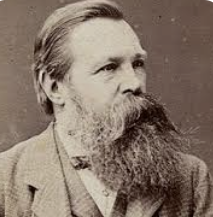
It is a universal revolution and will, accordingly, have a universal range.
5 months 2 weeks ago
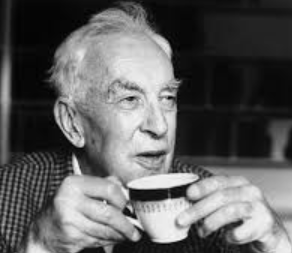
A life which does not go into action is a failure.
▼
Source
source
Vol. 10

8 months 3 days ago
So nigh is grandeur to our dust, So near is God to man, When Duty whispers low, Thou must, The youth replies, I can.
▼
Source
source
Voluntaries, st. 3
6 months 3 weeks ago
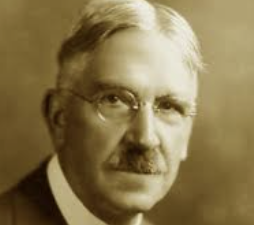
But the individual butterfly or earthquake remains just the unique existence which it is. We forget in explaining its occurrence that it is only the occurrence that is explained, not the thing itself.
4 months 3 weeks ago
Happy the people whose annals are blank in history books!
▼
Source
source
Life of Frederick the Great, Bk. XVI, ch. 1.

8 months 3 days ago
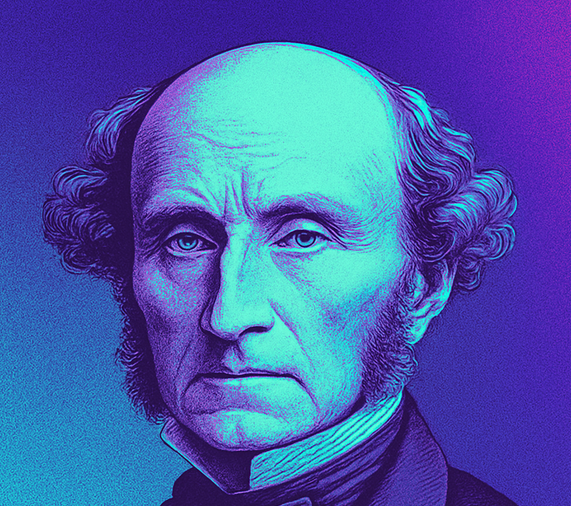
No one can be a great thinker who does not recognise, that as a thinker it is his first duty to follow his intellect to whatever conclusions it may lead...Not that it is solely, or chiefly, to form great thinkers, that freedom of thinking is required. On the contrary, it is as much and even more indispensable to enable average human beings to attain the mental stature which they are capable of.
▼
Source
source
Ch. II: Of the Liberty of Thought and Discussion
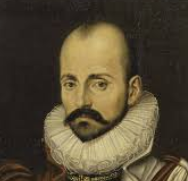
8 months 1 week ago
I speak the truth, not my fill of it, but as much as I dare speak; and I dare to do so a little more as I grow old.
▼
Source
source
Ch. 2

7 months 3 weeks ago
The goal of maximizing the welfare of all may be better achieved by an ethic that accepts our inclinations and harnesses them so that, taken as a whole, the system works to everyone's advantage.
▼
Source
source
Chapter 6, A New Understanding Of Ethics, p. 157

7 months 1 week ago
If it be of the highest importance to man, as an individual, that his religion should be true, the case of society is not the same. Society has no future life to hope for or to fear; and provided the citizens profess a religion, the peculiar tenets of that religion are of very little importance to its interests. Variant translation: Though it is very important for man as an individual that his religion should be true, that is not the case for society. Society has nothing to fear or hope from another life; what is most important for it is not that all citizens profess the true religion but that they should profess religion.
▼
Source
source
Chapter XVII.

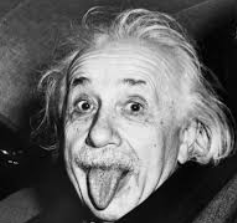
3 months 3 weeks ago
I do not think that religion is the most important element. We are held together rather by a body of tradition, handed down from father to son, which the child imbibes with his mother's milk. The atmosphere of our infancy predetermines our idiosyncrasies and predilections.
▼
Source
source
In response to a question about whether religion is the tie holding the Jews together.
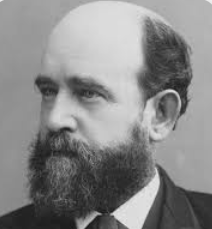
4 months 1 day ago
My primary object is to defend and advance a principle in which I see the only possible relief from much that enthralls and degrades and distorts, turning light to darkness and good to evil, rather than to gage a philosopher or weigh a philosophy. Yet the examination I propose must lead to a decisive judgment upon both.
▼
Source
source
Introduction : The Reason for the Examination

6 months 4 weeks ago
He who has never envied the vegetable has missed the human drama.
▼
Source
source
p. 178, first American edition
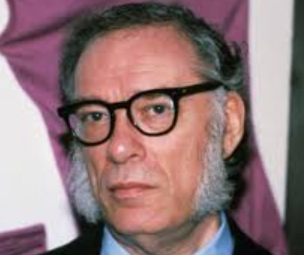
9 months ago
It is important to remember that the viciousness and wrongs of life stick out very plainly but that even at the worst times there is a great deal of goodness, kindness, and day-to-day decency that goes unnoticed and makes no headlines.
3 months 4 weeks ago
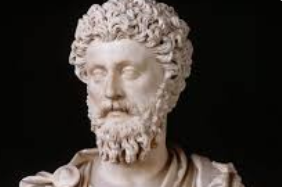
As for life, it is a battle and a sojourning in a strange land; but the fame that comes after is oblivion.
▼
Source
source
II, 17
5 months 3 weeks ago
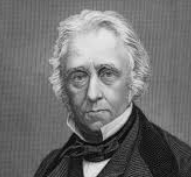
That is the best government which desires to make the people happy, and knows how to make them happy.
▼
Source
source
p. 160
8 months 3 days ago
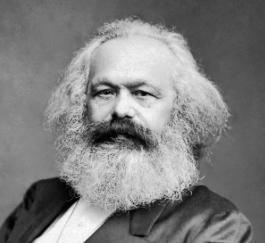
Something that is merely negative creates nothing.
▼
Source
source
Notebook VI, The Chapter on Capital, p. 532.
6 months 4 weeks ago
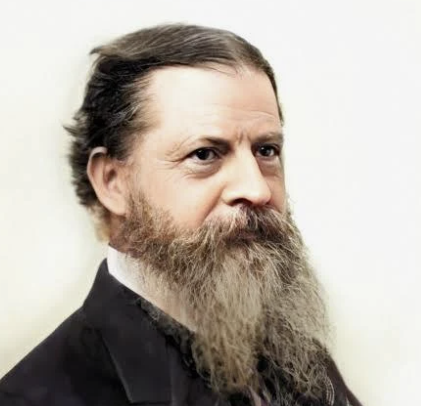
Wherever ideas come together they tend to weld into general ideas; and whenever they are generally connected, general ideas govern the connection; and these general ideas are living feelings spread out.
7 months 3 days ago
No passion so effectually robs the mind of all its powers of acting and reasoning as fear.
▼
Source
source
Part II Section II
8 months 1 week ago
No wind serves him who addresses his voyage to no certain port.
▼
Source
source
Book II, Ch. 1
6 months ago
A beautiful face is a silent commendation.
▼
Source
source
Maxim 283
4 months 1 week ago
As a general rule, all that has been hitherto advanced respecting the nature of this deity, must be understood to refer to his properties: for the nature of the god is not one thing, and his influence another: and truly, besides these two, his energy a third thing: seeing that all things which he wills, these he is, he can, and he works. For neither doth he will that which he is not; nor is he without strength to do that which he wills; nor doth he will that which he cannot effect. Now this is very different in the case of men, for theirs is a double nature mixed up in one, that of soul and body; the former divine, the latter full of darkness and obscurity: hence naturally arise warfare and discord between the two.
4 months 3 weeks ago
Battles, in these ages, are transacted by mechanism; with the slightest possible development of human individuality or spontaneity: men now even die, and kill one another, in an artificial manner.
▼
Source
source
Pt. I, Bk. VII, ch. 4.
4 months 2 weeks ago
For sometimes it is an act of bravery even to live.
▼
Source
source
Seneca, Ad Lucilium epistulae morales, transl. Richard M. Gummere, 1920 ed., Epistle LXXVIII, pp. 181-182
6 months 1 week ago
When a book and a head collide and a hollow sound is heard, must it always have come from the book?
▼
Source
source
D 66
9 months ago
Science fiction offers its writers chances of embarrassment that no other form of fiction does.
6 months 2 weeks ago
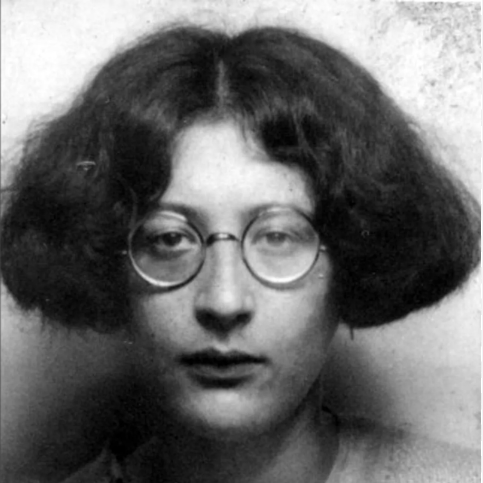
I have sometimes told myself that if only there were a notice on church doors forbidding entry to anyone with an income above a certain figure, and a low one, I would be converted at once.
▼
Source
source
Letter to Georges Bernanos (1938), in Seventy Letters, as translated by Richard Rees (Wipf and Stock: 1965), p. 105

3 months 4 weeks ago
The whole contains nothing which is not or its advantage; and all natures indeed have this common principle, but the nature of the universe has this principle besides, that it cannot be compelled even by any external cause to generate anything harmful to itself.
▼
Source
source
X, 6
5 months 6 days ago
There is no social entity with a good that undergoes some sacrifice for its own good. There are only individual people, different individual people, with their own individual lives. Using one of these people for the benefit of others, uses him and benefits the others. Nothing more.
▼
Source
source
Ch. 3 : Moral Constraints and the State; Why Side Constraints?, p. 32
4 months 3 weeks ago
All that Mankind has done, thought, gained or been: it is lying as in magic preservation in the pages of Books.
9 months 5 days ago
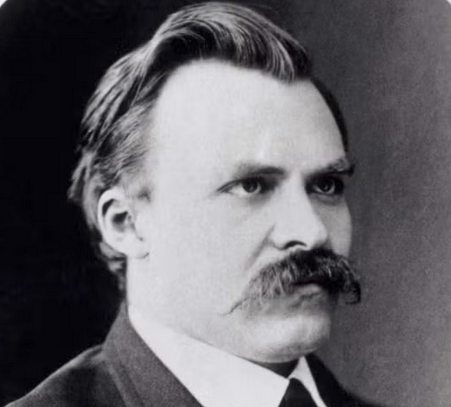
A thinker sees his own actions as experiments and questions as attempts to find out something. Success and failure are for him answers above all.
8 months 2 weeks ago
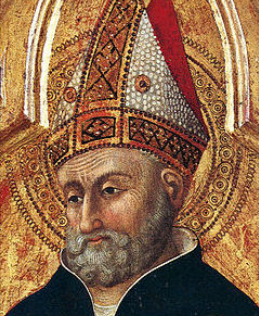
We are He, since we are His body and since He was made man in order to be our Head.
▼
Source
source
p.432
3 months 4 weeks ago
The longest-lived and the shortest-lived man, when they come to die, lose one and the same thing.
▼
Source
source
II, 14
CivilSimian.com created by AxiomaticPanic, CivilSimian, Kalokagathia