

6 months 4 days ago
The telling of jokes is an art of its own, and it always rises from some emotional threat. The best jokes are dangerous, and dangerous because they are in some way truthful.
▼
Source
source
Interviewed by J. Rentilly, "The Best Jokes Are Dangerous", McSweeny's


6 months 2 weeks ago
Jesus said that God was not the God of the dead, but of the living. And the other life is not, in fact, thinkable to us except under the same forms as those of this earthly and transitory life.
4 months 2 days ago
A child raised every 2. years is of more profit then the crop of the best laboring man. in this, as in all other cases, providence has made our duties and our interests coincide perfectly.... [W]ith respect therefore to our women & their children I must pray you to inculcate upon the overseers that it is not their labor, but their increase which is the first consideration with us.
▼
Source
source
In letter to plantation manager, as quoted in The Dark Side of Thomas Jefferson, by Henry Wiencek, Smithsonian Magazine,
7 months 3 weeks ago
Nowadays, to say that we are clever animals is not to say something philosophical and pessimistic but something political and hopeful - namely, if we can work together, we can make ourselves into whatever we are clever and courageous enough to imagine ourselves becoming. This is to set aside Kant's question "What is man?" and to substitute the question "What sort of world can we prepare for our great grandchildren?"
▼
Source
source
"Human Rights, Rationality, and Sentimentality." Truth and Progress: Philosophical Papers, Volume 3 (1998).

8 months 2 weeks ago
Men are eager to tread underfoot what they have once too much feared.
▼
Source
source
Book V, line 1140 (tr. Rouse)
8 months 4 days ago
A reproach can only hurt if it hits the mark. Whoever knows that he does not deserve a reproach can treat it with contempt.
4 months 4 weeks ago
It is not easy for any of us to stop measuring the world against the standard of Europe, but the concept of the multitude requires it of us. It is a challenge. Embrace it.

7 months 4 weeks ago
Nevertheless, the ultimate business of philosophy is to preserve the force of the most elemental words in which Dasein expresses itself, and to keep the common understanding from levelling them off to that unintelligibility which functions in turn as a source of pseudo-problems.
▼
Source
source
Macquarrie & Robinson translation
6 months 2 weeks ago
Jung believed that he was proceeding scientifically, but most Freudians remain convinced that he was inventing his own underground realm, rather as Tolkien invented Middle Earth. There is at least an element of truth in this view.
▼
Source
source
p. 126
4 months 2 days ago
All, too, will bear in mind this sacred principle, that though the will of the majority is in all cases to prevail, that will to be rightful must be reasonable; that the minority possess their equal rights, which equal law must protect, and to violate would be oppression. Let us, then, fellow-citizens, unite with one heart and one mind. Let us restore to social intercourse that harmony and affection without which liberty and even life itself are but dreary things.
6 months 4 weeks ago
The deep critical thinker has become the misfit of the world. This is not a coincidence. To maintain order and control you must isolate the intellectual, the sage, the philosopher, the savant before their ideas awaken people.

7 months 3 weeks ago
Let's put a limit to the scramble for money. ... Having got what you wanted, you ought to begin to bring that struggle to an end.
▼
Source
source
Book I, satire i, lines 92-94, as translated by N. Rudd
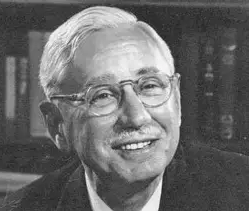
4 months 3 weeks ago
Let us ask the Gods not for possessions, but for things to do; happiness is in making things rather than consuming them.
▼
Source
source
Ch. 2 : On Youth

8 months 2 days ago
The alleged power to charm down insanity, or ferocity in beasts, is a power behind the eye.
▼
Source
source
Behavior

8 months 2 days ago
Our chief want in life is somebody who shall make us do what we can.
▼
Source
source
Considerations by the Way

6 months 4 weeks ago
To get up in the morning, wash and then wait for some unforeseen variety of dread or depression. I would give the whole universe and all of Shakespeare for a grain of ataraxy.

8 months 2 weeks ago
Will is to grace as the horse is to the rider.
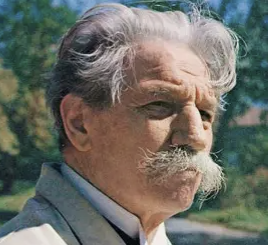
4 months 1 week ago
Very little of the great cruelty shown by men can really be attributed to cruel instinct. Most of it comes from thoughtlessness or inherited habit. The roots of cruelty, therefore, are not so much strong as widespread. But the time must come when inhumanity protected by custom and thoughtlessness will succumb before humanity championed by thought. Let us work that this time may come.
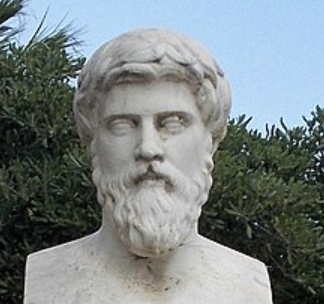
7 months 2 weeks ago
A prating barber asked Archelaus how he would be trimmed. He answered, "In silence."
▼
Source
source
33 Archelaus
8 months 6 days ago
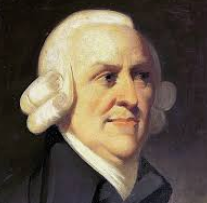
In every country it always is and must be the interest of the great body of the people to buy whatever they want of those who sell it cheapest. The proposition is so very manifest that it seems ridiculous to take any pains to prove it; nor could it ever have been called in question had not the interested sophistry of merchants and manufacturers confounded the common sense of mankind. Their interest is, in this respect, directly opposite to that of the great body of the people.
▼
Source
source
Chapter III, Part II, p. 531.
5 months 4 weeks ago
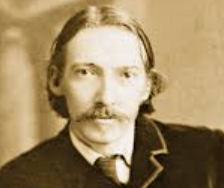
The imagination loves to trifle with what is not.
▼
Source
source
The Sea Fogs
6 months 4 weeks ago
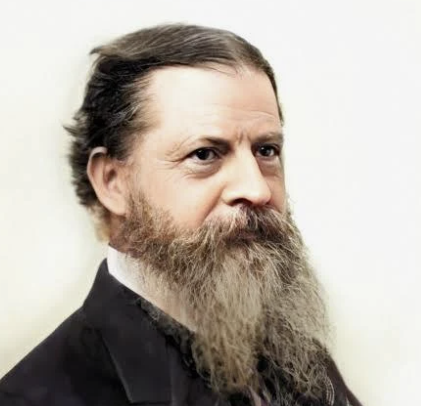
To say, therefore, that thought cannot happen in an instant, but requires a time, is but another way of saying that every thought must be interpreted in another, or that all thought is in signs.
▼
Source
source
Vol. V, par. 254
7 months 4 weeks ago
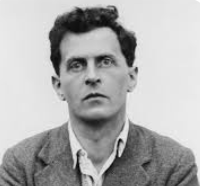
Scepticism is not irrefutable, but obviously nonsensical, when it tries to raise doubts where no questions can be asked. For doubt can exist only where a question exists, a question only where an answer exists, and an answer only where something can be said.
8 months 1 week ago
He who should teach men to die would at the same time teach them to live.
▼
Source
source
Ch. 18. That Men are not to judge of our Happiness till after Death, tr. Cotton, rev. W. Hazlitt, 1842
6 months 2 days ago
If you want to be happy, be.
▼
Source
source
Attributed in Wisdom for the Soul : Five Millennia of Prescriptions for Spiritual Healing (2006) by Larry Chang, p. 352
3 months 3 weeks ago
I am happy because I want nothing from anyone. I do not care about money. Decorations, titles or distinctions mean nothing to me. I do not crave praise. The only thing that gives me pleasure, apart from my work, my violin, and my sailboat, is the appreciation of my fellow workers.
6 months 2 weeks ago
Egoism you say? There is nothing more universal than the individual, for what is the property of each is the property of all. Each man is worth more than the whole of humanity, nor will it do to sacrifice each to all save in so far as all sacrifice themselves to each. That which we call egoism is the principle of psychic gravity, the necessary postulate. "Love thy neighbor as thyself," we are told, the presupposition being that each man loves himself; and it is not said "Love thyself." And nevertheless, we do not know how to love ourselves.
9 months ago
Parmenides: I was pleased with you, Socrates, because you would not discuss the doubtful question in terms of visible objects or in relation to them, but only with reference to what we conceive most entirely by the intellect and may call ideas… But if you wish to get better training, you must do something more than that; you must consider not only what happens if a particular hypothesis is true, but also what happens if it is not true.
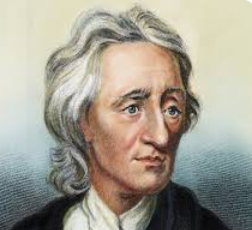
8 months 4 days ago
There is no virtue they should be excited to, nor fault they should be kept from, which I do not think they may be convinced of; but it must be by such reasons as their age and understandings are capable of, and those propos'd always in very few and plain words.
▼
Source
source
Sec. 81
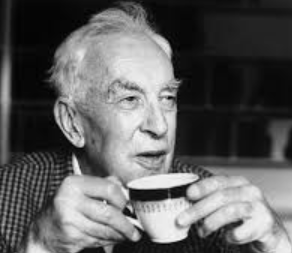
5 months 2 weeks ago
On this showing, the nature of the breakdowns of civilizations can be summed up in three points: a failure of creative power in the minority, an answering withdrawal of mimesis on the part of the majority, and a consequent loss of social unity in the society as a whole.
▼
Source
source
Vol. 4 (1955 ), part B, p. 6
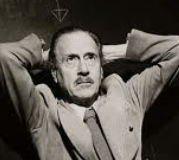
6 months ago
Until now a culture has been a mechanical fate for societies, the automatic interiorization of their own technologies.
▼
Source
source
(p. 86)
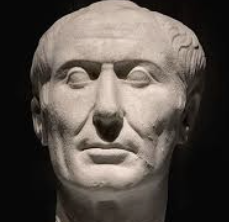
6 months ago
Whom Fortune wishes to destroy she first makes mad.
▼
Source
source
Maxim 911
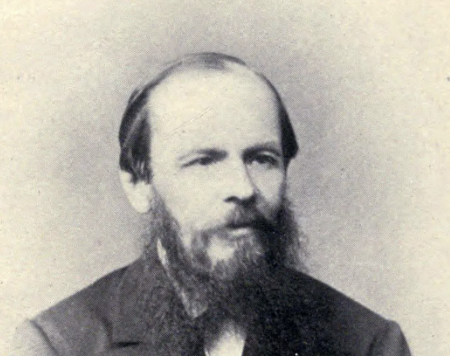
7 months 3 days ago
The best definition of man is: a being that goes on two legs and is ungrateful.
▼
Source
source
Part 1, Chapter 8 (tr. David Magarshack, 1950) The best definition of man is: a biped, ungrateful.
6 months 2 weeks ago
Considered as a whole, Hesse's achievement can hardly be matched in modern literature; it is the continually rising trajectory of an idea, the fundamentally religious idea of how to 'live more abundantly'. Hesse has little imagination in the sense that Shakespeare or Tolstoy can be said to have imagination, but his ideas have a vitality that more than makes up for it. Before all, he is a novelist who used the novel to explore the problem: What should we do with our lives? The man who is interested to know how he should live instead of merely taking life as it comes, is automatically an Outsider.
▼
Source
source
p. 77
6 months ago
The "message" of any medium or technology is the change of scale or pace or pattern that it introduces into human affairs.
▼
Source
source
(p. 8)
8 months 5 days ago
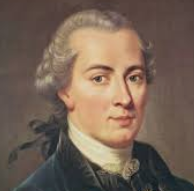
In man (as the only rational creature on earth) those natural capacities which are directed to the use of his reason are to be fully developed only in the race, not in the individual.
▼
Source
source
Second Thesis
9 months 3 days ago
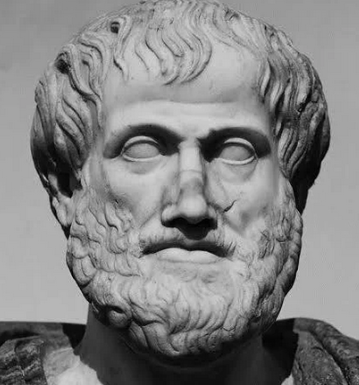
It's gravity is the cause; and that which is heavy abides in the middle, and the earth is in the middle: in like manner also, the infinite will abide in itself, through some other cause... and will itself support itself. ..The places of the whole and the part are of the same species; as of the whole earth and a clod, the place is downward; and of the whole of fire, and a spark, the place is upward. So that if the place of the infinite is in itself, there will be the same place also of a part of the infinite.

4 months 3 weeks ago
The spoken Word, the written Poem, is said to be an epitome of the man; how much more the done Work. Whatsoever of morality and of intelligence; what of patience, perseverance, faithfulness, of method, insight, ingenuity, energy; in a word, whatsoever of Strength the man had in him will lie written in the Work he does. To work: why, it is to try himself against Nature, and her everlasting unerring Laws; these will tell a true verdict as to the man.
7 months 4 weeks ago
Resting on your laurels is as dangerous as resting when you are walking in the snow. You doze off and die in your sleep.
▼
Source
source
p. 35e
8 months 2 weeks ago
Every habit and faculty is confirmed and strengthened by the corresponding actions, that of walking by walking, that of running by running.
▼
Source
source
Book II, ch. 18, 1
6 months 4 weeks ago
Haven't people learned yet that the time of superficial intellectual games is over, that agony is infinitely more important than syllogism, that a cry of despair is more revealing than the most subtle thought, and that tears always have deeper roots than smiles?
7 months ago
A character is a completely fashioned will.
▼
Source
source
(vollkommen gebildeter Wille).
7 months 4 weeks ago
If I have exhausted the justifications, I have reached bedrock and my spade is turned. Then I am inclined to say: "This is simply what I do."
▼
Source
source
§ 217
CivilSimian.com created by AxiomaticPanic, CivilSimian, Kalokagathia